| Intl. Notebook | Jan 26 2023 |




| Intl. Notebook | Mar 12 2013 |

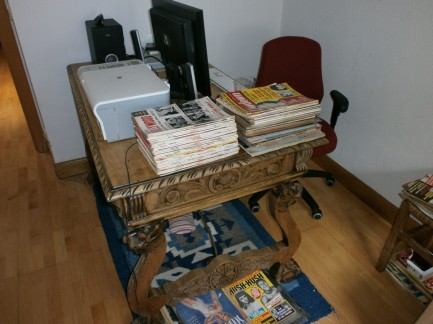
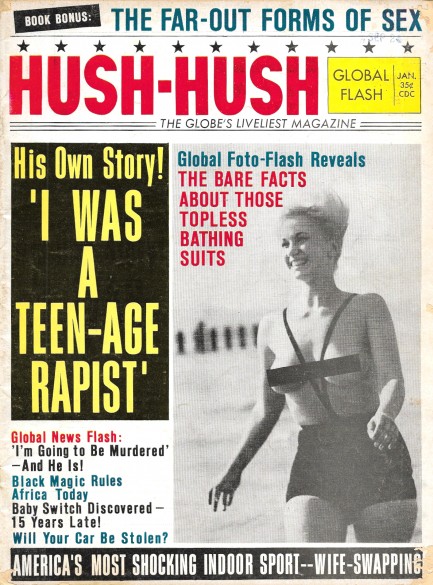
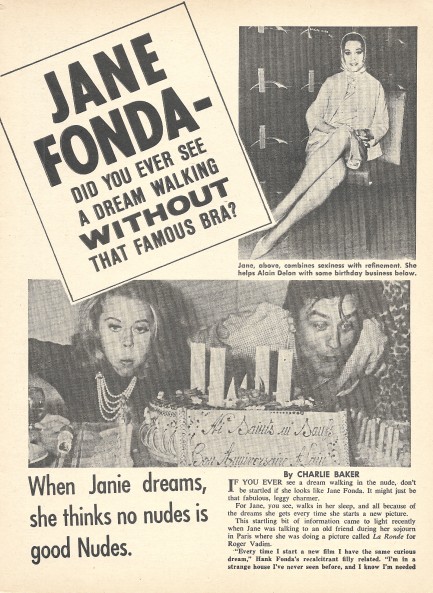
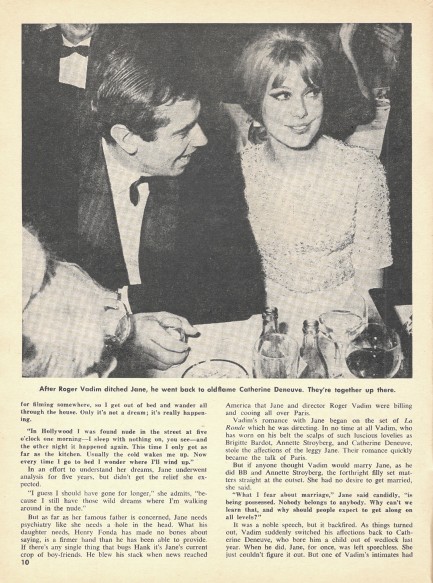
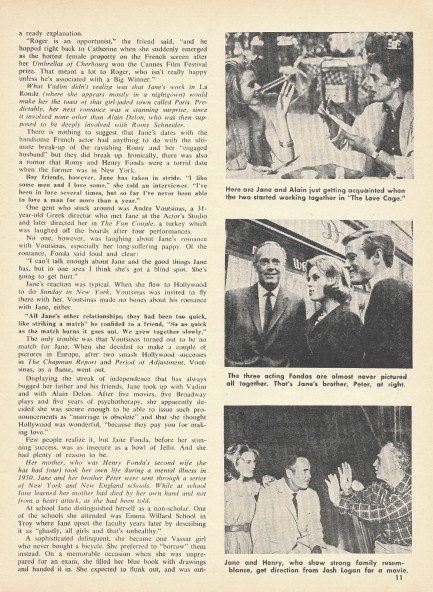
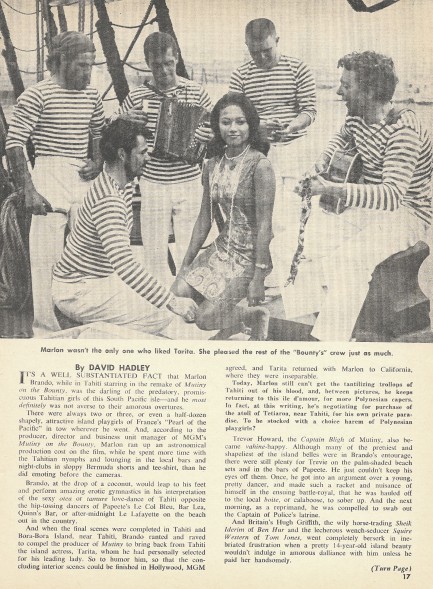
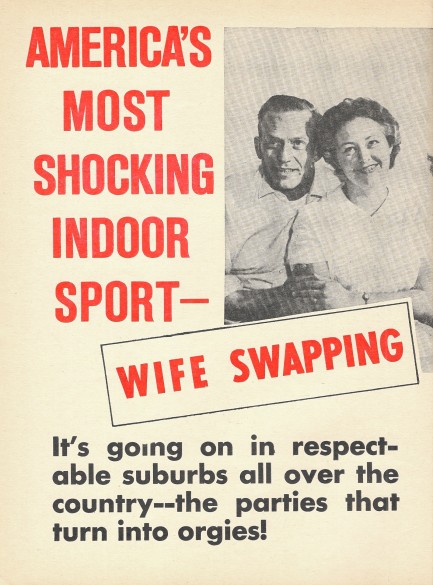
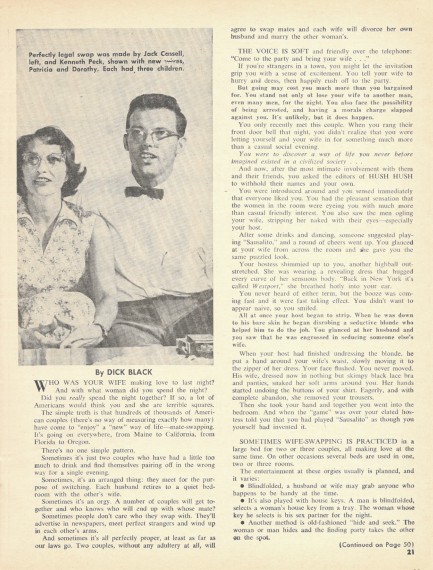
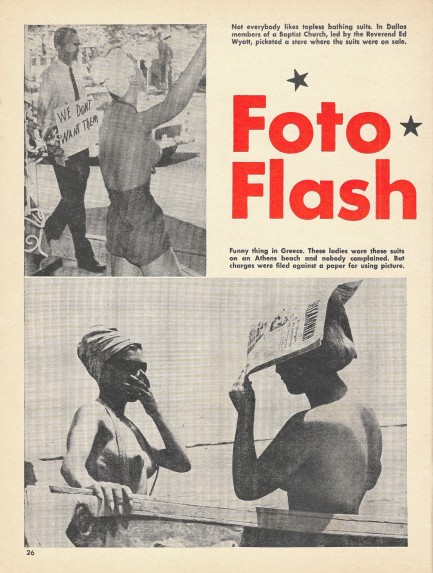
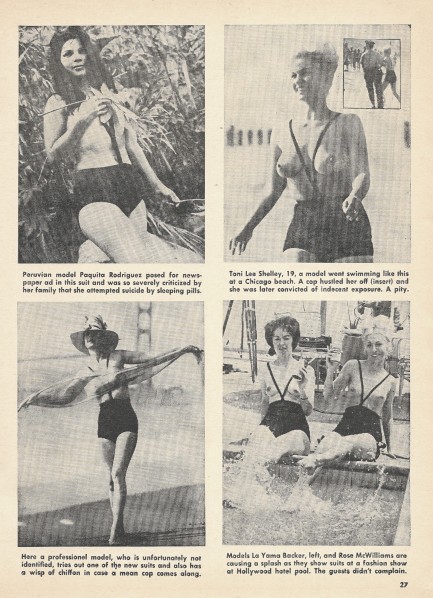
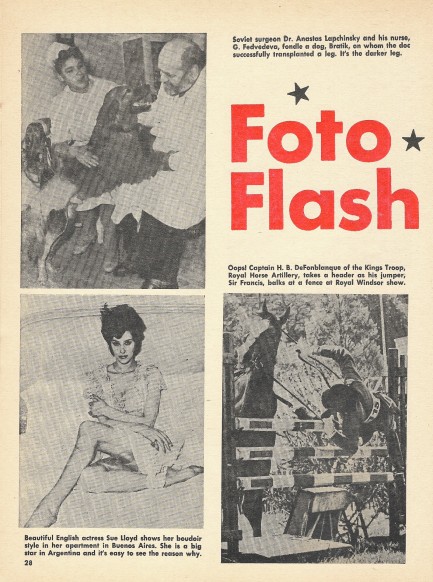
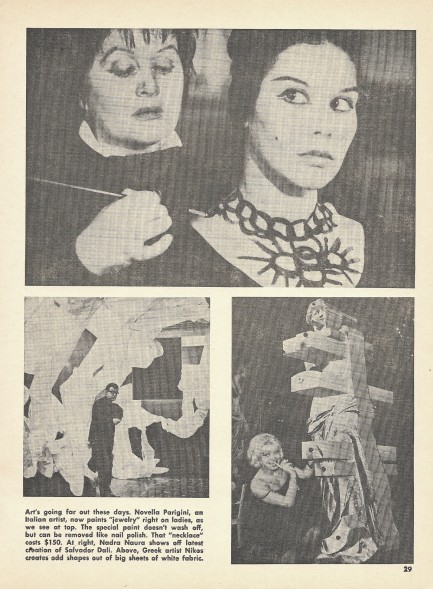
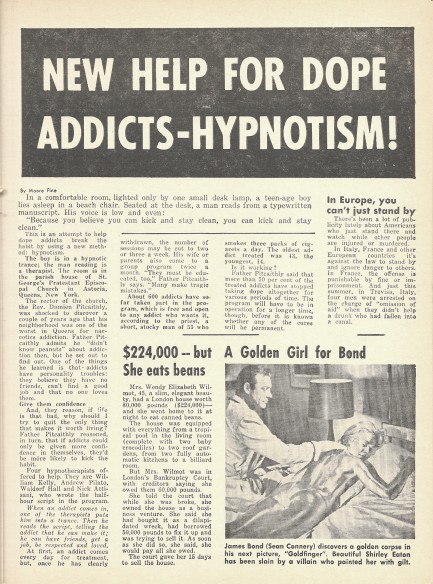
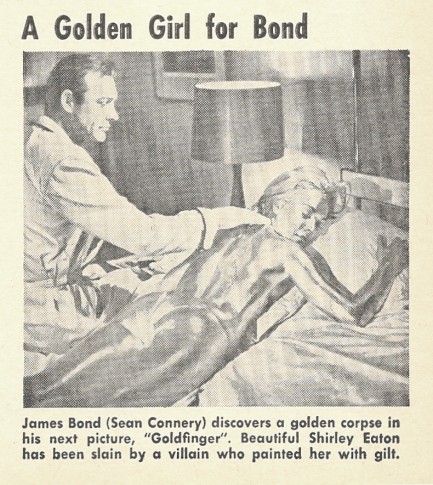
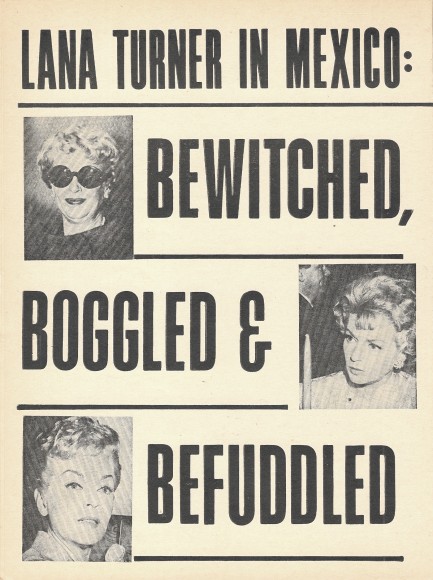
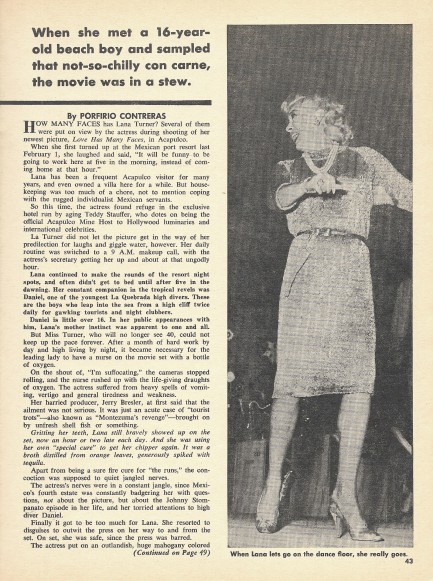
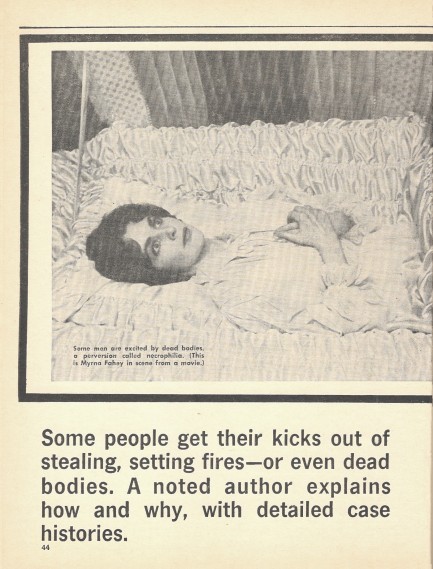
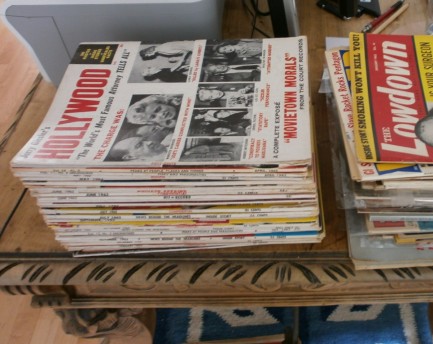
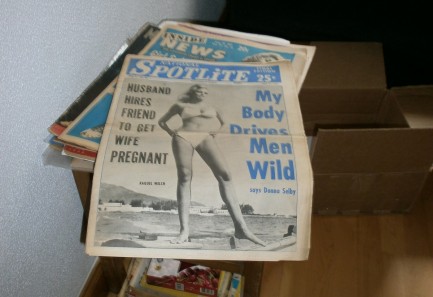
Well it worked again. We’re definitely feeling total confidence in the postal system now. Why that first issue of Adam disappeared a while back we’ll never know, but after that little mishap we successfully received one shipment, so this time we decided to go for broke. Above is the result of that experiment—forty-four American tabloids. Even with postage in the $40 range, these came out to about two dollars apiece. Very exciting, and since the collection consists of all the heavyweights—Whisper, Hush-Hush, On the QT, Confidential, Uncensored, The Lowdown, et al.—we’re pretty much set for the foreseeable future. You want mid-century tabloids? This is where to find them. Accept no substitutes. On a side note, remember we said we were refinishing a 150-year-old desk? There it is above in final form. Note that the legs are topped by carved demon heads. We haven’t yet figured out who he’s supposed to be, but he emanates a palpable aura of evil that’s a bit… Hang on a sec. Did you hear that noise? Probably the wind, but we better go check anyway. Be right ba—

| Vintage Pulp | Jan 18 2013 |

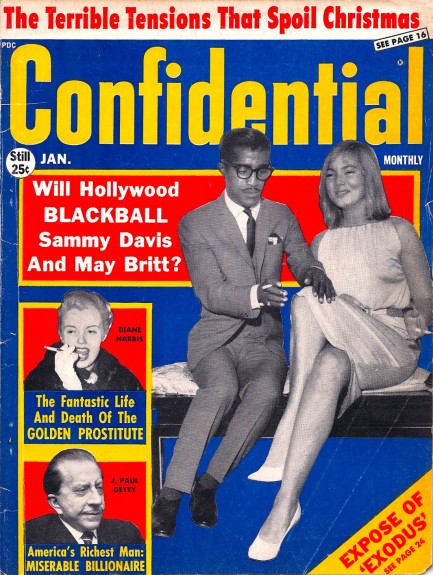
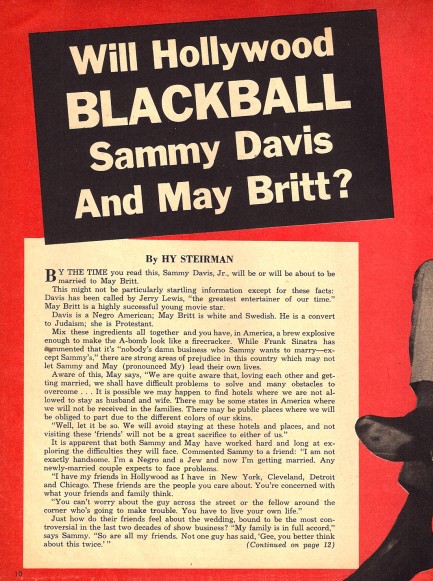
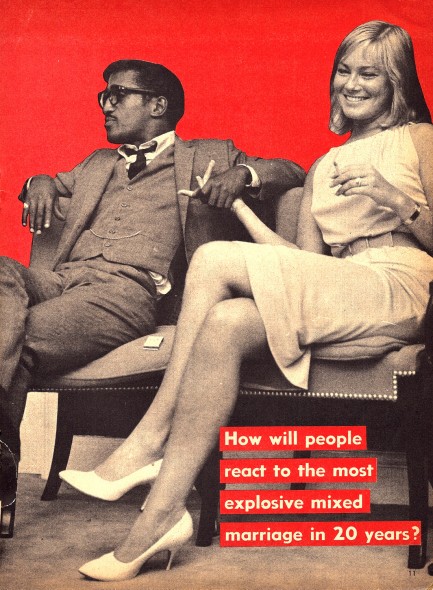
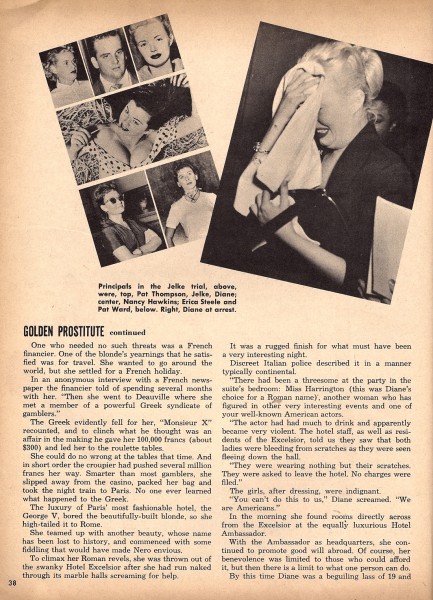
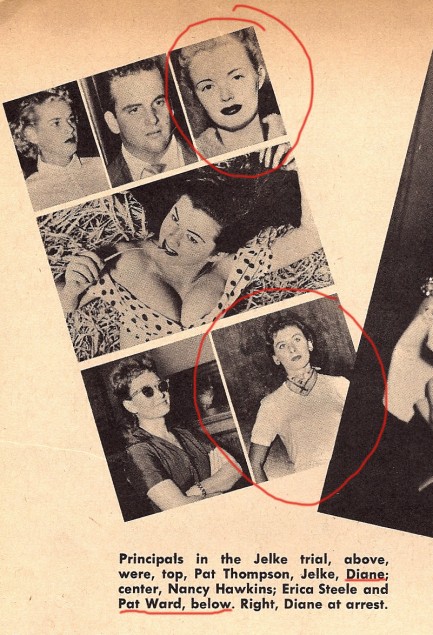
Today we have a January 1961 issue of Confidential for you, with cover stars Sammy Davis, Jr. and May Britt. Since we’ve already discussed Sammy and May of late, and even made her a recent femme fatale, we’ll skip past them and focus on another interesting story—the tale of Diane Harris, who shot to notoriety as a witness in the infamous Minot Jelke pimping trial of 1952. We wrote about it back in 2009—Jelke was an oleomargarine heir who was cut off from his trust fund and decided to turn his girlfriend Patricia Ward into a prostitute in order to make ends meet. Ward became known as the “Golden Girl of Vice” and “The Golden Girl of Café Society,” which is why it’s interesting that Confidential calls Diane Harris “The Golden Prostitute.” Apparently Jelke had the Midas touch.
Confidential wastes no time in its article. It begins: She gave herself a title… Lady Diana Harrington. The New York D.A. gave her another… the Golden Girl of Café Society. Houston police gave her a third, less flamboyant title… prostitute. Uh oh—the New York District Attorney’s nickname for Harris is identical to Patricia Ward’s nickname. After a few more paragraphs of reading, it becomes clear that Confidential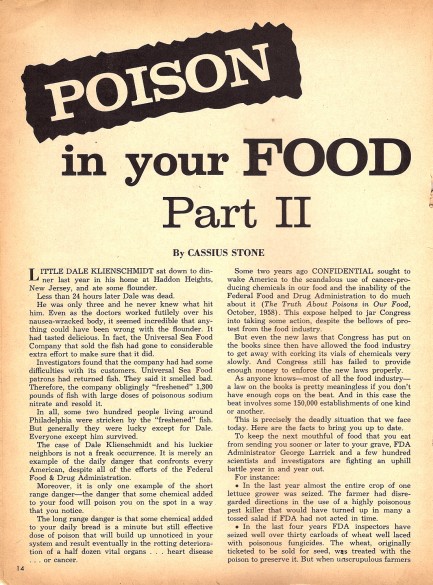
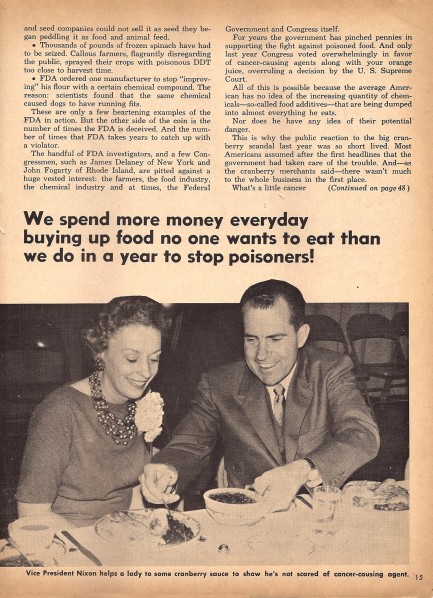
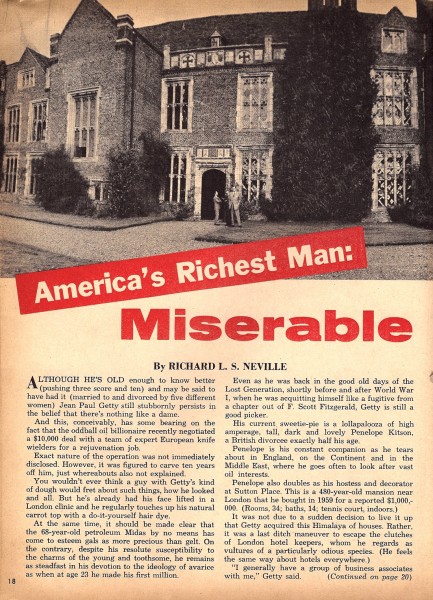
 believes the Golden Girl is Diane Harris—not Patricia Ward. While it’s true that Harris did use some aliases, including Lady Diana Harrington and Mary Lou Brew, nowhere is the name Ward mentioned as a pseudonym.
 point of a Hollywood motion picture misidentifying her. She was indeed Minot Jelke’s girlfriend, whereas Harris was just a fellow high dollar prostie (and corroborating witness), so perhaps some clever scribe, or even the writers of the 1995 movie, decided that such a catchy nickname would be better applied to the girlfriend. At least that’s the way it looks to us.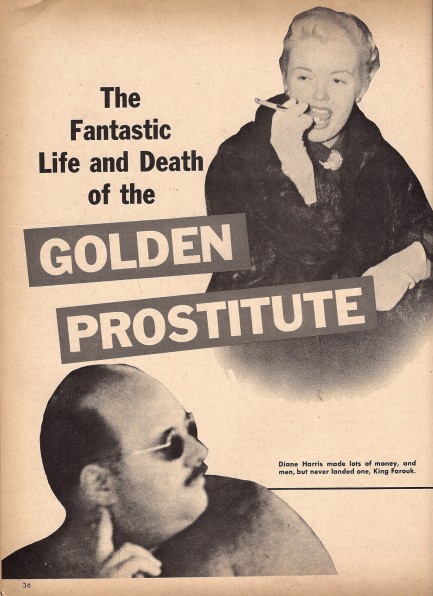
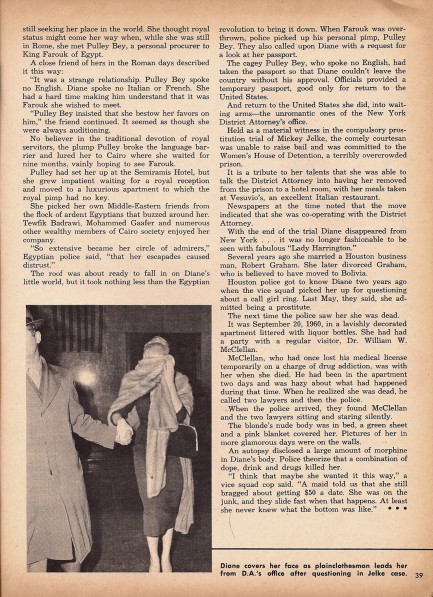 in more glamorous days were on the walls. An autopsy disclosed a large amount of morphine in her body. Police theorize that a combination of drink and drugs killed her.
| Hollywoodland | Nov 2 2012 |

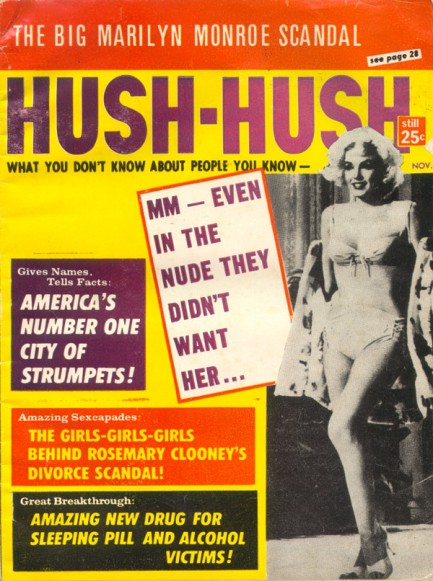
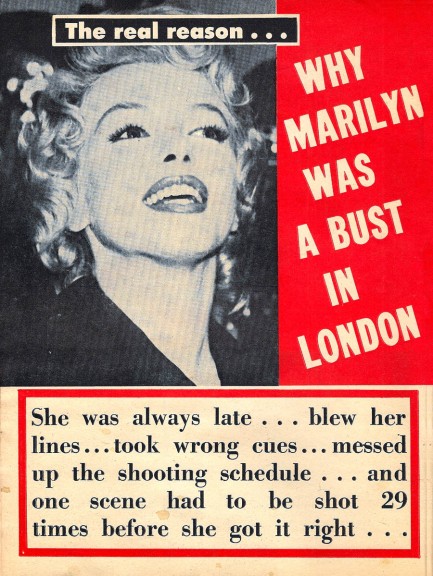
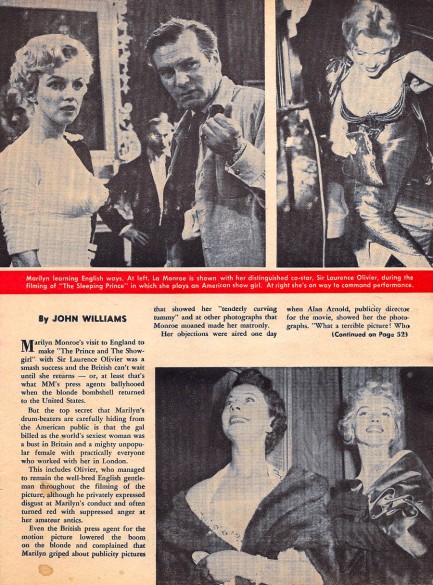
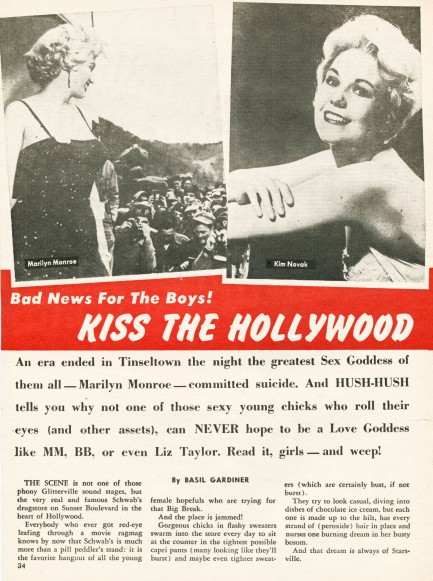
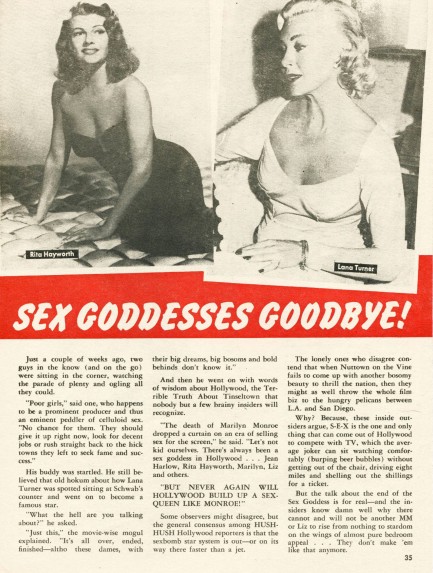
The story probably fueled ten million fantasies. Marilyn Monroe had stripped naked on the set of her last movie Something’s Got To Give. Monroe was eventually fired, the production was scrapped, and the footage was archived, but if it had been released, she would have been the first Hollywood actress to appear unclothed onscreen since the 1920s. It’s interesting, isn’t it, to reflect upon the effect a minority of prudes had on Hollywood? Because of them, Monroe’s unreleased scene, and Jayne Mansfield’s later nude scene in 1963’s Promises, Promises, merely brought American cinema back to where it had already been four decades earlier.
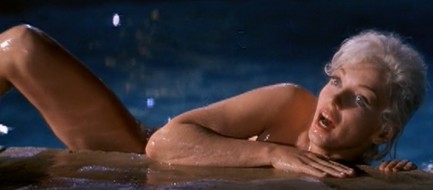 Hush-Hush was not the first magazine to break the story of Monroe’s peel down. Life had done that in June 1962, and included a couple of titillating photos. By the time Hush-Hush told the tale Monroe was two months dead. The blurb MM—Even In The Nude They Didn’t Want Her wasn’t strictly true. The production company Twentieth Century Fox most certainly did want her. A hospital stint prior to production had caused her to shed twenty-five pounds, bringing her to a weight she had never reached in her adult life, despite exercise and dieting. The newly svelte Monroe looked good and Fox was getting her cheap—$100,000.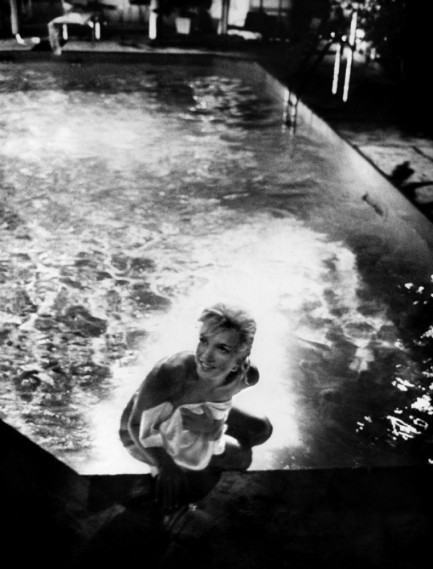

| Hollywoodland | Jul 27 2012 |

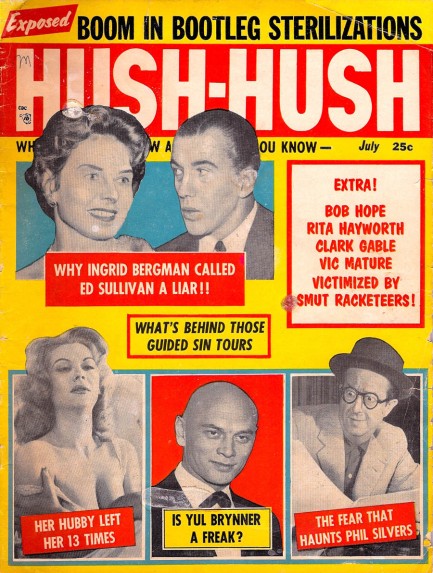
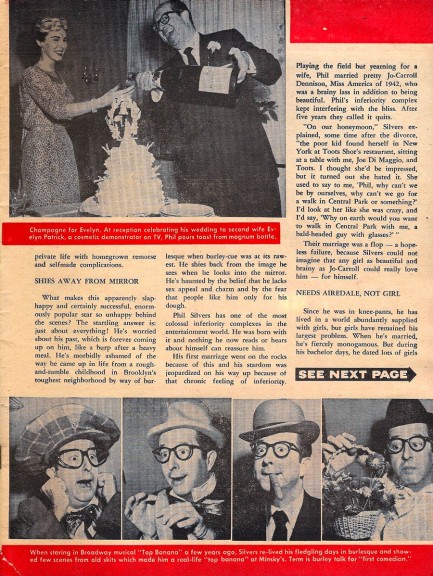
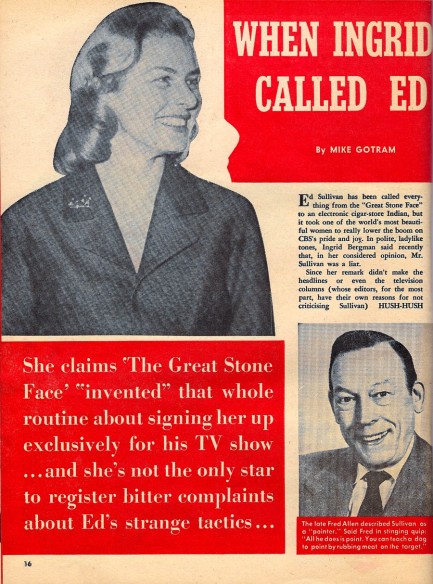
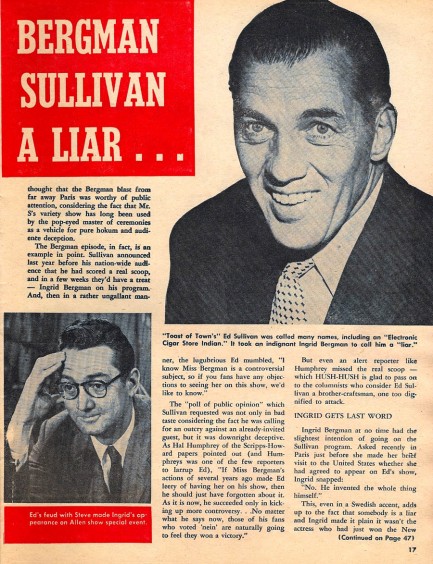
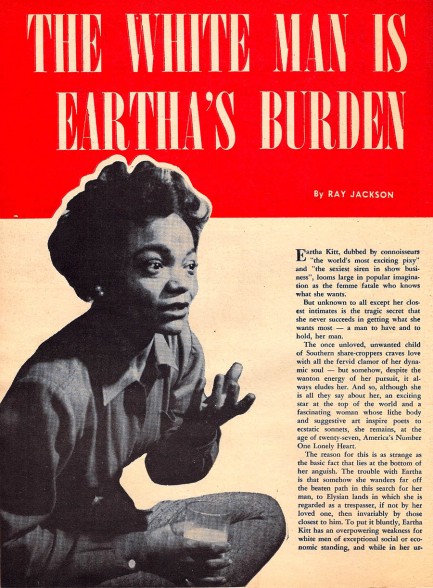
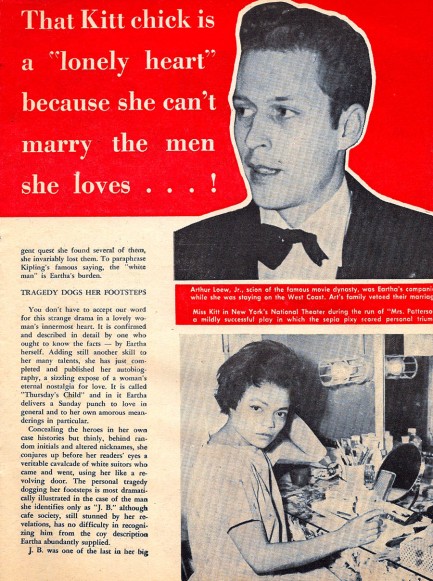
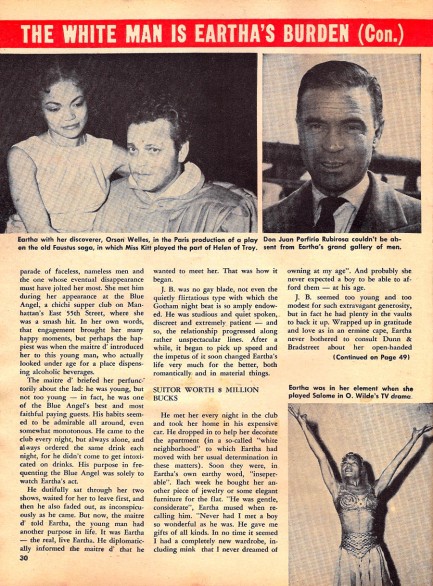
It’s been a while since we’ve featured Hush-Hush, but it’s one of our favorite high-end mid-century tabloids, so today we have a newly scanned issue from this month 1957. We learn that Ingrid Bergman called Ed Sullivan a liar for falsely claiming she was booked on his show, and that Phil Silvers was terrified that he would lose his fame, and that Eartha Kitt was destined to forever be lonely because she was interested only in white men.
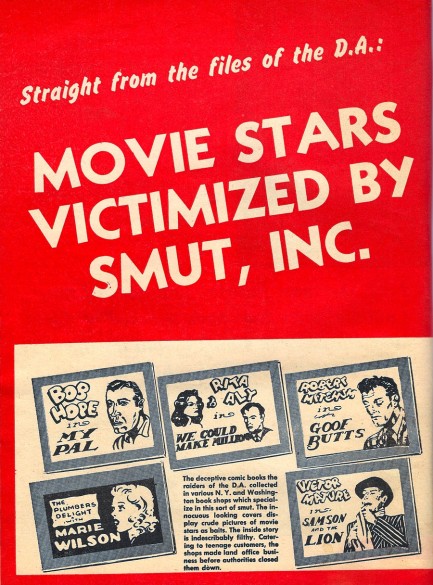
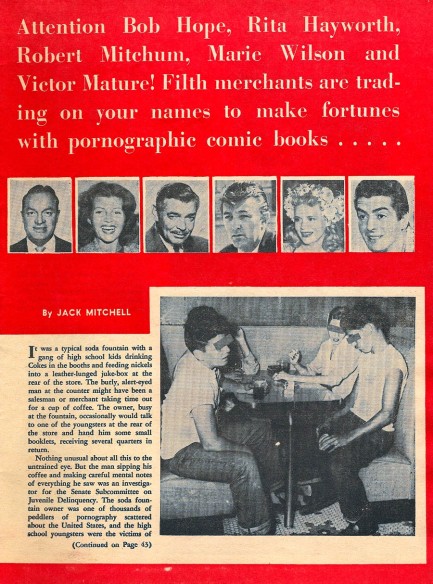
But the fun story here is the one headed: “Movie Stars Victimized By Smut, Inc.” The article is about Tijuana bibles, and the many celebs who had been unknowingly featured in them. We’ve already posted a few bibles, thus you probably already know that they’re pornographic eight-page comic booklets sold clandestinely in drug stores and soda fountains. Their makers felt free to borrow the likenesses of public figures of the day, and Hush-Hush offers up examples starring Bob Hope, Marie Wilson, Robert Mitchum and others. The article describes them as “unbelievably filthy booklets showing the basest sexual acts and perversions.”
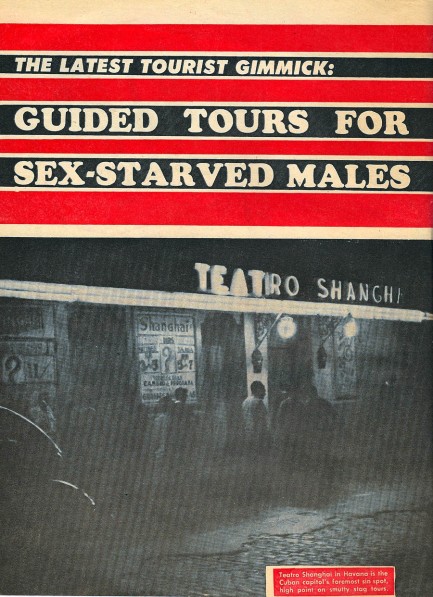
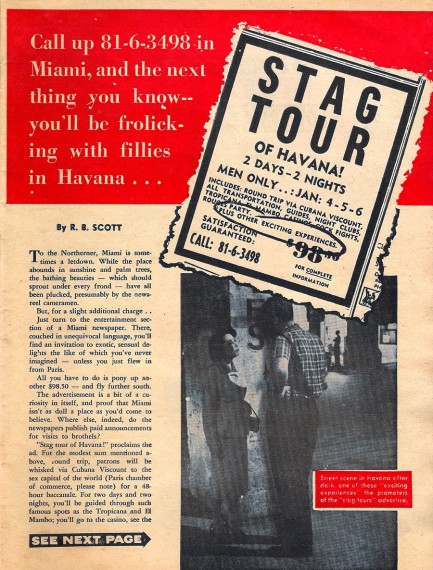
Well, true enough. Their distribution was so worrisome that the FBI got involved, and while the feds did manage to make some arrests, the flow of booklets remained pretty much uninterrupted. We can only assume that Hush-Hush’s exposé made them even more popular, which is kind of how it works with porn, right? Someone gets on their soapbox about it and people walk away thinking, Hmm, I better see one of these with my own eyes. Of course, Hush-Hush didn’t dare reprint the interior pages, but we have no such inhibitions here at Pulp Intl. See the next post, and see here.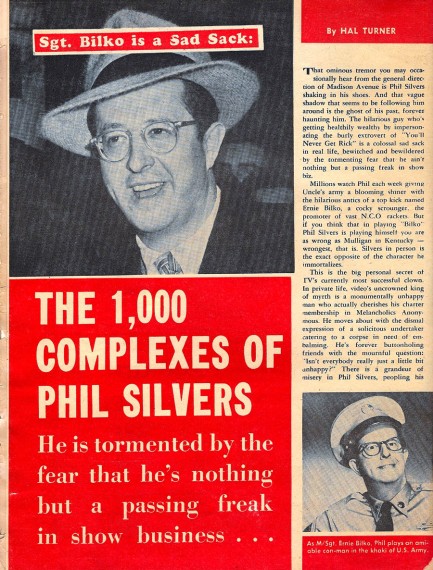
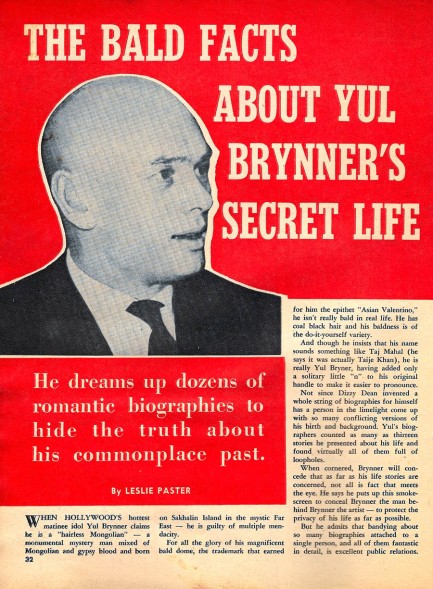
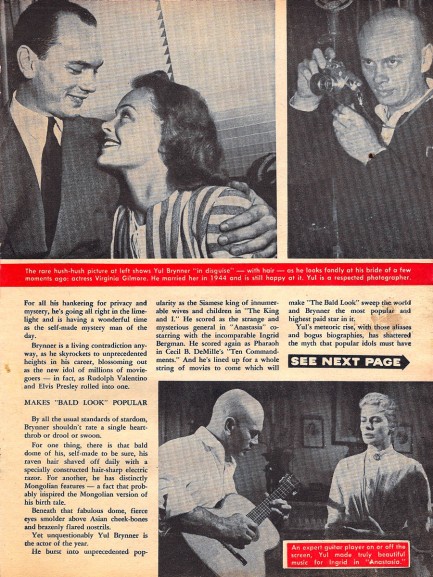
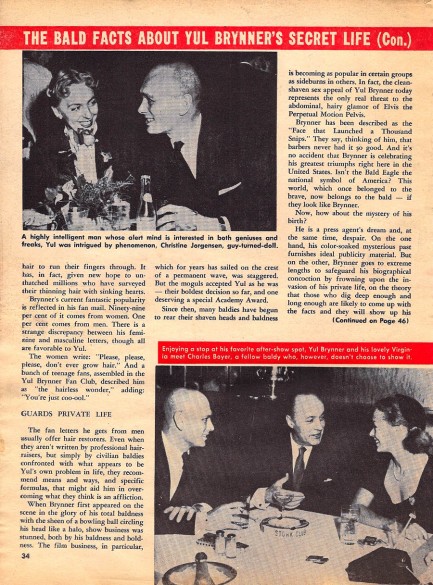
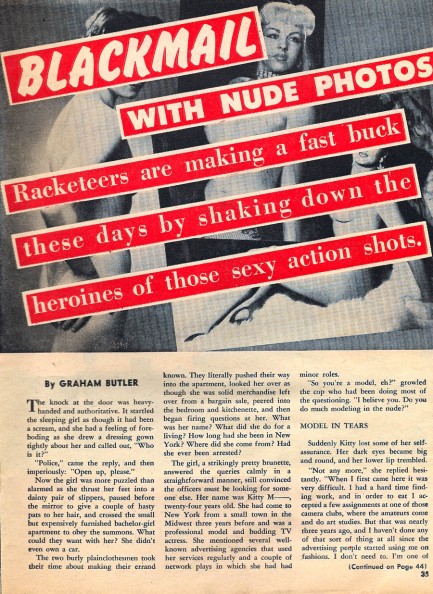
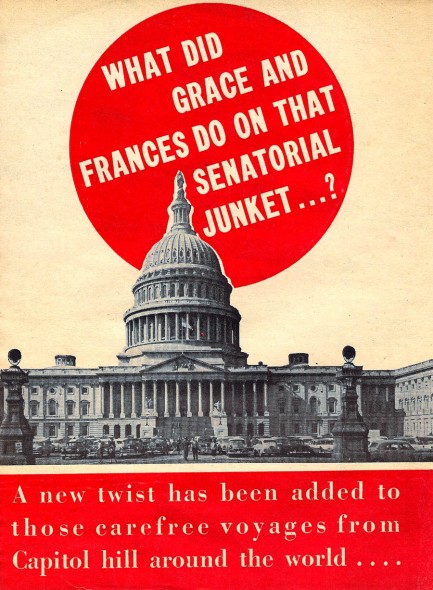
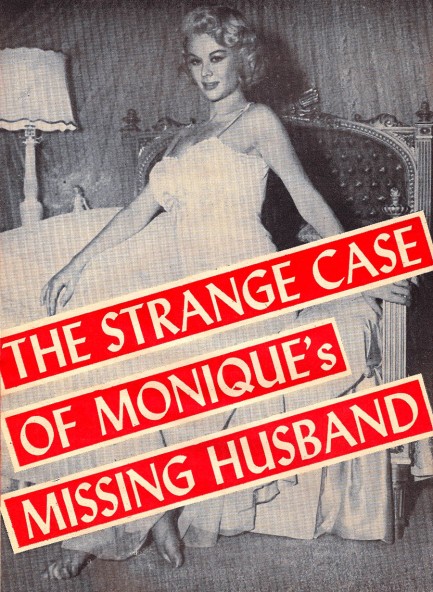
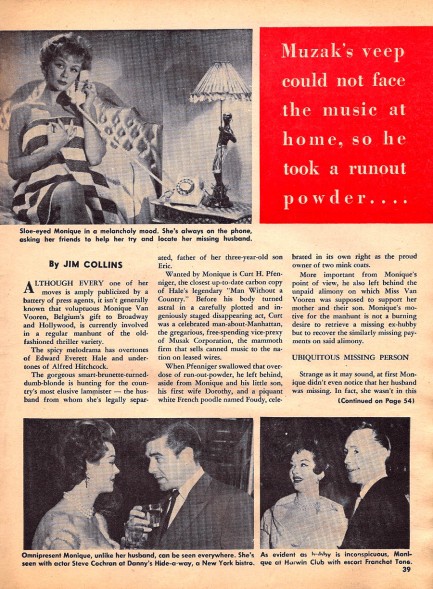

| Sex Files | Sep 13 2011 |

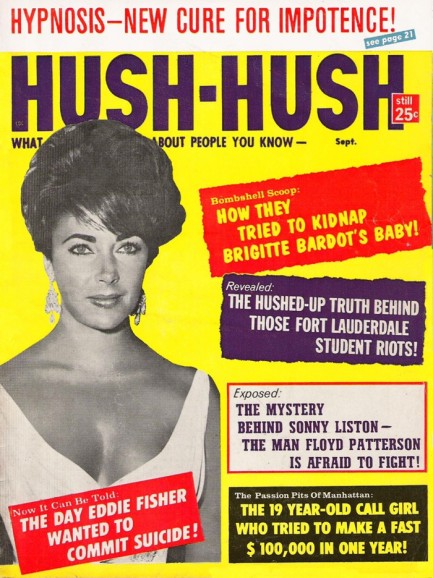
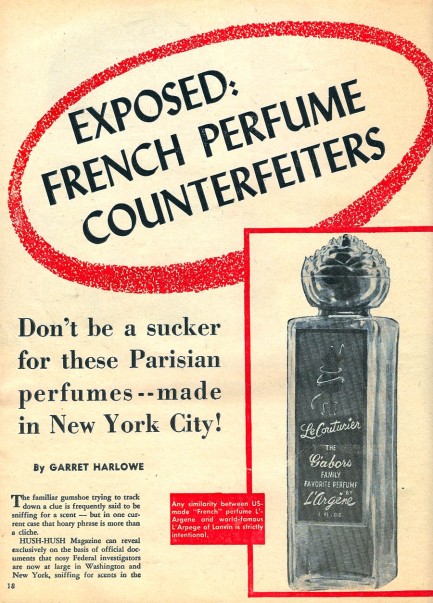
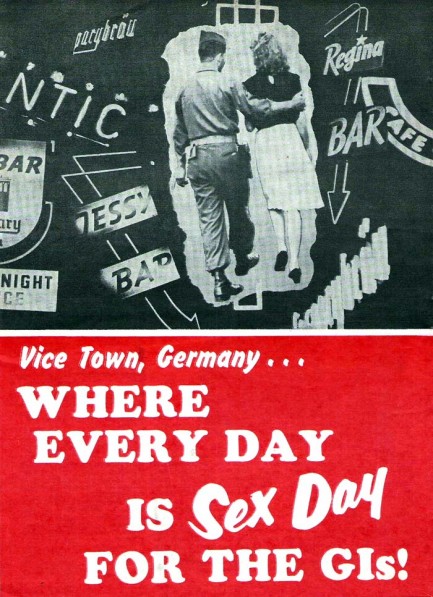
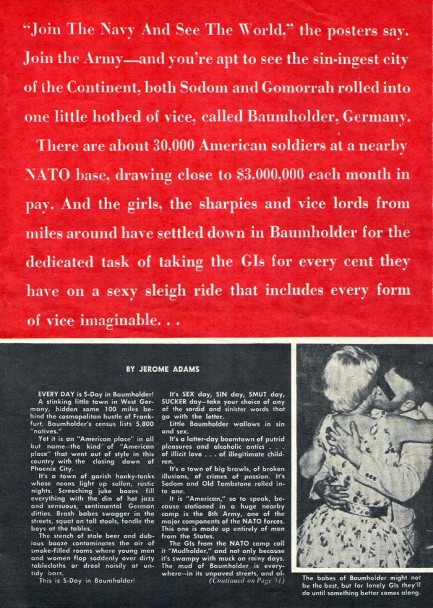
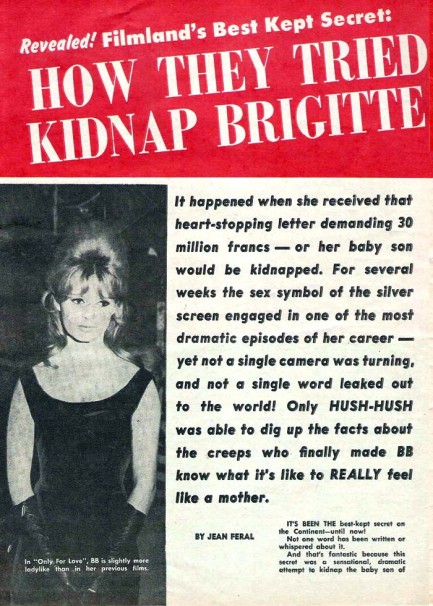
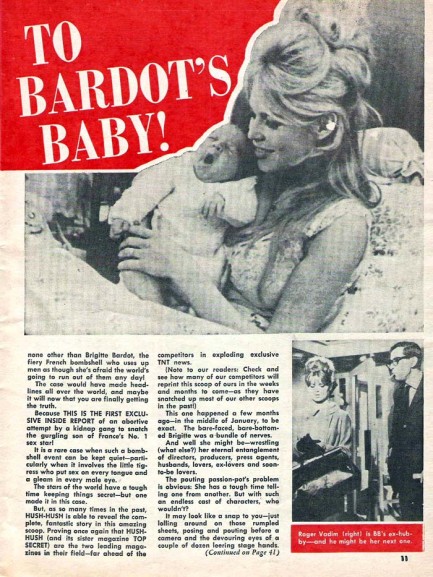
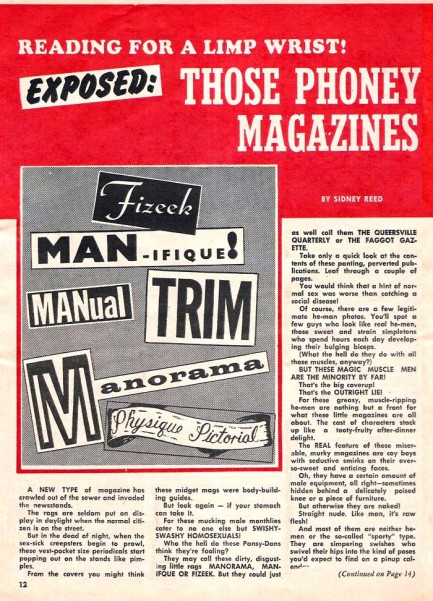
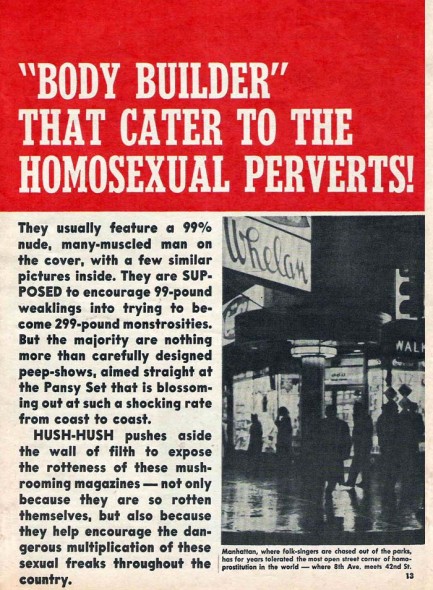
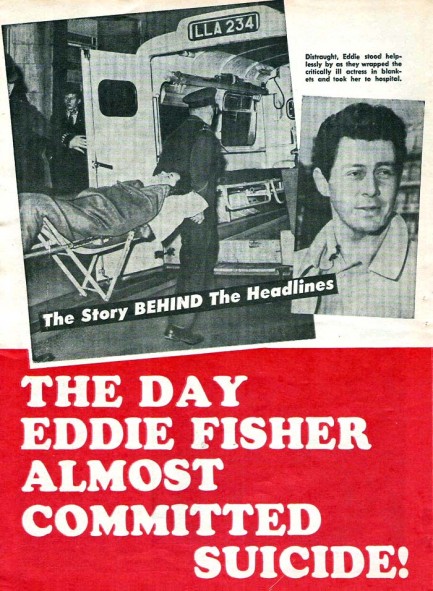
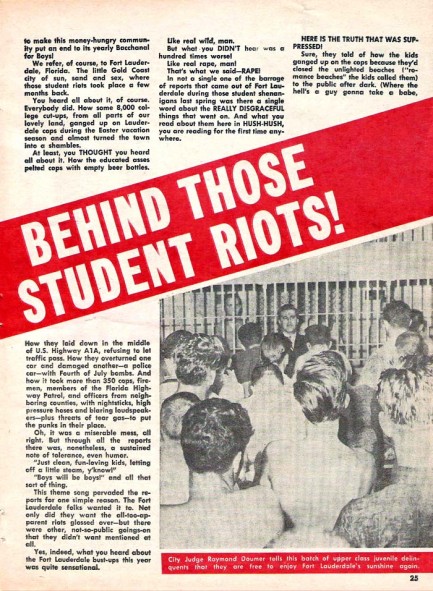
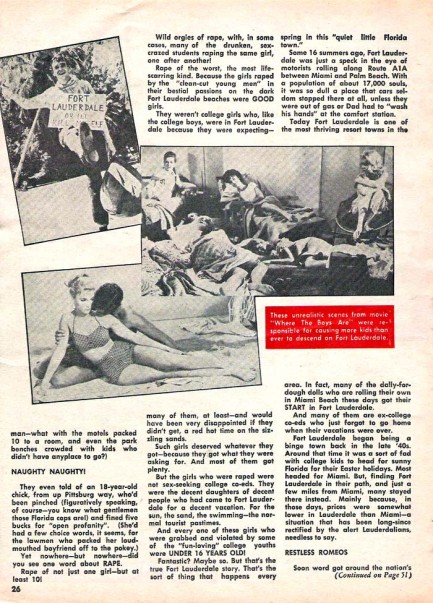
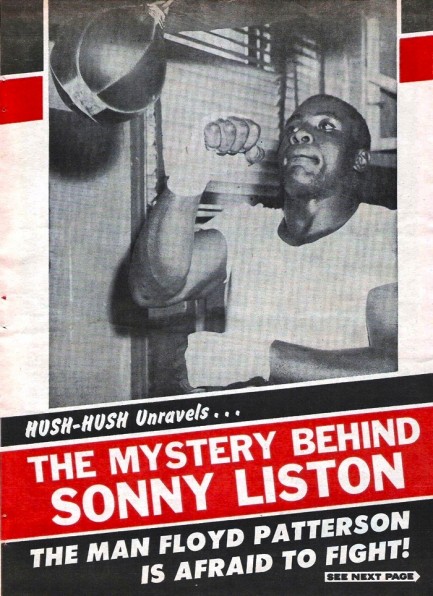
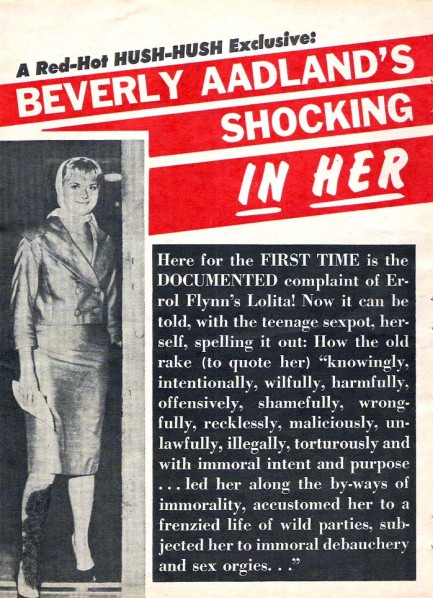
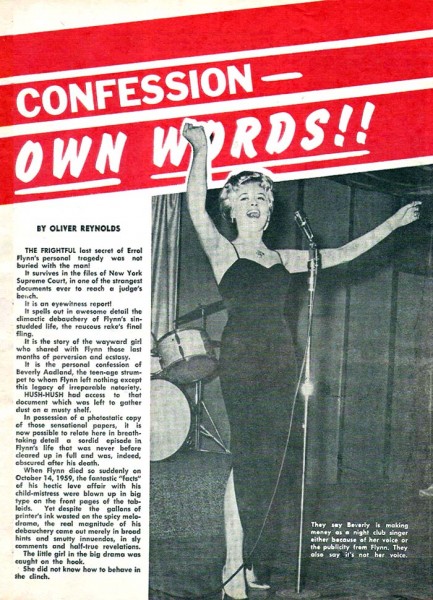
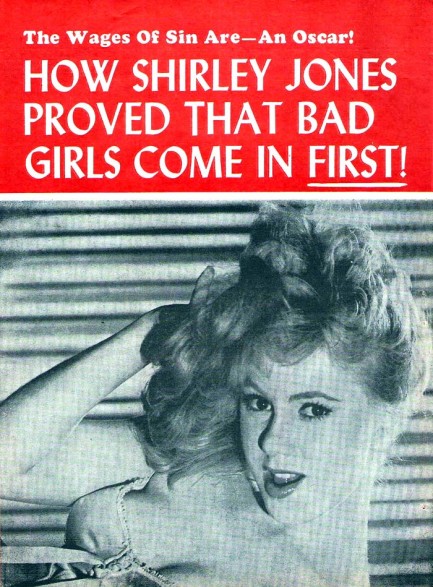
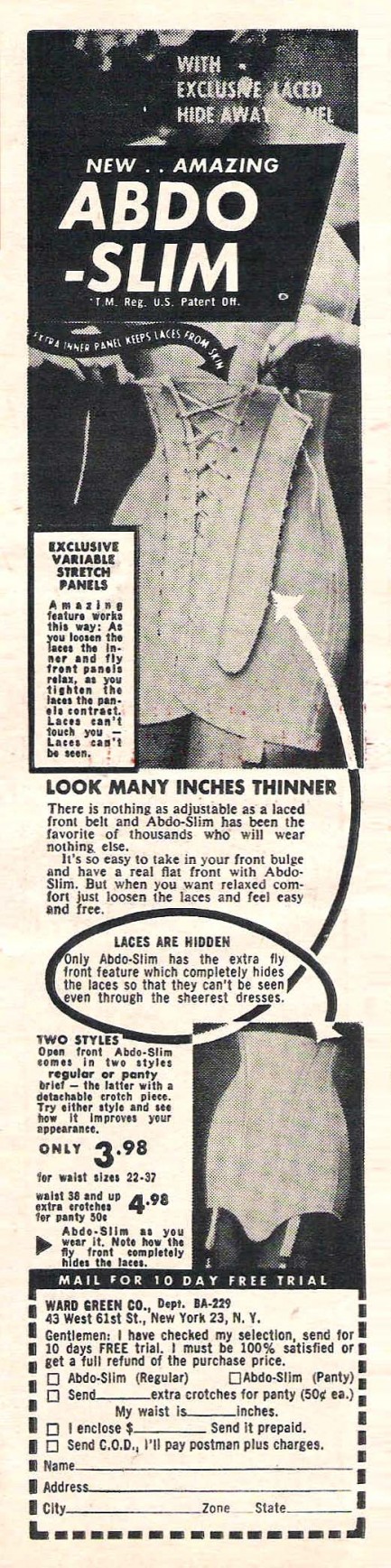
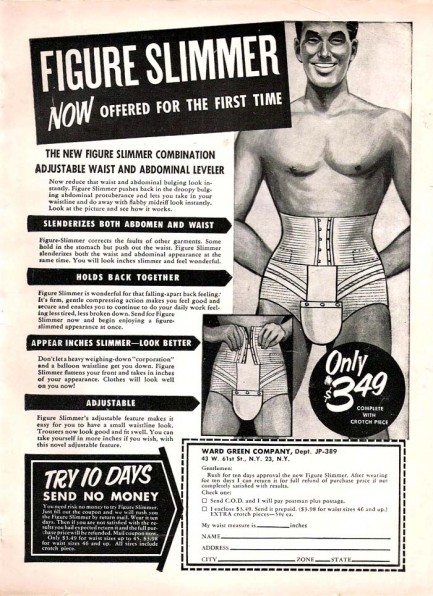
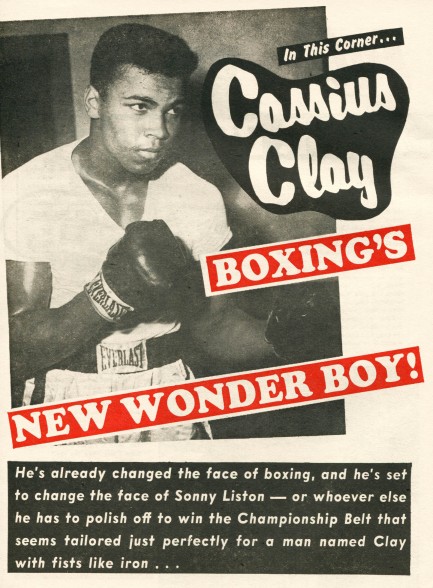
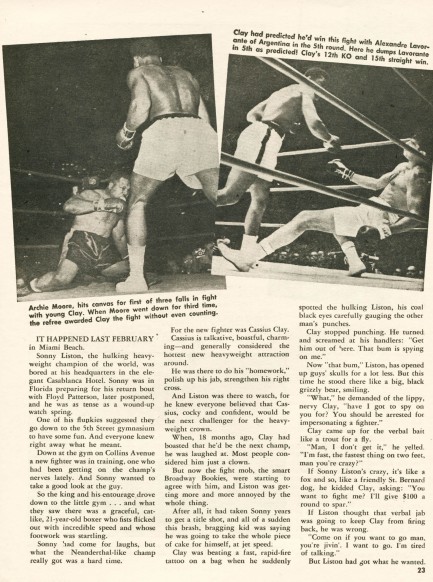
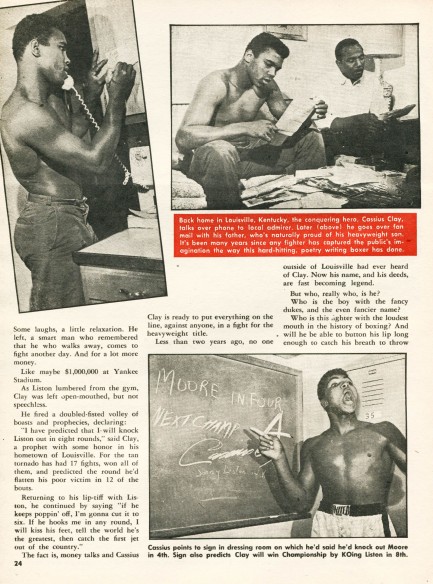
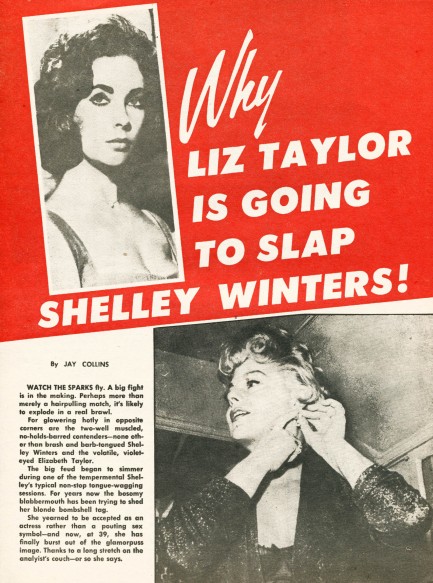
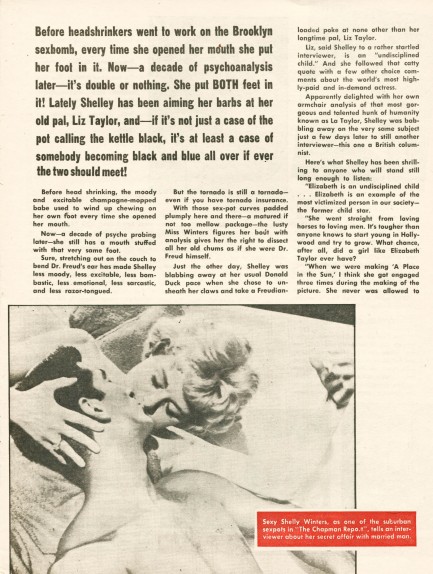
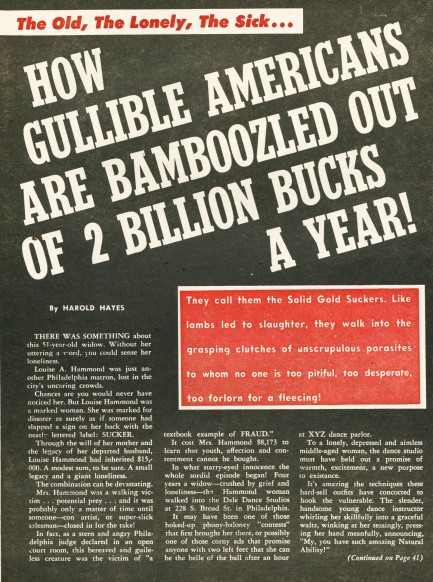
Mid-century scandal rag Hush-Hush gets all riled up in this September 1961 issue featuring cover star Elizabeth Taylor. Inside, readers are treated to exposés of Taylor, Eddie Fisher, Brigitte Bardot, Sonny Liston, and Beverly Aadland, as well as shocking tales about goings-on in Fort Lauderdale, Florida, and Baumholder, Germany, but it’s in the article on bodybuilding magazines that Hush-Hush truly gets out the knives.
Because erotic publications openly catering to gay males would have caused a legal firestorm in the early 1960s, various enterprising capitalists published gay content in the guise of bodybuilding magazines, using health and fitness as a cover for imagery designed to sexually titillate. Hush-Hush journo Sidney Reed jumps all over this practice in his article, informing readers about the existence of these magazines in terms so abusive we’ve never seen their equivalent in print anywhere. He uses phrases like “sex sick creepsters” and “lunatic depravity”, and there are many more insults, so colorful, so vicious, and piled so high that it begins to feel like satire.
But Reed is 100% serious, perhaps even obsessed. He finds, in one of the magazines he located, an ad for nude photographs of a fourteen-year-old boy, then tars all gay men with that brush, while of course sparing heterosexuals from the same treatment even though the trade in pre-pubescent girls was well-established and well-documented by that time. It’s worth pointing out once again that Hush-Hush wasn’t a fringe publication—it sold millions of copies a month. And so you get a sense of some very prevalent attitudes about homosexuality in the early ’60s. We have many scans below, and more issues of Hush-Hush coming later.
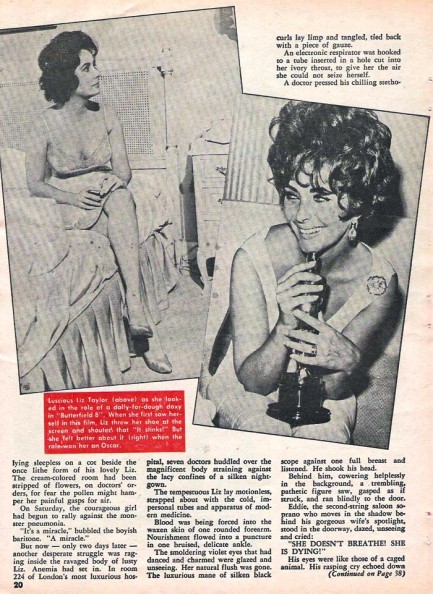
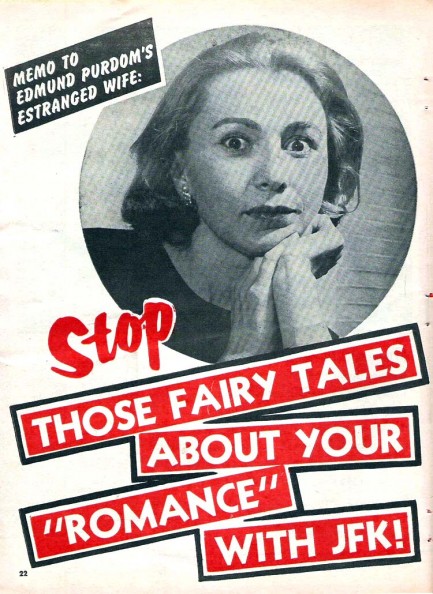
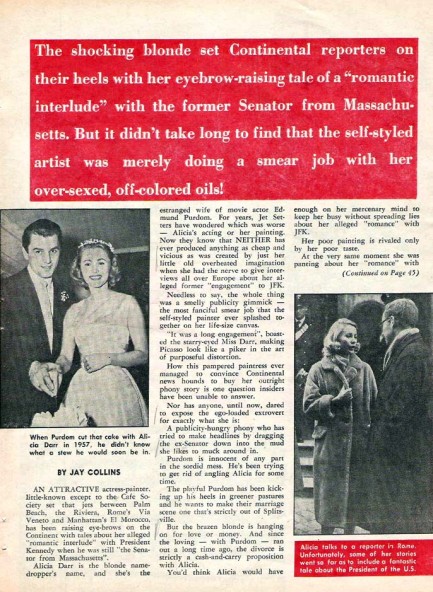
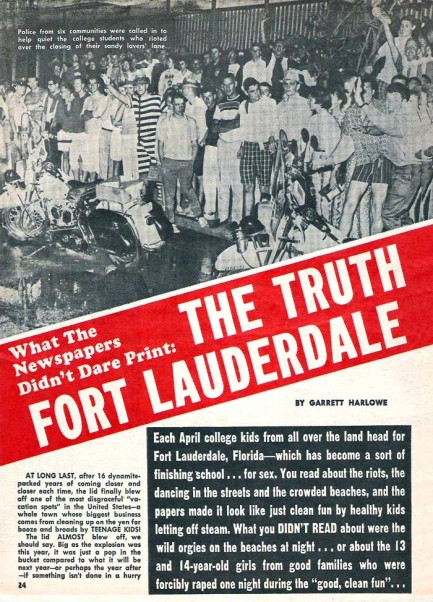


| Hollywoodland | Aug 5 2010 |

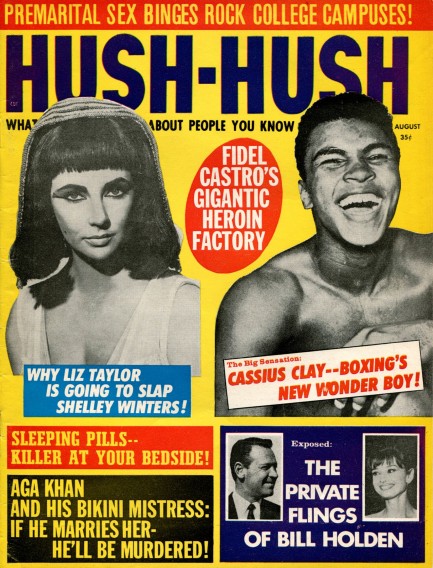
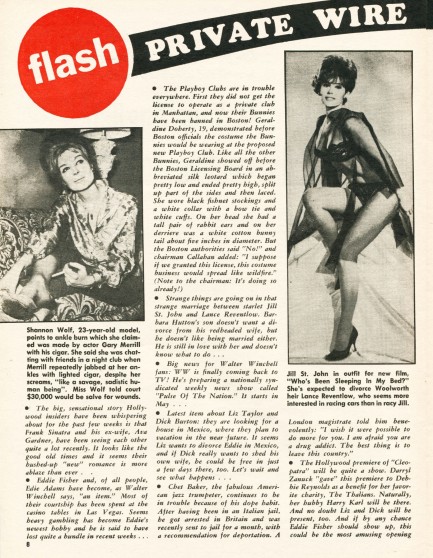
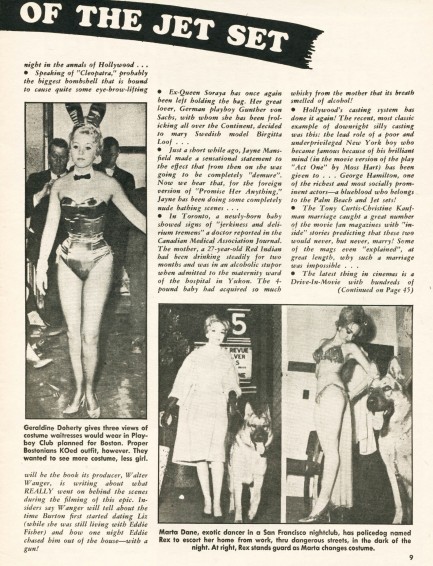
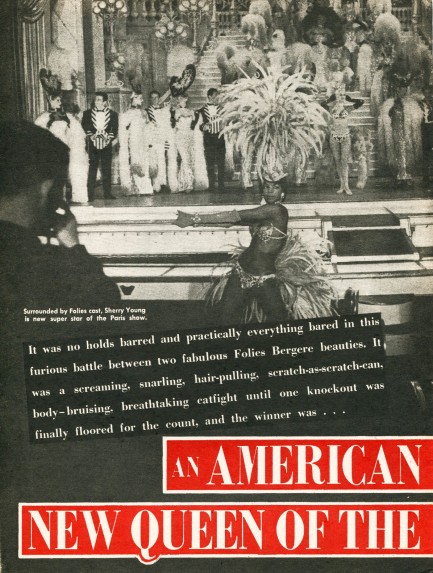
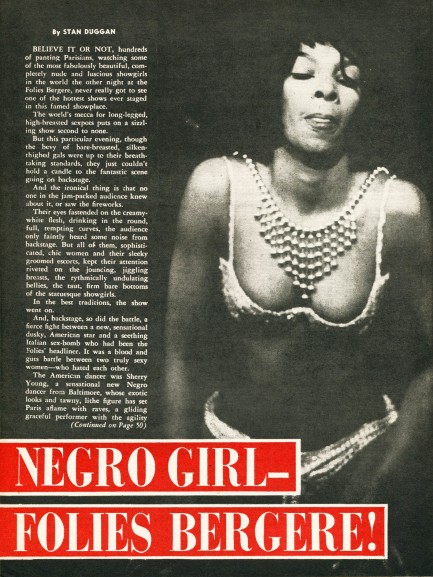
Hush-Hush magazine goes for broke in this issue from August 1963, offering up a slate of tales narrated in their usual breathless style. First, they tell us how Roddy McDowall took nude photographs of Elizabeth Taylor on the set of Cleopatra and tried to sell them, but was thwarted when she “erupted like Mount Vesuvius”. They then demonstrate the limits of their imaginations by telling us that Italian singer Silvana Blasi reacted like “an uncontrollable Mount Vesuvius” when an African-American dancer was hired at the Folies Bergère. Two volcano similes in one issue is bad enough, but the same mountain?
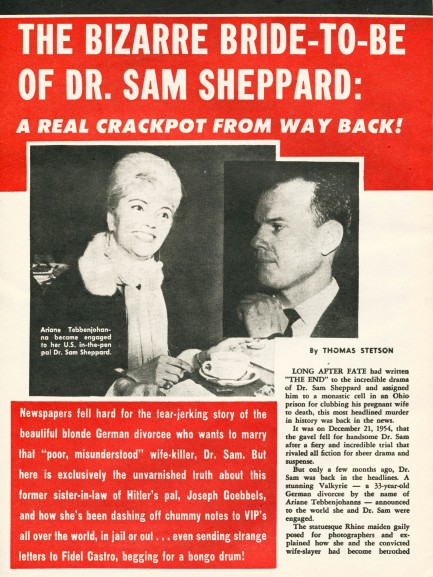
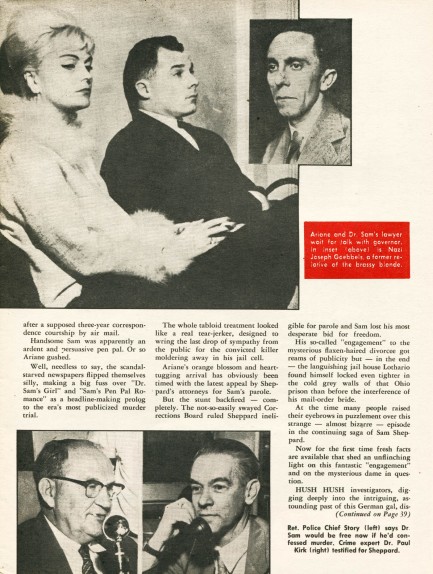
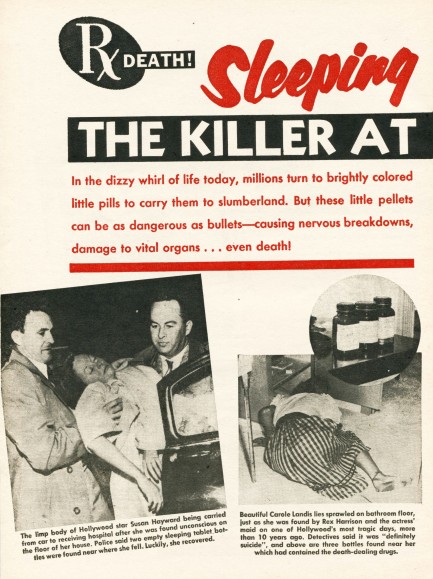
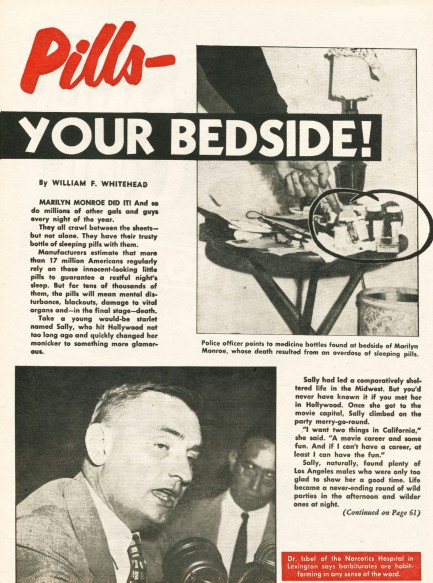
For investigative journalism, Hush-Hush shows us photographs of a dead Carole Landis and an unconscious Susan Hayward, and concludes that sleeping pills are bad. And finally, the magazine stokes the fires of paranoia with two stories: in the first, they explain how Fidel Castro plans to conquer America with heroin, which he’s growing with the help of two-thousand Chinese advisors; in the second, they reveal that the second wife of Dr. Sam Sheppard is a Nazi who plans to revive the Third Reich, and that she’s being helped by—you guessed it—Fidel Castro, who is somehow a communist and a Nazi. Neat trick that.
As we’ve mentioned before, though these stories are laughable, people actually believed them, and believed them by the millions, as evidenced by Hush-Hush’s sales figures. The lesson is clear: the choice between popularity and truth is really no choice at all.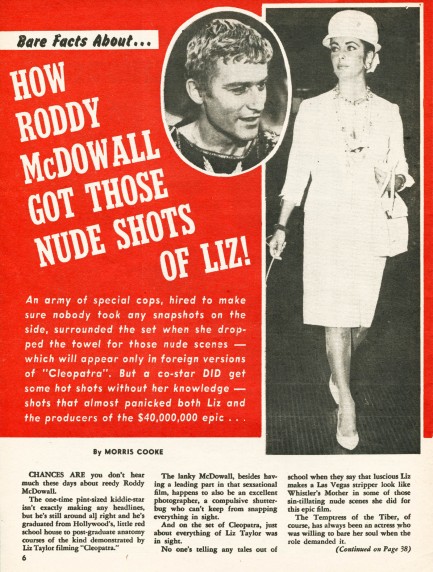

| Intl. Notebook | Mar 24 2010 |

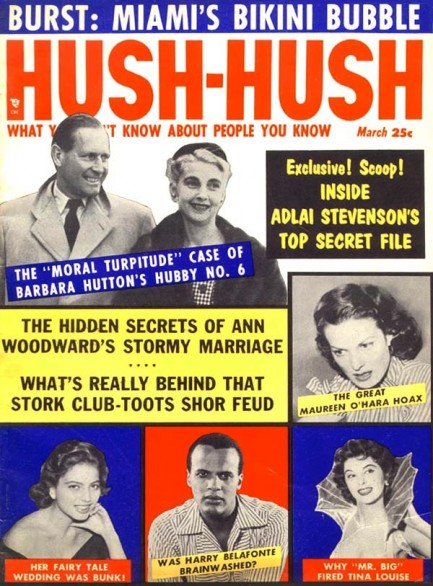
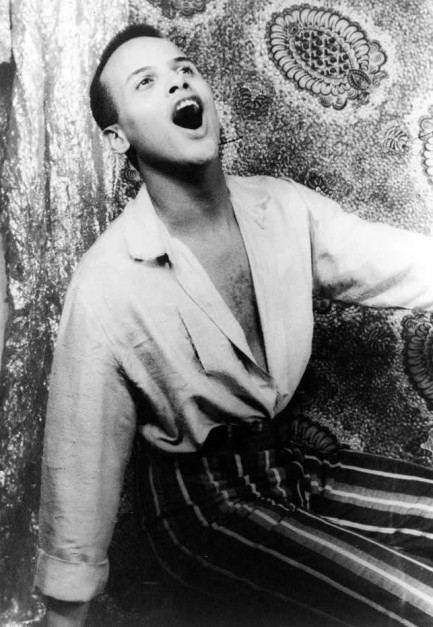 Harry Belafonte gets a spotlight as well, but for political reasons. By 1956 he was a leading figure in the American civil rights movement and was highly critical of U.S. domestic and inter-national policy, and so Hush-Hush does what any respectable red-baiting scandal rag would do—suggest he was brainwashed by communists. While the story is pure baloney, it did turn out to be prescient in one sense—Belafonte did begin explicitly endorsing communist ideals, and remains a supporter of Fidel Castro and other leftist leaders today.
| Hollywoodland | Mar 2 2010 |

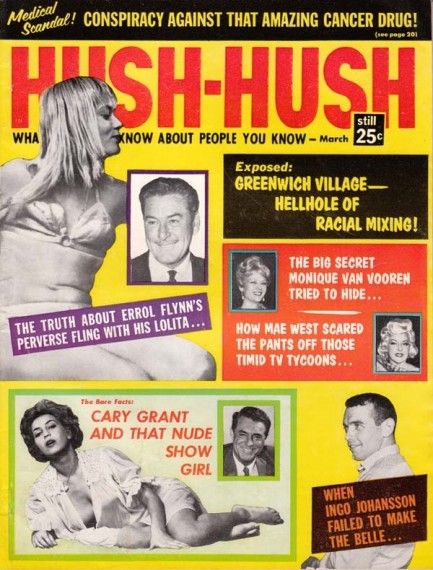
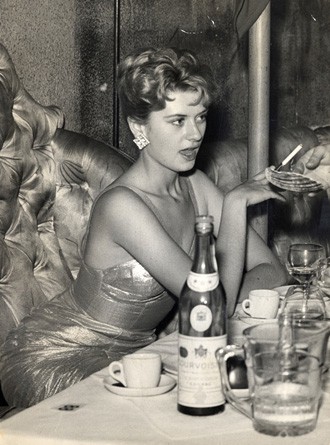
Above is a Hush-Hush from March 1960 with a spotlight on Errol Flynn’s “perverse fling with his Lolita.” They’re talking about fifteen-year old Beverly Aadland, below, who we’ve mentioned before. The article is the beginning of a long tradition of journalists writing the truth—or at least their version of it—about Flynn. Since his death he’s been tagged as a bisexual, a fascist, and a Nazi spy. As recently as 1988 Aadland offered her truth about Flynn in a People interview, and a 1990 book by biographer Tony Thomas rejected the fascist claims, pointing out instead that Flynn had left-leaning politics, though he had made racist comments in letters and conversation.
 Thomas claimed Flynn’s true feelings were evidenced by his support for the Loyalists during the Spanish Civil War and his friendship with Fidel Castro. Flynn has also been depicted with assorted personality quirks in films such as 1996’s The Australian, with guy Pearce, and 2004’s The Aviator, with Leonardo DiCaprio. So, suffice it to say that he’s never gone out of style. But as far as whose story to believe concerning who Flynn was, we can’t say. We doubt the conflicting accounts will ever truly be settled—with the passing of Beverly Aadland just last month, all the people who knew Flynn personally are dead.

| Hollywoodland | Feb 18 2010 |

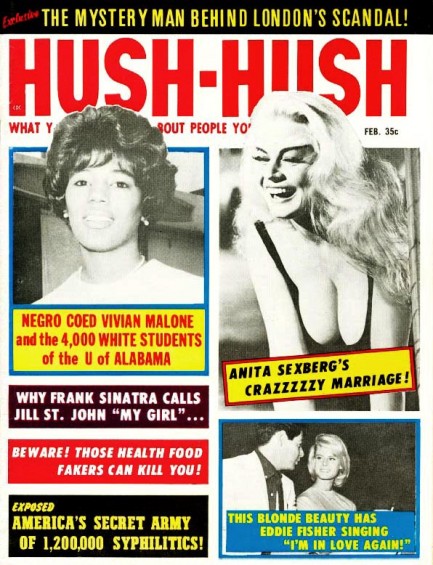
February 1964 Hush-Hush with Anita Ekberg and Vivian Malone. Malone was the woman who Alabama Governor George Wallace barred from entering the University of Alabama during the fall of 1963 after the U.S. Supreme Court ruled segregation unconstitutional. Wallace had state troopers at his back that morning, but when John F. Kennedy nationalized the Alabama National Guard later that day, they escorted Malone to school and the troopers were forced to step aside. Thanks to the court ruling, and Kennedy’s executive order, Malone earned a degree and worked in the U.S. State Department for thirty-one years.
Interestingly, her brother-in-law is the current U.S. Attorney General, Eric Holder. The cover blurb on Malone reads vaguely sexual, but of course the story has nothing to do with that. The Ekberg story is similarly smoke sans fire. You also get a feature on Frank Sinatra and Jill St. John. The two worked together in Come Blow Your Horn in 1963 and Tony Rome in 1967, but most sources say their brief involvement didn’t commence until 1971. However St. John was part of Sinatra’s “in-crowd” for years, and to be seen palling around with Frank was to be accused of waking up in his bed.
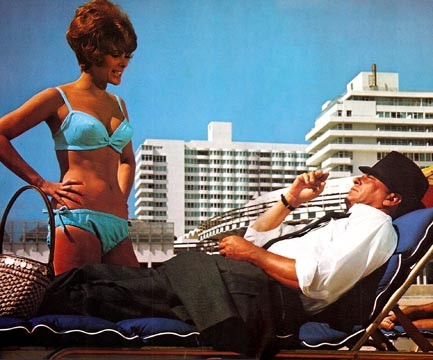
Every actress in Hollywood knew that, and few seemed terribly concerned. Finally, after making readers think about sex for most of the issue, Hush-Hush makes them afraid to do it themselves with a story on America’s syphilis epidemic. The mid-century tabs were very much like slasher movies in that way—in the end, sex must always be punished. We found a nice shot on Ebay of Sinatra and St. John together on the set of Tony Rome, and we've posted it below. Our next trick will be to try and find a tabloid that doesn't have Sinatra inside. We think we have our work cut out for us.