| Hollywoodland | Mar 21 2024 |

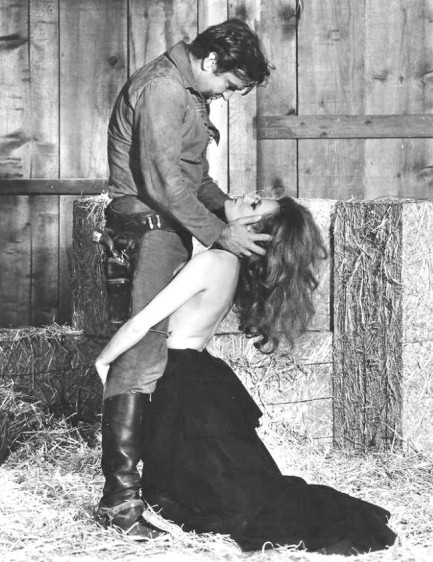
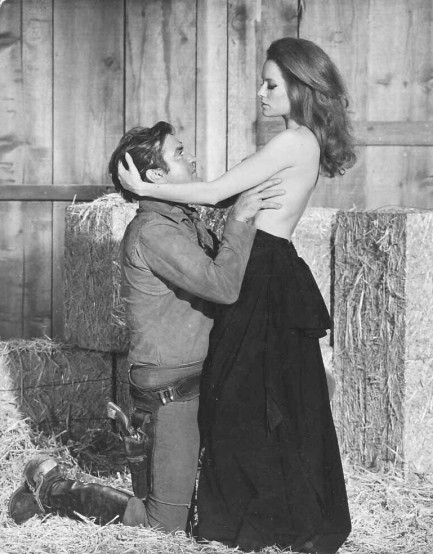 Rod Taylor and Luciana Pauluzzi swap subordinate positions for 1967's Chuka.
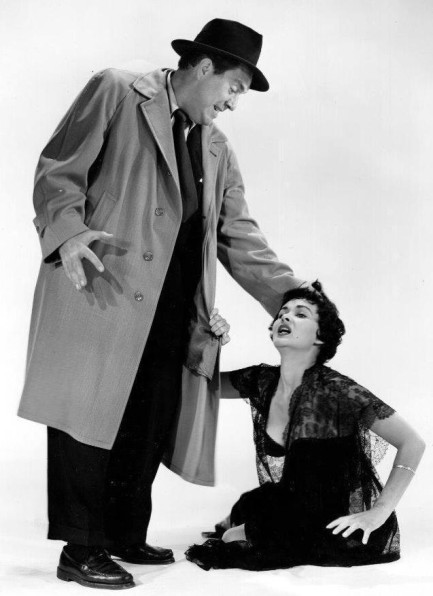 Edmund O'Brien goes for the time honored hair grab on Marla English for 1954's Shield for Murder.
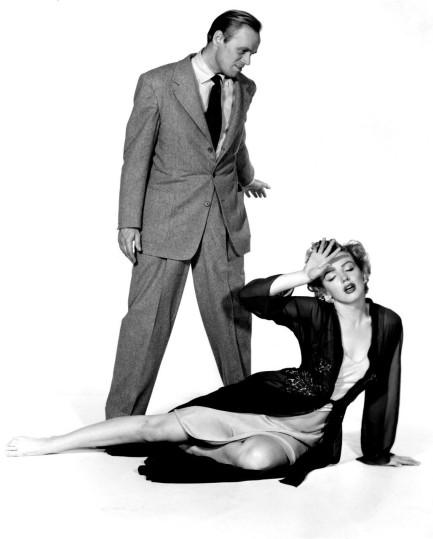 Marilyn Monroe swoons as Richard Widmark snarls for Don't Bother To Knock, 1952.
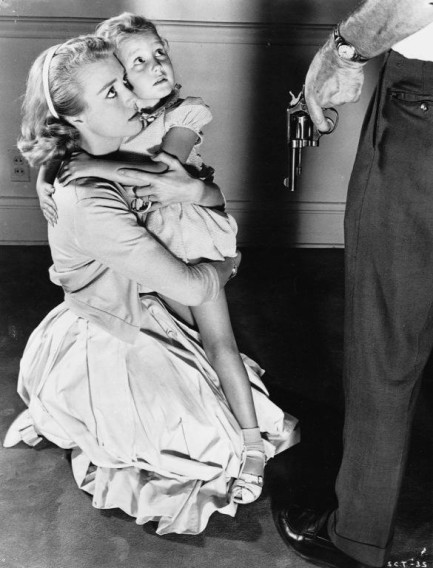 Inger Stevens and Terry Ann Ross for Cry Terror, an adaptation of a novel we talked about a few years ago.
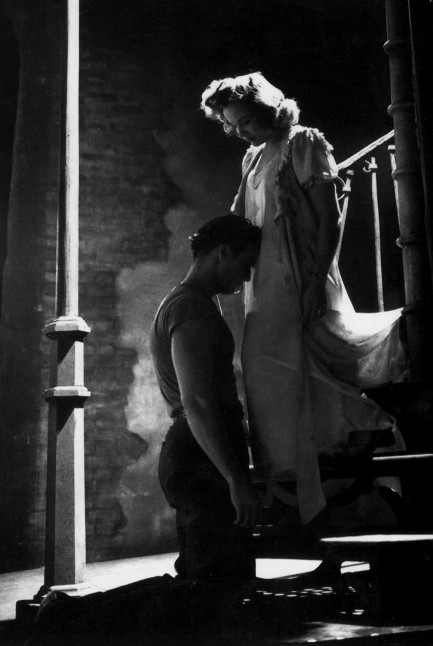 Kim Hunter soothes an overheated Marlon Brando in a promo for 1951's A Streetcar Named Desire.
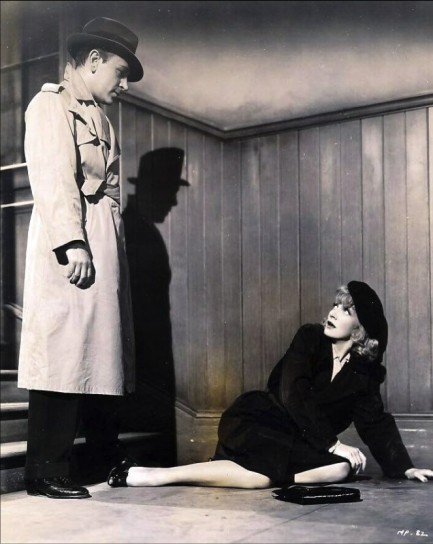 George Raft menaces Marlene Dietrich in the 1941 comedy Manpower.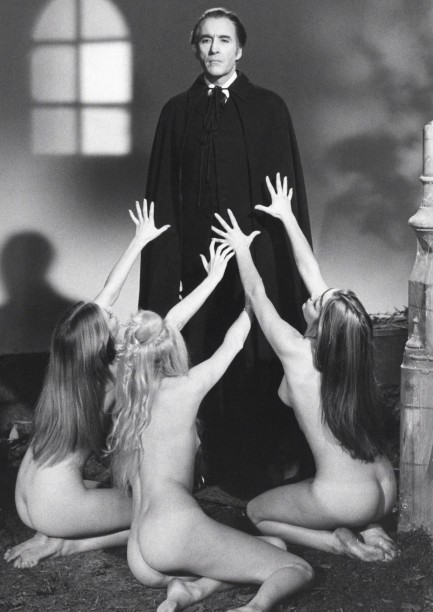
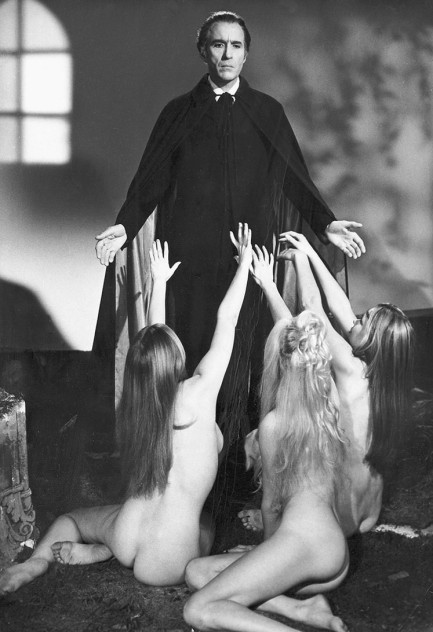 As promos go, these actually make sense. They show three unidentified models mesmerized by vampire Christopher Lee for 1970's Taste the Blood of Dracula.
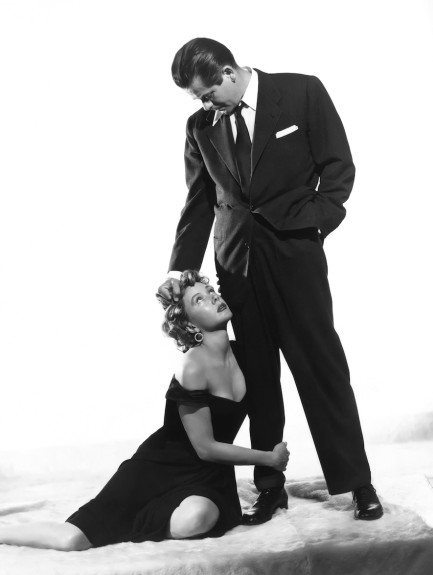
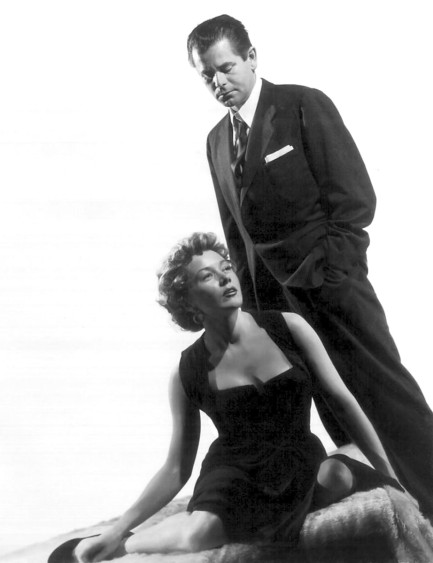
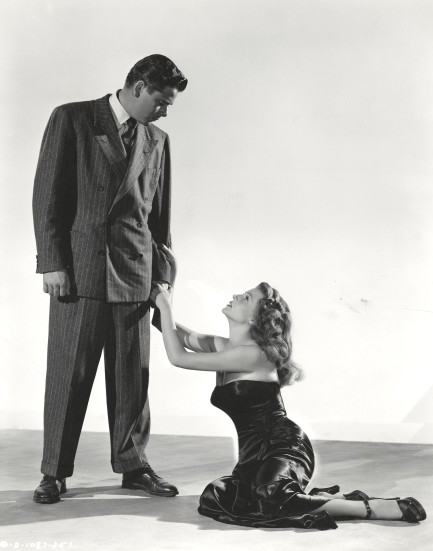 Glenn Ford is at it again, this time looming over Rita Hayworth for the 1946 classic Gilda.
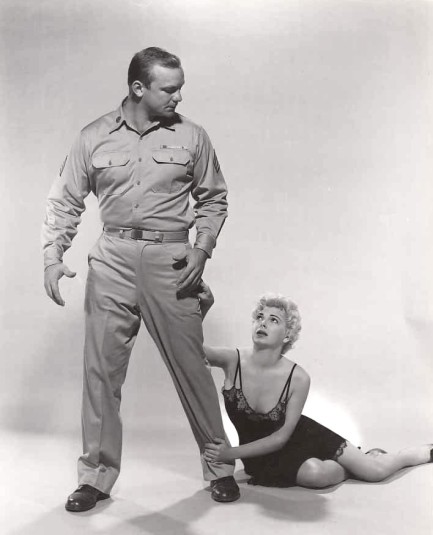 Aldo Ray and Barbara Nichols for 1958's The Naked and the Dead.
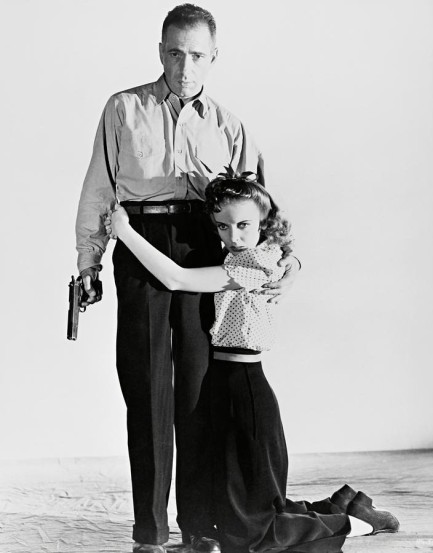 This one shows less domination and more protectiveness, as Humphrey Bogart prepares to defend Ida Lupino for High Sierra, 1941.
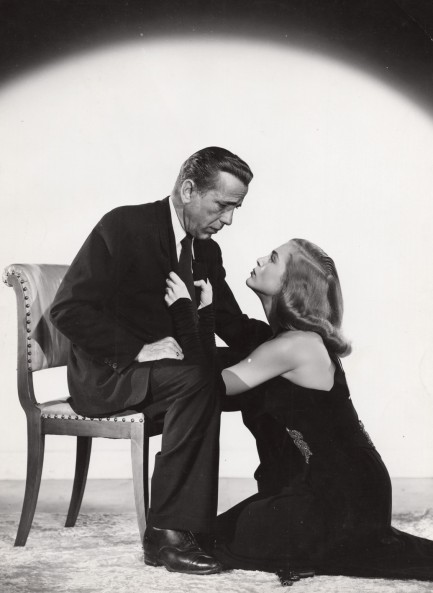 Humphrey once more. Here he's with Lizabeth Scott for Dead Reckoning, 1947.
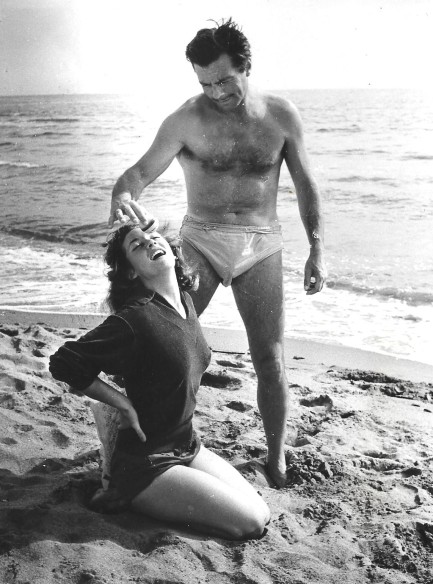 This shot shows Brazilian actress Fiorella Mari with an actor we can't identify in a movie we also can't identify.
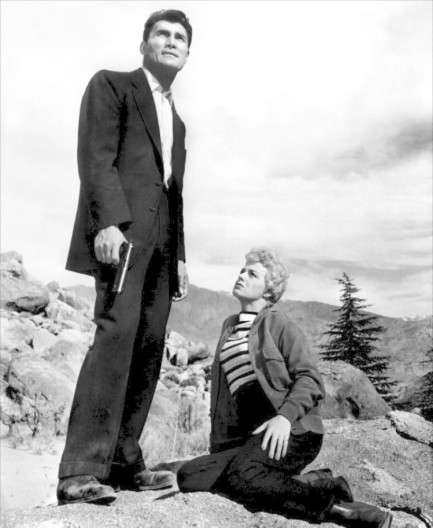 Shelly Winters and Jack Palance climb the highest mountain together for I Died a Thousand Times, 1955.
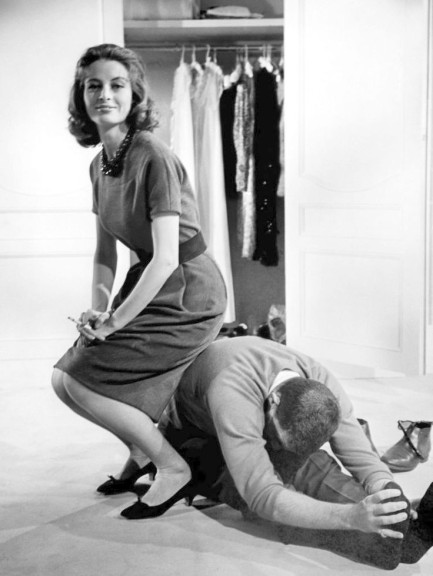 As we said, we didn't find as many examples of kneeling men, but we found this gem—Cappucine makes a seat of director Blake Edwards on the set of The Pink Panther in 1963. Does this count, though? While Edwards is subordinate, he isn't kneeling and it really isn’t a legit promo.
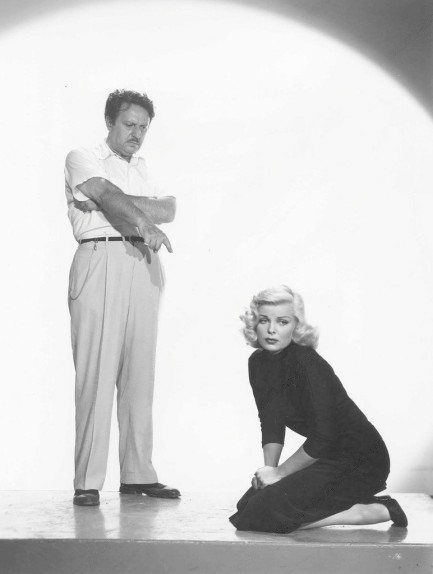 And lastly, in a curious example, Hugo Haas seems to tell Cleo Moore to stay in a shot made for 1953's One Girl's Confession.


| Hollywoodland | Mar 18 2024 |



| Hollywoodland | Feb 21 2024 |

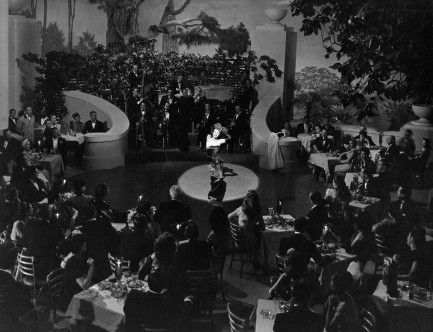
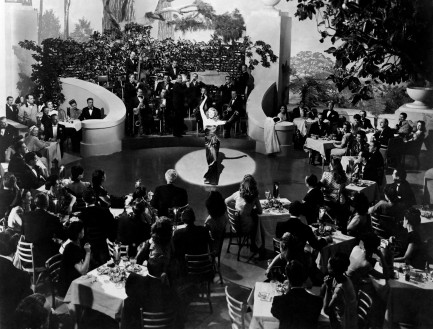
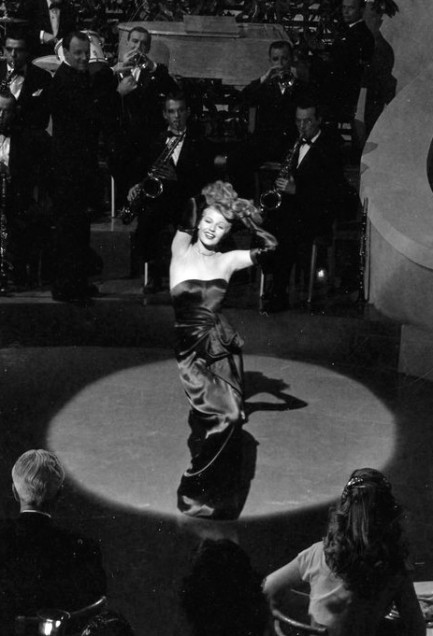
How many times have we circled back to Gilda? Four or five, we guess. It isn't because it's good, which it is, of course, but rather because it has excellent promo materials. Above are two images (plus a crop we made) from the Hollywood set of the film showing Rita Hayworth performing her signature number “Put the Blame on Mame,” which was one of the more provocative sequences put onscreen post-Hays Code. For those who don't remember or haven't seen it, just after the number ends she's willing to let audience members undress her. Supporting actor Joe Sawyer prevents it by intercepting the guys struggling at Hayworth's zipper. But nothing is preventing you from watching Gilda. We consider it at least a top fifteen film noir.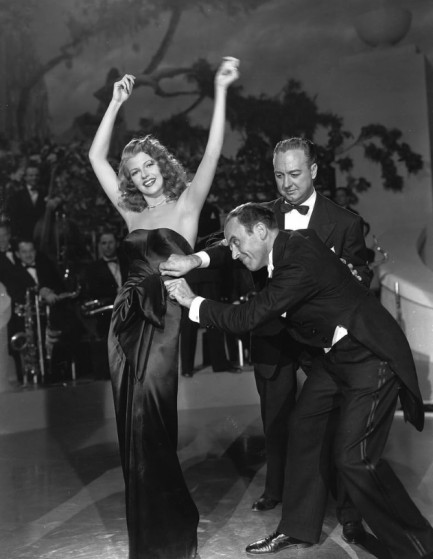

| Hollywoodland | Jan 8 2024 |

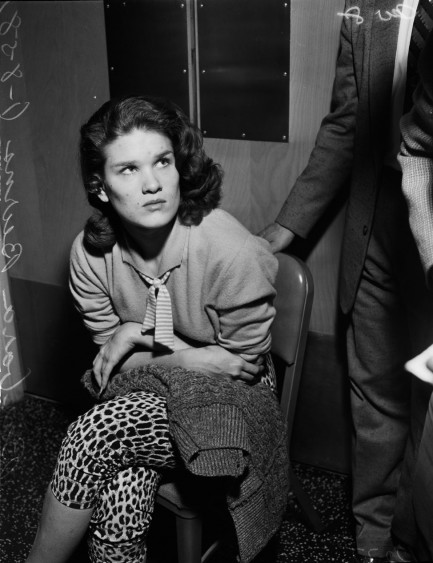
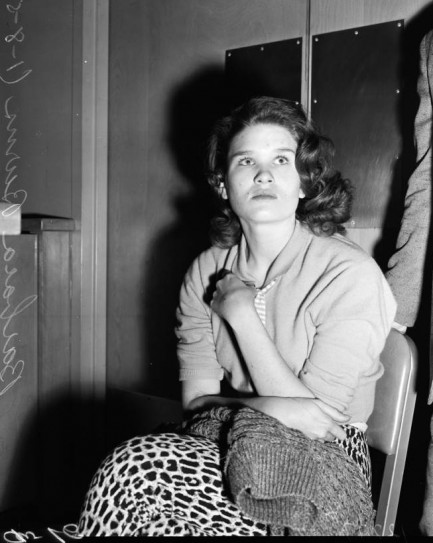
The above photos show Barbara Burns when she was busted for drugs today in 1958 after LAPD officers found track marks on her arms. Burns was the well-to-do daughter of famed comedian Bob Burns, but her father had died of kidney cancer in 1956. Barbara Burns was sentenced to probation after the arrest, and the story got some play in national newspapers, with several calling her probation sentence a storybook opportunity at a second chance. But she didn’t cooperate in the role. She managed to cobble together some behind-the-cameras television work, but was arrested for heroin possession in 1959. That time she served ninety days in jail and admitted in an interview, “I’m really hooked. I had nothing else to do, and my mother wouldn’t talk to me. I wanted to be a singer but I was too heavy and they told me it would help me lose weight.”
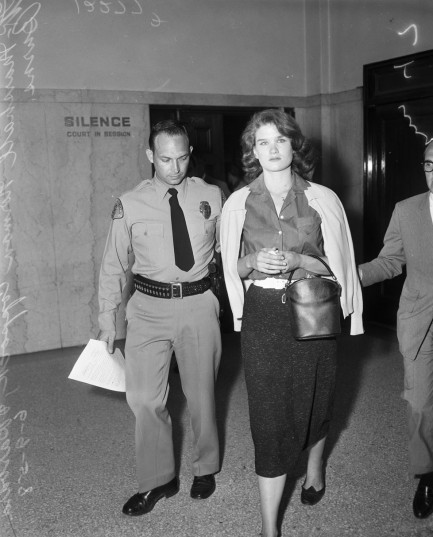
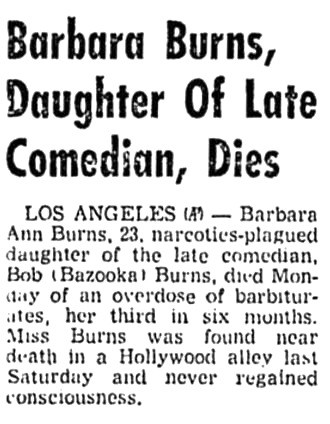 earned ninety days in Camarillo State Hospital. In November 1960 she was snared in another weed bust, but that time she walked after a jury acquitted her. When she was arrested for heroin possession again in June 1961, she lamented what had probably been true for longer than she admitted—that she had doomed her chance to have a career in show business.
| Hollywoodland | Dec 23 2023 |

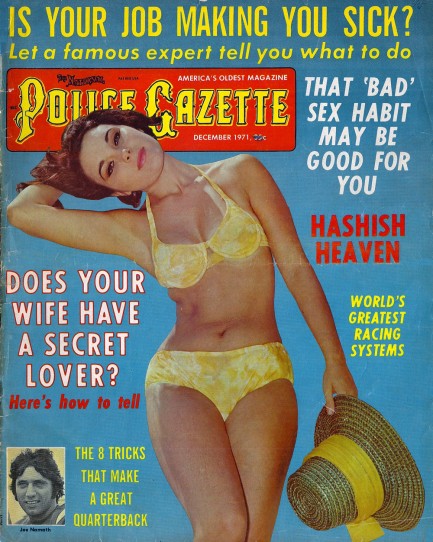
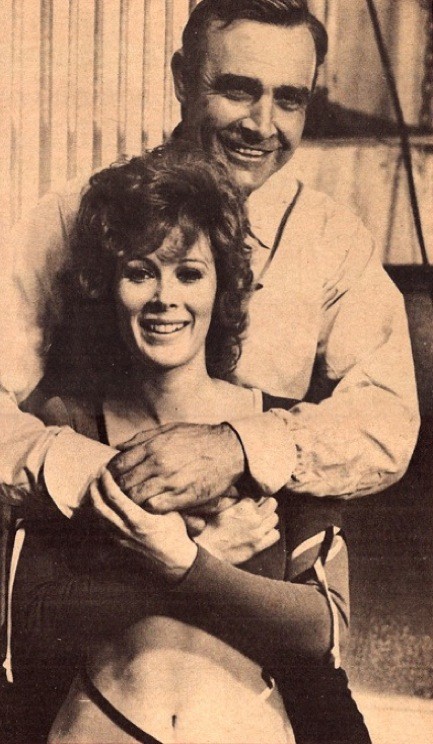
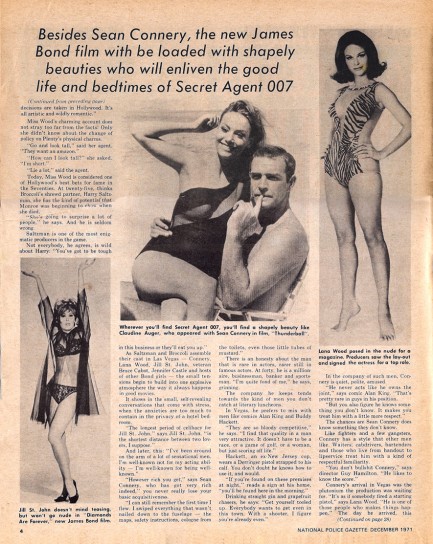
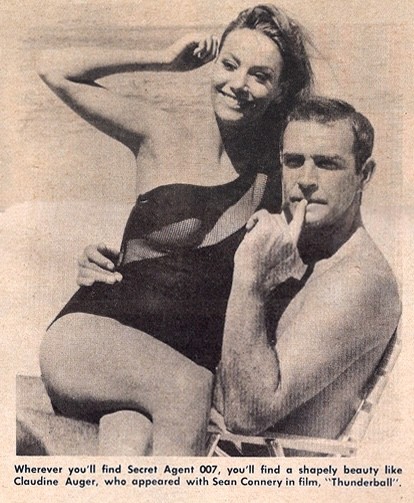
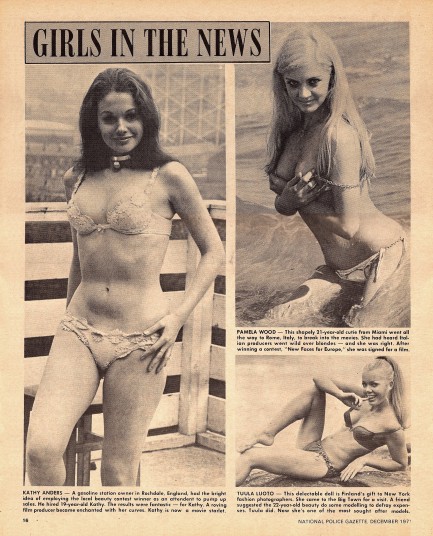
Sean Connery made as many appearances in sixties and seventies tabloids as just about any celeb of his time period, so here he is again in an article promoting his role in Diamonds Are Forever, which would premiere just a couple of weeks after this December 1971 National Police Gazette hit newsstands. we talked a bit about the source novel for the film, and author Ian Fleming's troubles with his publishers. It's interesting, so check here if you wish.
In Gazette, Connery speaks of his futile struggle to portray James Bond as a balding hero, and quips about making his stylist thin his wigs so there was almost no point in wearing them at all. Connery said about Bond’s aging, “No one is immortal—not me, not you, and not James Bond.” It was a commendable sentiment, but naïve. Seems as though Connery didn’t realize United Artists had already branded Bond well beyond the point where the character was tethered to any concept of aging.
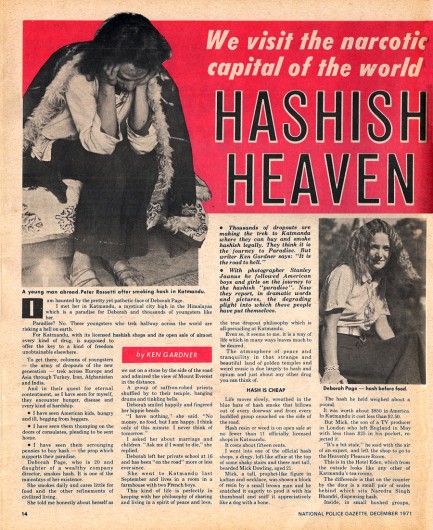
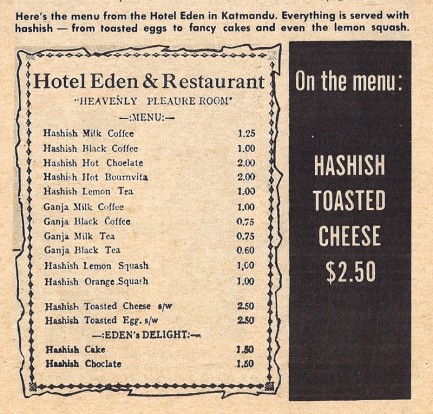
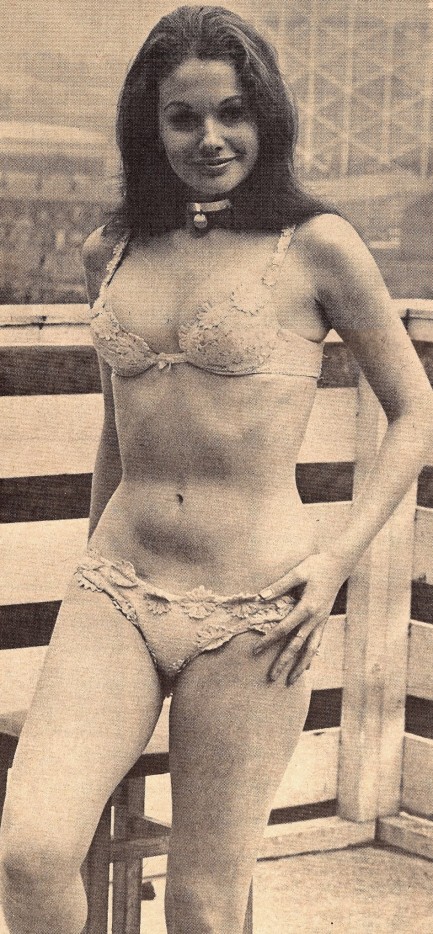
The studio proved that when it brought the much younger Roger Moore on the scene for 1973’s Live and Let Die. Moore would later give way to Dalton, who gave way to Brosnan, who gave way to Craig, as Bond himself remained eternally forty-ish through the passing years. Elsewhere in the Gazette you get a report on the hash capital of the world, the world’s greatest racing systems, and the usual assortment of random beauties in bathing suits. All that, plus hashish toasted cheese, below.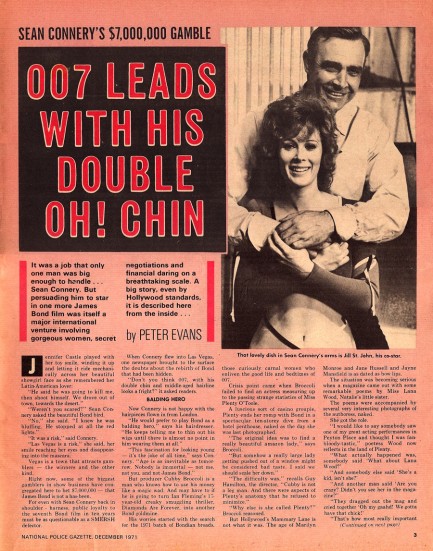

| Hollywoodland | Dec 10 2023 |

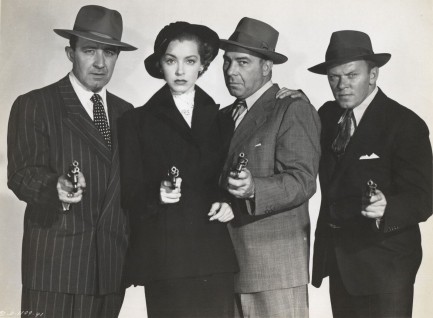
This promo image, with a Columbia Pictures serial number in the lower lefthand corner, was made for the 1949 crime drama Mary Ryan, Detective, and shows Paul Bryar, Marsha Hunt, Ben Welden, and William Phillips. We love the shot, and because of it we'll watch the movie and report back.

| Hollywoodland | Oct 24 2023 |


| Hollywoodland | Sep 9 2023 |

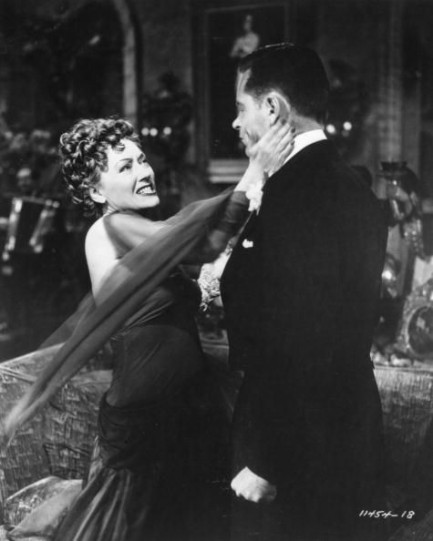
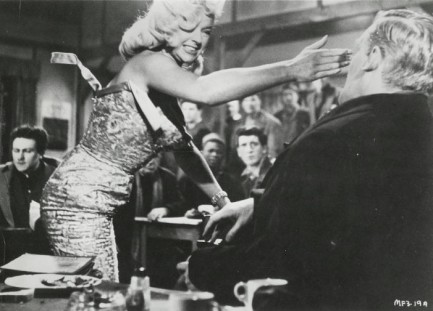
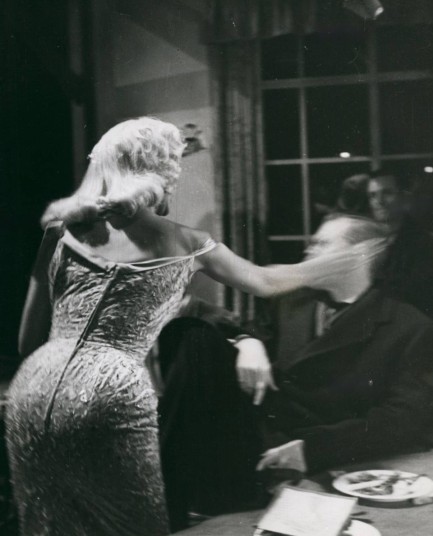 Diana Dors smacks Patrick Allen blurry in 1957's The Long Haul.
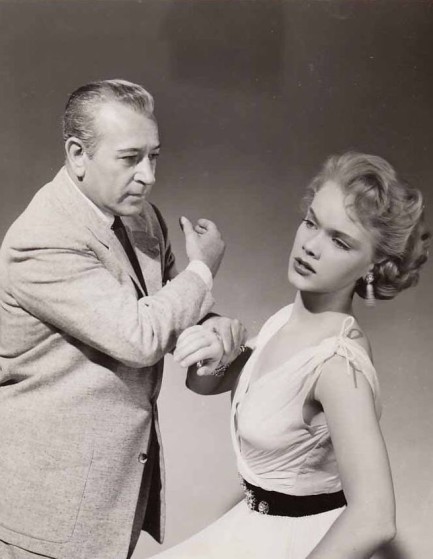 Mob boss George Raft menaces Anne Francis in a promo image made for 1954's Rogue Cop.
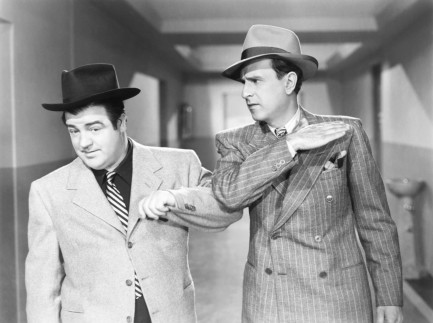 Bud Abbott gets aggressive with Lou Costello in 1945's Here Come the Co-Eds.
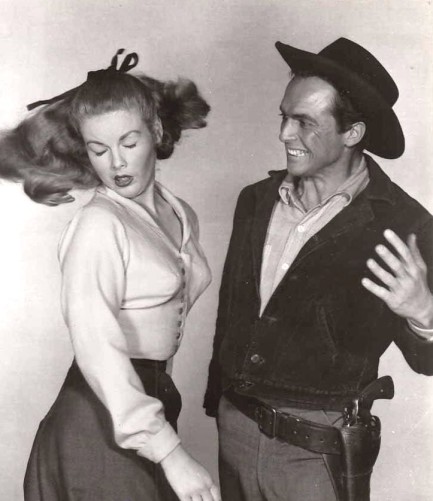 Jo Morrow takes one from black hat Jack Hogan in 1959's The Legend of Tom Dooley.
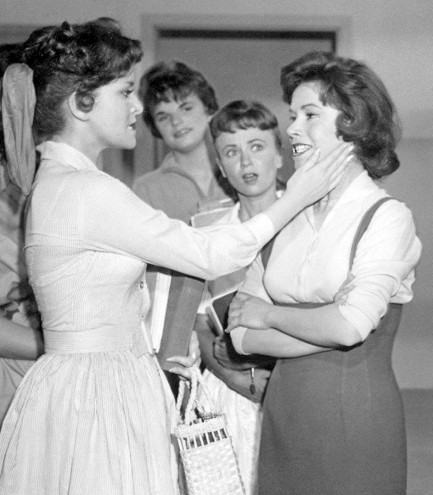 Chris Robinson and Anita Sands get a couple of things straight about who's on the yearbook committee in Diary of High School Bride.
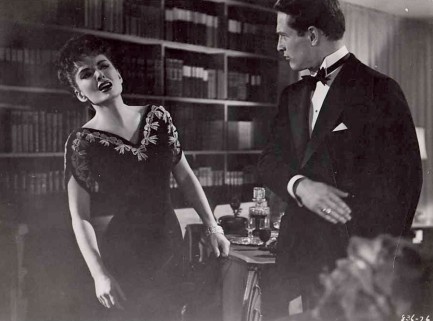 Paul Newman and Ann Blyth agree to disagree in 1957's The Helen Morgan Story.
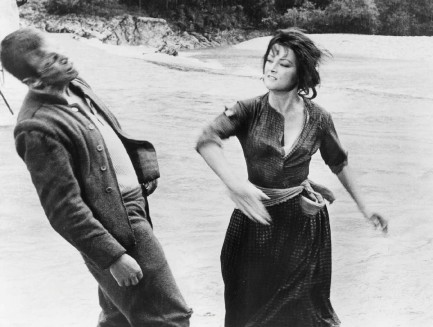 Verna Lisi shows Umberto Orsini who gives the orders in the 1967 film La ragazza e il generale, aka The Girl and the General.
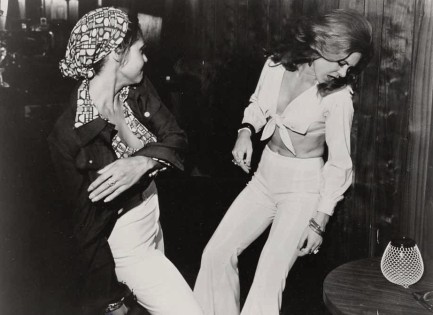 What the fuck did you just call me? Marki Bey slaps Betty Anne Rees loopy in the 1974 horror flick Sugar Hill.
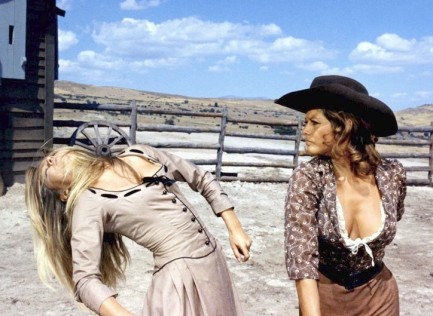 Claudia Cardinale slaps (or maybe punches—we can't remember) Brigitte Bardot in the 1971 western Les pétroleuses, known in English for some reason as The Legend of Frenchie King.
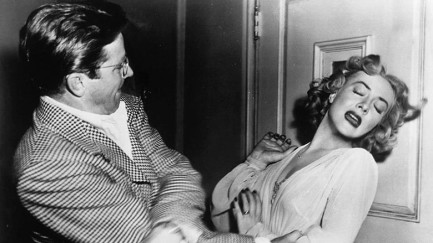 Audrey Totter reels under the attentions of Richard Basehart in 1949 Tension. We're thinking it was probably even more tense after this moment.
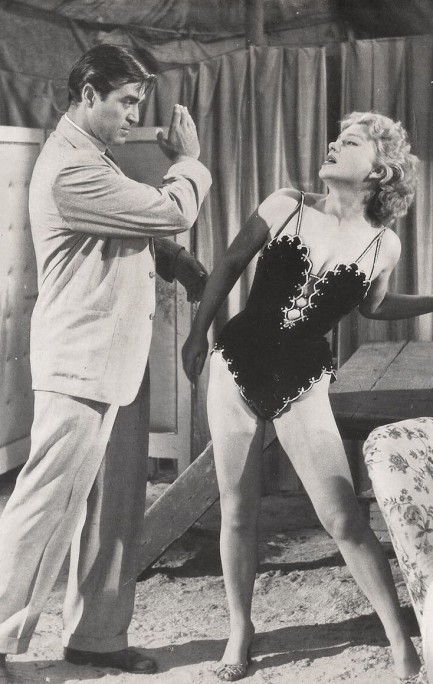 Anne Baxter tries to no avail to avoid a slap from heel Steve Cochran in 1954's Carnival Story.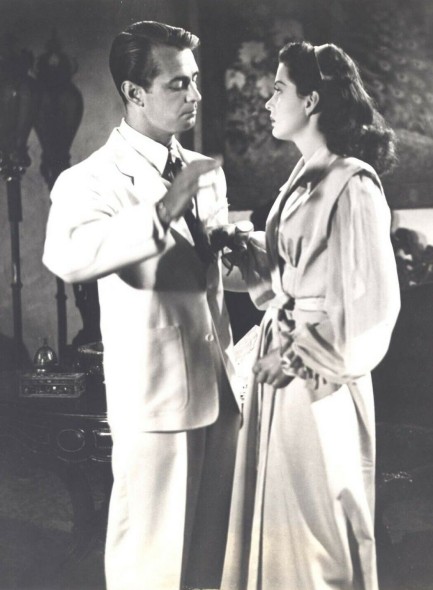
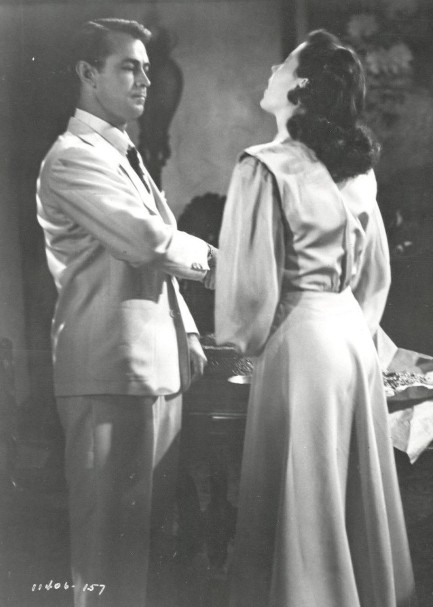 Though Alan Ladd was a little guy who Gail Russell probably could have roughed up if she wanted, the script called for him to slap her, and he obeyed in the 1946 adventure Calcutta.
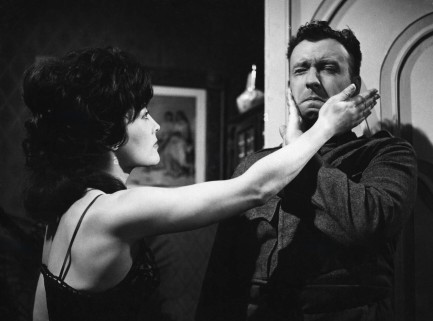 Peter Alexander guards his right cheek, therefore Hannelore Auer crosses him up and attacks his left in 1964's Schwejk's Flegeljahre, aka Schweik's Years of Indiscretion.
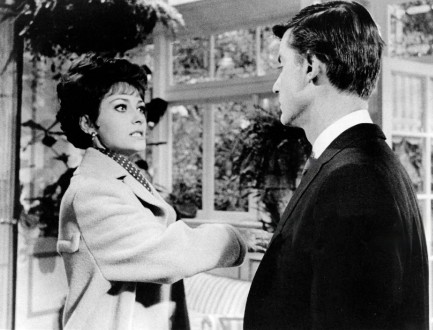 Elizabeth Ashley gives Roddy McDowall a facial in in 1965's The Third Day.
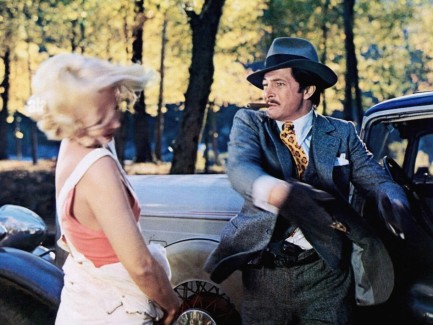 Tony Anthony slaps Lucretia Love in 1972's Piazza pulita, aka Pete, Pearl and the Pole.
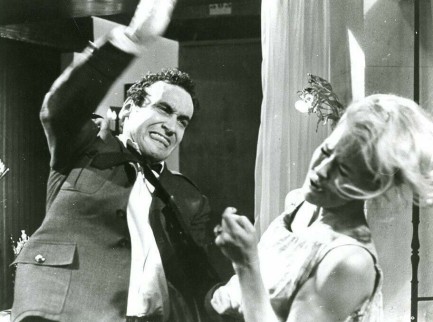 André Oumansky goes backhand on Lola Albright in 1964's Joy House.
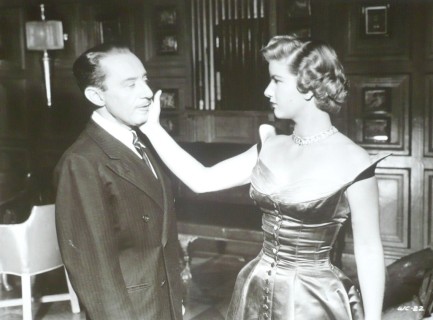 Frank Ferguson catches one from Barbara Bel Geddes in the 1949 drama Caught.
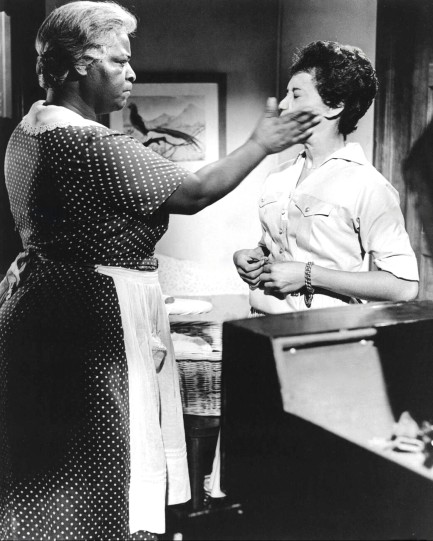 This looks like a real slap, so you have to credit the actresses for their commitment. It's from 1961's Raisin in the Sun and shows Claudia McNeil rearranging the face of Diana Sands.
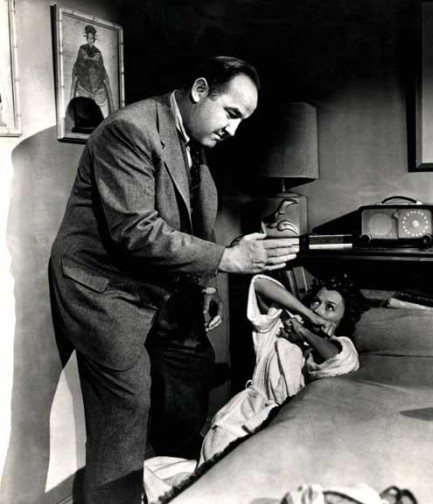 Gloria Grahame finds herself cornered by Broderick Crawford in 1954's Human Desire.
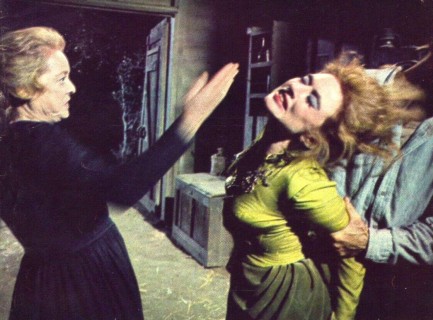 Bette Davis, an experienced slapper and slappee, gets a little assistance from an unidentified third party as she goes Old West on Amanda Blake in a 1966 episode of Gunsmoke called “The Jailer.”
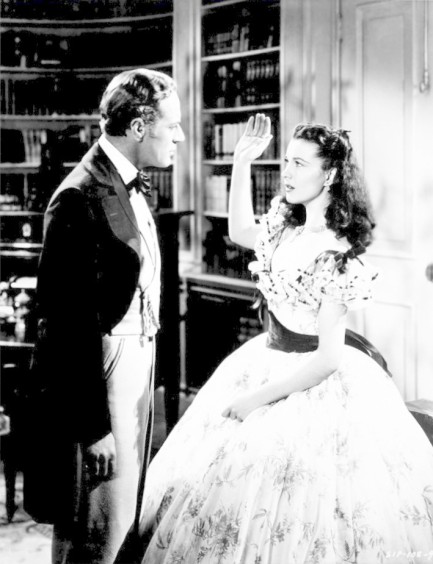 There are a few slaps in 1939's Gone with the Wind, so we had our pick. We went with Vivien Leigh and Leslie Howard.
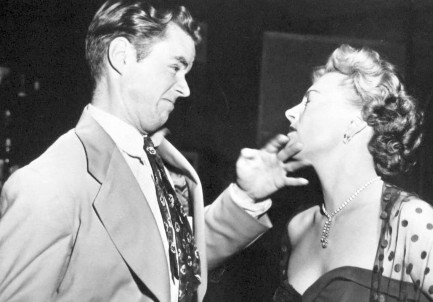 Virginia Field takes one on the chin from Marshall Thompson in Dial 1119.
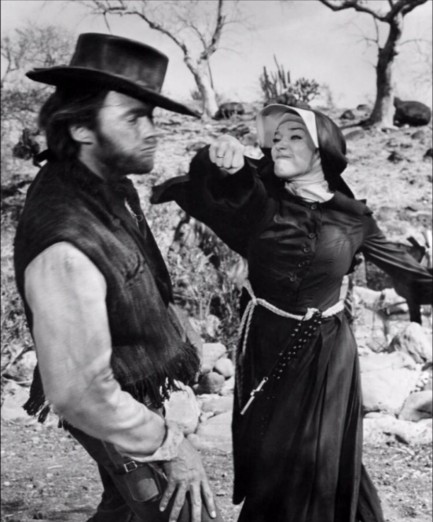 Clint Eastwood absorbs a right cross from nun Shirley MacLaine in 1970's Two Mules for Sister Sara.
| Hollywoodland | Aug 21 2023 |


| Hollywoodland | Aug 6 2023 |