 Listen, humans are a delicacy. They don't taste very good, but eating them is about status. 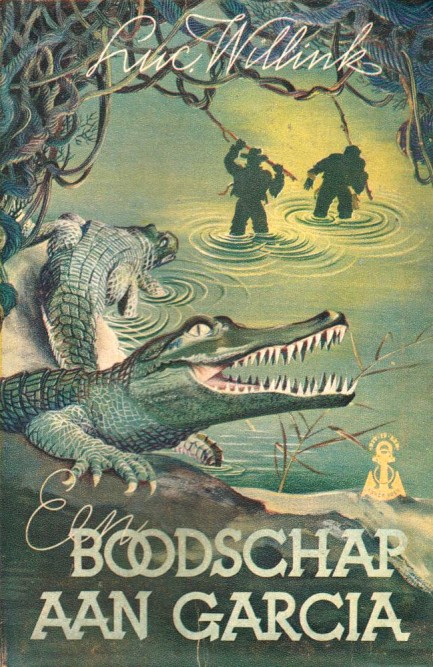
We wanted to revisit Dutch illustrator Piet Marée, whose style is so unusual it's very much worth another look. There's nothing biographical out there about him, as far as we can find. But we love his work. Een boodschap aan Garcia, which means, “a message to Garcia,” was written by Luc Willink, aka Lucas Willink, aka Clifford Semper, and published by Hague based Anker-Boekenclubin in 1950. How it relates to Elbert Hubbard's dramatized 1916 essay of the same name (which resulted in a 1936 Barbara Stanwyck movie) is unknown to us. We can tell you it's the same story—U.S. soldier Andrew S. Rowan carries a secret message from President William McKinley to Calixto García, a rebel hiding in the mountains of Cuba, before the Spanish American War. But the point here is Marée's art. We love it. We'll try to dig up more from him to share later.
 I walked home and sat on the stoop and watched the sun sink behind the trees and held the cat. It was a fine cat. 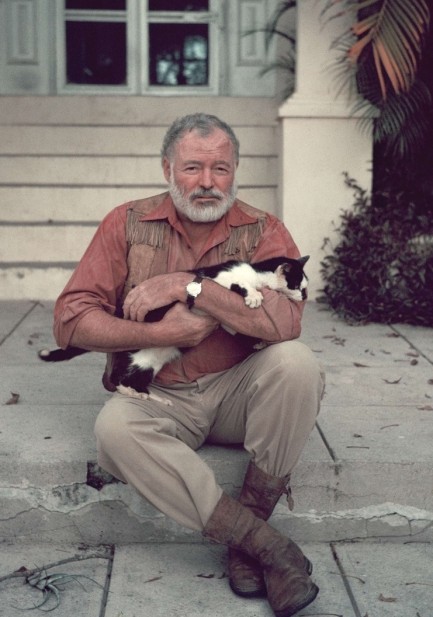
Above is one of the better photos of one of the better writers, Ernest Hemingway, seen here in 1954 at his house Finca de Vigía, which was located in San Francisco de Paula, Cuba. He owned the house and fifteen acre grounds from 1939 to 1960, and it was there that he wrote part of For Whom the Bell Tolls and all of his Pulitzer Prize-winning The Old Man and the Sea. The cat mostly walked across his typewriter keyboard.
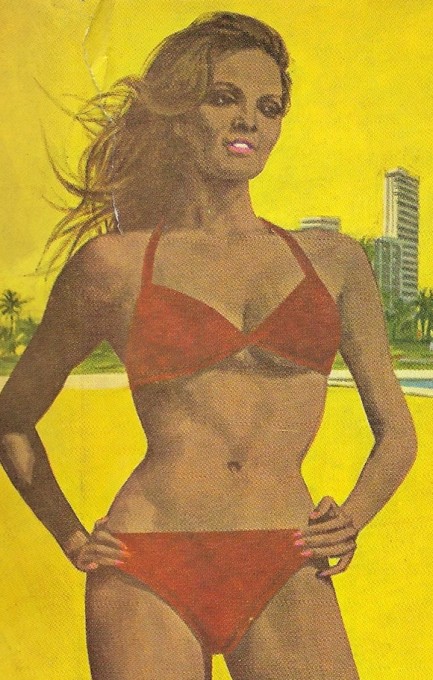
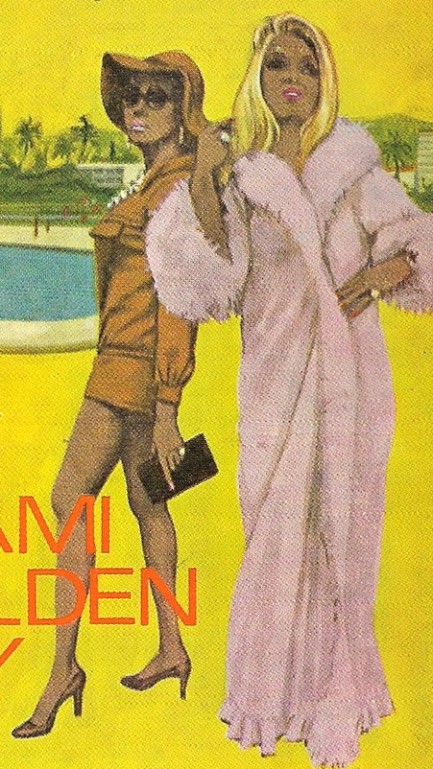
 Herbert Kastle writes South Beach as Sodom in his sprawling kidnap thriller. 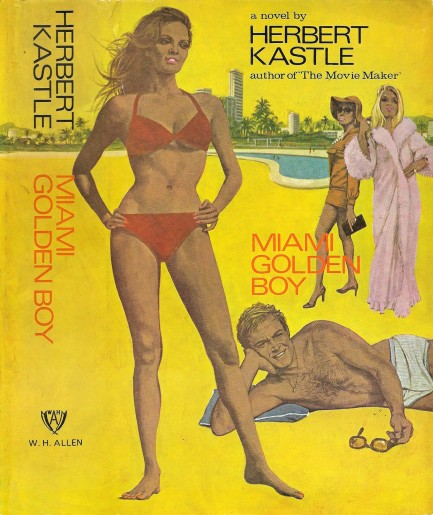
Miami Golden Boy is the wrong title for this book. It's too trite for the tale of a plot to kidnap the invalid former president of the U.S., which intersects a plot by Havana expats to return to Cuba and depose Fidel Castro. While the book gets its name from the ostensible central figure Bruce Golden, there's a vast assortment of characters, including a Kennedyesque political clan, that keeps him out of the narrative for entire chapters. These characters have deeply detailed personal lives that add dimension but strain credulity. One secretly has cancer, one is secretly gay, one is secretly sadistic, one is secretly a pedophile, one is being blackmailed, one is secretly a drug addict, one is secretly suicidal. It's a lot. But okay, the only question that matters is does it all work? Well, mostly. Kastle uses these secrets to weave a tale of decadent American decline, with South Beach as a backdrop. A choice example:
“The country is beginning to stink. Our stated goals and our actual goals are drawing farther and farther apart. And the divergence is tearing us apart. We've either got to bring the actual goals closer to the stated goals—reduce the materialism in our lives, the idiocy of our anti-communist crusades, the cruelty and blindness of our dealings with blacks—or admit that the stated goals are false.”
Kastle wrote that fifty-two years ago, and we know how things have gone since then. His abduction plot is a symptom of the greed, hypocrisy, and decline he details. The scheme involves several characters using several other characters as pawns. The lever in most cases is sex, and the book is pretty well packed with sexual content, occasionally explicit, and in one case violent. Then there's that pedo thing too. Kastle doesn't shy away from it, though you may wish he had. The tapestry of duplicity and manipulation, in terms of how it relates to the kidnap, needs to weave together in perfect synchronization, and of course doesn't. The scheme blows up spectacularly. If it didn't there'd be no book. Conversely, Kastle brings everyone's secret stories to miraculous conclusions within the space of the final thirty pages. That's the drawback of so many characters—a few story arcs don't end convincingly.
Even so, the one thing you cannot say is that Kastle doesn't know how to write. His skillful prose makes the slam bang climax almost believable. Bruce Golden, a bit of a shallow playboy, isn't a great guy but at least he isn't a killer, kidnapper, or political plotter, so he's the character you root for. His love interest Ellie De Wyant, on the other hand, is a crucial if unwitting cog in the kidnapping, which means if Golden is to have her he may have to do something he's never done in his entire life—show courage in the face of danger. Will he or won't he? We think Miami Golden Boy is worth a read to find the answer. And speaking of worth, books with Barbara Walton cover art aren't usually cheap, but this one from the publisher W.H. Allen was. We got lucky. Walton was one of the top illustrators of her era. See more from her here and here.
 Thanks for rescuing me. Don't untie me yet, though. First let me tell you about this kinky fantasy I've always had. 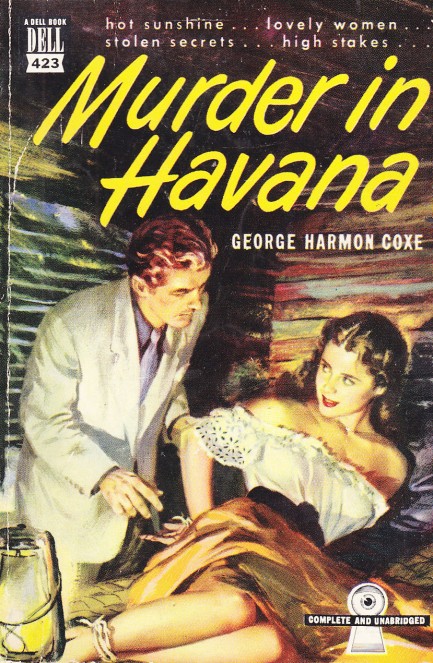
George Harmon Coxe's Murder in Havana was an easy buy for us—it was cheap and set in an exotic land. We were also drawn by its World War II backdrop, which made us fully expect Nazis, and we got them. The story concerns Andrew Talbot, who's in charge of a secret shipbuilding project. While he's out on the town someone breaks into his hotel room but somehow ends up dead five floors below. Talbot is relieved not to have been robbed of his top secret dox, but once he realizes the dead man hadn't been the only person in his room and his papers were photographed rather than stolen, he sets out to save his professional reputation and unmask the spies. As required from this sort of tale, the hero meets a couple of beautiful women, interfaces fractiously with the local cops, gets knocked over the head, and drinks rum. Mysteries from this era can be wordy, but Coxe deserves credit—he keeps the action moving around Havana and avoids the pointless reiterations that can slow these books. The ending is fun, and multi-layered. There could be more local color and travelogue, and we aren't sure if we accept the idea of skeleton keys being purchaseable on the street, but overall Murder in Havana is quite entertaining. It was published in 1943 originally, with this Dell edition and its Barye Phillips cover art of a woman bound but incongruously smiling coming in 1950.
 Have yourself a very Humphrey Christmas. 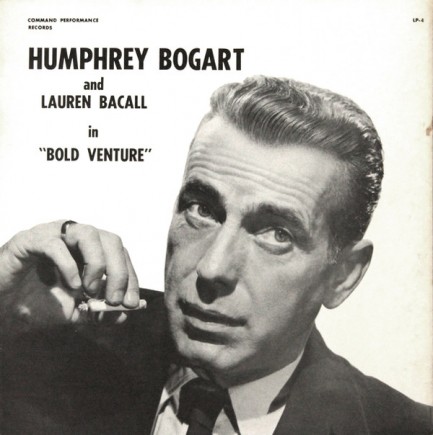
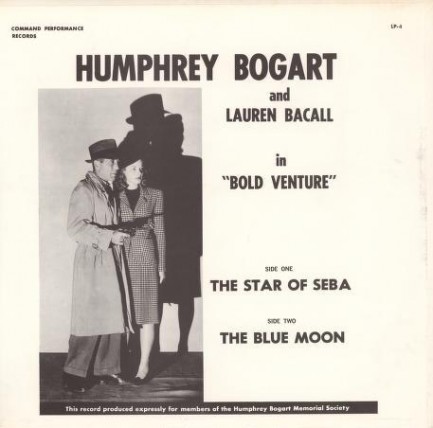
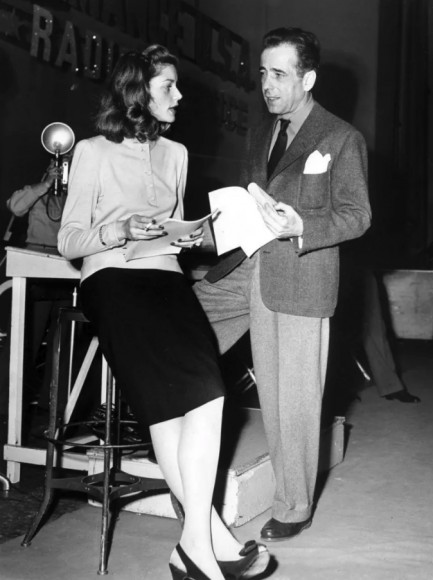
In the other work we do discussions about starting a podcast have come up. We shoot the idea down because we can't possibly fit anything else into our lives, but the concept got us thinking about things that might be fun to listen to. Above you see a record sleeve for Bold Venture, pressed from a radio series starring Humphrey Bogart and Lauren Bacall. Developed by Bogart's Santana Productions, he and Bacall star as Slate Shannon and Sailor Duvall. He's the proprietor of a hotel in Cuba where various shady characters, revolutionaries, and all around scalawags wander through, and she's the woman he promised her dead father to watch over and protect. And by protect, we mean at close quarters. Sounds a bit like To Have and Have Not, right? All we can say is—sold!
The series ran for fifty-seven episodes in 1951 and 1952, and this record contains one episode on each side. If you like podcasts, or listening to stuff while doing stuff, this may be for you. We can give no qualitative info. We haven't heard it. We're traveling now for two weeks (we mentioned that preloaded posts thing, right?) and grabbed this to listen to during our wanderings. It may be amazing, or it may be bad. But we very much like Bogie and Bacall, and given all the great work they've done together and apart, how can it possibly be bad? Like, seriously. You can have your own copy of the series in a jiffy, because it's available on Archive.org, the public domain repository, here, or at a dedicated UK website here. Merry Christmas, pulpsters!
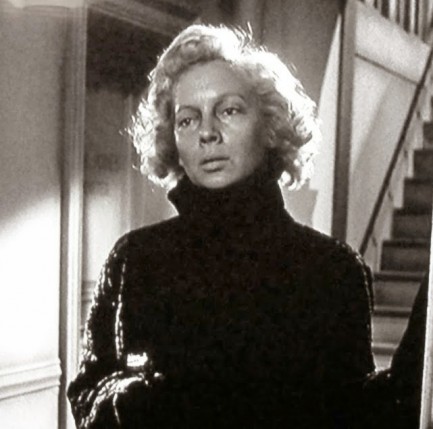
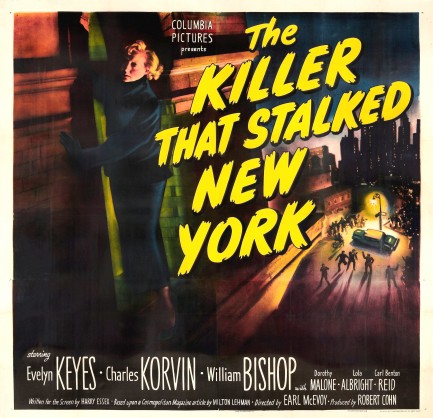
 Evelyn Keyes goes from jewel thief to disease vector in The Killer That Stalked New York. 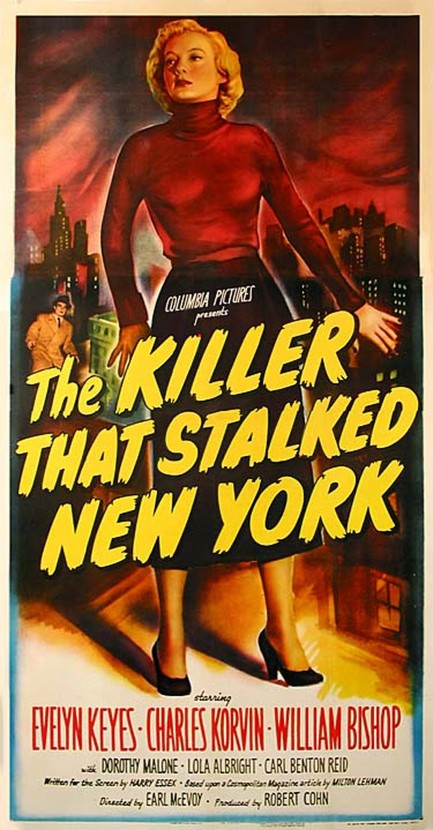 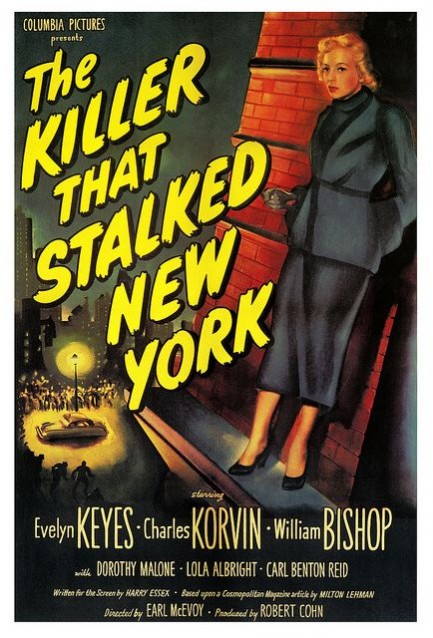
Above are a couple of excellent posters for the drama The Killer That Stalked New York, one of which features Evelyn Keyes on a high ledge. The movie is sometimes classified as a film noir, and we really don't mean to act like pain-in-the-ass purists, but we don't consider it a film noir. Plotwise, it deals with a jewel smuggler who unknowingly brings smallpox from Cuba to New York City. Keyes smuggled the jewels in for her boyfriend, but when she turns them over to him the sneaky fucker absconds. Keyes knows he has to sell them in the city, so she tries to track him down and prevent him from stiffing her, even as doctors notice that people are falling ill, manage to identify the culprit as smallpox, and try to decide how to stop the spread of the virus. Obviously, there are numerous parallels and ironies involved in watching this in the COVID-19 era. Carl Benton Reid as NYC's health commissioner: “Anyone not vaccinated is liable to get the disease. If they still refuse to submit, then tell them what they face.”
Of course, smallpox had a 30% per-case death rate compared to 1.6% in the U.S. for COVID-19, but mention that difference to people who've watched others die and see what reaction you get. What 1.6% represents, aside from a death rate, is a level of suffering at which tens of millions of adults shrug and refuse to take a shot to help save lives—at least 775,000 dead in the U.S. and counting, each of them a real person, not just a statistic. We've lost two close friends to this virus, neither in a so-called high risk category, and so has PI-1—whose friend spent weeks on a ventilator only to finally succumb to brain death. She had a six-year-old daughter. That kind of disaster kills not just the victim, but quite possibly forever harms families and loved ones.
Keyes reaches the point where her smallpox makes her like a dead woman walking, but she won't drop until she's found that chiseler of a boyfriend and made him pay for crossing her. What The Killer That Stalked New York ends up being is a crime procedural-turned medical thriller-turned double-layered chase movie. Keyes is a great, unsung star, and her willingness to uglify herself shows her commitment to the art of storytelling, but even so, the movie could be better. The two layers of story are required, because it's only Keyes' criminal status that causes her to run around dodging the cops—and by accident spreading the virus—however the film maybe should have done away with its framing narration and public service feel. At least it has Keyes. Nothing dims her luster for us—not even a mediocre script, dark rings under her eyes, and a layer of fever sweat. The Killer That Stalked New York premiered in the U.S. today in 1950.
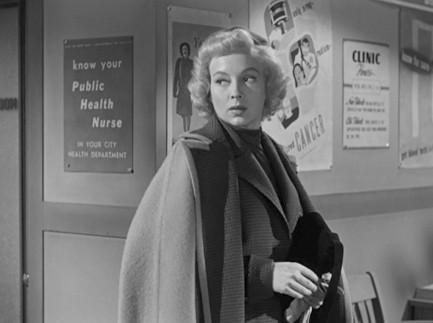 Killer virus? Whatever. I'll take my chances. Killer virus? Whatever. I'll take my chances.
 Hi, is it too late for big government to save my ass? Hi, is it too late for big government to save my ass?
 Update: It's illuminating to lurk on the Facebook pages of COVID skeptics. The farther we get from the height of the epidemic—when there were literal mass graves in New York City—the more people seem to think they're smarter than doctors and virologists. Someone we know put up a photo of a convenience store with a plexiglas screen separating them from the clerk, and railed against the precaution, calling it dumb and all the rest: "What's the point? She touches my stuff anyway when she scans it! God, people are such stupid sheep!"
People in the comments agreed. It was illustrative of social media bubbles, and how self-centered people are, and how ego shapes their thinking. It never occurred to anyone in the thread that the plexiglas screen is not for customer, but for the clerk. The customer comes and goes, and, in their genius, scoffs at the screen and determines that it's useless. But after this genius has left, the clerk they've forgotten is exposed to another customer, and another, and another, up to hundreds a day. Some of those customers probably carry COVID, but the screen will at least prevent them from coughing or sneezing on the clerk. The upshot of the entire Facebook thread was, “I don't see how this plexiglas screen helps me!” Well, it doesn't help you. It helps the person who does the essential work that keeps you fed—and skeptical. One has to marvel at people.
 Mystery attackers of U.S. embassy workers in Havana might not be Cuban—or human. 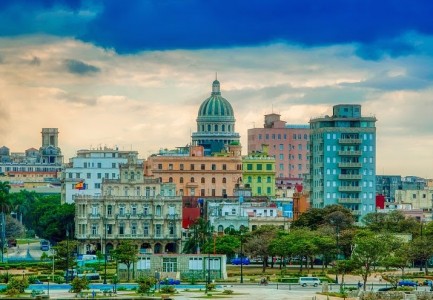
A couple of nights ago PSGP and PI-1 were in deep slumber in their seaside apartment when a high pitched noise sprang up in the wee hours. It took only moments to identify the sound as a cricket, which somehow had gained entry to their bedroom though it's on the top floor three stories up, and the exterior doors were shut. What followed was a comedy of errors, as PSGP tried in vain to pinpoint the noise and eject the interloper, while PI-1 cursed all of creation because insects were now conspiring to disturb her sleep. They ended up moving out of the bedroom. The next day PSGP had another look around, and after a more careful examination located the cricket—outside on the balcony. It had never gained entry to the flat in the first place. It was just that loud and disorienting. This is an absolutely true story, and even the timeline is factual. It really did happen night before last.
So imagine our surprise when an item came across the wires this morning about the infamous Havana Syndrome. You know the one. U.S. embassy personnel stationed in Cuba, beginning in 2016, reported mysterious sounds in the building, which brought on headaches, dizziness, tinnitus, balance problems, and other weird effects. The State Department and the American press immediately ran a political football the entire length of the unverified news field and claimed Cuban or Russian sonic or energy weapons were probably the cause. Nobody explained what Cuba or Russia had to gain from quasi-effectual sonic attacks, and it didn't matter, because you never let implausibility get in the way of rekindling the Cold War. But there are these people called scientists, and they have a way of studying things until they find answers, and yesterday the most likely cause of the dastardly Havana Syndrome was revealed to be crickets.
The JASON Group, an independent organization of scientists that works with the U.S. government, analyzed recordings made by embassy personnel and found only one phenomenon to be a sonic match—the Indies short-tailed cricket. There the sneaky bugger is just below. This mystery was actually unravelled back in 2019, but the report was classified—probably to milk a few more years from a patently ridiculous story of being targeted by commies. Let's face it—when you have top level Cuban figures defensively trying to explain that they have no sonic or energy weapons, and the American press is pretty much dismissing those claims, you keep the pressure on. Some experts note that sonic weapon frequencies wouldn't be recordable, and the enemy attack theory is thus unaffected. In other words, the recordings given to JASON scientists weren't of the actual phenomenon in question. Well, okay, but we prefer crickets. Please let it be crickets. Or maybe the answer is twofold. Maybe Havana Syndrome is caused by crickets trained by Cuba or Russia. Bet those egghead scientists didn't even think of that. sonic or energy weapons, and the American press is pretty much dismissing those claims, you keep the pressure on. Some experts note that sonic weapon frequencies wouldn't be recordable, and the enemy attack theory is thus unaffected. In other words, the recordings given to JASON scientists weren't of the actual phenomenon in question. Well, okay, but we prefer crickets. Please let it be crickets. Or maybe the answer is twofold. Maybe Havana Syndrome is caused by crickets trained by Cuba or Russia. Bet those egghead scientists didn't even think of that.
 Hemingway's lament for the downtrodden working class is supposed to be his worst novel. But is it really? 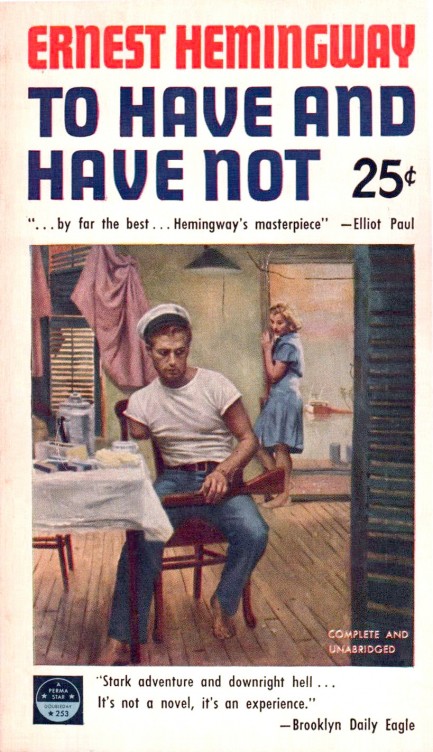
Don't let the cover blurbs fool you. In general To Have and Have Not is considered by critics to be Ernest Hemingway's worst novel. Originally published in 1937, it was completely rewritten and became a great 1944 movie with Humphrey Bogart and Lauren Bacall. If you've already seen the movie but never read the book, hold onto your hats, because this is extraordinarily rough stuff from Hemingway, a tale of desperation and murder in the depths of the Great Depression. Harry Morgan is a Key West boat captain who's stiffed for $825 after his three-week charter skips town. That would be about $15,000 in today's money, so it's no surprise that losing this bundle means Morgan, who's married, has three kids, the usual assortment of bills and responsibilities, and has spent his life fighting to get ahead, is now destitute.
If you opt to read the book, make sure not to gloss over exactly how far in the hole Morgan is. $825 dollars would bend the morals of most people in 1937, just as $15,000 would today. After being cheated out of this cash he makes a fateful decision to turn criminal himself by running illegals from Cuba to Florida. That's when things go from bad to worse. If you look closely at the cover art on this Perma Books edition from 1953 you'll see what the result of Morgan's criminal foray was. That's one reason cover art is so interesting. The scene the artist chooses to depict—in this case it's Tom Dunn—can sometimes be so specific as to give away an important plot point. If you can't tell what we're talking about by looking at the art we'll give you a hint. What happens to Morgan is the also title of an earlier Hemingway book.
But moving on, To Have and Have Not is—we'll just come out and say it—brutally racist. There are some who would like to gaslight you into thinking you're seeing something that isn't there, and others who would prefer you to ignore this, but you shouldn't, because racism is actually pivotal in the narrative. Morgan's initial foray into crime is against people he clearly feels are subhuman. They and other ethnic groups are referred to with slurs, and these come not just from Morgan's mouth, and from his thoughts, but from the writer's thoughts too. There are places where Morgan uses actual names to refer to characters that Hemingway still refers to by slurs. Think: “Hey Joe, give me a hand with these poles,” said Harry. The [slur] put down his coffee and helped Harry with the poles. So while it's always good to separate the author from their fiction so they have freedom to create any sort of characters they wish, it still raises an eyebrow when you read something like that.
Another aspect of To Have and Have Not that may jar is its lack of sympathetic characters. Morgan's ex-prostitute wife Marie is probably the nicest person in the book, and even she drops n-bombs all over place. But you have to root for someone, so it's her and Harry. You do it because they're at the economic mercy of terrible people. Most of these folks—who are generally of a better class—wouldn't use racial slurs, but they also wouldn't think twice about ruining someone for a few dollars. And while Harry employs a black man and gets along with him fine, you can be sure none of his rich charters would let a black man deign to speak to them. So in its way, To Have and Have Not is relevant in 2020 by starring a working class character who's uncouth, uneducated, and devoid of genuine empathy, but who constantly deals with people that think they're better than him and really aren't.
This is why losing the charter and those $825 bucks is such a clever way to open the novel. The charter, Johnson, flies away and doubtless never gives what he did much thought, but in shafting a working man creates wreckage that crushes not just the man he cheated, but those around him. We think this is the way to focus on the book if you read it—acknowledge the obvious deficiencies of Harry Morgan, but pay close attention to the secondary characters. This is what Hemingway wanted, which is why Morgan's narration lasts for only a while. Everything after his first crime caper is told from outside his point of view. As the book goes on, Hemingway drags you deeper into the lives of these ancillary characters, dispassionately leaving a struggling Morgan to recede into the distance.
So is To Have and Have Not Hemingway's worst book? We don't like it as much as his other works, but with its changes in point-of-view, mood, and even narrative tense, it's also more challenging than those books. Ultimately, the most serious indictment of To Have and Have Not comes from the author himself—he thought it was his worst book too. And who are we argue with Ernest Hemingway? But on the other hand, when you write The Sun Also Rises and For Whom the Bell Tolls, and win a Pulitzer Prize for The Old Man and the Sea, and later win a Nobel Prize for your body of work, your worst book can still be pretty good.
 Whether by day or night the action was non-stop. 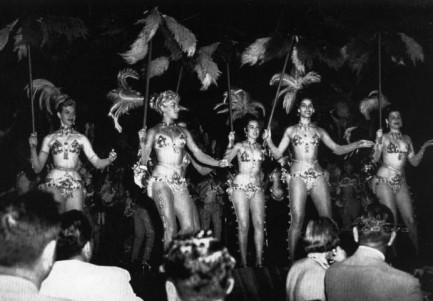
We love vintage nightclub photos, and vintage pix of people partying in general. Since Havana photos are unusually interesting, we're always drawn to them. There's a large number of Havana photos out there, but not primarily because of Cuba's political history. The photos really exist because Cuba was a pioneer of Caribbean tourism, attracting travelers beginning in the 1920s through a heyday of the mid-1950s. The island was promoted as a place of sophistication, mixed with permissiveness, unpredictability, and a touch of the primitive. This prompted various movers and shakers—from New York City businessmen to top musicians to Hollywood stars—to flock to Havana. And where important people went, cameras followed.
Was the Havana image true? Probably, based on what we've read. But it was not unique. During the same period Tangier had a similar reputation, as it attracted writers like Paul Bowles, William S. Burroughs, and numerous gay expatriates. During the 1960s Acapulco was known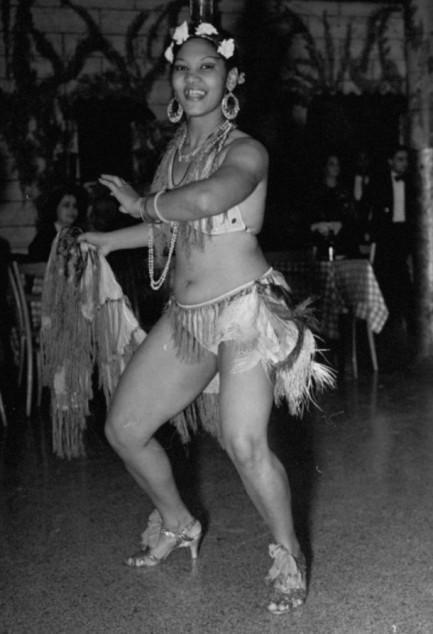 as a great place to go for thrills. During the 1980s, Ibiza or Mykonos. The 90s, Thailand or Goa. The 00s, Tulum. Havana wasn't unusual in terms of what it offered. Bigger, yes. More convenient for Americans, for sure. But numerous far flung locales have served as paradises for foreign visitors to lose themselves and get crazy. as a great place to go for thrills. During the 1980s, Ibiza or Mykonos. The 90s, Thailand or Goa. The 00s, Tulum. Havana wasn't unusual in terms of what it offered. Bigger, yes. More convenient for Americans, for sure. But numerous far flung locales have served as paradises for foreign visitors to lose themselves and get crazy.
Most or all of the aforementioned places are considered to have changed for the worse, whether through ecological damage, destruction of historic architecture, unchecked overbuilding, overtourism, or all four scourges at once. But it was revolution that changed Havana, a fact that gives vintage photos from there a particular poignancy. A typical narrative is that while elites and tourists partied, exclusion, inequality, and poverty helped fertilize the seeds of upheaval. But we don't judge anyone in these shots. We've lived in similar circumstances in Central America. We were even partners in a beach bar in the Caribbean. We were always well aware of the prevailing socio-political problems, and we sympathized greatly with the local populations. But it didn't stop us from partying the nights away.
There's an immense feeling of freedom being in a simpler place—and for all its opulent nightclubs and restaurants, Havana is said to have exuded a primeval sensuality that intoxicated tourists and expatriates. If you live in the U.S. or some other modern nation, that feeling isn't something you can achieve by merely paring down your current lifestyle. The things you give up continue to exist all around you. By rejecting those, you become a weirdo. But by living in a less modern nation your life truly changes top to bottom, and you gain this while still existing above the local mean. That's the paradox, or the injustice, depending on your point of view: your satisfaction derives partly from the ability to take or leave anything you wish, because you are economically able to do so. You live more simply than you did, yet live better than most people around you. It isn't noble, but it's very much an attraction.
Bowles and Burroughs lived well in Tangier because it was immensely cheaper than Europe or the U.S. With the savings gained they hosted parties and had time to hone their literary crafts. They were a part of the local society, but existed in a middle-upper stratum, high above the impoverished, well below the Moroccan elites, benefitting from the general perception that foreigners from rich nations are themselves rich. That's how it was for us too. So there's inequality built into that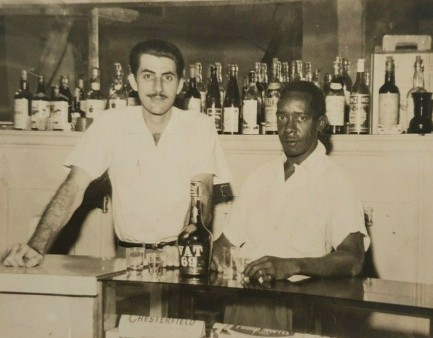 type of expatriate experience. It's unavoidable. A friend of ours lived in a stick shack on Cayos Cochinos for an entire year and he was still considered a rich foreigner. Everyone knows you have a choice. The Americans who partied in Cuba could never have been anything but wealthy invaders, no matter the reality of their finances, or the inclusiveness their sensibilities. type of expatriate experience. It's unavoidable. A friend of ours lived in a stick shack on Cayos Cochinos for an entire year and he was still considered a rich foreigner. Everyone knows you have a choice. The Americans who partied in Cuba could never have been anything but wealthy invaders, no matter the reality of their finances, or the inclusiveness their sensibilities.
Living comfortably means the novelties one experiences seem thrilling or romantic. When we were knocking around Guatemala, El Salvador, and the Bay Islands, we turned washing our clothes by hand into an enjoyable ritual, yet understood quite well that many families' daily water intake literally depended on walking a mile to a river. Buying food from the local fruit and veggie stand was far more convenient than queuing at the supermarket for meat, and we ended up dropping to our college weight, but we were nevertheless aware that many people couldn't afford any food, and would have been disgusted at how pleased we were that our reduced fat intake meant we could show six pack abs at the beach. We helped some local families, both financially and logistically, but when your downsized existence is a choice you can never truly fit in.
But the freedom you feel is real. Offloading the burdens of modern life brings legitimate satisfaction. The pursuit of pleasure takes on a special joy. We hit bars, parties, and gallery mixers continually. As foreigners there's no social stigma to drinking every night. Unless you have a job—and we didn't—it's how you form a social circle. Locals generally disapprove, but their judgements carry little weight. So when we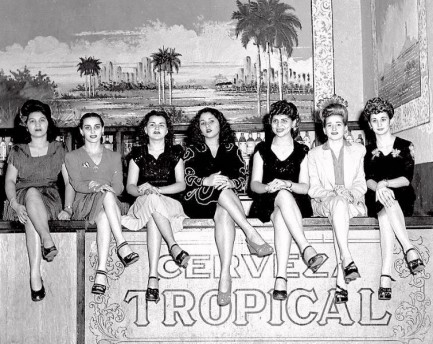 look at Havana partying shots we don't quite see oblivious, entitled people, because we know it isn't that simple. Most of them knew what was percolating. Stability was diminishing fast. There was a dissolved parliament, large protests, a 1953 battle in Santiago de Cuba, and other signposts on the way to change. It was clear the fun could never last. look at Havana partying shots we don't quite see oblivious, entitled people, because we know it isn't that simple. Most of them knew what was percolating. Stability was diminishing fast. There was a dissolved parliament, large protests, a 1953 battle in Santiago de Cuba, and other signposts on the way to change. It was clear the fun could never last.
The assortment of people you see here are caught on film like insects caught in amber, long dead but preserved. They're having a few laughs, enjoying some drinks, executing deft turns on dance floors, making their small, temporary marks on the world, leaving behind images showing them for one sliver of a moment in timeless eternity. Things changed in Havana, and now things have changed for all of us. If circumstances where we can dance and laugh and shout together in hot crowded places without fear of sickness ever return, be sure to embrace them fully. We don't just mean in some far flung tropical enclave. We mean anywhere. Because if it isn't a virus that takes those pleasures away, it'll be the march of years. You'll want to have done your best with this gift called life.
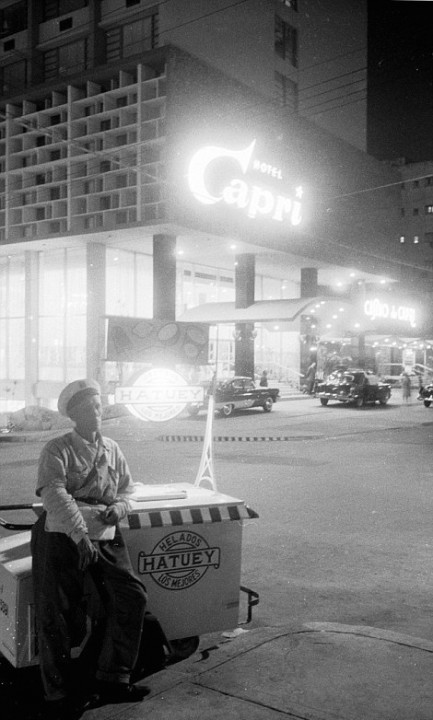 An ice cream vendor patiently waits for potential customers to emerge from the Capri Hotel and Casino, 1958. An ice cream vendor patiently waits for potential customers to emerge from the Capri Hotel and Casino, 1958.
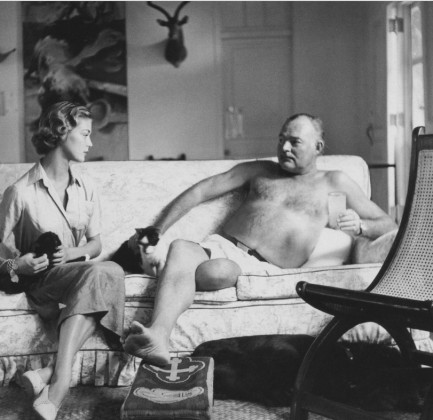 Fashion model Jean Patchett and author Ernest Hemingway, who habitually went shirtless, lounge at Finca Vigia, his house in Cuba, 1950. Fashion model Jean Patchett and author Ernest Hemingway, who habitually went shirtless, lounge at Finca Vigia, his house in Cuba, 1950.
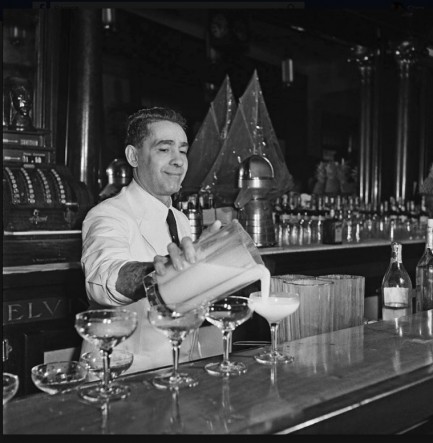 Above, Constantino Ribalaigua Vert, the "Cocktail King of Havana," inventor of the Papa Doble daiquiri, and owner of the famed bar La Floridita. Above, Constantino Ribalaigua Vert, the "Cocktail King of Havana," inventor of the Papa Doble daiquiri, and owner of the famed bar La Floridita.
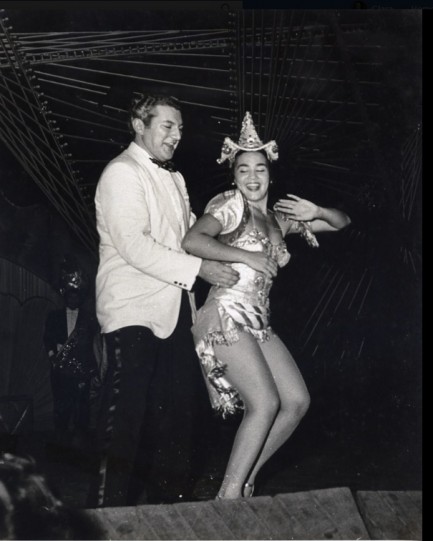 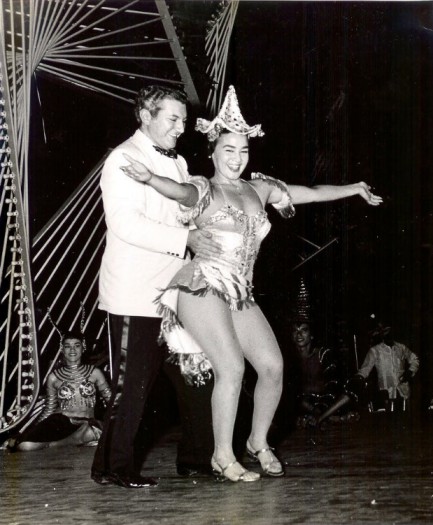 Liberace performs on stage at the Tropicana with headline dancer Ana Gloria Varona, 1954. Liberace performs on stage at the Tropicana with headline dancer Ana Gloria Varona, 1954.
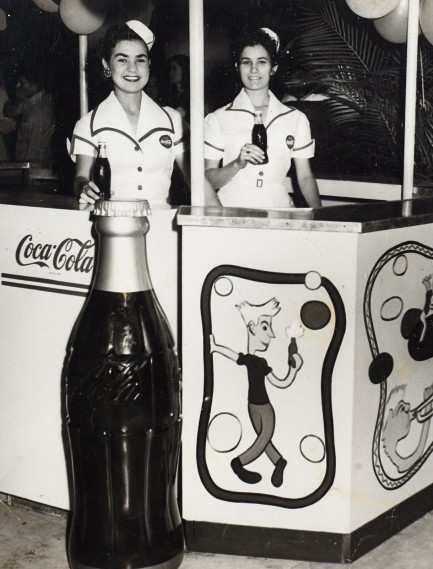 A Coke and a smile from two soft drink vendors. A Coke and a smile from two soft drink vendors.
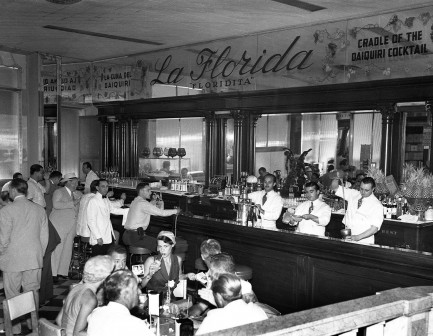 Patrons enjoy drinks at La Floridita, 1955. Patrons enjoy drinks at La Floridita, 1955.
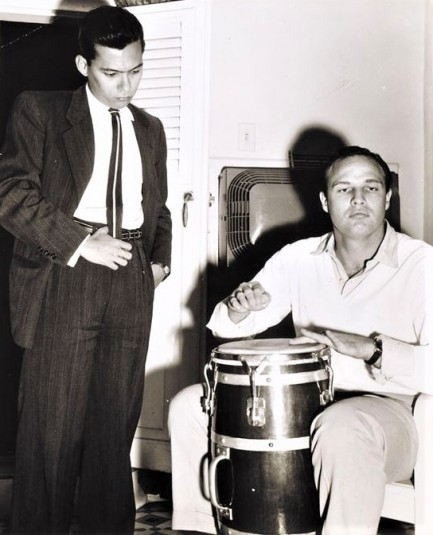 Cuban writer Guillermo Cabrera Infante stands by while Marlon Brando tries his hand—or both of them—at the conga drum at Hotel Packard, 1956. Cuban writer Guillermo Cabrera Infante stands by while Marlon Brando tries his hand—or both of them—at the conga drum at Hotel Packard, 1956.
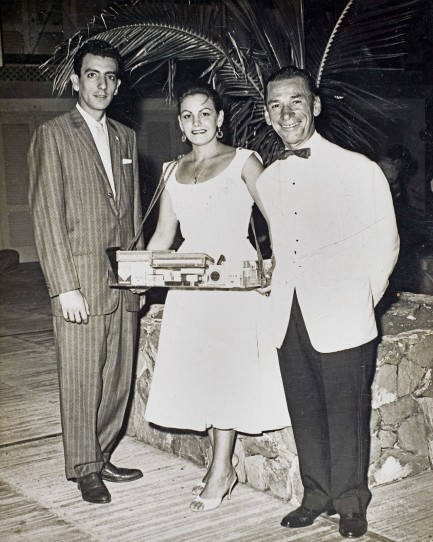 Mafia kingpin Meyer Lansky, on the right in this shot, attends the opening of the Hotel Riviera in December 1957. Mafia kingpin Meyer Lansky, on the right in this shot, attends the opening of the Hotel Riviera in December 1957.
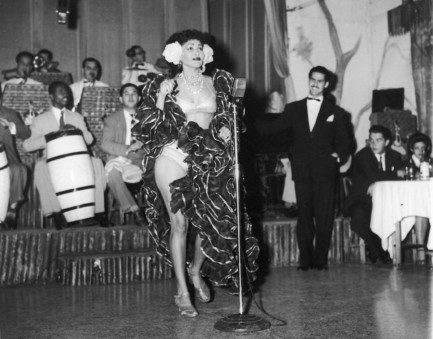 Famed entertainer Zulema dances the rhumba at the Zombie Club, 1946. Famed entertainer Zulema dances the rhumba at the Zombie Club, 1946.
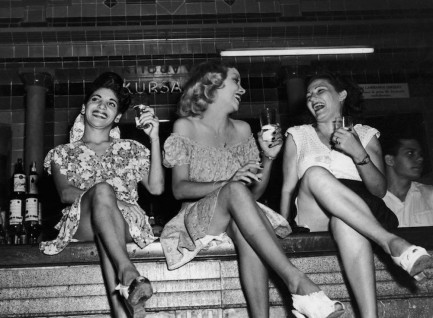 Three women liven up the room from their perch on the bar at Cabaret Kursal. Three women liven up the room from their perch on the bar at Cabaret Kursal.
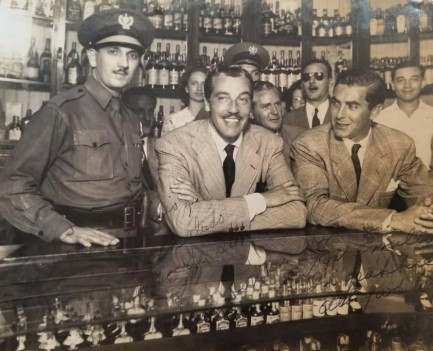 Cesar Romero and Tyrone Power enjoy a drink and a chat at Sloppy Joe's Bar. Cesar Romero and Tyrone Power enjoy a drink and a chat at Sloppy Joe's Bar.
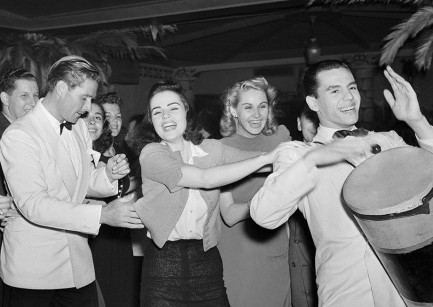 Revelers including Errol Flynn and Desi Arnaz, Jr. form a conga line during the Yoruba festival known as Dia de Babalú-Ayé. Revelers including Errol Flynn and Desi Arnaz, Jr. form a conga line during the Yoruba festival known as Dia de Babalú-Ayé.
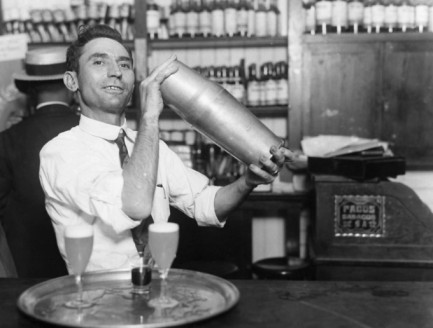 José Abeal Otero, founder of Sloppy Joe's Bar, mixes up a giant batch of liquid magic. No, this isn't the same person as above, Ribalaigua. They were both small, dapper guys. José Abeal Otero, founder of Sloppy Joe's Bar, mixes up a giant batch of liquid magic. No, this isn't the same person as above, Ribalaigua. They were both small, dapper guys.
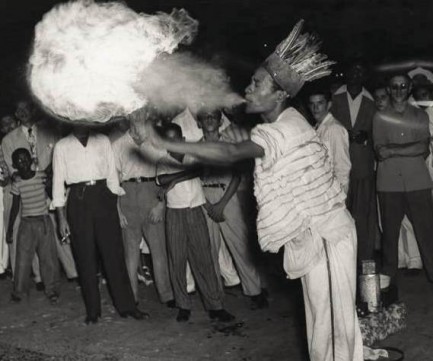 A firebreather thrills onlookers in front of the Saratoga Hotel, 1949. A firebreather thrills onlookers in front of the Saratoga Hotel, 1949.
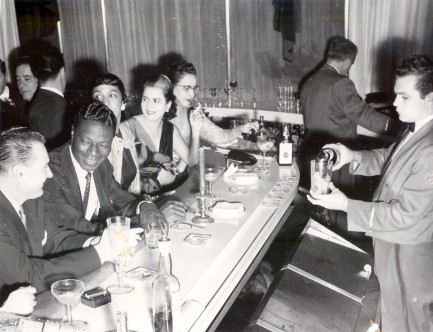 This photo shows Nat King Cole and his wife Maria Cole, along with Martin Fox, who was the owner of the Tropicana, accompanied by his wife Ofelia and an unknown fifth party. This photo shows Nat King Cole and his wife Maria Cole, along with Martin Fox, who was the owner of the Tropicana, accompanied by his wife Ofelia and an unknown fifth party.
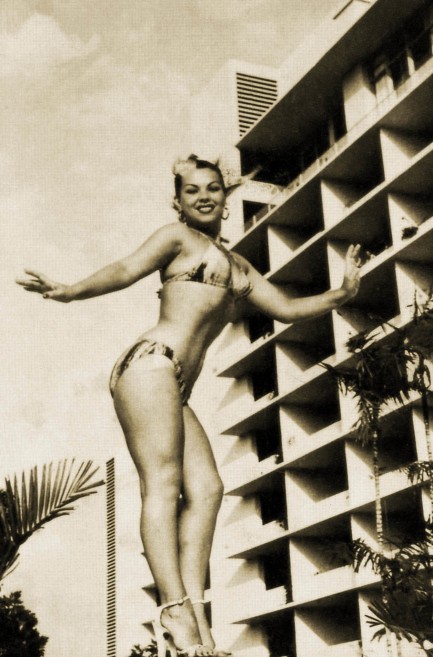 U.S. born vedette and movie star Tongolele, aka Yolanda Montes, poses outside the Capri Hotel and Casino, 1958. U.S. born vedette and movie star Tongolele, aka Yolanda Montes, poses outside the Capri Hotel and Casino, 1958.
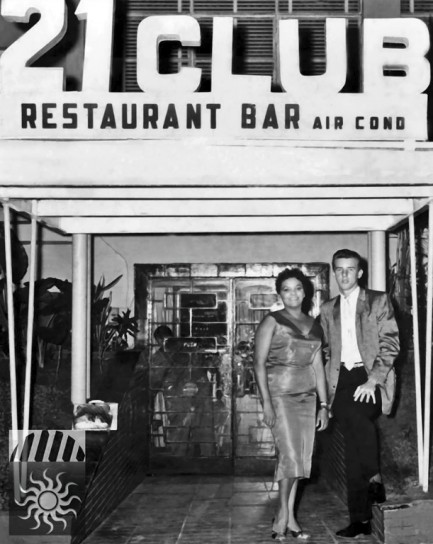 Meme Solis and Elena Burke pose at the entrance to the 21 Club, located in the Capri Hotel. Meme Solis and Elena Burke pose at the entrance to the 21 Club, located in the Capri Hotel.
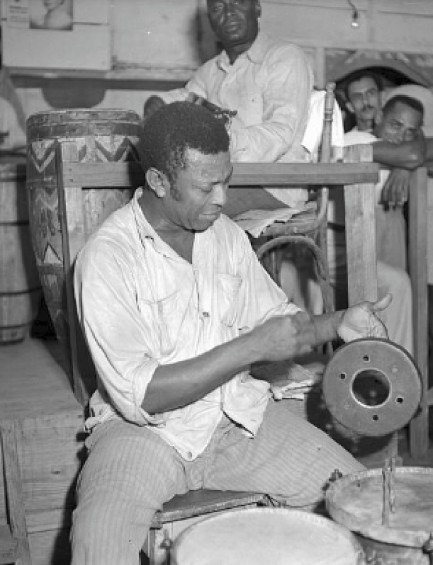 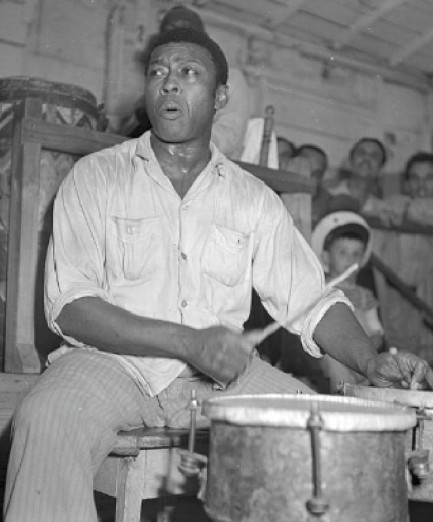 These photos show Silvano Chueg Echevarría, a master of percussion and an iconic musical personage. Let's go back to that Marlon Brando photo for a sec. Brando was an aficionado of percussive instruments. During that 1956 jaunt to Cuba he made it known that he wanted to buy drums from real percussionists. One of the musicians he met was Echevarría. All the Havana percussionists knew of Brando, of course, but thought he was a musical dilettante. At some point he finagled his way onto a nightclub stage, sat in with a band, and truly amazed onlookers with his ability on the conga. He wasn't a master, but he was pretty good. He won respect, and bought his drums. These photos show Silvano Chueg Echevarría, a master of percussion and an iconic musical personage. Let's go back to that Marlon Brando photo for a sec. Brando was an aficionado of percussive instruments. During that 1956 jaunt to Cuba he made it known that he wanted to buy drums from real percussionists. One of the musicians he met was Echevarría. All the Havana percussionists knew of Brando, of course, but thought he was a musical dilettante. At some point he finagled his way onto a nightclub stage, sat in with a band, and truly amazed onlookers with his ability on the conga. He wasn't a master, but he was pretty good. He won respect, and bought his drums.
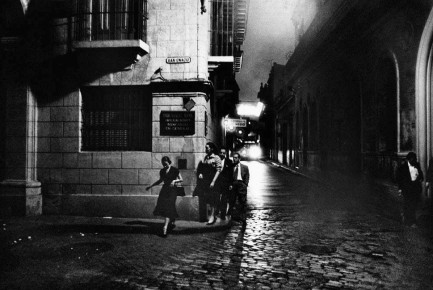 Raquel Revuelta, Manuel Corrales, and Mariano Rodriguez leave the famed bar Bodeguita del Medio and walk through the Havana night to other locales, other adventures, 1958. Raquel Revuelta, Manuel Corrales, and Mariano Rodriguez leave the famed bar Bodeguita del Medio and walk through the Havana night to other locales, other adventures, 1958.
 Once upon a time there was nobody hotter than Hemingway. 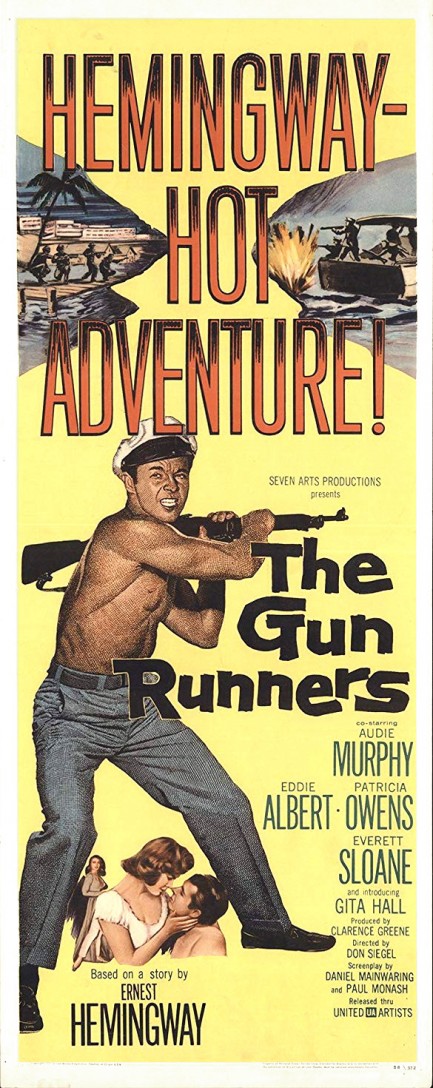
We'd heard that The Gun Runners, which premiered in Britain today in 1958, is the most faithful of the several film adaptations of Ernest Hemingway's novel To Have and Have Not. It isn't that close, actually, but it's Hemingway-hot! according to the promo poster. If we're catching the subtle inference correctly, that must mean it's good. Maybe, but what it really shows is Hemingway was so famous at this time that his mere name was a selling point. Think—how many novelists' names have you seen above the title on a movie poster in recent years? Stephen King comes to mind. Maybe Clive Barker, for a minute there. Michael Crichton? Possibly. After those three we draw a blank.
Well, we like Hemingway, and we love the Bogart/Bacall adaptation of To Have and Have Not, though it has nothing to do with the book. This Hemingway-hot! version stars Audie Murphy—yes, that one, and he's a solid enough actor—as a boat captain working out of Key West who gets ensnared in a dangerous scheme that involves smuggling weapons to Cuba. Eddie Albert as the heavy is as amoral as they come, and in supporting roles you get Patricia Owens, Gita Hall, and Everett Sloane. Sometimes the performances in old movies don't feel quite right to modern sensibilities, but you could transplant Albert's performance note for note into a new movie. Acting that stands the test of time that strongly is rare.
Another thing that stands the test of time are the themes explored here. In the novel, the item some people have that others have not is money and the freedom it brings, but in The Gun Runners what people either have or have not would appear to be scruples. It's no surprise that the structural inequality aspect of Hemingway's text was downplayed—who wanted to hear about that in 1958, when so many Americans could work a simple job yet afford a car, a house, and a family? But people sure have a clear understanding of inequality these days, don't they? For that reason alone, we think this flick will resonate with many. We recommend putting this in your queue. In the end it really is Hemingway-hot! 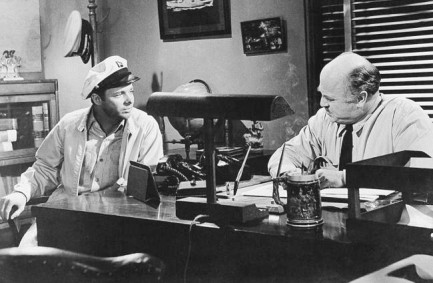 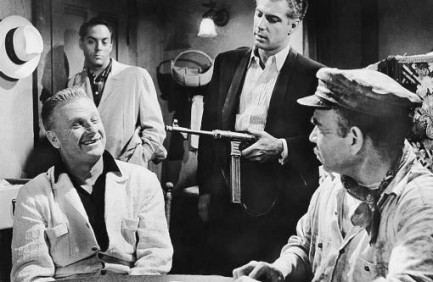 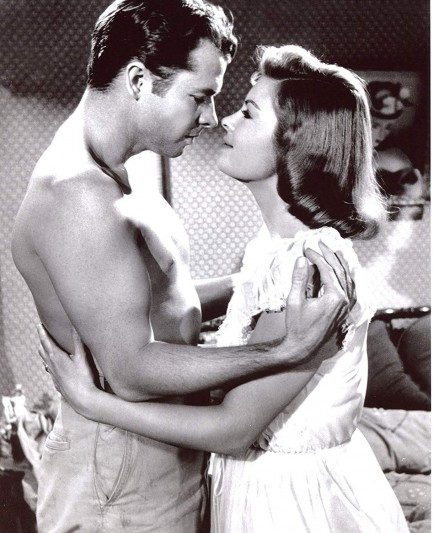 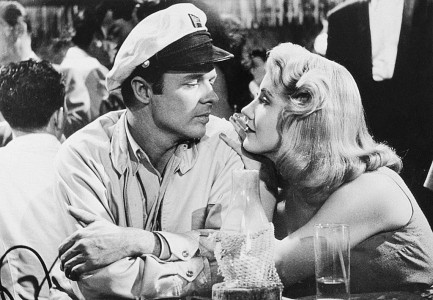 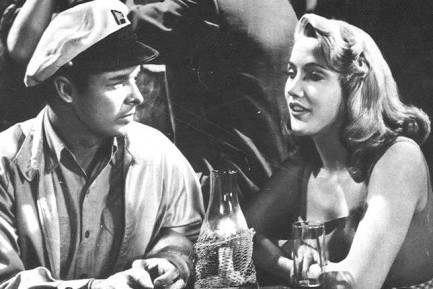 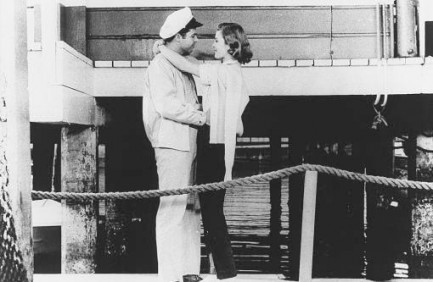 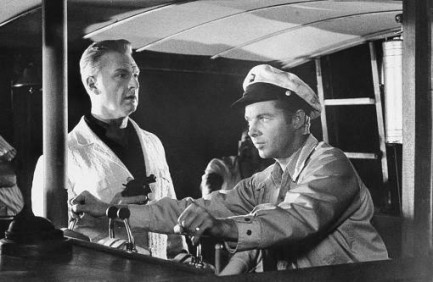 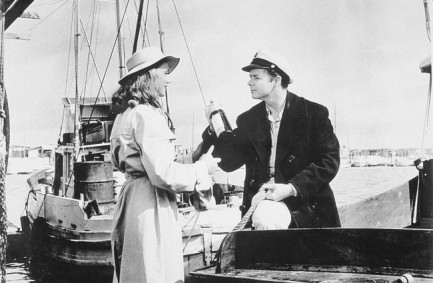 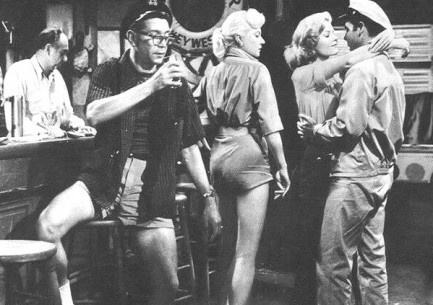 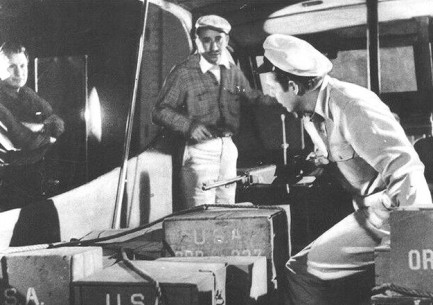 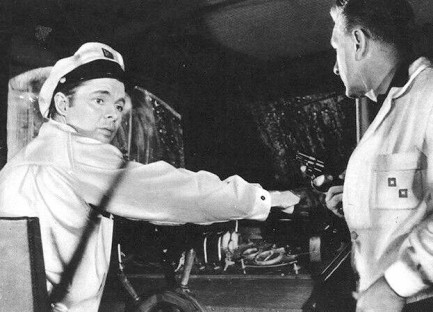 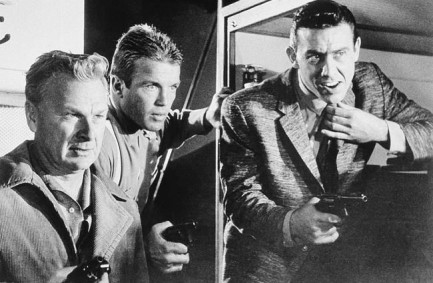 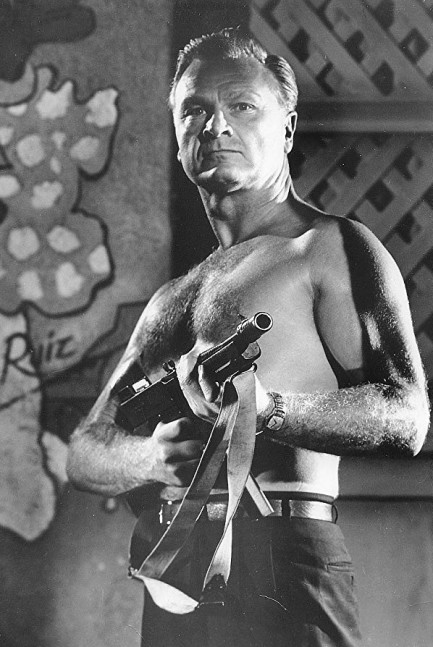 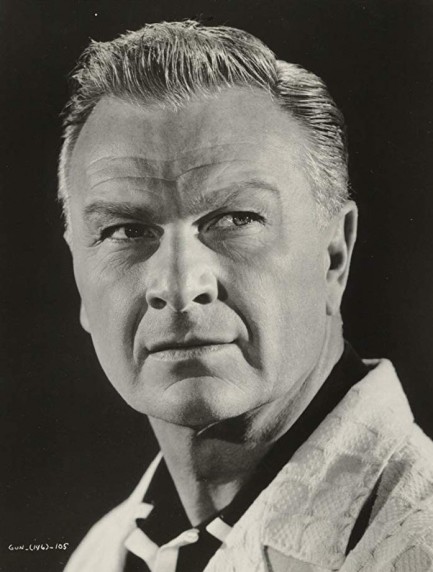

|
 |
The headlines that mattered yesteryear.
1933—The Gestapo Is Formed
The Geheime Staatspolizei, aka Gestapo, the official secret police force of Nazi Germany, is established. It begins under the administration of SS leader Heinrich Himmler in his position as Chief of German Police, but by 1939 is administered by the Reichssicherheitshauptamt, or Reich Main Security Office, and is a feared entity in every corner of Germany and beyond. 1937—Guernica Is Bombed
In Spain during the Spanish Civil War, the Basque town of Guernica is bombed by the German Luftwaffe, resulting in widespread destruction and casualties. The Basque government reports 1,654 people killed, while later research suggests far fewer deaths, but regardless, Guernica is viewed as an example of terror bombing and other countries learn that Nazi Germany is committed to that tactic. The bombing also becomes inspiration for Pablo Picasso, resulting in a protest painting that is not only his most famous work, but one the most important pieces of art ever produced. 1939—Batman Debuts
In Detective Comics #27, DC Comics publishes its second major superhero, Batman, who becomes one of the most popular comic book characters of all time, and then a popular camp television series starring Adam West, and lastly a multi-million dollar movie franchise starring Michael Keaton, then George Clooney, and finally Christian Bale. 1953—Crick and Watson Publish DNA Results
British scientists James D Watson and Francis Crick publish an article detailing their discovery of the existence and structure of deoxyribonucleic acid, or DNA, in Nature magazine. Their findings answer one of the oldest and most fundamental questions of biology, that of how living things reproduce themselves. 1967—First Space Program Casualty Occurs
Soviet cosmonaut Vladimir Komarov dies in Soyuz 1 when, during re-entry into Earth's atmosphere after more than ten successful orbits, the capsule's main parachute fails to deploy properly, and the backup chute becomes entangled in the first. The capsule's descent is slowed, but it still hits the ground at about 90 mph, at which point it bursts into flames. Komarov is the first human to die during a space mission.
|

|
|
It's easy. We have an uploader that makes it a snap. Use it to submit your art, text, header, and subhead. Your post can be funny, serious, or anything in between, as long as it's vintage pulp. You'll get a byline and experience the fleeting pride of free authorship. We'll edit your post for typos, but the rest is up to you. Click here to give us your best shot.
|
|