 Herbert Kastle writes South Beach as Sodom in his sprawling kidnap thriller. 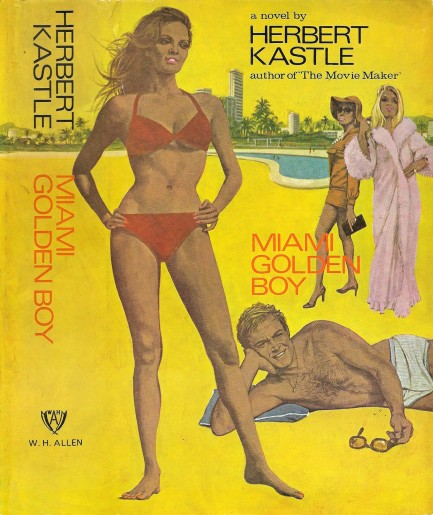
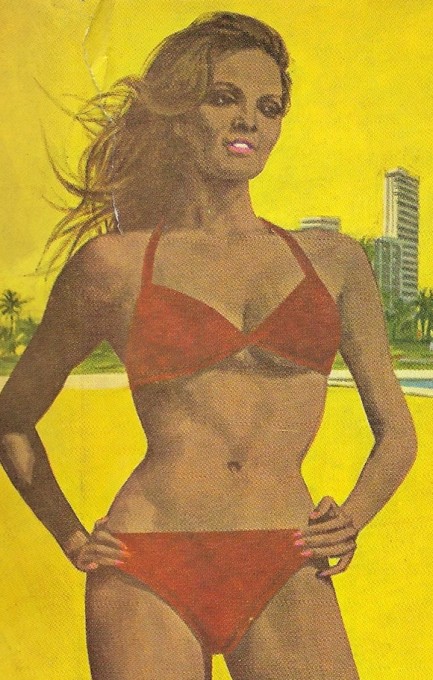
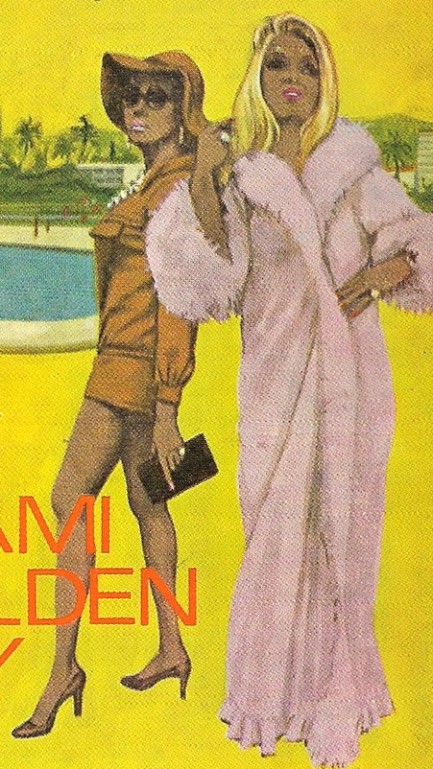
Miami Golden Boy is the wrong title for this book. It's too trite for the tale of a plot to kidnap the invalid former president of the U.S., which intersects a plot by Havana expats to return to Cuba and depose Fidel Castro. While the book gets its name from the ostensible central figure Bruce Golden, there's a vast assortment of characters, including a Kennedyesque political clan, that keeps him out of the narrative for entire chapters. These characters have deeply detailed personal lives that add dimension but strain credulity. One secretly has cancer, one is secretly gay, one is secretly sadistic, one is secretly a pedophile, one is being blackmailed, one is secretly a drug addict, one is secretly suicidal. It's a lot. But okay, the only question that matters is does it all work? Well, mostly. Kastle uses these secrets to weave a tale of decadent American decline, with South Beach as a backdrop. A choice example:
“The country is beginning to stink. Our stated goals and our actual goals are drawing farther and farther apart. And the divergence is tearing us apart. We've either got to bring the actual goals closer to the stated goals—reduce the materialism in our lives, the idiocy of our anti-communist crusades, the cruelty and blindness of our dealings with blacks—or admit that the stated goals are false.”
Kastle wrote that fifty-two years ago, and we know how things have gone since then. His abduction plot is a symptom of the greed, hypocrisy, and decline he details. The scheme involves several characters using several other characters as pawns. The lever in most cases is sex, and the book is pretty well packed with sexual content, occasionally explicit, and in one case violent. Then there's that pedo thing too. Kastle doesn't shy away from it, though you may wish he had. The tapestry of duplicity and manipulation, in terms of how it relates to the kidnap, needs to weave together in perfect synchronization, and of course doesn't. The scheme blows up spectacularly. If it didn't there'd be no book. Conversely, Kastle brings everyone's secret stories to miraculous conclusions within the space of the final thirty pages. That's the drawback of so many characters—a few story arcs don't end convincingly.
Even so, the one thing you cannot say is that Kastle doesn't know how to write. His skillful prose makes the slam bang climax almost believable. Bruce Golden, a bit of a shallow playboy, isn't a great guy but at least he isn't a killer, kidnapper, or political plotter, so he's the character you root for. His love interest Ellie De Wyant, on the other hand, is a crucial if unwitting cog in the kidnapping, which means if Golden is to have her he may have to do something he's never done in his entire life—show courage in the face of danger. Will he or won't he? We think Miami Golden Boy is worth a read to find the answer. And speaking of worth, books with Barbara Walton cover art aren't usually cheap, but this one from the publisher W.H. Allen was. We got lucky. Walton was one of the top illustrators of her era. See more from her here and here.
 The tabloid media was like a pack of animals and Mansfield was the meal. 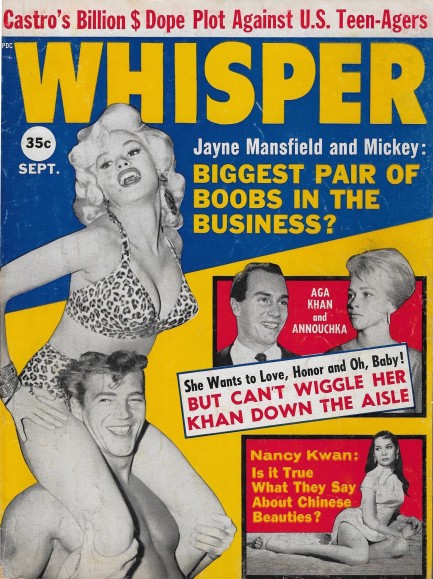
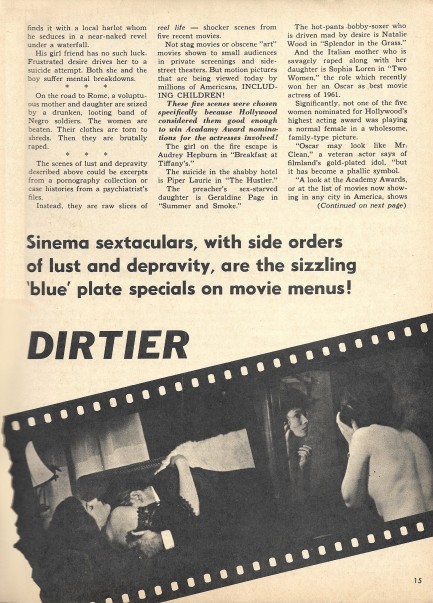
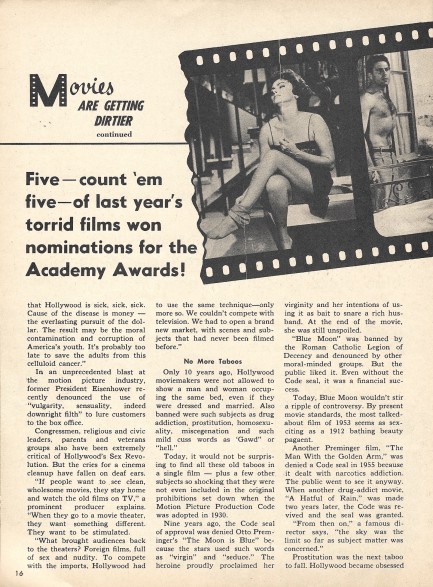
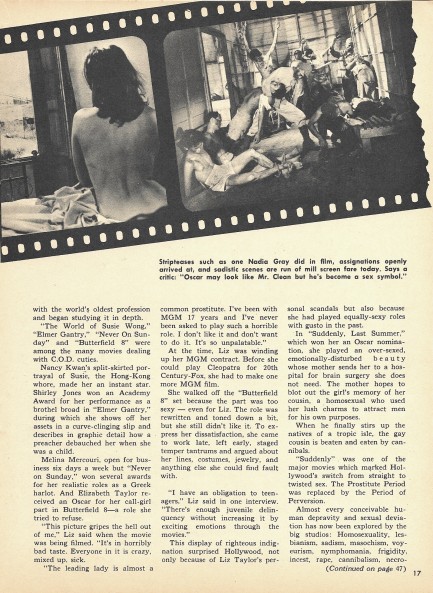
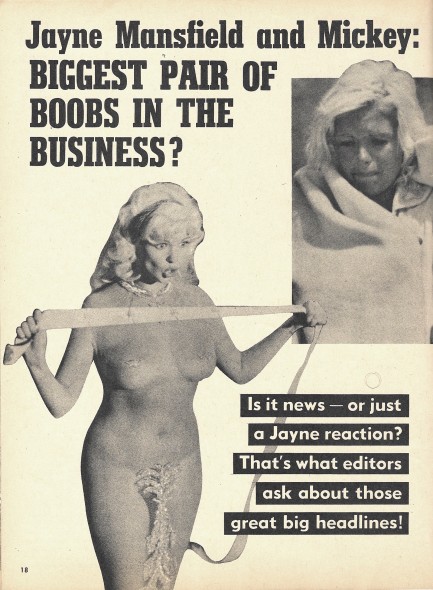
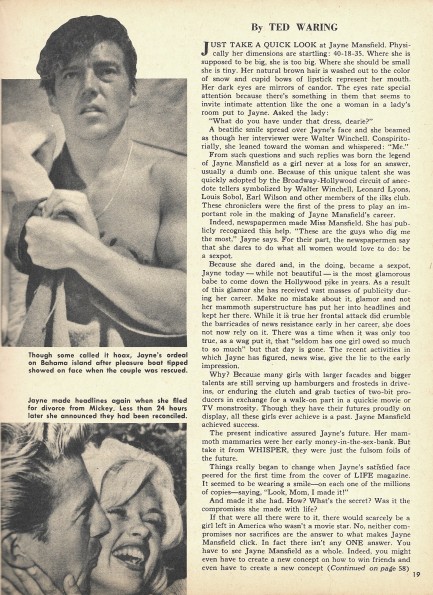
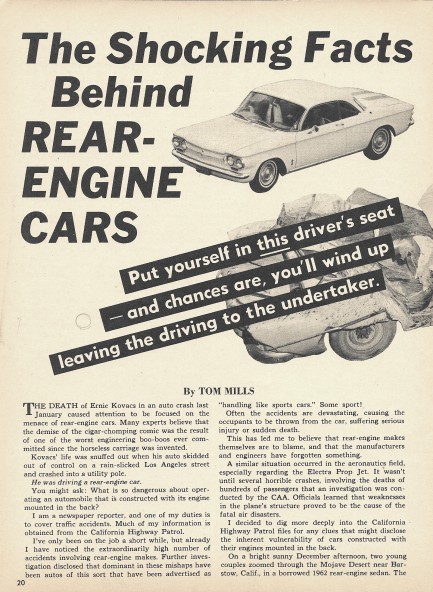
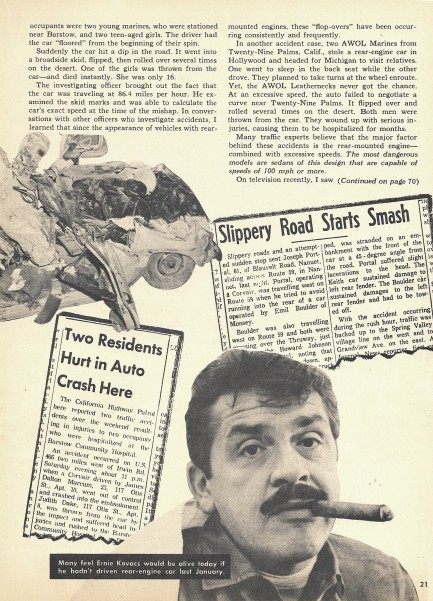
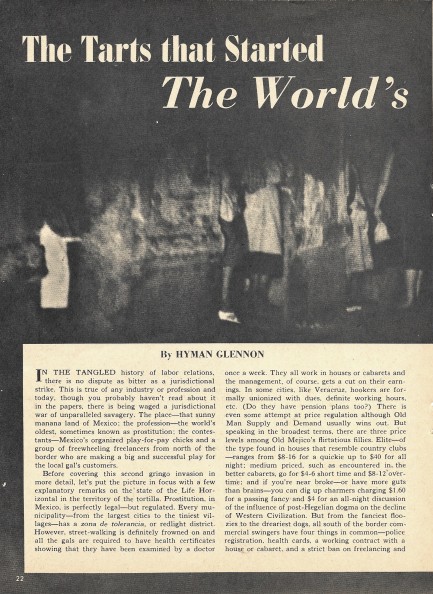
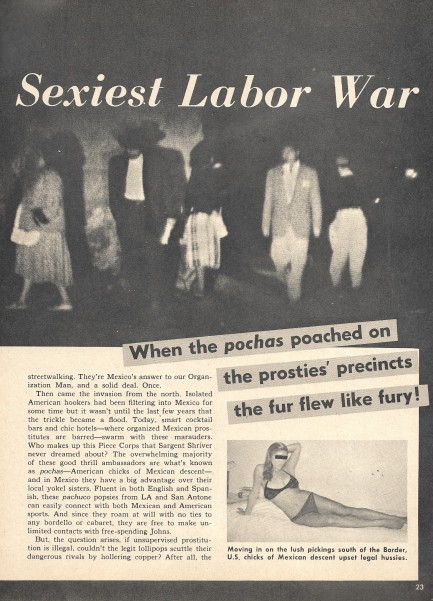
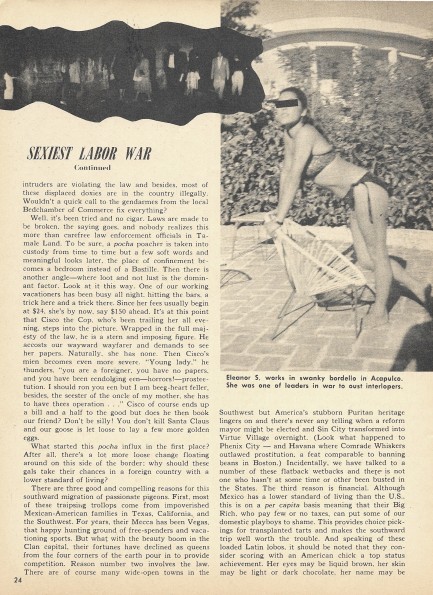
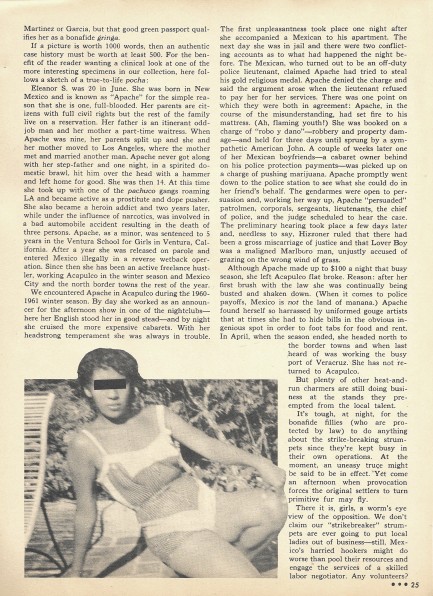
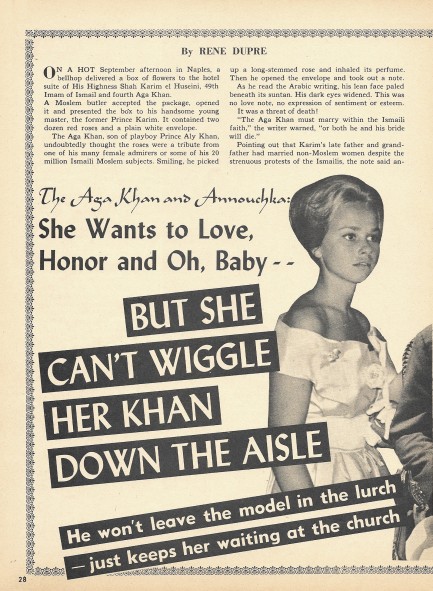
We never realized this before, but the editors of Whisper really had it in for Jayne Mansfield. We mean more than usual for a vicious tabloid. Most of the issues we have contain highly negative stories about her, such as this one published in 1962 that calls her and husband Mickey Hargitay “the biggest pair of boobs in the business.” Geez, what did she do to them? Piss in their grits? Dropkick their Corgis? Obviously, the biggest boobs thing is a play on words referencing Mansfield's bust, but they're referencing her personality when they talk about her “false façade” and “up-front ways.” Regardless of whether Whisper approved of Mansfield, it couldn't stop featuring her—a fact the magazine acknowledged. We'll see her in these pages again.
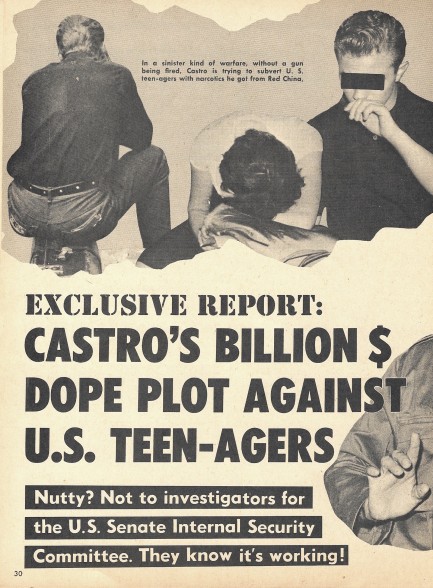
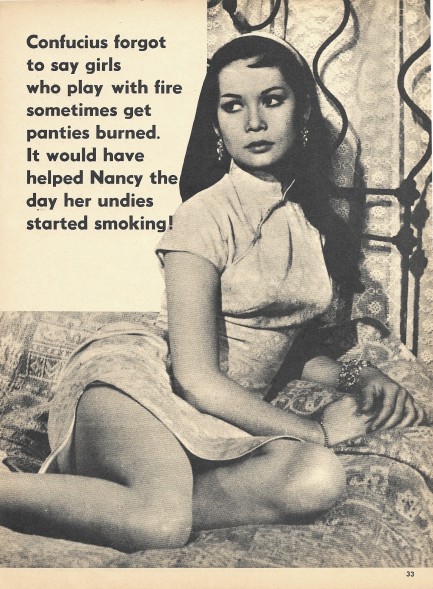
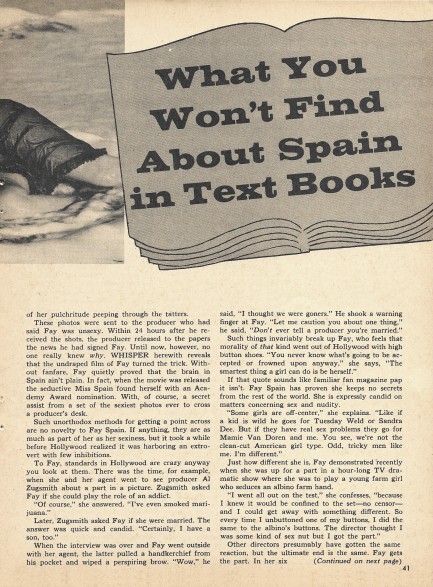
Meanwhile, elsewhere in Whisper, the amazing Señor Fidel Castro makes one of his regular appearances. Like Mansfield, the magazine couldn't stop writing about him. According to the editors, the Beard had launched a plot to addict American youth to drugs. We call Castro amazing because according to various mid-century tabloids he was simultaneously training Viet Cong soldiers in Cuba, funneling arms to U.S. inner cities, assassinating JFK, planning to overthrow the Catholic Church, raping teenaged girls, and helping East Germany revive the Third Reich. Talk about great time management skills. If only we were half as organized.
Did drugs flow from Cuba to the U.S.? It's an accusation that has come up numerous times over the years. Considering that since at least 1950 drugs were flowing into the U.S. from Colombia, Mexico, Peru, Brazil, Afghanistan, Thailand, et al—it would be astonishing if drugs didn't also originate from or transit through Cuba. With what degree of official approval we'll probably never know. Heads of state are notoriously insulated. In fact, the only one we can think of offhand who was definitively tied to drug dealing was Panama's former strongman Manuel Noriega, who was doing it with the full knowledge of the CIA, but we can probably safely assume he wasn't the first national leader to peddle drugs.
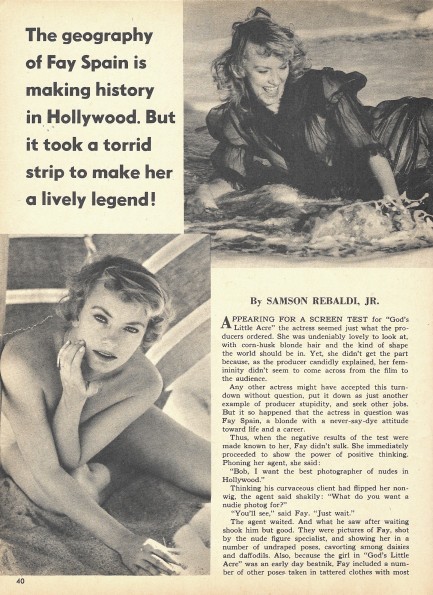
Whisper isn't aiming for investigative journalism in its Castro piece. That would require actual work. Its story is 90% lollipop, 10% stick. But the ratio of fiction to fact is meaningless as long as the writing fits the brief: focus obsessively on the sensational, the frightening, and the infuriating. That's why we call mid-century tabloids the cable news channels of yesteryear. Though people were doubtless highly agitated about what they read in these quasi-journalistic outlets, the passage of decades makes them harmless fun for us to explore. Maybe one day a future website—or whatever passes for one ages from now—will be able to make jokes about the things agitating us. Let's hope so. We have a bunch of scans below, and more tabloids than we can count inside the website. Look here.
 Cuban program to clone Fidel Castro goes horribly wrong. Multiple Castros result—but all are rampaging capitalists. 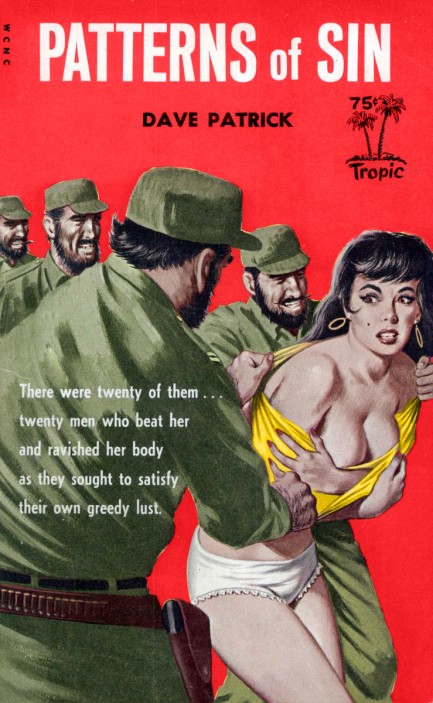
The lead character in Dave Patrick's 1965 novel Patterns of Sin is a college professor and ex-CIA operative named Thomas Keith who happens to be a millionaire. Only in sleaze fiction, right? When his latest girlfriend is almost kidnapped by rogue Cubans, he suspects there's more to her than meets the eye, and there is—she fled to the U.S. after some particularly sticky island dealings involving a long lost twin brother/incestuous lover who was a famed counter-revolutionary. Sadly, there are no clones, but who needs 'em? The incest angle is weird enough: “Tom had so reminded her of her brother that she'd almost called him by her brother's name as they made love.” She actually tells Thomas about her brother, and he's fine with it.
“Are you sure, Tom?” she whispered.
“Do the other women I've had bother you?”
“No, but men are supposed to be different. They're supposed to want virgins.”
“Every girl's a virgin to me, until I've made love to her.”
The government is interested in Tom's girlfriend and her Cuban connection, so he's brought back into the CIA, given a hot partner and—this being a sleaze novel—the partner is a woman with whom he has a steamy history. But they don't get together—the partner is gay now, prefers the Cuban girlfriend, and gets her. Thomas's reaction? “It's a waste of a beautiful woman as far as I'm concerned, but it's your life.” You may be wondering if there's any actual plot here. Not enough to matter. The anti-commie aspect is a mere placeholder between love scenes. The book was bad. We knew it would be bad. But we had to find out what it was about. It wasn't about clones the way the cover art might make you think, but maybe it should have been. That art, by the way, is by Bill Edwards—the mole on his female figures always gives it away.
 Fidel Castro's long vigil over Cuba comes to a close. 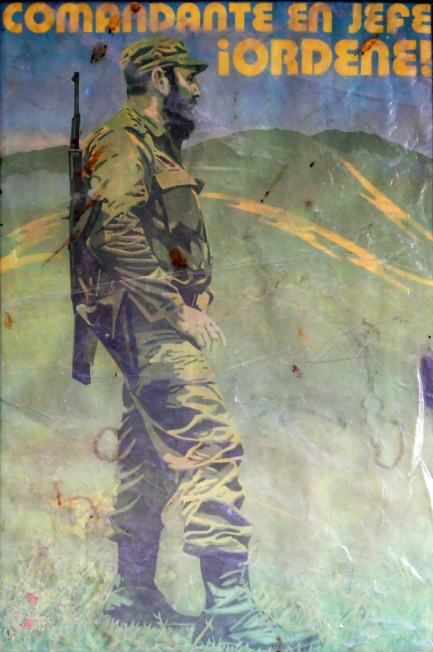
Above is a unique artifact we've been holding onto for several years—a photo of a metal Fidel Castro billboard located in the vicinity of Holguin, Cuba, a town in the southeast part of the island. Political billboards are a common sight in Cuba but this one is unique, as far as we know. It says: “Commander in Chief: Order!” We were out of town when Castro died and didn't have a chance to comment on it, and now we've been beaten to it by everyone. Well, no matter. We've written about him—usually in relation to other iconic mid-1960s figures such as John F. Kennedy and Lee Harvey Oswald—numerous times, and you can see those posts yourself by clicking his keywords just below.
 Comprehensive photography book looks back at Cuba during the 1960s. 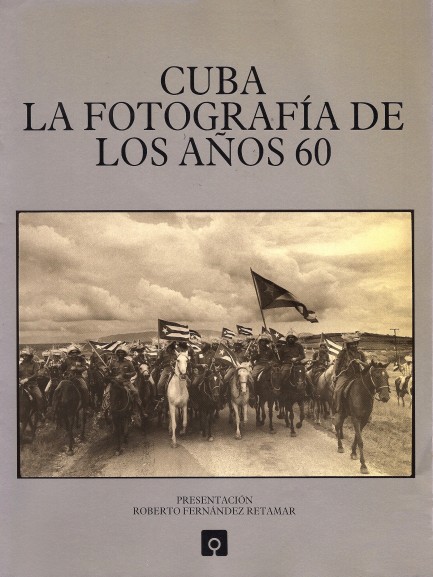
Seems everyone's talking about Cuba these days. Barack Obama became the first U.S. president to visit the island in ages, and every megacorporation from Home Depot to Major League Baseball wants to do business there. By any measure, Cuba's is a remarkable story, particularly its educational and medical accomplishments in the face of an economic blockade that keeps out everything from computer chips to breakfast cereal. Despite that embargo, Cubans can convincingly claim to be better off than residents in nearby capitalist nations like Honduras (highest per capita murder rate in the world), El Salvador (thousands killed each year by rampaging drug gangs), Haiti (59% poverty rate), and even Puerto Rico ($70 billion in debt—an astonishing $20,000 per resident). But one thing Cubans don't have is the opportunity to accumulate wealth. That may be about to change. At such a moment, then, it seems like a good opportunity to look back at Cuba as it was during the heady days during and just after the Cuban Revolution. Cuba la fotografía de los años 60 is a large volume of images from that time, shot by such figures as Ernesto Fernández, Alberto Korda, and Raúl Corrales. The photos are mostly rare, and the technical quality is consistently high. We scanned the images below several years ago (the book appeared in 1988), but only just got around to sharing them today. As a bonus, there's an eloquent preface written by Roberto Fernández Retamar, which we've uploaded in its entirety. If you've followed Pulp Intl. for a while you probably know we lived in Central America for some years, spending most of our time in Guatemala, but traveling around to numerous countries on the isthmus and in the Caribbean. So the region is a subject of some interest to us. Cuba will gain plenty from being allowed to reconnect with the world, but it will lose plenty too. It's impossible to know what sort of balance will be struck. Cubans, excited but also concerned, hope for a better one than exists in many of its neighbor countries, but only time will tell. 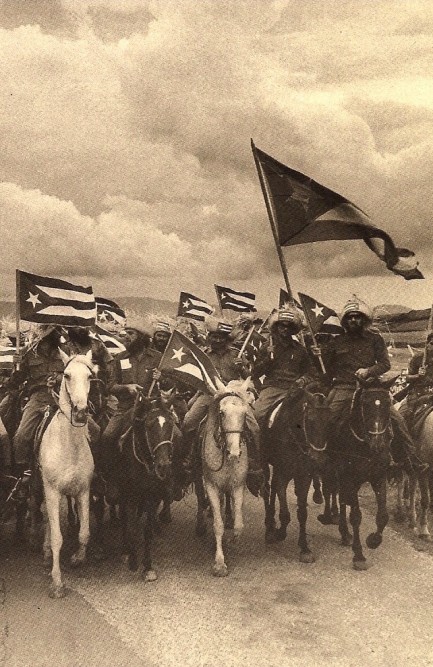 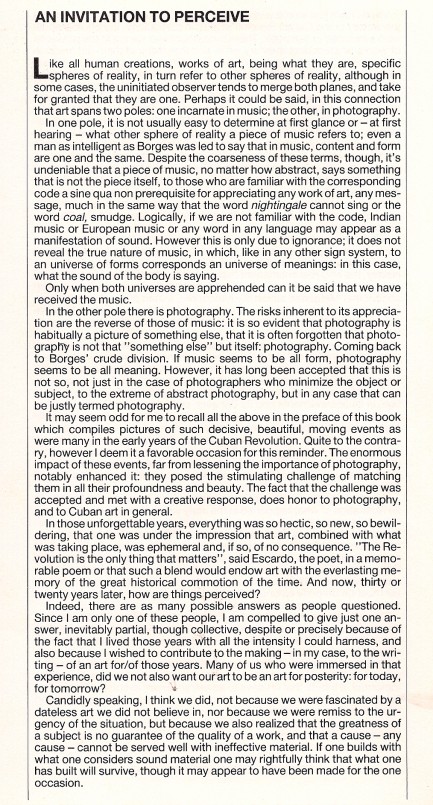 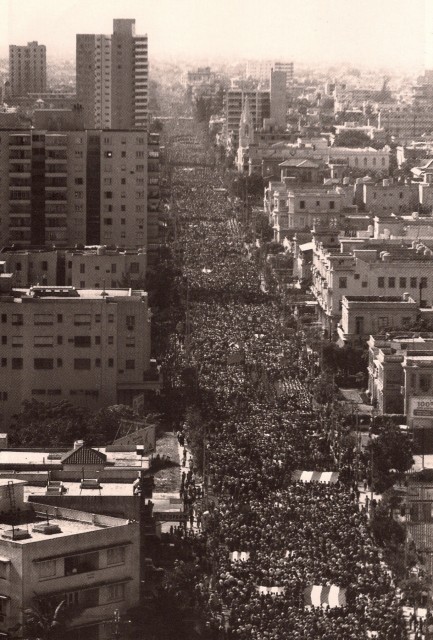 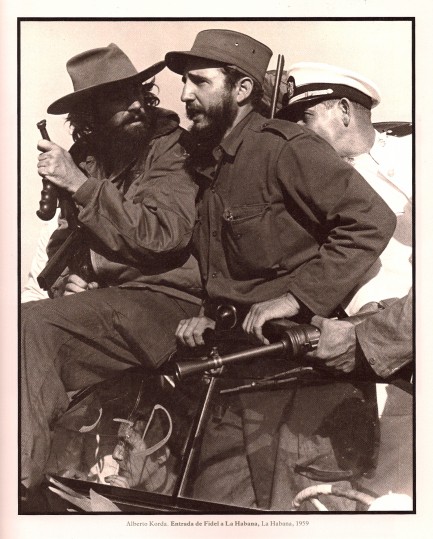 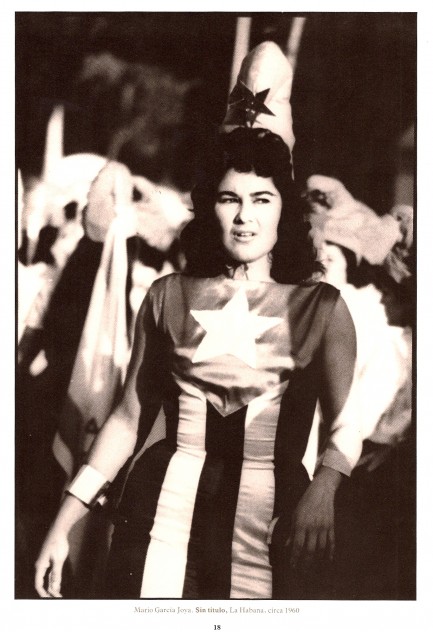 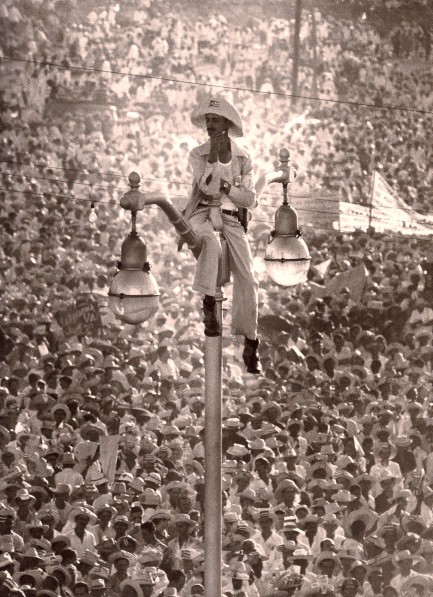 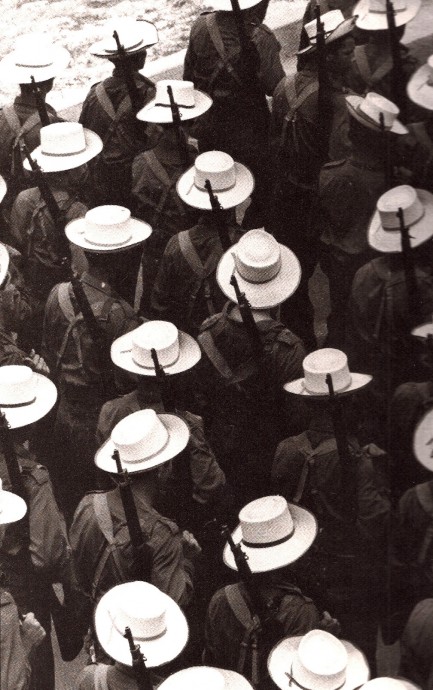 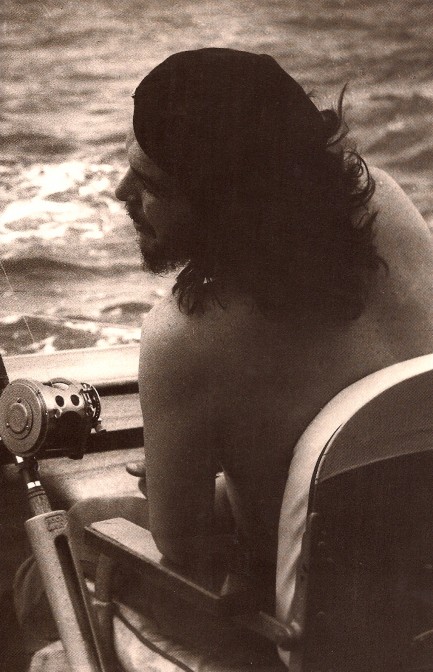 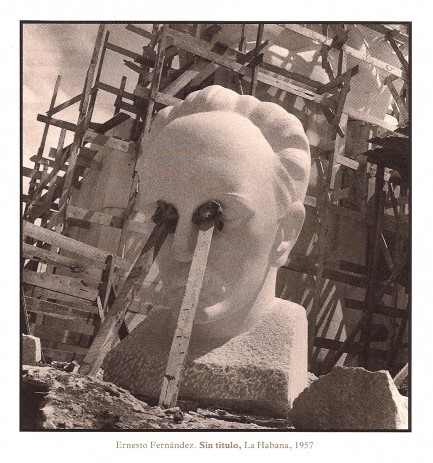 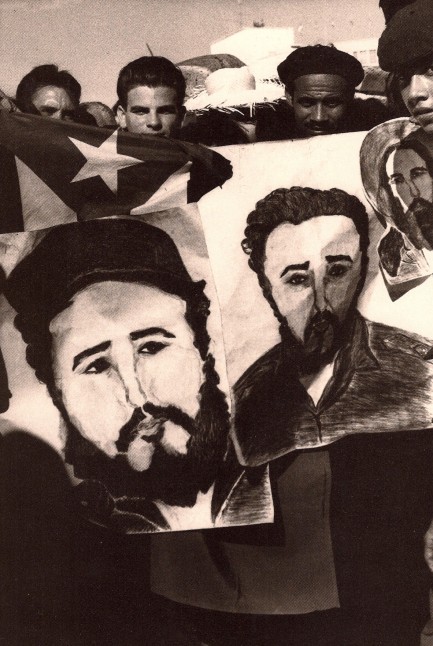 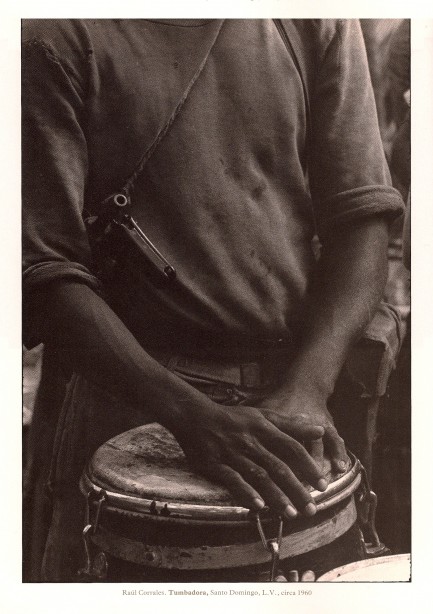 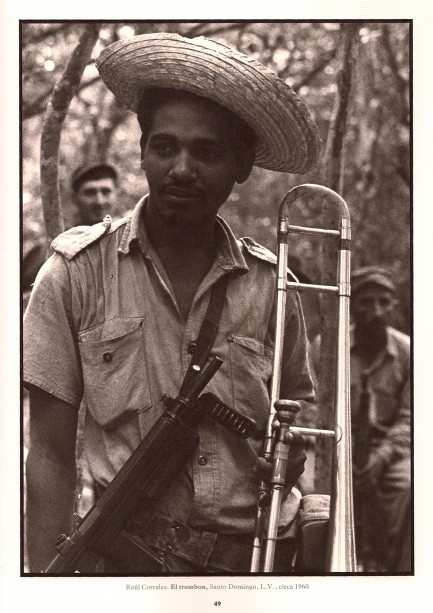 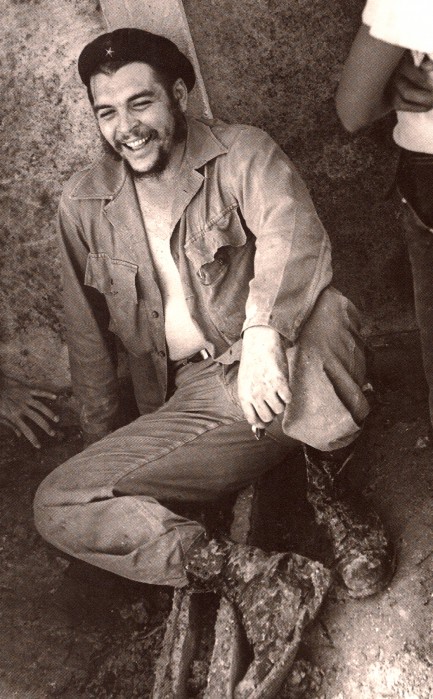 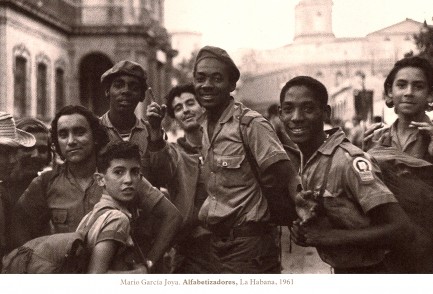
 Hasta siempre, Comandante. 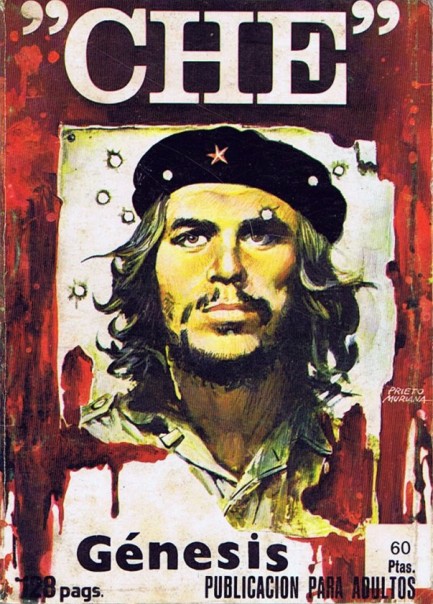 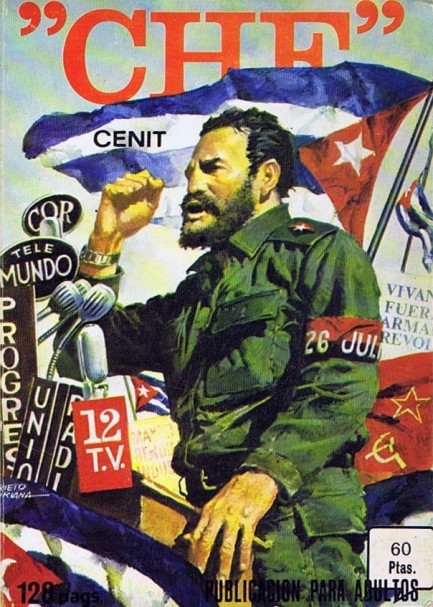 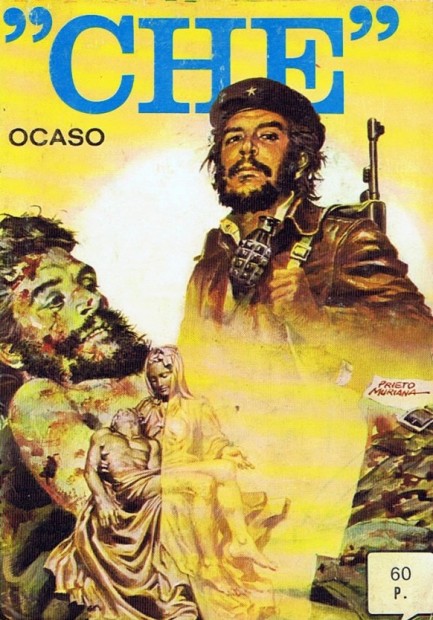
Since we mentioned in our Kennedy post that Mercocomic had serials about other historical figures, we decided we’d go ahead and share these Spanish Che covers from 1978. The complete run was three issues in the order seen, and the art is once again from the excellent Prieto Muriana, who even worked in a Pietà on cover three. “Hasta siempre, Comandante,” by the way, is a very famous Carlos Puebla song recorded by everyone from Joan Baez to Nathalie Cardone.
 Police Gazette gets readers up to date with Ava Gardner but it’s their Castro story that leads someplace interesting. 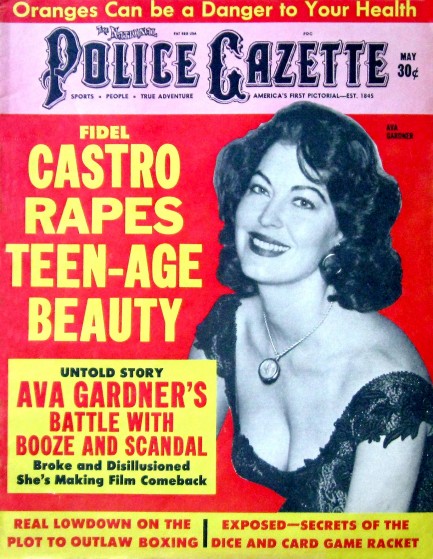 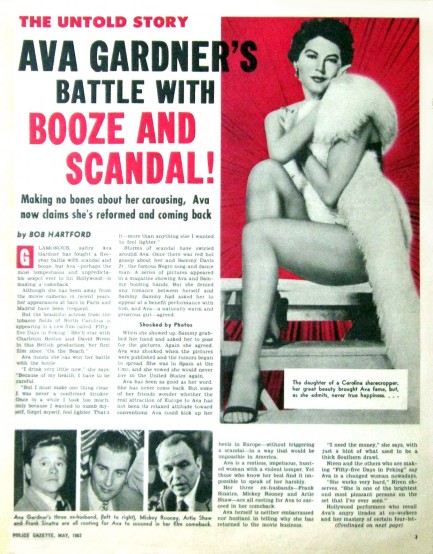
Above are a couple of scans from an issue of The National Police Gazette published this month in 1963 with cover star Ava Gardner. Gardner had been living in Spain and hadn’t been in a movie in three years, but was about to appear in the historical war drama 55 Days at Peking with Charlton Heston and David Niven. The Gazette discusses how she’d gotten fed up with the U.S.—particularly the American press. She had been particularly annoyed by the rumor that she was involved with Sammy Davis, Jr., a story that took flight after several magazines published photos of the two holding hands. When asked why she was returning to Hollywood after being out of circulation for so long, Gardner, in typically blunt fashion, replied, “I need the money.” Moving on, we’ve pointed out that the Gazette made a longstanding habit of using Adolf Hitler on its covers, but his wasn’t the only face that moved magazines. After Fidel Castro assumed leadership of Cuba, the Gazette regularly wrote scathing stories about him. We’ve already learned that he let Viet Cong killer squads train in Cuba, and that he planned to “arm southern Negroes” in order to foment revolution in the U.S. Well, now we learn he was also a rapist. Figures, right? He might have been supreme leader of an island filled with beautiful women, but people always want what they can’t have—in this case, a teenaged ship captain’s daughter named Lisa. Gazette writer Bob Hartford cranks up the melodrama: Castro laughed drunkenly as he weaved his way into Lisa’s sitting room. “Have you changed your mind, my pet?” he demanded. “No,” replied the brave but frightened girl.  All Castro needs at that point is a Lacoste sweater and a fraternity paddle and his transformation into pure evil would be complete. But as fanciful as the story seems, Lisa really did exist. Her real name was Marita Lorenz and she was Castro’s live-in mistress for several months in 1959. While Lorenz herself never suggested she was ever raped by Castro, the two did have a falling out around the issue of her unplanned pregnancy, which was terminated in its sixth month. Lorenz later said the abortion was forced on her while she was drugged; Castro’s associates claim that she wanted it. Lorenz went on to join anti-Castro activists in the U.S., and on a fundraising visit with the deposed Venezuelan dictator Marcos Pérez Jiménez, became involved with him. She was still traveling to and from Cuba, and was recruited by the CIA for a Castro assassination attempt. But instead of poisoning his food, like she’d been instructed, she abandoned the plot, supposedly because she still felt strongly for him. Lorenz later wrote about all this in two autobiographies. All Castro needs at that point is a Lacoste sweater and a fraternity paddle and his transformation into pure evil would be complete. But as fanciful as the story seems, Lisa really did exist. Her real name was Marita Lorenz and she was Castro’s live-in mistress for several months in 1959. While Lorenz herself never suggested she was ever raped by Castro, the two did have a falling out around the issue of her unplanned pregnancy, which was terminated in its sixth month. Lorenz later said the abortion was forced on her while she was drugged; Castro’s associates claim that she wanted it. Lorenz went on to join anti-Castro activists in the U.S., and on a fundraising visit with the deposed Venezuelan dictator Marcos Pérez Jiménez, became involved with him. She was still traveling to and from Cuba, and was recruited by the CIA for a Castro assassination attempt. But instead of poisoning his food, like she’d been instructed, she abandoned the plot, supposedly because she still felt strongly for him. Lorenz later wrote about all this in two autobiographies. In 1977, Lorenz told the New York Daily News that she met Lee Harvey Oswald in autumn 1963 at a CIA safe house in Miami. She claimed she met him again weeks later along with a group of anti-Castro Cubans and they had Dallas street maps. We all know what happened next. Lorenz eventually testified about this before the House Select Committee on Assassinations, but her story was deemed unreliable. We suppose bouncing between two dictators and acting as a double agent will tend to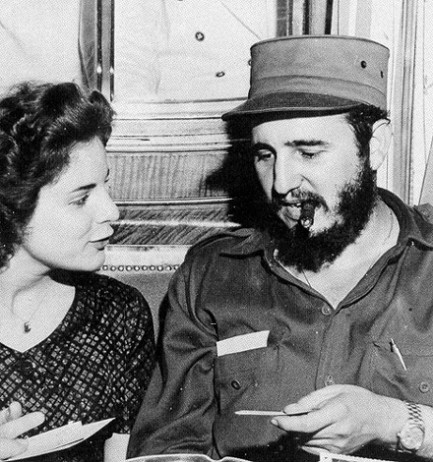 raise a red flag with American congressmen, though these things have no bearing on whether she was telling the truth. It’s interesting though, isn’t it? You’d think that if a single man of his own accord assassinated another man the surrounding circumstances wouldn’t be so… labyrinthine. Yet lurking near the supposed black swan event of the Kennedy killing were double-agents like Lorenz, spooks like E. Howard Hunt, underworld figures like Eladio Ceferino del Valle and others. Just saying. In any case, we’ll have more from the Police Gazette and more on Fidel Castro soon. raise a red flag with American congressmen, though these things have no bearing on whether she was telling the truth. It’s interesting though, isn’t it? You’d think that if a single man of his own accord assassinated another man the surrounding circumstances wouldn’t be so… labyrinthine. Yet lurking near the supposed black swan event of the Kennedy killing were double-agents like Lorenz, spooks like E. Howard Hunt, underworld figures like Eladio Ceferino del Valle and others. Just saying. In any case, we’ll have more from the Police Gazette and more on Fidel Castro soon.
 National Enquirer digs into JFK’s assassination. 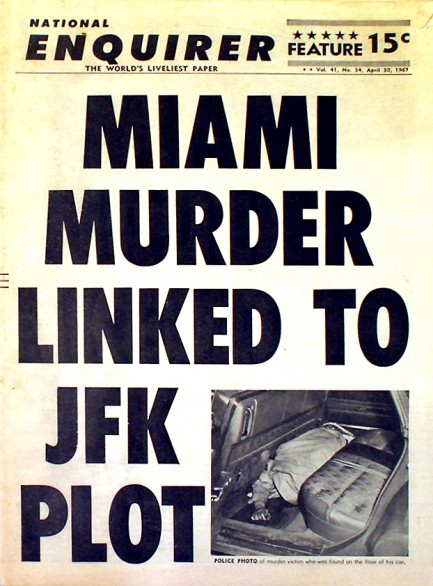
Above is a cover of National Enquirer published today in 1967 with a headline informing readers that three days after identifying the photo of an alleged conspirator in the assassination of President John F. Kennedy, a man named Eladio Ceferino del Valle was found dead in Miami. Good thing his photo is from a distance, because he had been severely beaten and shot in the chest, and his head had been chopped open. He died the same day another alleged Kennedy conspirator named David Ferrie died in New Orleans. Ferrie had two suicide notes next to him, but a coroner ruled the cause of death to be a naturally occurring aneurysm. Enquirer scribe Charles Golden perhaps goes off the rails a bit in trying to tie Kennedy’s assassination to Fidel Castro. He brands del Valle a Castro double agent who pretended to flee Cuba just before the revolution, but who was working for Fidel the entire time. Golden then claims that “key investigators feel Castro’s higher-ups used homosexuals for the assassination,” the significance being that David Ferrie was gay and del Valle was bi-sexual. Golden tosses off this doozy on page two of his story: “Sexual deviation is taking on special importance as new evidence comes to light in the assassination probe.” 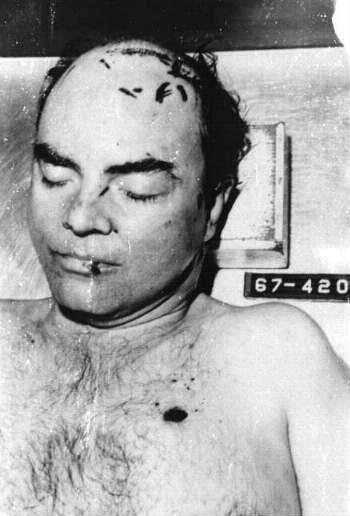 But even though Golden seems to let his own prejudices color his reporting, he does cite some interesting facts. Eladio del Valle’s and David Ferrie’s deaths occurred just as New Orleans District Attorney Jim Garrison, who was investigating Kennedy’s assassination, was planning to drag them into his probe. Eladio del Valle died three days after being contacted by Garrison, and Ferrie’s death came just days before Garrison planned to arrest him as part of his investigation. If all this sounds like the plot of Oliver Stone’s movie JFK, that’s because it basically is. But if any of it sounds untrue, it isn’t—it’s all public record. And if any of it sounds a bit crackpot, well, let’s just flip that term on its head, shall we? But even though Golden seems to let his own prejudices color his reporting, he does cite some interesting facts. Eladio del Valle’s and David Ferrie’s deaths occurred just as New Orleans District Attorney Jim Garrison, who was investigating Kennedy’s assassination, was planning to drag them into his probe. Eladio del Valle died three days after being contacted by Garrison, and Ferrie’s death came just days before Garrison planned to arrest him as part of his investigation. If all this sounds like the plot of Oliver Stone’s movie JFK, that’s because it basically is. But if any of it sounds untrue, it isn’t—it’s all public record. And if any of it sounds a bit crackpot, well, let’s just flip that term on its head, shall we?
 French painter Jacques Puiseux returns with another batch of pulp influenced contemporary art. 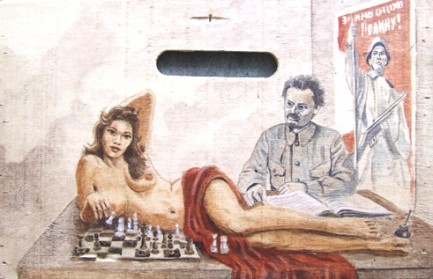
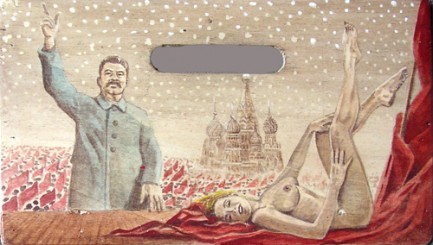
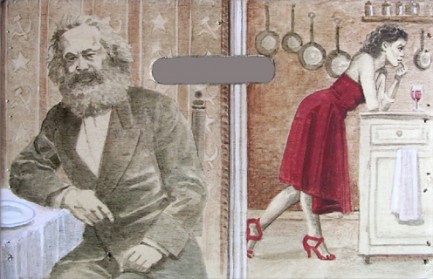
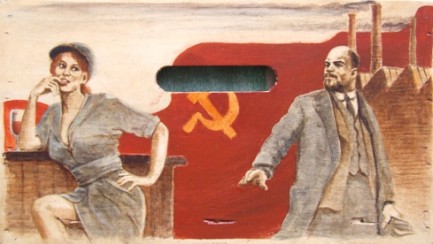
Last year we shared some unusual pulp influenced crate paintings from a French artist named Jacques Puiseux, and this morning we received more scans of his Marxist themed pieces via email. Last time we shared Puiseux’s work, we mentioned that we avoid posting modern art, and that’s true, but we didn’t want to leave you with the impression that we find it inferior to vintage art (if that were true we wouldn't bother to have a "Modern Pulp" category on the website). What we find inferior is modern promotional art—e.g., book covers, movie posters and the like. And obviously we find modern movies inferior, but then who doesn’t? However modern fine art is something we very much like, and more to the point, we like the relationship it has to the viewer. We aren’t art majors or anything, so bear with us while we try to explain ourselves. When it comes to classic art all the hard work is already done for you by the time you see it. You can go see Picasso’s blue portraits or Monet’s lilies or any run-of-the-mill Diego Rivera and know before you see it that you’re about to experience great art. But with contemporary art the viewer plays a role in deciding its ultimate worth. Certainly gallerists and museum curators have plenty of say, but the public is extremely important, and its influence can cut both ways. Sometimes, the public is wrong, as in the case of artists that never sold anything while alive, but whose flames were kept burning by critics and experts, eventually leading to a reevaluation of the work. Conversely, sometimes art is critically dismissed, but sustained public support brings about a reevaluation. That’s almost a description of the entire field of pulp art. So, while we glorify vintage art on this website, and in the case of promotional art we don’t think there’s any possible doubt that 99% of today’s efforts are just lame (maybe they should try letting actual artists do the work), we do like contemporary art, which means that when Jacques Puiseux sends us something that exhibits such a strong pulp influence we feel like we might as well throw it out there for you to have a gander at. It’s different from looking at a famous artist’s work—in this case, you actually have a say. And that’s the beauty of contemporary art. So at top is a piece featuring Leon Trotsky called “Embrouille à Tijuana,” just below is our favorite, “Fidèle-au-poste,” and under that are four more interesting efforts, including the last—“Tsar bomba.” For some context on that one, go here. 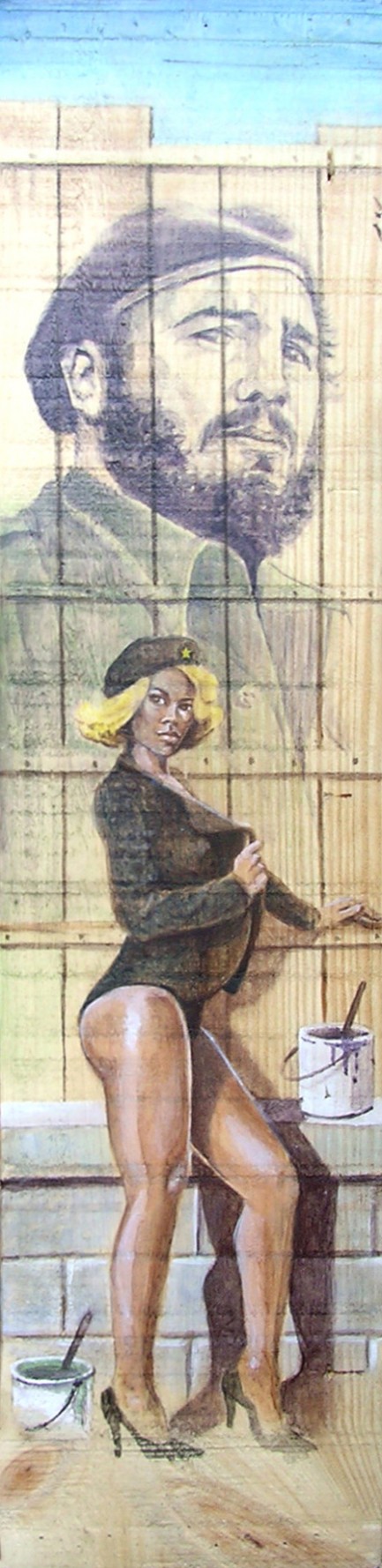

 Did Hollywood really freeze out the most popular starlet in the world? 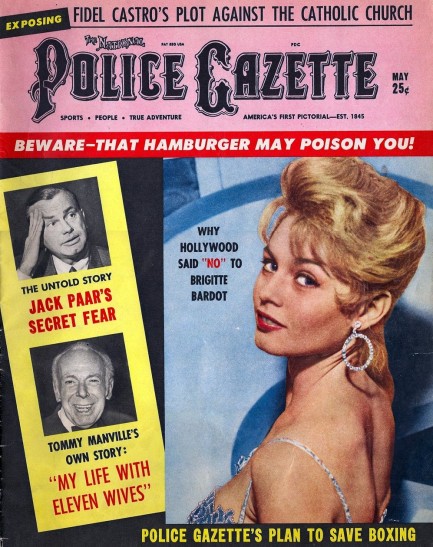
The National Police Gazette reveals on this cover from today in 1960 that Hollywood said no to Brigitte Bardot. The accompanying story quotes an unnamed independent producer, who says that the problem is that Bardot's deficient acting skills limited her to sex kitten roles, but American censorship meant Hollywood couldn't make those kinds of movies. He adds that, at $150,000 salary per project, Bardot is too expensive for Hollywood. A second “well-informed source” tells Gazette that studios are afraid of Bardot’s unbridled sexuality, claiming that her image is “so sexually devastating, that [Hollywood] quivers in fear before the slight, curvaceous French girl with the moist, pouted lips.” So, basically two of three reasons Police Gazette gives for Bardot not featuring in Hollywood films have to do with the influence of legions of American prudes. So maybe it wasn’t really a case of Hollywood saying no to Bardot as much as it was saying yes to sexual repressives. Bardot, it should be noted, simply continued on as the biggest star in the world. Elsewhere in this issue you get the plot-of-the-month attributed to Fidel Castro, tales of Adolf Hitler and Eva Braun, Jack Paar’s fears, and a nice portrait of Babe Ruth and Lou Gehrig. Scans of all that below, and more Gazette coming soon. 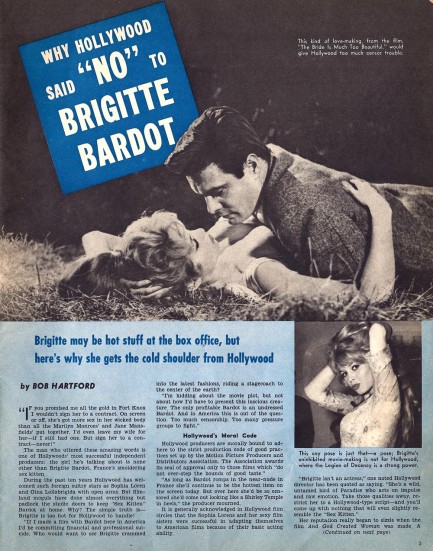 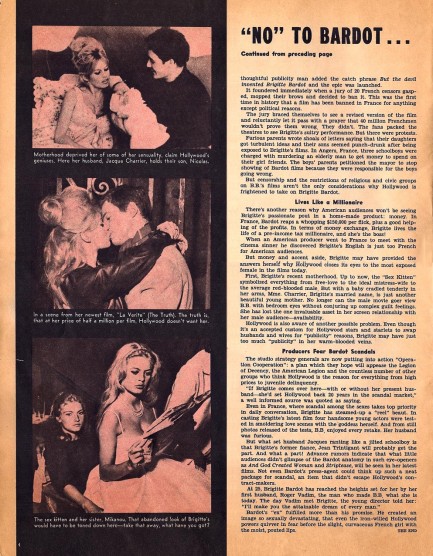 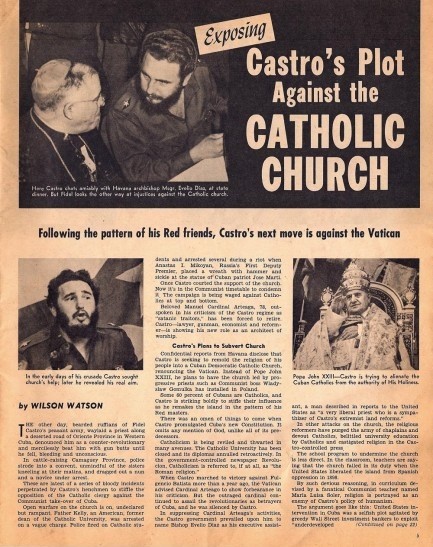 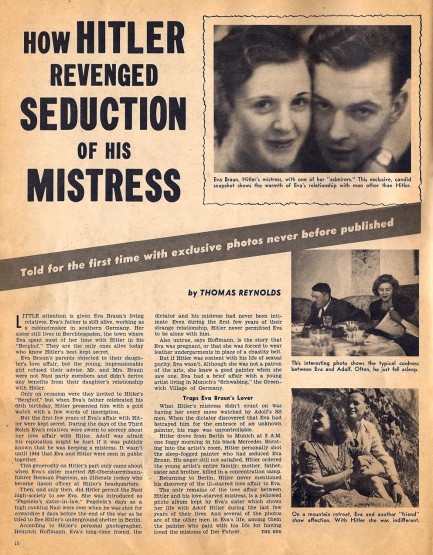 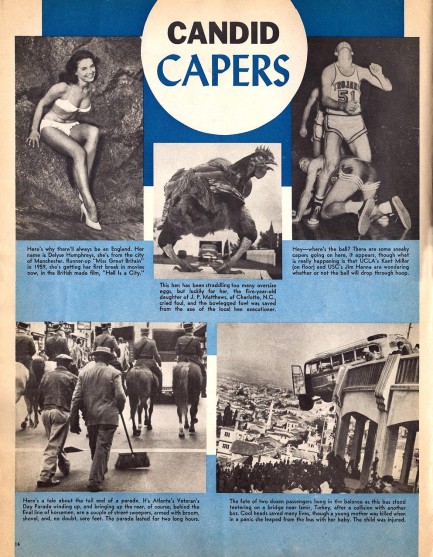 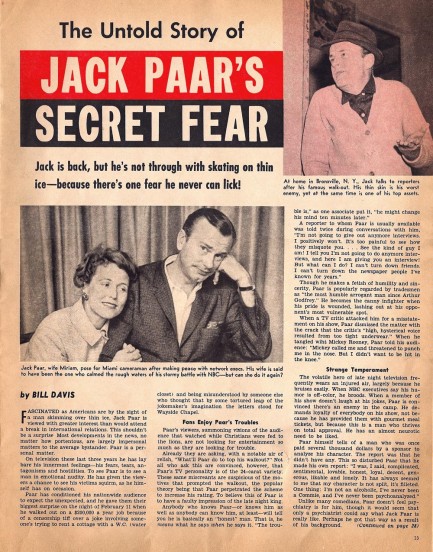 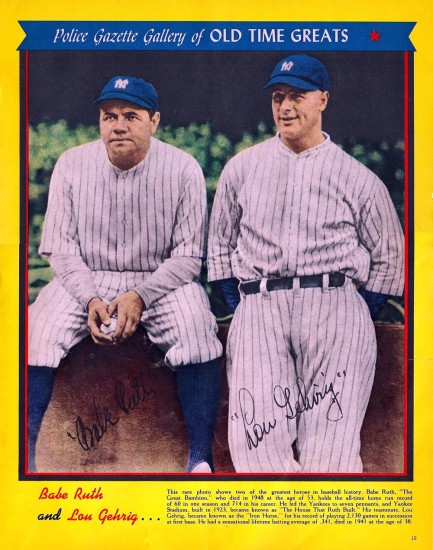

|
 |
The headlines that mattered yesteryear.
1967—First Space Program Casualty Occurs
Soviet cosmonaut Vladimir Komarov dies in Soyuz 1 when, during re-entry into Earth's atmosphere after more than ten successful orbits, the capsule's main parachute fails to deploy properly, and the backup chute becomes entangled in the first. The capsule's descent is slowed, but it still hits the ground at about 90 mph, at which point it bursts into flames. Komarov is the first human to die during a space mission. 1986—Otto Preminger Dies
Austro–Hungarian film director Otto Preminger, who directed such eternal classics as Laura, Anatomy of a Murder, Carmen Jones, The Man with the Golden Arm, and Stalag 17, and for his efforts earned a star on Hollywood's Walk of Fame, dies in New York City, aged 80, from cancer and Alzheimer's disease. 1998—James Earl Ray Dies
The convicted assassin of American civil rights leader Martin Luther King, Jr., petty criminal James Earl Ray, dies in prison of hepatitis aged 70, protesting his innocence as he had for decades. Members of the King family who supported Ray's fight to clear his name believed the U.S. Government had been involved in Dr. King's killing, but with Ray's death such questions became moot. 1912—Pravda Is Founded
The newspaper Pravda, or Truth, known as the voice of the Communist Party of the Soviet Union, begins publication in Saint Petersburg. It is one of the country's leading newspapers until 1991, when it is closed down by decree of then-President Boris Yeltsin. A number of other Pravdas appear afterward, including an internet site and a tabloid. 1983—Hitler's Diaries Found
The German magazine Der Stern claims that Adolf Hitler's diaries had been found in wreckage in East Germany. The magazine had paid 10 million German marks for the sixty small books, plus a volume about Rudolf Hess's flight to the United Kingdom, covering the period from 1932 to 1945. But the diaries are subsequently revealed to be fakes written by Konrad Kujau, a notorious Stuttgart forger. Both he and Stern journalist Gerd Heidemann go to trial in 1985 and are each sentenced to 42 months in prison.
|

|
|
It's easy. We have an uploader that makes it a snap. Use it to submit your art, text, header, and subhead. Your post can be funny, serious, or anything in between, as long as it's vintage pulp. You'll get a byline and experience the fleeting pride of free authorship. We'll edit your post for typos, but the rest is up to you. Click here to give us your best shot.
|
|