| Intl. Notebook | Mar 30 2009 |

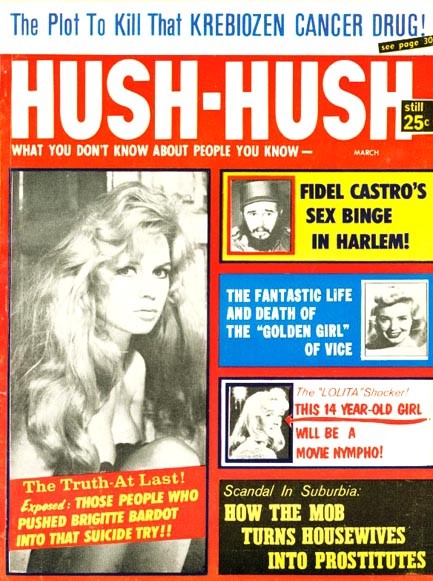
We’ve posted another nice Hush-Hush cover, this one from March 1961, with Brigitte Bardot, Fidel Castro and Sue Lyon on the cover. These tabloids always have such intriguing headlines, so this time we decided to do a bit of research on the stories. What we found was way too interesting not to share, so if you fancy a trip in the Wayback Machine to the year 1961, read on.
The drug Krebiozen, which is mentioned on the banner across the top of the magazine, was an experimental cancer treatment extracted from horse’s blood. Bad as that sounds, it gets downright gruesome when you consider that one horse yielded one gram of the drug, and the extraction process was fatal. That means treating America’s cancer patients would have required the death of every horse on the planet, along with some donkeys and mules, and possibly even a few humans with horsey features. But potential equine extinction isn’t what killed Krebiozen—what happened is its inventor, an Italian doctor living in Argentina named Stevan Durovic, refused to divulge to the American Medical Association or Food & Drug Administration precisely how Krebiozen was made for fear communists would get ahold of it. Or put another way, Dr. Durovic used his political beliefs as an excuse to duck legitimate questions from legislative bodies empowered to ask them.
As the saying goes, if it ducks like a quack it probably is a quack, and there seems little doubt that’s exactly what Durovic was. In the end, a very pissed-off FDA tested a reverse-engineered version of Krebiozen, which showed no discernible benefits for cancer patients. The question of whether they correctly manufactured the drug remains, but we don’t know the answer. What intrigued us most about this story was the fact that no contemporaneous articles we read expressed an iota of concern for potentially millions of slaughtered horses, nor Durovic’s stunning violation 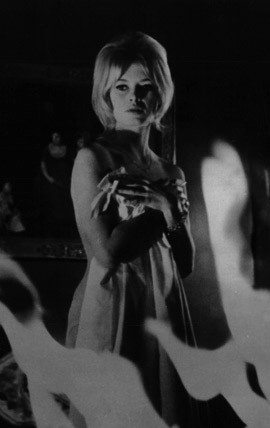 of his Hippocratic oath by publicly wishing harm on innocent cancer patients in the Eastern Bloc. Though we are retro fetishists here, we don’t believe the past, as a rule, was a better time—only that it was more glamorous and, during the 60s and 70s, more artistically daring and sexually freewheeling. None of those qualities compensates for its shortcomings, which the Krebiozen story makes clear.
Moving down the page, the story about Bardot struck us for one reason—we never heard she was suicidal. We’re actually embarrassed not to have known, but since our go-to reference site—ahem, IMDB—made no mention of attempted suicide, we were clueless. Of course, once we looked elsewhere, several comprehensive bios mentioned it. Bardot’s words on the subject are unflinching: “I really wanted to die at certain periods in my life,” she wrote in her autobiography. “Death was like love, a romantic escape.” It was so romantic an escape, in fact, that she tried to off herself more than once. We think the suicide try referenced by Hush-Hush occurred in 1958, when the Los Angeles Times reported Bardot had swallowed a bunch of sleeping pills after a nervous breakdown in Italy. Probably the maddening Rome traffic pushed her over the edge, which is totally understandable.
Next we hop across the page to where Hush-Hush presses the button marked X for xenophobia: Fidel Castro did indeed visit Harlem. In 1960 he was invited to New York City to speak at the United Nations. His delegation was supposed to stay at the swanky Shelburne Hotel on Lexington Avenue, but when they arrived the management asked his delegation for a $10,000 cash deposit. We don’t know much about lodging diplomats, but that seems a bit unusual, in our view. You’d think details such as payment would have been taken care of in advance, via either the UN or the host government. Anyway, Castro got upset and made a pretty big stink about it, even famously threatening to sleep in Central Park. In the end the Hotel Theresa in Harlem came to the rescue by offering the Cuban delegation rooms, and when Castro arrived there African American crowds turned out in the streets to either cheer him, or 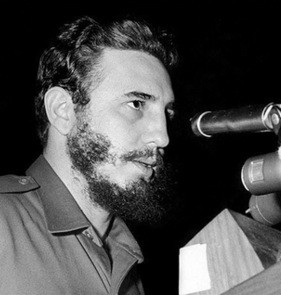
 curiously observe him, depending on which accounts you believe. We doubt Hush-Hush’s contention that the visit was some sort of sex holiday, but even if it were, La Barba was divorced at the time, so it wasn’t as if he committed infidelity. In-Fidel-ity. See how we did that?
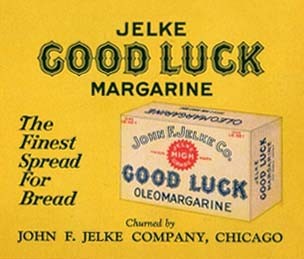
The last item we wanted to mention is the one concerning The Golden Girl of Vice. This is a reference to a woman named Patricia Ward, who was an aspiring actress pressed into prostitution by her boyfriend, oleomargarine heir Minot F. Jelke. That’s right—oleomargarine. Good Luck oleomargarine, to be precise, whose slogan was “the finest spread for bread.” Telling you, we couldn’t make this shit up if we wanted to. Apparently Jelke needed an income because his family had cut him off. The fine Ms. Ward proved able, if not necessarily willing, to go ho strolling with the intent of spreading for bread. The whole tawdry set-up fell apart and Ward’s next stroll was into court, where she was the star prosecution witness against Jelke in his pimping trial. The proceedings ended in a guilty verdict and Jelke languished upstate for twenty-one months. The Golden Girl of Vice apparently died sometime before 1961, but we know not when, where or how.
So there you have it—everything you always wanted to know about ’60s tabloid headlines but were afraid to ask. We could have researched more deeply into these stories, but frankly, actual writing was not part of our plan with this website, and we’re way over our weekly limit already. We’ll just add that a cable movie was released in the U.S. in 1995 that revisited the Golden Girl of Vice scandal. It was entitled Café Society and starred Frank Whalley as Minot F. Jelke and Lara Flynn Boyle as Patricia Ward. Reviews were generally favorable and the filmmakers presented a very stylish portrait of mid-century New York City. Might be worth a glance. Now, get back to work people.
For an update on this story click here.