| Vintage Pulp | Sep 26 2020 |

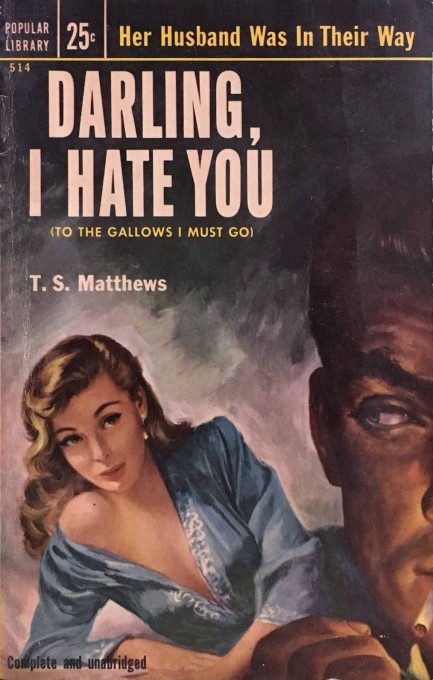
The cover of Darling, I Hate You by T.S. Matthews tells you it was originally titled To the Gallows I Must Go. We consider that too much information, but yeah, this book is about a man whose latest sexual partner wants him to kill her husband. Matthews didn't write many novels, but he built a significant career as an editor, working at The New Republic and Time before jettisoning the U.S. to live in England, where he wrote books and moonlighted as a reviewer for New York Times. However, the above debuted in 1931. He wouldn't publish a second book for more than twenty-five years. This Popular Library edition from 1953 has pretty nice art, but sadly it's uncredited.


| Mondo Bizarro | Apr 28 2020 |


 your drone back. But alien hunters are creaming their undies right now, and why not? The footage is interesting. And we admit, of course, we weren't there, and we aren't pilots. Our drone opinion is just that. What you see here are screenshots we made, but you can view all the fun video for yourself in the document library of the Naval Air Systems Command, located here. Whether you believe in UFOs or not, watching the videos is at least a break from reading about the virus again.
| Vintage Pulp | Jun 3 2018 |


| The Naked City | Nov 25 2014 |

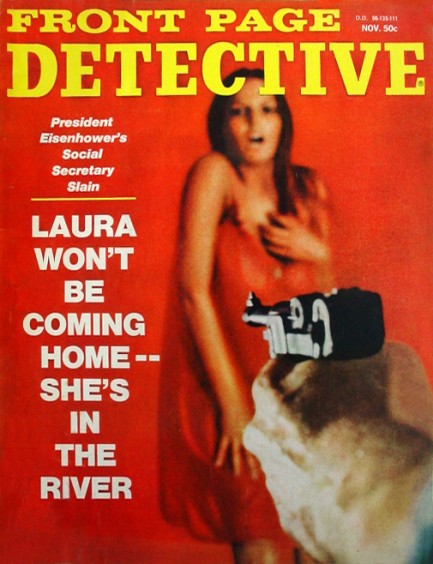
Front Page Detective shows on this November 1971 cover how to attract eyeballs with lurid art and titillating text. Eisenhower’s social secretary murdered? That sounds intriguingly political, but it turns out Eisenhower’s only connection is that his White House had more than a decade earlier employed the murder victim in a secretarial position. Though no political angle exists, the crime itself is still very interesting. Laura Carpi, scion of a prominent Philadelphia family, disappeared in February 1971. In June the decomposed body of a woman was found in New York City’s East River, labeled an accidental drowning victim, and twenty days later interred on Hart Island as a Jane Doe in the potter’s field there. After the body was identified as Carpi’s, the New York Times published a sensational story claiming that her head had been removed before burial for study by junior pathologists, or, according to some sources in the pathologist’s office, simply to be used as a desk ornament. The Times claimed that a technician had been cleaning out whatever grisly remnants of flesh were still attached to the skull and happened to find a bullet lodged in its neck tissue. Dealing now with a suspected homicide, police focused on missing persons, and eventually summoned Carpi’s dentist. Recognizing his own work, he made the positive identification.
The ME’s office became the center of a storm, with Chief Medical Examiner Milton Helpern blasting the Times story for insinuating that “the doctors in this office are cutting off people’s heads to make ashtrays.” He pronounced the entire article “grossly distorted.” Perhaps it was, but uncovering a murder by chance never looks good, and he didn’t help his cause when he responded to a question about why his staff had failed to discover the bullet by saying that he ran a mortuary, not a graveyard, and was extremely busy. Though his answer was callous, it was also correct. His office had a contant flow of bodies coming through—that year more than 1,800 alone that had been victims of murder—and his staff was overworked. Add to this the facts that Laura Carpi had thick hair that concealed the small caliber entry wound at the base of her skull, the slug had left no exit wound, and the head had been four months in the water, and it’s possible to see how mistakes could be made. As to why the head was kept, the unconvincing official reason was that it was because the dentalwork would allow for possible future identification—which only made sense if all the Jane and John Does on Hart Island were also headless.
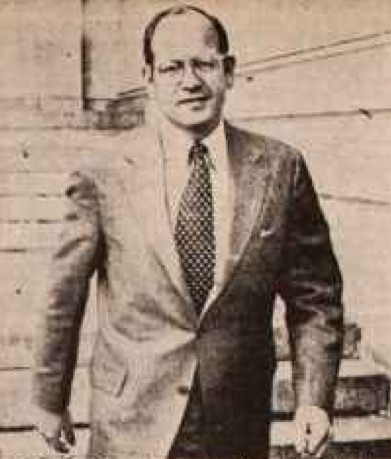 In any case, the finger of suspicion for the murder immediately pointed toward Carpi’s estranged husband Colin, at right, who was battling for custody of their four children. Not only would the loss of this battle and subsequent divorce settlement wipe him out financially, but he was also well aware that his wife had been seeing another man. For various reasons—jurisdictional issues and general reluctance to pursue the crime—Colin Carpi didn’t go to trial for two more years. A mountain of circumstantial evidence pointed at him, but his acquittal was deemed by most legal experts to be the right decision. The prosecution simply bungled its presentation to the jury, and even if the courtroom aspect had been perfect, much of Colin Carpi’s suspicious behavior could be chalked up to the circumstances around the custody battle and his wife’s affair. Perhaps a not-guilty verdict was an anti-climax after the high drama associated with the identification of Laura Carpi’s body, but not finding the perp is the way it often goes in true crime, and real life.

| Vintage Pulp | Jun 30 2014 |

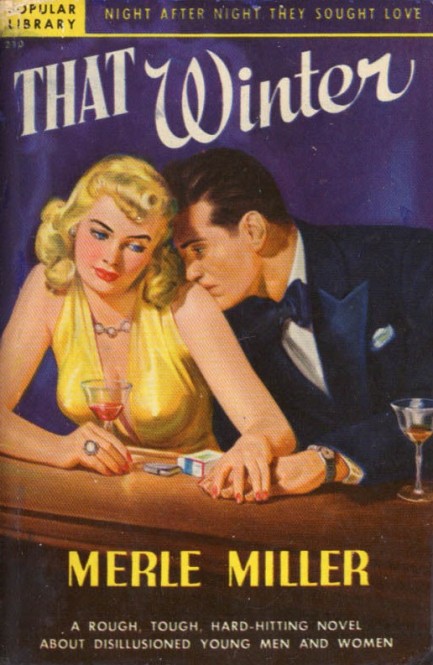
Merle Miller’s That Winter is one of the better post-World War II novels, dealing with the time-honored theme of veterans struggling to fit in after their military service. One has a dead end job, another believes he can function only in the army, and another is trying to hide the fact that he’s Jewish. In the area of feeling forced to hide an essential aspect of oneself, Miller knew exactly what he was writing about. In 1971 at the age of fifty-one, during a time when he was a public intellectual of considerable stature, he came out in the New York Times Magazine as gay. The article catapulted him into the forefront of gay activism, a status he maintained the rest of his life. That Winter was his first novel, appearing in 1948, with the above Popular Library edition hitting shelves in 1950. The great cover art could be by Earle Bergey, but Christopher P. Stephens’ reference tome A Checklist of the Popular Library Paperbacks lists no illustrator, so we’ll have to go with unknown on this one for now.

| Vintage Pulp | Dec 4 2013 |

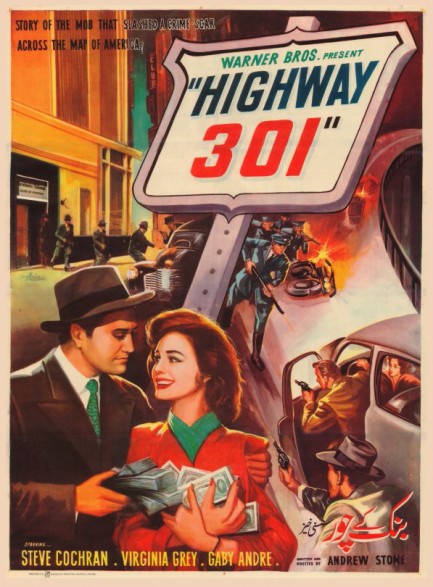
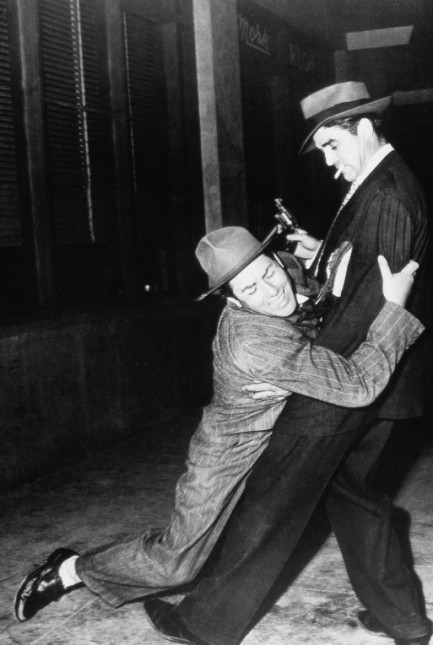
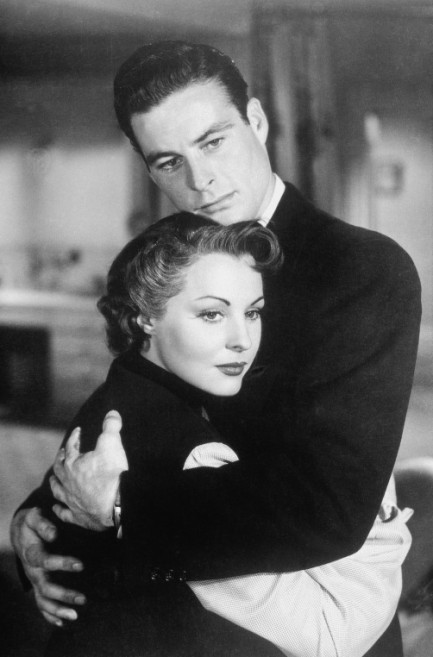
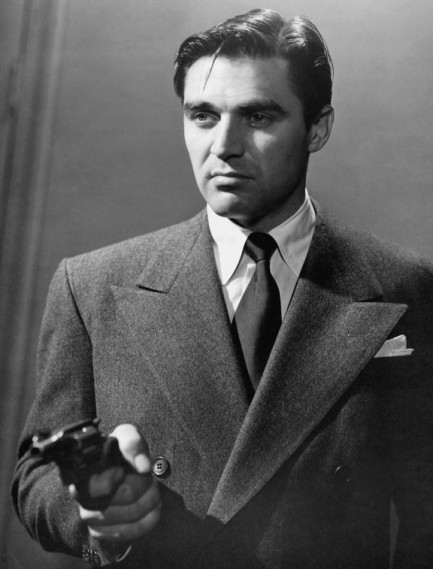
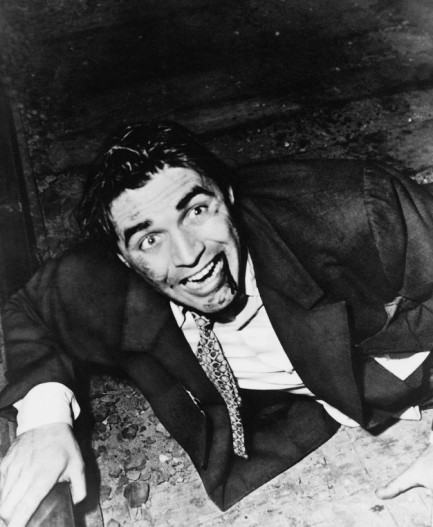
Though we can’t find much online about the making of the 1950 b-budget film noir Highway 301, we have a suspicion what happened during its production. The studio holding the purse strings, Warner Bros., had a look at the rough cut and said there’s no way we’re putting out a movie this intense. How intense is it? Influential New York Times critic Bosley Crowther called it “a straight exercise in low sadism.” So what does a studio do when it has on its hands a movie it thinks is likely to bad vibe audiences right out of the cinema? Simple—tell the audiences before the movie starts how it’s going to end. Get three sitting state governors—W. Kerr Scott of North Carolina, John S. Battle of Virginia, and William P. Lane, Jr. of Maryland—to announce in a prologue that crime does not pay, and that every member of the Tri-State Gang depicted in the movie ended up dead, except for one, who ended up in prison. Was Warner Bros. really responsible for such a blatant mutilation of Highway 301? It’s a very good bet, simply because a screenwriter can’t write a script that counts on the participation of three state governors. But for Jack Warner, well, all it would have taken was a phone call to each.
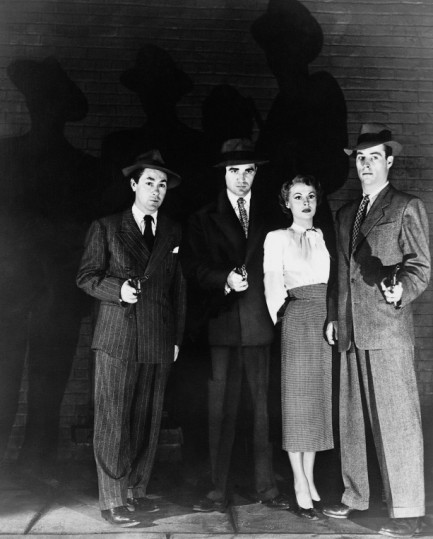
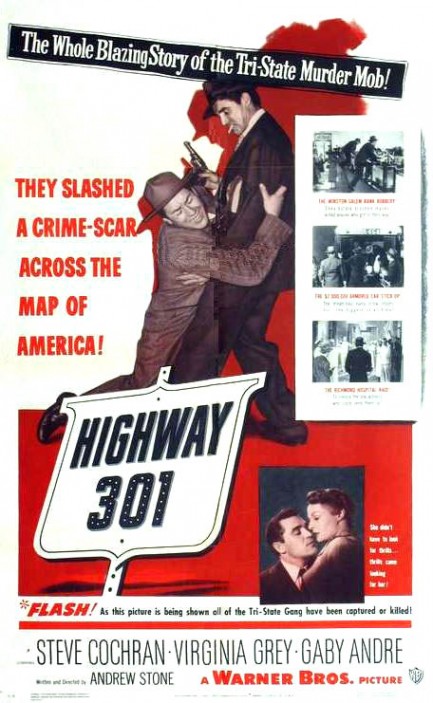 determine the fortunes and misfortunes of the characters, and which gnaw at the nerves of an audience that knows which choice is right but can only watch events unfold. At the center of it all is Steve Cochran as the gang’s murderous leader, a guy who solves every problem with a gun. The supporting cast includes Virginia Grey, Gaby Andre, and Robert Webber, and all are good in their roles.
Writer/director Andrew L. Stone deserves a lot of credit for putting this together. He was an experienced hand at this point, but never before had he created something so innovative. Highway 301 ends on a down note with more moralizing, but sandwiched in between is a highly recommendable drama. Flawed, yes, but only due to the intrusion of front office types, we suspect. A re-release without the moral parentheses and intermittent narration would elevate this to classic status. The poster at top is classic in its own right. It was painted by someone who signed it Aziz, and the Arabic script in the lower right corner confirms it was made for release in the Middle East or North Africa, most likely Egypt, but don’t quote us on that.

| Vintage Pulp | Jan 18 2013 |

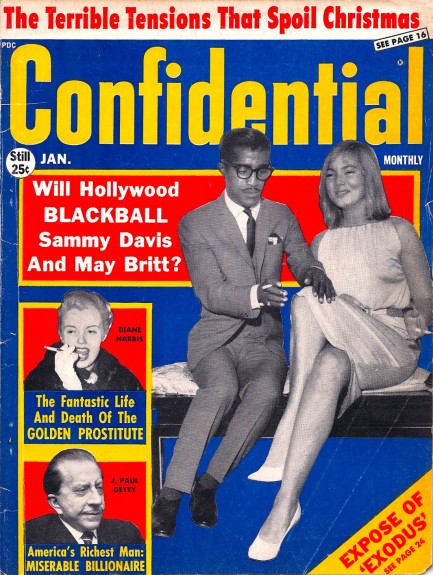
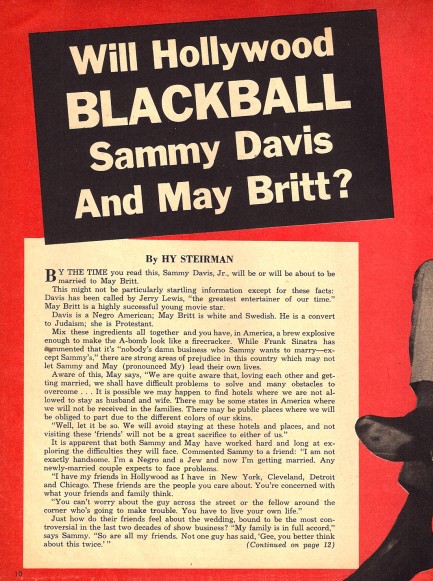
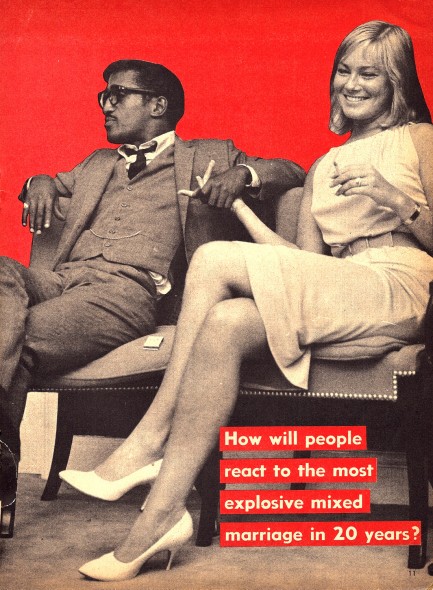
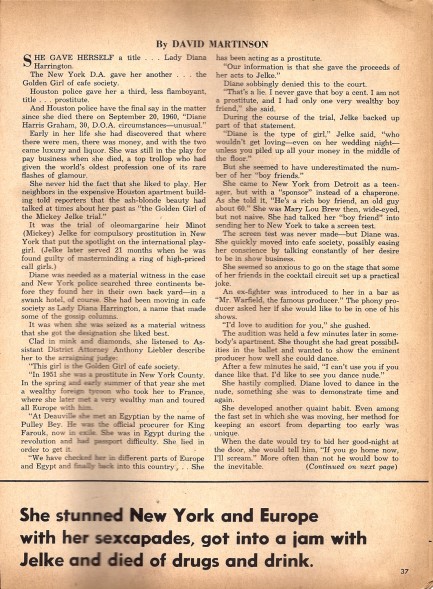
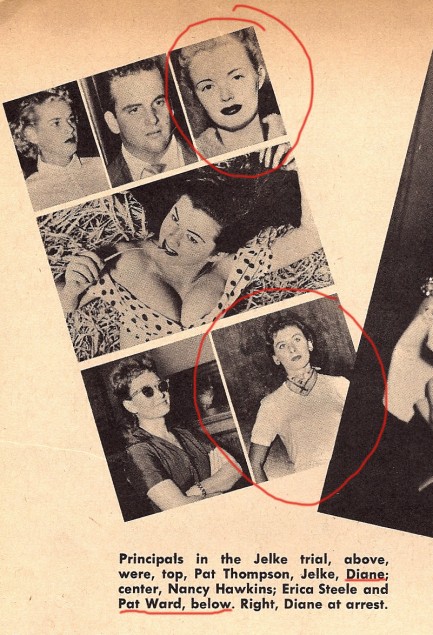
Today we have a January 1961 issue of Confidential for you, with cover stars Sammy Davis, Jr. and May Britt. Since we’ve already discussed Sammy and May of late, and even made her a recent femme fatale, we’ll skip past them and focus on another interesting story—the tale of Diane Harris, who shot to notoriety as a witness in the infamous Minot Jelke pimping trial of 1952. We wrote about it back in 2009—Jelke was an oleomargarine heir who was cut off from his trust fund and decided to turn his girlfriend Patricia Ward into a prostitute in order to make ends meet. Ward became known as the “Golden Girl of Vice” and “The Golden Girl of Café Society,” which is why it’s interesting that Confidential calls Diane Harris “The Golden Prostitute.” Apparently Jelke had the Midas touch.
Confidential wastes no time in its article. It begins: She gave herself a title… Lady Diana Harrington. The New York D.A. gave her another… the Golden Girl of Café Society. Houston police gave her a third, less flamboyant title… prostitute. Uh oh—the New York District Attorney’s nickname for Harris is identical to Patricia Ward’s nickname. After a few more paragraphs of reading, it becomes clear that Confidential
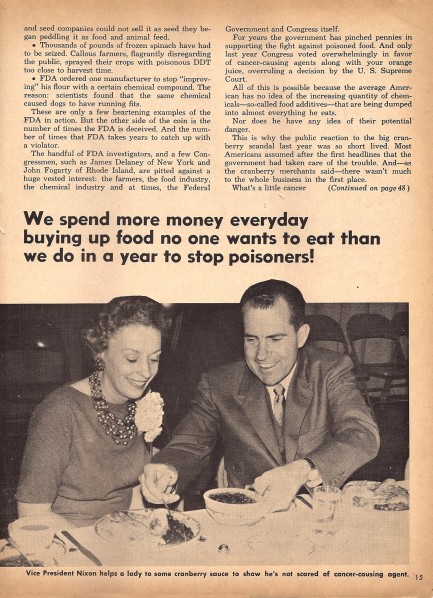
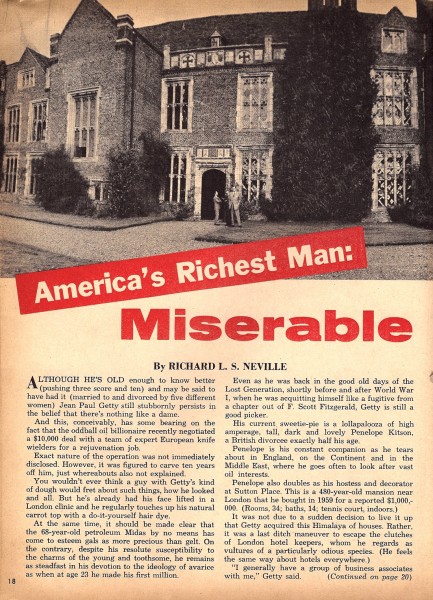
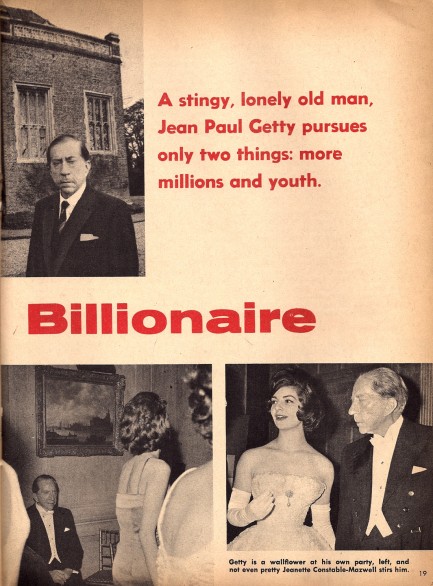 believes the Golden Girl is Diane Harris—not Patricia Ward. While it’s true that Harris did use some aliases, including Lady Diana Harrington and Mary Lou Brew, nowhere is the name Ward mentioned as a pseudonym.
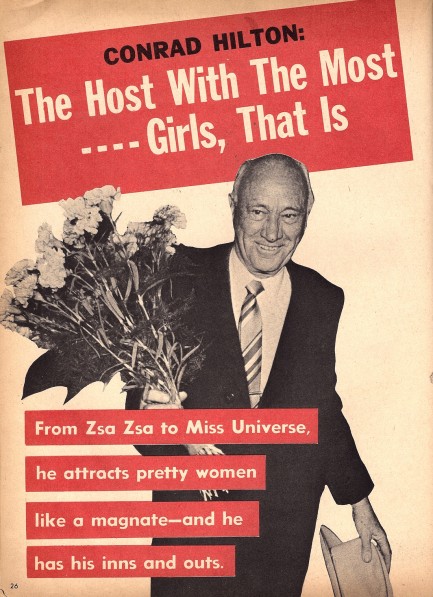
 point of a Hollywood motion picture misidentifying her. She was indeed Minot Jelke’s girlfriend, whereas Harris was just a fellow high dollar prostie (and corroborating witness), so perhaps some clever scribe, or even the writers of the 1995 movie, decided that such a catchy nickname would be better applied to the girlfriend. At least that’s the way it looks to us.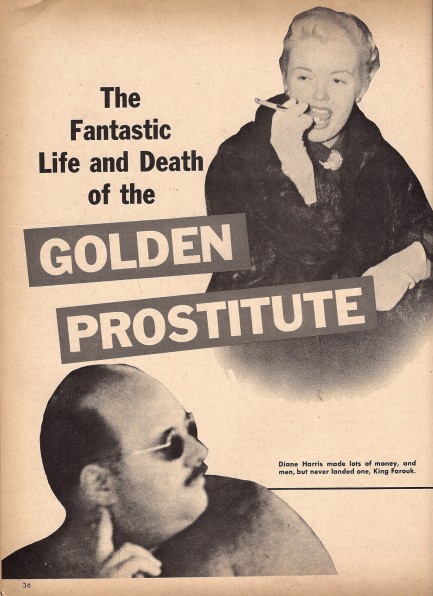
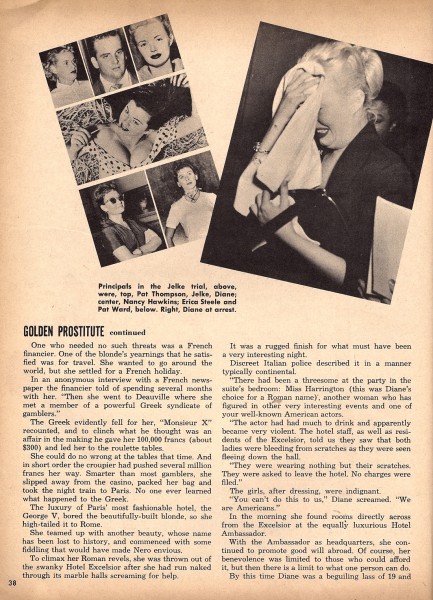
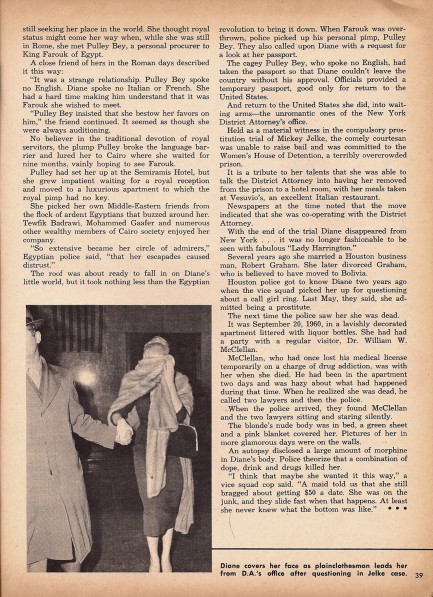 in more glamorous days were on the walls. An autopsy disclosed a large amount of morphine in her body. Police theorize that a combination of drink and drugs killed her.
| Intl. Notebook | Oct 8 2012 |


Last week we watched Meiko Kaji’s Kaidan nobori ryu, aka Blind Woman’s Curse, and were too busy being cute with our summary of the film to mention that the blind woman was played by Hiroko (Hoki) Tokuda, who is better known to many people as author Henry Miller’s last wife. When they met she was working as a lounge pianist in L.A. and Miller, who had established himself as one of the most important American writers ever, was living in Pacific Palisades.
Tokuda told the New York Times in 2011: “Henry started asking every week to meet me. I realized he just wanted a Japanese woman to add to his collection, and I would always ask myself, ‘Why me?’ Soon after we met, he started telling people he was going to marry me.” And marry her he did in September 1967. She was twenty-nine and Miller, who had been born in 1891, was on the verge of turning seventy-six.
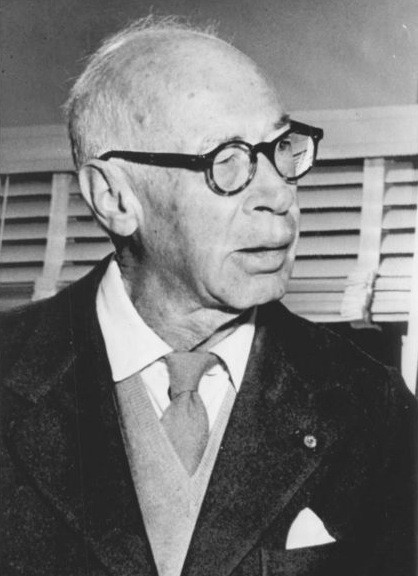 and has even joked about him being a bad kisser. "Terrible," she describes it. "Wet."
| Femmes Fatales | Feb 11 2012 |

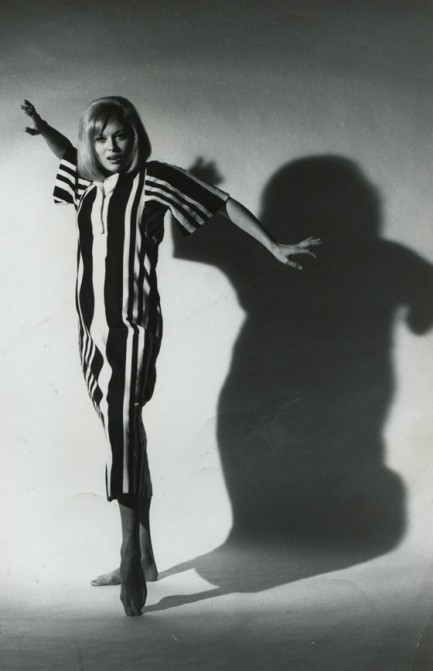
This rare promo shot of American actress Faye Dunaway was made when she was starring in Bonnie and Clyde, which was a film so polarizing that one of the most respected critics in America—the New York Times’ Bosley Crowther—launched a campaign against the values he felt the movie represented. But American filmgoers loved Bonnie and Clyde, and Crowther’s scathingly negative review exposed him as out of touch with the zeitgeist and especially with the maverick film directors coming out of Hollywood. It was 1967, and everything was changing. The Times fired Crowther and gave his job to Pauline Kael. Bonnie and Clyde became a worldwide hit and cinematic landmark. And Faye Dunaway became one of the biggest stars in Hollywood.

| Intl. Notebook | Nov 6 2010 |

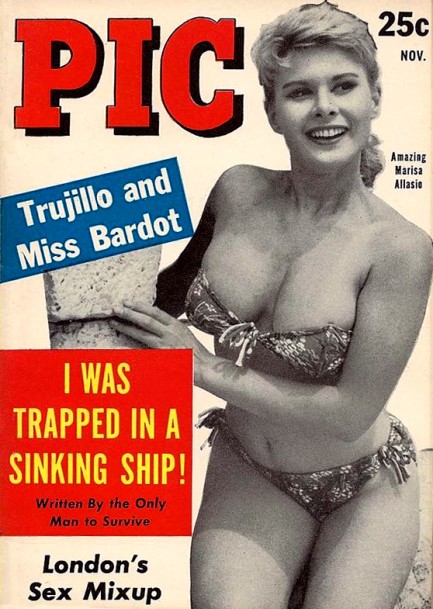
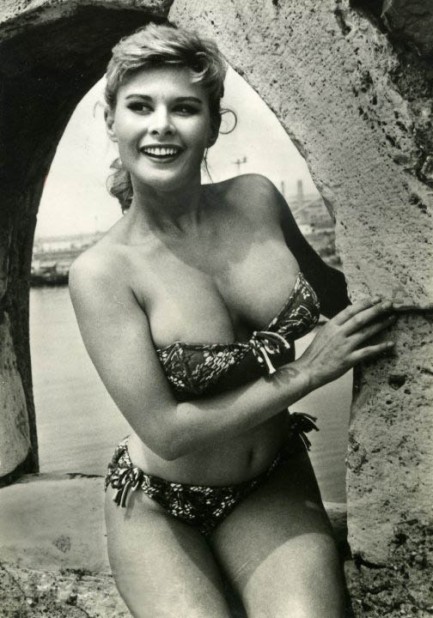
Here’s a new tabloid in our collection—Pic, which like Whisper and a few other publications evolved from a pin-up magazine into a scandal sheet during the 1950s. The cover star on this November 1958 issue is Marisa Allasio, and the photo is one that originally appeared in the Italian magazine Il Borghesi and landed the publishers in court on obscenity charges. As anyone who has ever been to a beach can attest, there is a big difference between almost falling out of a bikini and actually doing it, and that difference is where all the fun lies. But the shot was nonetheless deemed too sexual by Italy’s moral watchdogs, and all the newsstand copies of Il Borghese were confiscated. In the end, the magazine was able to prove that the image was a promo still from Allasio’s forgettable 1956 film Poveri ma belli, aka Poor but Beautiful. Since Il Borgese was not responsible for the image, charges against the magazine were dropped. If you’d like to read a scathing contemporary review of the film, we found one by Bosley Crowther at the New York Times, and just because it’s Saturday, we have the almost-obscene bikini photo below, in its original unreversed state. We’ll have more from Pic later.