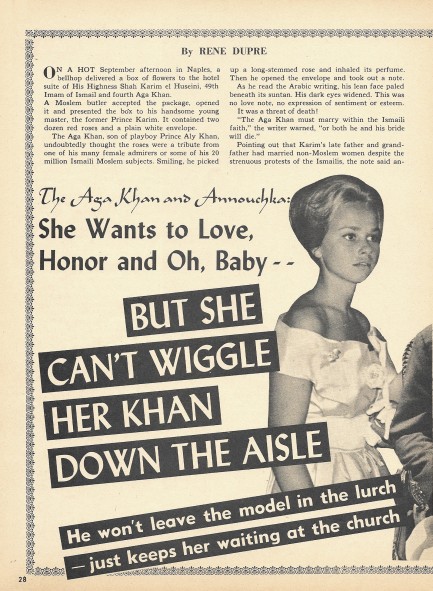
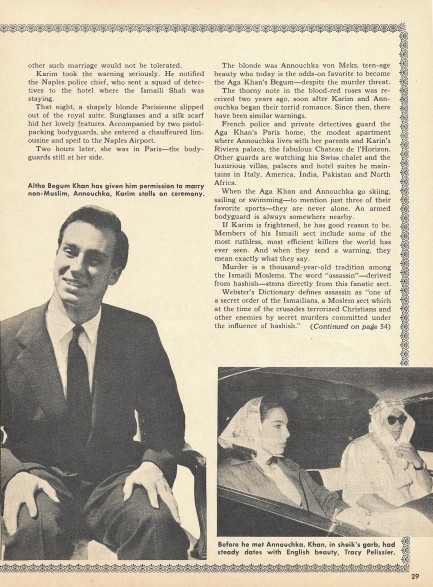
 Shhh! Character assassination in progress. 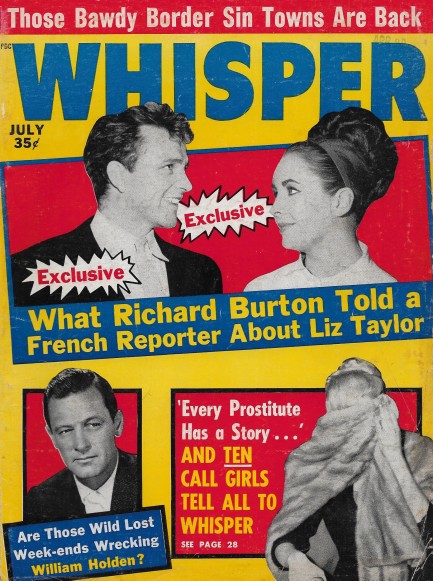 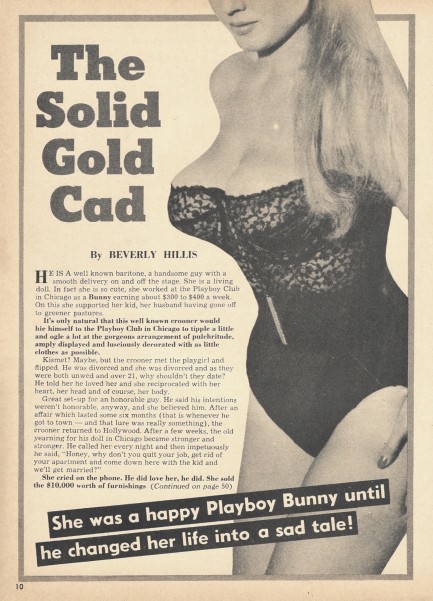 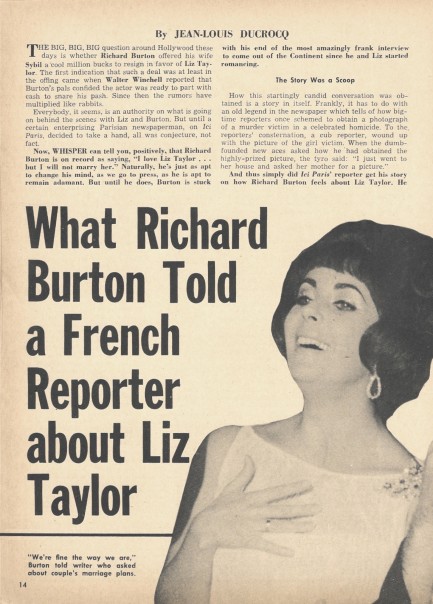 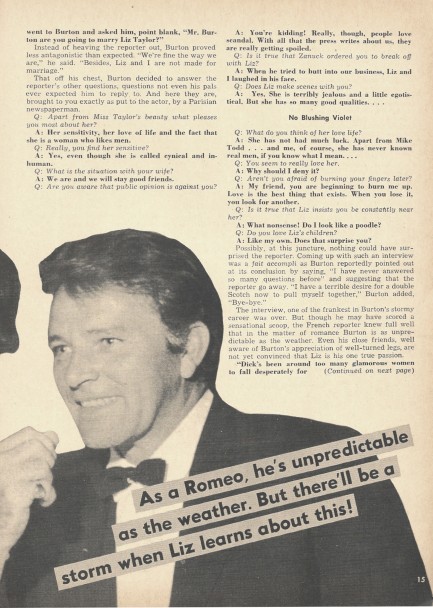 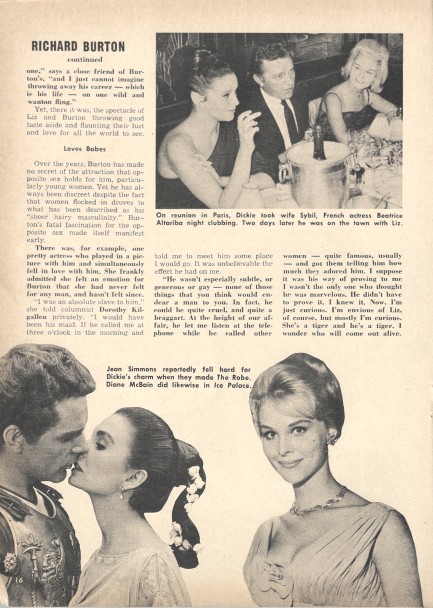 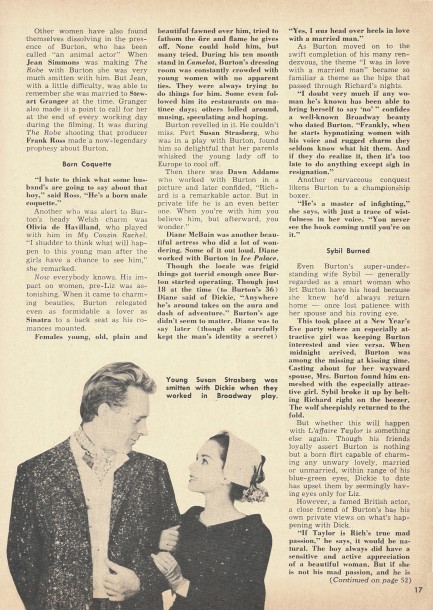 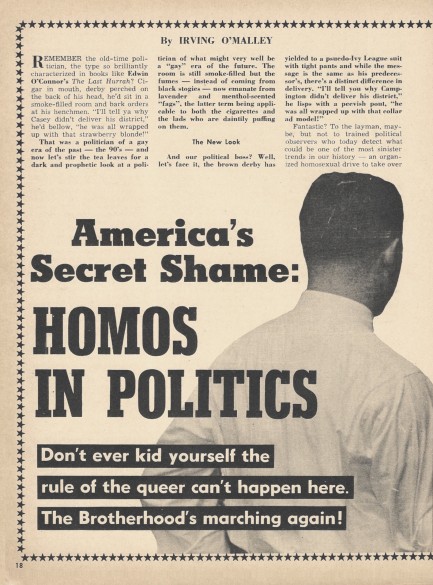   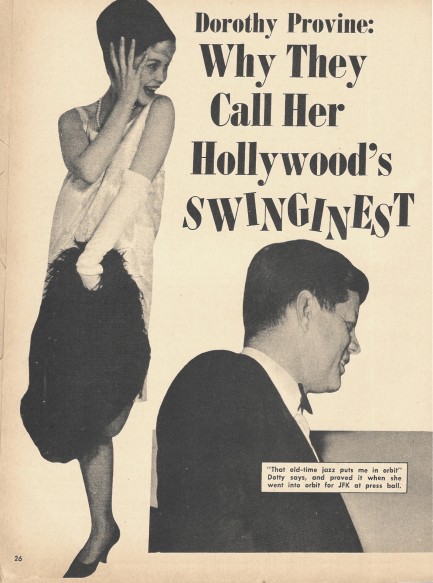 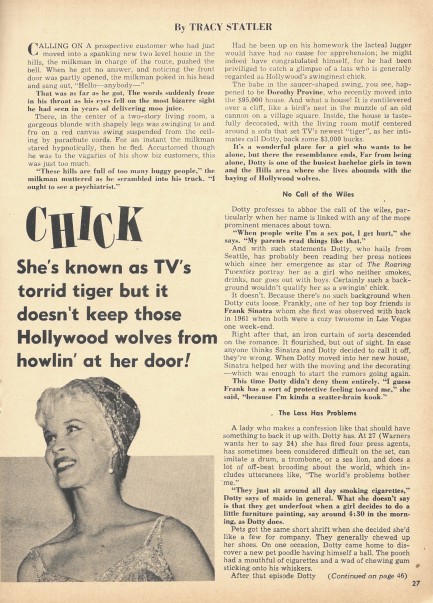  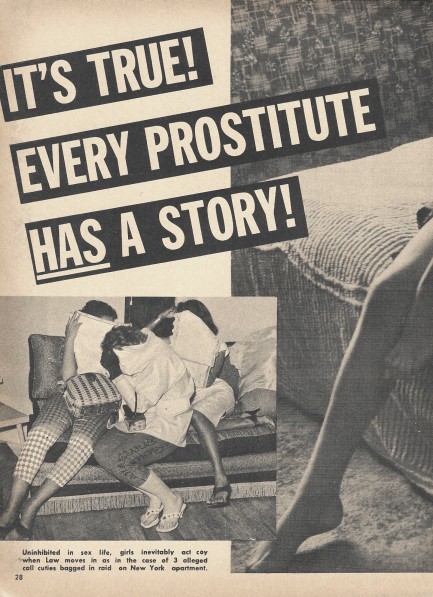 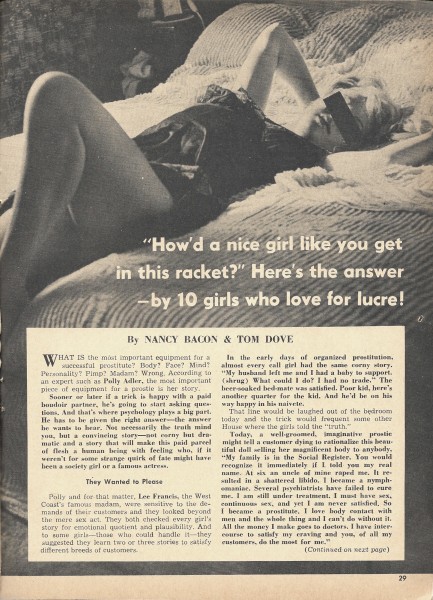 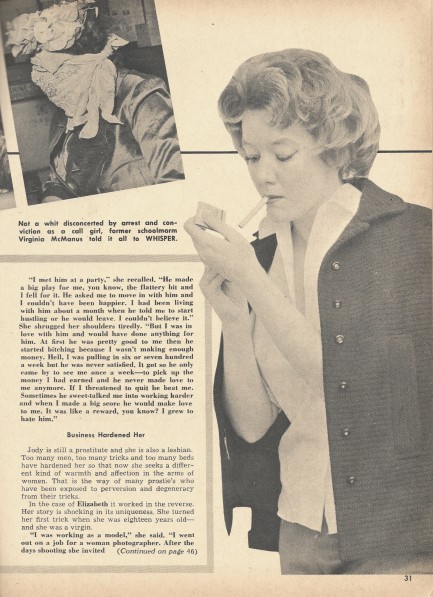 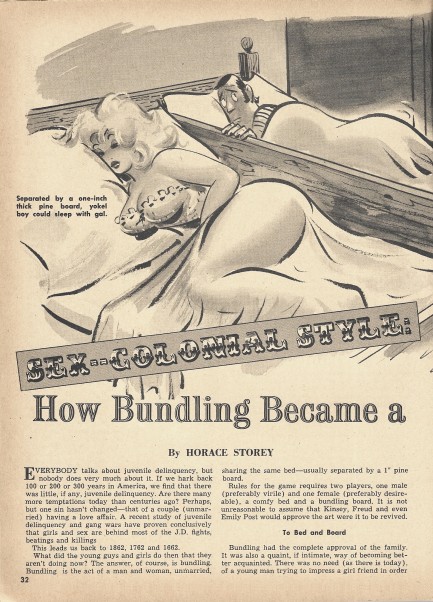 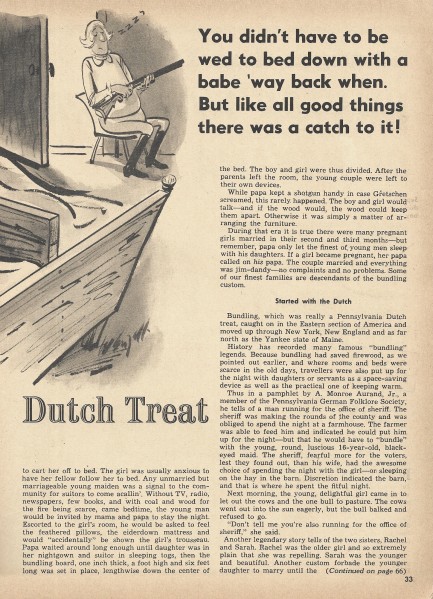 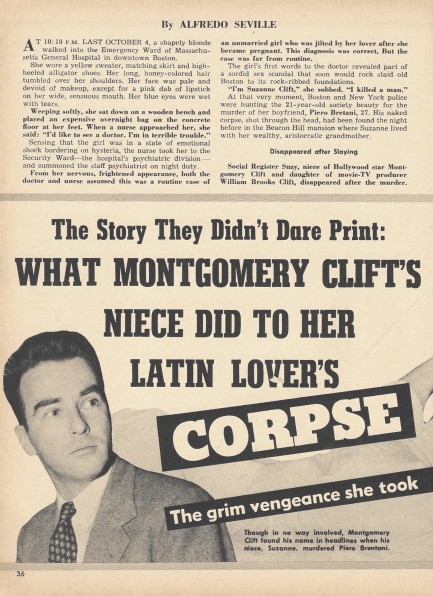 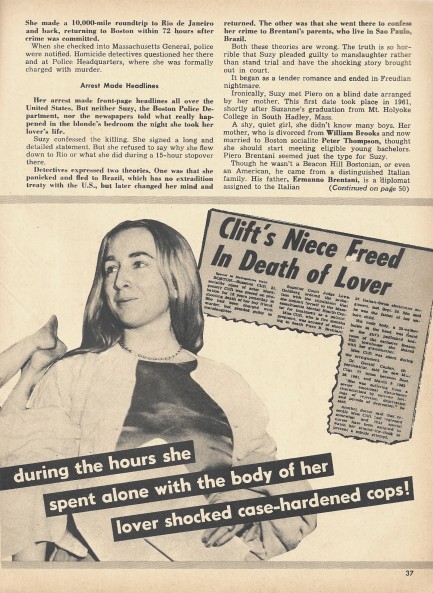 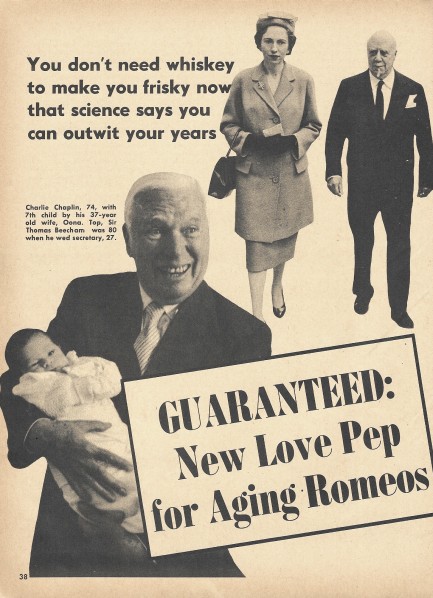 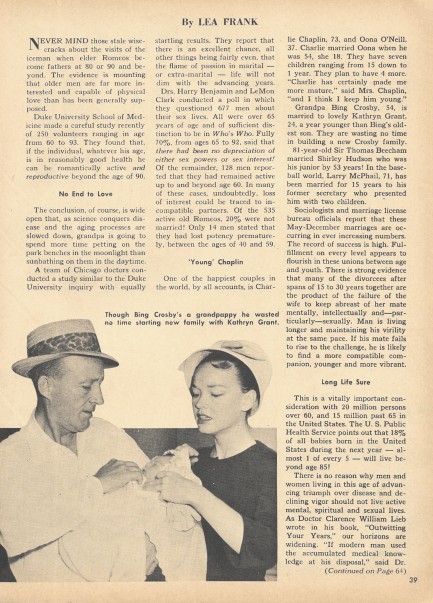 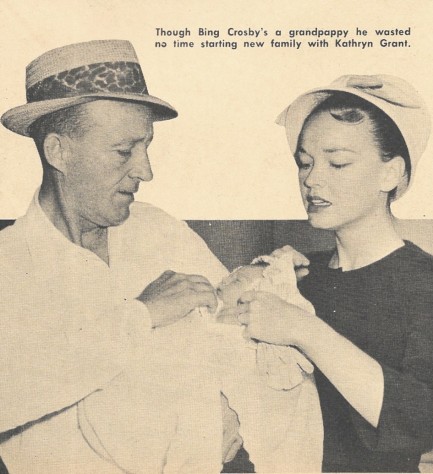 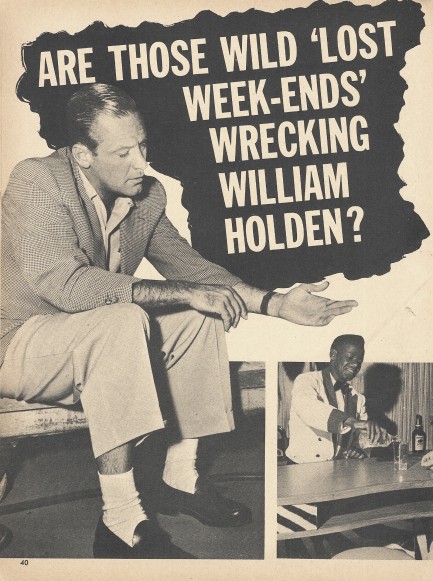 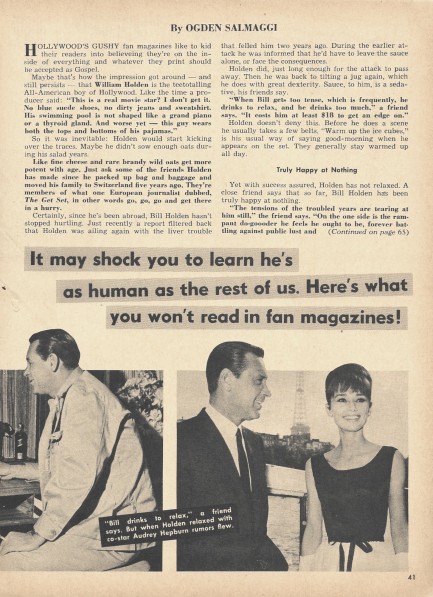 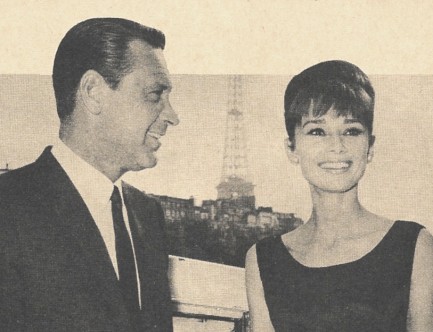 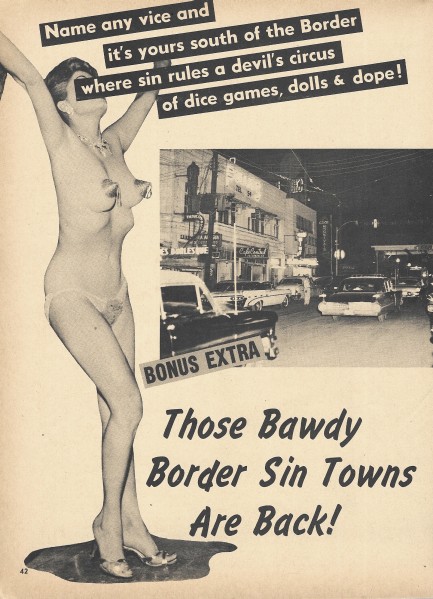 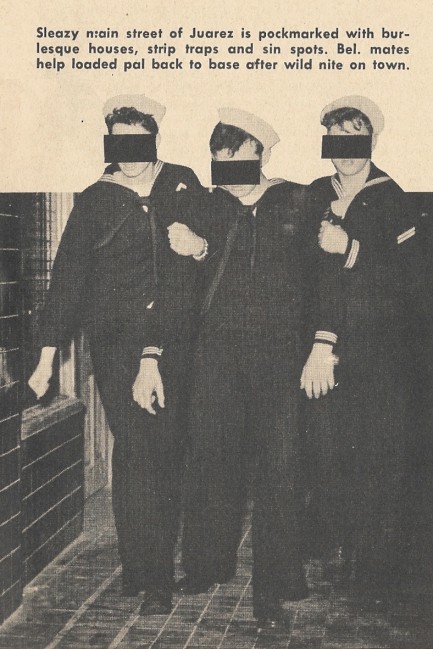
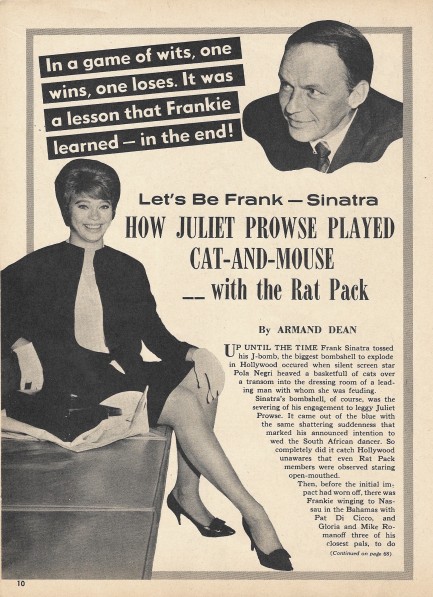
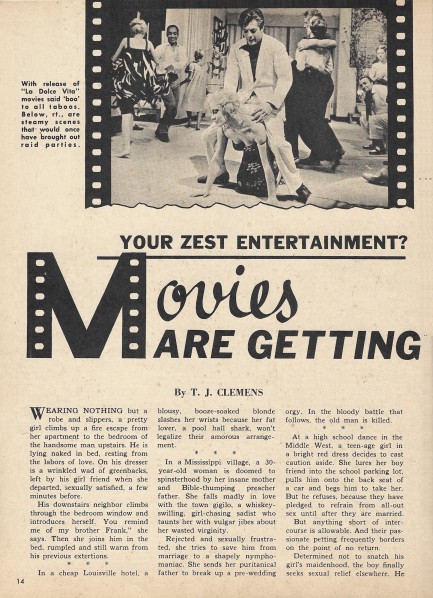
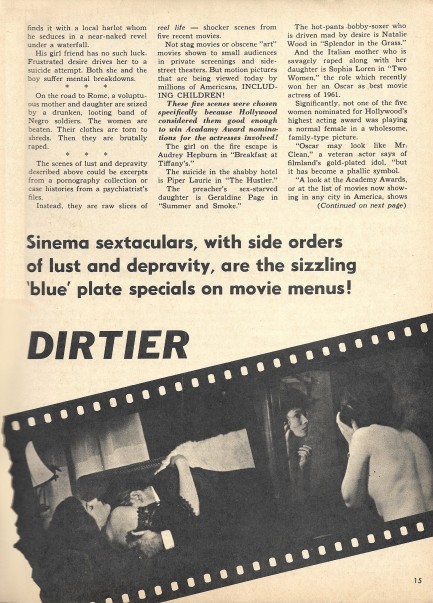
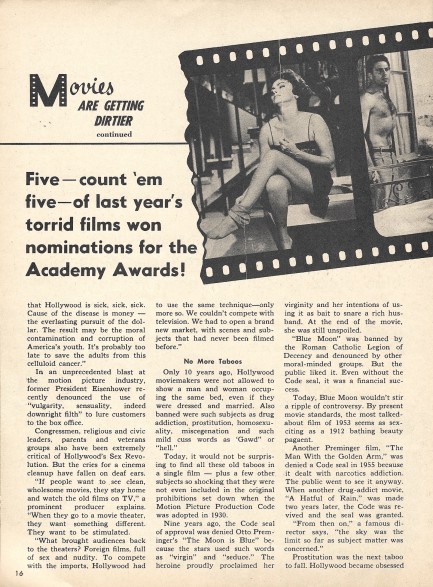
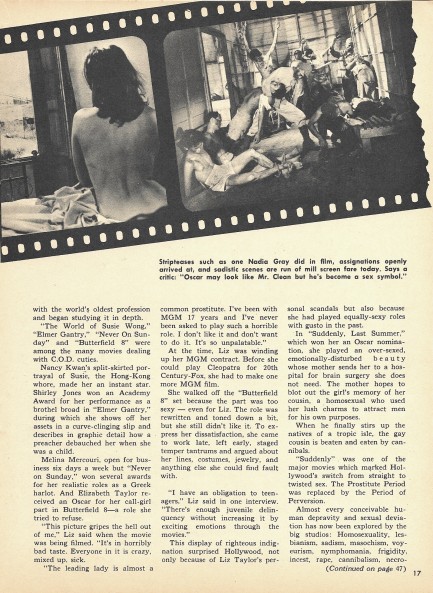
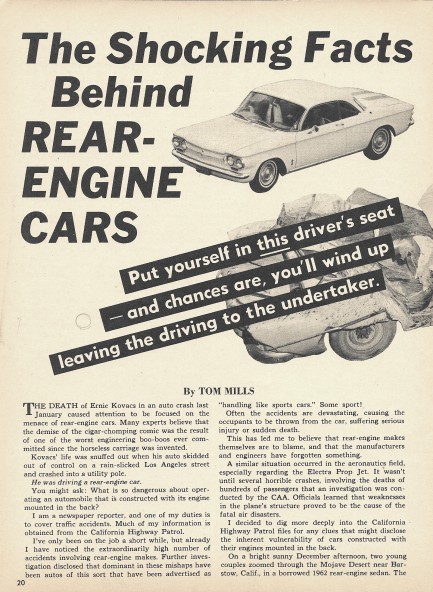
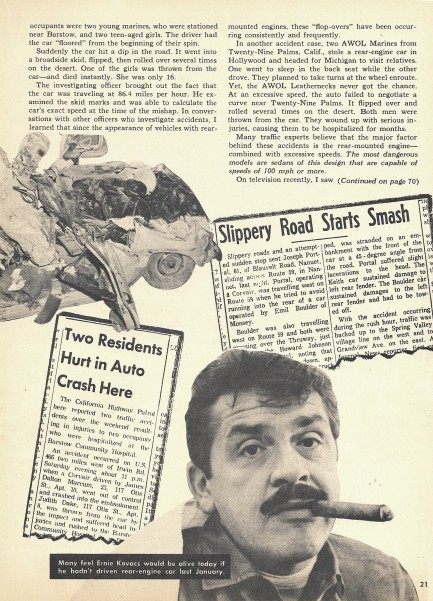
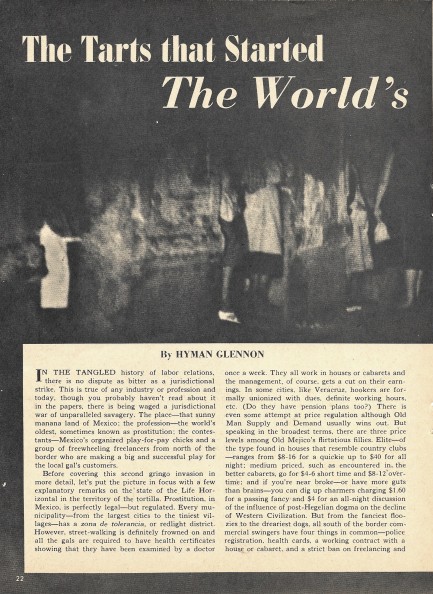
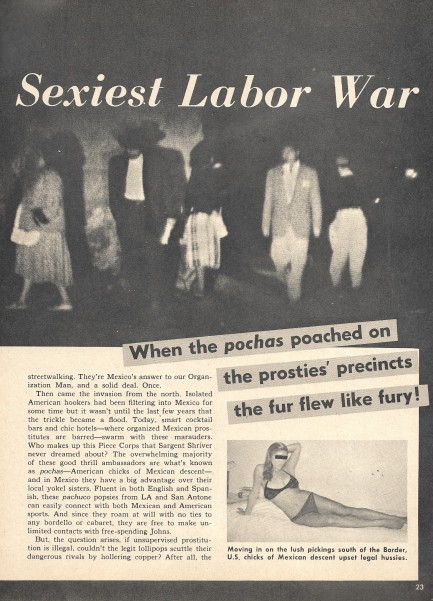
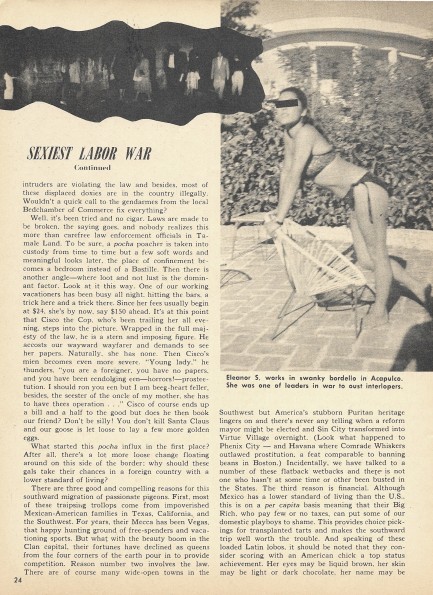
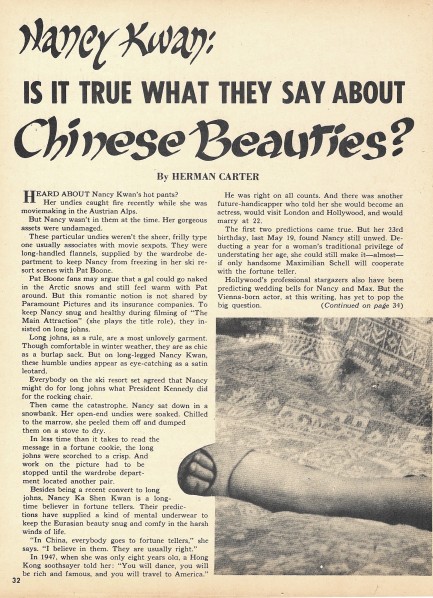
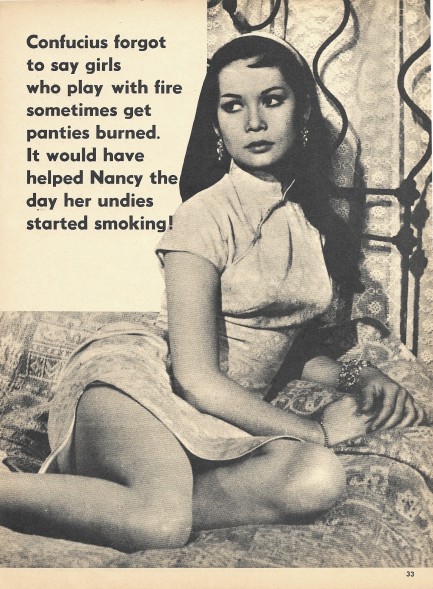
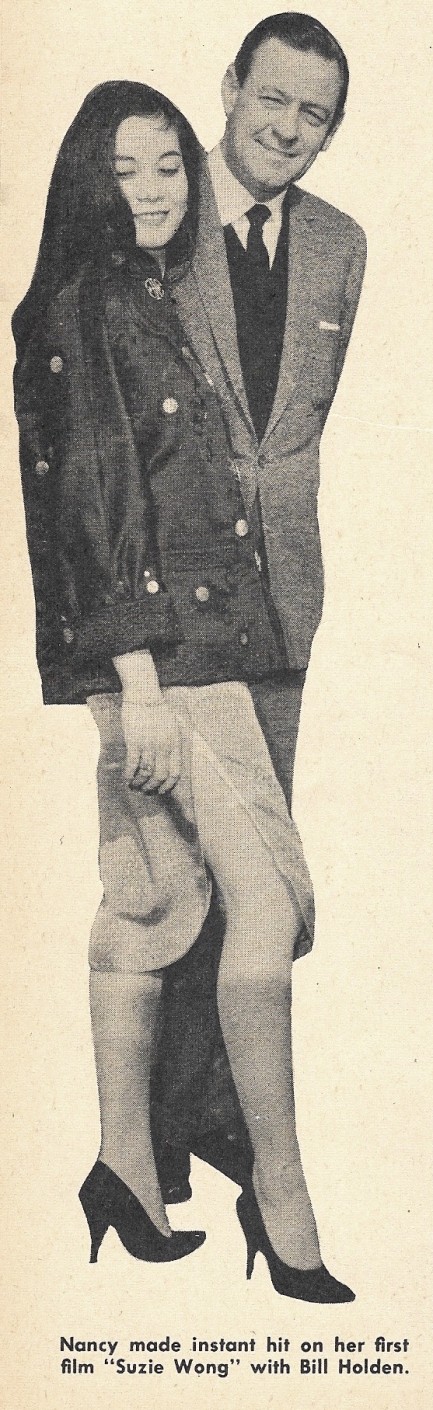
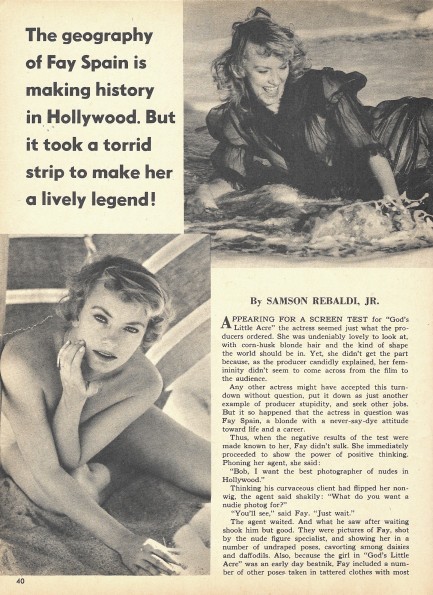
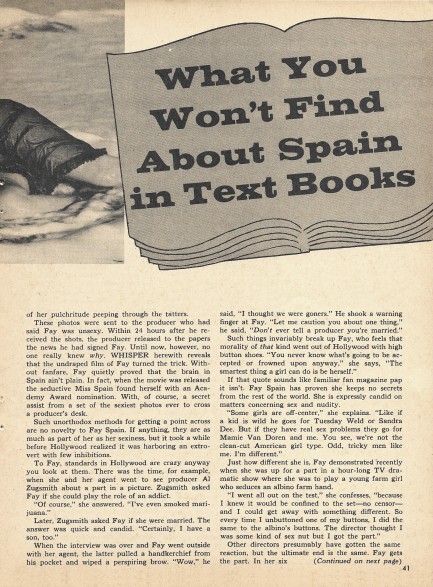
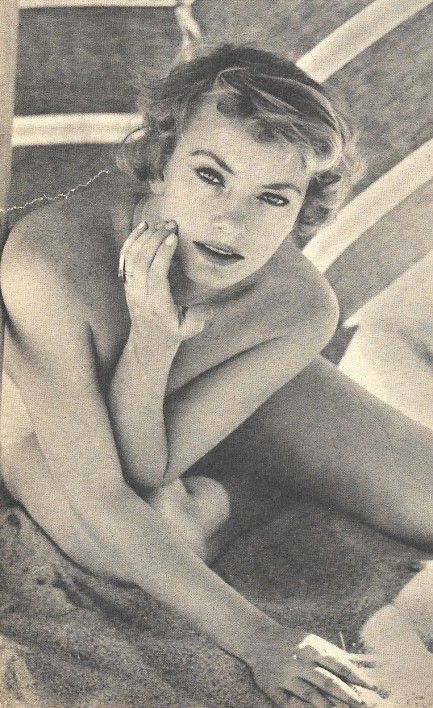
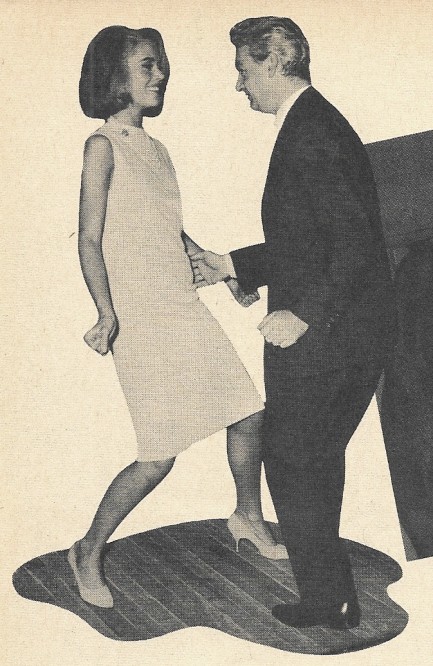
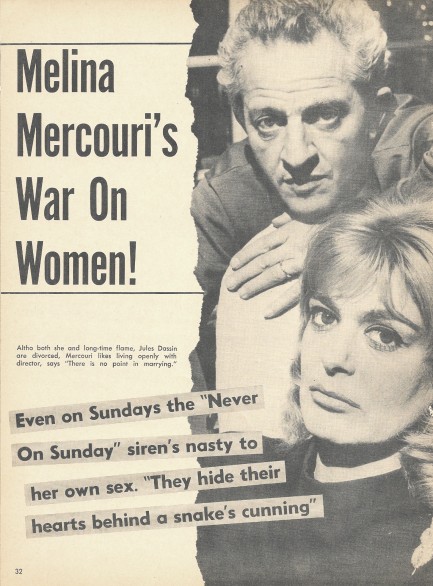
Above are some scans from an issue of the tabloid Whisper published this month in 1963. We've shared hundreds of tabloids over the years, and we always marvel at them. How would you describe the compulsive need to know what's going on in other people's lives? Is it a from of comparison? Is it schadenfreude? Is it envy? The American Psychological Association calls it natural behavior stemming from the fact that humans are social animals curious about what's going on around them. It's why, according to the APA, we gossip about friends and neighbors. Your first thought, in terms of tabloids, might be that celebrities are neither friends nor neighbors. However, the headshrinkers tell us they are. People create parasocial relationships with celebrities, and thus the same dynamic exists. And nobody is immune. Condescending remarks about celebrity gossip are liable to come from people inordinately involved with their favorite baseball player, acclaimed author, or television talking head. Some people let celebrity fashionistas suggest what they should wear, while others who consider themselves above such silliness let television pundits tell them who to hate.
We find mid-century tabloids incredibly interesting, even if everybody being gossiped about is long departed. The robust sales of tabloids on auction sites seems to confirm that we aren't alone. In this issue Whisper digs dirt on numerous titans of celebritydom—Elizabeth Taylor, Richard Burton, Audrey Hepburn, Bing Crosby, Charlie Chaplin, and others. Editors also let their bigot flags fly by predicting “one of the most sinister trends in history—an organized homosexual drive” to take over the U.S. That one still sells in some quarters. We'll have more from Whisper soon.
 It was the Whisper heard from coast to coast. 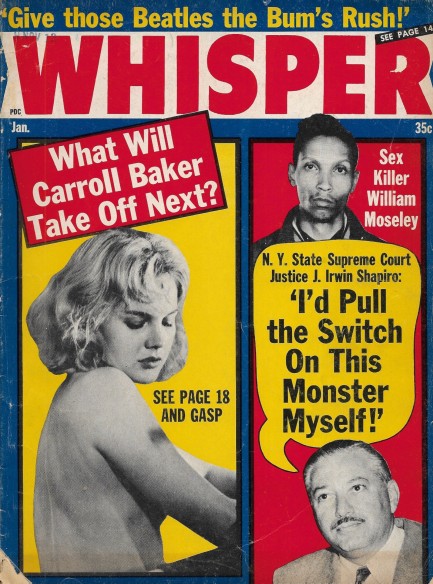
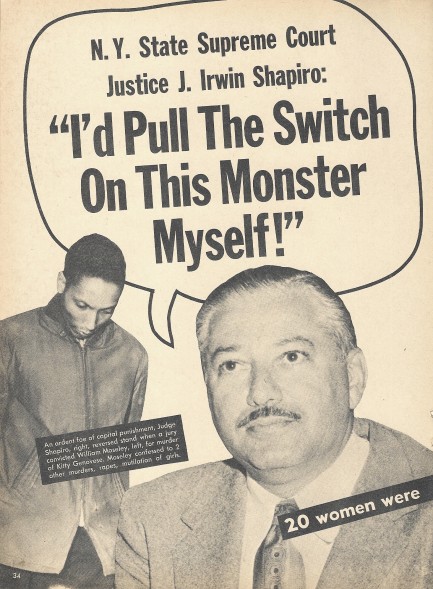
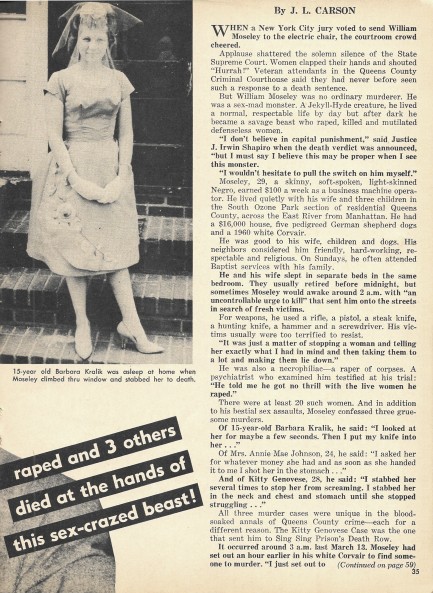
Above is a cover of the tabloid Whisper from January 1965, with actress Carroll Baker, convicted murderer Winston Moseley, and New York judge J. Irwin Shapiro starring on the front. But before we get into the magazine, we want to share the good news that our longtime scanning problems are fixed. We didn't get a new scanner, though. We got a new computer—a Mac Studio with plenty under the hood. It's quicker than the old Mac, but it also changed the functionality of the scanning interface. The whole process runs differently, and is about three times faster now. So you'll be seeing more magazines in the future. Turning back to Whisper, Winston Moseley—who editors call William for some reason—was America's villain of the moment for the murder of Catherine Genovese, who he stalked, stabbed with a hunting knife, then found again where she had taken refuge in a building, and finished her off. Additionally, Moseley was a necrophiliac. He raped his victims—of which there were three total—post-mortem. Of the trio of victims Genovese is the one that's remembered today because her murder sparked a national reckoning about the relationship between citizens and the police, as well as life in big cities, because the press reported that thirty-eight people had seen the crime happening but had done nothing. As it turned out, that number was wildly inaccurate, but never let the truth get in the way of perfectly cooked, juicy tabloid outrage. A quote appeared in nearly every story about the murder: “I didn't want to get involved.” New York City—where the crime occurred—and other metropolitan centers were criticized as uncaring places. Author Harlan Ellison, who at that time was writing urban crime fiction, weighed in, saying, “not one of [the witnesses] made the slightest effort to save her, to scream at the killer, or even to call the police.” Peak outrage was achieved by New York State Supreme Court Justice J. Irwin Shapiro when he expressed a desire to execute Moseley himself. In the end, Moseley wasn't executed at all. He died in prison in 2016 at age eighty-one.
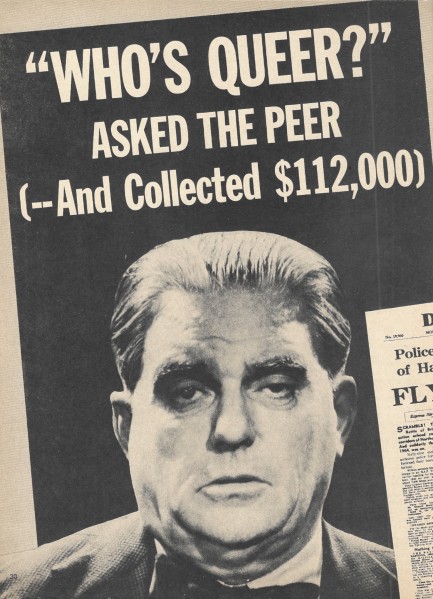
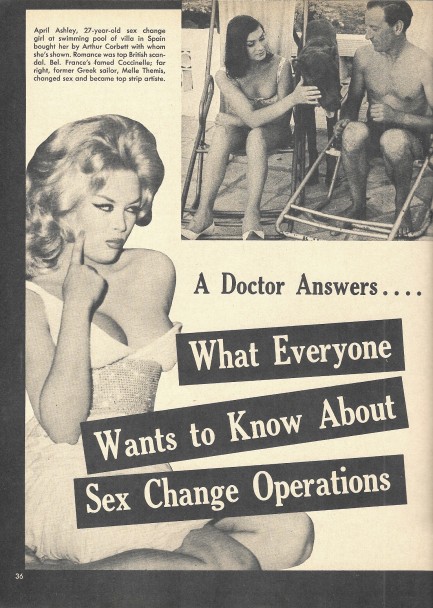
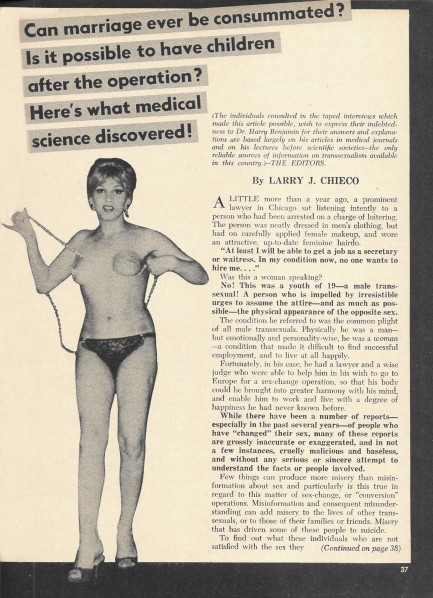
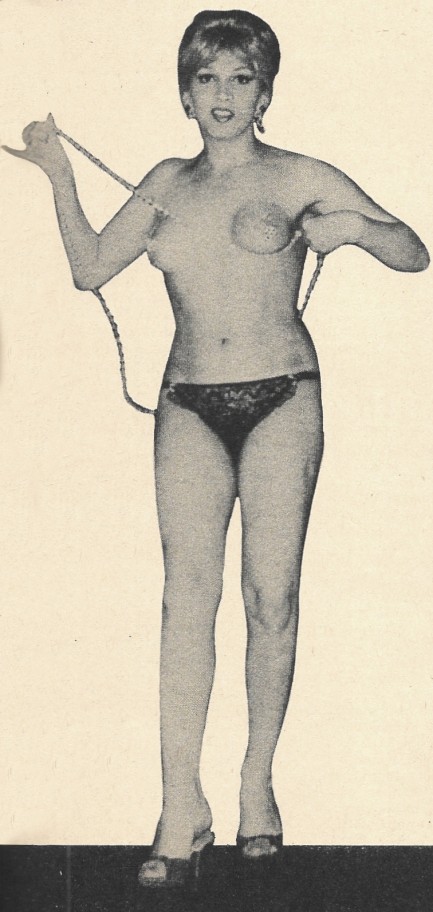
Elsewhere in Whisper, you'll notice that the magazine is—unsurprisingly, given the time period and nature of the publication—antagonistic toward gay men, as demonstrated by the panel with the blaring text: “Who's Queer Asked the Peer?” But what is a surprise is that later in the issue the editors run a detailed piece on transvestites and transsexuals, and the approach is very different than the contempt shown toward homosexuality. As we've pointed out many times before, mid-century tabloids had a deep interest in trans issues. The story is titled, “A Doctor Answers What Everyone Wants To Know About Sex Change Operations.” The tone is as follows:
The condition he referred to was the common plight of all male transsexuals. Physically he was a man, but emotionally and personality-wise he was a woman, a condition that made it difficult to find successful employment, and to live at all happily. Fortunately, in his case, he had a lawyer and a wise judge who were able to help him in his wish to go to Europe for a sex change operation so that his body could be brought into greater harmony with his mind, and enable him to work and live with a degree of happiness he had never known before.
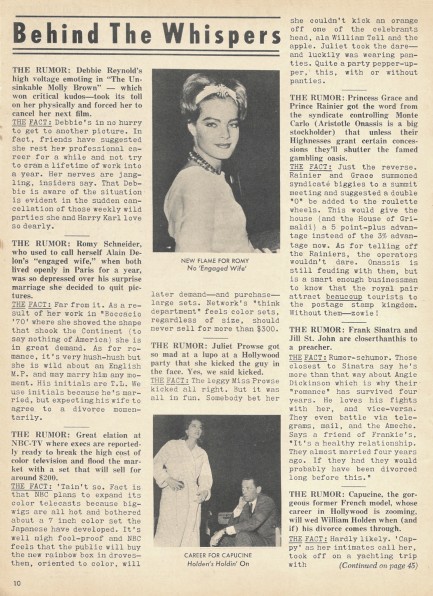
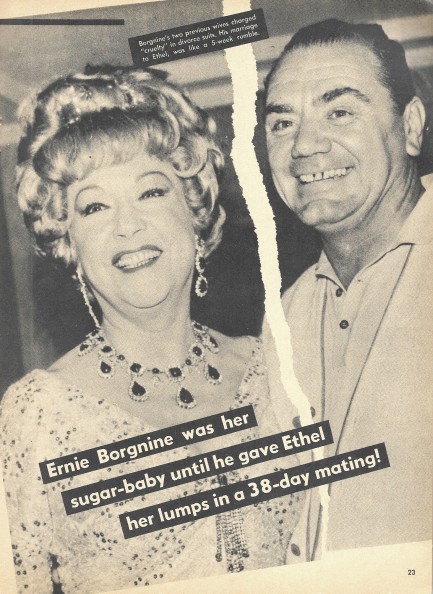
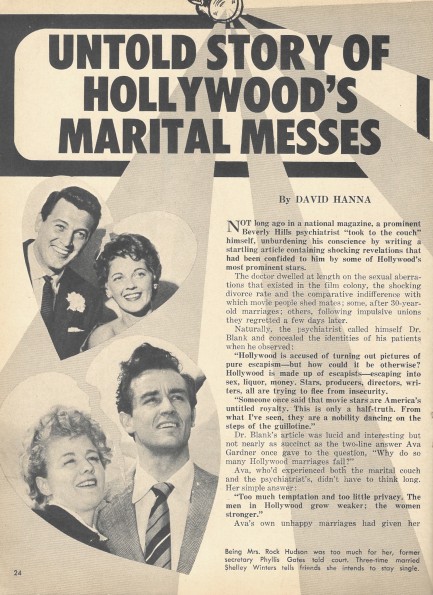
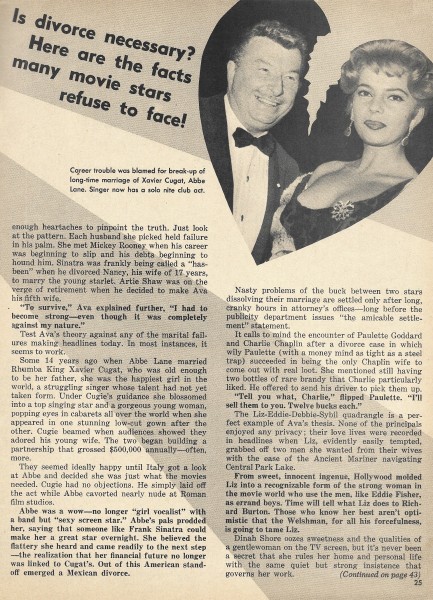
That's respectful—if not even compassionate—for a 1965 publication considered lowbrow by sophisticated readers. Is it a paradox that the magazine could be so evil toward gay men, yet so civil toward transsexuals? We think so, and we'd love to know the thought process behind it. While we're puzzling that out, you may want to move on to Whisper's slate of celebrity news. Everyone from Romy Schneider to Ernest Borgnine get their due exposure. We've uploaded the magazine's “Behind the Whispers” feature, so you can get the dish on a few Hollywood stars. Please enjoy.
  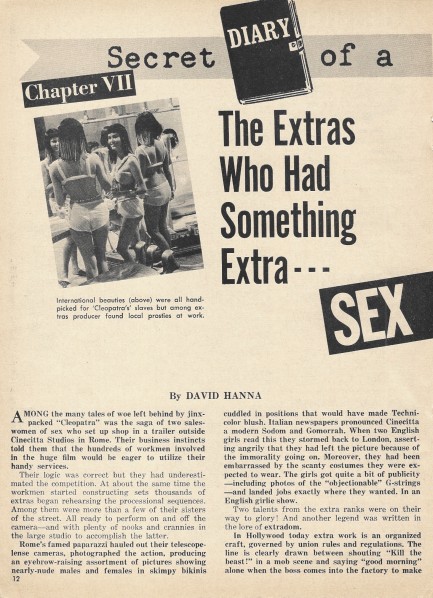 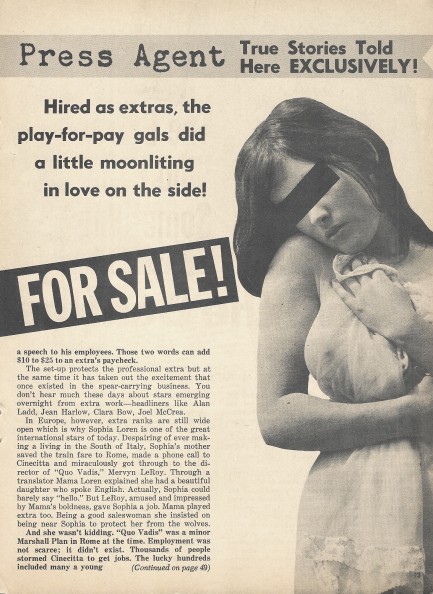 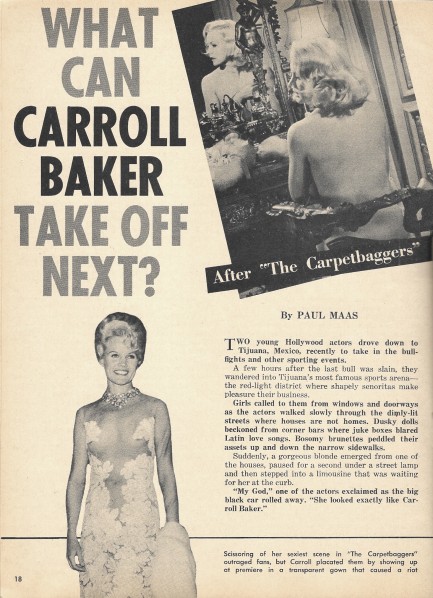 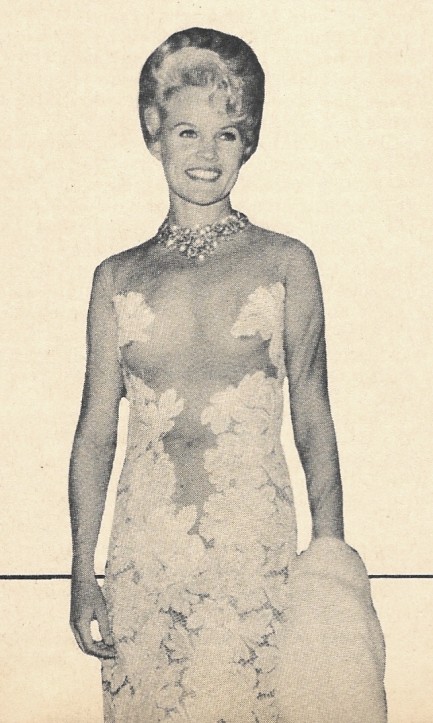 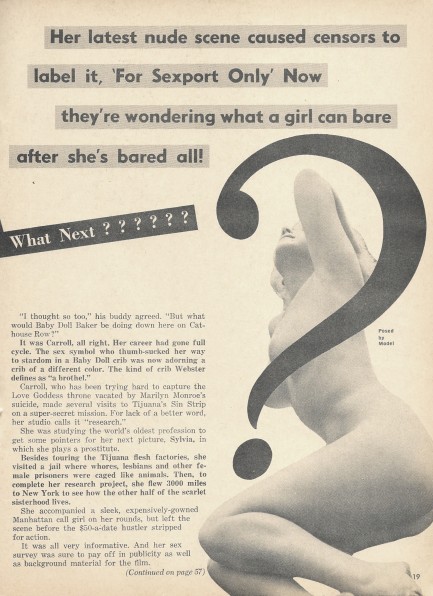 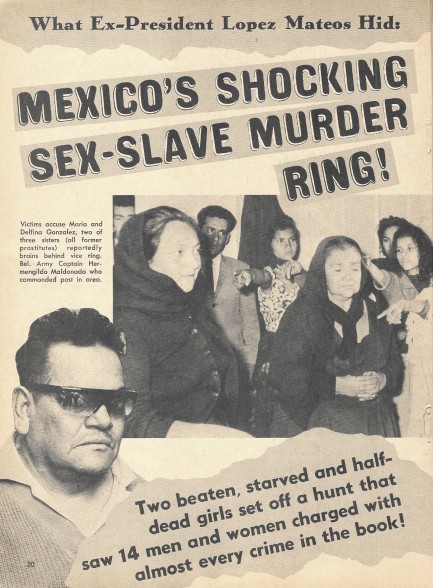 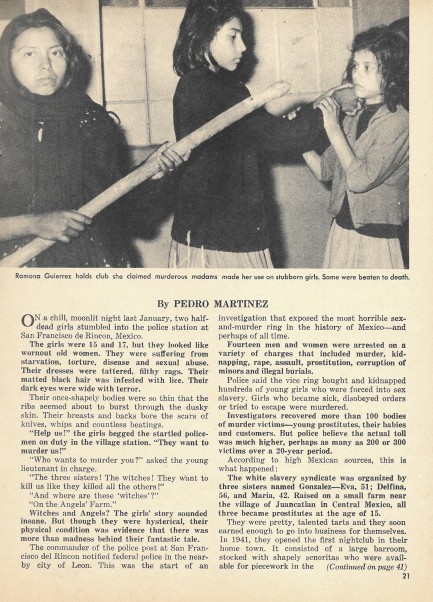 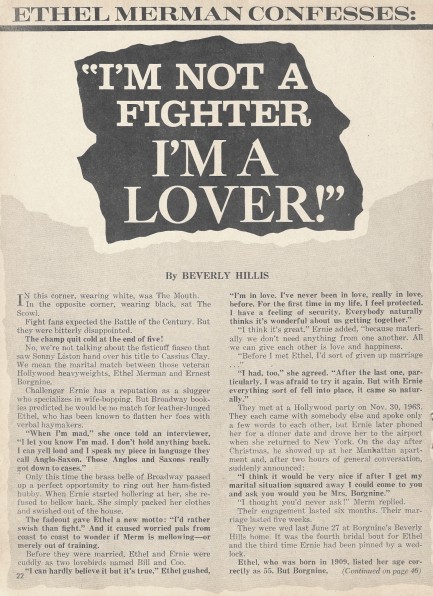                 
 She was one of the most watched people in the world—onscreen and off. 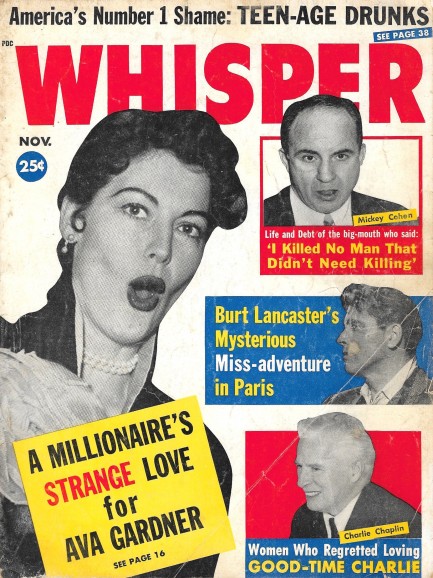
Whisper magazine, in this issue published this month in 1961, offers readers an interesting story about an unnamed millionaire's obsession with Ava Gardner. Apparently the millionaire hired people to follow Gardner around 24/7, all over the world, and report back to him, with this surveillance going on for years. The purpose? If he couldn't have her, he at least wanted to know what she was doing. Whisper focuses on a particular spy named Bill, the fourth of four spies employed by the millionaire, who Gardner came to be friends with and let live on her property, rather than have to sleep in his car night after night. Is this tale true? Maybe. Money buys a lot—including tolerance for bad behavior.
And speaking money, there's also a story on gangster Mickey Cohen, who counted among his consorts Liz Renay and Candy Barr, both of whom we've discussed, Renay here, and Barr here and here. Barr has also shown up in five magazines we've posted. The easiest way to see those is click her keywords and scroll. Cohen proves that no matter what people try to tell you, money is an aphrodisiac, because there's no way trolls like him could score beautiful dancers and models if it weren't for wealth. Take a look at the worst man in the world, and if he has money, he has a wife far more beautiful than makes sense.
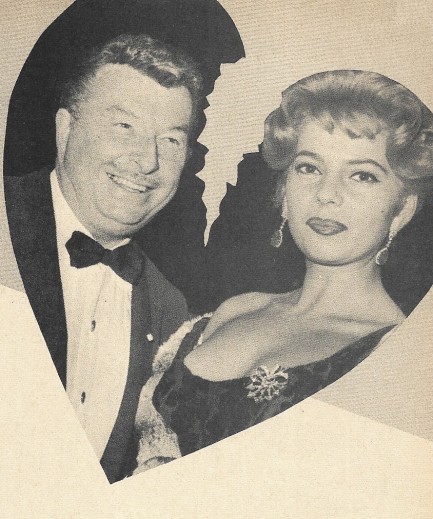
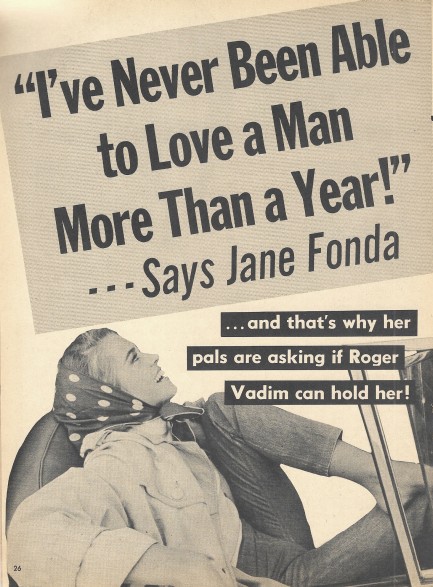
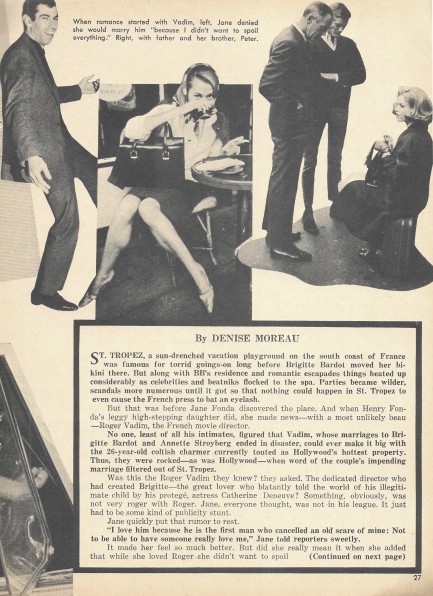
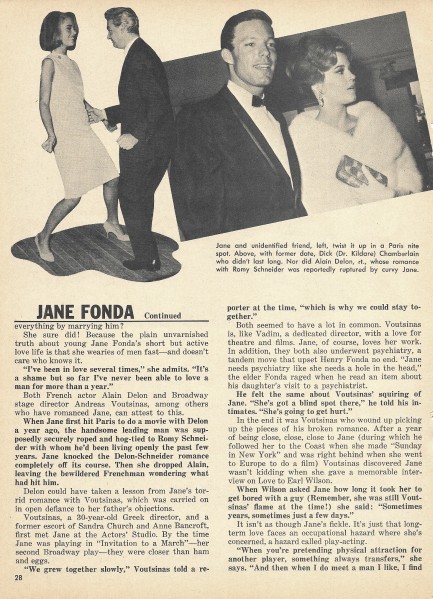
Whisper goes on to talk about Burt Lancaster's and Charlie Chaplin's lovers, teen-age drunks, Soviet honeytraps, U.S. prisons, Jane Fonda's professional and family lives, and more. It was a Robert Harrison publication that morphed from a cheesecake magazine with painted pin-up covers into a gossip rag. That happened around 1954, when the original Whisper, launched in 1946, began going broke thanks to an inability to compete with girly magazine numero uno—Playboy. But there was plenty of room in the tabloid market and Harrison made Whisper a staple monthly on par with Confidential, his flagship publication. We'll have more from Whisper later, as always. 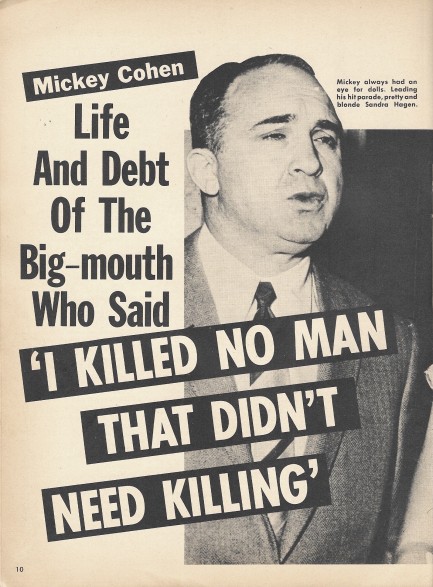 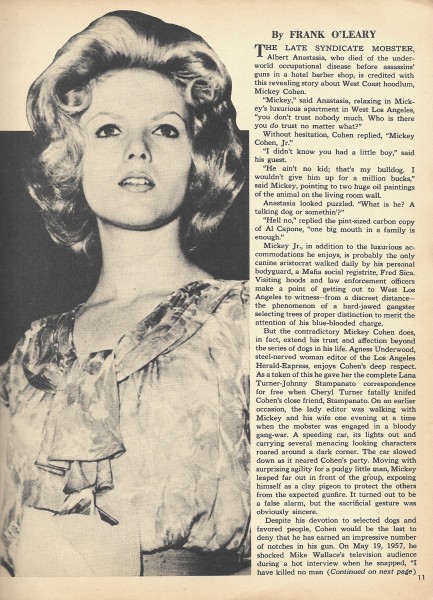 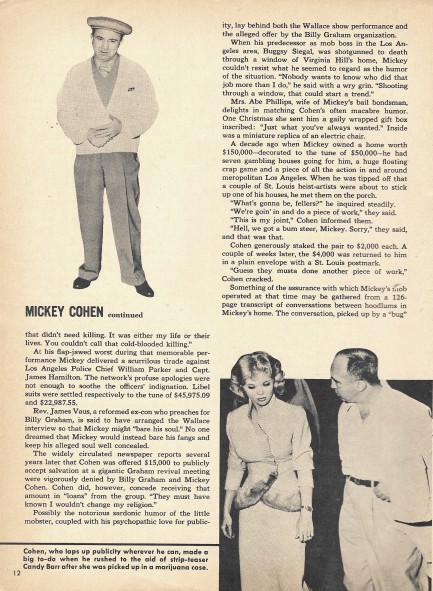 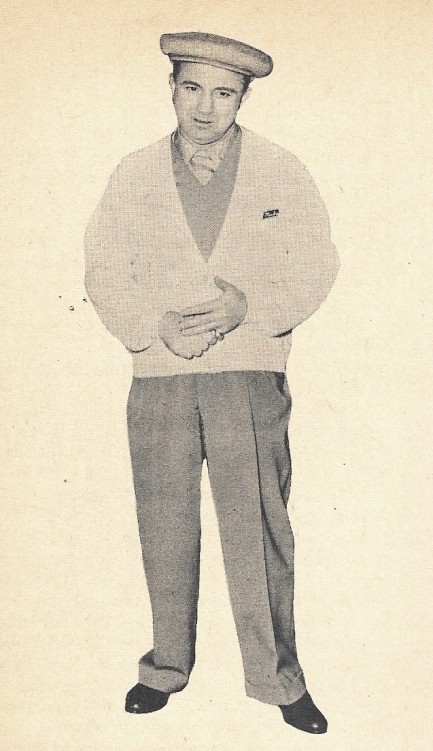 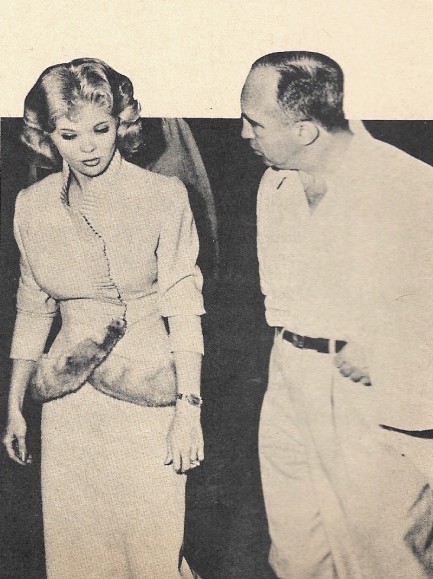 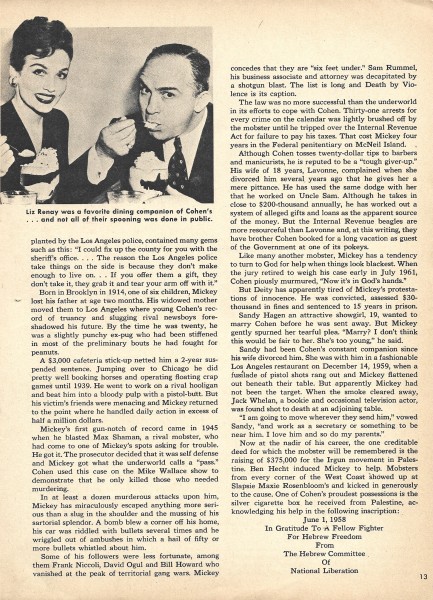 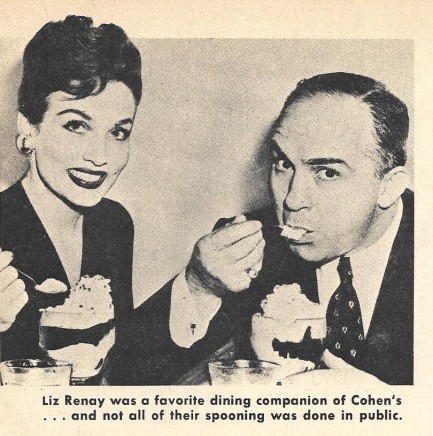 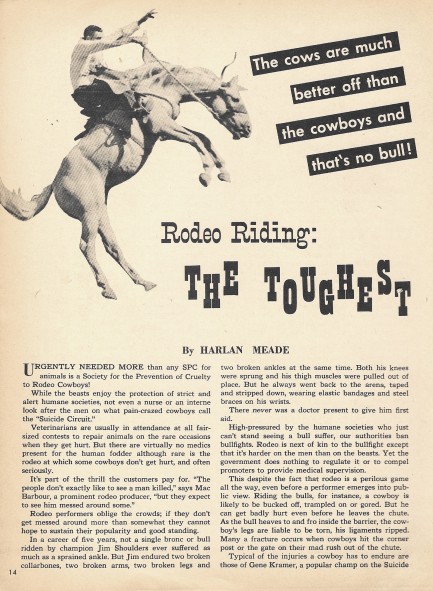 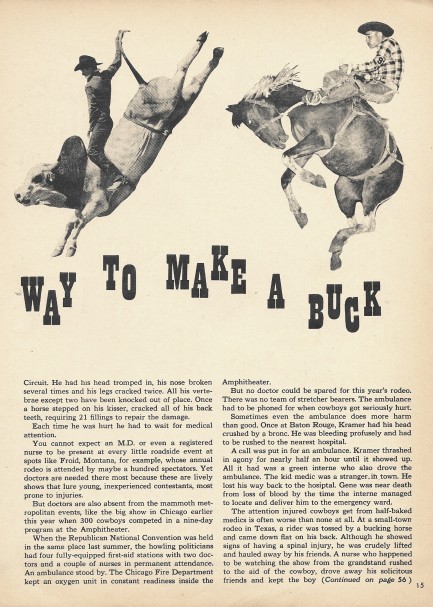   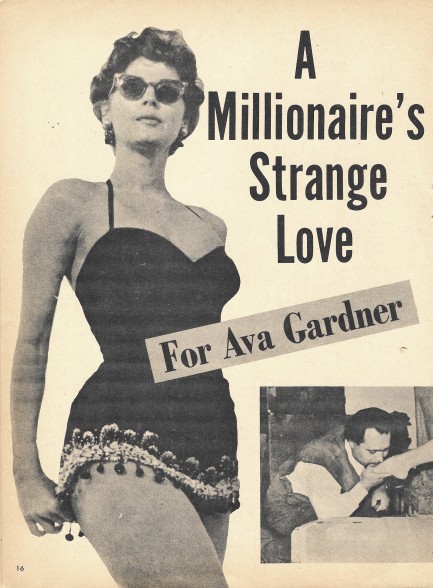 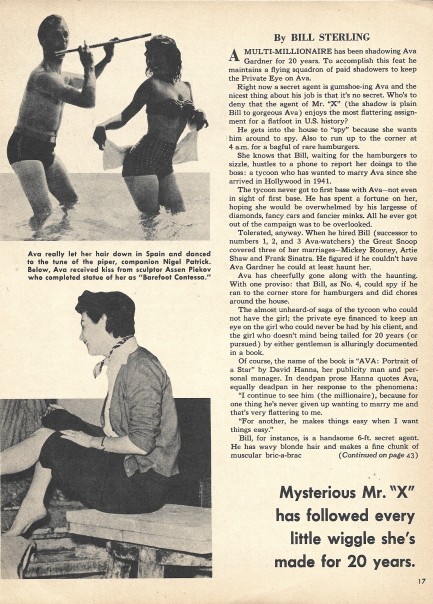 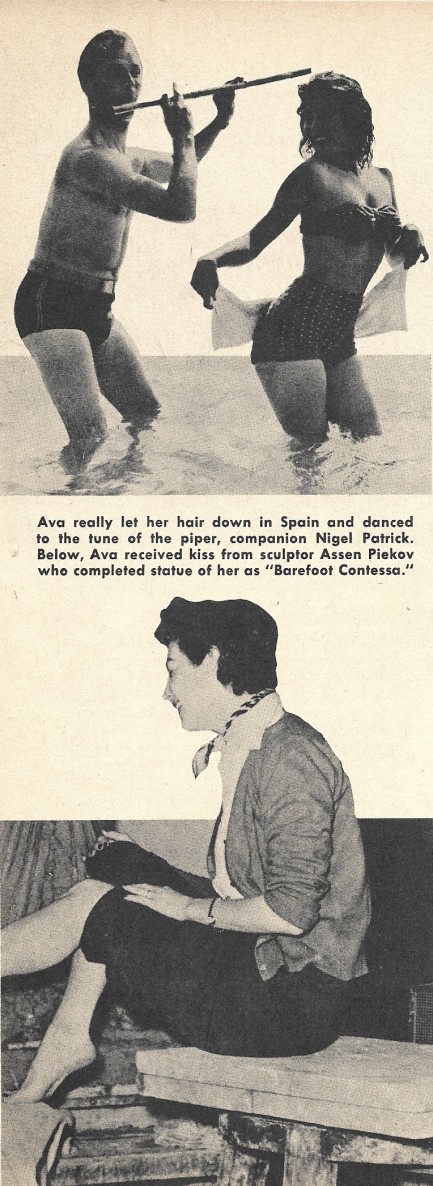 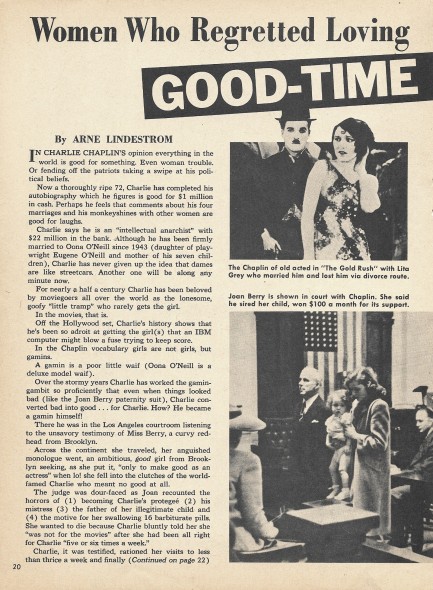 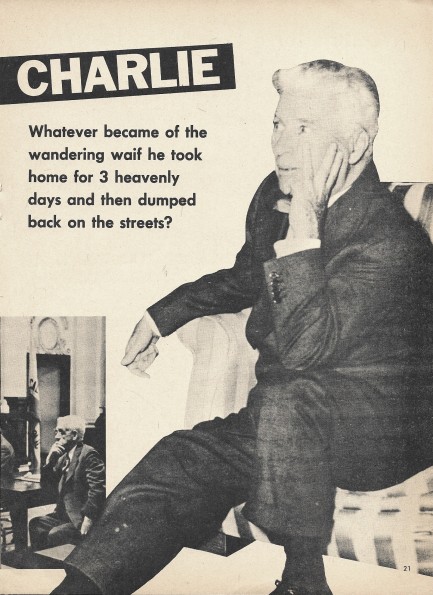 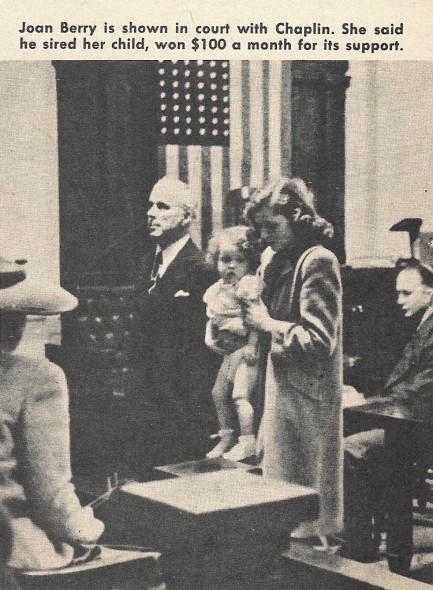 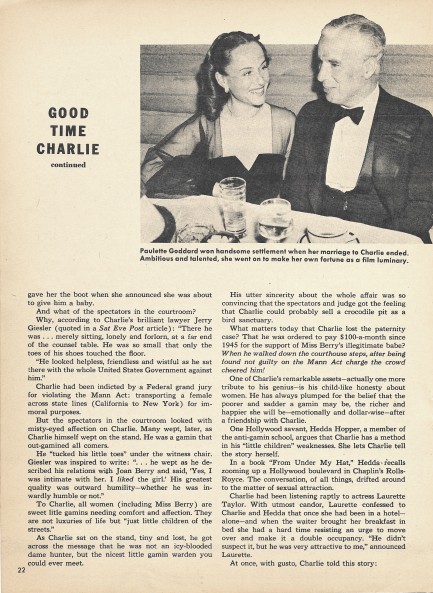 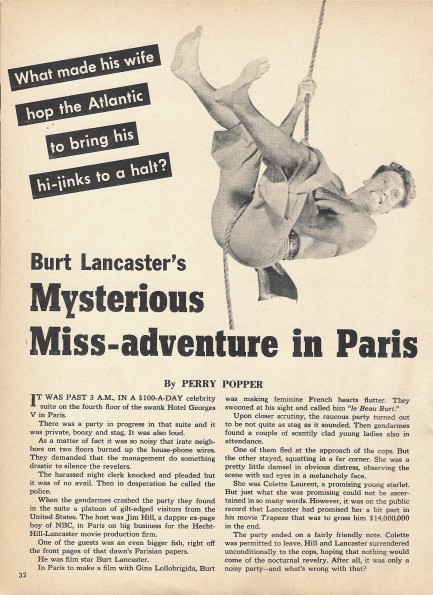 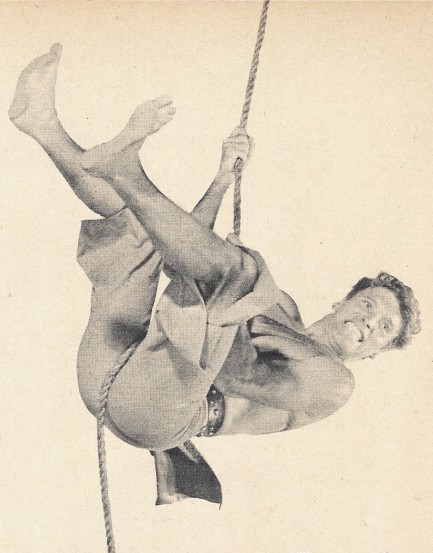 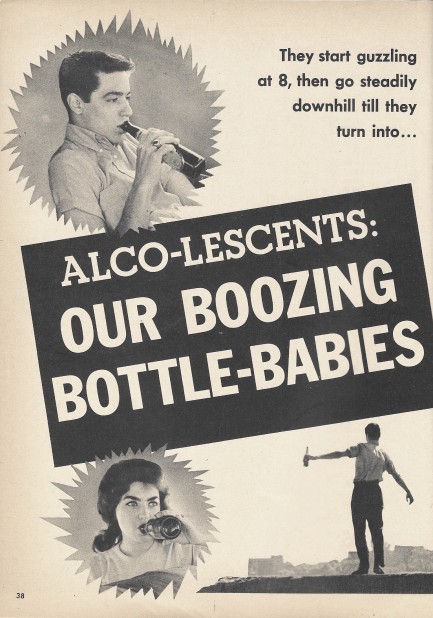 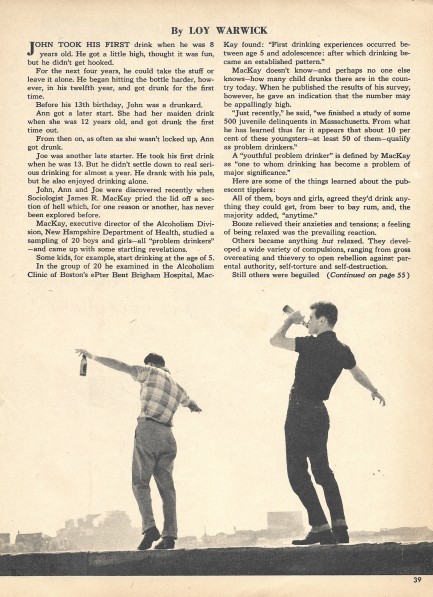 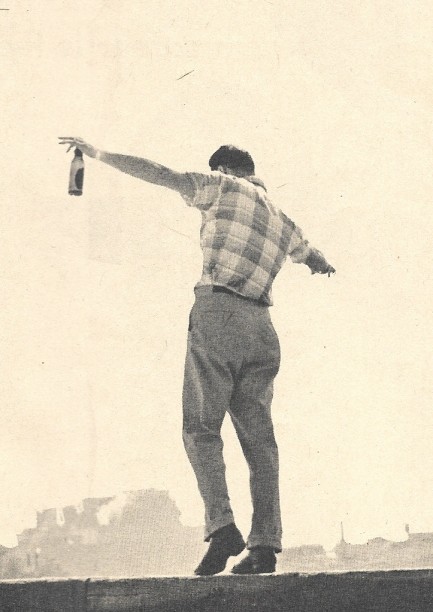 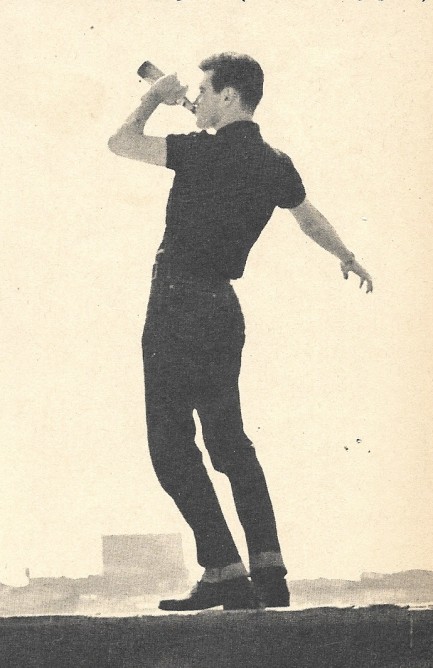 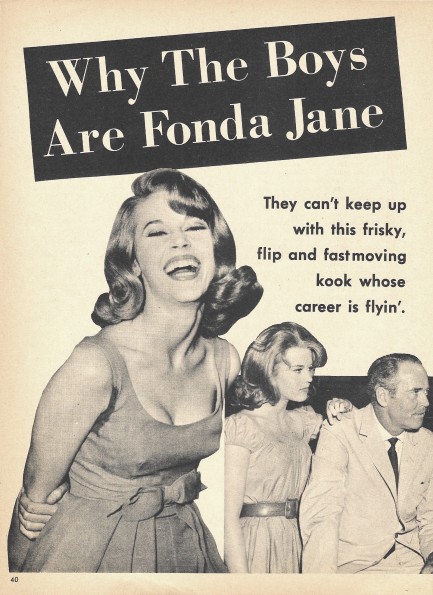 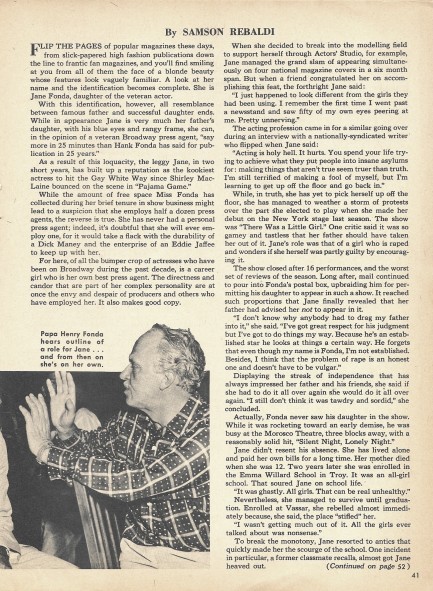
 Want to keep a secret? Don't try it in Hollywood. 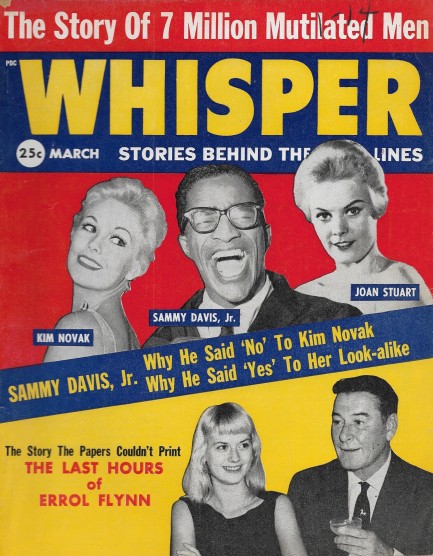
We wonder if any modern celebrity romances will be talked about half a century from now the way the old romances were. The way the Taylor/Burtons and Monroe/DiMaggios were talked about. We doubt it. Mid-century Hollywood and public romance seemed go hand in hand, and near the top of the legendary romance pyramid perches Sammy Davis, Jr.'s and Kim Novak's doomed love. Why doomed? Not to put too fine a point on it, but a 1958 Gallup poll showed that a mere 4% of Americans approved of interracial marriage. Four percent! There has never been a scientific study that showed anything other than deeply entrenched racial inequality and animosity in the U.S., and that includes today. But four percent? That's the dark ages.
We've marveled over Kim Novak before, but in case you need a visual reminder look here. Yeah. So Sammy was smitten, and so was all of America. And Novak? She saw in Sammy... charisma maybe? It wasn't devastating looks. Even Davis spoke of himself disparagingly in terms of physical appeal. But he had it. Everyone said so. His it and Novak's it were magnetically attracted and led to a relationship they tried and failed to keep relatively quiet. It's here, though, where we must note that the many Hollywood insiders who say Davis and Novak were knocking boots don't include Novak. She claims they were never more than friends. But when two megastars continually show up—however discreetly—in public together, people will talk. More importantly, tabloids will talk. And perhaps most concerning of all, Whisper will talk.
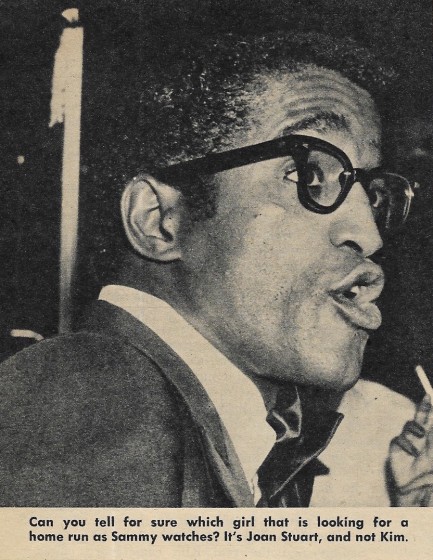
The above issue published this month in 1960 purports to have new info about the maybe-affair that shook Hollywood to its foundations, and also claims to have the scoop on Sammy's post-Kim fling Joan Stuart. We've seen many stories about his Swedish wife Mai Britt—also called a Kim copy by tabloids—but this is the first we've seen about Stuart. She wasn't Davis's first post-Novak partner. He married actress Loray White in 1958, but divorced her in 1960. Rumor is he married her under duress, having been told by certain Mafia figures to marry a black woman or else lose another eye. Whisper says that story isn't true.
Stuart was a Canadian actress, just starting out in show business. Whisper gets quotes from her parents about their daughter's relationship with Davis, and they aren't supportive. Shocking as that may be. The magazine's final take is this: “Boy meets girl. Boy gets girl. Boy loses girl. Boy meets another girl just like the girl he had before. Boy gets girl. And boy seems to be going to keep girl.” Davis did want to keep her, telling friends and reporters he wanted to marry her, but their pairing didn't last. Stuart went on to appear in some television shows and one movie—1978's In Praise of Older Women—but did not have a notable career. Did romance with Sammy Davis, Jr. hurt her? You'd have to think so—with about 96% of the public. We have some scans below, and more from Whisper to come.
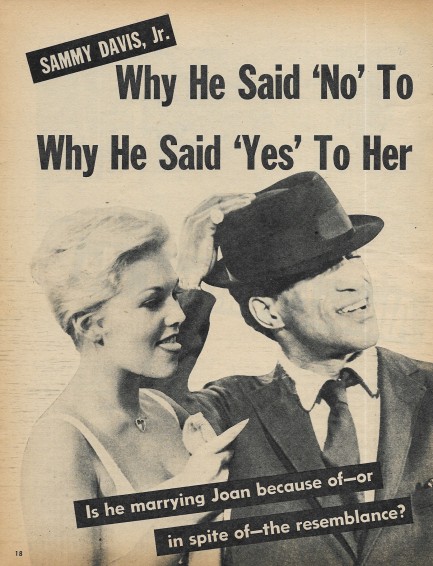 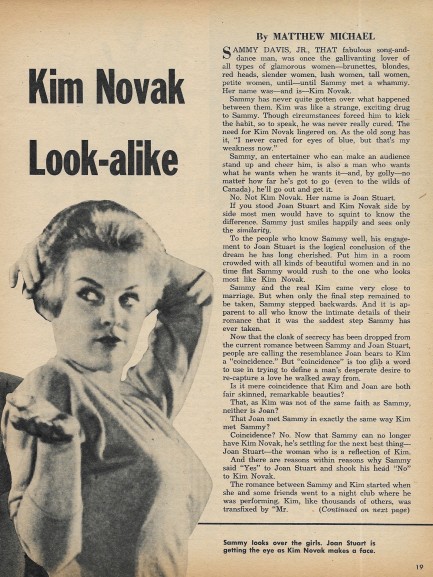 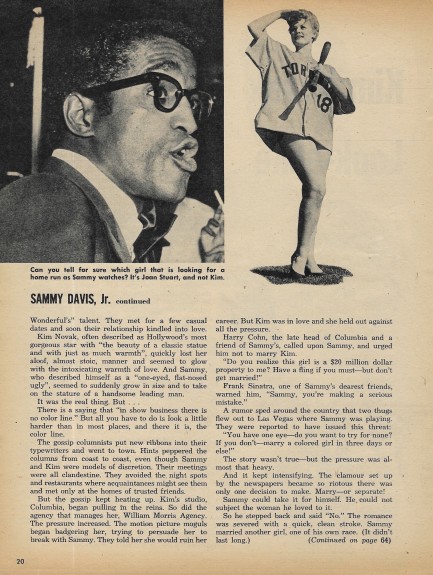  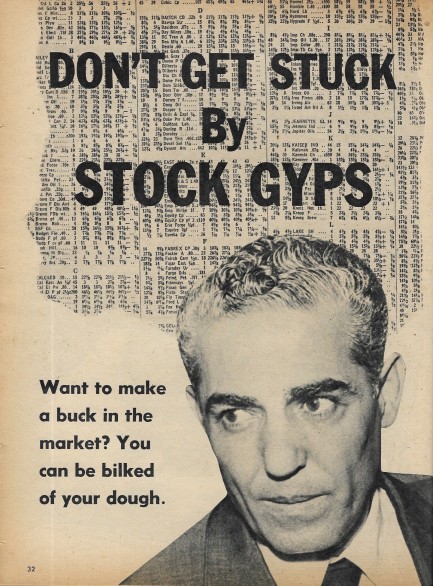 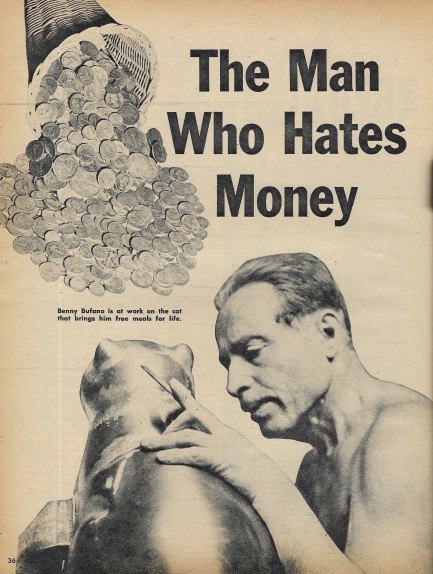 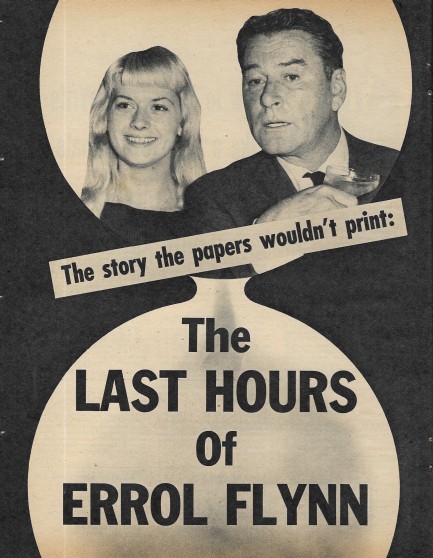 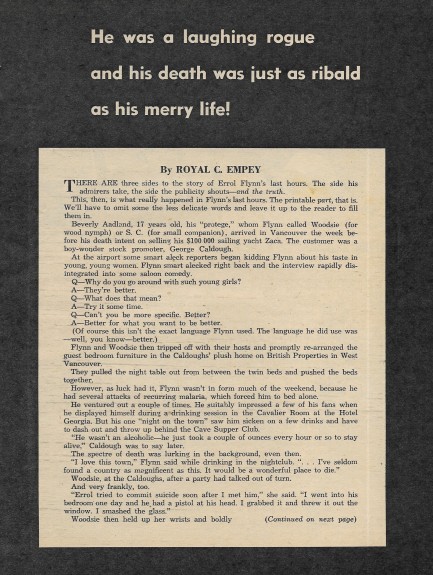 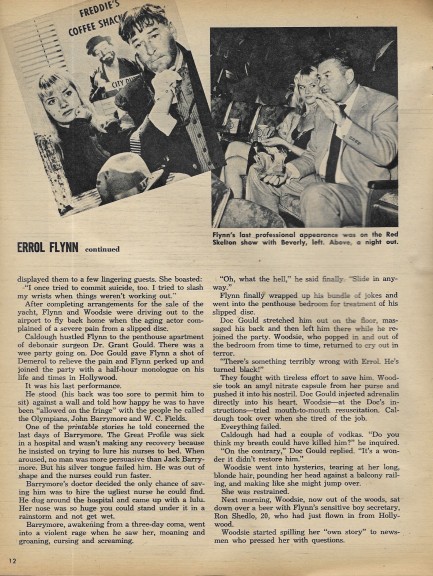 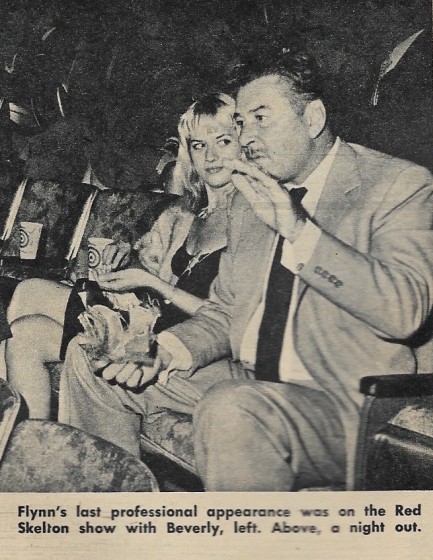 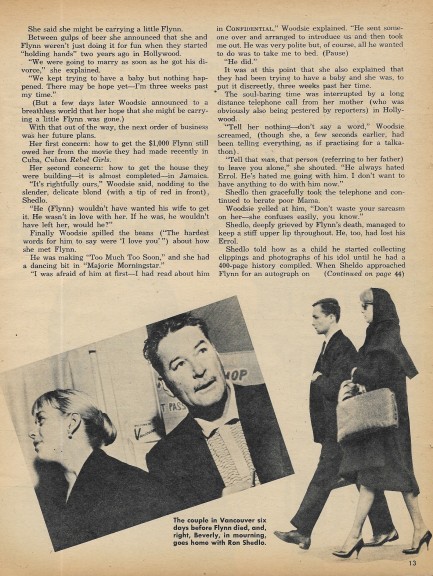 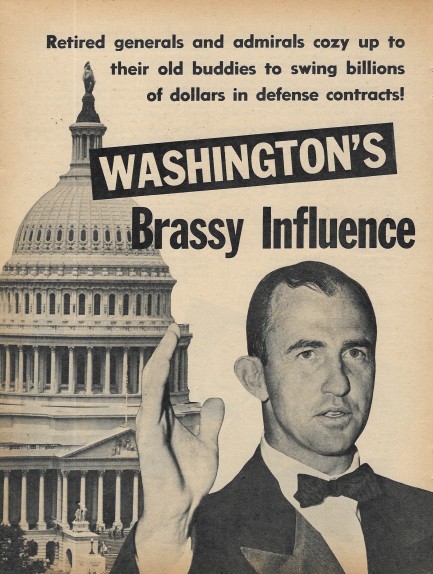  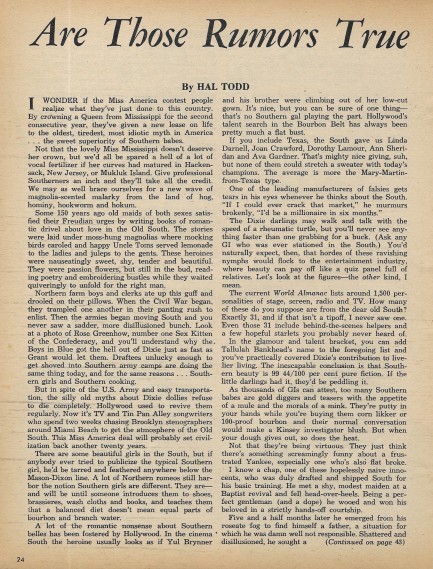 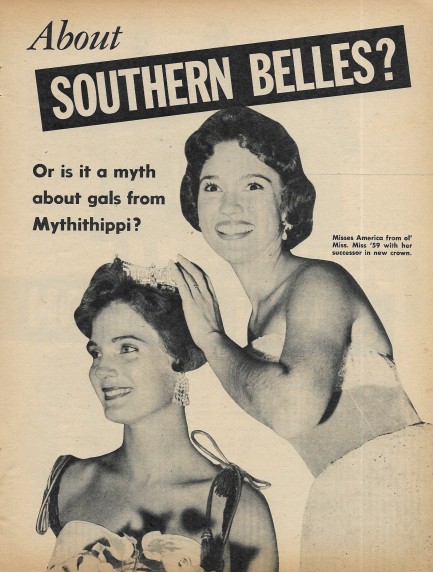
 The tabloid media was like a pack of animals and Mansfield was the meal. 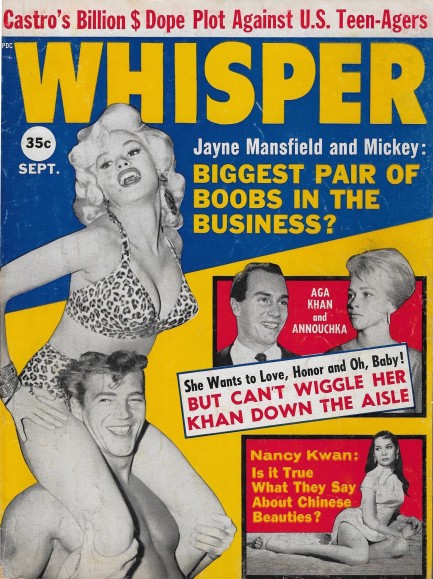
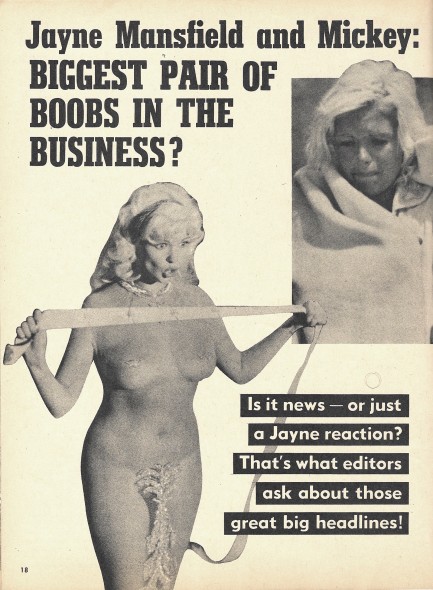
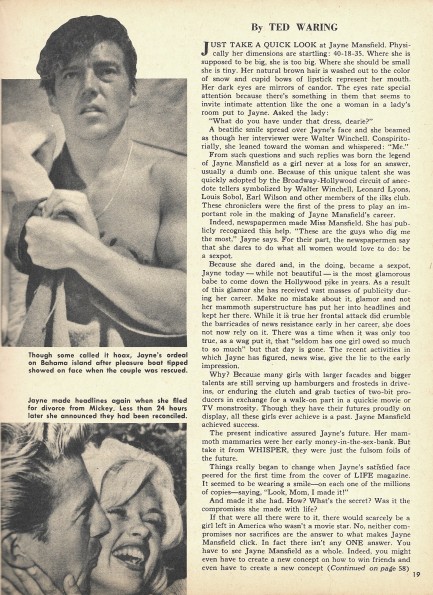
We never realized this before, but the editors of Whisper really had it in for Jayne Mansfield. We mean more than usual for a vicious tabloid. Most of the issues we have contain highly negative stories about her, such as this one published in 1962 that calls her and husband Mickey Hargitay “the biggest pair of boobs in the business.” Geez, what did she do to them? Piss in their grits? Dropkick their Corgis? Obviously, the biggest boobs thing is a play on words referencing Mansfield's bust, but they're referencing her personality when they talk about her “false façade” and “up-front ways.” Regardless of whether Whisper approved of Mansfield, it couldn't stop featuring her—a fact the magazine acknowledged. We'll see her in these pages again.
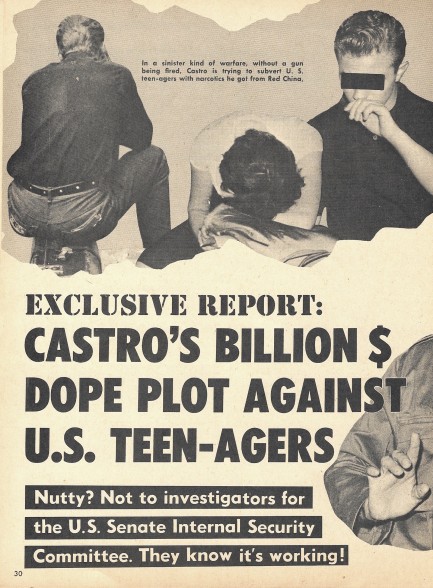
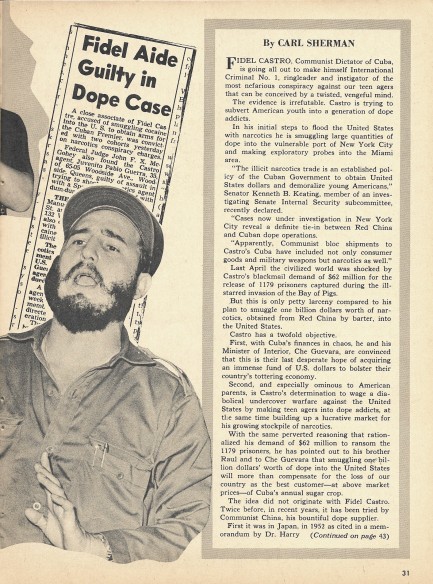
Meanwhile, elsewhere in Whisper, the amazing Señor Fidel Castro makes one of his regular appearances. Like Mansfield, the magazine couldn't stop writing about him. According to the editors, the Beard had launched a plot to addict American youth to drugs. We call Castro amazing because according to various mid-century tabloids he was simultaneously training Viet Cong soldiers in Cuba, funneling arms to U.S. inner cities, assassinating JFK, planning to overthrow the Catholic Church, raping teenaged girls, and helping East Germany revive the Third Reich. Talk about great time management skills. If only we were half as organized.
Did drugs flow from Cuba to the U.S.? It's an accusation that has come up numerous times over the years. Considering that since at least 1950 drugs were flowing into the U.S. from Colombia, Mexico, Peru, Brazil, Afghanistan, Thailand, et al—it would be astonishing if drugs didn't also originate from or transit through Cuba. With what degree of official approval we'll probably never know. Heads of state are notoriously insulated. In fact, the only one we can think of offhand who was definitively tied to drug dealing was Panama's former strongman Manuel Noriega, who was doing it with the full knowledge of the CIA, but we can probably safely assume he wasn't the first national leader to peddle drugs.
Whisper isn't aiming for investigative journalism in its Castro piece. That would require actual work. Its story is 90% lollipop, 10% stick. But the ratio of fiction to fact is meaningless as long as the writing fits the brief: focus obsessively on the sensational, the frightening, and the infuriating. That's why we call mid-century tabloids the cable news channels of yesteryear. Though people were doubtless highly agitated about what they read in these quasi-journalistic outlets, the passage of decades makes them harmless fun for us to explore. Maybe one day a future website—or whatever passes for one ages from now—will be able to make jokes about the things agitating us. Let's hope so. We have a bunch of scans below, and more tabloids than we can count inside the website. Look here.
 Wow, you’re blurrier and taller than you were earlier this evening. 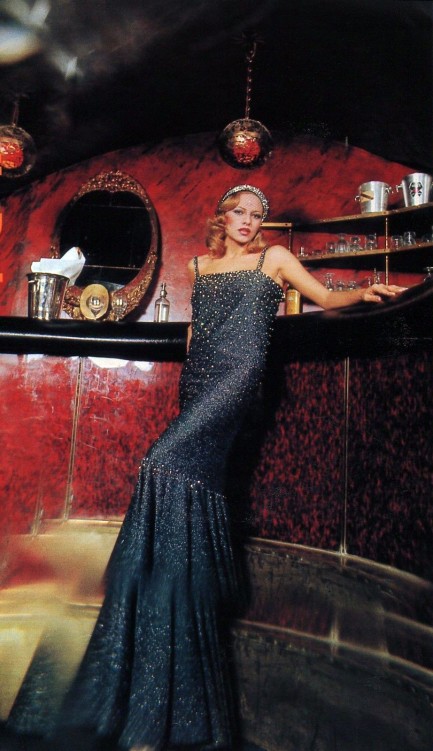
French actress Nathalie Delon was born in Oudja, Morocco as Francine Canovas, during the period when the North African country was occupied by France. She appeared in more than thirty films, including Bluebeard, Sex Shop, and Un sussurro nel buio, aka A Whisper in the Dark, and she also wrote, directed, and recorded music. We love this photo because not only was it shot in the world’s swankiest bar, but because it looks like it was photographed from the perspective of someone who got drunk and fell off his stool. No beer goggles here, though—Delon is a celebrated beauty. The shot is from 1977.
 Every celebrity’s time comes eventually. 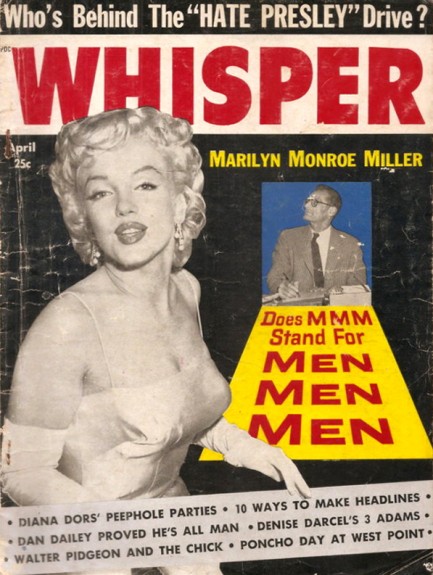
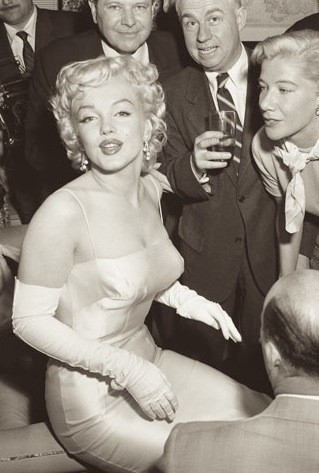 Reading about celebrities in these old tabloids is a bit like reliving their fame in real time, and in this Whisper published this month in 1957 we get to observe Marilyn Monroe in mid-career. You know that stage. It’s the one where she’s no longer a sparkling new star, but hasn’t yet earned the status of a venerable old treasure. It’s the stage where almost overnight the very editors who were partners in constructing the edifice of fame begin to take it apart brick and girder, with sledgehammers and blowtorches. Reading about celebrities in these old tabloids is a bit like reliving their fame in real time, and in this Whisper published this month in 1957 we get to observe Marilyn Monroe in mid-career. You know that stage. It’s the one where she’s no longer a sparkling new star, but hasn’t yet earned the status of a venerable old treasure. It’s the stage where almost overnight the very editors who were partners in constructing the edifice of fame begin to take it apart brick and girder, with sledgehammers and blowtorches. In this issue Whisper editors throw Monroe into their monthly crucible “The Pit,” an unenviable place you may remember from our post on Liberace a while back. Sometimes a celebrity behaves in such a way as to deserve harsh criticism, but generally that isn’t the case—only the narrative has changed, which itself reflects the belief in editorial circles that more magazines can be sold by tearing a person apart than by continuing to build them up. As we’ve mentioned before, we know a little bit about this, having spent many years working in media. So what had Monroe done? What was Whisper so miffed about? Well, she had declared her craving to act in serious films. We’ll let Whisper hatchet man Tom Everleigh spin it for you in his own words: “And while the only success she’s ever had in films has been by rolling her hips and doing a lightweight Mae West routine, she’s suddenly going to become a “serious actress”—and would even love to render Shakespeare even!” There you have it, complete with two "evens," oddly. Monroe was the pits because she sought artistic growth. Everleigh describes every aspect of her career as crass manipulation and propaganda, which strikes us as pretty harsh, considering she was never in politics. But anyway, it does illustrate the point that when the script is primed to flip the flimsiest of pretexts will do. At this point in her career Monroe probably would have ended up in Whisper’s Pit whether she’d personally thwarted a terrorist attack or thrown a crate of golden retriever puppies in a woodchipper. Or put another way, when it’s your time to suffer the knives of the tabloids it’s simply your time. Monroe eventually did reach venerable old treasure status, but sadly, it was after her death five years after this issue appeared. We have a couple of scans of her, as well as a great page of Diana Dors with her husband Dennis Hamilton, below. 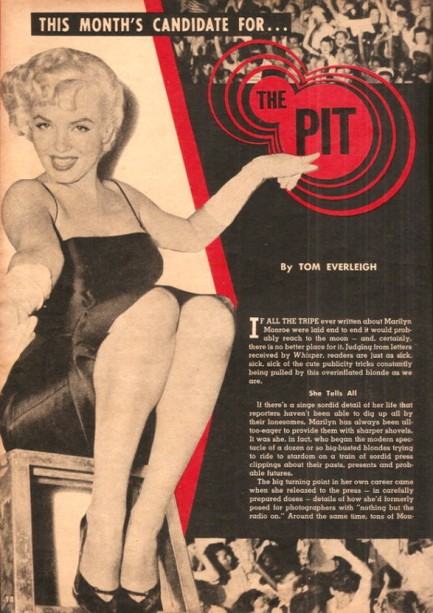 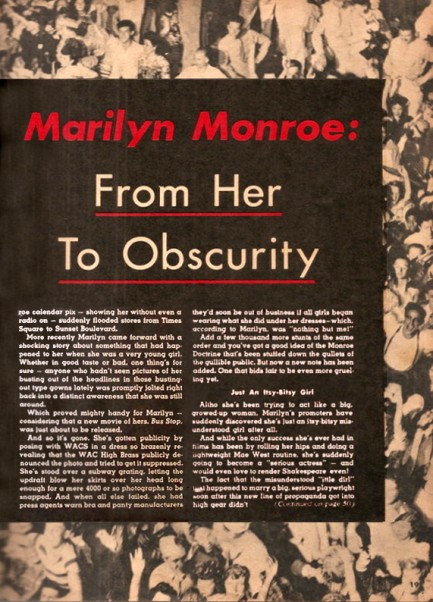 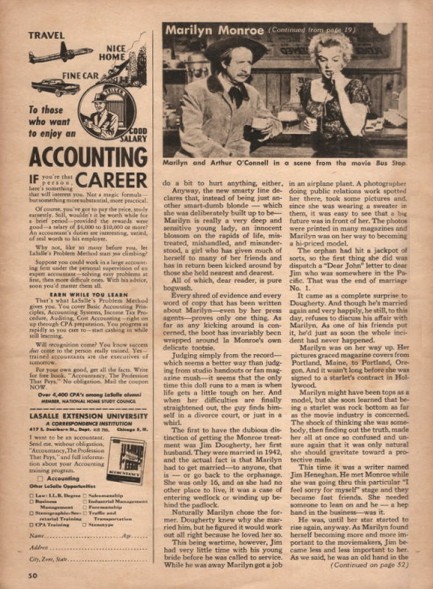 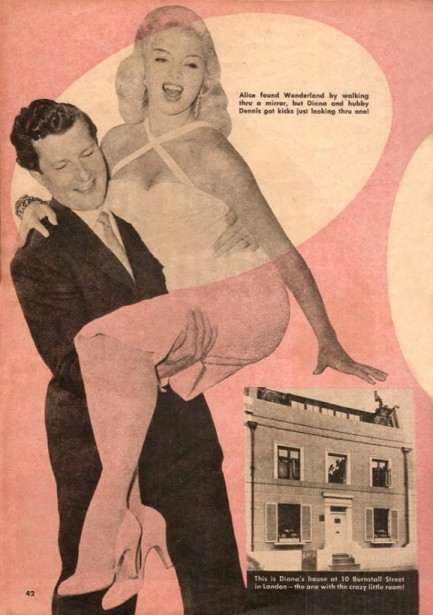
 Whisper dishes dirt from Sukarno to Lollobrigida. 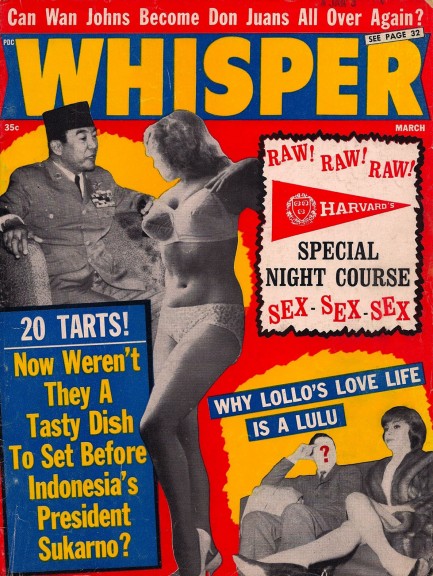
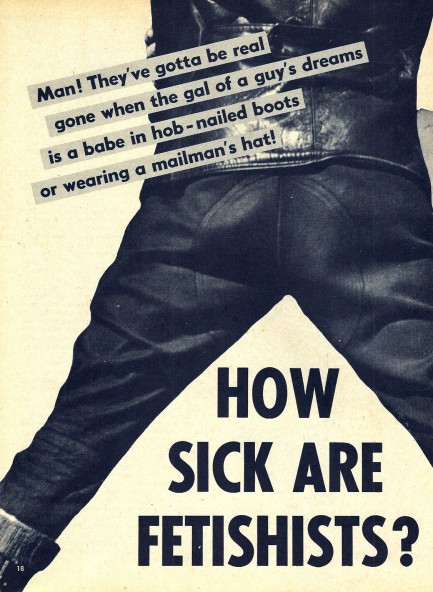
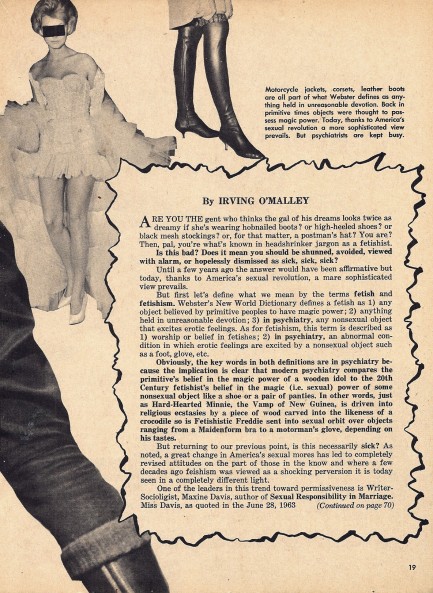
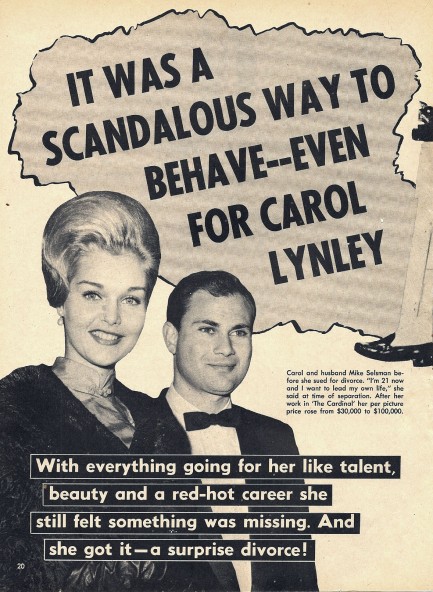
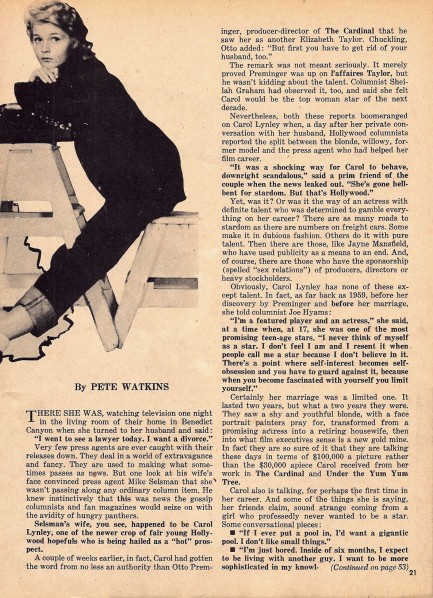
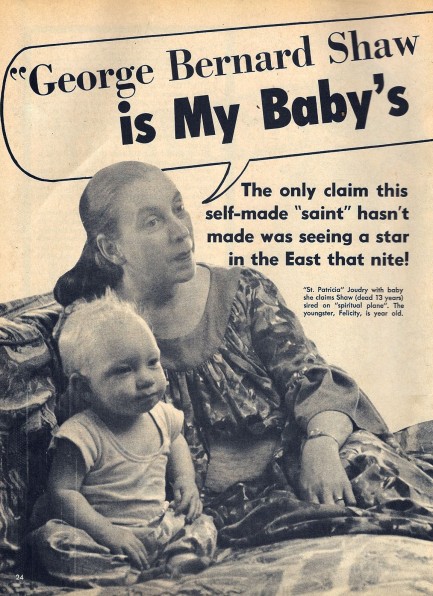
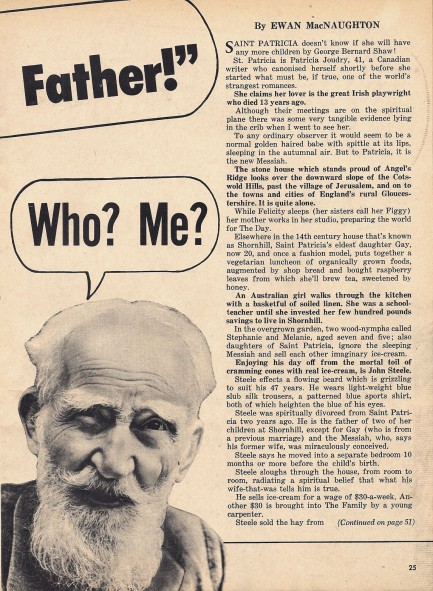
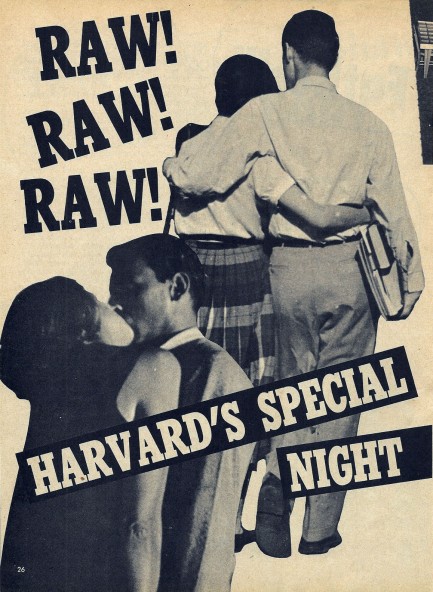
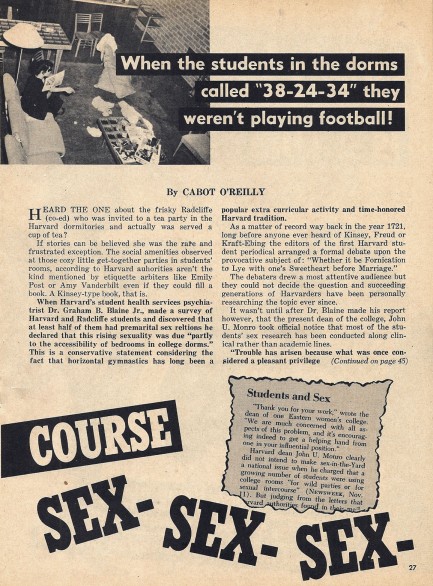
Whisper features a political figure on this cover from March 1964, namely Indonesian ruler Kusno Sosrodihardjo, later known as Sukarno, who we’re told was offered twenty prostitutes while visiting his country’s embassy in Copenhagen in 1961. In fact, the magazine goes on to claim that the embassy housed a brothel. Though it sounds like a typical tabloid tall tale, it’s actually true. Time magazine had written about it in its October 1963 issue, stating: A diplomat may be only a cookie pusher, but the kind of cookies pushed by Indonesia’s charge d’affaires in Copenhagen tumbled, not crumbled. Last week Danish police announced that Gustin Santawirja not only ran his country’s embassy, [snip] but was also a procurer on the side. Santawirja got into the tart trade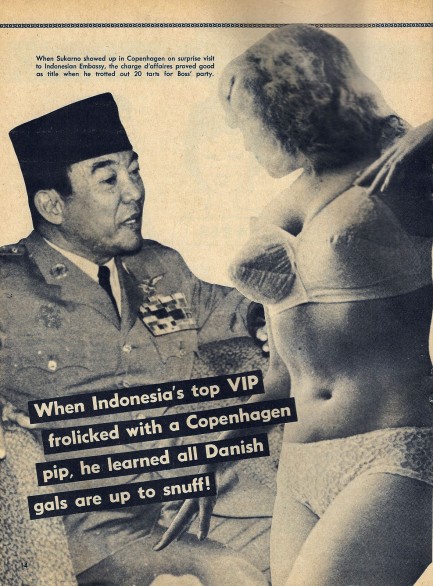 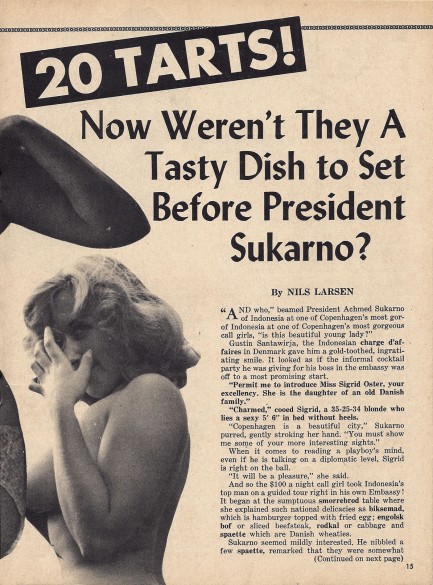 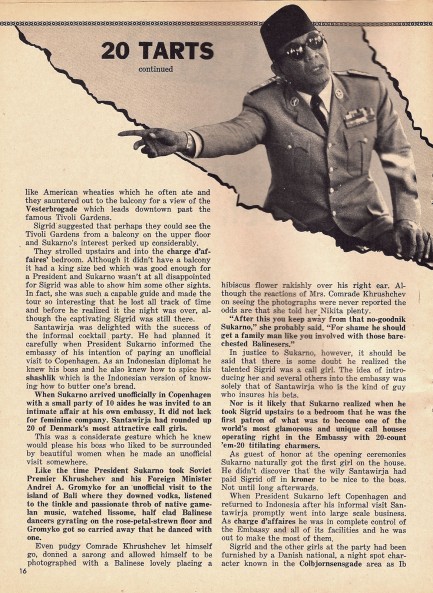 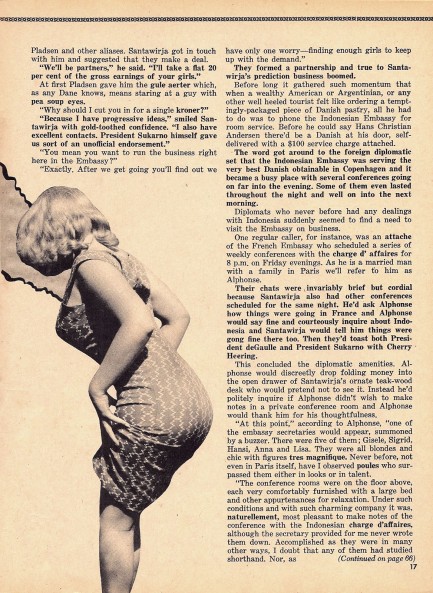 in 1961 when Indonesia's President Sukarno showed up in Copenhagen on an unofficial visit. Amiably, he rounded up some girls for the visiting entourage. So successful was the venture that he decided to supplement his entertainment allowance by running a fulltime poule hall. “Poule” is French for “hen,” by the way, and Whisper was correct, but it was also late to the party. We give no credit for publishing what was already widely known. in 1961 when Indonesia's President Sukarno showed up in Copenhagen on an unofficial visit. Amiably, he rounded up some girls for the visiting entourage. So successful was the venture that he decided to supplement his entertainment allowance by running a fulltime poule hall. “Poule” is French for “hen,” by the way, and Whisper was correct, but it was also late to the party. We give no credit for publishing what was already widely known. The magazine moves on to the subject of sexual shenanigans at Harvard University, Carol Lynley’s divorce, Sonny Liston’s world, Roland Gilbert’s bed hopping, and George Bernard Shaw’s love child. The latter is a curious story, since Shaw had died in 1950. But the woman in question, whose name was Patricia Joudry, claimed to have conceived spiritually. In addition to Shaw apparently transmitting his seed from the netherworld, Joudry claimed he transmitted a treasure trove of written material to her, explaining, “There are eighteen full length stage plays, a dozen TV plays, two full length novels and essays. At first George and I worked out an alphabet so we could speak, but now I am a clairvoyant and clairaudient. Now I can see him and hear him.” We actually believe this story because our entire website is transmitted to us by Rodney Dangerfield. Lastly, Whisper offers up an exposé of Gina Lollobrigida’s complicated personal life. For years she had been protesting that she was not a sex symbol (as if she’s the one who actually gets to decide that), but rather a nice girl. She tells an interesting story from her early career about Howard Hughes’ efforts to romance her, which were fruitless but led to her being stuck in a hotel “for six weeks like a prisoner.” In the end,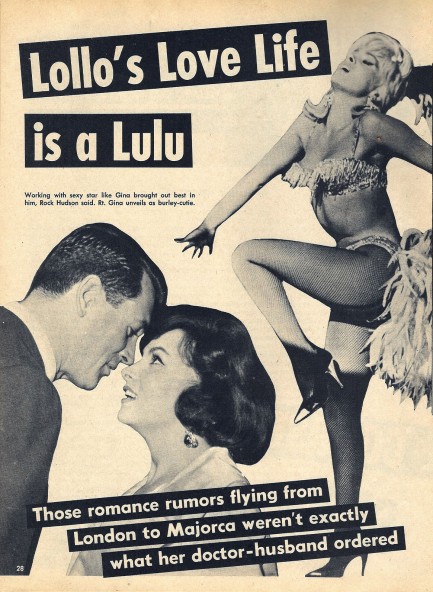 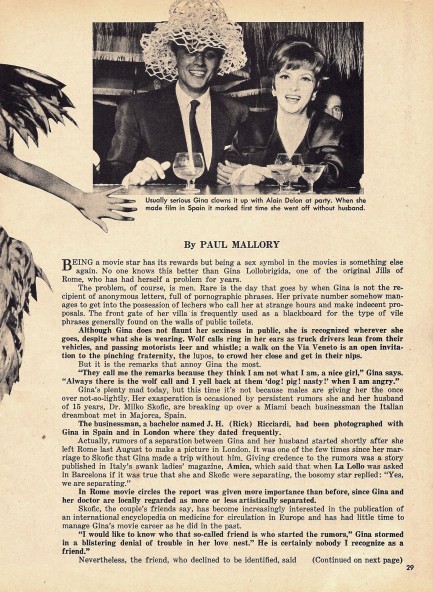 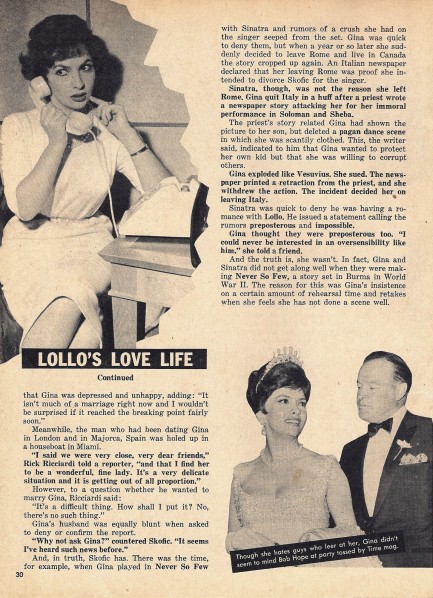 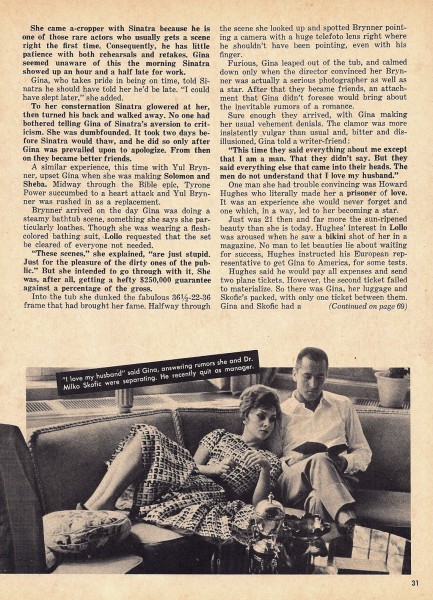
she fled back to Italy and, because Hughes owned her American contract, she was unable to make movies in the U.S. She became an international star just the same, acting exclusively in Europe, but having attained celebrity claimed it was difficult for her. She complained: “When I am with people I am constantly watched, and I can’t get used to this sort of thing—that they look at me as a chimpanzee in a zoo.” Sounds bad, but she eventually learned to enjoy it. In 2000 she commented to Parade magazine, “I’ve had many lovers and still have romances. I am very spoiled.” So it seems even the worst parts of celebrities’ lives aren’t really all that bad. Assorted scans below.
 Hah hah, this is so much fun. Wait—what do I win again? 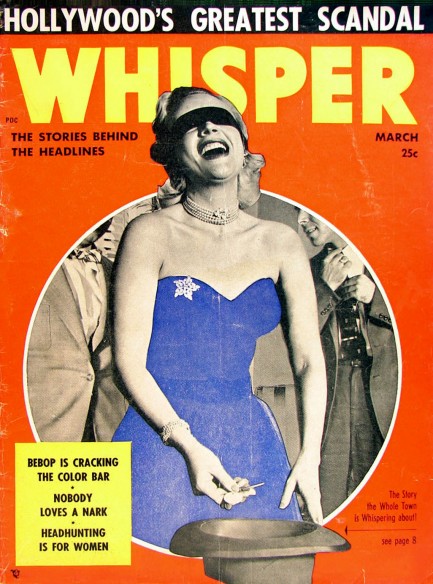
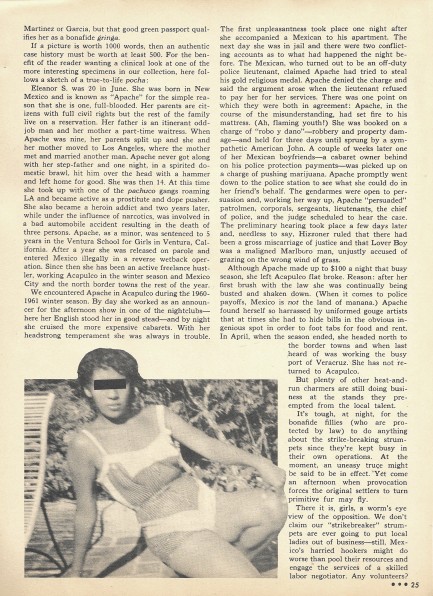
This Whisper from March 1955 features a striking cover image and the teaser at lower right: The Story the Whole Town Is Whispering About. What story was that? Seems Whisper had discovered key parties, a type of sexual swapping where men placed their keys in a hat or bowl and women blindly grabbed a set and went home with the person whose keys they chose. The phenomenon is generally associated with the 1970s, and has certainly become more widely known since the novel and movie The Ice Storm featured it as a central plot device, but there are many who doubt such parties were real. Here we have proof that the idea (if not the practice) existed in 1955.
 Liberace is finally forced to take up arms against the tabloids. 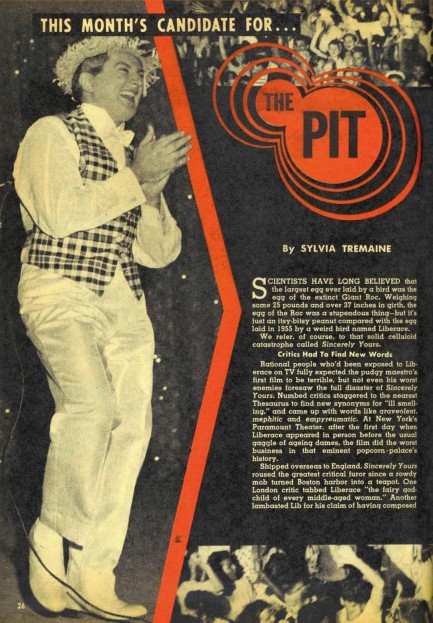 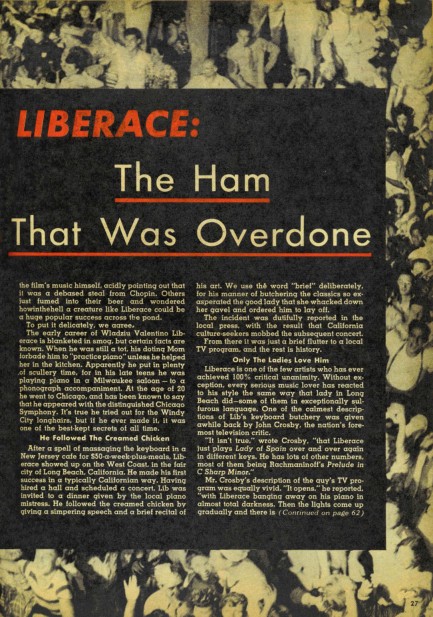
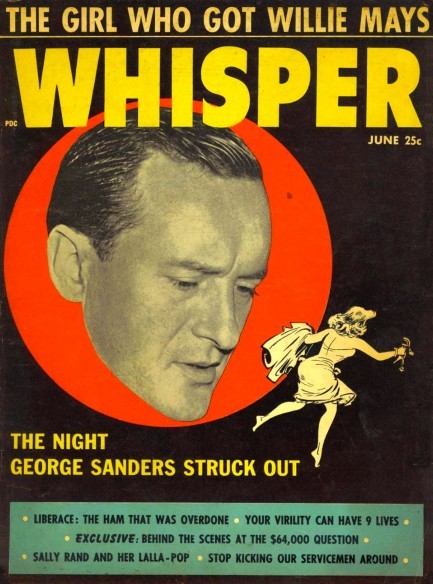 A long while ago we shared the cover of a 1956 Whisper featuring George Sanders. The same issue had an article on Liberace, and we’re returning to that today as part of our look at mid-century tabloid attitudes toward gay culture. In general of course, the tabloids were brutally insulting, using overt as well as coded language to get intimations of homosexuality across. Theoretically, when dealing with public figures they had to be somewhat cautious, but both Rave and Inside had in 1954 written stories insinuating that Liberace was gay, and in 1955 Suppressed and Private Lives did the same. In Whisper, a journalist writing under the name Sylvia Tremaine refers to Liberace as a “creature,” labels his speech as “simpering,” and describes his move to television this way: “From there it was just a brief flutter to a local TV program.” A long while ago we shared the cover of a 1956 Whisper featuring George Sanders. The same issue had an article on Liberace, and we’re returning to that today as part of our look at mid-century tabloid attitudes toward gay culture. In general of course, the tabloids were brutally insulting, using overt as well as coded language to get intimations of homosexuality across. Theoretically, when dealing with public figures they had to be somewhat cautious, but both Rave and Inside had in 1954 written stories insinuating that Liberace was gay, and in 1955 Suppressed and Private Lives did the same. In Whisper, a journalist writing under the name Sylvia Tremaine refers to Liberace as a “creature,” labels his speech as “simpering,” and describes his move to television this way: “From there it was just a brief flutter to a local TV program.”
You’ll notice there’s deniability in all those words—Whisper could claim there was nothing defamatory in the language. Ridiculous, of course. Clearly the magazine was calling Liberace gay, and only a fool would claim otherwise, but defamation had not occurred to an extent that would stand up in court. Thus we see the joy of coded language. The same occurs in the U.S. today in certain media outlets with language directed at African Americans. The disparagement is clear, but deniable. Or for a cinematic example of coding, consider the Maltese Falcon and how the character of Joel Cairo is announced by flute trills on the soundtrack. Clear, and yet deniable. But in its Liberace article Whisper then throws deniability out the window with this: “Hollywood snickerers are wondering, in fact, if all the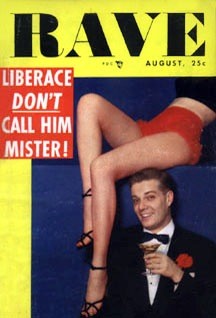 male hormones earmarked for the Liberace boys weren’t hogged by George, leaving Lee with only his nimble fingers.” That goes a bit beyond code, wouldn’t you say? male hormones earmarked for the Liberace boys weren’t hogged by George, leaving Lee with only his nimble fingers.” That goes a bit beyond code, wouldn’t you say? Liberace did not sue, and the tabloids simply built momentum. Later in 1956 Britain’s Daily Mirror called him a “deadly, winking, sniggering, snuggling, chromium-plated, scent-impregnated, luminous, quivering, giggling, fruit-flavoured, mincing, ice-covered heap of mother love.” Robert Harrison’s Confidential piled on in 1957. It published a three-part tale of Liberace attacking a hapless press agent. A sample from that hit piece: “Fatso plumped onto the couch alongside his young guest, and before you could say Gorgeous George, the pair were [wrestling]. In a matter of moments, it turned into a boxing bout, too, with the press agent throwing desperate lefts and rights at Liberace. The latter, his determination stiffening, merely clung tighter. The floor show reached its climax when Dimples, by sheer weight, pinned his victim’s shoulders to the mat and mewed into his face: 'Gee, you’re cute when you’re mad!'”
Liberace’s lawyer John Jacobs filed lawsuits against both Daily Mirror and Confidential, demanding a whopping twenty million dollars from the latter. Adjusted for inflation, that's about $174 million in today's terms. You can almost imagine Robert Harrison spitting up his coffee when he heard the settlement demand. Equally you can imagine Liberace’s reluctance to dignify the article, but Confidential at the time had readership in the millions. Something had to be done. It had become open season on his private life. Even the press photo below toyed with him. The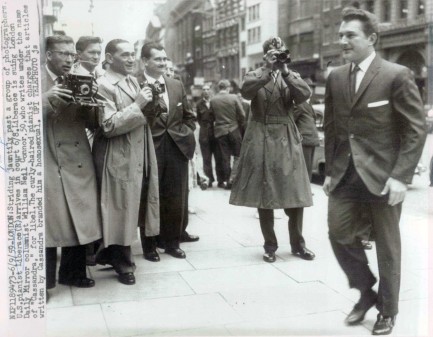 descriptive text, written for newspaper staff, is meant to simply get across the basic facts of the photos and is typically pretty dry stuff. But this describes Liberace as "the curly-haired pianist" and says his walk is "jaunty." Clear, but deniable. descriptive text, written for newspaper staff, is meant to simply get across the basic facts of the photos and is typically pretty dry stuff. But this describes Liberace as "the curly-haired pianist" and says his walk is "jaunty." Clear, but deniable. In the end, Liberace received $40,000 from Confidential and $53,000 from the Daily Mirror, substantial sums for the time. In addition to his legal victories, the constraints against tabloid journalism were becoming more defined. Of course, Liberace had won the cases by perjuring himself in court about being gay. In 1987 when he died of complications related to AIDS, Daily Mirror refused to show an iota of deference or respect and published a piece referring to the 1950s settlement. It was headlined: Any Chance of a Refund?

|
 |
The headlines that mattered yesteryear.
1945—Mussolini Is Arrested
Italian dictator Benito Mussolini, his mistress Clara Petacci, and fifteen supporters are arrested by Italian partisans in Dongo, Italy while attempting to escape the region in the wake of the collapse of Mussolini's fascist government. The next day, Mussolini and his mistress are both executed, along with most of the members of their group. Their bodies are then trucked to Milan where they are hung upside down on meathooks from the roof of a gas station, then spat upon and stoned until they are unrecognizable. 1933—The Gestapo Is Formed
The Geheime Staatspolizei, aka Gestapo, the official secret police force of Nazi Germany, is established. It begins under the administration of SS leader Heinrich Himmler in his position as Chief of German Police, but by 1939 is administered by the Reichssicherheitshauptamt, or Reich Main Security Office, and is a feared entity in every corner of Germany and beyond. 1937—Guernica Is Bombed
In Spain during the Spanish Civil War, the Basque town of Guernica is bombed by the German Luftwaffe, resulting in widespread destruction and casualties. The Basque government reports 1,654 people killed, while later research suggests far fewer deaths, but regardless, Guernica is viewed as an example of terror bombing and other countries learn that Nazi Germany is committed to that tactic. The bombing also becomes inspiration for Pablo Picasso, resulting in a protest painting that is not only his most famous work, but one the most important pieces of art ever produced. 1939—Batman Debuts
In Detective Comics #27, DC Comics publishes its second major superhero, Batman, who becomes one of the most popular comic book characters of all time, and then a popular camp television series starring Adam West, and lastly a multi-million dollar movie franchise starring Michael Keaton, then George Clooney, and finally Christian Bale. 1953—Crick and Watson Publish DNA Results
British scientists James D Watson and Francis Crick publish an article detailing their discovery of the existence and structure of deoxyribonucleic acid, or DNA, in Nature magazine. Their findings answer one of the oldest and most fundamental questions of biology, that of how living things reproduce themselves.
|

|
|
It's easy. We have an uploader that makes it a snap. Use it to submit your art, text, header, and subhead. Your post can be funny, serious, or anything in between, as long as it's vintage pulp. You'll get a byline and experience the fleeting pride of free authorship. We'll edit your post for typos, but the rest is up to you. Click here to give us your best shot.
|
|