 Well, looks like them bandits is gone, miss. And now, I'm powerful curious about several aspects of your predicament. 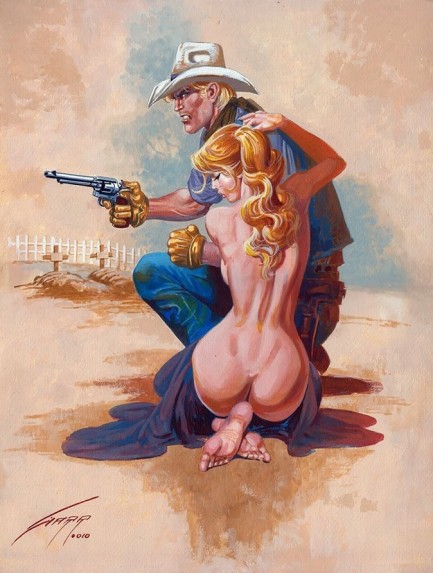
Above you see a piece of modern Mexican comic book art painted by Rafael Gallur for the cover of issue #771 of La Ley del Revolver, published in 2010. Many questions could be asked here, but none can be answered without buying the comic book. Perhaps we'll do that down the line. We've shared other work from Gallur before and, like this one, it's extremely lurid. Check it out here.
 People are being eaten by sharks but the hipsters of the Mexican Riviera are too groovy to care. 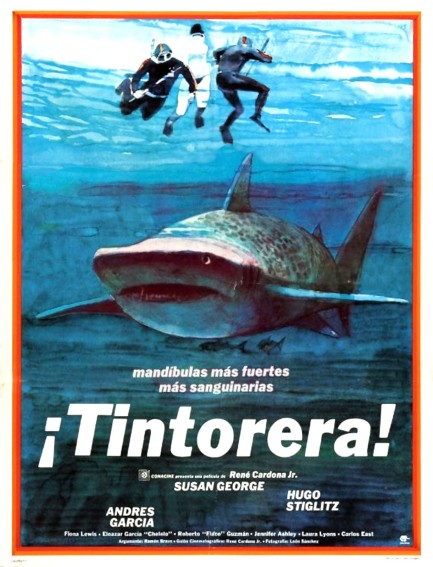
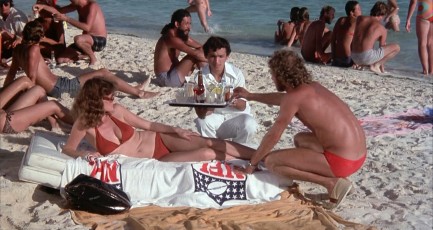
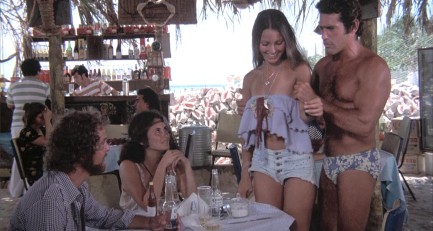
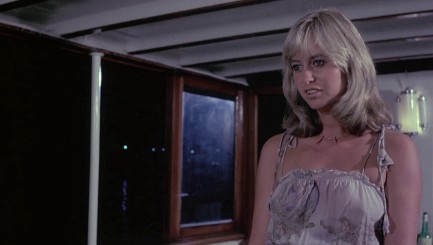
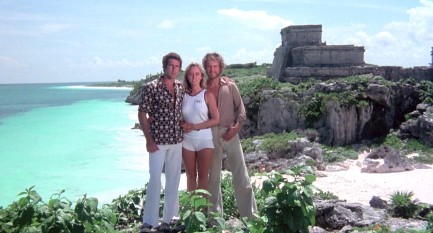
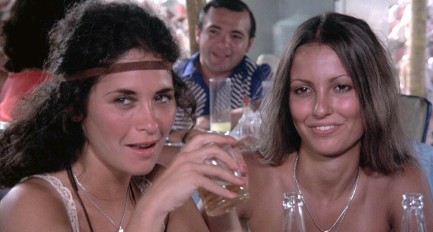
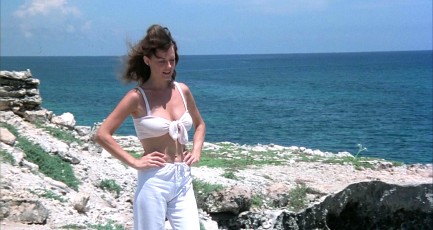
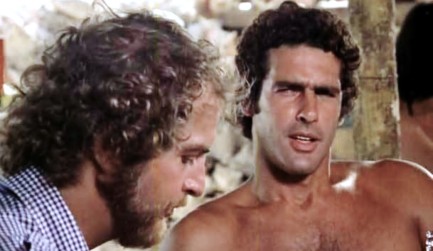
¡Tintorera!, for which you see a poster above, is often presumed to be within the pantheon of Jaws knockoffs, and that's true, but barely. There's a giant shark, and it eats a few people, but ¡Tintorera! couldn't be more different in tone than Spielberg's blockbuster. It's a counterculture movie set in and around Cancún, Tulum, and the Rivera Maya. A considerable amount of script is spent exploring free love and utopian lifestyles. Shark hunters Andrés Garcia and Hugo Stiglitz fashion an exclusive three-way relationship with Susan George. They also mix and match with Laura Lyons and Jennifer Ashley, and each bed down on consecutive nights with Fiona Lewis, which catalyzes a transformation from professional rivals to friends. Discussions of sexual sharing and finding new ways to live take up far more running time than anything to do with sharks.
But sharks there indeed are—specifically, a large tiger shark whose first victim is Lewis. She's eaten during a nude swim, which is another resemblance to Jaws. But to give a sense of how different ¡Tintorera! really is, consider that Lewis appears to be the movie's star during its first half hour, and when she vanishes no trace of her is ever found and nobody much cares that she's gone. They assume she left the country. In cinema's imaginary countercultureworld, who has time to ask questions? The focus of the film shifts to Garcia and Stiglitz's rivalry-cum-friendship. Shortly afterward, Susan George arrives, and the focus shifts again, onto the aformentioned threesome. But then she leaves, and suddenly Lyons and Ashley are the main love interests. Then one of them is eaten too. This round robin approach, in our experience, is unique in a film that isn't anthological or episodic, and it's jarring, to be sure.
Another aspect of ¡Tintorera! that might jar is it usage of real sharks and extremely practical special effects. Many actual sharks are killed. A loggerhead turtle is killed via throat cutting and hung over the side of a boat to make a blood trail. We don't think the Mexican filmmakers Conacite Uno and Productora Filmica Real added a disclaimer to the credits about no animals being harmed. Somehow they got a shark to swim around with a fake human torso sticking out of its mouth. Another shark is made to carry around a human lower body trailing yards of intestines. We don't know how the filmmakers achieved these striking scenes, but they look very real. So if all of what we've written doesn't make the film's slender free love plot sound enticing, maybe watch it for the gory efx. You'll marvel. ¡Tintorera! premiered in Mexico today in 1977.
 He was a good husband at first. Then he turned into a total ape. 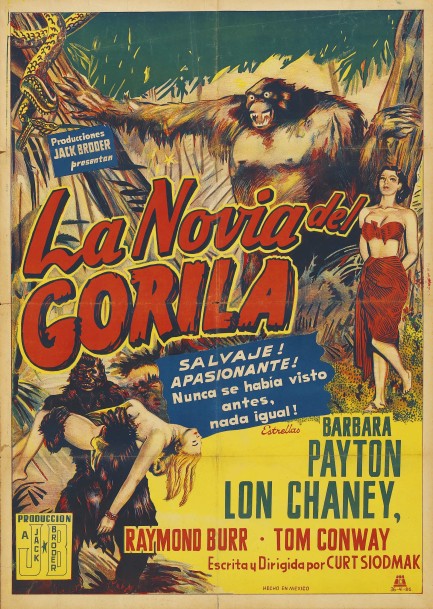
This Mexican poster for La novia del gorilla, aka Bride of the Gorilla, is chockful of interesting elements, from the massive simian at top, to the snake hanging in a tree, to star Barbara Payton being borne away by a second gorilla, and co-star Carol Varga in her classic “native” two-piece. There's a line early on: “White people shouldn't live too long in the jungle. It brings out their bad side—jealousies, impatience.” That sums up the thrust of the plot, the subplot, and the underlying themes, because it's a one-note psychological suspense flick about northerners out of place in the humid global south.
In brief, Raymond Burr runs a rubber plantation for colonial boss Paul Cavanaugh, and has the hots for his wife Barbara Payton. He kills Cavanaugh, thanks to a serendipitous lethal snake that's slithering by. He gets away with the murder, but he can't fool the withered old crone who runs the plantation house. She uses the pe de guine—the so-called plant of evil—to place a curse on Burr. It's slow to act, but by the time he marries the widowed Payton he comes to think he's changing into a beast. Is it in his mind? Is he suffering the effects of slow poisoning from the pe de guine? Or is he really a monster?
Bride of the Gorilla, while a middling and basically inconsequential cinematic effort, is well remembered by Hollywood buffs for its extracurriculars. Barbara Payton was being surveilled via detective by her husband Franchot Tone, and passed on the unfortunate news that Payton was enjoying sweaty horizontal interludes with Woody Strode. He was one of the best looking guys you can imagine, so it's no wonder the highly sexed Payton got hot and bothered. It was one in a series of affairs for her, but this one harmed her career because Strode was black. She would later suffer one of the worst downward spirals in celebrity history.
In any case, the question is should whether you give Bride of the Gorilla a screening. Hmm... well, owing to the good cast, we think so. Chaney and Burr are quality talents even when overrmatched by substandard screenwriting. But keep your expectations in check. It's watchable, but it's still pure b-movie schlock. It was originally released in the U.S., and opened in Mexico today in 1951 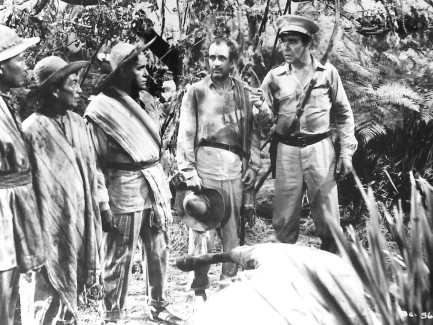 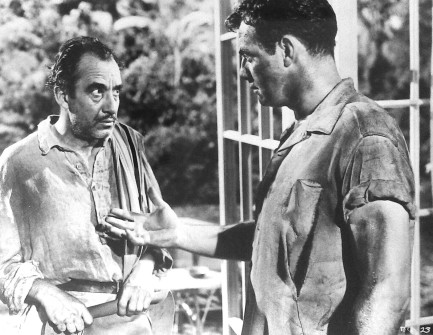 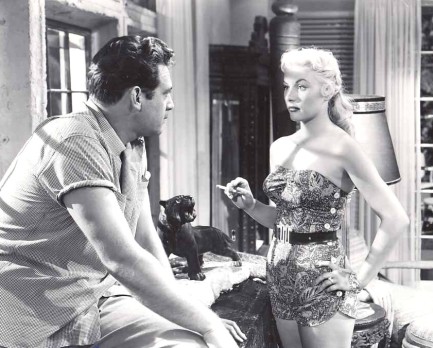 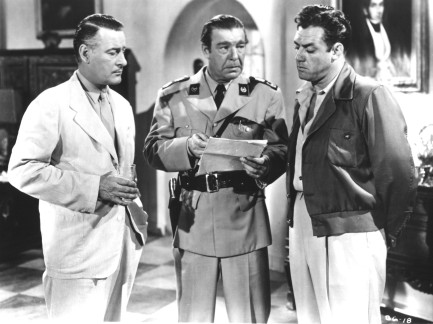 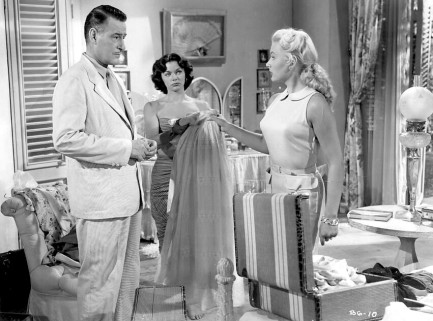 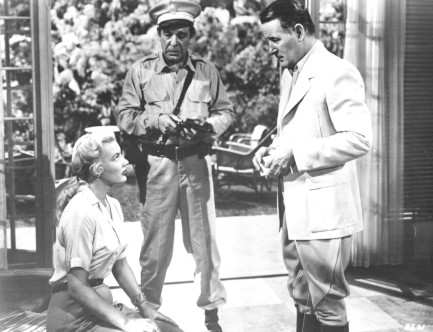 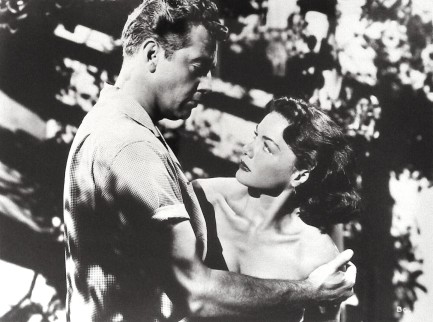 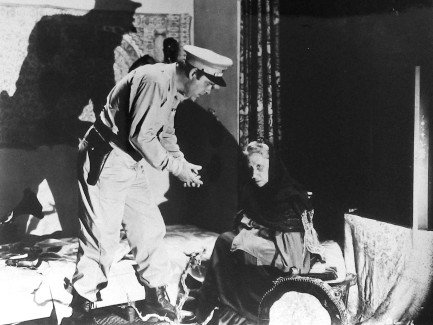 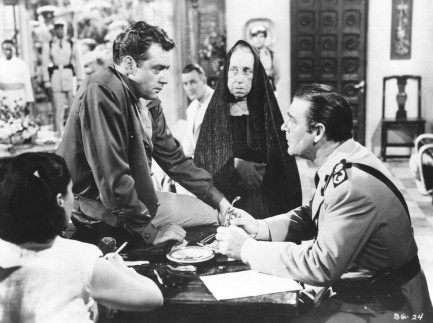 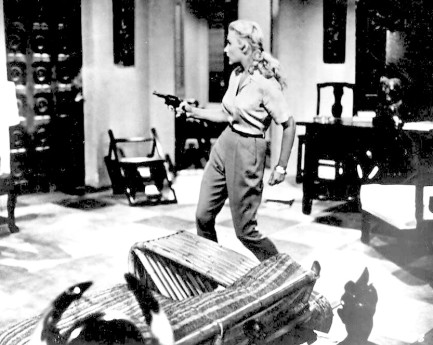 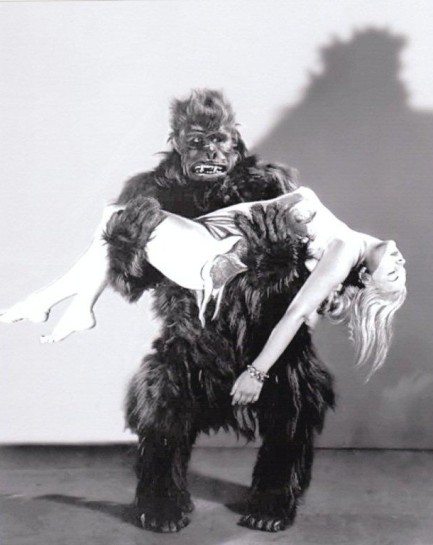
 I came to the bar to have a double—and look. They're about to come over here now. 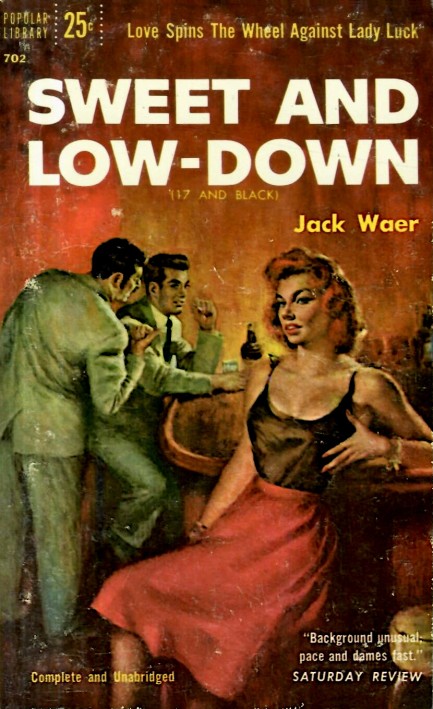
1955's Sweet and Low-Down was originally published as 17 and Black in 1954. The copy we bought is very worn. We looked for a better scan online to use, as we'll sometimes do, but every example we saw was equally abraded until we found one on Amazon, which you see above. It's a pretty nice cover, though uncredited. Is all the wear and tear on copies of this book an indication that it's read and re-read often, and therefore is good? That's certainly what we hoped.
The story, written by Polish born author Alexander Warchiwker writing as Jack Waer, is about Jim Foster, who runs an illegal casino in Hollywood but flees south of the border after taking a rap for his partners. They later ask him to open another casino in Mexico City. He's willing to oblige—for a bigger percentage—but during the opening gala the murder of a local one percenter spoils the party. It's an intriguing set-up for a novel, although it starts slowly. Luckily Waer's writing style maintains interest. For example:
The first time I called, the bim with the sultry voice let on she didn't have any idea who I wanted—said I had the wrong number. When I dialed back her memory was better. His nibs came to the phone. I found out that the vicers were off on a fresh trail. They were out for a pair of Internal Revs who were suspected of collecting a split from the top wigs in the commie crowd. I was as stale as a warmed over soufflé.
Strong approach there. A book this slang heavy goes in for a lot of off-color language, unsurprisingly, and being set in Mexico means there's racist invective. We could not in any way blame you for deciding to take a pass. There are plenty of vintage crime novels that visit Mexico without donning a Klan hood. We're not put off by a smidgen of salty language, but there's a limit—we don't think Foster ever used a non-slur to refer to a Mexican character, even when speaking of his so-called friends.
In any case, he needs to solve the murder, and he does precisely that, and solves another couple of mysteries too. Much of the book takes place within the casino, which would be fine if Waer managed to keep the stew at a hard boil, but his narrative cools considerably toward the finale, and the story drags. The end makes clear that the book was supposed to be a launching point for more novels, and the fact that it wasn't says everything you need to know. But if you find it cheap and don't mind the language, sure, what the hell, give it a read.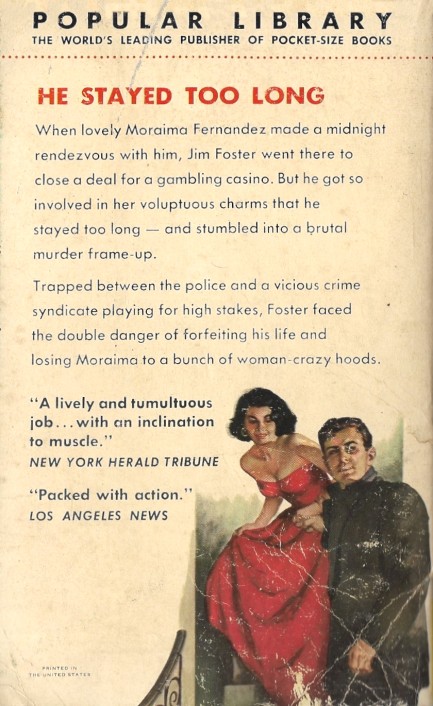
 She had nothing left to hang onto. 
Arabella Árbenz, née Arabella Árbenz Vilanova, was born and raised in our former (and still beloved) home Guatemala, moved to Canada for college, and became a fashion model in France. She also tried acting and had one credited role, playing the lead in the 1965 drama Un alma pura, which was made in Mexico. We've seen it, and she's decent in it, enough so that we suspect she'd have had a future on the screen. But nothing having to do with Guatemala is ever simple, therefore Arabella's life had many twists and turns. She was the daughter of Jacobo Árbenz, who was elected president of Guatemala in 1951, but was overthrown in a CIA sponsored coup lobbied for by the United Fruit Company. Under the collaborationist dictator Jorge Ubico Castañeda, United Fruit had been given 99-year leases on millions of acres of land amounting to 42% of the country's total area, and was exempted from taxes. Arabella didn't weather her family's subsequent exile well, and after problems in romance and with drugs, in 1965 shot herself dead in front of her paramour, Mexican bullfighter Jaime Bravo Arciga, in Colombia, at age twenty-five.
 Bermuda, Barbuda, anyplace will do, as long as there's plenty of pizza. 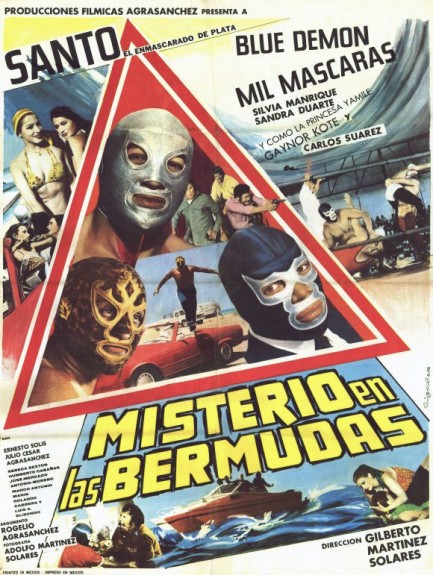
Over the years of watching Santo movies we've made numerous jokes about the legendary El enmascarado de plata—who was played by Rodolfo Guzmán Huerta—being in less than ideal shape. We've even made a few heart attack jokes. Today, for reasons having to do with nothing, we actually sought Huerta's bio and learned that he did in fact die of a heart attack in 1984. We don't feel bad about the fat jokes, cholesterol jokes, and pizza jokes. And in truth Huerta was in decent shape. A bit high in body fat, but with a thick layer of muscle underneath. Wrestling, while fake, takes athleticism, and Huerta had it. The only reason we make fun of him is because we consider him fat for a movie superhero. So the heart attack thing, in the context of all our quips, is ironic. Misterio en las Bermudas came close to the end of Huerta's career, and finds Dr. Chunkenstein™ dealing with yet another MacGyverish mad villain. This one, who's named Dr. Gro, has a device that allows him to abduct people, objects, or even entire aircraft while producing storm effects, causing authorities to blame the disappearances on the Bermuda Triangle. Initially, Santo and sidekicks Blue Demon and Mil Mascaras know nothing about this and are on protection detail, watching over a Middle Eastern princess played by Gaynor Kote. A trio of women are sent to honeytrap the heroes, but in the midst of this effort, one of them is kidnapped by teleporting aliens. Later there's a political assassination attempt, an underwater lair, a long lost father, and a nuclear explosion. In addition, all of this occurs within a framing device suggesting that this is Santo's—if not humanity's—final outing.
Yeah, it's as bizarre as it sounds. It's as if a card sharp shuffled the script pages then threw every fifth one into the vortex. And the low budget doesn't help the filmmakers make South Texas, where the movie was shot, look like Bermuda. In any case, the creators of the Santo series had a formula and they stick closely to it for this late entry. There's less in-the-ring wrestling action than usual, but we always considered that to be the most expendable part of the movies anyway. Bottom line: if you like Santo you'll like this. Rodolfo Huerta may have been long in the tooth at this point, but the man could still wear a gimp mask with style. Misterio en las Bermudas premiered in Mexico today in 1979.
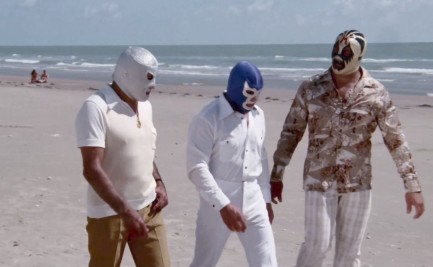 I'm skeptical about wearing masks in this heat, Santo, but maybe you're right. Maybe they'll make the chicks sit up and take notice. I'm skeptical about wearing masks in this heat, Santo, but maybe you're right. Maybe they'll make the chicks sit up and take notice.
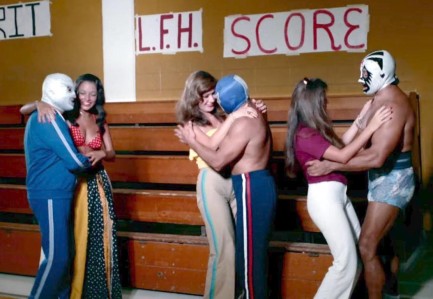 Groovy masks, guys. Those won't, uh, restrict the mobility of your tongues in any way, will they? Groovy masks, guys. Those won't, uh, restrict the mobility of your tongues in any way, will they?
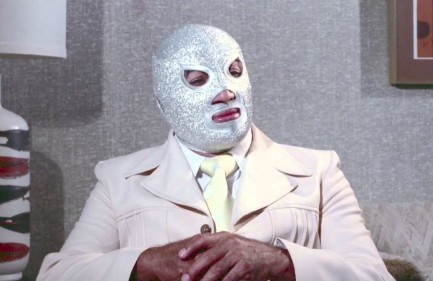 Well, boys, was I right, or was I right? Well, boys, was I right, or was I right?
 Question, plot related. So what the fuck was all that alien stuff? Question, plot related. So what the fuck was all that alien stuff?
 The people who got burned the worst were the movie's investors. 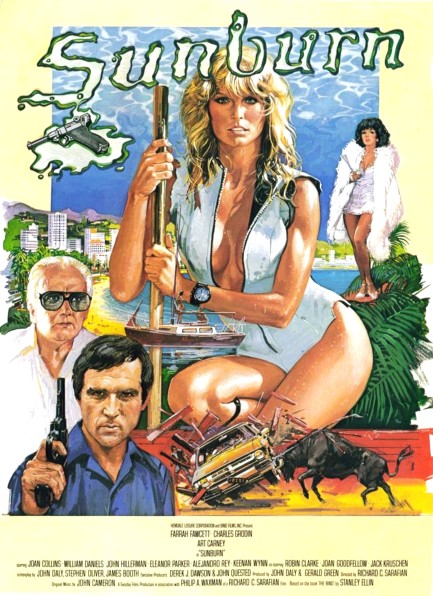
As we mentioned back in the spring, we started watching Sunburn, but stopped ten minutes in to backtrack to Stanley Ellin's source novel first because we thought the concept of an investigator hiring a woman to pose as his wife might be fun in written form. It was that, but the book wasn't perfect, as we discussed. Returning to the movie, above you see a painted promo poster, uncredited, though pretty nice, even if the central figure doesn't look as much like the star attraction as she should. But you recognize her anyway, right? That's Farrah Fawcett, or supposed to be, who headlined along with Charles Grodin, the latter of whose presence immediately marks the movie as a non-drama. But we forged ahead anyway to see what he, Fawcett, and co-stars Art Carney and Joan Collins could provide.
Sunburn, it must be said right off, flopped at the box office. That isn't definitive proof of a bad movie, but it's suggestive. The novel's premise and plot were retained: insurance investigator Grodin needs to get close to a rich Acapulco family in order to prove fraud, therefore he rents the villa next door and hires Fawcett to smooth his cover story by playing his wife. What's added that wasn't in the book is a thick layer of slapstick and Grodin's “comedy.” Fawcett is sunny, ingenuous, and sexy without guile, which was basically her brand, and it works as expected—wonderfully—but there's definitely no spark between her and Grodin. We don't think we've seen a woman's lips that tightly closed for a kiss since PI-1 lost a bet and had to smooch a friend's slobbery German boxer. As for the other participants, Carney finds himself in a wise old advisor role that fits, but Collins is wasted as a farcical nympho cougar.
Basically, the movie can be summed up this way: Grodin stumbles and bumbles his way through an investigation, Fawcett gives unsolicited and unappreciated help, and the plot veers inevitably toward reliable woman-in-danger tropes, buttressed by a standard cheeseball car chase that ends up going through a random fruit stand, round the inside of a colonial fortress, and into a bullring. The chase is capped by Fawcett's capture, which naturally leads to a chaotic rescue and a pat conclusion. From beginning to end the filmmakers whiff on all the good music of the late ’70s, which means the too-present soundtrack consists of only the worst pop hits of the era. Unhelpful, to say the least, and a lesson on the downside of using popular music on soundtracks.
We don't watch many movies from the late 1970s that aren't hard dramas, and Sunburn reminded us why—comedic acting from that time can be very idiosyncratic, and Grodin in particular hadn't yet perfected his distracted deadpan superior-attitude schtick. But if you get the feeling we disliked the movie, you'd be wrong. Its very obviousness makes it worth a smile. And we liked it a lot better than did our new consulting critic, Angela the sunbear, who'll mostly be advising us behind the scenes but may occasionally make a public appearance or two, depending on her mood. Today, she's feeling social. Give the Pulp Intl. readership a wave, Angela. 
Very good. And nice work standing on two legs. You look almost human, if that isn't offensive to say. Anyway, we could ask Angela to enumerate her many qualifications and credentials to critique cinema, including her degree from the Beijing Film Academy, but we assume you trust us to collaborate with only the most experienced and educated professionals. Also, it's 100 degrees where she lives, so she won't suffer an entire film unless it's really good. In this case, she waited about twenty minutes to see if any of her favorite fruits or wild berries made an appearance, discoursed on the tradition of comedians becoming actors (somehow tying in the Greek muses of comedy and drama—Thalia and Melpomene—which was way over our heads, if we're honest), pondered whether Grodin might get mauled at some point, then went for shade and water. So there you have it: Sunburn gets one reluctant thumbs up, but one definitive claw down. It premiered today in 1979.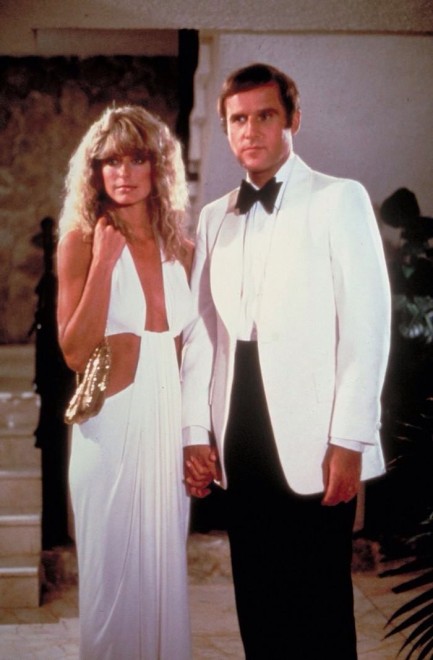 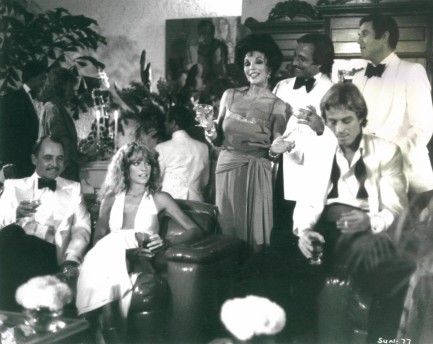  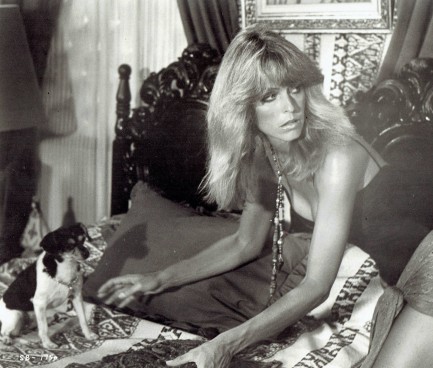 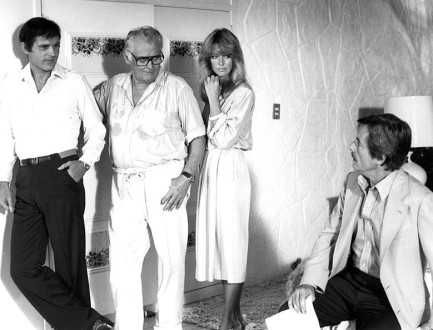 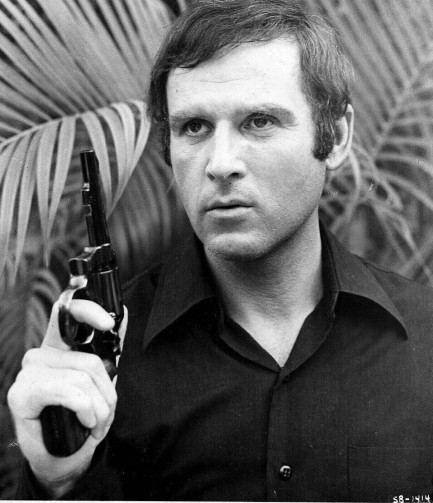 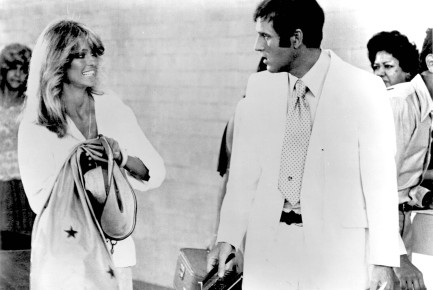 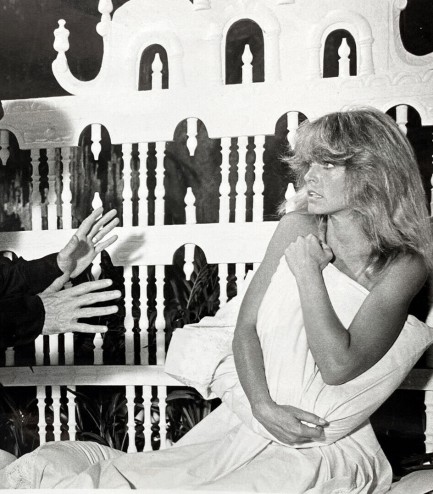 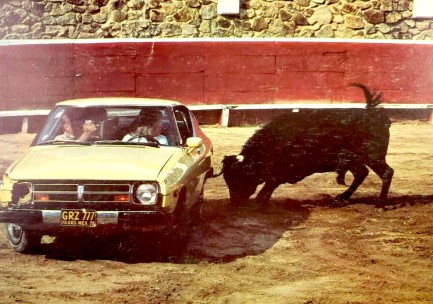  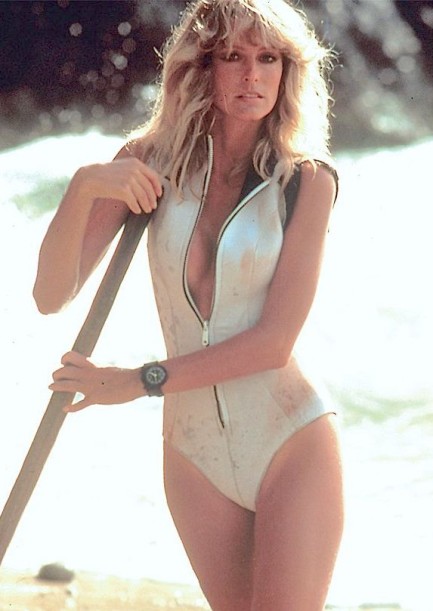   
 If it helps to persuade you, when you're an old woman you'll look back on even your worst one night stands with nostalgia. 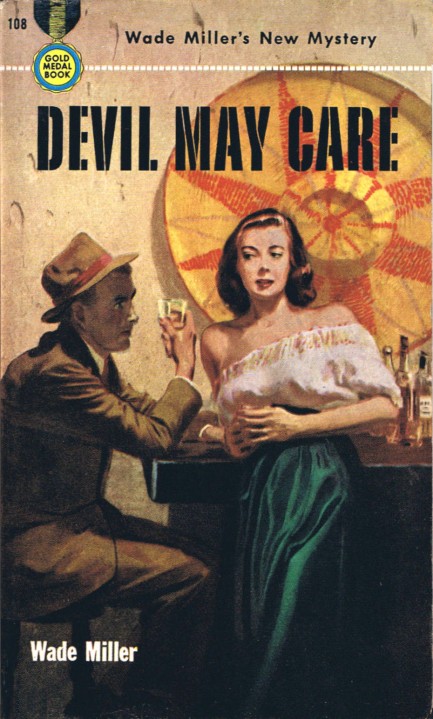
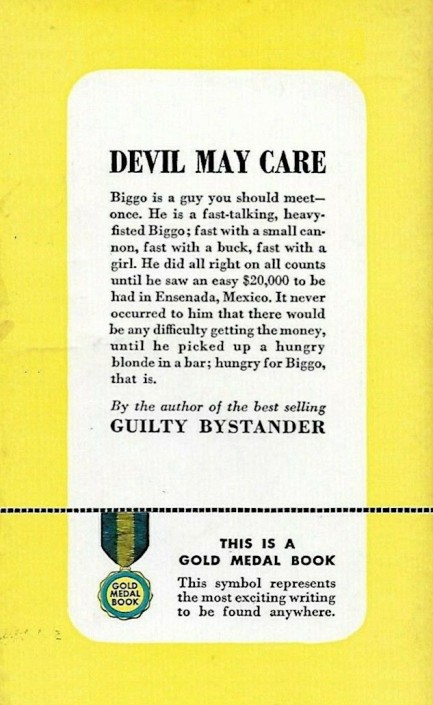
Vintage thrillers and films often used Mexico as a setting, and we very much enjoy when that happens, due to our own numerous trips to the country and the many fond memories they produced. Wade Miller's 1950 novel Devil May Care takes readers to Mexico and does a better job of it than most books we've read. The trip happens when soldier of fortune Biggo Venn is sent to Ensenada on a mission that promises to profit him $10,000. Unfortunately, Biggo's contact turns up murdered, and out of caution he decides the smartest move is to wait for the unknown killer or killers to reveal themselves. He lays low and plays the role of gringo tourist. While doing so he meets up with a hard luck American named Jinny and a beautiful local named Pabla, both of whom are romantic interests, though in Jinny's case it's a love-hate dynamic.
Plenty happens with Jinny and Pabla, but Biggo's most portentous encounter is with fellow soldier of fortune Lew Hardesty, who's not only a rival suitor for both women, but keeps trying to horn in on Biggo's caper. The two eventually get into a vicious fight that settles nothing except that Biggo, who's ten years older, is losing his edge (though he dislocates Hardesty's jaw before the man pushes it back into place and comes at Biggo like a whirlwind). It's a good scene in a fun book. In fact, we think Devil May Care is Wade Miller (a pseudonym for authors Bob Wade and Bill Miller) at his/their best. The story is well paced, exciting, sometimes sad, and often funny. The authors use the rough-edged mercenaries-at-large premise brilliantly, as in this exchange between Biggo and Hardesty:
Biggo growled, “I thought you were in Bolivia.” Just because he had met one of his own kind made the outlook no brighter. Hardesty was a comrade but something less than a friend. He had a knack for showing up where he wasn't wanted.
“I was. Now I'm here.”
“What happened?”
“Have you ever spent a summer in Bolivia? Very hot.”
Biggo understood the old pattern. Hardesty had been on the wrong side, whichever side happened to be losing that year. “Yes, Lew, I was thinking about you only the other night.”
“I love you too.”
“I know that. I remember the time you let me go out after that tiger in the Malay with a jimmied gun.”
Hardesty laughed. “That was a fine joke. Those man-killers are always old tigers, anyway. You've got more teeth than he had. Was that any worse than shipping me that opium in Transjordan? I sat in that mud jail for two months until one of your shells knocked out a wall.”
Biggo laughed in turn. “That was the gunner's fault. He'd promised me a direct hit.”
Much of the dialogue features similar banter, and not just between the soldiers. Hard luck Jinny can quip with the best of them:
Jinny said faintly, “I thought you went to jail.” She looked ready to be sick. She held a cracker halfway to her mouth, forgotten.
“Can't keep a good man down, honey.”
“What's that got to do with you?”
In the end the killers reveal themselves and Biggo—by now seeking revenge as well as a payoff—brings hell directly to their doorstep, or in this case to their yacht in the harbor. The climax brings a surprise or two, and Biggo's fate hinges upon who to trust, and who not to. Devil May Care is a wide-open sort of tale about dangerous men, but its title proves to be contradictory. Biggo pretends not to care about anything except the next mission and the next exotic port of call, but his acceptance of his own aging and his slim hope for retirement and a restful old age matter—in the end—more than anything else. The book has some moments that might make modern readers quail, but all the portrayals and reactions make sense in context. We loved this one.
 Here's a hint—it's for keeping something warm, it'll be really useful in about eight months, and by then we'll have the same last name. 
 Above: the front cover of Our Flesh Was Cheap by Eve Linkletter, 1959, for Fabian Books. Linkletter, whose photo appears on the back cover, wrote a handful of books with sensational titles, such as Dime-a-Dance Hustler, B-Girl Decoy, Lesbian Orgies, and The Gay Ones. Above: the front cover of Our Flesh Was Cheap by Eve Linkletter, 1959, for Fabian Books. Linkletter, whose photo appears on the back cover, wrote a handful of books with sensational titles, such as Dime-a-Dance Hustler, B-Girl Decoy, Lesbian Orgies, and The Gay Ones.
We've heard that Our Flesh Was Cheap is far better than it looks. It's a first-person narrative about an eighteen-year-old Tijuana prostitute named Rosa, and the American woman who brings her San Diego with fake papers and gives her a job as maid. Unfortunately, though Rosa tries to let go of her past, her past doesn't want to let go of her. We may buy this one if it appears at a reasonable price.
 Mexico hasn't been the same since. 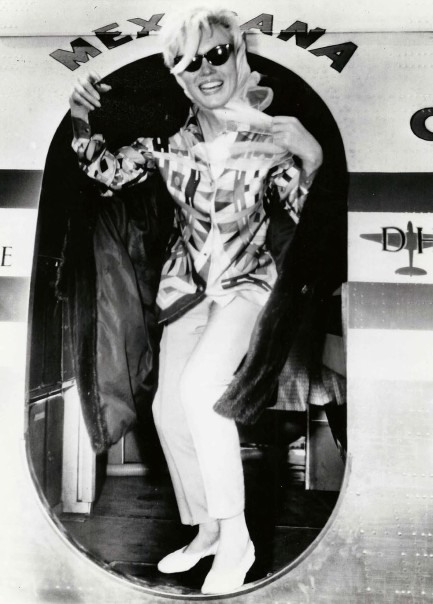
Did we ever mention that Mexico is our favorite country? Not that we really rank them, but we've been numerous times, always had fun, and more than once considered moving there. It could still happen. Marilyn Monroe looks like she had a fun time there in this publicity photo made today in 1962, when she landed in Los Angeles after ten days of vacation in Mexico City. You may have noticed the fur coat. It probably wasn't just for show. Mexico City can be quite warm in Fenruary, but nightly lows can get into the 40s Fahrenheit. Or maybe the plane was freezing. In any case, we like this shot showing a world champion of striking excellent poses looking a bit candid. We took notice of this shot because we too shall be flying away on vacation. We'll get into that tomorrow, and as always, Monroe will return.

|
 |

The headlines that mattered yesteryear.
1945—Mussolini Is Arrested
Italian dictator Benito Mussolini, his mistress Clara Petacci, and fifteen supporters are arrested by Italian partisans in Dongo, Italy while attempting to escape the region in the wake of the collapse of Mussolini's fascist government. The next day, Mussolini and his mistress are both executed, along with most of the members of their group. Their bodies are then trucked to Milan where they are hung upside down on meathooks from the roof of a gas station, then spat upon and stoned until they are unrecognizable. 1933—The Gestapo Is Formed
The Geheime Staatspolizei, aka Gestapo, the official secret police force of Nazi Germany, is established. It begins under the administration of SS leader Heinrich Himmler in his position as Chief of German Police, but by 1939 is administered by the Reichssicherheitshauptamt, or Reich Main Security Office, and is a feared entity in every corner of Germany and beyond. 1937—Guernica Is Bombed
In Spain during the Spanish Civil War, the Basque town of Guernica is bombed by the German Luftwaffe, resulting in widespread destruction and casualties. The Basque government reports 1,654 people killed, while later research suggests far fewer deaths, but regardless, Guernica is viewed as an example of terror bombing and other countries learn that Nazi Germany is committed to that tactic. The bombing also becomes inspiration for Pablo Picasso, resulting in a protest painting that is not only his most famous work, but one the most important pieces of art ever produced. 1939—Batman Debuts
In Detective Comics #27, DC Comics publishes its second major superhero, Batman, who becomes one of the most popular comic book characters of all time, and then a popular camp television series starring Adam West, and lastly a multi-million dollar movie franchise starring Michael Keaton, then George Clooney, and finally Christian Bale. 1953—Crick and Watson Publish DNA Results
British scientists James D Watson and Francis Crick publish an article detailing their discovery of the existence and structure of deoxyribonucleic acid, or DNA, in Nature magazine. Their findings answer one of the oldest and most fundamental questions of biology, that of how living things reproduce themselves.
|

|
|
It's easy. We have an uploader that makes it a snap. Use it to submit your art, text, header, and subhead. Your post can be funny, serious, or anything in between, as long as it's vintage pulp. You'll get a byline and experience the fleeting pride of free authorship. We'll edit your post for typos, but the rest is up to you. Click here to give us your best shot.

|
|