 I find it fascinating that today's paper says nothing about you, but by tomorrow you're all it will talk about. 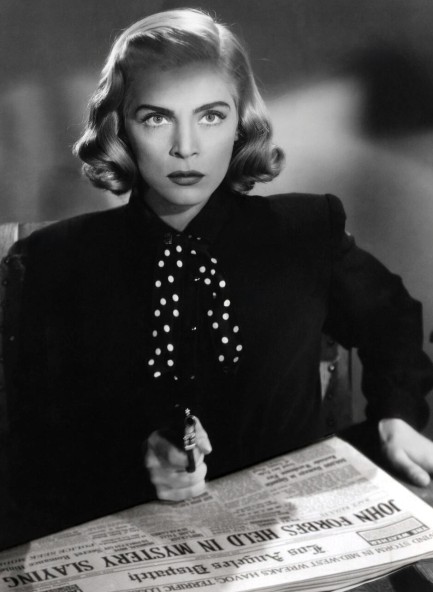
Above: Lizabeth Scott looking like she means serious business in a promo photo made for her 1948 film noir Pitfall. Scott was an a-list actress and a noir stalwart, so her movies are usually safe bets. Pitfall isn't her best, but it's certainly worth watching.
 Give credit where credit is due—when possible. 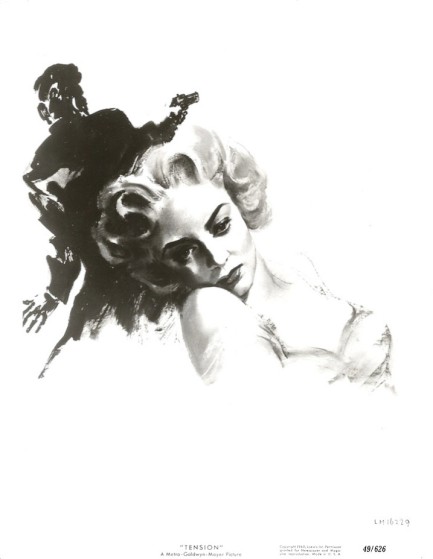
Above is an MGM promo handout for the film noir Tension, which starred Audrey Totter and hit cinemas today in 1949. It was painted in ink by the same person who did the poster, one of the greatest artists in cinema poster history—the inimitable uncredited. It's a great piece by a true master. We've shown you a lot of Tension's U.S. promo art, and today's doesn't even empty the well of what's out there, but it's the last time we'll dip into it. So many vintage films, so little time...
 Not just another brick in the wall. 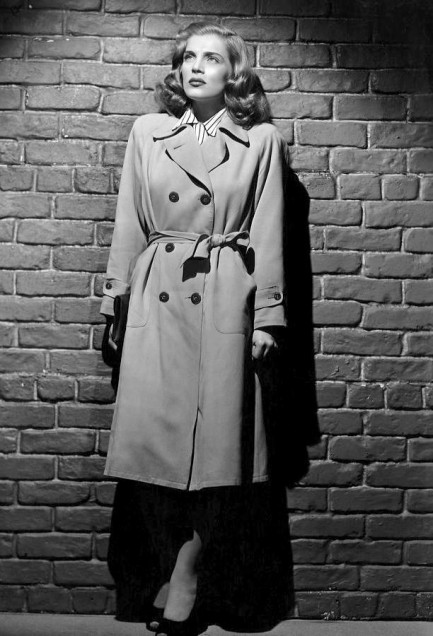
Lizabeth Scott, who you see above, has an outsize legacy in film history thanks to her appearances in several film noir landmarks: Dead Reckoning, I Walk Alone, Pitfall, and Too Late for Tears come to mind. She also appeared in Dark City, Paid in Full, The Racket, the bizarre British noir-adjacent melodrama Stolen Face, and others. The above promo image was made when she appeared in one of her best movies—the Barbara Stanwyck headlined film noir The Strange Love of Martha Ivers, from 1946.
 There's a new prosecutor in town—and his name is Humphrey. 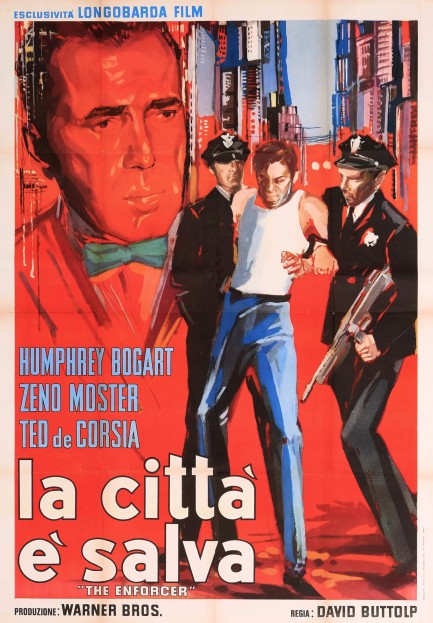
Above: an Italian poster for La città è salva, better known as The Enforcer, starring Humphrey Bogart as a prosecutor tasked with cleaning up rampant corrutpion in the big city. The movie is middle tier for Bogart, but that means it's still very good. The poster is uncredited, but spectacular, with its abstract skyscraperscape and elongated figures. If we ever find out who painted it we'll updated this post. La città è salva premiered in Italy today in 1951.
 With Bogart and Bacall in the starring roles an unusual fugitive movie takes flight. 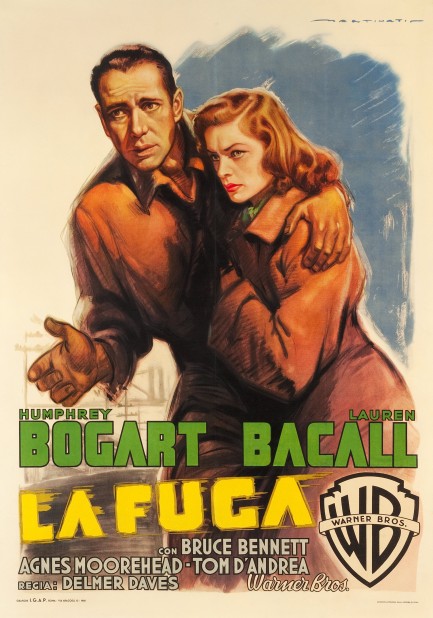
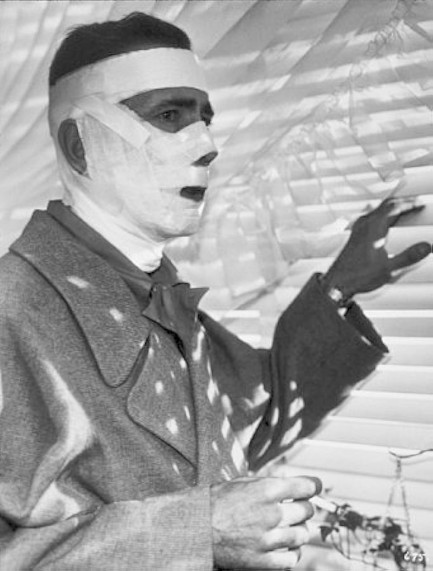
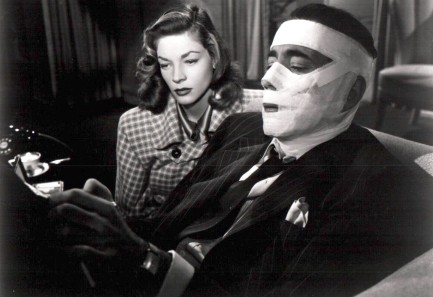
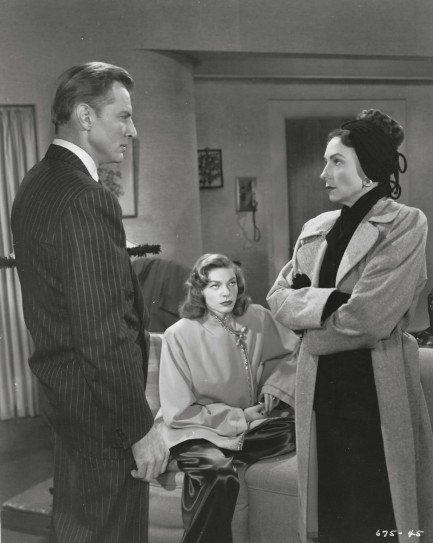
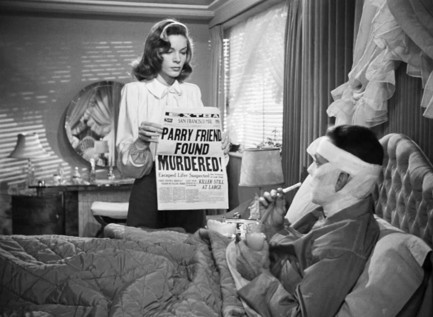
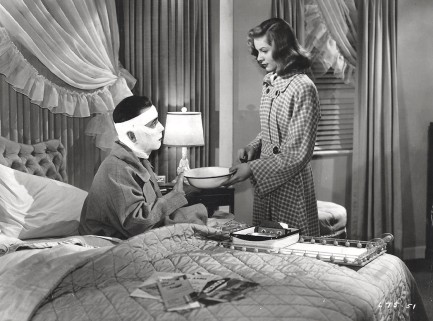
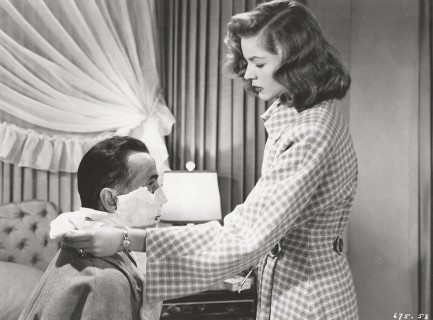
This beautiful poster for La fuga was painted by Italian artist Luigi Martinati, and you doubtless recognize Humphrey Bogart and Lauren Bacall. They starred in four movies together and had a dual cameo in a fifth. This promo was made for their fourth outing Dark Passage, retitled to “the escape” in Italy. And therein lies the plot. Bogart breaks prison and undergoes a backalley cosmetic surgery procedure on his face in order to evade the cops and have a chance to solve the crime for which he was unjustly sent up the river. The filmmakers decided to use the gimmick of having the first section of the film in Bogart-vision—i.e. first person pov until he gets his new face. It makes sense. Otherwise they'd have needed to have another actor play pre-surgery Bogart, or have resorted to clunky make-up and prosthetics. Bacall co-stars as unlikely shelter and succor, plus the prospect of love—if Bogie can survive. It's a good movie.
But we're going to tack upwind at this point and suggest that Dark Passage, while good, isn't as scintillating as its reputation. Certainly it isn't in the class of To Have and Have Not, Key Largo, or The Big Sleep. But hey—it stars B&B, and that's all audiences of the era really cared about. Three years into her film career Bacall had grown into superstardom—or stardom as it was called back then—and dished out a performance here that did plenty with a thin script and a belief defying scenario. The other star here is San Francisco, where most of the movie was shot. The city appeared in many period productions, but we can't think of it ever being used to such an extent as in Dark Passage. Since we lived across the Bay in Berkeley for a couple of years, we got to know San Fran well and it's fun to see it as it once was. Dark Passage—slightly overrated and all—is fun too. It premiered in the U.S. in 1947 and reached Italy today in 1948.
      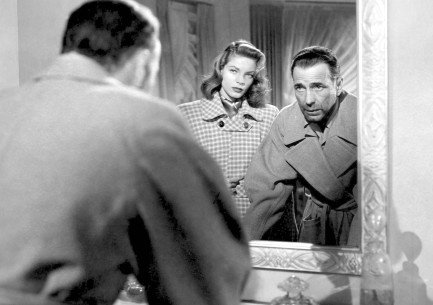 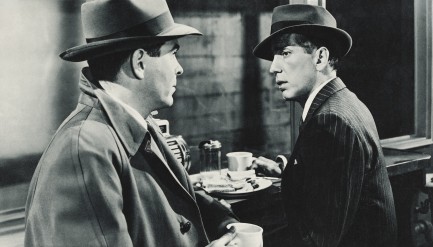 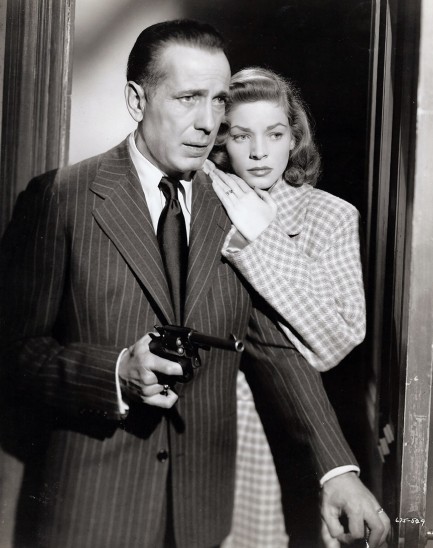 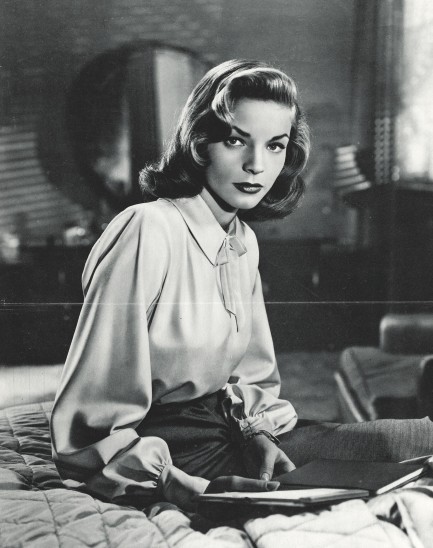   
 When the worst that can happen actually happens. 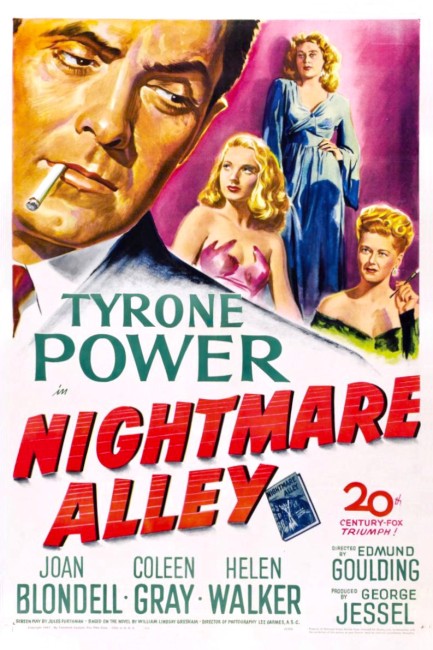
Nine years ago when we discussed Nightmare Alley we shared its West German poster, so we thought we'd circle back to the movie today, first because it was excellent, second because we wanted to share the U.S. poster, and third because Mexican auteur Guillermo del Toro remade it a couple of years ago, which made us think we needed to remind people there was a previous version. Well, here's the reminder: the original Nightmare Alley is one of the darkest films of the mid-century period. Tyrone Power is great in it, and Coleen Gray never hurts to have around, but what really makes the film worthwhile is that it's loaded with interesting subtext. If you want to know more about it, our previous write-up is here. Nightmare Alley premiered in the U.S. today in 1947.
 The gun is dangerous but the shoes are killer. 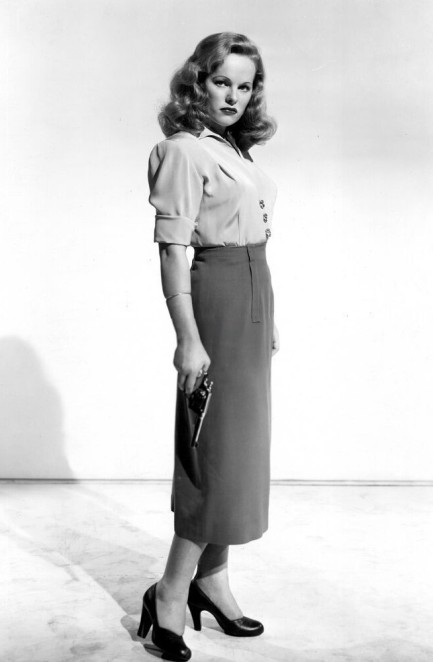
Above: a second cool promo image of Welsh born Irish actress Peggy Cummins from her 1950 b-noir Gun Crazy. We recently shared some photos of her as pre-Princess Leia. To see those just click here.
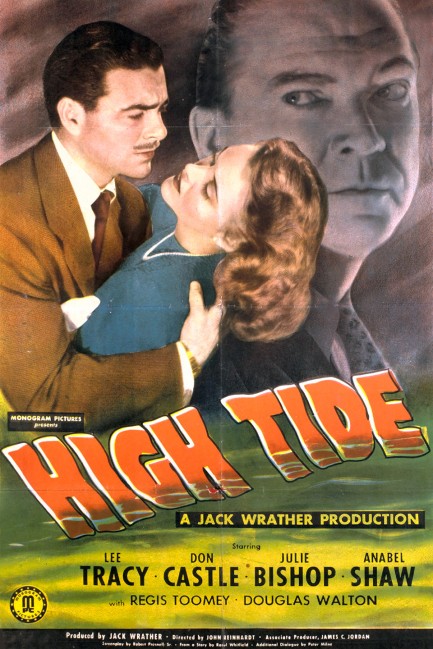
 Tracy and Castle try to avoid a watery grave in low budget crime thriller. 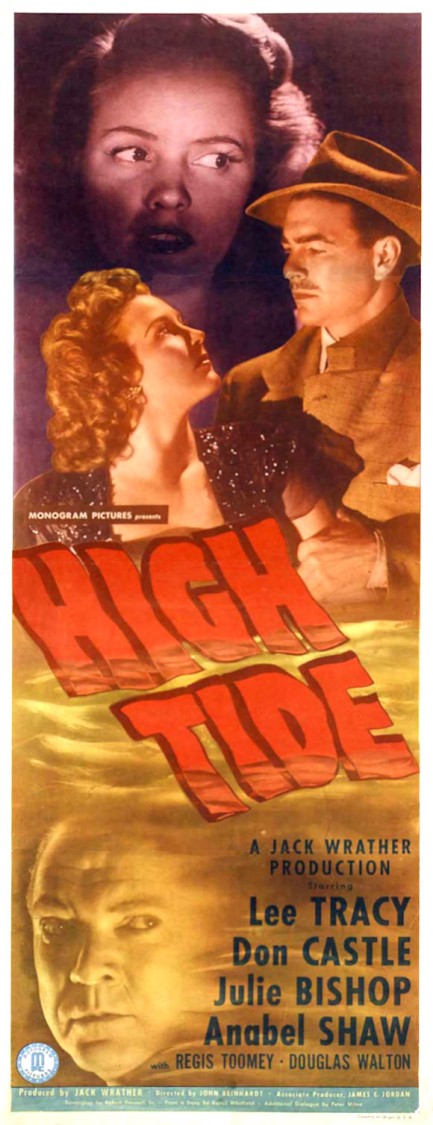
Above is a rare poster for the 1947 drama High Tide, which starred Lee Tracy and Don Castle as an editor of a fictional Los Angeles newspaper and a private investigator who crash while driving on what is presumably the Pacific Coast Highway, and find themselves immobilized in the wreckage. Trapped and thinking they're doomed to drown when the sea rises, they discuss the events leading up to their mishap. It's a b-movie all the way, a mere seventy minutes long, with stock footage, day-for-night shooting, and mise-en-scène on the more static end of the spectrum, but the story is interesting and the film noir flourishes are fun.
Some of the dialogue scores too: “He's having a slight attack of rigor mortis right in the middle of my living room floor.” That's not bad. We know, of course, that Tracy and Castle didn't just drive off the PCH but crashed for a pivotal reason. No spoiler there. It's an assumption you'll have made just reading the film's synopsis. We can't recommend High Tide strongly because it's too bottom bin to be really exciting, but it might give you intermittent pleasures anyway. It's certainly instructive in terms of making a workable movie with very little money. It premiered today in 1947. 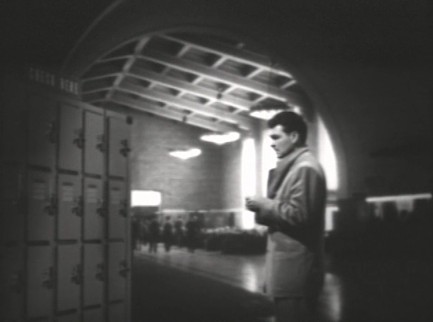 I've spotted him. He's in front of that rear projection of the main lobby of Union Station. I've spotted him. He's in front of that rear projection of the main lobby of Union Station.
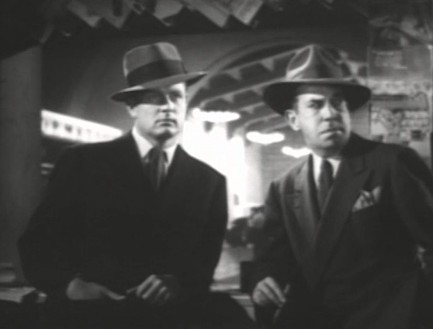 Hey, that's strange. That looks like our rear projection, only reversed. Hey, that's strange. That looks like our rear projection, only reversed.
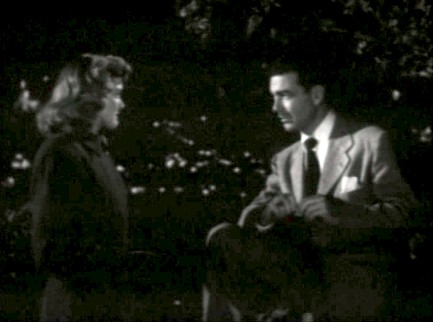 The rear projection of Los Angeles is lovely tonight. But not as lovely as you, my dear. The rear projection of Los Angeles is lovely tonight. But not as lovely as you, my dear.
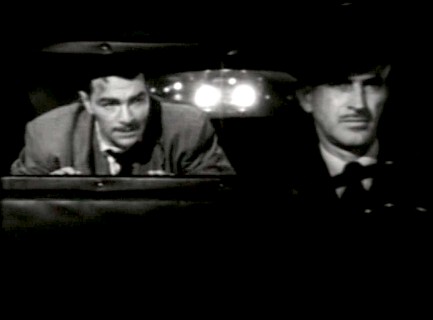 Driver, step on it. We've got to outrun that projectionist. Driver, step on it. We've got to outrun that projectionist.
 By whatever means necessary. 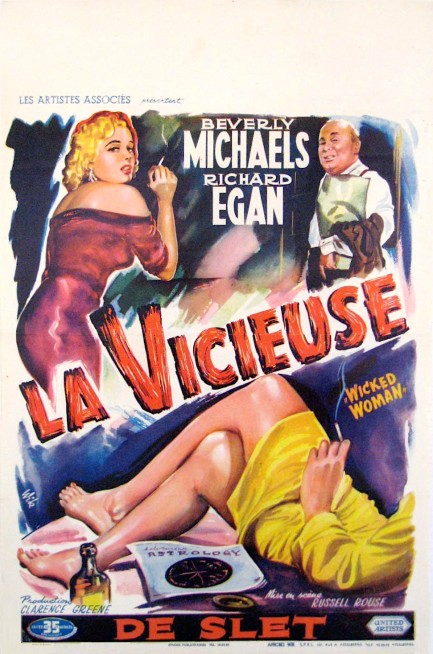
Above is a Belgian poster for the 1953 film noir Wicked Woman, originally made in the U.S. starring Richard Egan and, in one of her classic femme fatale roles, Beverly Michaels. Generally, because of the predominant languages used in Belgium, posters from there carried both French and Dutch text. In French Wicked Woman was titled La vicieuse, and in Dutch it was De slet (you can guess what that means). Our header for this post is a play on the never ending debate over whether film noir is a genre or a cycle. Either way, what it produced was always vicious. We briefly talked about Wicked Woman some years ago and shared the U.S. poster. This effort is from the presses of S.P.R.L. Belgique and it's signed by Wik, an artist who remains a mystery. Below, you see Michaels pondering the wickedness of her behavior and deciding she's fine with it.

|
 |
The headlines that mattered yesteryear.
1945—Mussolini Is Arrested
Italian dictator Benito Mussolini, his mistress Clara Petacci, and fifteen supporters are arrested by Italian partisans in Dongo, Italy while attempting to escape the region in the wake of the collapse of Mussolini's fascist government. The next day, Mussolini and his mistress are both executed, along with most of the members of their group. Their bodies are then trucked to Milan where they are hung upside down on meathooks from the roof of a gas station, then spat upon and stoned until they are unrecognizable. 1933—The Gestapo Is Formed
The Geheime Staatspolizei, aka Gestapo, the official secret police force of Nazi Germany, is established. It begins under the administration of SS leader Heinrich Himmler in his position as Chief of German Police, but by 1939 is administered by the Reichssicherheitshauptamt, or Reich Main Security Office, and is a feared entity in every corner of Germany and beyond. 1937—Guernica Is Bombed
In Spain during the Spanish Civil War, the Basque town of Guernica is bombed by the German Luftwaffe, resulting in widespread destruction and casualties. The Basque government reports 1,654 people killed, while later research suggests far fewer deaths, but regardless, Guernica is viewed as an example of terror bombing and other countries learn that Nazi Germany is committed to that tactic. The bombing also becomes inspiration for Pablo Picasso, resulting in a protest painting that is not only his most famous work, but one the most important pieces of art ever produced. 1939—Batman Debuts
In Detective Comics #27, DC Comics publishes its second major superhero, Batman, who becomes one of the most popular comic book characters of all time, and then a popular camp television series starring Adam West, and lastly a multi-million dollar movie franchise starring Michael Keaton, then George Clooney, and finally Christian Bale. 1953—Crick and Watson Publish DNA Results
British scientists James D Watson and Francis Crick publish an article detailing their discovery of the existence and structure of deoxyribonucleic acid, or DNA, in Nature magazine. Their findings answer one of the oldest and most fundamental questions of biology, that of how living things reproduce themselves.
|

|
|
It's easy. We have an uploader that makes it a snap. Use it to submit your art, text, header, and subhead. Your post can be funny, serious, or anything in between, as long as it's vintage pulp. You'll get a byline and experience the fleeting pride of free authorship. We'll edit your post for typos, but the rest is up to you. Click here to give us your best shot.
|
|