The unburnable Hitomi Kozue finally strikes gold. 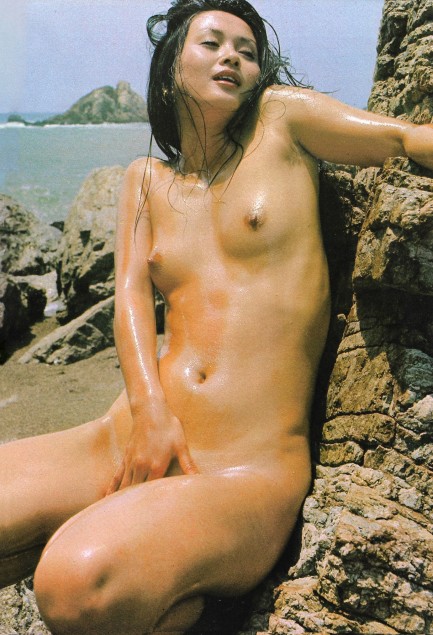 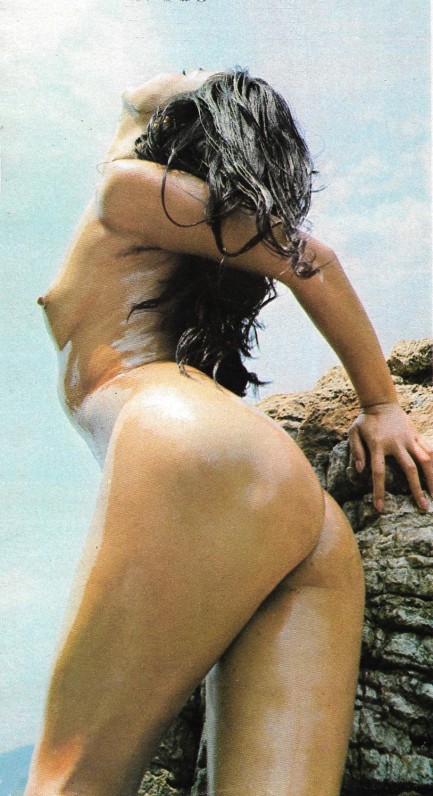
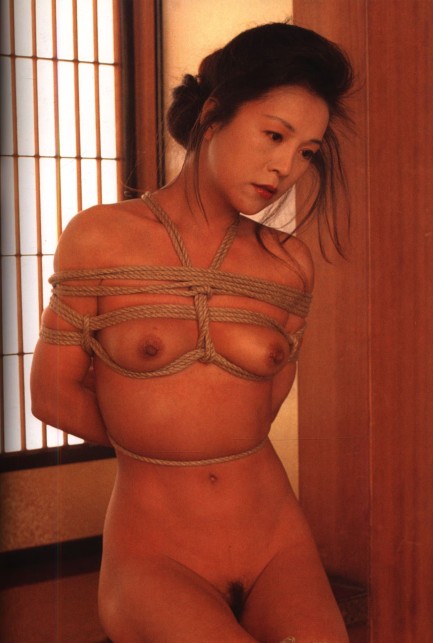
Japanese actress and eternal beauty Hitomi Kozue has finally gotten her tan perfect. She's been at it since last June, when we shared the first shot in a series she made for Heibon Punch. We checked in again a few months later and she still hadn't reached her ideal level of sun-baked luminescence. But now the star of such films as the 1974 Dirty Harry reinterpretation Sukeban Deka: daati Marii and the 1975 women-in-prison flick True Story of a Woman Condemned: Sex Hell is perfectly golden and her beach sojourn has come to a close. These two attention getting shots are the last from this particular session, but they're by no means the last photos of Kozue we have for you. She was prolific, and shall return.
 We recommend that you keep your distance—from the movie. 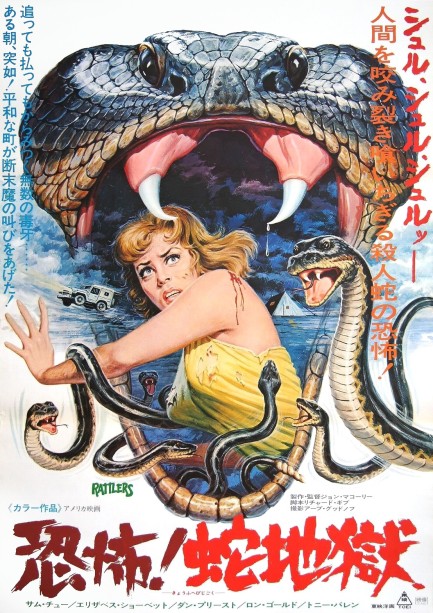
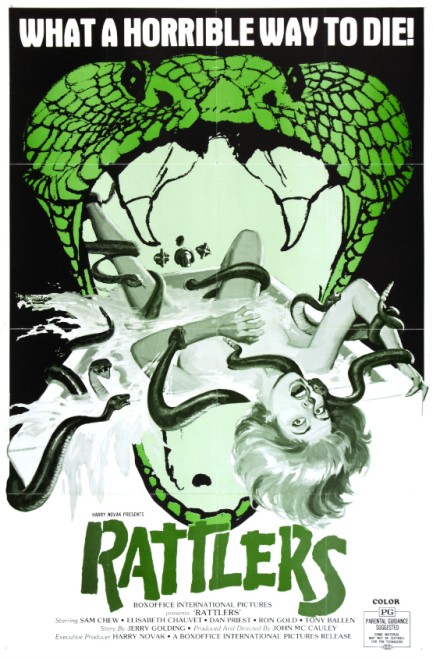 Japanese posters for U.S. film productions are sometimes so good we forget that the movies might not be. Case in point: the above poster was painted by the famed Japanese artist Seito, who was behind promos for films like Star Wars and Flesh Gordon. He produced this for the horror movie Rattlers, which premiered in the U.S. today in 1976 and reached Japan on an indeterminate date sometime afterward. The Japanese title is to the point:恐怖!蛇地獄means “Horror! Snake Hell.” The movie is its own special hell. It's about a bunch of rattlesnakes that run wild, and it's sssssssssssssssso bad. University of California herpetologist Sam Chew figures out how to deal with the offending reptiles, with the help of intrepid reporter Elisabet Chauvet, but nobody figured out how to deal with a bad script, a weak director, and a zero-charisma lead. You can let this one slide. Japanese posters for U.S. film productions are sometimes so good we forget that the movies might not be. Case in point: the above poster was painted by the famed Japanese artist Seito, who was behind promos for films like Star Wars and Flesh Gordon. He produced this for the horror movie Rattlers, which premiered in the U.S. today in 1976 and reached Japan on an indeterminate date sometime afterward. The Japanese title is to the point:恐怖!蛇地獄means “Horror! Snake Hell.” The movie is its own special hell. It's about a bunch of rattlesnakes that run wild, and it's sssssssssssssssso bad. University of California herpetologist Sam Chew figures out how to deal with the offending reptiles, with the help of intrepid reporter Elisabet Chauvet, but nobody figured out how to deal with a bad script, a weak director, and a zero-charisma lead. You can let this one slide.
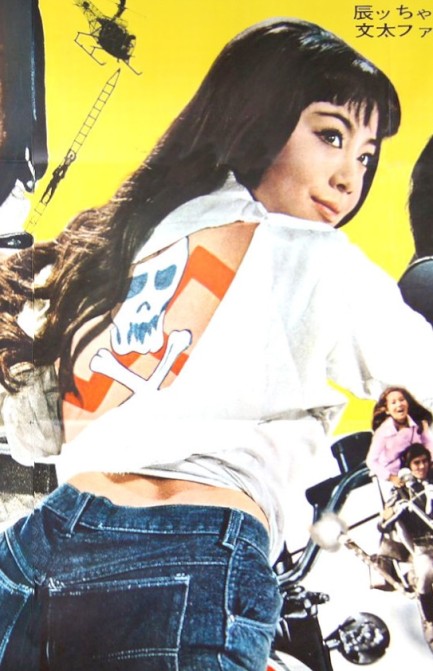
 Oshida makes her mark and it looks like a swastika. 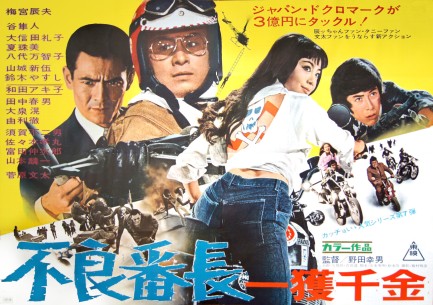
Above is a bo-ekibari style poster for the pinky violence actioner Furyô banchô: Ikkaku senkin, aka Wolves of the City: Fast Money. This piece is cousin to the standard sheet for the film we shared a couple of years ago. Just as when we showed you that one we haven't located the movie yet, but we'll keep working on it, if only to find out why star Reiko Oshida has a swastika on her back. We're guessing she's in a motorcycle gang, and it's their emblem. Furyô banchô: Ikkaku senkin premiered today in 1970. You can see the other poster here, and that entry also discusses briefly the swastika symbol in Japanese culture.
 The lone stranger rides again. 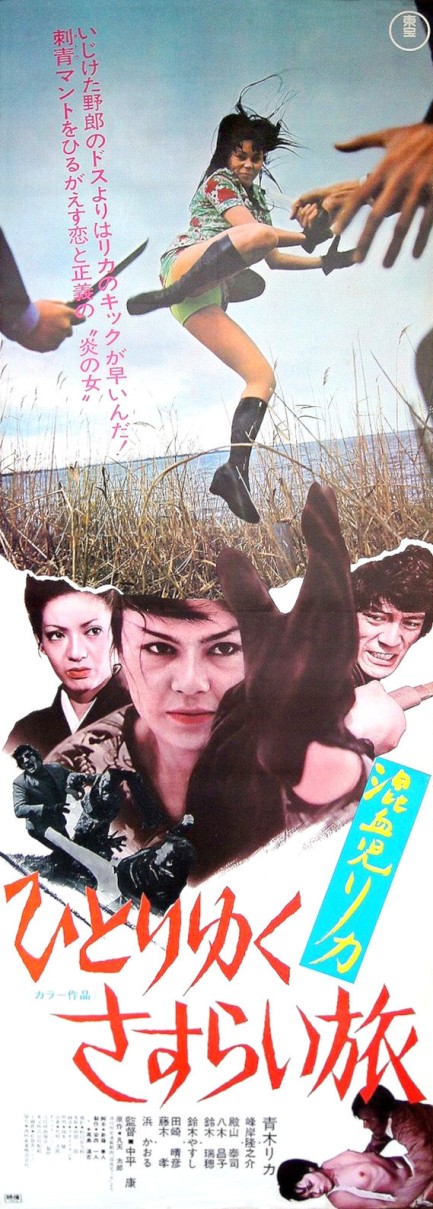 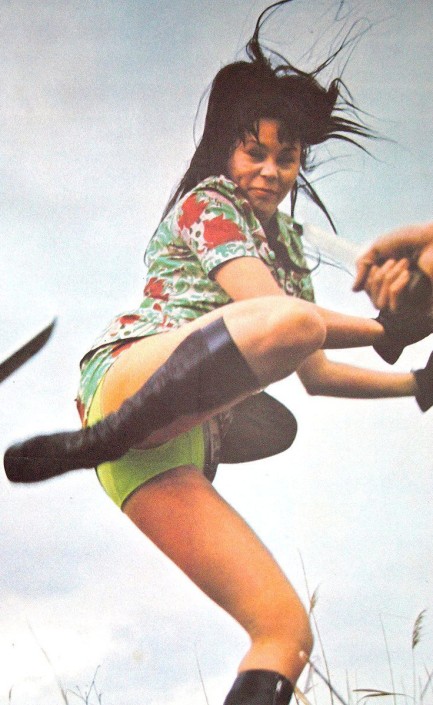
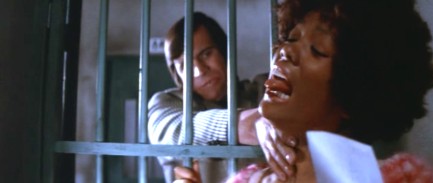
We usually watch movies in the order we're able to acquire them, so as a matter of availability we ended up watching parts one and three in the Rika the Mixed Blood Girl trilogy without having seen the middle entry. Last night we remedied that and screened part two, Konketsuji Rika: Hitoriyuku sasuraitabi, known in English as Rica 2: Lonely Wanderer. You see a rare tateken style poster for the film above—along with a nice zoom—that you won't find anywhere but on Pulp Intl. We already expounded upon the change in spelling of Rika's name in the English title a while back. Shorter version: we don't know why Rica makes more sense than Rika. Probably it doesn't. Take it up with the honchos at Kindai Eiga Kyokai.
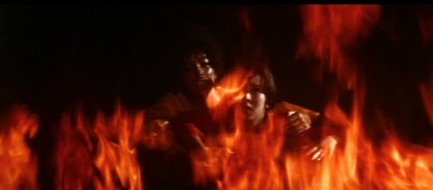
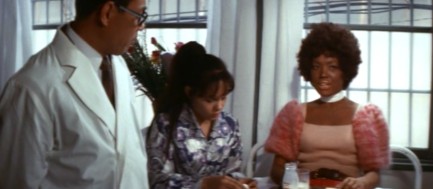
Rika 2/Rica 2 stars Rika Aoki and she's once again required to right wrongs, as she escapes from the frying pan of reform school and lands in the fire of urban crime and other hazards endemic to pinku cinema. The main plot involves a ship that exploded and sank in Misawa harbor, and a survivor—Rika's friend Hanako—who's in a mental hospital as a result. But Hanako is mentally fine. She's actually hiding in the one place hired killers can't reach her. Turns out the ship was yakuza owned, and everyone who survived is being hunted down. Rika goes to the police and demands an investigation, but the cops are yakuza owned too. Why must everyone who survived the ship disaster be killed? How high does the conspiracy go?
Rika handles her business with moral outrage and violence, but she also has time for a musical number or two. She's the Dylan of the Misawa nightclub district. Check out her lyrical stylings: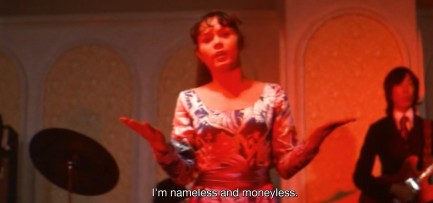  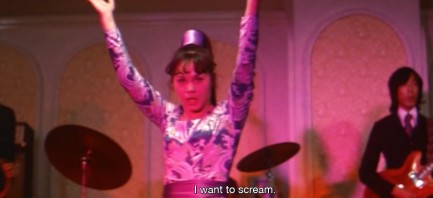
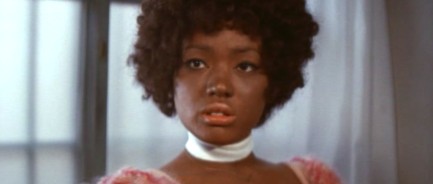
As with the other films, some of the action in Rika 2/Rica 2 veers into slapstick. Also like the other films, there are racial and political digressions, and they aren't subtle. For instance, when Rika and a friend are accosted by Americans at one point, the group consists of one cowboy, one hippie, one guy dressed in a suit, etc. Later Rika is told point blank that it's lucky she's half white, because being half black like her friend Hanako would make her even more inferior to anyone fully Japanese. These are villains talking to her. The movie's default setting is anti-racist, which of course is correct and moral, but it's funny how what's considered racist evolves over time. Hanako is played by Japanese actress Masami Souda in shoe polish and an afro wig. Oops! For pinku cinema, it's just another day. But all-in-all, a reasonably fun one. Konketsuji Rika: Hitoriyuku sasuraitabi premiered in Japan today in 1973.
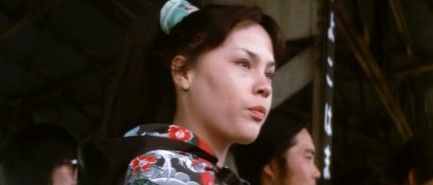 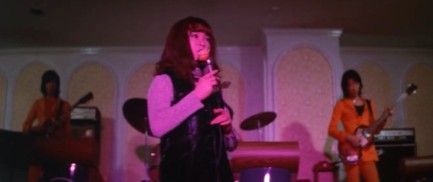 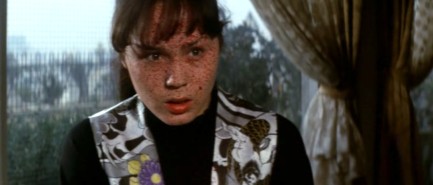 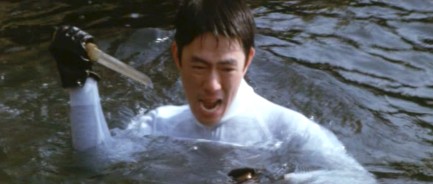 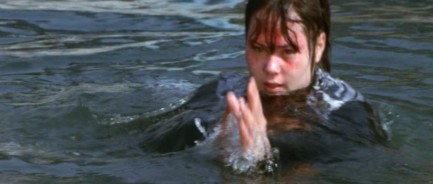 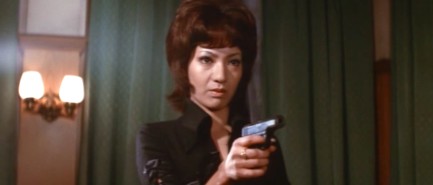 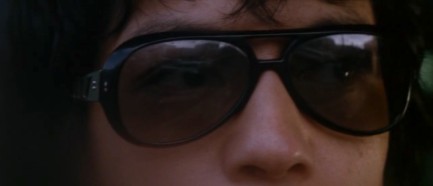 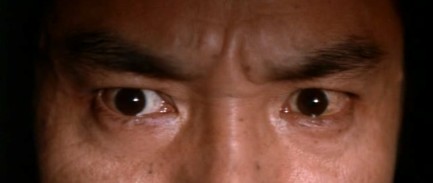 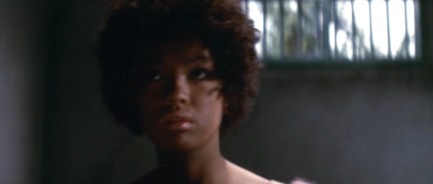 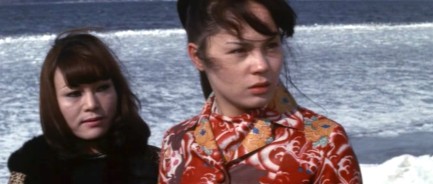     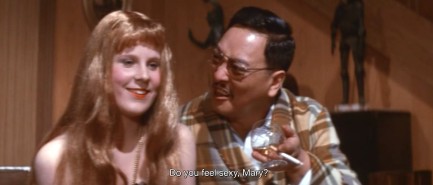 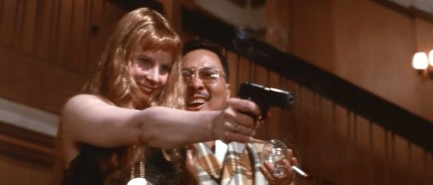
 All you need is one part Reiko and you'll be completely intoxicated. 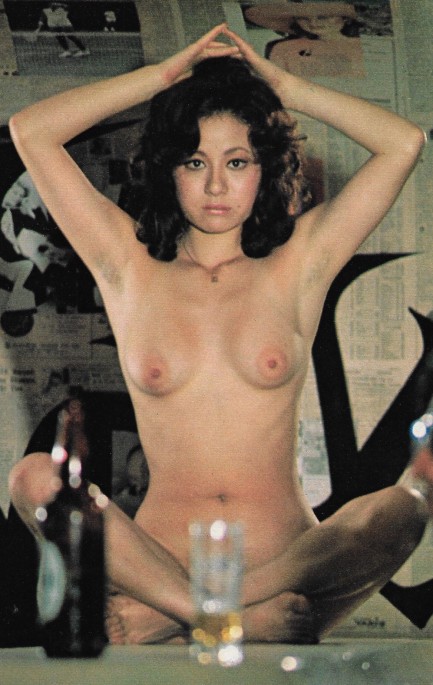
Above is another look at Reiko Ike perched on a Kyoto bartop from a 1972 promo series that appeared in the Japanese magazine Heibon Punch. As we mentioned, the location was used in her action movie Sukeban gerira. We'll try to get around to posting more shots from the series at some point. In the meantime, you can see the previous photo here.
 The deeper into the Underworld you go the hotter it gets until everyone—and everything—is liable to get burned. 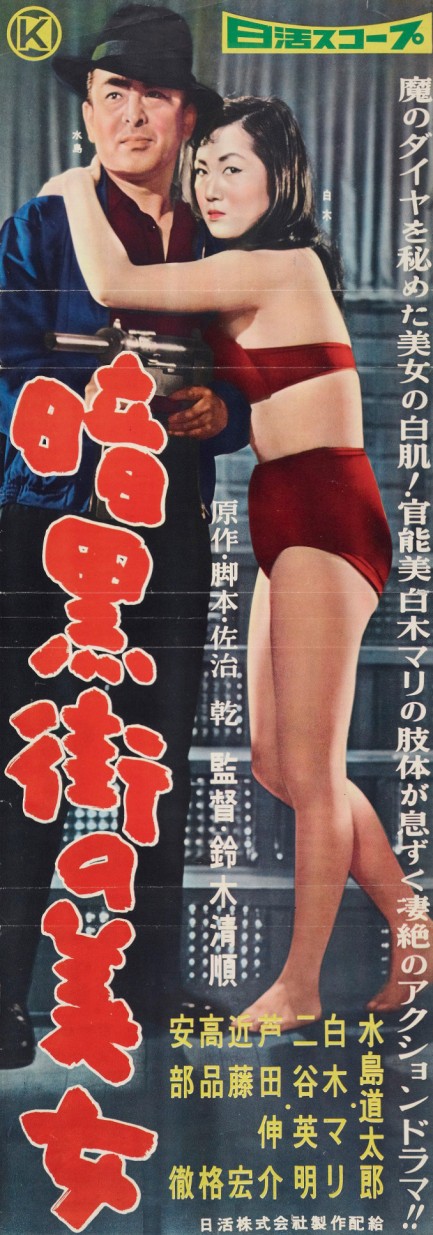 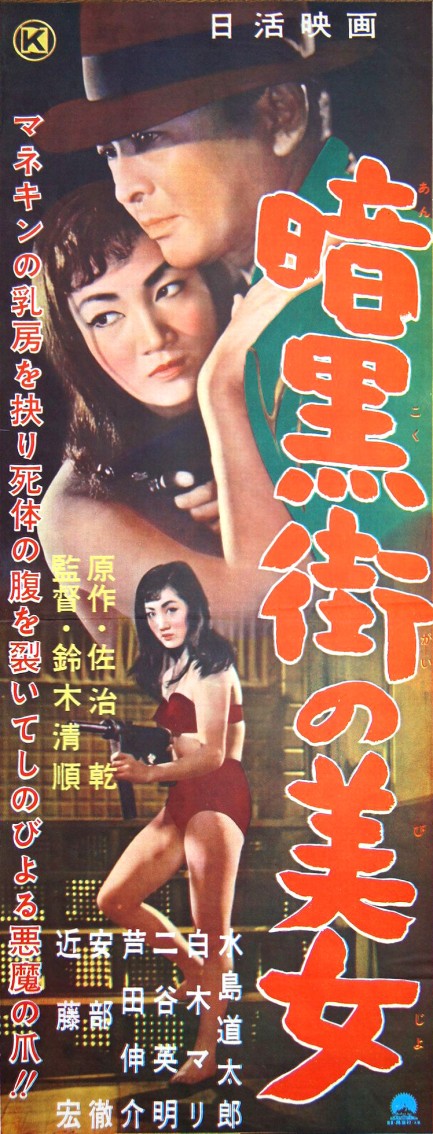
The two tateken style posters you see above were made for the Japanese crime drama Ankokugai no bijo, the title of which means “beauty of the underworld,” and which was known in English as Underworld Beauty. The movie is about a bunch of gangsters chasing after some diamonds. Co-star Tôru Abe has them first, but when the yakuza catch up to him, he swallows them and jumps off a roof, ending up in a hospital. He soon dies and the treasure is cut out of his body, but that's merely the beginning of a struggle to retain their possession. Abe's sister, played by Mari Shiraki, is the underground beauty of the title, and gets tangled up with the mobsters. They say diamonds are forever, but we're told early in the film when it seems as if the coveted stones might go into a crematorium with Abe's body, that they can actually burn. That's clumsy foreshadowing, but Underworld Beauty still manages to be an interesting and mostly satisfying film. It premiered today in 1958. 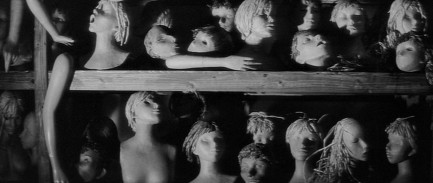 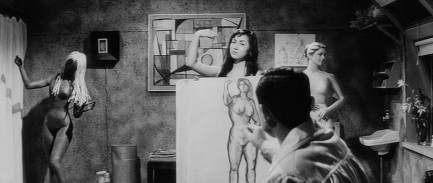 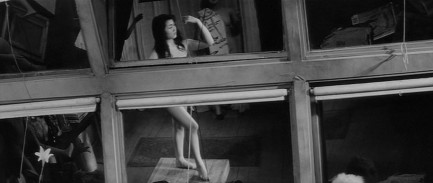 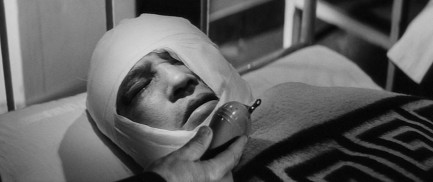 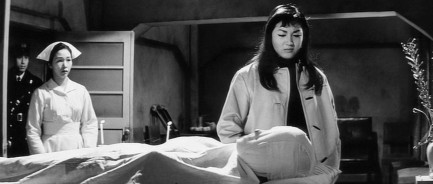 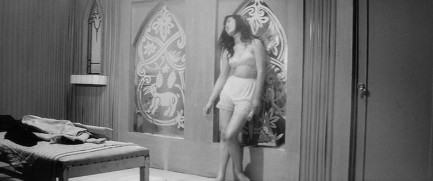 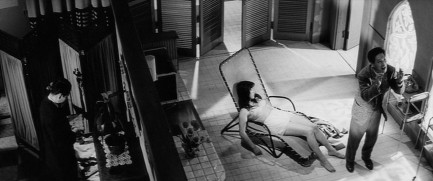 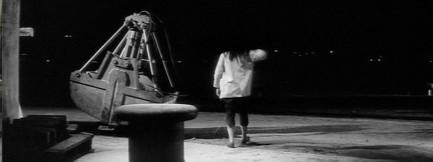 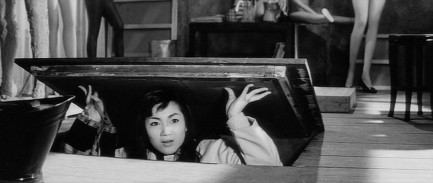 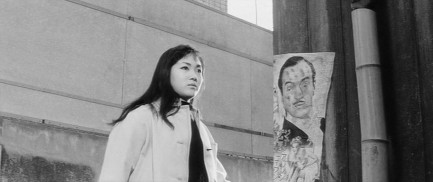 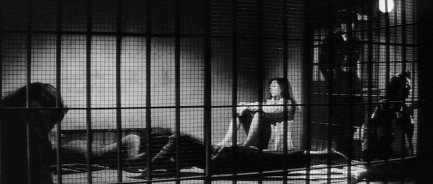 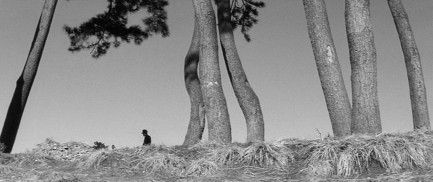 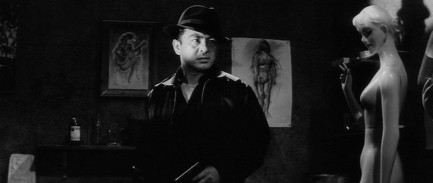
 Do you prefer cold steel or hot lead? The choice is entirely yours. 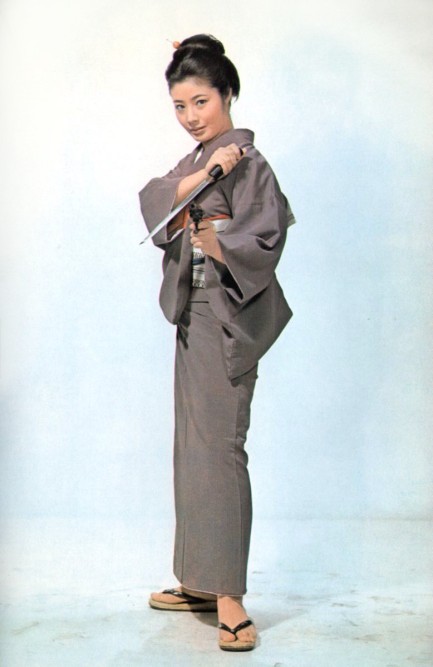
So that no confusion arises, Junko Fuji, who you see in this photo, is known today as Sumiko Fuji. But back during the ’60s and ’70s she acted as Junko, and since we're a vintage site that's what we've always called her. As you can see, she's added a razor sharp wakizashi to the pistol we saw her brandishing in a similar photo a few years ago. We found this shot in a 1971 issue of the Japanese magazine Modern Romance, and it was probably originally made for her 1968 yakuza actioner Hibotan bakuto—aka Red Peony Gambler—or for one of its sequels. By the way, Modern Romance? This photo just screams romance, right?
 In Japan business is war—complete with innocent bystanders. 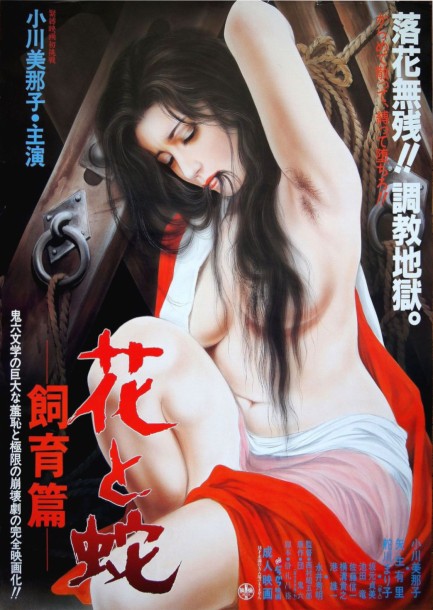
This brilliant promo was painted for Hana to hebi: Shiiku-hen, known in English as Flower and Snake 3: Punishment. It starred Minako Ogawa of Dan Oniroku ikenie shimai, aka Sisters To Be Sacrificed, and in fact the same painter must have produced both posters. Have a look. The central figure is almost identical, no? Right down to her hairy armpits. Since there's no official info on who the artist is we'll throw in our two cents. It was bondage painter Kaname Ozuma. He painted at least one other poster for the Flower and Snake series, which you can see here. In the meantime this piece is literally nowhere else to be found in the quality you see here. At least, as far as we can tell.
We watched the film and it's a typically perverse roman porno tale about a powerful businessman married to Minako Ogawa, who he stole from a subordinate who was helpless to prevent it. When he later declines to help a business associate out of a jam that person has Ogawa kidnapped—literally thrown into a giant bag—taken to an isolated house, sexually assaulted, and coercively trained using bondage, a kielbasa, and other esoterica in order to turn her into a performer for live sex shows. That's a hell of a twisted retaliation for being refused financial help, but twisted is what roman porno is all about.
Of technical note is the fact that, though it was illegal to show pubic hair in Japanese movies, the ever clever roman porno filmmakers found a loophole. They have Ogawa's captors, as part of her torment, cut off her pubic hair with scissors. Though it couldn't be shown attached to her body without bringing down the wrath of censors, they got away with showing it falling into bathwater. You gotta give the pervs credit. They were always thinking outside the—er—box. Hana to hebi: Shiiku-hen premiered in Japan today in 1986.
After a long day on the set filming sex and bondage... I'm very happy to spend the evening doing this.

 A long time ago, light years ahead of their time. 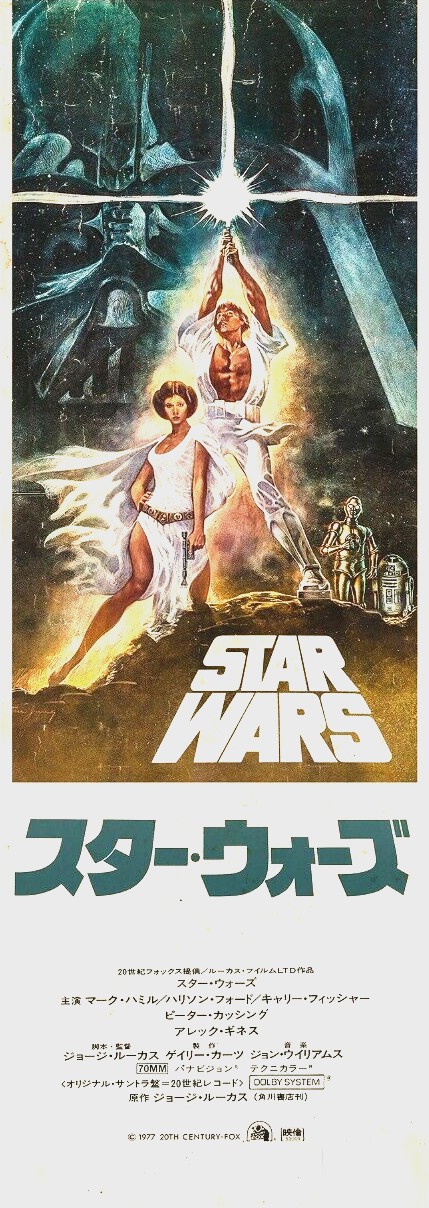 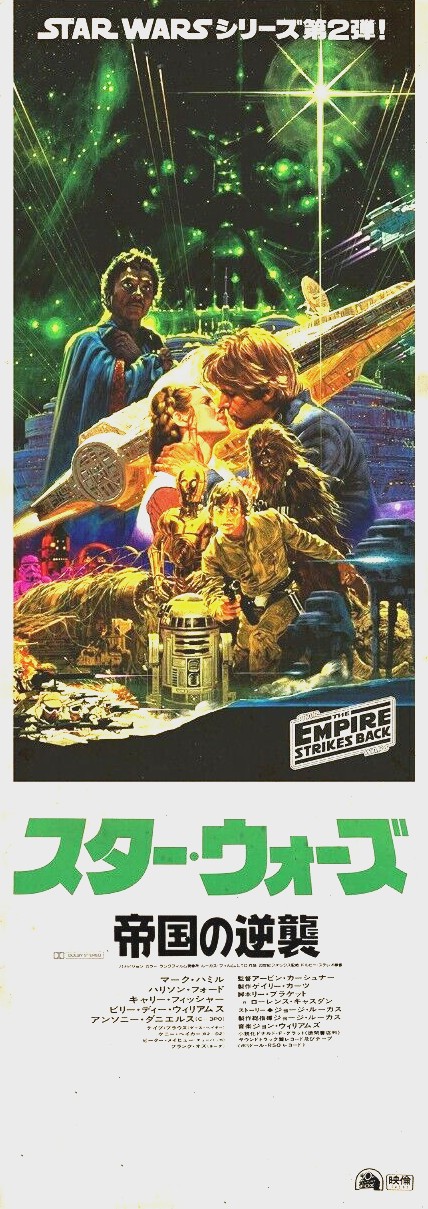 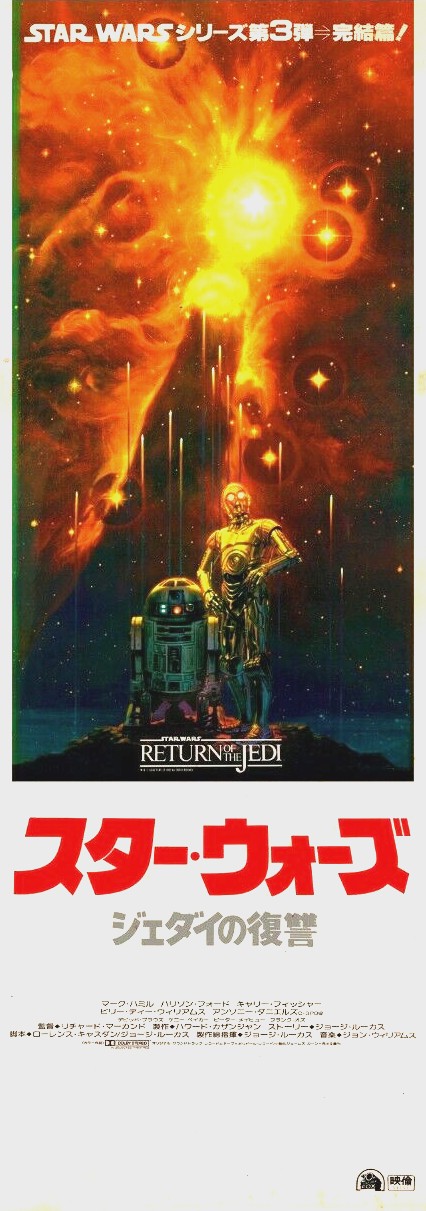
Above are three tateken sized posters for the first three films in George Lucas's galaxy spanning Star Wars series: Star Wars, The Empire Strikes Back, and The Return of the Jedi. Posting these today was a direct consequence of our recent move—new house, fresh reorganization, all sorts of forgotten items turning up, both physically and in our hard drives. Once we get in a solid scanner groove we have some amazing stuff to show you. In the meantime, we're pretty sure you won't see these anywhere else.
 Their grades aren't great but their extracurriculars are incomparable. 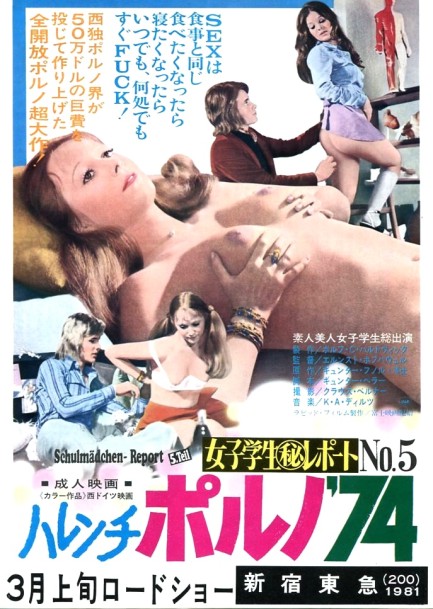 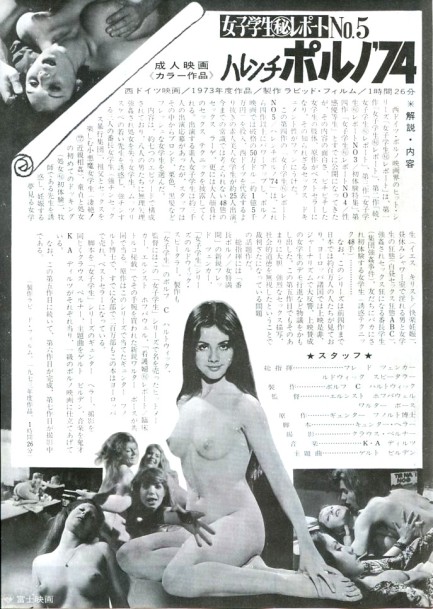
Two years ago we shared a brilliant Japanese poster for Schulmädchen-Report 5. Teil - Was Eltern wirklich wissen sollten, aka Schoolgirl Report Part 5: What All Parents Should Know. Above you see an alternate poster, front and back. It's a strange movie, part of a series of thirteen, which you can read about here.

|
 |
The headlines that mattered yesteryear.
1945—Mussolini Is Arrested
Italian dictator Benito Mussolini, his mistress Clara Petacci, and fifteen supporters are arrested by Italian partisans in Dongo, Italy while attempting to escape the region in the wake of the collapse of Mussolini's fascist government. The next day, Mussolini and his mistress are both executed, along with most of the members of their group. Their bodies are then trucked to Milan where they are hung upside down on meathooks from the roof of a gas station, then spat upon and stoned until they are unrecognizable. 1933—The Gestapo Is Formed
The Geheime Staatspolizei, aka Gestapo, the official secret police force of Nazi Germany, is established. It begins under the administration of SS leader Heinrich Himmler in his position as Chief of German Police, but by 1939 is administered by the Reichssicherheitshauptamt, or Reich Main Security Office, and is a feared entity in every corner of Germany and beyond. 1937—Guernica Is Bombed
In Spain during the Spanish Civil War, the Basque town of Guernica is bombed by the German Luftwaffe, resulting in widespread destruction and casualties. The Basque government reports 1,654 people killed, while later research suggests far fewer deaths, but regardless, Guernica is viewed as an example of terror bombing and other countries learn that Nazi Germany is committed to that tactic. The bombing also becomes inspiration for Pablo Picasso, resulting in a protest painting that is not only his most famous work, but one the most important pieces of art ever produced. 1939—Batman Debuts
In Detective Comics #27, DC Comics publishes its second major superhero, Batman, who becomes one of the most popular comic book characters of all time, and then a popular camp television series starring Adam West, and lastly a multi-million dollar movie franchise starring Michael Keaton, then George Clooney, and finally Christian Bale. 1953—Crick and Watson Publish DNA Results
British scientists James D Watson and Francis Crick publish an article detailing their discovery of the existence and structure of deoxyribonucleic acid, or DNA, in Nature magazine. Their findings answer one of the oldest and most fundamental questions of biology, that of how living things reproduce themselves.
|

|
|
It's easy. We have an uploader that makes it a snap. Use it to submit your art, text, header, and subhead. Your post can be funny, serious, or anything in between, as long as it's vintage pulp. You'll get a byline and experience the fleeting pride of free authorship. We'll edit your post for typos, but the rest is up to you. Click here to give us your best shot.
|
|