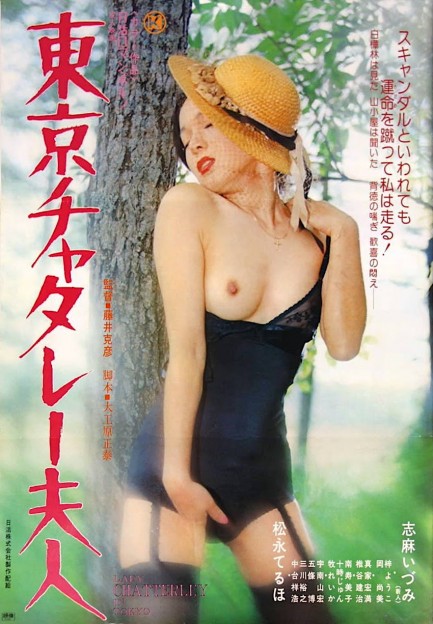
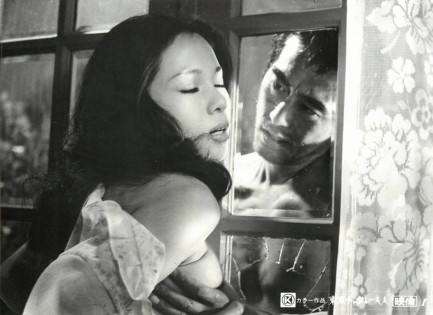
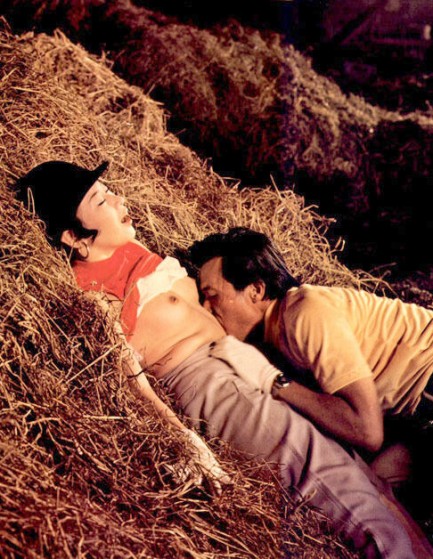
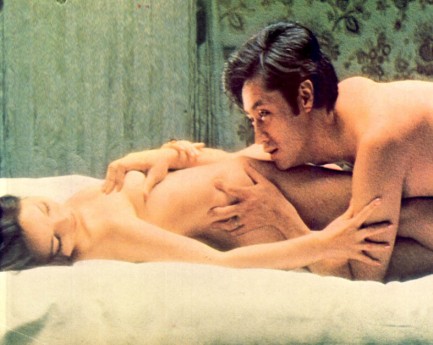
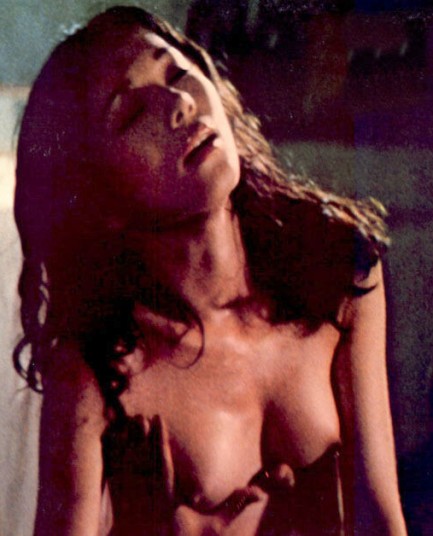
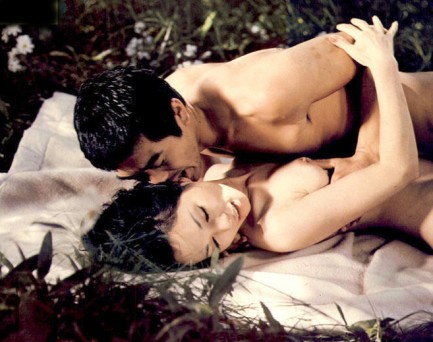
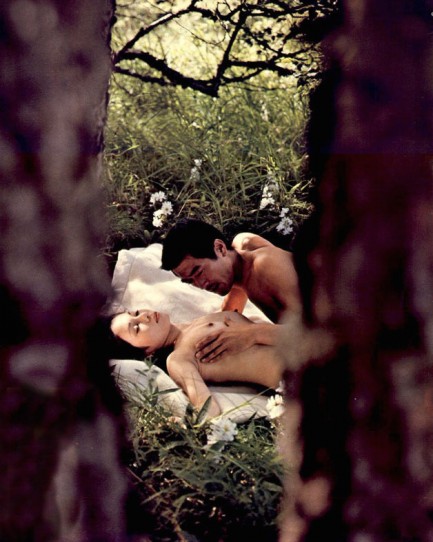
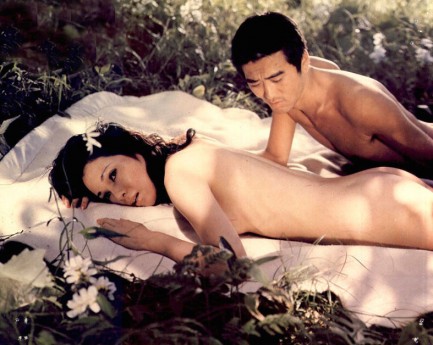
1001 nights is not nearly enough time with Ayako Meki, Erina Miyai, and Izumi Shima. 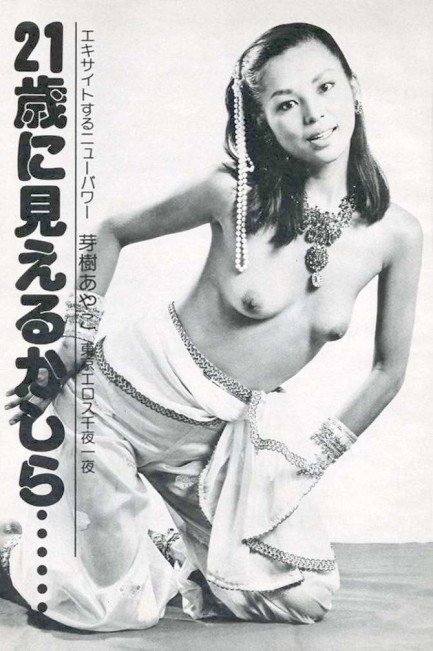
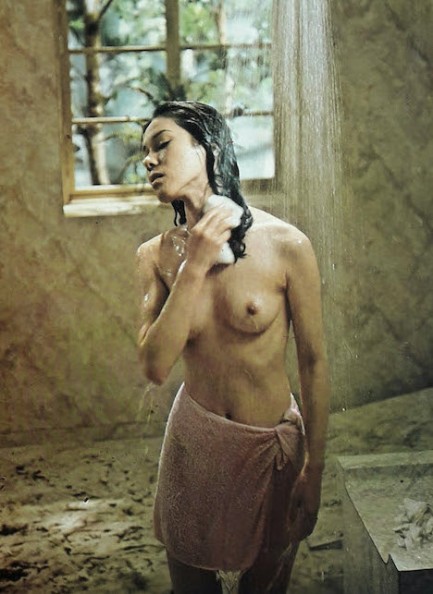
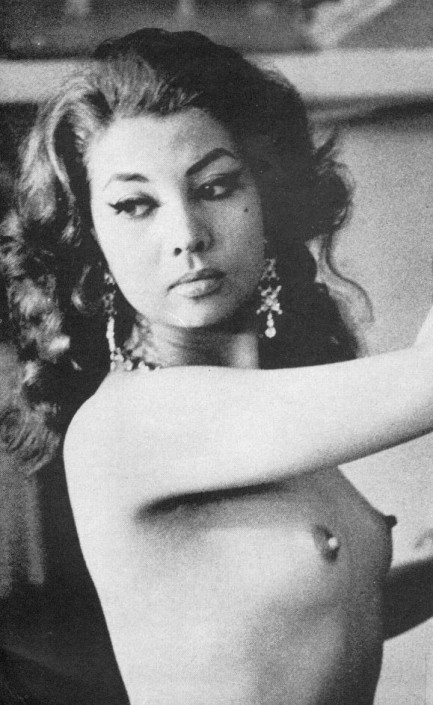
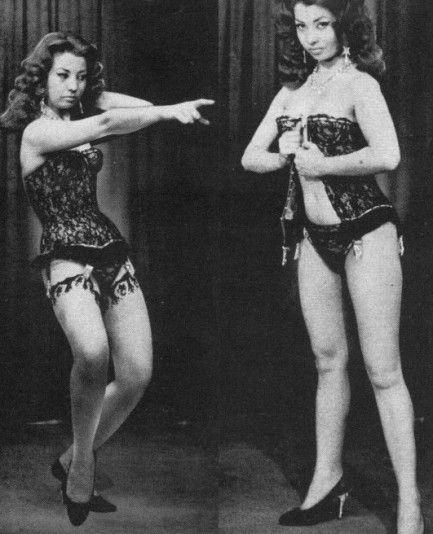
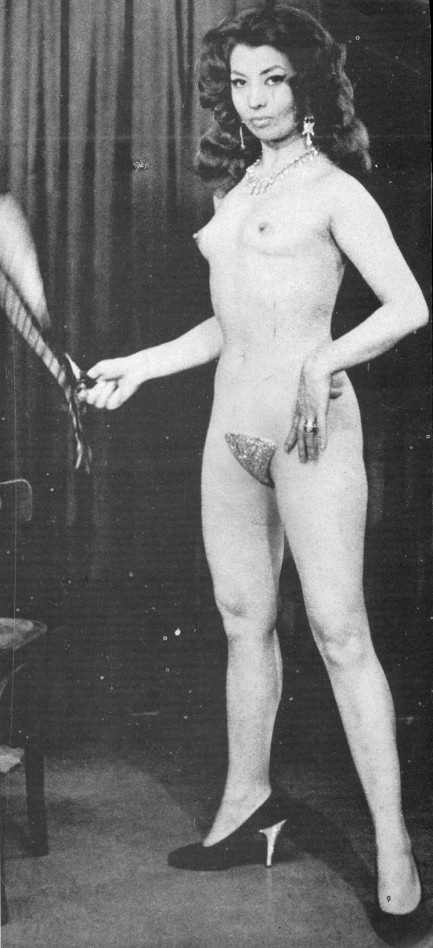
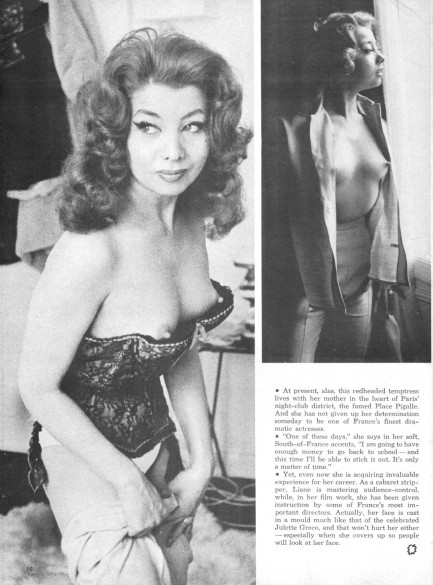
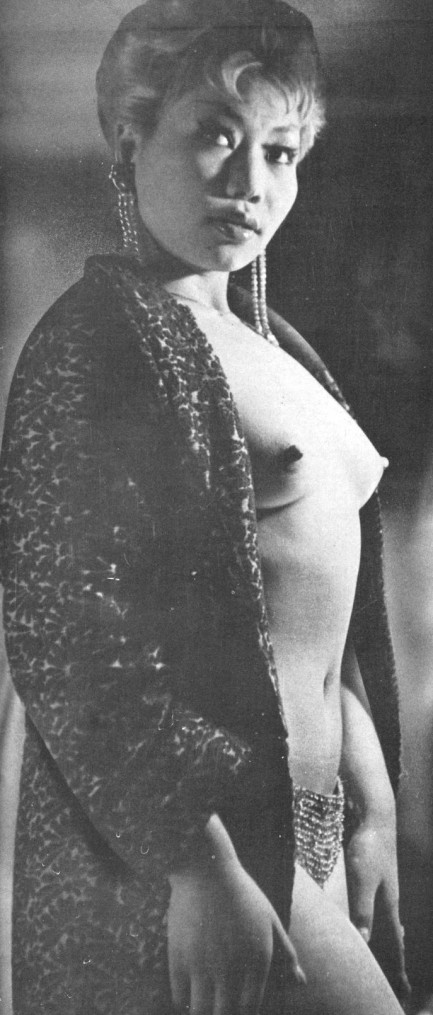
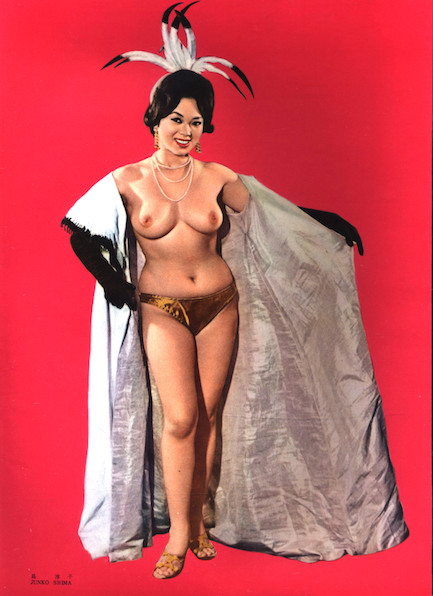
A few years ago we shared an ultra rare tateken promo for the 1001 Nights inspired roman porno flick Tokyo eros senya ichiya. That poster was a follow-up to a standard poster we'd shared back in 2017. In both cases the movie was unavailable for us to watch. Well, above you see a magazine page featuring the movie's co-star Ayako Meki. This isn't directly a promo for the film, but she's dressed in character. The text says “because you look 21,” which is weird, and goes on to describe her as “an exciting new power.” We're showing this to you because the movie premiered today in 1979, and this time we did have a copy to watch.
Known in English as Eros Nights in Tokyo, the story here involves lonely young Kiyoyasu Adachi and three women in his life—Izumi Shima, Ayako Meki, and Erina Miyai. We can't fault the guy's taste, but we do take exception to his methods. He succumbs to creepy urges such as spying on Shima (who's his stepmother), attempting to force a kiss upon Meki (which devolves into a full-scale perv attack), and looking up the skirt of Miyai (who's mentally disabled). Later he grows a bit more subtle in his attempts to indulge his urges, such as when he convinces Shima to accept a personalized wash, full body massage, and more. After that nipply nuru session, his stepmom is fully on board with further advances.
By now it's clear to the viewer that fantasy has overtaken reality for Adachi. We've seen this line crossed in numerous films, and it's usually a subtle trip across the border. When did it happen here? It's hard to be sure, but probably sometime after Adachi was chased by a policeman that somehow multiplied into an entire Keystone Kops style squad, and sometime before he was showered with a fortune in gold coins from a fountain.
All this stuff is mostly played for laughs, and indeed there are some legitimately funny moments, though not nearly as many as the filmmakers intended. We're talking about a Nikkatsu Studios roman porno production, which means that even as comedy it has the usual trappings of that genre, and those trappings just aren't humorous. For example, there's an attempted gang rape, which Adachi foils in full gangster mode, as the entire situation morphs into a set piece right out of American grindhouse cinema. Funny? No. Creative. For sure.
As we've mentioned before, by 1979 Nikkatsu was trying new ideas for its roman porno line, and Tokyo eros senya ichiya certainly qualifies. It's hard to judge such an outrageous flick objectively, so we won't try except to say that it's well made, as these films always are. We will mention, though, that we were disappointed none of the stars wore a harem costume. It turns out that 1001 Nights was a more oblique inspiration than we assumed. Have a look at the other posters here and here and you'll see what we expected. Do we recommend the film? Yes, of course. It has Izumi Shima. Full stop. 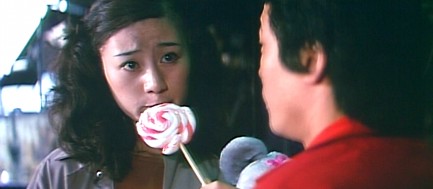  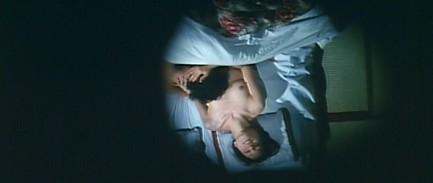 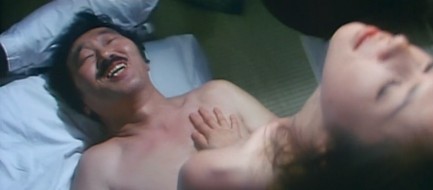 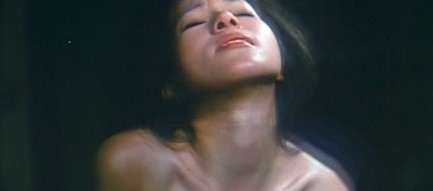 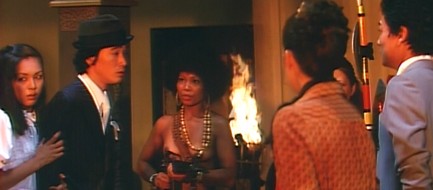    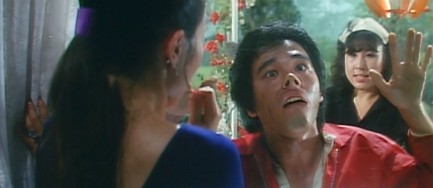 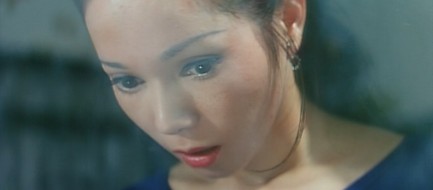 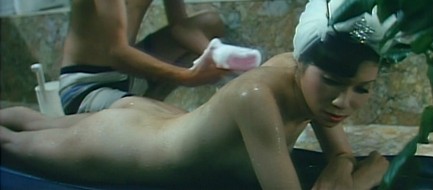 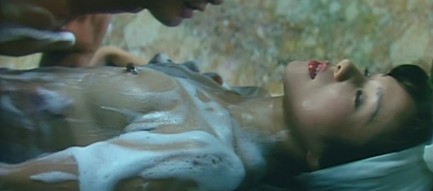 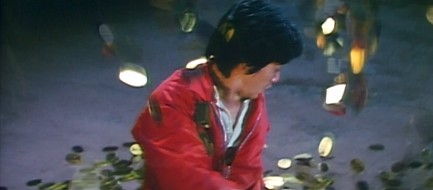
 Oshida and her friends run riot in the capital. 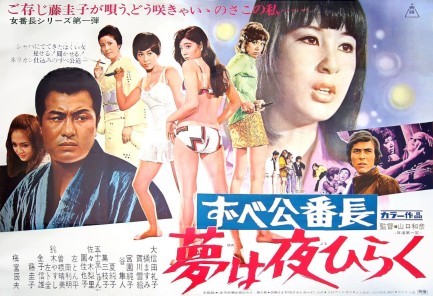 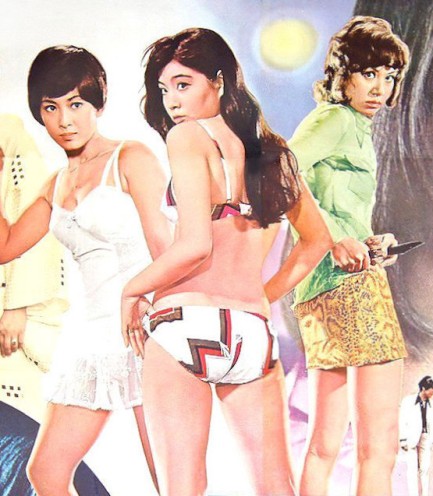
We're sticking with Japanese posters today. Here's one for the 1970 pinky violence flick Zubekô banchô: yume wa yoru hiraku, aka Tokyo Bad Girls, aka Delinquent Girl Boss: Blossoming Night Dreams. We showed you two other promos for this film, which were the standard and always fun tateken sizes. This is a rare bo-ekibari.
 They call her Marii—Daati Marii. 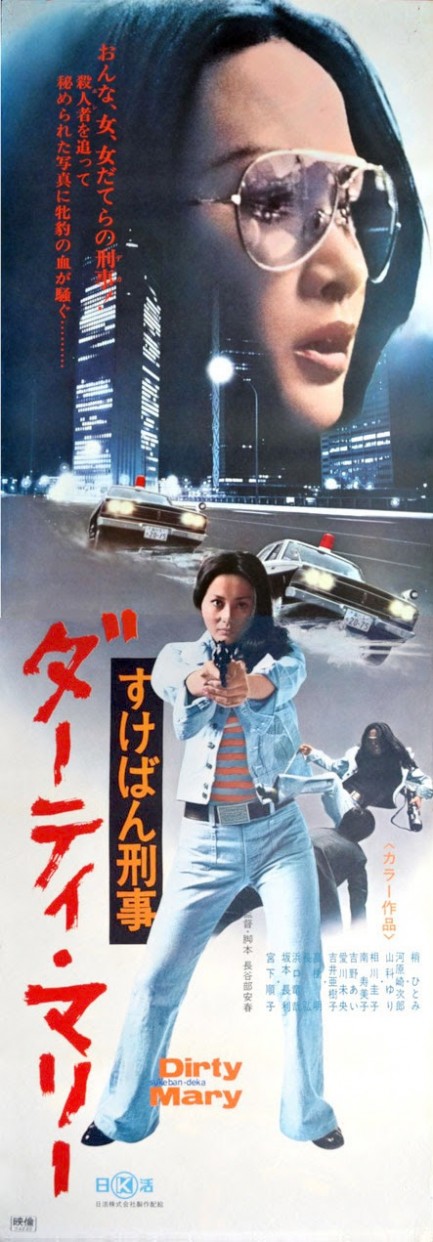
Above is a promotional poster in tatekan size for Sukeban Deka: daati Marii, which premiered in Japan today in 1974 and was known in English as Sukeban Deka: Dirty Mary. Obviously, the character is based on Clint Eastwood's Dirty Harry, and the name is phonetically spelled to assist Japanese pronunciation. Way back when we first talked about this flick we were able to watch it free online, but that boat has since sailed over the horizon. Now you'll have to watch it on Amazon Japan, which probably doesn't do you much good unless you speak Japanese. We wish we'd taken a few screenshots from the movie back then, but we were in a hurry that day. It's certainly worth a watch, should the opportunity arise. You can read a bit more about it here. As a bonus, we have some Kozue promo images below. Typically, she made nude photos, and indeed, we've already posted many and have others that are flat-out unbelievable which we'll share later. But today we wanted to show her in casual mode. You see her below, hanging out in Tokyo's Omiya Park.      
 The Zu animals break loose and Tokyo is never the same. 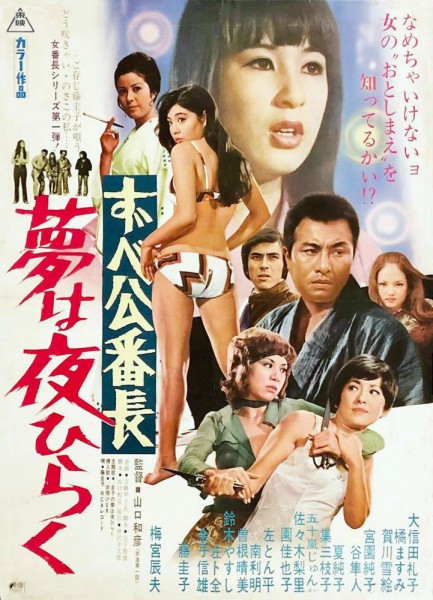
Above is a promo poster for Toei Company's pinky violence hit Zubekô banchô: yume wa yoru hiraku, aka Tokyo Bad Girls, aka Delinquent Girl Boss: Blossoming Night Dreams, which premiered in Japan today in 1970. We already talked about the movie years back and showed you the tateken sized promo poster. Because we had this second piece of art, today we decided to be completist. Reiko Oshida and Keiko Fuji are still the main graphic elements, but some of the other bits have been rearranged. You can see the first piece, and also read about the movie, at this link.
 These mystical lion statues are supposed to bring good luck and fortune. I'm making this one my agent. 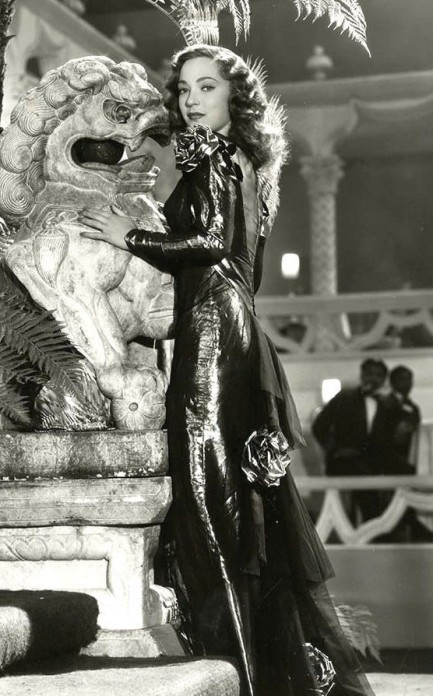
This elegant photo of June Duprez with a Chinese guardian lion was made when she was filming the drama Calcutta. According to tradition these lions ward off malign influences, and no wonder she's hanging onto it. She was born in England during World War I on a night when Germans were bombing her town. She survived and went on to make a mark in Hollywood, appearing in films like The Thief of Baghdad and Little Tokyo, U.S.A., but due to various factors her career stalled, and she found herself broke and cut off from family money back home due to the chaos of World War II. She made it through this second unstable period—no info on whether the lion helped—but her film career never recovered. Even so, we find her to be an impressive screen presence. We've heard that her best movie may be the 1945 mystery And Then There Were None, so we're going to check that out. This photo is from 1946.
 U.S. Adam goes in search of adult entertainment after dark. 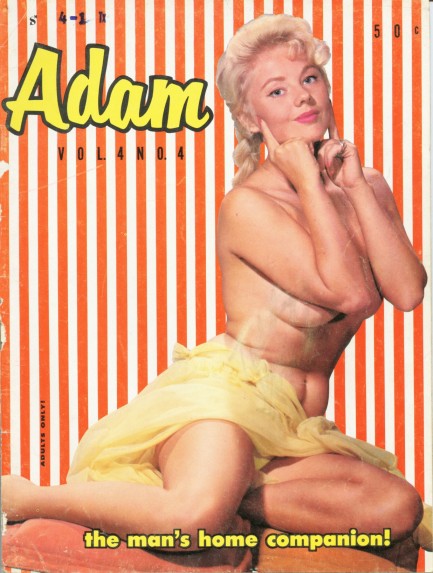
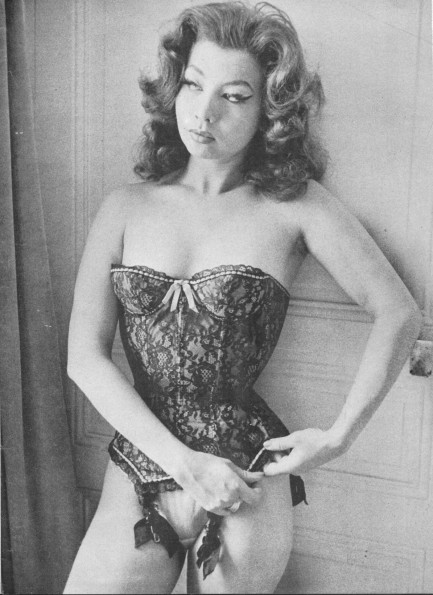
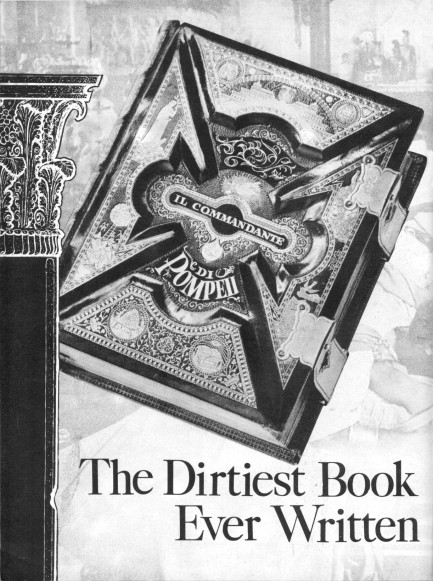
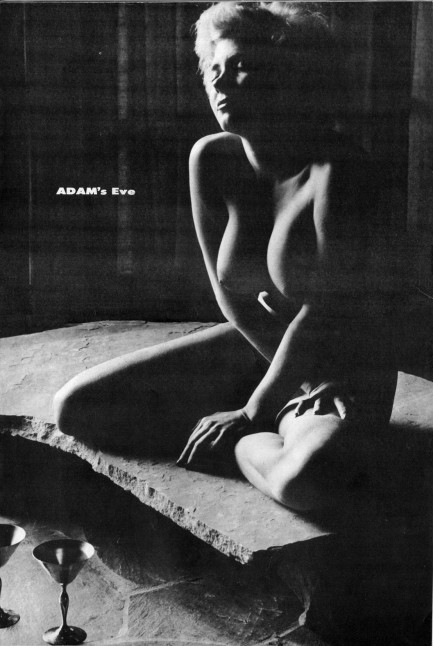
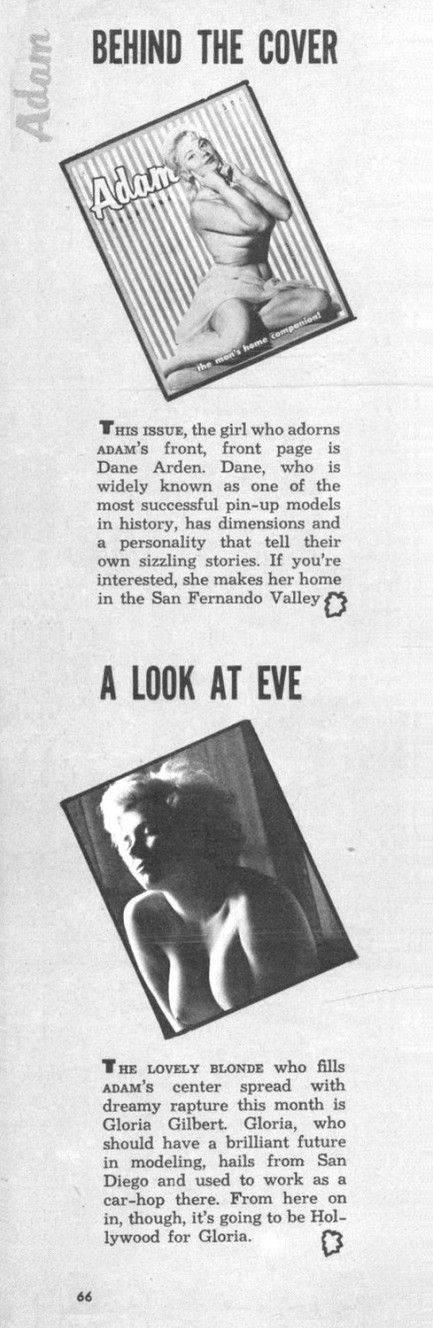
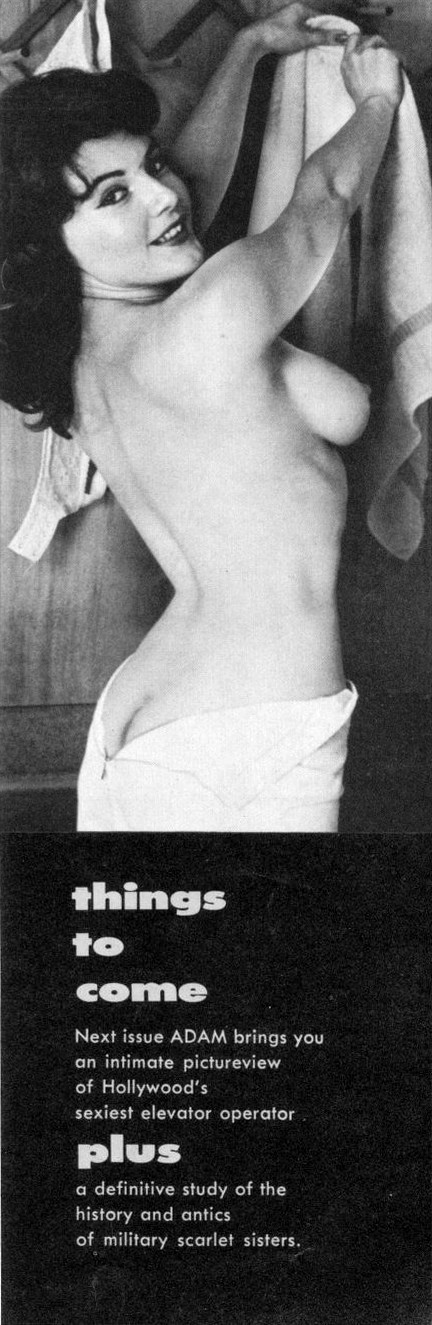
We're taking a break from the Australian Adam magazine to remind everyone that the unrelated U.S. men's magazine Adam was also filled with colorful art, fun fiction, weird facts, and beautiful models—in this case Danish pin-up and centerfold Elsa Sorensen, aka Dane Arden, who you see on the cover. We still think the down under Adam is the best, but northern Adam is always worth a look, and this issue published in 1960 is a representative example. Actually, there were two northern Adams. There was a French magazine of that name too, unrelated to the others. We've been meaning to locate one to buy online, but the price hasn't been right yet.
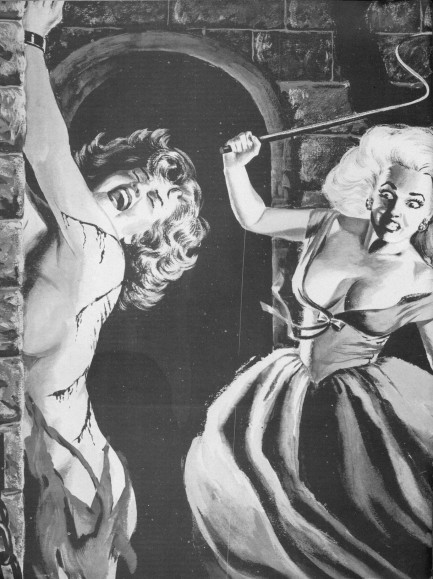
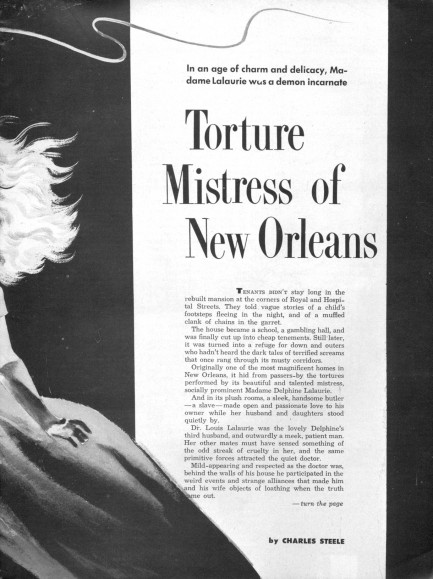
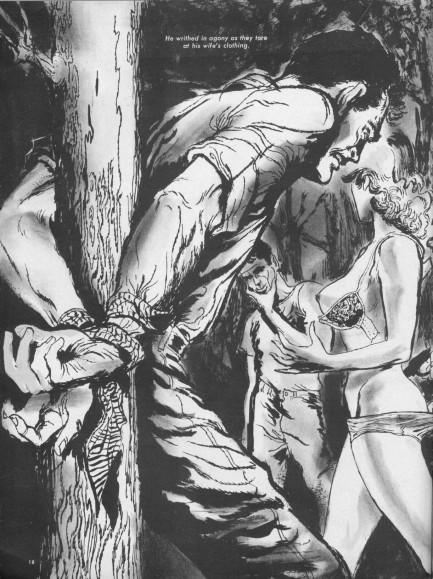
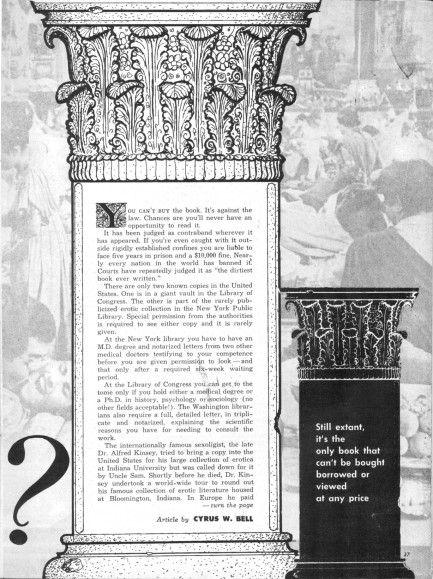
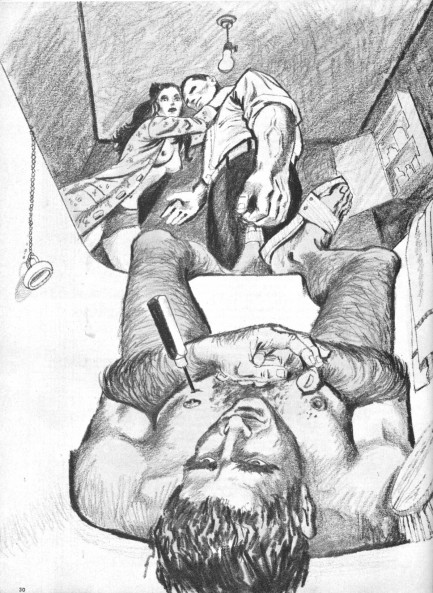
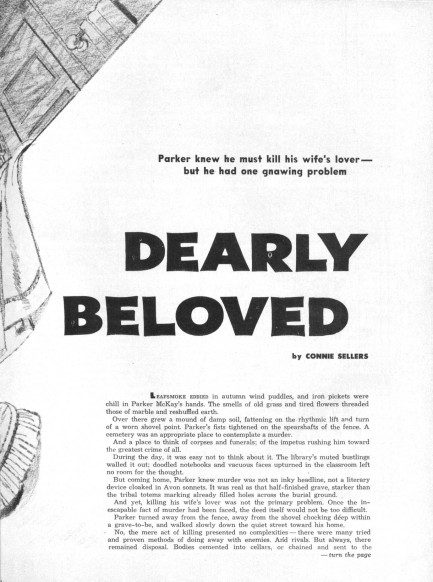
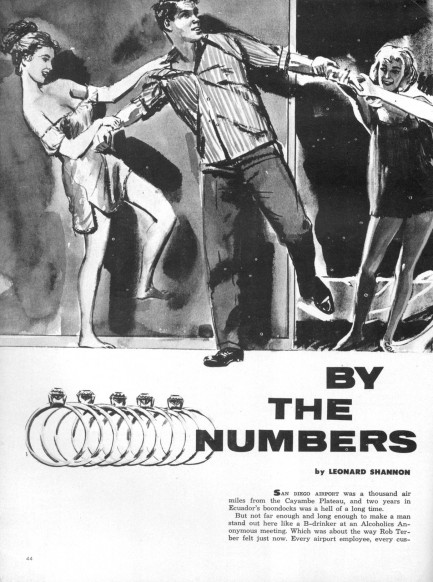
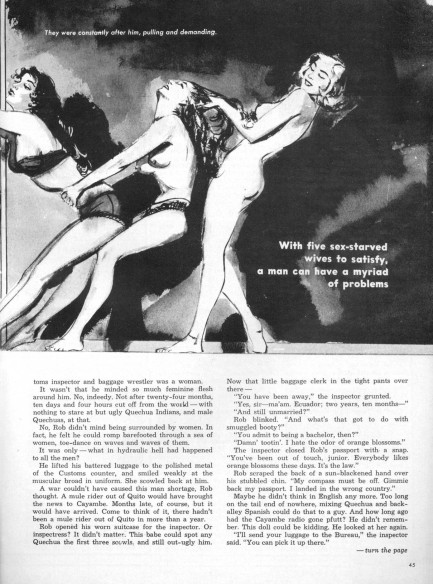
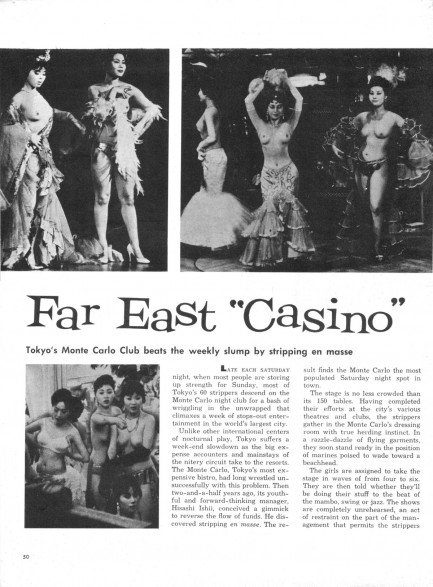
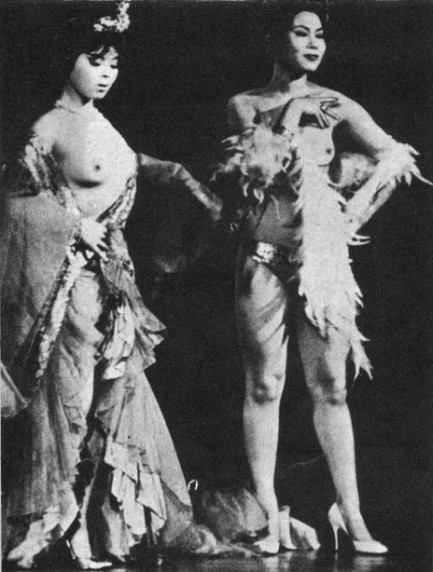
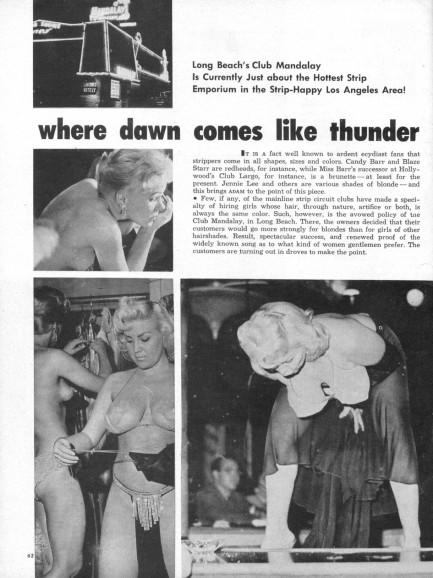
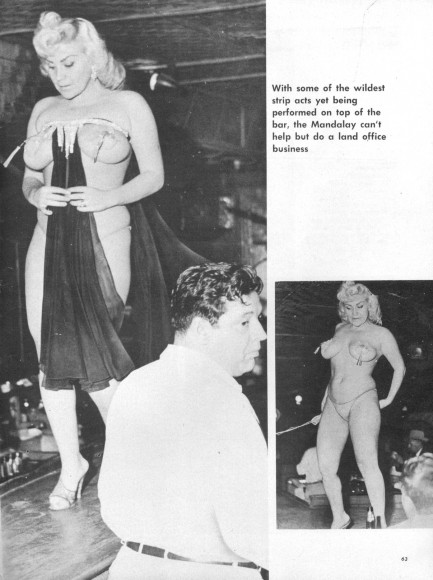
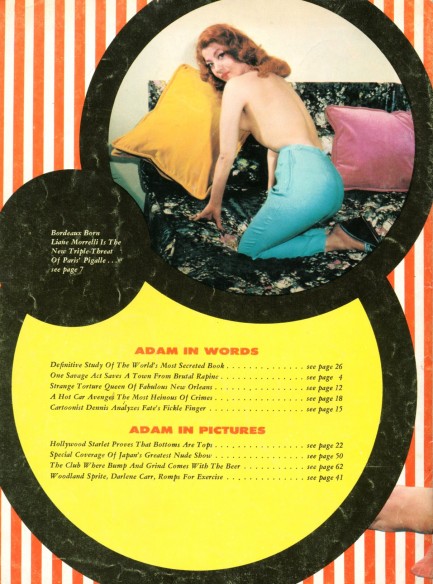
Anyway, this issue of Adam contains the usual fiction and humor, plus features on strip clubs in Paris, Tokyo, and Long Beach, a profile on New Orleans torture mistress Madame Delphine Lelaurie, and other pleasures of the evening. It also highlights the “dirtiest book ever written”—supposedly Il Commandante di Pompeii, which we suppose can keep you company on lonely nights if you don't get to Paris, Tokyo, or Long Beach. We have many scans below, and other issues of U.S. Adam you can find here, here, here, and here. And if you're interested in the Aussie Adam we have scans from almost seventy issues in the website, and you can see them by starting here.
 Yes, yes! A thousand and one times, yes! 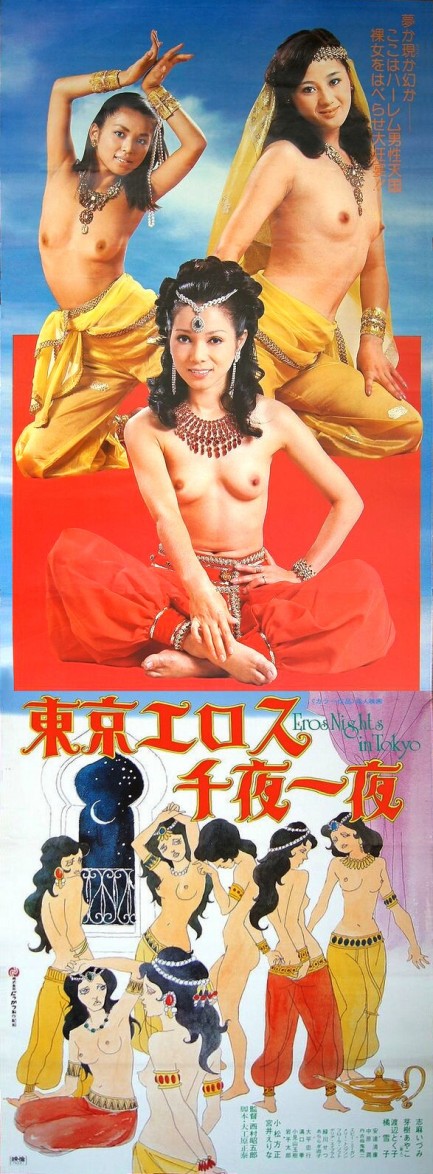
Yes! We're excited because we found yet another astonishingly rare Japanese poster. This was made to promote Tokyo eros senya ichiya, which would translate approximately as “Tokyo One Thousand and One Nights,” but is known in English as Eros Nights in Tokyo. You won't see this anywhere else. At least not uncensored. Now the bad news. Just like a few years ago when we shared the film's standard promo, we're still looking for a damn copy to watch. It stars Izumi Shima, Ayako Meki, and Erina Miyai, and that's a trio we want to see anytime. But it'll have to wait. In the meantime, gaze upon the celestial Izumi in a zoom below, and check her out here and here. For that matter, check out Irina Miyai here. Tokyo eros senya ichiya premiered in Japan today in 1979. 
 She gets into these situations so you don't have to. 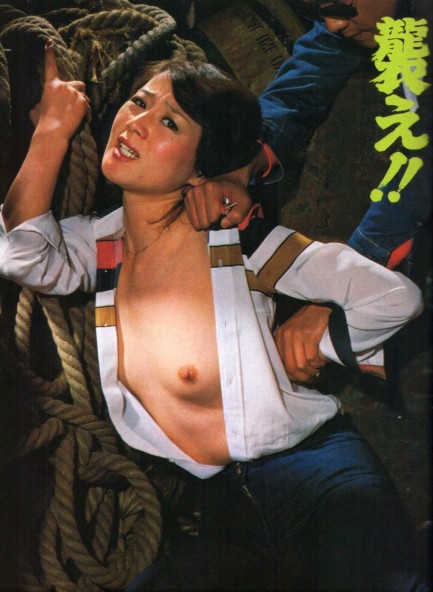
This poster is an addendum to our earlier write-up on this film, Osoe!, a hit roman porno from Nikkatsu Studios starring Erina Miyai, who spent her entire career getting into pickles like this one. This is basically the original promo poster, reversed and with all the text removed except the title. It was unusual for title-only art like this to be produced, which is why when we found it we thought we'd better share. We also share some thoughts on the film. Just look here. Osoe! premiered in Japan today in 1978.
 Japanese brochures hearken back to a legendary venue. 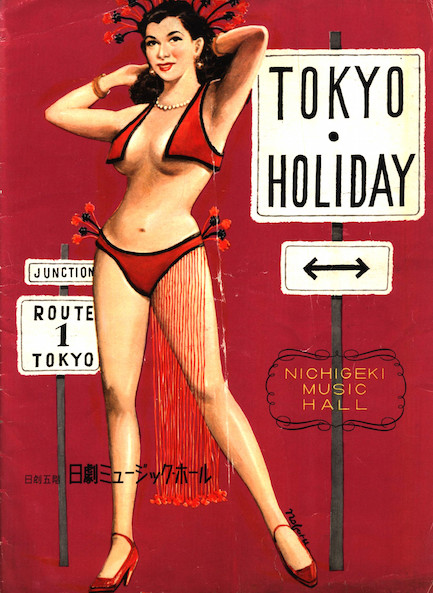
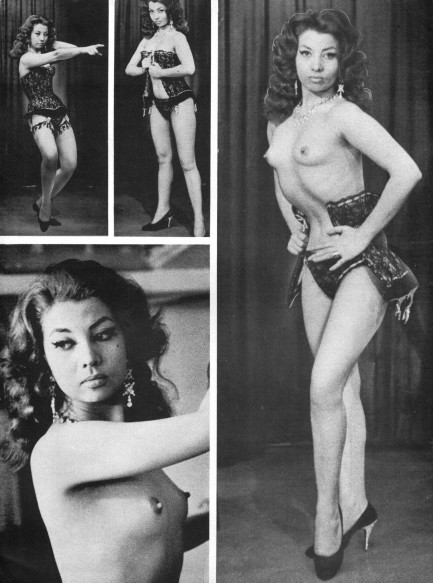
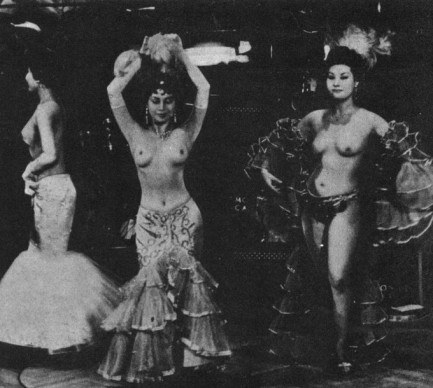
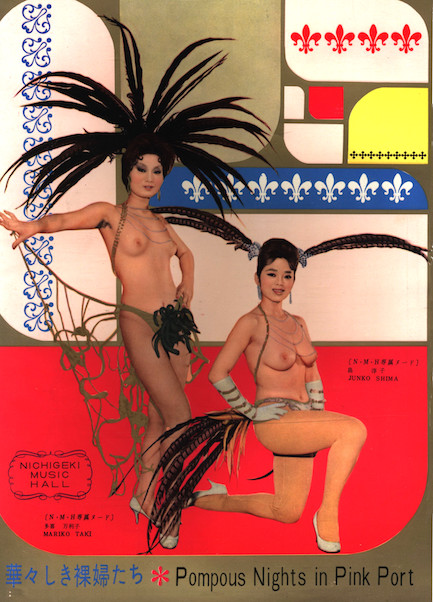
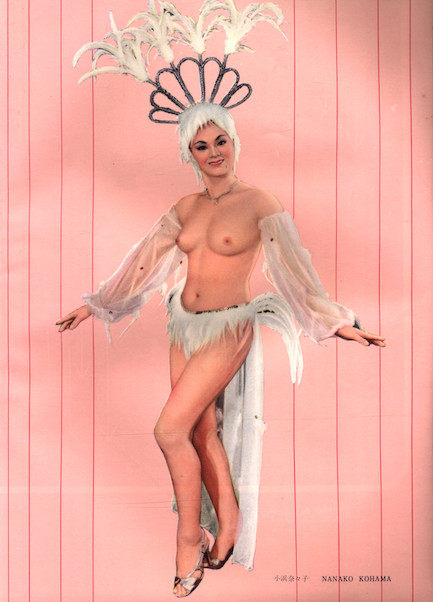
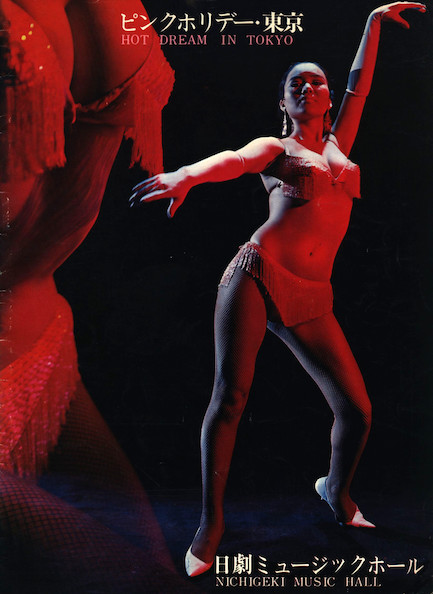
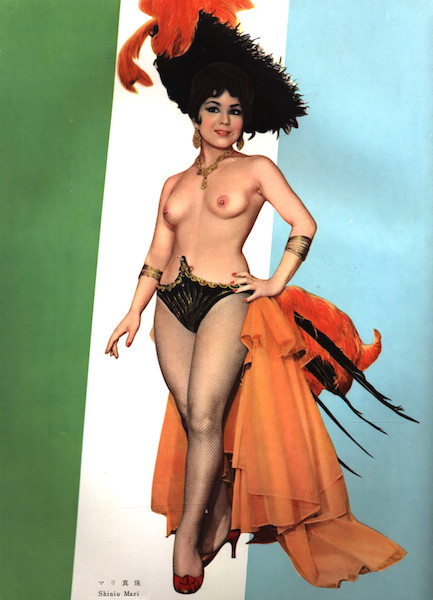
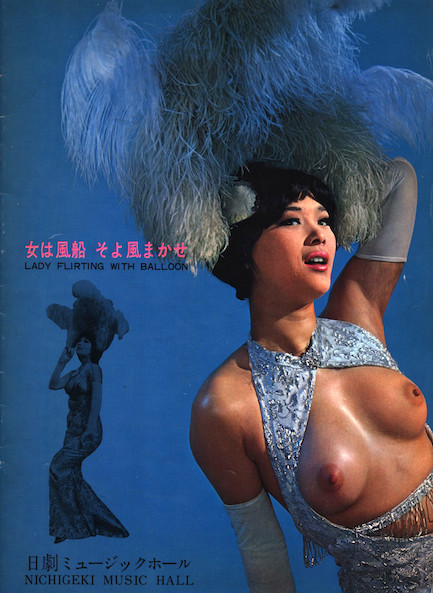
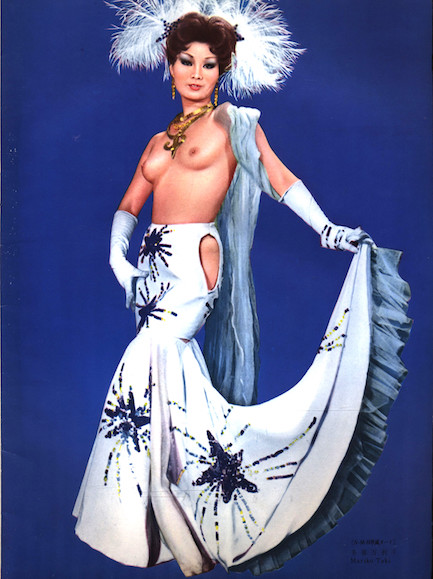
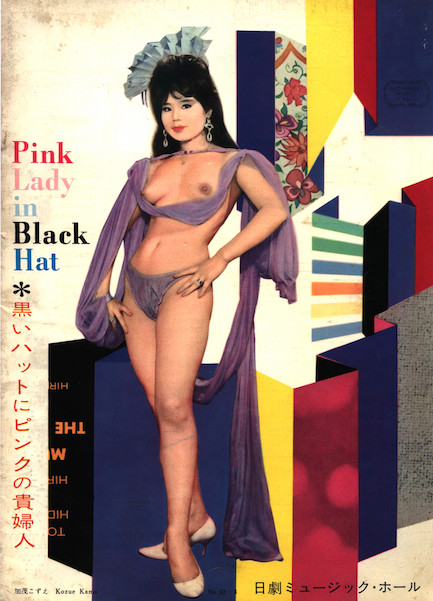
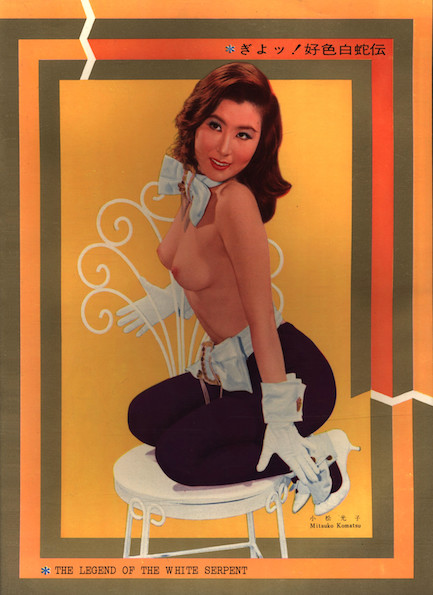
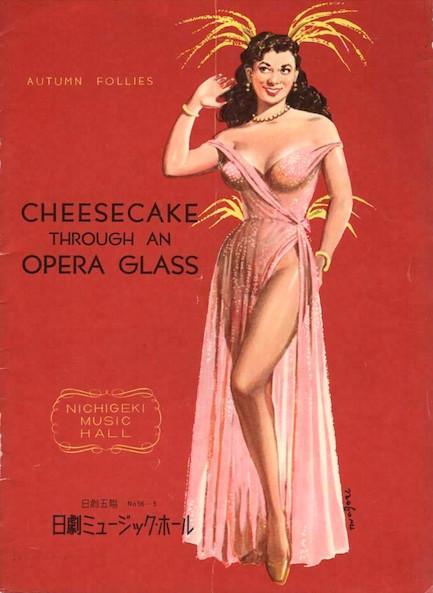
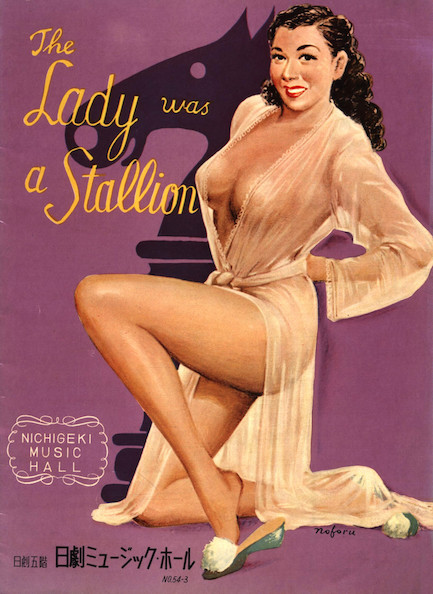
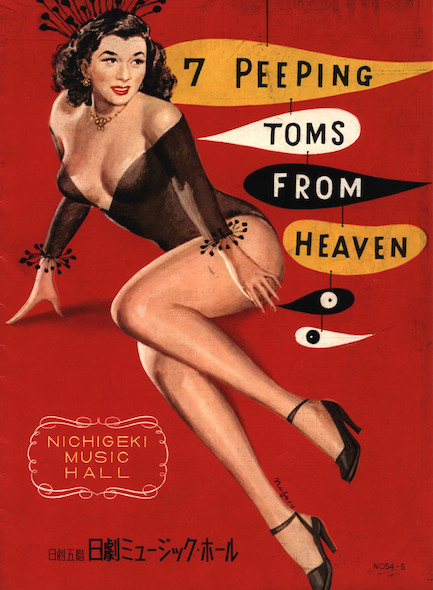
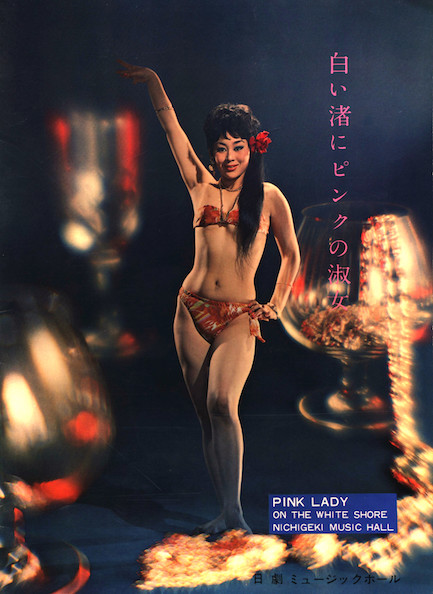
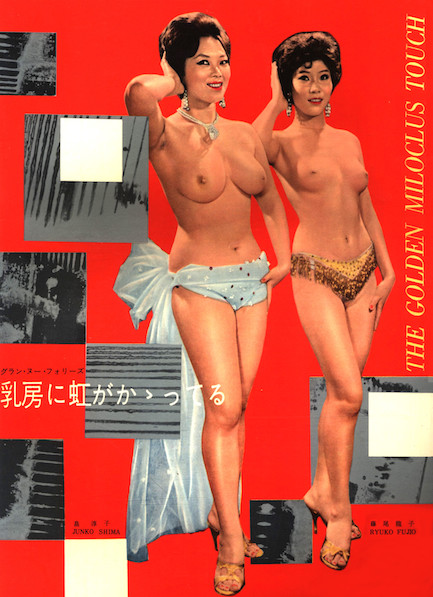
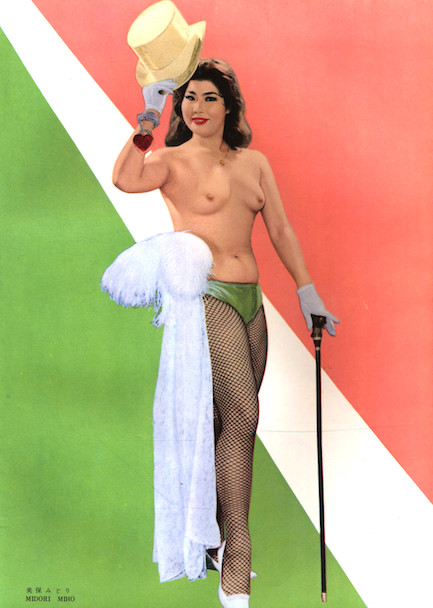
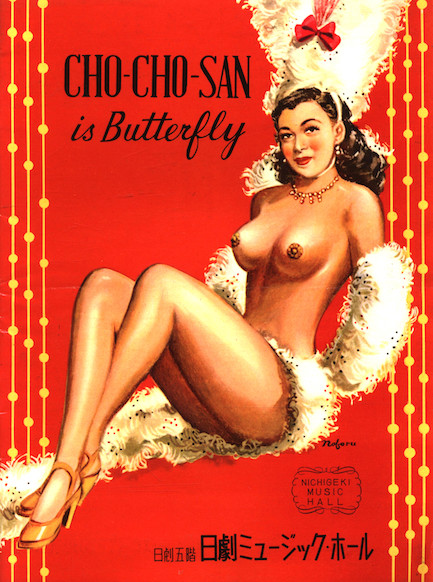
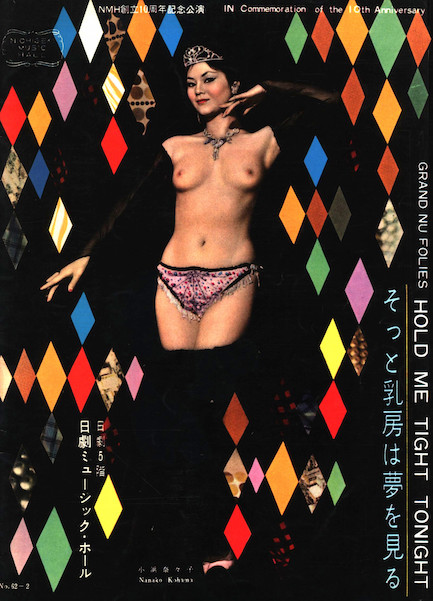
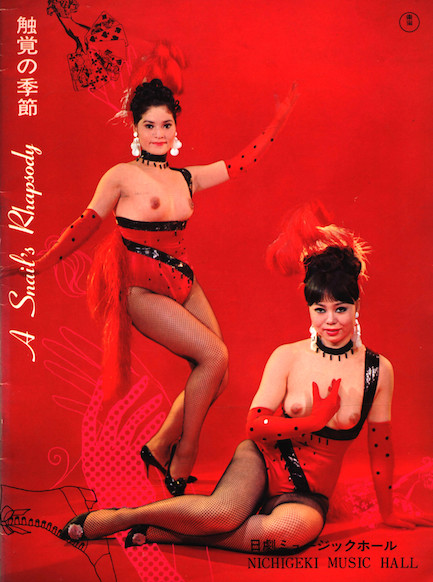
It's been a while since we've done anything extensive on burlesque, so today we have something unique—the covers of Japanese brochures printed during the 1950s and 1960s to promote the famed burlesque show at Nichigeki Music Hall in Tokyo. The building that hosted those shows—the Nichigeki Theatre, below—was an architectural wonder located in Yurakucho district near Ginza. The multi-level structure welcomed music acts as well as burlesque, and had its concert stage graced by Ella Fitzgerald, Gene Krupa, and Oscar Peterson. But it is remembered, first and foremost, for its fifth floor burlesque hall.
Nichigeki Music Hall's burlesque shows began during Tokyo's grim postwar years in March 1952. It showcased both local dancers and foreign stars, often from the Folies Bergère. The program changed often, and always had evocative names like “Devil Vamp Missile Glamours” or “Aqua Girls Bottom-Up Mambo.” The clientele at these shows was international—largely U.S. soldiers from Japan's occupying forces, and tourists. Indeed the Hall advertised specifically to attract that crowd. Interestingly, the shows were produced by Toho Company, the movie studio behind the Godzilla franchise, as well as quite a few softcore movies.
Frontal nudity in entertainment was illegal in Japan, so Nichigeki's extravaganzas featured feather boas, fans, frilled mini skirts, g-strings, and the like, all designed to dazzle the audience and obscure the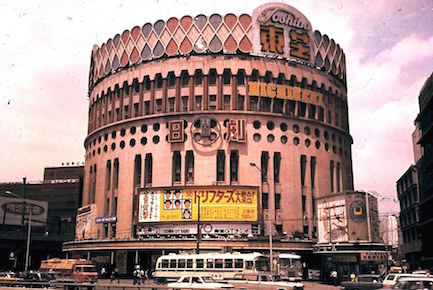 dancers' naughty bits. As time went by public tastes veered toward the explicit and attendance at the Hall began to decline. It closed in 1981 and the brilliant art deco influenced building was demolished, another sad architectural loss on a list so long it's pointless to even contemplate it. dancers' naughty bits. As time went by public tastes veered toward the explicit and attendance at the Hall began to decline. It closed in 1981 and the brilliant art deco influenced building was demolished, another sad architectural loss on a list so long it's pointless to even contemplate it. But at least the brochures survive. They're amazing, front and rear, as you'll see below, with a mix of stunning paintings by Noboru Ochiai, and lovely photos. Make sure you note the titles of the shows. Our favorite: “The Lady was a Stallion,” but “A Snail's Rhapsody” is good too. On a related note, you may want to check out the post we did on archetecturally significant cinemas. You'll see some real beauties there, including another shot of the Nichigeki Theatre. We'll get back to Nichgeki Music Hall's amazing brochures a bit later.

|
 |
The headlines that mattered yesteryear.
1967—First Space Program Casualty Occurs
Soviet cosmonaut Vladimir Komarov dies in Soyuz 1 when, during re-entry into Earth's atmosphere after more than ten successful orbits, the capsule's main parachute fails to deploy properly, and the backup chute becomes entangled in the first. The capsule's descent is slowed, but it still hits the ground at about 90 mph, at which point it bursts into flames. Komarov is the first human to die during a space mission. 1986—Otto Preminger Dies
Austro–Hungarian film director Otto Preminger, who directed such eternal classics as Laura, Anatomy of a Murder, Carmen Jones, The Man with the Golden Arm, and Stalag 17, and for his efforts earned a star on Hollywood's Walk of Fame, dies in New York City, aged 80, from cancer and Alzheimer's disease. 1998—James Earl Ray Dies
The convicted assassin of American civil rights leader Martin Luther King, Jr., petty criminal James Earl Ray, dies in prison of hepatitis aged 70, protesting his innocence as he had for decades. Members of the King family who supported Ray's fight to clear his name believed the U.S. Government had been involved in Dr. King's killing, but with Ray's death such questions became moot. 1912—Pravda Is Founded
The newspaper Pravda, or Truth, known as the voice of the Communist Party of the Soviet Union, begins publication in Saint Petersburg. It is one of the country's leading newspapers until 1991, when it is closed down by decree of then-President Boris Yeltsin. A number of other Pravdas appear afterward, including an internet site and a tabloid. 1983—Hitler's Diaries Found
The German magazine Der Stern claims that Adolf Hitler's diaries had been found in wreckage in East Germany. The magazine had paid 10 million German marks for the sixty small books, plus a volume about Rudolf Hess's flight to the United Kingdom, covering the period from 1932 to 1945. But the diaries are subsequently revealed to be fakes written by Konrad Kujau, a notorious Stuttgart forger. Both he and Stern journalist Gerd Heidemann go to trial in 1985 and are each sentenced to 42 months in prison.
|

|
|
It's easy. We have an uploader that makes it a snap. Use it to submit your art, text, header, and subhead. Your post can be funny, serious, or anything in between, as long as it's vintage pulp. You'll get a byline and experience the fleeting pride of free authorship. We'll edit your post for typos, but the rest is up to you. Click here to give us your best shot.
|
|