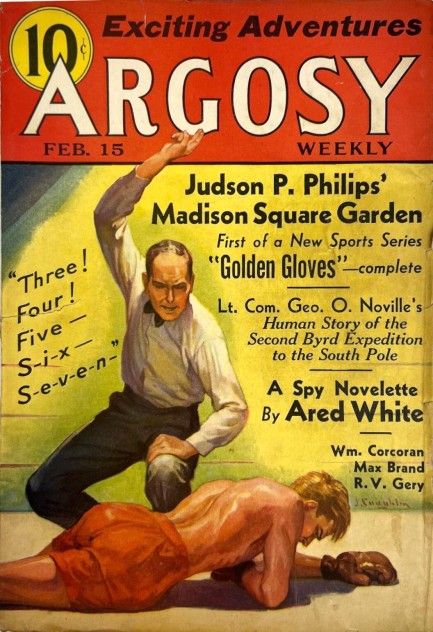
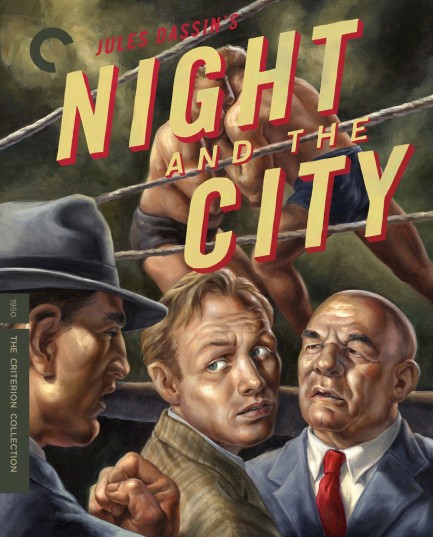
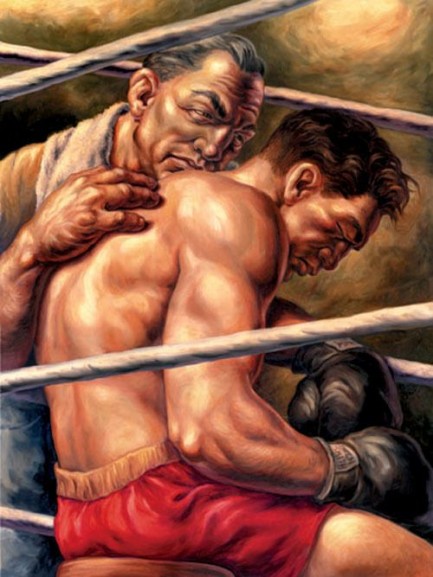
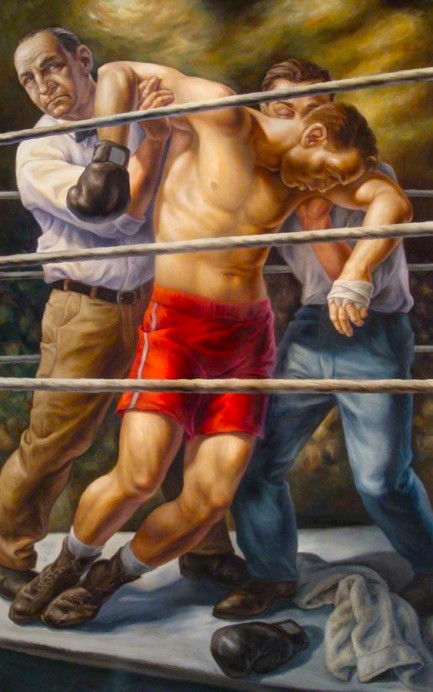
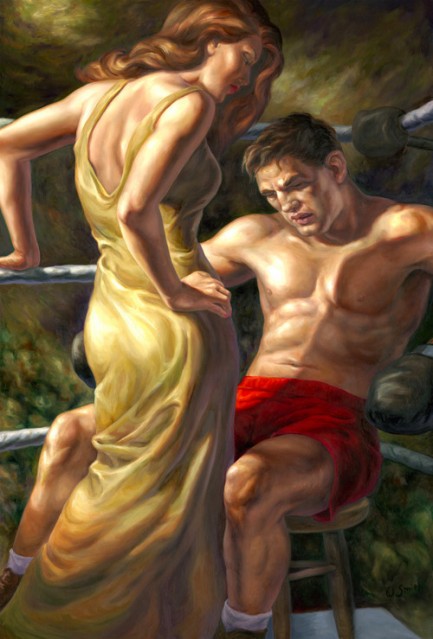
Eight! Nine! Nine and a half! Nine and five-eighths! Get up! I'm bought off but I can't be obvious! You think I'm a Supreme Court justice or something? 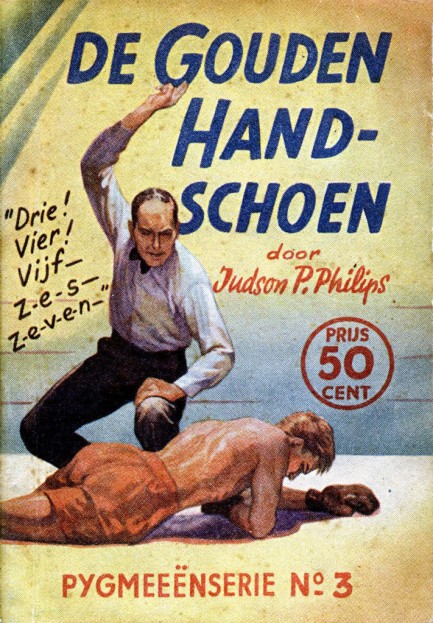
This Dutch paperback cover was painted by an unknown, but we love it. It fronts Judson P. Philips' De gouden handscheon. “Handschoen” is a pretty easy translation if you think literally—handshoe. But what the hell is a handshoe? *checking internet* In Dutch it means “glove.” Makes perfect sense. What do they call a condom? *checking internet* Sadly, it isn't “dickshoe.” Anyway, Philips was a pseudonym for Hugh Pentecost, and this was published by Uitgeverij de Combinatie in 1948.
Update: Same day update, actually, which should give you an idea how much time we spend poking around for information. Turns out the above cover was adapted from a 1936 issue of the pulp magazine Argosy. The art is signed by John A. Coughlin. Also note that Judson P. Philips has a story in the issue. That leads to the reasonable conclusion that De gouden handschoen is a Dutch translation of that story typeset to paperback length.
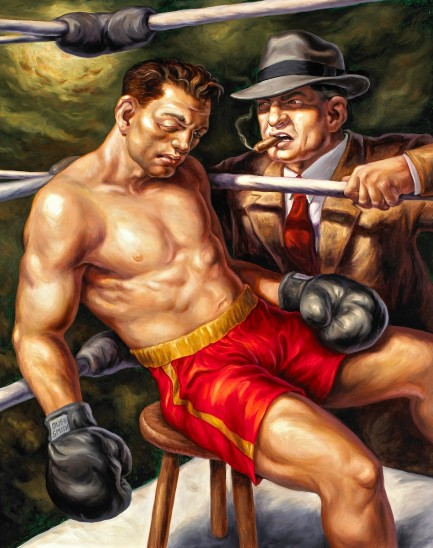
 Baby, stay down! I put a hundred bucks on the other guy! 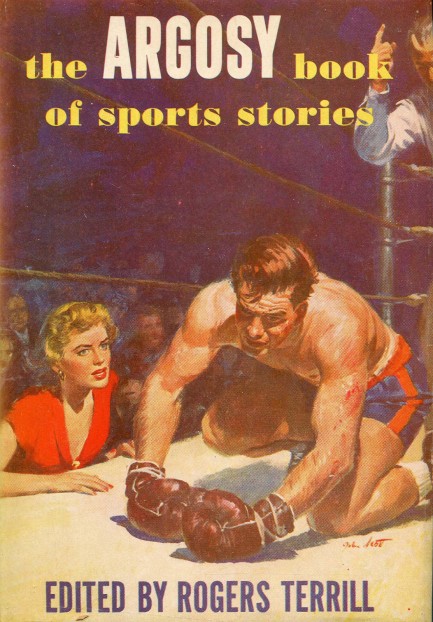
Argosy magazine, the first of the pulps, running from 1882 to 1978, occasionally compiled its sports related short stories into a long format publication, and you see an example here—The Argosy Book of Sports Stories. This edition with cover art by John Walter Scott was published in 1953 with stories from Virgil Scott, William Campbell Gault, William Holder, Stewart Sterling, Scott Young, and others. We stopped highlighting Argosy long ago because it has little visual content aside from the covers, but we discussed it several times, and you can those posts here, here, here, and here.
 I'd have sex for free, but that would be irresponsible from a business perspective. 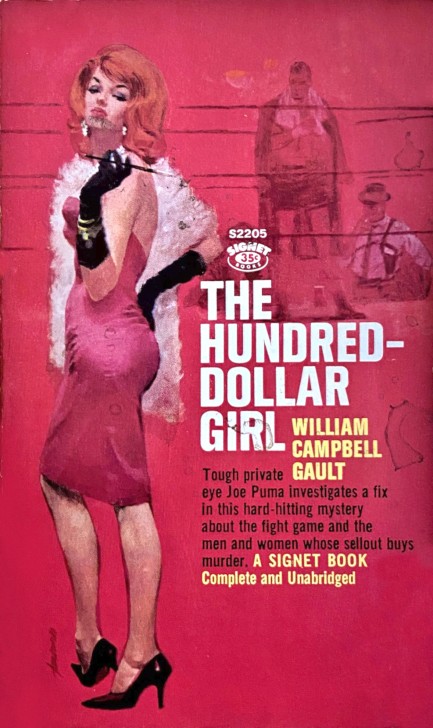
The 1962 Signet paperback of The Hundred-Dollar Girl has striking cover art by Jerry Allison, whose nice work we've seen before here, here, and here. William Campbell Gault's tale sees L.A. private dick Joe Puma investigating whether a boxing match was fixed, then finding himself in the middle of murder and an organized crime takeover of the fight racket. This is the second Puma we've read, and as with the previous book, he gets laid a couple of times, gets ko'd a couple of times, and beats up a couple of guys. All this is fine, but we haven't yet read the Gault novel that makes us sit up and go, "Ahh!" Certainly though, he's been good enough to make looking for that special book a pursuit we expect to pay off. We'll keep looking. In the meantime, if you want an L.A. crime read, you can do worse than The Hundred-Dollar Girl.
 I see a tiny island! If we make it there we can recite captions from classic castaway cartoons until we're rescued! 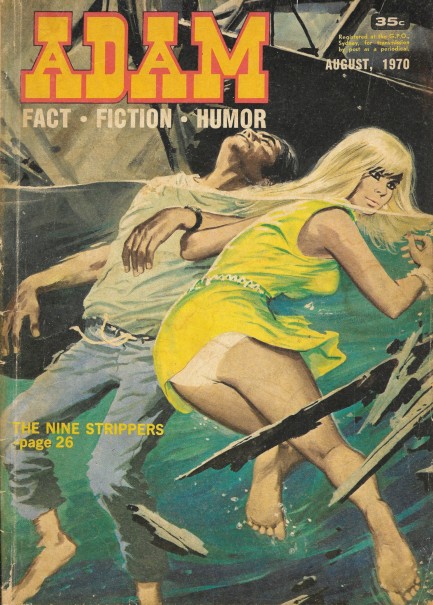
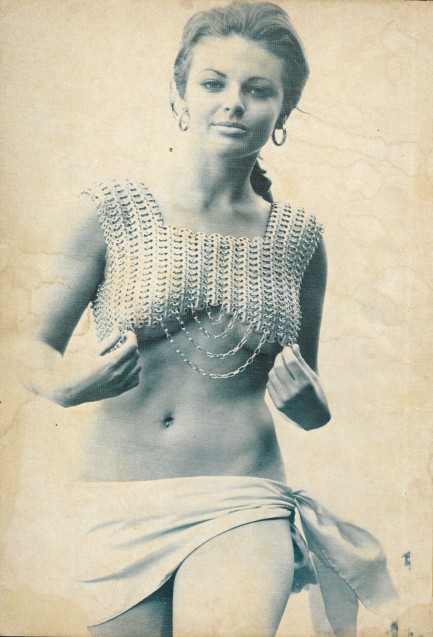
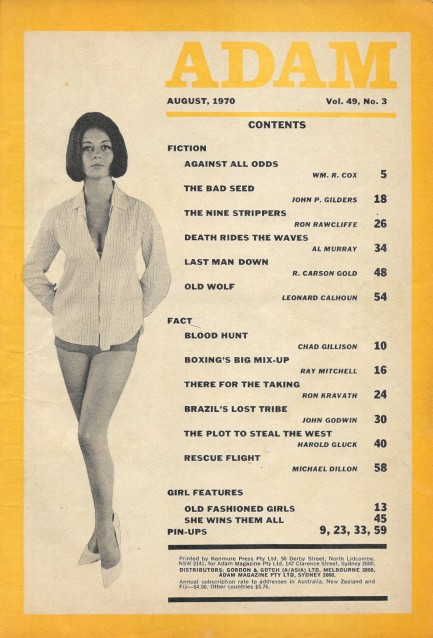
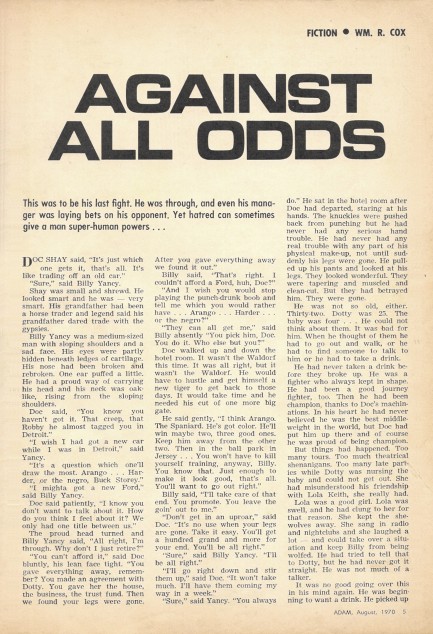
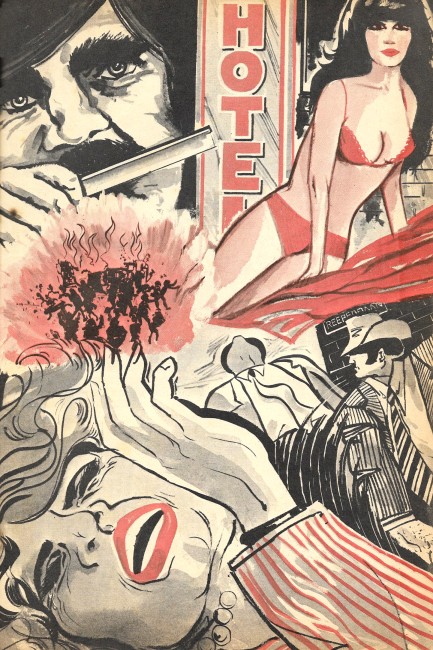
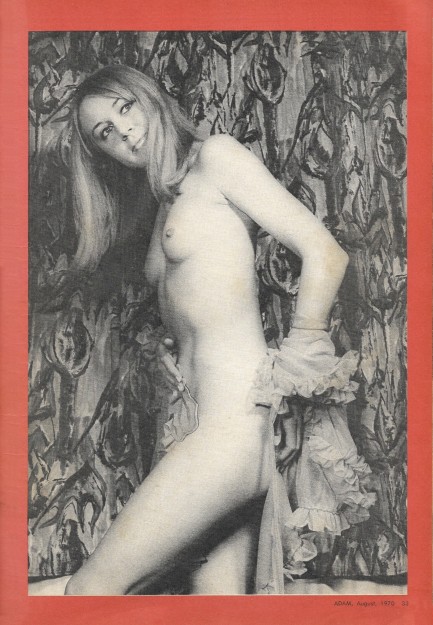
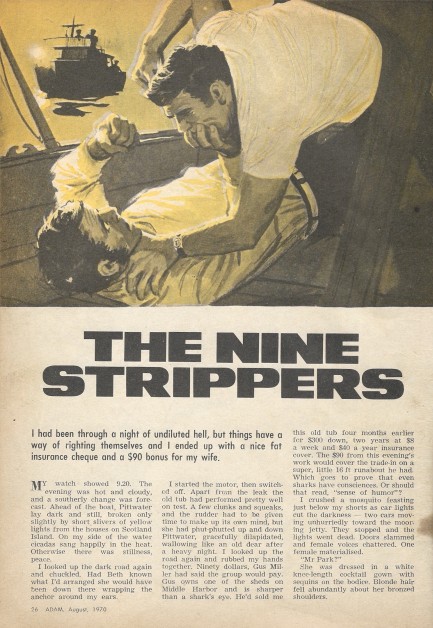
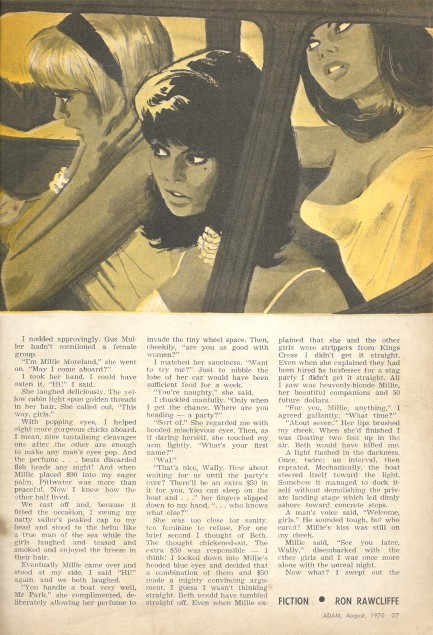
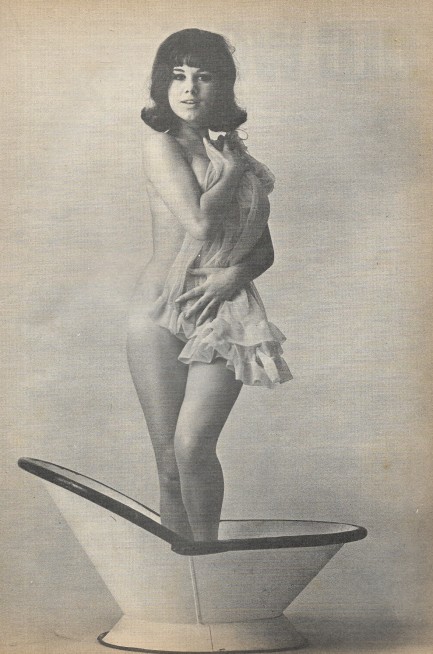
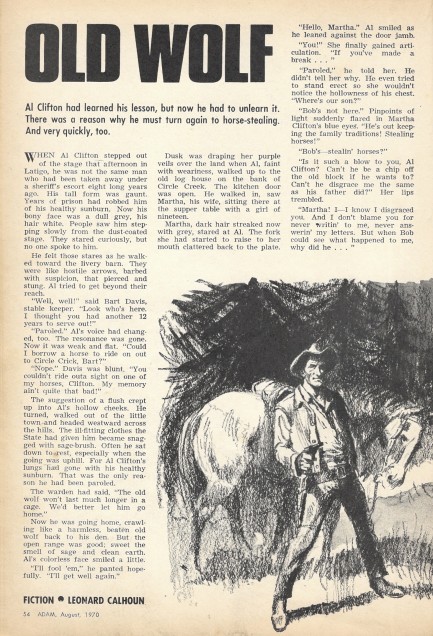
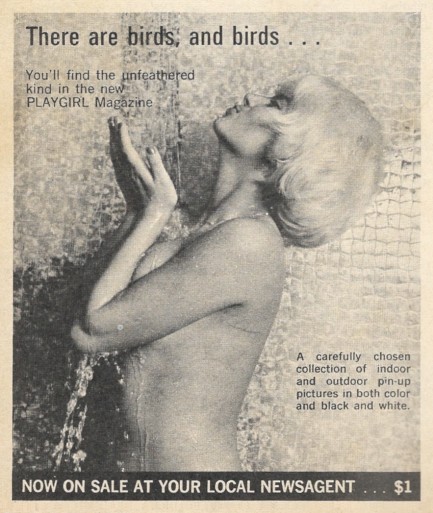
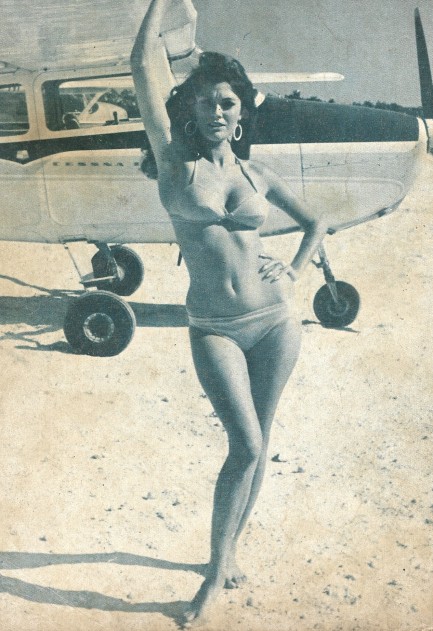
We have another issue of Adam today, with a fun cover illustrating Ron Rawcliffe's story, “The Nine Strippers.” Obviously, with a title like that we had to read it, and it deals with a charter boat captain hired to take nine exotic entertainers upriver into the wilderness under mysterious circumstances, and it turns out they've been hired by an organized crime cabal. When the gathering is raided by federal police the captain must escape intact with bullets flying, strippers fleeing, and mafiosi trying to hijack his boat. Also in this issue of Adam you get fiction by Leonard Calhoun and John P. Gilders, plus a bit of boxing and a lot of models, including German born Israeli actress Helena Ronée just below, and French actress Catherine Rouvel in the feature "She Wins Them All." And circling back to the cover and its two potential castaways, look forward to this: we have another set of castaway cartoons coming up.
     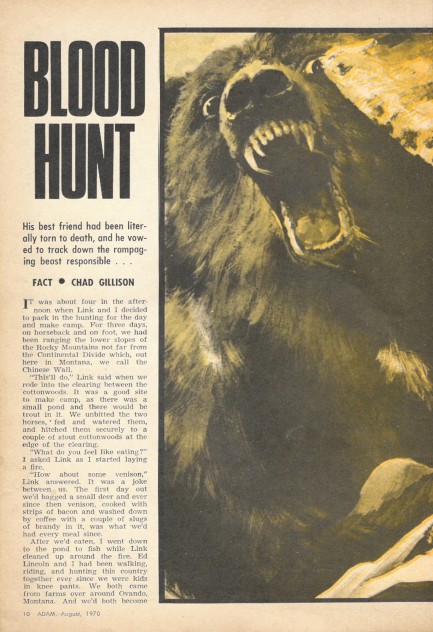     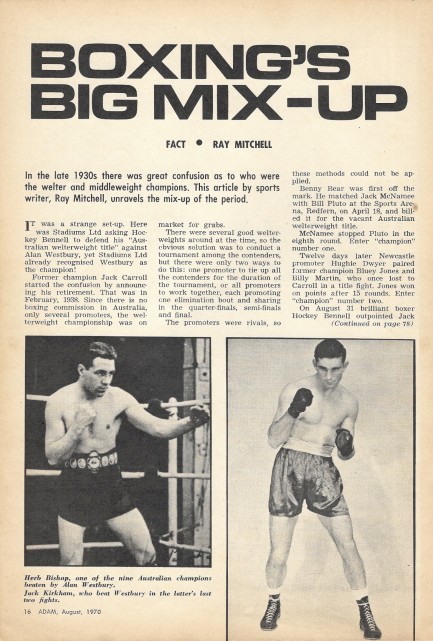 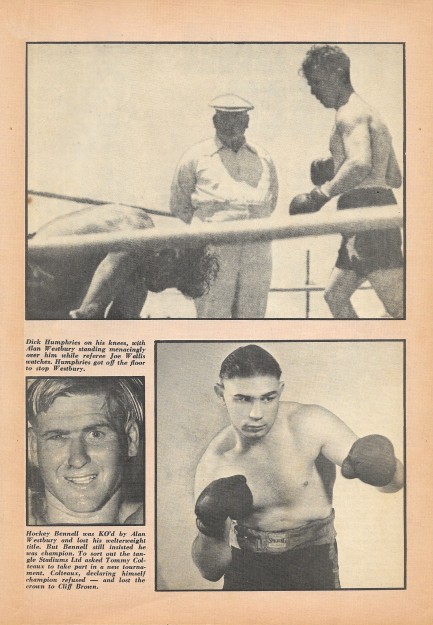 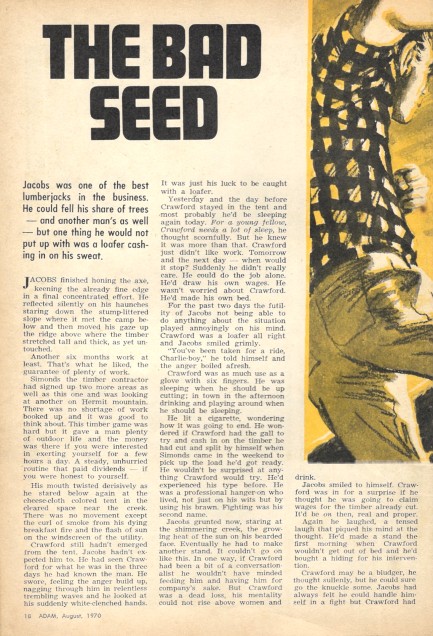 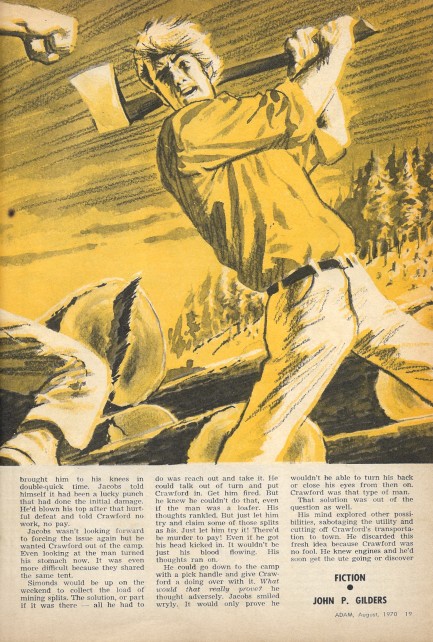 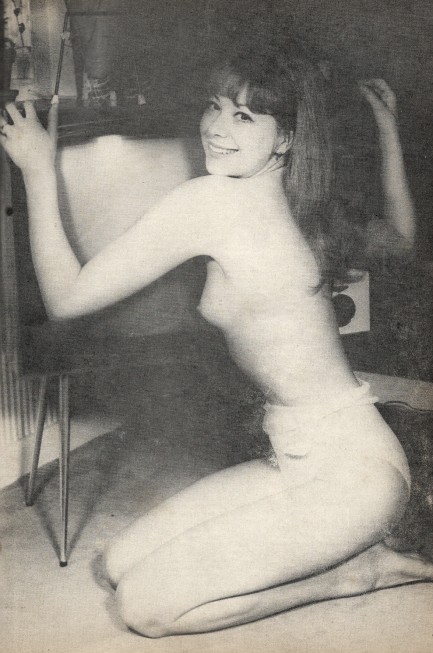 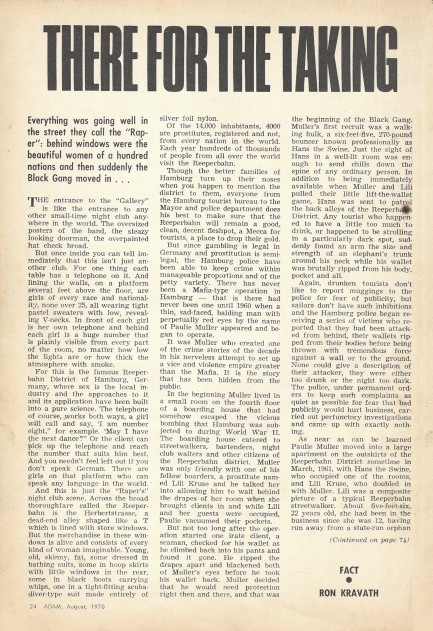     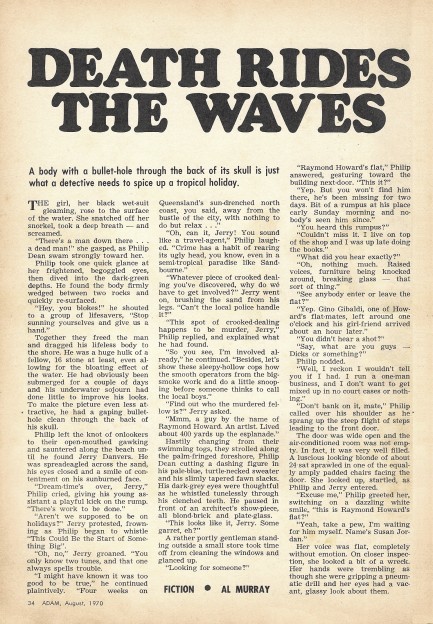 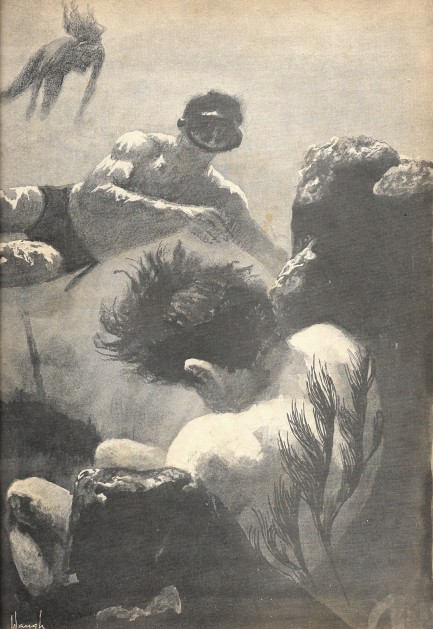 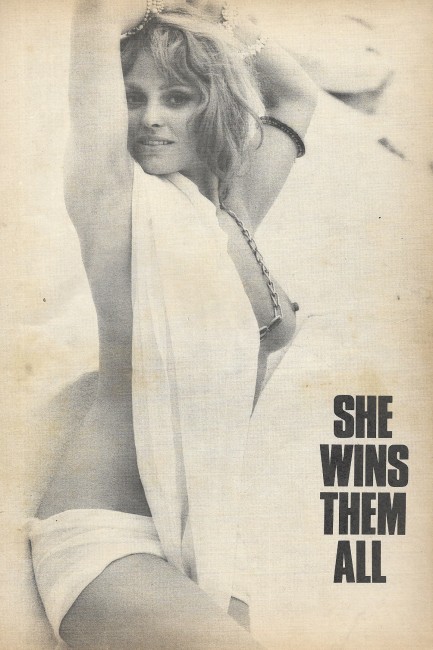 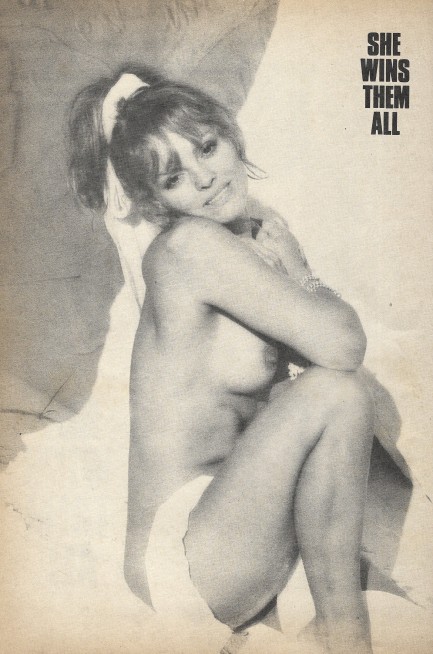          
 Hmm... not bad. Of course, the real test of strength is whether someone goes down when I bust them in the mouth. 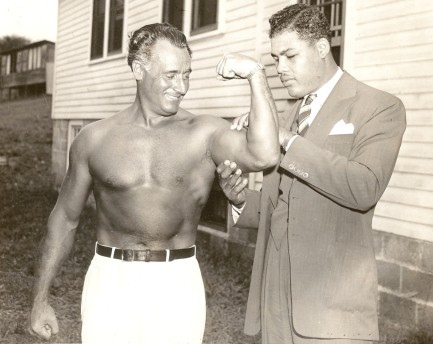
Two titans of U.S. culture meet in this photo showing boxing champ Joe Louis examining the muscles of strongman Charles Atlas (née Angelo Siciliano) at Madame Bey's, a New Jersey camp for professional boxers. While Louis and Atlas are legends in their fields, Bey was an interesting personality too, though now mostly forgotten. Her camp was used by top rank boxers who needed to train for upcoming fights, and because the rules banned alcohol, swearing, women, etc., it was considered an ideal place to hone skills while shutting out distractions. The photo was made in 1938.
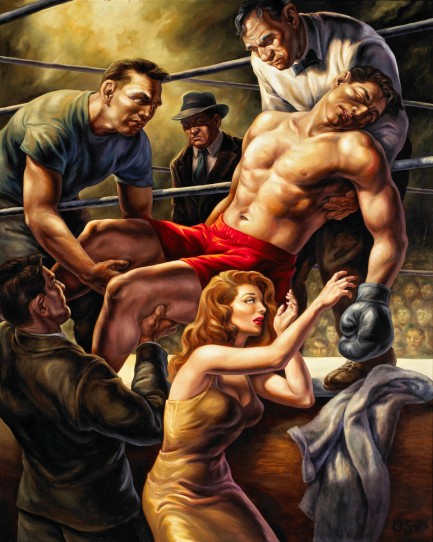
 Honey! Oh no! There goes your undefeated record! And in your very first fight! 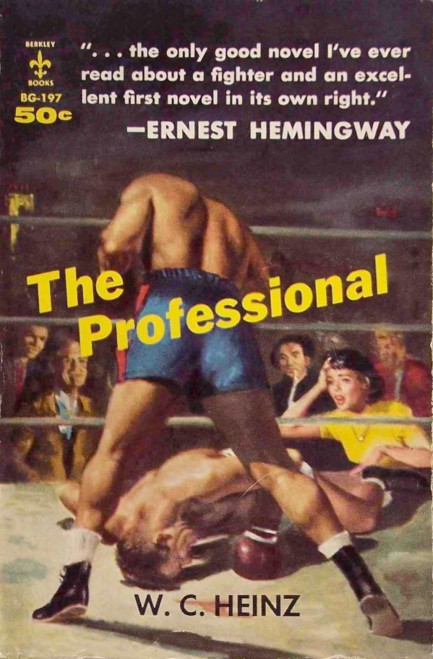
This 1959 Berkley Books edition of the 1958 W.C. Heinz boxing novel The Professional has excellent Robert Maguire cover art of a boxer on the deck and a distressed woman looking on in horror. You'll also notice Ernest Hemingway's endorsement. Papa's fame led to his stamp of approval being highly coveted. We'd guess we've seen his name used this way on ten covers, but we bet there are more. If you go by the reviews on this book, Heinz deserved all the praise he received for his tale of a middle-weight boxer trying to climb to the top. As an award winning sports writer he knew his stuff, and he collected other accolades to go with his anointment by Hemingway, winning the E. P. Dutton Award for best magazine story of the year five times, and earning the A. J. Liebling Award for boxing writing. Over the decades Heinz had his work reprinted in dozens of anthologies and textbooks, so if you're into sports journalism he's one of the main dudes. We have a fair number of boxing covers in our website, and they tend to be amusing if you look at them just the right way. We won't link to them all, but if you want to see some good examples try here, here, here, here, here, and here.
 For every job there's a perfect tool. 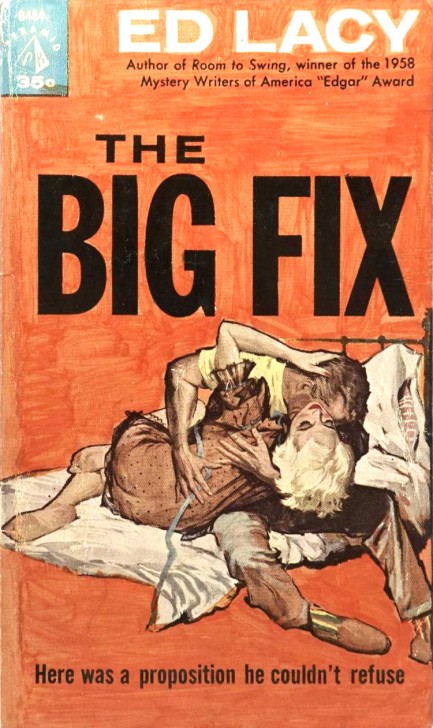
In Ed Lacy's 1961 boxing drama The Big Fix, the fix is defnitely in, and in the worst way possible. Tommy Cork, a thirty-something middleweight boxer who in his prime battled Sugar Ray Robinson, becomes the pet project of a dilletante boxing manager who promises that with the best training, diet, and promotion Cork can reach the top again. Sounds good, but Tommy has unwittingly become the focus of a deadly scam, a plan to find some desperate boxer with a reputation for ugly losses, make a show of training him for high profile bouts, all the while taking out a life insurance policy on him, then having a hammerfisted accomplice kill him in the ring. Since the murder will happen before a crowd, there will be no suspicion of foul play, particularly for a pug known for fighting stubbornly and hitting the canvas hard.
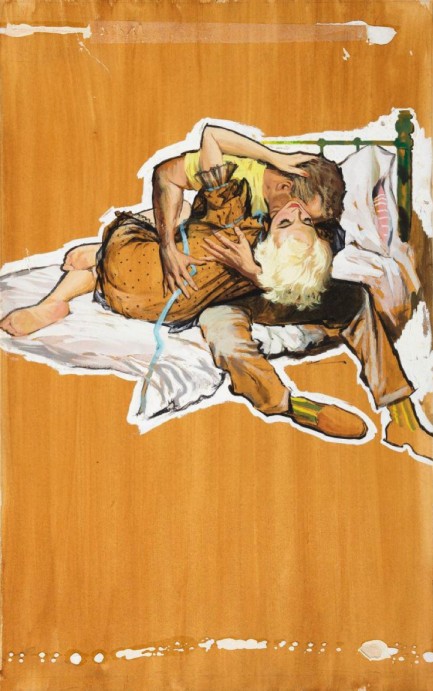
But nothing is straightforward in Lacy's hands. Tommy's wife May, hopeful for a better life, gets into trouble with violent numbers runners, an aspiring writer sees the couple as the perfect pathetic characters to be the focus of a novel, an ex-boxer cop starts to get wise to the murder scheme, and other twists come from nowhere to infinitely complicate the tale. Despite the subplots, as readers you know the only fitting climax is one that takes place in the ring, and Lacy pushes the story inexorably toward that showdown, hapless Tommy facing off against a man who plans to kill him with a relentless assault, or if possible a single blow. If he's going to have help, he'll need to provide it himself. As usual, Lacy tells a good story. He's reliably full of excellent ideas. That also goes for Ernest Chiriacka, who painted the eye-catching cover.
 If a boxer falls when nobody hits him is it still a knockout? 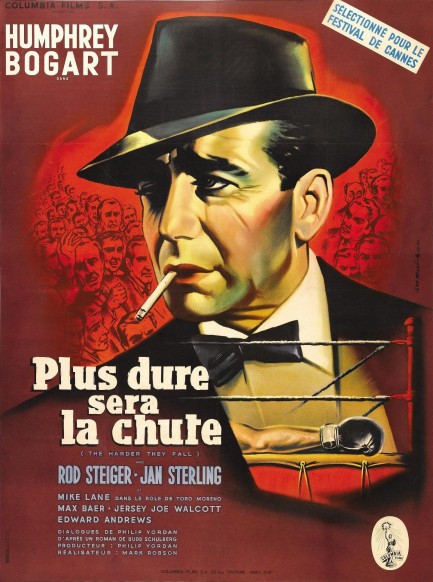
We've been neglecting French promo art lately, so here'a a little something—a poster for Plus dure sera la chute, which is better known as The Harder They Fall. This was painted by Jean Mascii, whose work we last saw several years ago when we talked about the 1960 thriller Plein soleil. We recommend having a look at that to get a better sense of Mascii's skill. He created a very interesting portrait of Humphrey Bogart for this effort. This was Bogart's last movie. He filmed it while gravely ill, having been diagnosed with esophageal cancer, but did his work in legendary style, a true professional, working long hours, shooting retakes, and generally doing all he could to prevent his condition from affecting the production.
Bogart plays a struggling sports writer hired by shady fight promoter Rod Steiger to be the press agent for his new discovery—a gigantic but glass-jawed carnival strongman from Argentina named Toro Moreno. Steiger wants Bogart to sell Toro as the next great heavyweight contender, but in order to do so they need to send him on a bum-of-the-month tour to knock out a series of hapless opponents paid to take dives. After Toro has been built up in the press as the second coming of the heavyweight division, Steiger plans to make a bundle with a match against the champ, played by Max Baer. Bogart signs on for this ride because after all his work in the newspaper business he has nothing, and wants to finally make real money. But it could cost his reputation, and because Toro has no clue the fights he's winning are fixed, the scheme can only end with the poor overconfident dupe slaughtered by the champ.
Steiger would win an Academy Award in 1967 for In The Heat of the Night, and here, more than a decade earlier, you can see that achievement as almost inevitable as you watch him dominate the screen. He's simply great in this, and Bogart gives an excellent performance too, failing physically but soldiering onward, using that world weary mug of his to impart a lifetime's worth of fatigue and disappointment. The movie also features Jan Sterling. We had no idea she'd gone in for rhinoplasty, and at first weren't positive it was her. It is though, and after writing just recently how gorgeous she was we're sad she didn't see her own perfection and instead chose to go under the surgeon's knife. But her body her choice. She's good as always, here playing Bogart's conscience, trying to keep him from sliding down the slippery slope to amorality.
There's another person who should be mentioned—Mike Lane as the lumbering Toro Moreno. This was his debut role, and you'd think there weren't many more parts out there for a guy standing 6'8”, but surprisingly he accumulated almost seventy acting credits, almost all on television, where he appeared in shows of every type, from Gunsmoke to Get Smart. Obviously, any vintage boxing movie involves mimetic acting, and the fighting here isn't realistic—quantum leaps in how to convincingly portray ring scenes came later—but they serve their purpose. And for boxing realists, the movie gets extra credit due to the presence of both Baer and Jersey Joe Walcott. The Harder They Fall opened in March 1956, and had its French premiere today at the 1956 Cannes Film Festival. 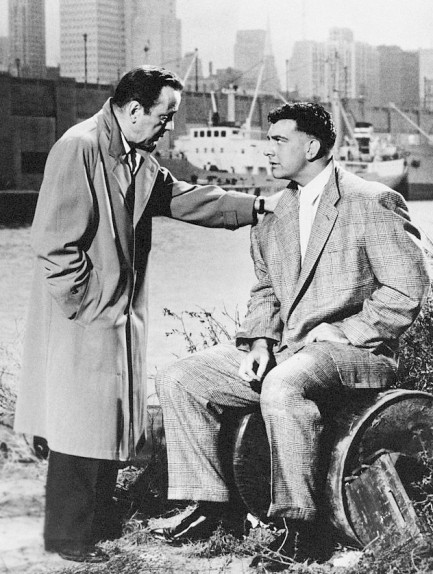 Fine, Toro, you're huge. Massive. Enormous. But you need to learn how to box or the champ is going to crush your face like a graham cracker. Fine, Toro, you're huge. Massive. Enormous. But you need to learn how to box or the champ is going to crush your face like a graham cracker.
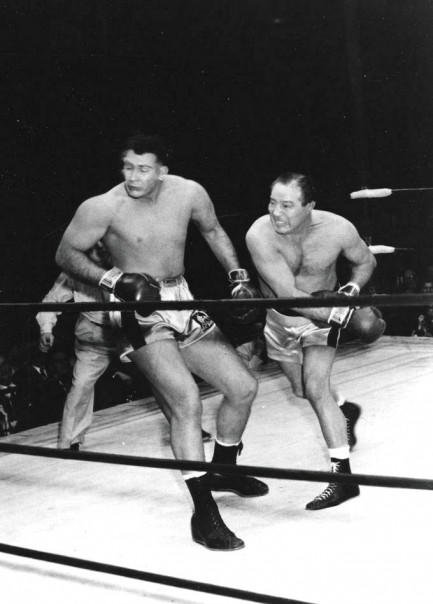 Hi, champ! Before we start, I just want to say I'm probably your biggest admir— Hi, champ! Before we start, I just want to say I'm probably your biggest admir—
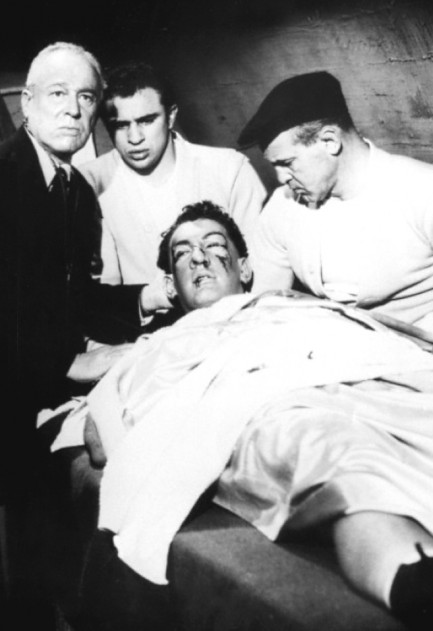 I thought that whole graham cracker speech was just Bogie being colorful. I thought that whole graham cracker speech was just Bogie being colorful.
 If you shoot him, you better make sure he's dead. 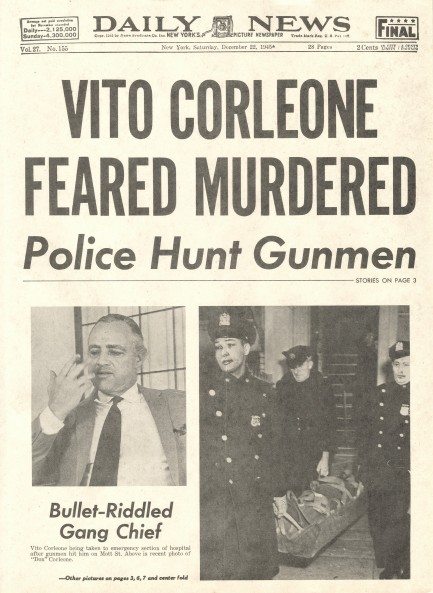
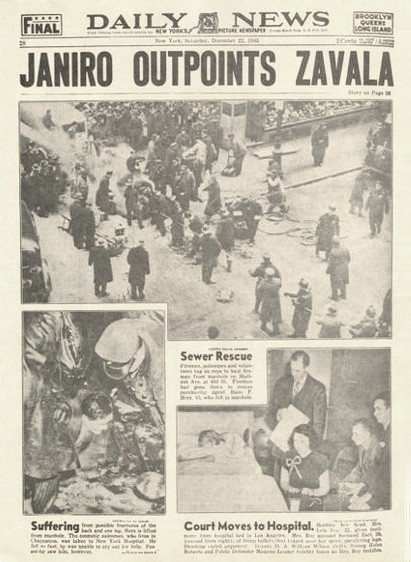 The prop Daily Bugle newspaper we shared a while back from 2002's Spider Man got us thinking about these sorts of items, so we had a look around and found this newspaper made for the 1972 gangster epic The Godfather, which bears a headline about (spoiler alert) Vito Corleone's shooting. The paper is dated today in 1945. Corleone was of course played by Marlon Brando, and it was possibly the crowning achievement of a highly accomplished if occasionally controversial film career. Haven't seen the movie? All we can say is it's in no way overrated. And because realism is key in Hollywood, the paper has a rear cover with a story about boxer Tony Janiro beating Humberto Zavala on points, yesterday in 1945. The prop Daily Bugle newspaper we shared a while back from 2002's Spider Man got us thinking about these sorts of items, so we had a look around and found this newspaper made for the 1972 gangster epic The Godfather, which bears a headline about (spoiler alert) Vito Corleone's shooting. The paper is dated today in 1945. Corleone was of course played by Marlon Brando, and it was possibly the crowning achievement of a highly accomplished if occasionally controversial film career. Haven't seen the movie? All we can say is it's in no way overrated. And because realism is key in Hollywood, the paper has a rear cover with a story about boxer Tony Janiro beating Humberto Zavala on points, yesterday in 1945.

|
 |
The headlines that mattered yesteryear.
1945—Mussolini Is Arrested
Italian dictator Benito Mussolini, his mistress Clara Petacci, and fifteen supporters are arrested by Italian partisans in Dongo, Italy while attempting to escape the region in the wake of the collapse of Mussolini's fascist government. The next day, Mussolini and his mistress are both executed, along with most of the members of their group. Their bodies are then trucked to Milan where they are hung upside down on meathooks from the roof of a gas station, then spat upon and stoned until they are unrecognizable. 1933—The Gestapo Is Formed
The Geheime Staatspolizei, aka Gestapo, the official secret police force of Nazi Germany, is established. It begins under the administration of SS leader Heinrich Himmler in his position as Chief of German Police, but by 1939 is administered by the Reichssicherheitshauptamt, or Reich Main Security Office, and is a feared entity in every corner of Germany and beyond. 1937—Guernica Is Bombed
In Spain during the Spanish Civil War, the Basque town of Guernica is bombed by the German Luftwaffe, resulting in widespread destruction and casualties. The Basque government reports 1,654 people killed, while later research suggests far fewer deaths, but regardless, Guernica is viewed as an example of terror bombing and other countries learn that Nazi Germany is committed to that tactic. The bombing also becomes inspiration for Pablo Picasso, resulting in a protest painting that is not only his most famous work, but one the most important pieces of art ever produced. 1939—Batman Debuts
In Detective Comics #27, DC Comics publishes its second major superhero, Batman, who becomes one of the most popular comic book characters of all time, and then a popular camp television series starring Adam West, and lastly a multi-million dollar movie franchise starring Michael Keaton, then George Clooney, and finally Christian Bale. 1953—Crick and Watson Publish DNA Results
British scientists James D Watson and Francis Crick publish an article detailing their discovery of the existence and structure of deoxyribonucleic acid, or DNA, in Nature magazine. Their findings answer one of the oldest and most fundamental questions of biology, that of how living things reproduce themselves.
|

|
|
It's easy. We have an uploader that makes it a snap. Use it to submit your art, text, header, and subhead. Your post can be funny, serious, or anything in between, as long as it's vintage pulp. You'll get a byline and experience the fleeting pride of free authorship. We'll edit your post for typos, but the rest is up to you. Click here to give us your best shot.
|
|