| Vintage Pulp | Jun 21 2022 |



| Vintage Pulp | Jan 28 2015 |


| Vintage Pulp | Jan 6 2015 |

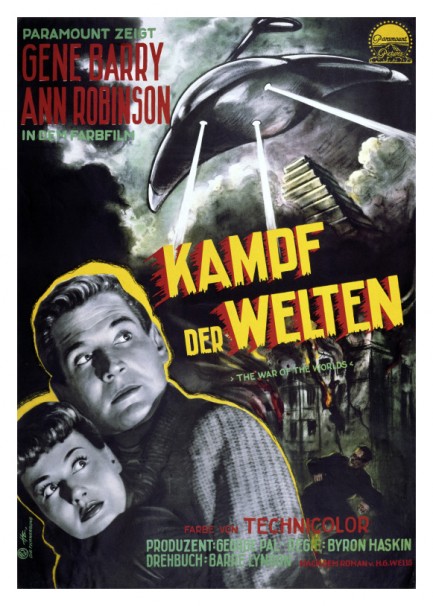
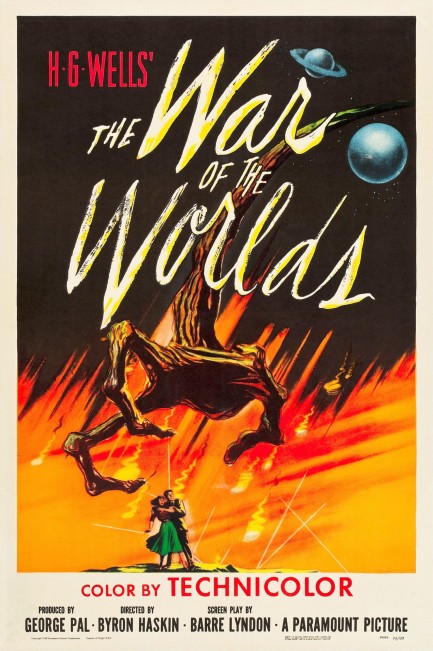
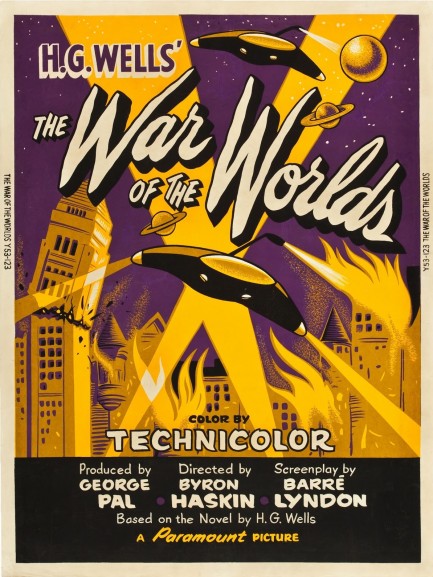
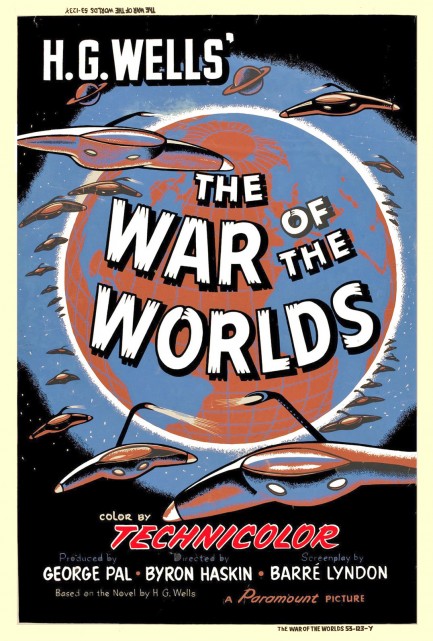
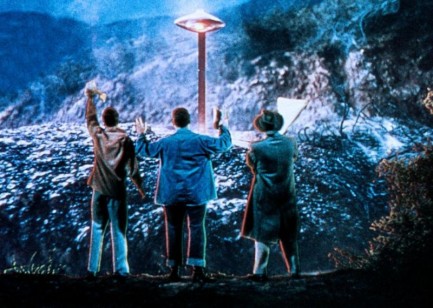
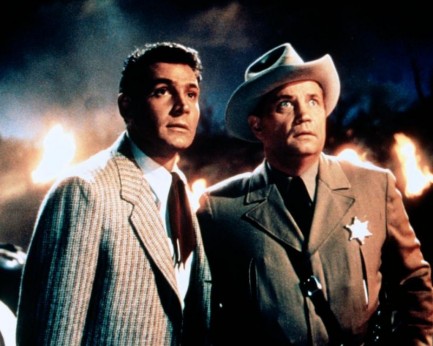
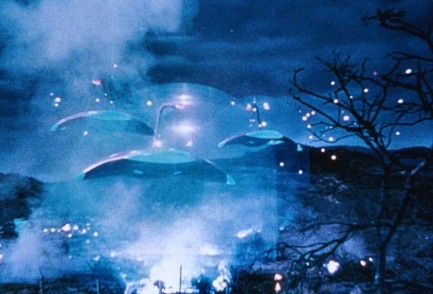
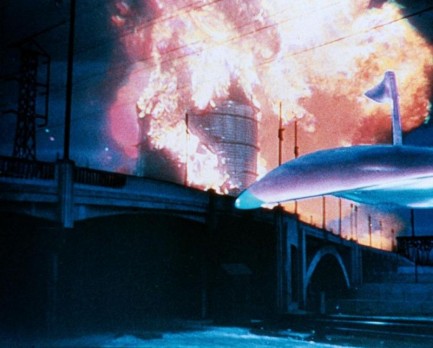
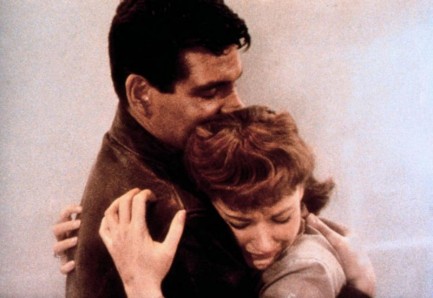
Kampf der Welten is, we’re sure you can guess from the art, the West German title for War of the Worlds. This cinematic adaptation of H.G. Wells’ famous 1897 serial starred Gene Barry and Ann Robinson, and if you haven’t seen it we suggest it’s worth the time, though it’s quite different from the novel. Actually, we recommend the novel too. It’s grimmer than the film, and has a distinct, rationalist point-of-view that was whitewashed for cinema audiences. Actually, not whitewashed—more like inverted to portray the clergy heroically, where in the novel it is characterized by cowardice. Spielberg and Cruise left that out, too, in their 2005 interation, but in other respects their movie is very close to the book. In addition to the German promo, we also have the three English language posters below. War of the Worlds premiered in the U.S. during the summer of 1953, and reached West Germany today in 1954.

| Vintage Pulp | Jun 23 2014 |

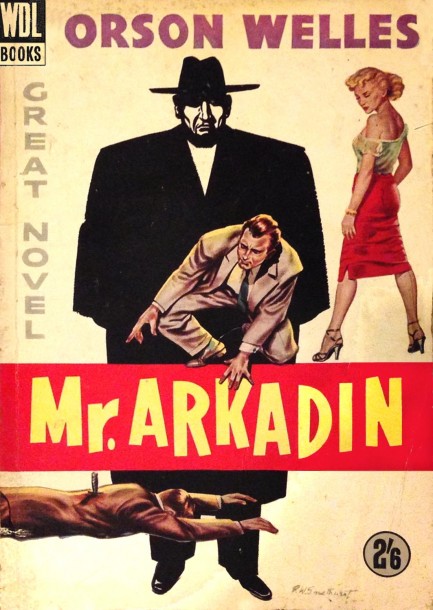
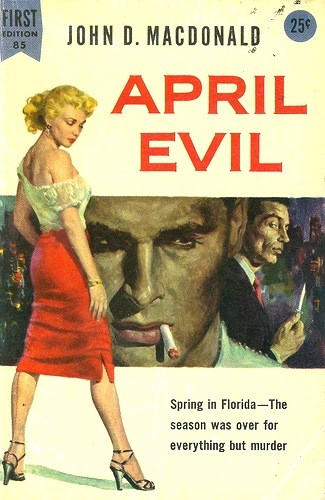
This striking paperback cover for Mr. Arkadin was put together for Britain’s WDL Books by R. W. Smethurst, a well-known illustrator of comic books during the 1950s and 1960s. The Smethurst signature you see is not an autograph, but rather part of the art, something many of his covers contained. But the fact that he claims credit at all is rather interesting, because the art isn’t completely his. He seems to have borrowed his red-skirted femme fatale from Robert Maguire, who painted her for John D. MacDonald’s April Evil, below. It’s quite possible the other figures are borrowed as well. How strange.
 Yet, it’s fitting. Welles was consumed by the question of fakery. His documentary F for Fake discusses the subject in absorbing detail, even focusing on his own work. In short, he suggests that authenticity is a chimerical concept because it is subject to human error and fraud. While Welles slyly avoided explicitly claiming authorship of the Mr. Arkadin novelization, Maurice Bessy’s role, if it was ever widely known, was reconfirmed only in 2007. It’s easy to suspect that Welles knew the role of his ghostwriter would be forgotten. We’re talking about a man, after all, whose career caught fire thanks to one of history’s ultimate fakes—his panic inducing War of the Worlds broadcast.
We’re pretty sure, Smethurst, however, is not actually playing with the concept of fakery. John D. MacDonald was not obscure and neither was artist Robert Maguire, so there was no attempt at theft when Smethurst painted a close duplicate of Maguire’s femme (or excised it whole). His cover falls into the category of pastiche—work in the style of another. What we’d really enjoy is if someone out there identified the other figures on the cover. But if those are Smethurst’s that would prove interesting too. In the meantime, if you want to know about Welles’ F for Fake and learn more about his attitudes toward authenticity, go here.

| Hollywoodland | Oct 30 2009 |

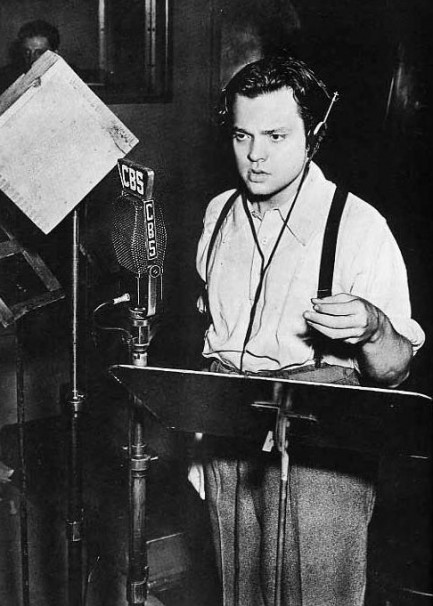
Today in 1938, Orson Welles vaulted into stardom by narrating his famous radio presentation of H.G. Wells’ The War of the Worlds. In adapting the novel, which concerns an invasion by malevolent Martians bent on the total destruction of humanity, Welles decided to use fictional news bulletins to describe the action. These were presented without commercial breaks, leaving listeners to decide whether the familiar sounding news flashes were truthful. Since a radio show had never used the news flash for dramatic purposes, many people were confused. The public reaction was described at the time as a panic, but historians now dispute that claim, suggesting that newspapers embellished the stories to make radio look bad. At the time print media feared radio would put them out of business, so they took advantage of an opportunity to deride radio broadcasters as irresponsible.
Newspaper embellishments notwithstanding, there is no doubt the broadcast caused widespread anxiety. Only the first forty minutes of the show were in bulletin format—after that it would have been clear to listeners they were hearing a dramatization. But not everyone listened to the full hour. In the tense atmosphere that had been created by the lead-up to World War II, many people assumed they were listening to a broadcast about attacking Germans, rather than Martians. Some people left their homes, either to confirm events with neighbors, or to try and see the invaders for themselves. A crowd gathered in Grover’s Mills, New Jersey, where the attack was reported have begun. If there was indeed a panic, it subsided quickly when it became clear there were no invaders. In the end there was only one long-lasting effect from the broadcast—Orson Welles, who had been just another radio personality, became the most famous man in America.

| Vintage Pulp | Swindles & Scams | Mar 12 2009 |

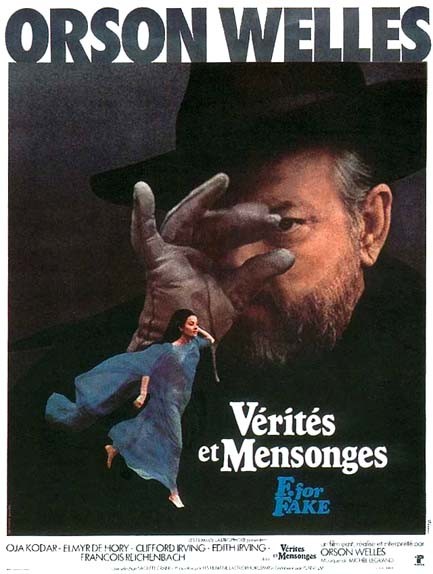
Orson Welles’ Vérités et mensonges, aka F for Fake is a documentary meditation on the nature of fraud, forgery and lies that slowly expands to discuss the fragility and impermanence of all human creations. Shot in France and Spain, the film follows two main subjects—Clifford Irving, who infamously wrote a fake biography of Howard Hughes, and master art forger Elmyr de Hory. At the time of filming Irving had served jail time for his crimes, but de Hory was living on Ibiza, safe from prosecution because the many museums that owned his forgeries feared the scandals sure to result if the works were exposed as false.
De Hory’s fake paintings would never have been bought by museums if art experts hadn’t declared them legitimate. The experts were unwitting accomplices to his crimes. Clifford Irving’s fate was likewise determined by experts. He admitted his Howard Hughes biography was phony after Hughes released an audiotape claiming the two had never met, but since Hughes was a recluse who hadn’t been seen for years, how did anyone know it was really him speaking? You guessed it—a panel of experts, i.e. people who had met him, listened to the tapes and agreed the voice was his. But if art experts can’t be relied upon to determine real paintings from fake, how can a bunch of self-described Hughes experts be trusted to verify a voice on a tape? What would have happened if Irving had never confessed? Would the faker have joined the ranks of the legitimate, enshrined there for eternity? And ultimately, when everything of value hangs by such a fragile thread, does any of it have true worth?
Interesting questions, and Welles doesn’t exempt his own field from examination. He discusses his War of the Worlds broadcast, along with the fakery of acting in general. He even makes Vérités et mensonges a bit of a fake by adding sequences from a movie shot by a different director, and constantly dispelling the illusion of filmmaking by showing camera men and sound techs. It’s easy to imagine that Welles, were he alive today, would have been intrigued by the current economic crisis, and the roles played by financial regulators in the U.S. who falsely labeled billions in dodgy investment packages as safe for purchase. These men were either experts without expertise, or forgers with the power to declare their forgeries genuine. Welles probably would have loved that.
Vérités et mensonges was slammed upon release but, as often happens, the art has outlasted its detractors and now most film mavens hail it as a triumph. This too fits perfectly with Welles’ thesis. The works of humans are certain to outlast their creators and critics, but in the end all must—as he says—“fall in war, or wear away into the ultimate and universal ash.” Not very upbeat. But he also tells us, “Our songs will all be silenced, but what of it? Go on singing.” That's a sentiment we can get behind. Vérités et mensonges opened in France today in 1975.