MGM's fantasy version of Africa goes swinging into northern Europe. 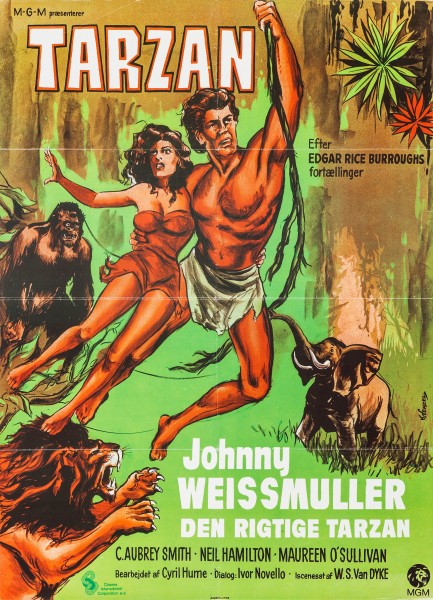
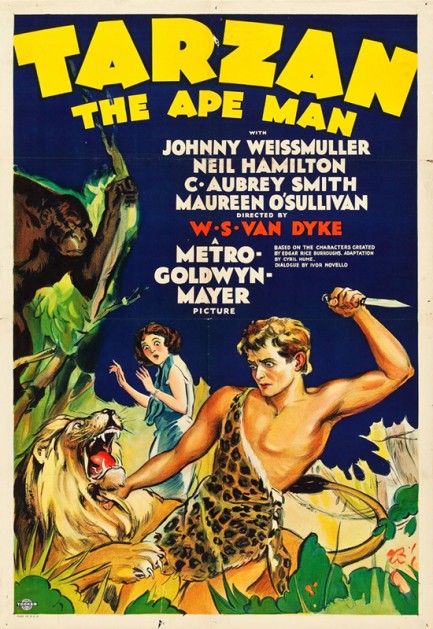
From up Scandinavia way comes this colorful borderless Danish poster for Tarzan the Ape Man, which starred Johnny Weissmuller and Maureen O'Sullivan. It was called simply Tarzan in Denmark, though Danes who've since seen it on DVD know it as Abemanden Tarzan. This was painted by Kurt Wenzel, whose signature you can see at the righthand margin, and who also painted well known posters for The Flying Tigers, The Killers, and The Searchers. We saw Tarzan for the first time last year and enjoyed it despite its flaws. We enjoyed the sequel too, equally flawed. Shorter version: watch it only with your historical accuracy and outrage filters turned off. After opening in the U.S. in March 1932, Tarzan premiered in Denmark today the same year.
 They may not have much but at least they're free. 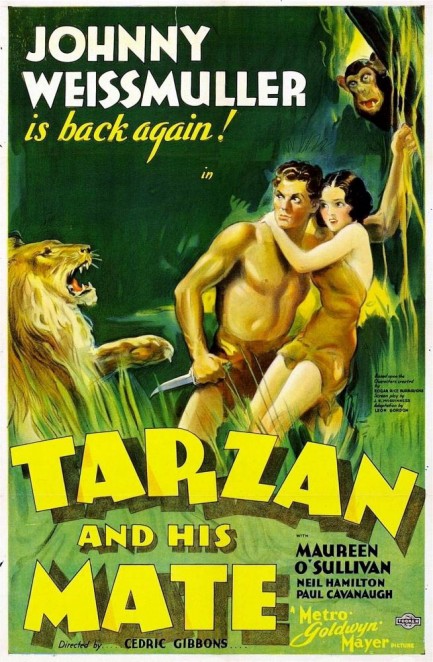
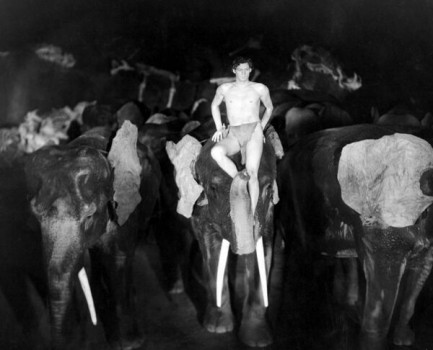
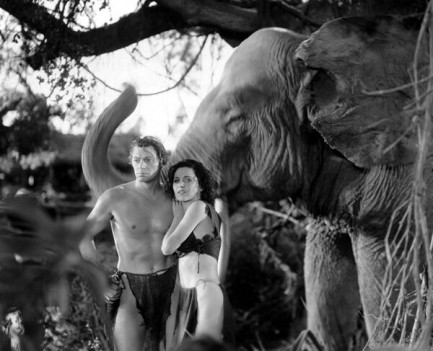
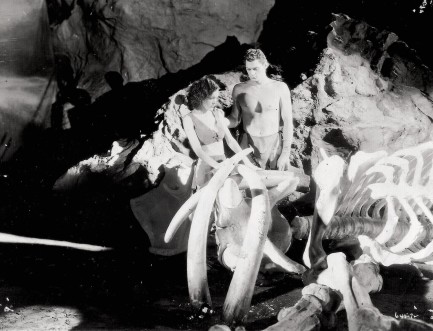
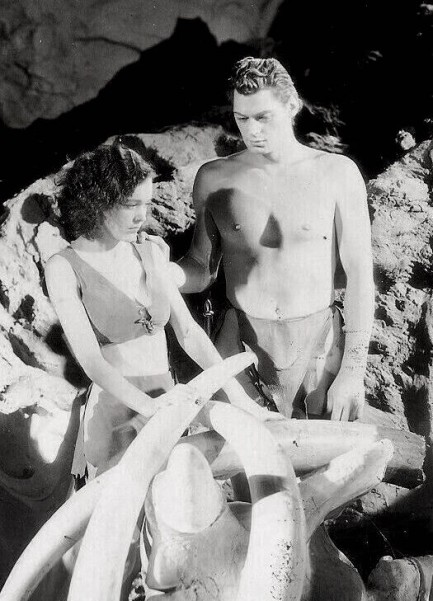
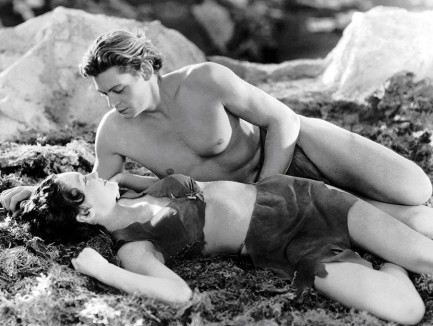
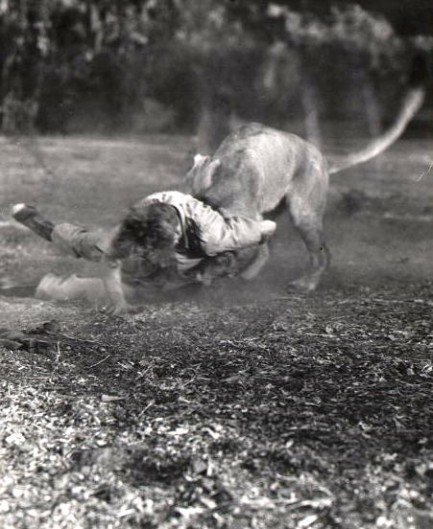
Like the poster says, Johnny Weissmuller is back again. When we last saw him as Tarzan, earlier this month, he and love interest Maureen O'Sullivan had swung away into the African trees together. But her British friends were always going to return, and sure enough Neil Hamilton and company are back to get their mitts on that legendary cache of elephant ivory. You know the drill. Hamilton and Paul Cavanaugh seek the unobtanium. The jungle comes alive with lethal dangers. Bearers sacrifice their lives to keep the bosses safe. Meanwhile Tarzan and Jane deal with their own cavalcade of jungle horrors—first a lion, then a rhino, then a leopard, then a crocodile, then a lion. We don't have to detail it. What's fascinating is not the action, but the erotic subtext.
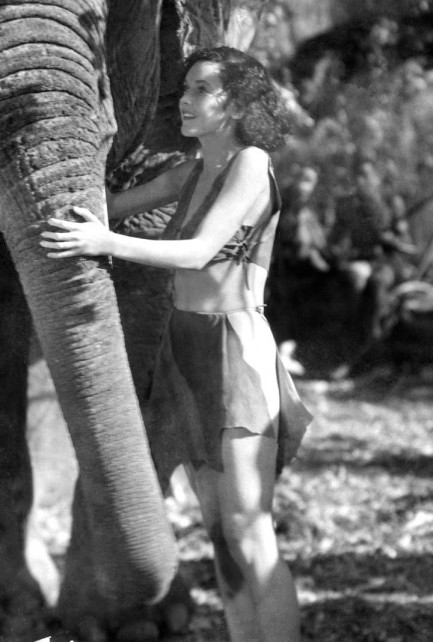
This flick oozes sex. O'Sullivan's role has evolved. She's no plain Jane. She's a fantasy of the perfect woman here, the perfect lover. Her character is—in a word—devastating. Her humor, cuteness, and coquettishness are off the charts. She wears less than ever. Her body double Josephine McKim wears nothing, or at most a patch over her pubic area. But audiences who saw the full cut thought it was a bare-assed O'Sullivan. All of this is designed to make her irresistible not only to the male audience, but to Cavanaugh, who goes after her with the charmless persistence of a high school sophomore. Dare we say this is a dangerous game when dealing with the King of the Jungle?
Of course, all the flaws we cited with Tarzan the Ape Man are recurrent here. Once again African bearers are whipped through the jungle, across dangerous rivers, and up that same deadly escarpment from installment one. At which point Cavanaugh says, “Well, I hope we've got the worst behind us.” No, not even. Tarzan and His Mate is not a good look, and what it stylizes—not big men in a big land, but the rape of Africa—is uglier still. But it's up to each viewer to decide whether to watch it, and if so, whether to decide it's simply entertainment, or to compartmentalize its implications, or maybe to use it as a launching point for further thought and discussion. Tarzan and His Mate premiered in the U.S. today in 1934.
 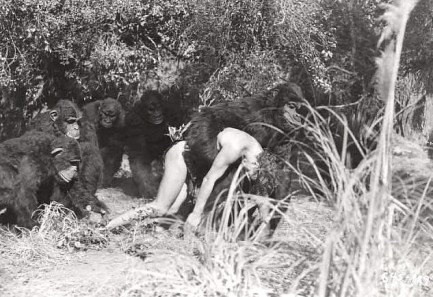 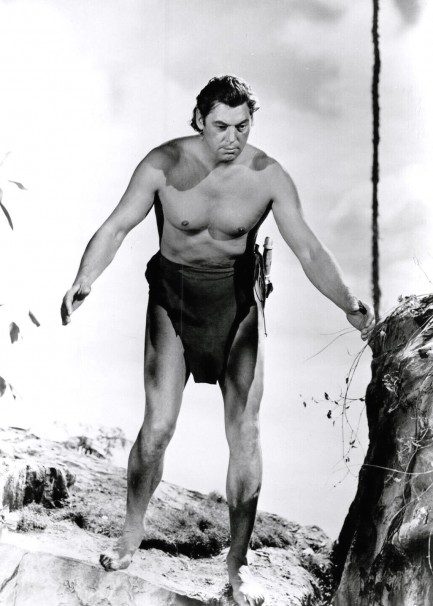 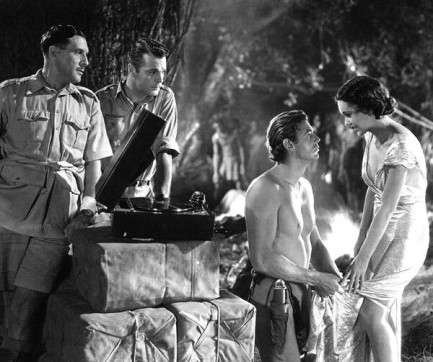 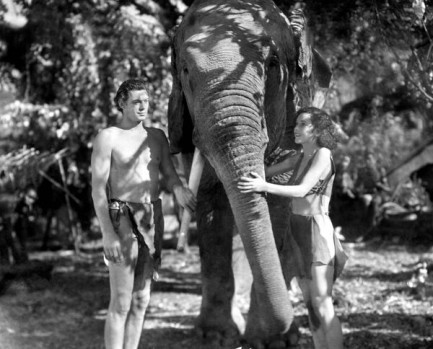     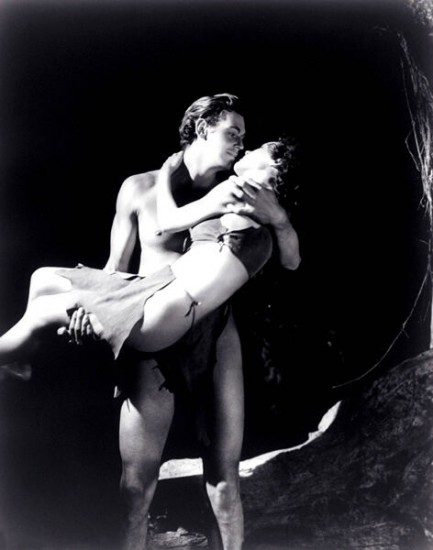 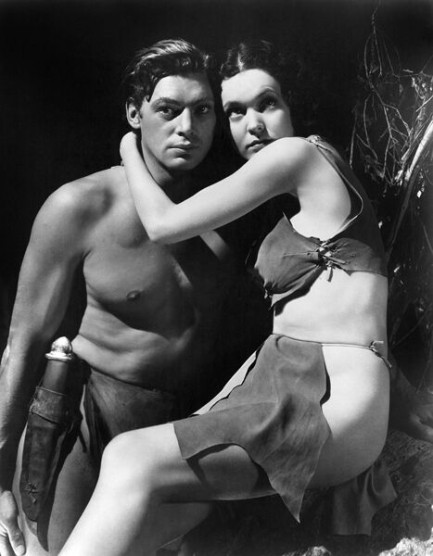 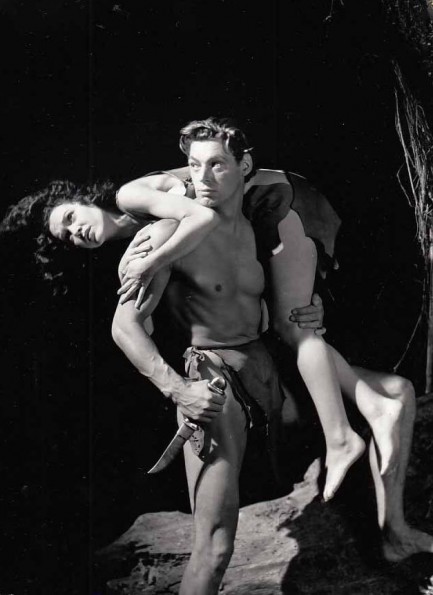 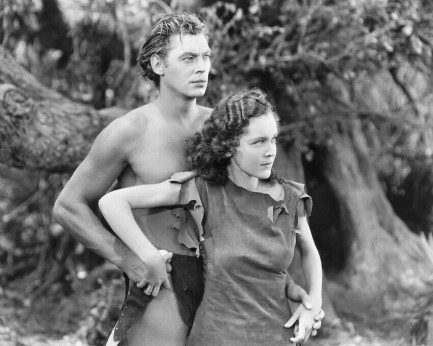       
 Weissmuller's jungle classic continues to look weirder as time goes by. 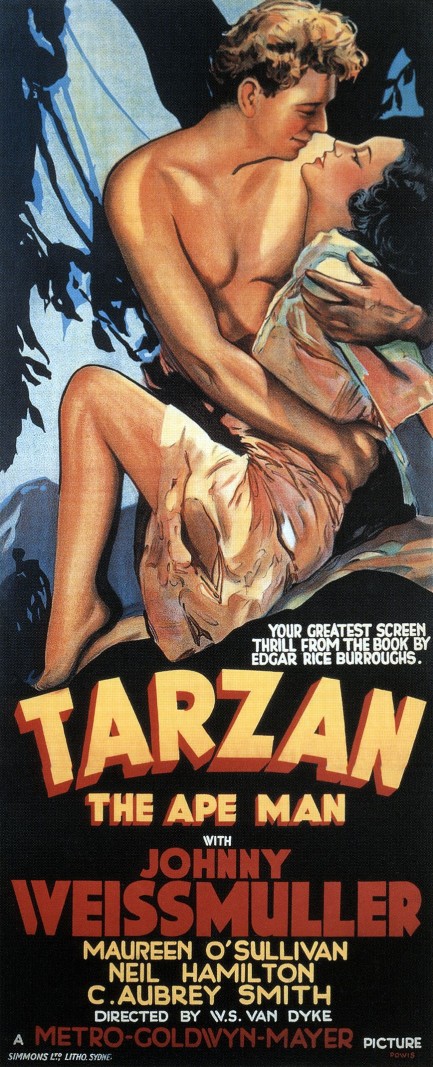
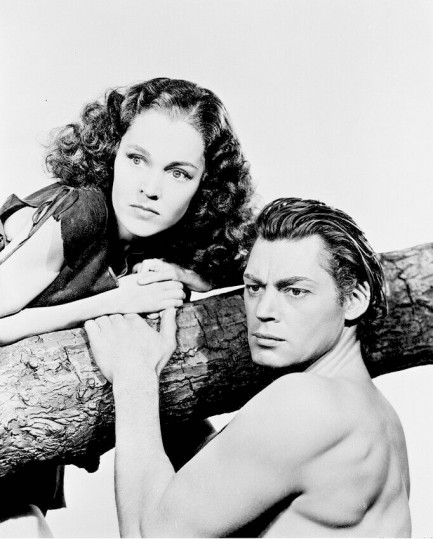
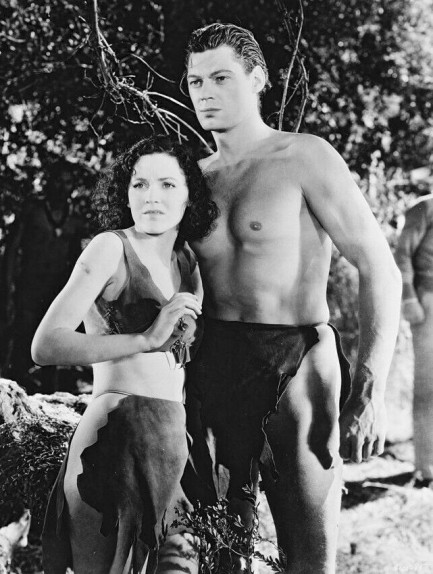
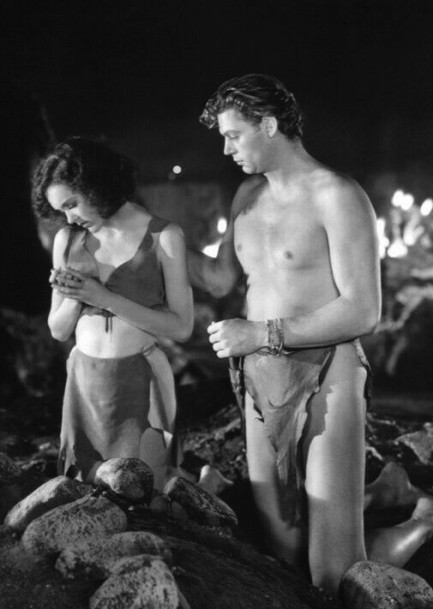
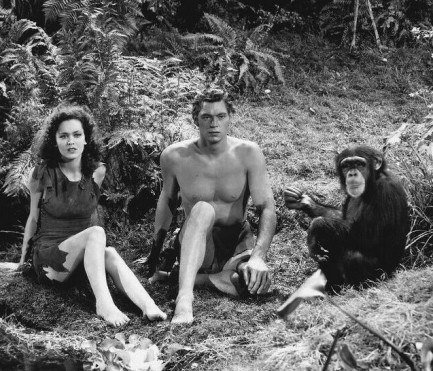
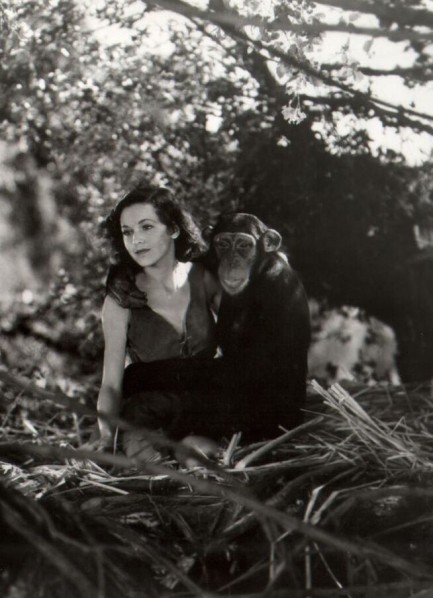
Above is a beautiful poster for Tarzan the Ape Man, which starred Olympic swimmer Johnny Weissmuller as Tarzan and twenty-one year old Maureen O'Sullivan as Jane Parker. The plot here is simple. White explorers are desperate to find a million pounds of ivory they believe lies hidden in an elephant graveyard somewhere in the African interior. After scaling a massive escarpment (and losing a native bearer over the side), and traversing a river (and losing native bearers to rubber hippos and crocs), and stumbling across a tribe of dwarfs (and losing a native bearer to an arrow), they finally reach the right area—and promptly lose Jane to Tarzan. Although he's carried her away against her will, she and Sir Loincloth eventually establish a rapport. And no wonder—this particular Tarzan is handsome, has good hair, and a physique in top maintenance.
Tarzan the Ape Man was made way back in 1932, but it isn't the first Tarzan film, or even the fifth or the eighth. But this effort from MGM, with its somewhat detailed sets, scanty costuming, and numerous animal co-stars, was the first that was a big hit. The shooting took place in various locations around Southern California and Florida, although there is some legit African stock footage used in spots, and, according to some sources, some second unit stuff from Mexico. For the era it must have been pretty convincing, rubber hippos and all. 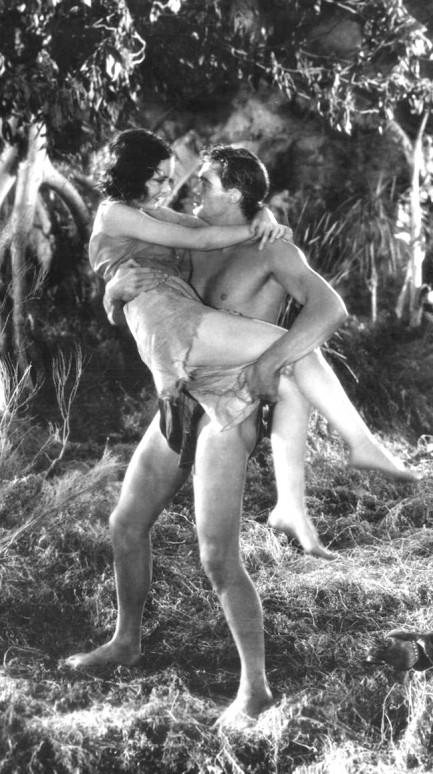 Needless to say, this flick is not flattering to Africans, African Americans, or African anyones. As for what the little person community thinks about fifty of their number covered in shoe polish, you'd have to ask a little person. We don't know any. But we seriously doubt they like it. Needless to say, this flick is not flattering to Africans, African Americans, or African anyones. As for what the little person community thinks about fifty of their number covered in shoe polish, you'd have to ask a little person. We don't know any. But we seriously doubt they like it.
As we are all part of the same human family, we all should feel empathy as we would if a brother or beloved cousin were insulted. Seems to us we've made halting progress on that front. What hasn't progressed at all is agreement about how to deal with literally trillions of dollars of stolen labor, goods, economic potential, and lives. If no recompense is to be offered, then at least we should be able to talk honestly about what happened. German Foreign Minister Heiko Maas recently admitted that his country's possession of some of the priceless Benin Bronzes amounted to harboring stolen goods. The U.S. and Britain, meanwhile, refuse even to entertain conversations about their share of these looted pieces. It's the same with people: some admit to crimes of the past, while others say there were no crimes, and even if there were, they don't matter anymore.
Tarzan the Ape Man presents a fictionalized version of the real-world history of capitalists strip-mining Africa. Without an iota of reflection, the characters here plan to steal local wealth, described by head bwana C. Aubrey Smith as, “Enough ivory for the entire world.” But what he really means is, “Enough ivory for the entire world to buy from me.” Of course, colonials didn't think they were looters. But then, colonials wrote the rules. So Tarzan the Ape Man scratches the surface of a contentious history, but here's the thing: it's still just a movie, and it's possible to watch it, be aware of what it portrays, yet have a laugh. It's a 100-minute over-the-top burlesque of historical wrongs, from colonialism to segregation in moviemaking. To enshrine so many bad practices in one film is a hell of a feat. Yet within its narrative universe it's still very entertaining. Is that a paradox? Maybe. But that's art for you. Tarzan the Ape Man premiered in the U.S. today in 1932.
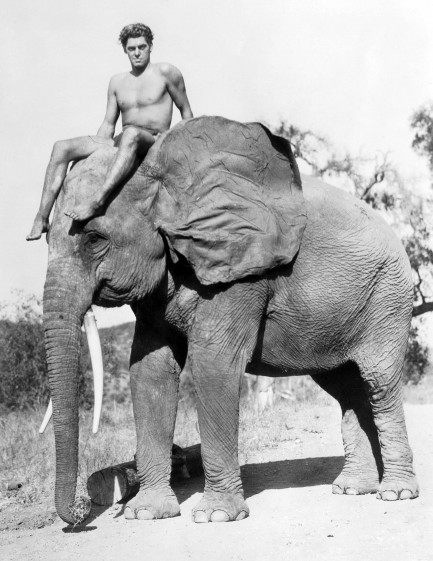 Pick man up. Put man down. Pick man up. Let man sit on my head. I'm about to stomp this fool. Pick man up. Put man down. Pick man up. Let man sit on my head. I'm about to stomp this fool.
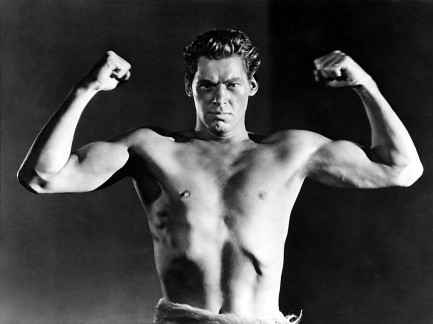 Tarzan invent shaving armpits. Tarzan smooth like eel. Tarzan invent shaving armpits. Tarzan smooth like eel.
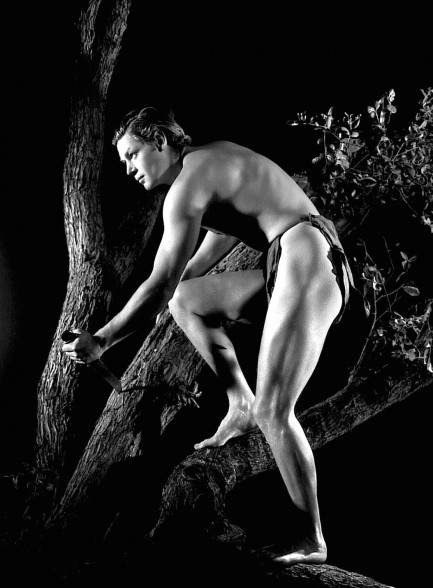 Great pose, Johnny! Just great. And your nuts didn't fall out this time. Excellent! Great pose, Johnny! Just great. And your nuts didn't fall out this time. Excellent!
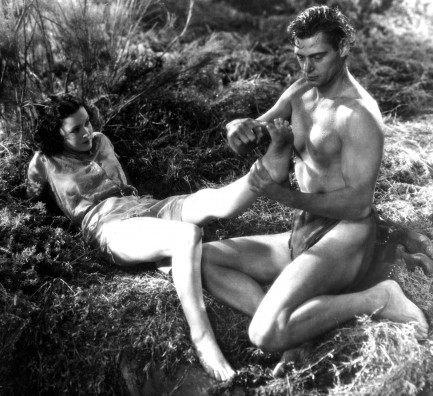 Jane feet funky. Also, Jane need pedicure. Jane feet funky. Also, Jane need pedicure.
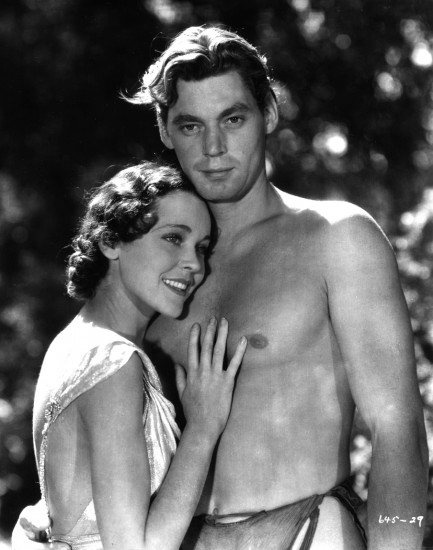 OooOOOoo... what's this here, Johnny? Is that a rock hard chest? I think it is. Who's got a rock hard chest? Johnny's got a rock hard chest... OooOOOoo... what's this here, Johnny? Is that a rock hard chest? I think it is. Who's got a rock hard chest? Johnny's got a rock hard chest...
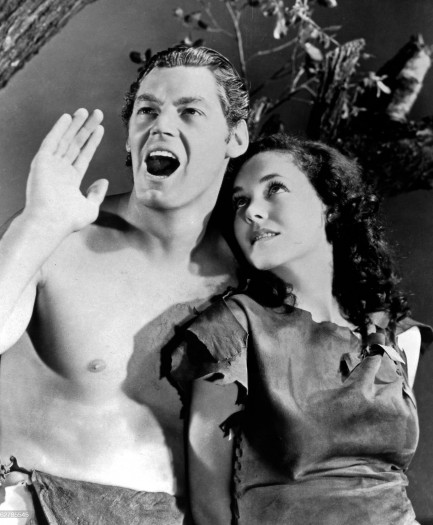 AHHHH-AHAHAHAH-AHAHAHAHA! Can Maureen and I get some goddamned lunch over here! AHHHH-AHAHAHAH-AHAHAHAHA! Can Maureen and I get some goddamned lunch over here!
 It's taken weeks to get here, but it will be worth it—in that fabled place I am told are stores that have shoes, boxer-briefs, bug repellant, and more. 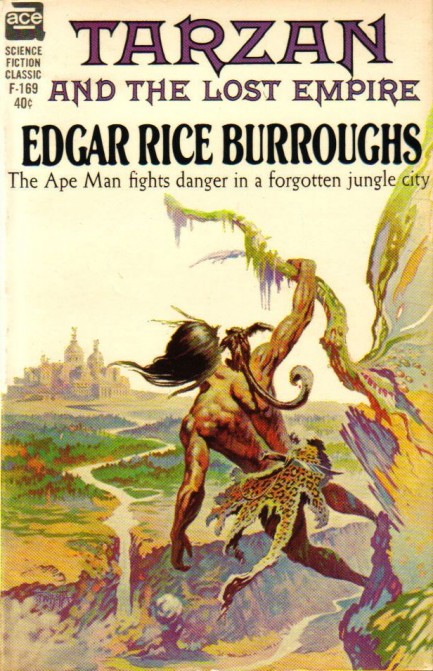
We shared a Robert Stanley cover for Edgar Rice Burroughs' wild adventure Tarzan and the Lost Kingdom a while back. We'd be doing a disservice if we didn't also share the brilliant Frank Frazetta art used for Ace Books on its 1962 re-issue. Frazetta is an artist about whom there is no debate. He was a genius.
 Tarzan destroyed on social media after posting photo of himself with lion he killed for sport. 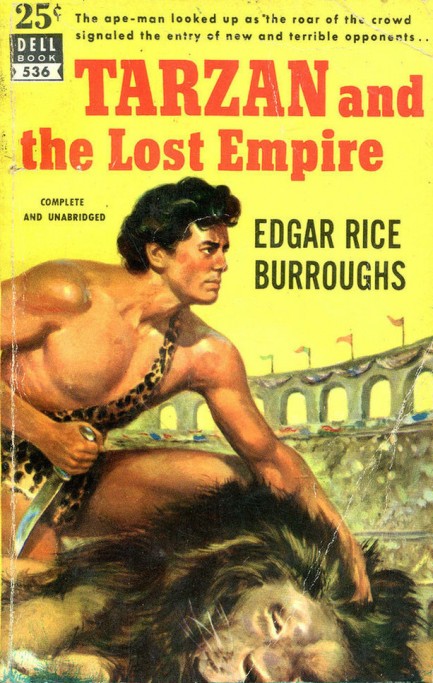
Tarzan and the Lost Empire, originally serialized in 1928 and ’29 in Blue Book Magazine, was entry twelve in Edgar Rice Burroughs' Tarzan series, and some would say the concept had jumped the shark—and the lion—at this point. Basically, Tarzan stumbles upon a remnant of the Roman Empire hidden deep in the mountains somewhere in Africa and—as this 1951 cover by Robert Stanley depicts—is dragged into their coliseum bloodsports. In later books he'd venture to a subterranean world, find a city of talking gorillas, and fly a fighter plane for the RAF (maybe that one isn't so strange, since he had the civilian identity of John Clayton). Burroughs was never mistaken for a great writer, but his Tarzan books sold millions of copies and the character remains one of the best known in pulp literature. As tough as he was, we doubt even the King of the Jungle could have survived social media. But Tarzan was not one with whom to trifle. We can totally picture an adventure where he goes to Silicon Valley to battle the forces of shame. It ends when he learns the evil mastermind is Mark Zuckerberg, swings on a DSL cable into Facebook, and lays waste to the place. “Shame me, Zuckerberg? Me Tarzan! You lame!” 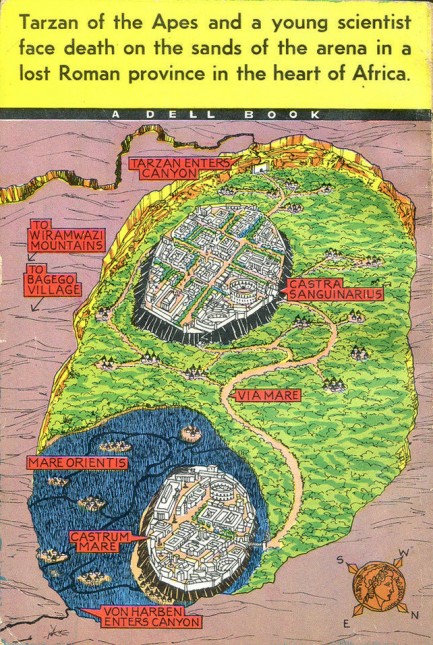
 Ever get the feeling you've met someone before? 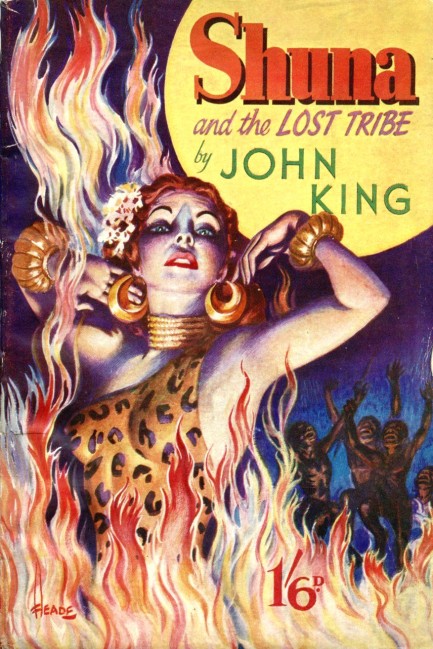 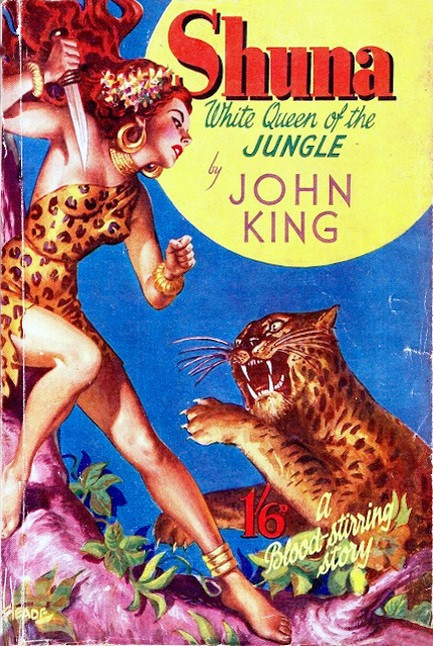
Shuna and the Lost Tribe and Shuna White Queen of the Jungle were written by British author John King, aka Ernest L. McKeag, and reached bookstores via Harborough Publishing in 1951. Shuna is exactly what she seems to be—the archetypal Western literary fantasy of a naturalistic and uncorrupted white woman maintaining semi-sexual thralldom over black hordes who look on with wonder but never, ever get to touch. She's also a virtual copy, right down to the form-fitting leopardskin tunic, of the character Sheena, who appeared in the 1930s, and was part of a wave of lost world literature, comics, and movies that came after the runaway success of Edgar Rice Burroughs' 1912 novel Tarzan of the Apes. We're a little surprised King was able to basically steal Sheena's name. He seems to have gotten away with it, though—we found no mention in the historical record of legal trouble. Maybe it's like the whole Britney Spears vs. Britney Rears thing. The name is close, but juuust different enough to avoid a lawsuit. Anyway, the cover art is really the thing to focus on here. We love these. They're two of the most striking efforts we've seen from the incomparable Reginald Heade, and a reminder we need to feature him more.
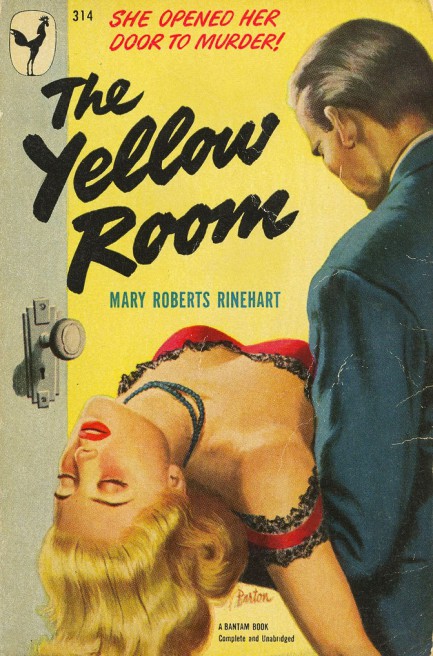
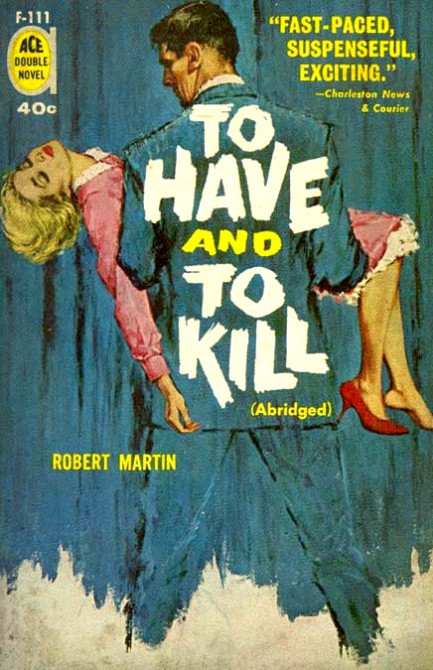
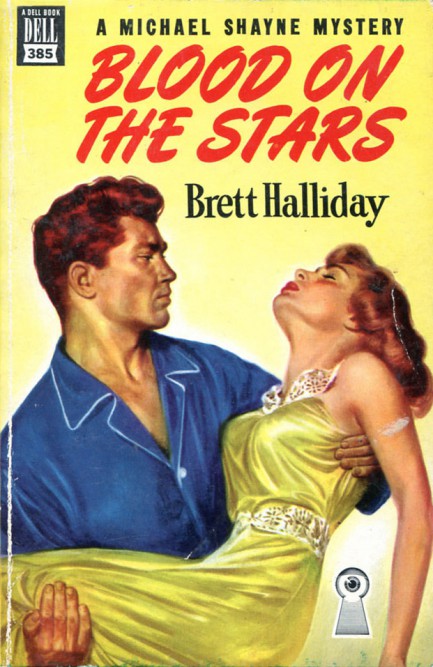
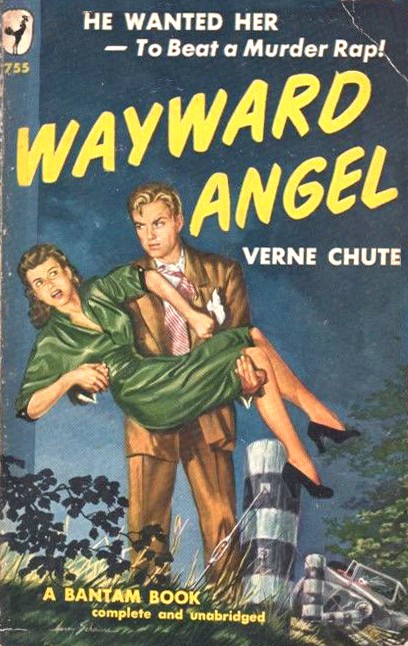
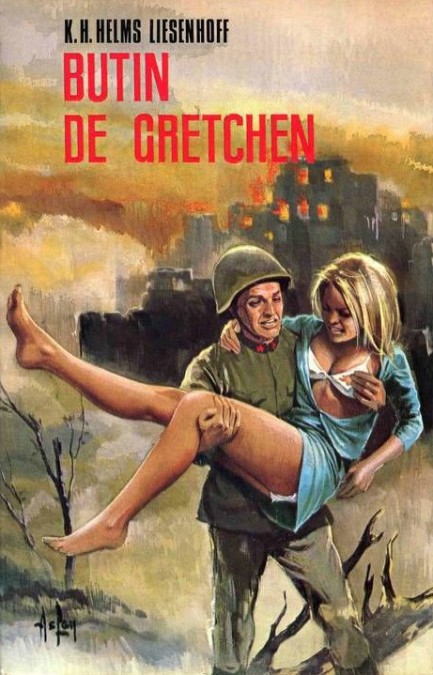
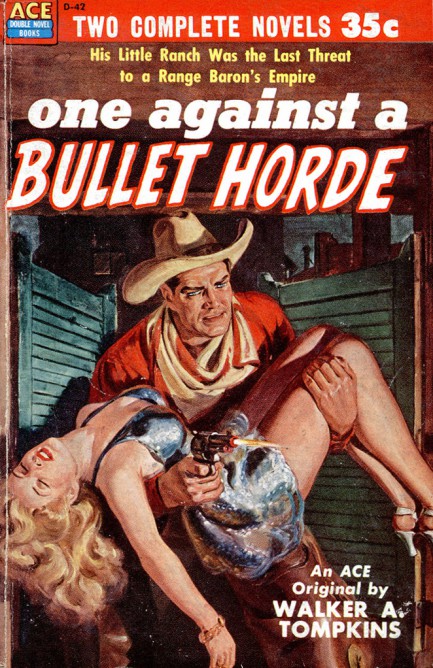
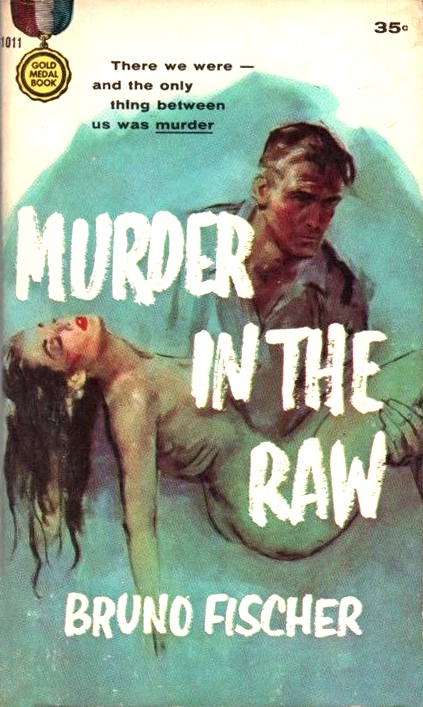
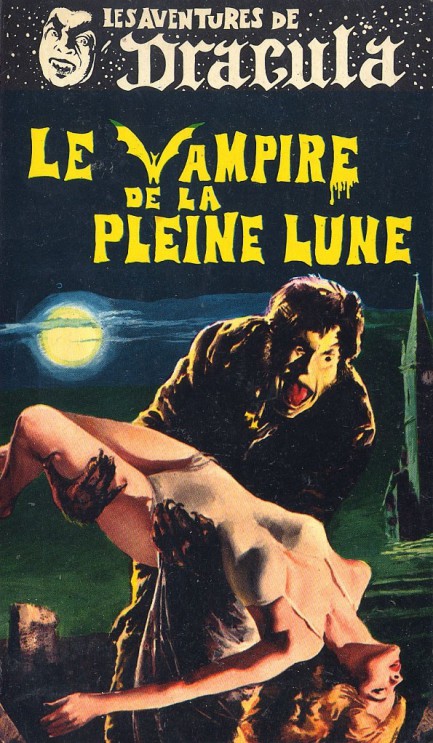
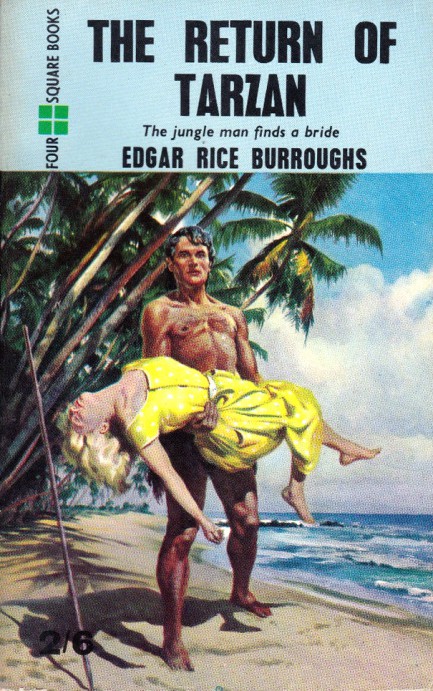
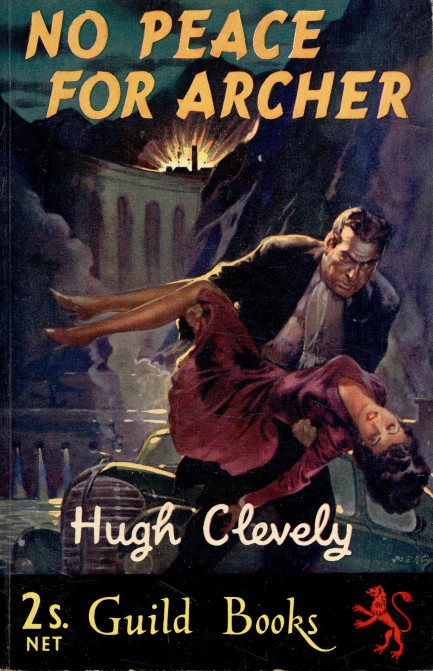
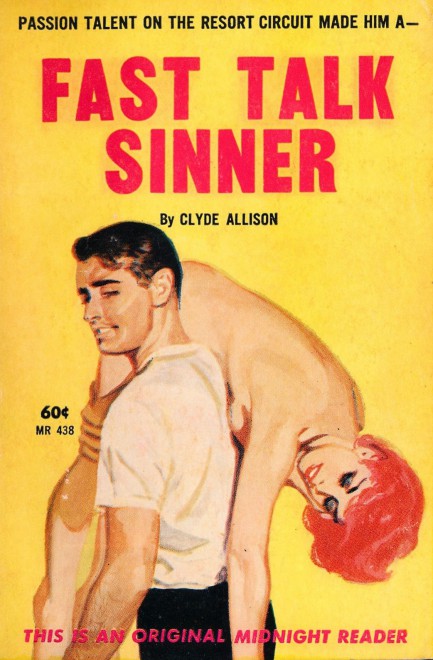
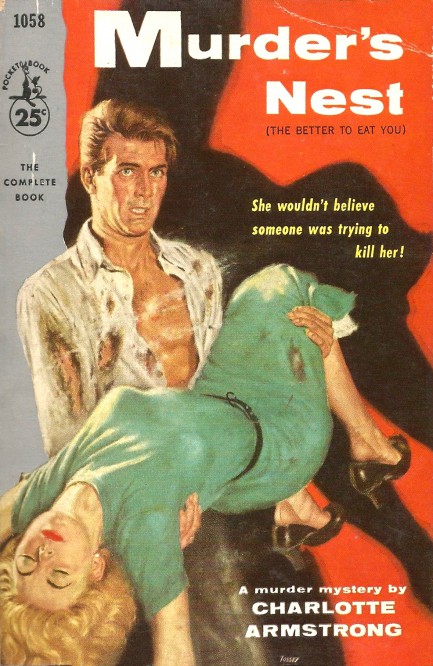
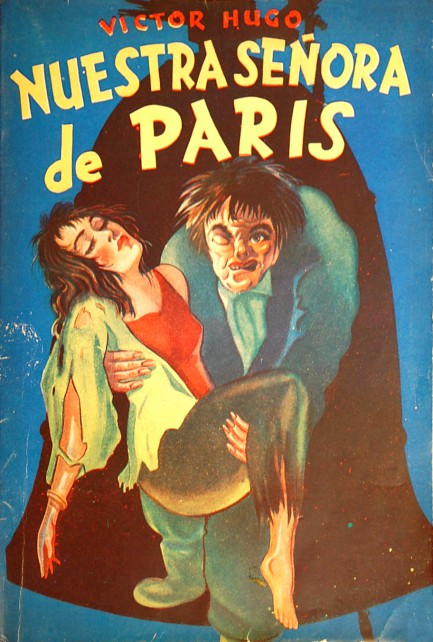
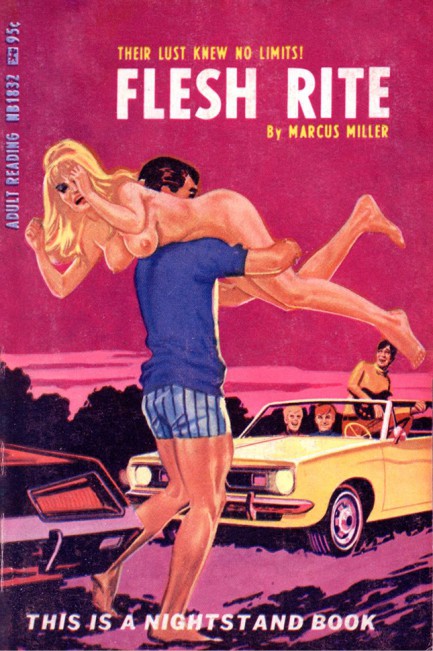
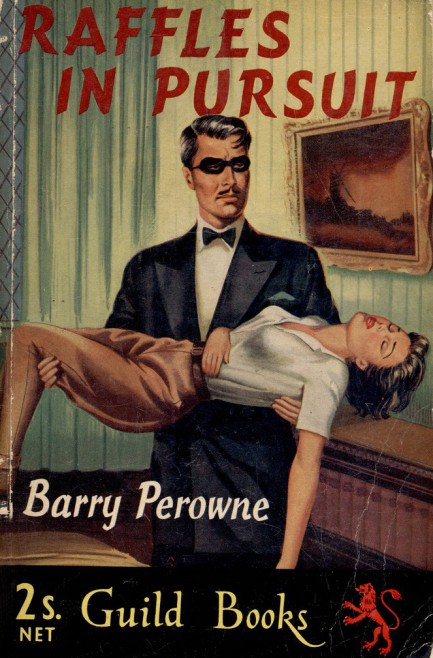
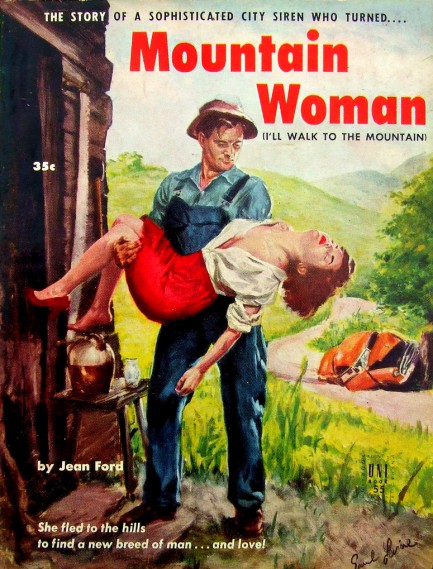
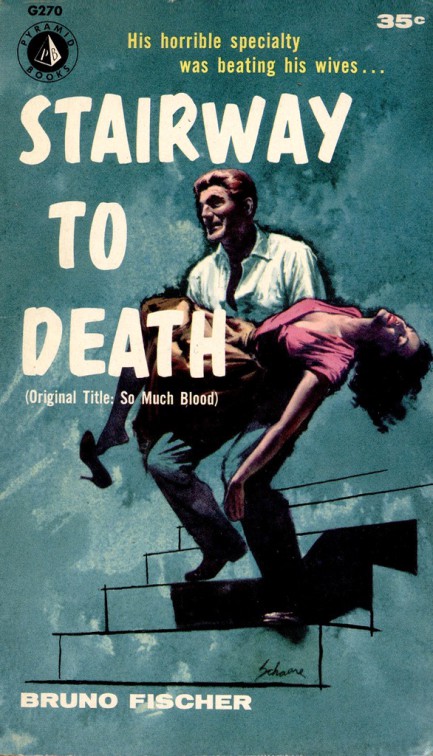
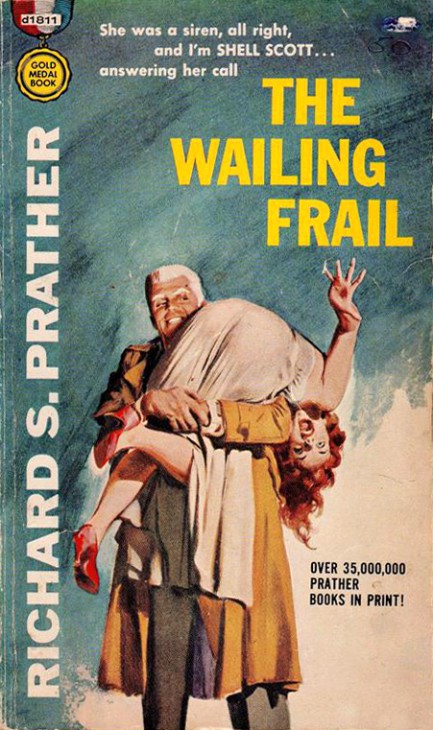
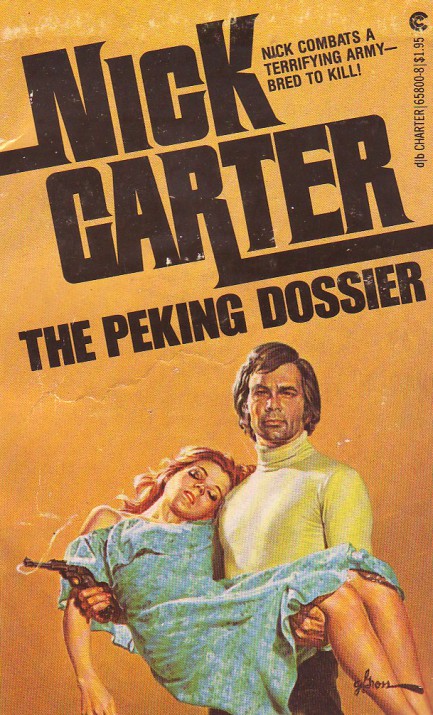
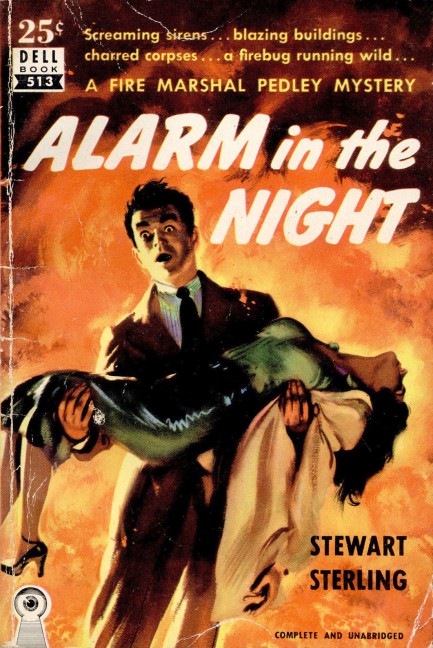
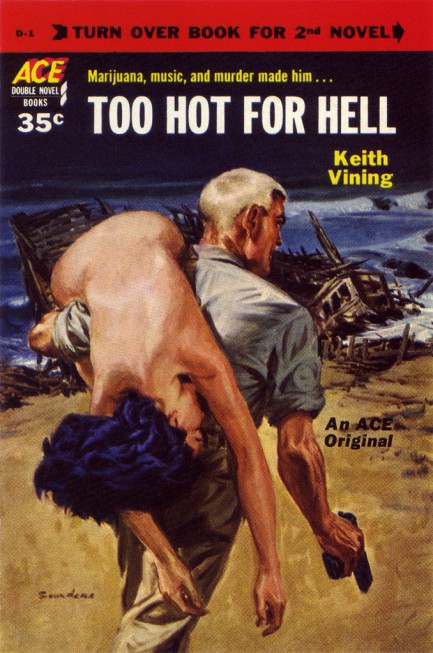
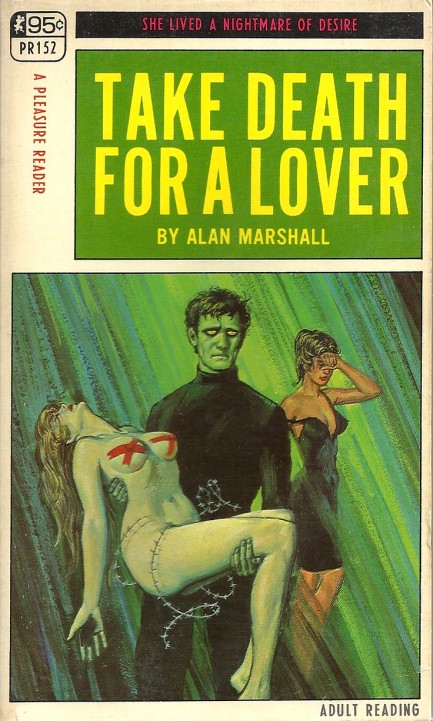
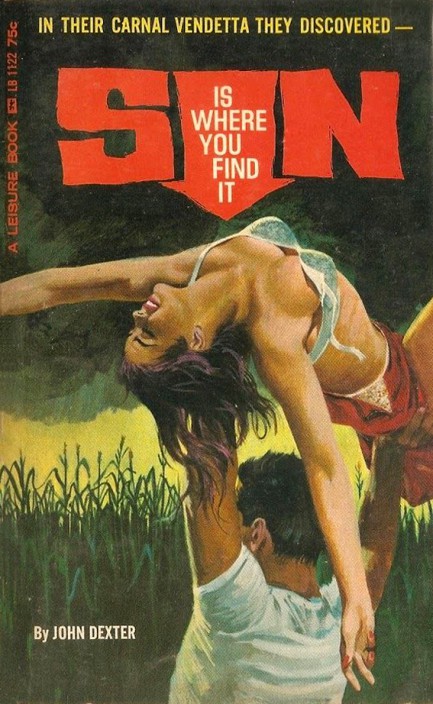
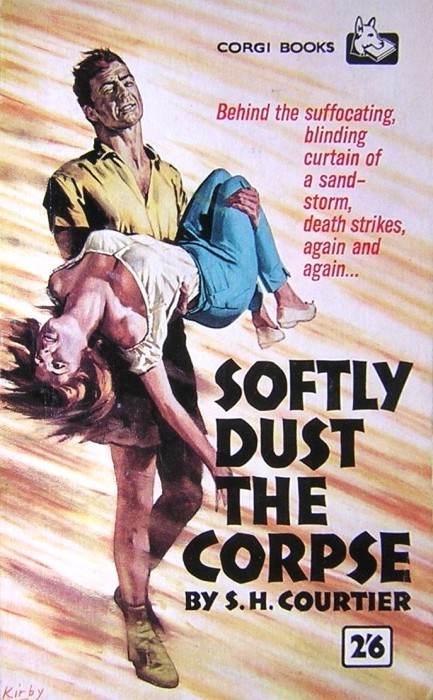
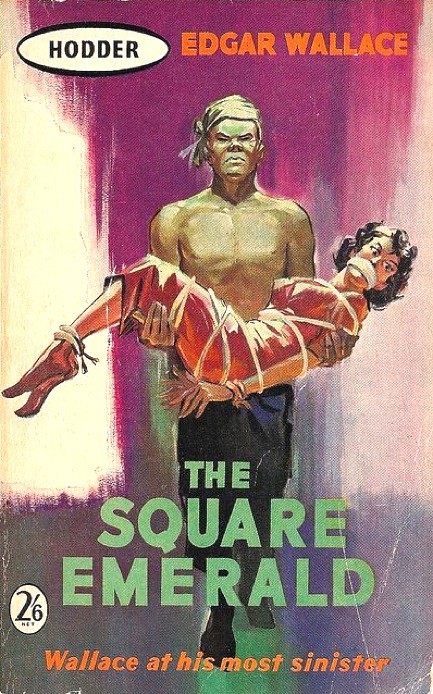
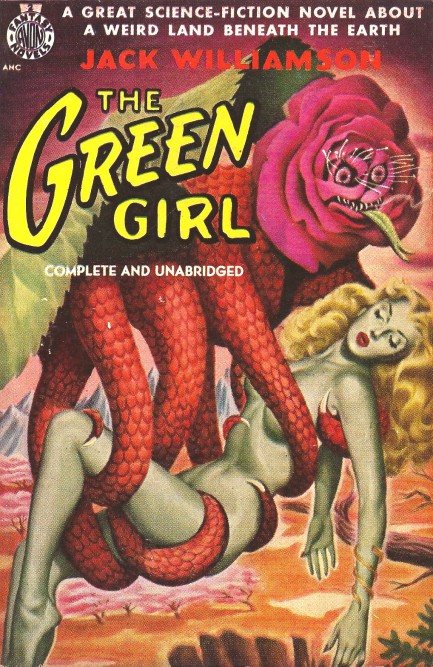
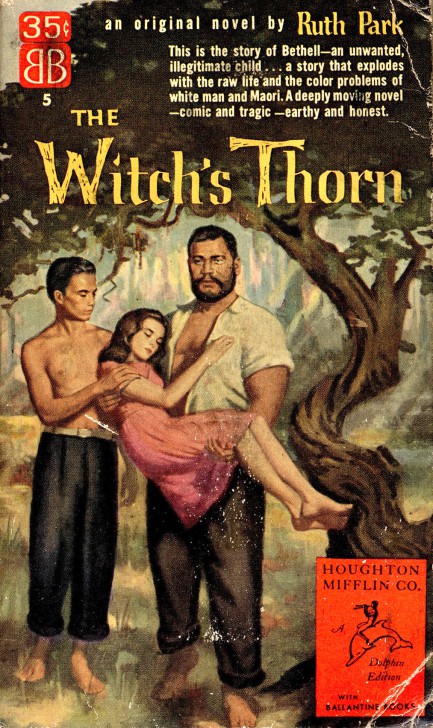
 For better or worse, in sickness and health, women in pulp don’t have a heck of a lot of choice about it. Pulp is a place where the men are decisive and the women are as light as feathers. We’ve gotten together a collection of paperback covers featuring women being spirited away to places unknown, usually unconscious, by men and things that are less than men. You have art from Harry Schaare, Saul Levine, Harry Barton, Alain Gourdon, aka Aslan, and others.
 I don’t know. Last time I saw her she was sitting over by that patch of mushrooms and now look at her. 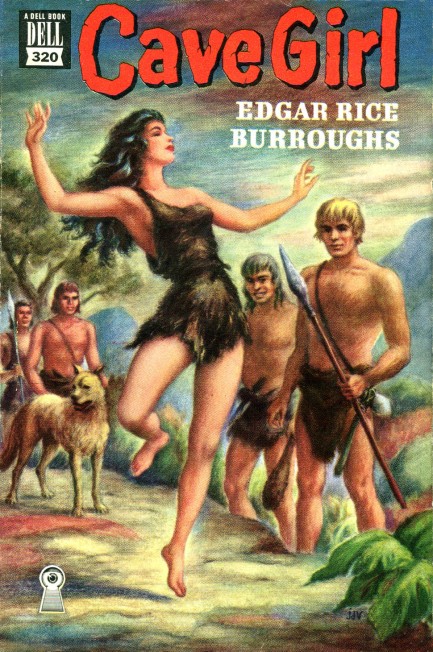
Although there aren’t any psychedelic mushrooms in Edgar Rice Burroughs’ The Cave Girl, it’s still a fun book. Basically, a wheezy, wimpy, uptight city dweller named Waldo is swept overboard during a Pacific sea journey and fetches up on an island of Neolithic savages. He meets a girl and the rest of the book involves him turning into Rambo in order to defend her from the men of her own undeserving (obviously) tribe. Ultimately it turns out she was never a savage, but rather a regular white chick born on the island twenty years earlier to a shipwrecked American woman. The woman died and the girl was raised as an islander. So it’s a good thing Waldo washed ashore to keep those primitives from defiling her flesh. Burroughs helped pioneer the entire Lost World genre, so despite its flaws, The Cave Girl is worth a read for that reason alone. It began as two separate stories in 1914, was melded into a novel in 1925, and in 1949 was released in the Dell paperback edition you see above, with the title shortened to simply Cave Girl, and with cover art by Jean des Vignes. Interesting and action-packed, this one should keep you entertained for a couple of days, and it’s in the public domain, which means you can download it.

|
 |
The headlines that mattered yesteryear.
1947—Heyerdahl Embarks on Kon-Tiki
Norwegian ethnographer and adventurer Thor Heyerdahl and his five man crew set out from Peru on a giant balsa wood raft called the Kon-Tiki in order to prove that Peruvian natives could have settled Polynesia. After a 101 day, 4,300 mile (8,000 km) journey, Kon-Tiki smashes into the reef at Raroia in the Tuamotu Islands on August 7, 1947, thus demonstrating that it is possible for a primitive craft to survive a Pacific crossing. 1989—Soviets Acknowledge Chernobyl Accident
After two days of rumors and denials the Soviet Union admits there was an accident at the Chernobyl nuclear power plant in Ukraine. Reactor number four had suffered a meltdown, sending a plume of radioactive fallout into the atmosphere and over an extensive geographical area. Today the abandoned radioactive area surrounding Chernobyl is rife with local wildlife and has been converted into a wildlife sanctuary, one of the largest in Europe. 1945—Mussolini Is Arrested
Italian dictator Benito Mussolini, his mistress Clara Petacci, and fifteen supporters are arrested by Italian partisans in Dongo, Italy while attempting to escape the region in the wake of the collapse of Mussolini's fascist government. The next day, Mussolini and his mistress are both executed, along with most of the members of their group. Their bodies are then trucked to Milan where they are hung upside down on meathooks from the roof of a gas station, then spat upon and stoned until they are unrecognizable. 1933—The Gestapo Is Formed
The Geheime Staatspolizei, aka Gestapo, the official secret police force of Nazi Germany, is established. It begins under the administration of SS leader Heinrich Himmler in his position as Chief of German Police, but by 1939 is administered by the Reichssicherheitshauptamt, or Reich Main Security Office, and is a feared entity in every corner of Germany and beyond. 1937—Guernica Is Bombed
In Spain during the Spanish Civil War, the Basque town of Guernica is bombed by the German Luftwaffe, resulting in widespread destruction and casualties. The Basque government reports 1,654 people killed, while later research suggests far fewer deaths, but regardless, Guernica is viewed as an example of terror bombing and other countries learn that Nazi Germany is committed to that tactic. The bombing also becomes inspiration for Pablo Picasso, resulting in a protest painting that is not only his most famous work, but one the most important pieces of art ever produced.
|

|
|
It's easy. We have an uploader that makes it a snap. Use it to submit your art, text, header, and subhead. Your post can be funny, serious, or anything in between, as long as it's vintage pulp. You'll get a byline and experience the fleeting pride of free authorship. We'll edit your post for typos, but the rest is up to you. Click here to give us your best shot.
|
|