 The Asphalt Jungle remains one of the top crime thrillers ever filmed. 
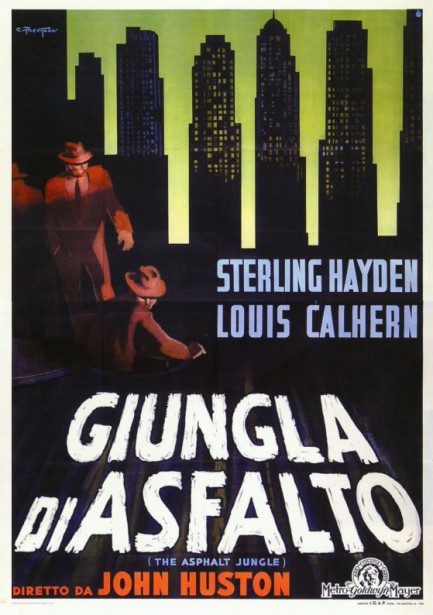
 The Asphalt Jungle is half a century old, but remains one of the best procedural heist films ever made. The men who commit the robbery at the center of this movie come from all walks of life—some are perennial losers, others are opportunists, and others are just having a hard time and need a way out. All of them long for better lives. All desperately need the money to get there. These footmen, facilitators, and financial backers plan every aspect of a lucrative heist, but the caper begins falling apart almost immediately, due to back luck, mistrust, and greed. Sterling Hayden, who we’ve mentioned before, is incendiary in the lead, exuding extreme menace but with a hint of recognizable humanity behind the eyes. One of his best moments comes in a brief but exquisitely choreographed shooting involving a thrown valise. All of this takes place under the sure hand of legendary director John Huston, working from a 1949 book by William Riley Burnett. Burnett was a bit of a legend himself. He was a prolific crime novelist who wrote the source material for Little Caesar, Scarface, and High Sierra, and whose screenplays include This Gun for Hire, I Died a Thousand Times, and Nobody Lives Forever. Put Burnett, Huston and Hayden together (not to mention James Whitmore, Jean Hagen, Sam Jaffe, and a young Marilyn Monroe in a small role as a rich man's plaything) and you get exactly what you’d expect—a genre classic that transcends its boundaries and becomes instead a piece of high art. The film was a major hit that wowed audiences worldwide. At top you see the Italian promo art, and below that we have both the hardback and paperback cover art. The Asphalt Jungle opened as Giungla di asfalto in Italy today in 1951.
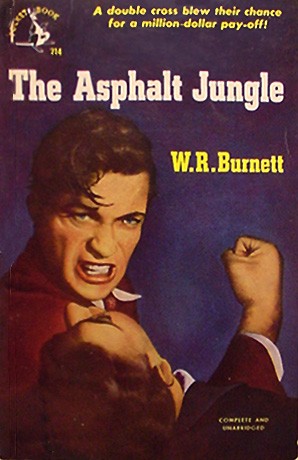
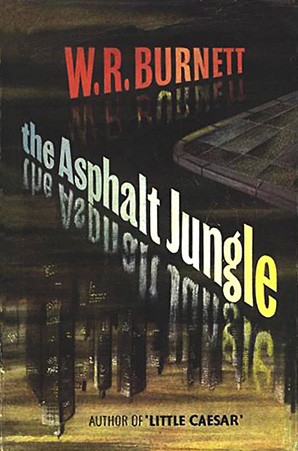
Italy, Asphalt Jungle, Little Caesar, High Sierra, Scarface, Giungla di asfalto, W. R. Burnett, Sterling Hayden, Marilyn Monroe, Sam Jaffe, Jean Hagen, James Whitmore, John Huston, film noir, poster art, cinema

|
 |
The headlines that mattered yesteryear.
1933—Roosevelt Addresses Nation
Franklin D. Roosevelt uses the medium of radio to address the people of the United States for the first time as President, in a tradition that would become known as his "fireside chats". These chats were enormously successful from a participation standpoint, with multi-millions tuning in to listen. In total Roosevelt would make thirty broadcasts over the course of eleven years. 1927—Roxy Theatre Opens
In New York City, showman and impresario Samuel Roxy Rothafel opens the Roxy Theatre, a 5,920-seat cinema. Rothafel would later open Radio City Music Hall in 1932, which featured the precision dance troupe the Roxyettes, later renamed the Rockettes. Rothafel died in 1936, but his Roxy remained one of America's greatest film palaces until it was closed and demolished in 1960. 1977—Polanski Is Charged with Statutory Rape
Polish-born film director Roman Polanski is charged with raping a 13-year-old girl at the home of Hollywood star Jack Nicholson. Polanski allegedly had sex with the girl in a hot tub after plying her with Quaaludes and champagne. Rather than risk prison Polanski fled the U.S. for Europe, but was eventually arrested in Switzerland in 2009. 1945—U.S. Bombs Tokyo
335 American B29 bombers raid Tokyo, dropping so many incendiary bombs that the resulting firestorm kills more than 100,000 people, mostly civilians. The number of injured is estimated to have topped a million, and another million were left homeless, but these figures have been called low by numerous historians, both Japanese and American.
|
blog advertising is good for you

 |
|
It's easy. We have an uploader that makes it a snap. Use it to submit your art, text, header, and subhead. Your post can be funny, serious, or anything in between, as long as it's vintage pulp. You'll get a byline and experience the fleeting pride of free authorship. We'll edit your post for typos, but the rest is up to you. Click here to give us your best shot.
|
|