 New documentary highlights slippery ethics of London tabloids. 
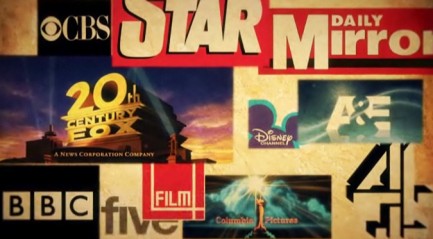
In Great Britain, controversy is building around an upcoming documentary depicting the loose journalistic ethics of London tabloids. Entitled Starsuckers, the movie is the brainchild of Taking Liberties director Chris Atkins and a group of colleagues, whose goal was to prove, in a comical way, that modern tabloids cannot be trusted to print the truth. To do this, they decided to anonymously call tabloid tip lines with fabricated stories. Their first test involved ringing up the Daily Mirror claiming to have seen singer Avril Lavigne passed out in a nightclub. The story appeared in the Mirror the next day, embellished with a few taunts to the effect that the singer was a “lightweight.” In the next few weeks the Starsuckers team planted false stories in the Daily Express, the Daily Star, the Sun, and most of the other London tabloids, all using the same method—anonymous tips that were not in any way questioned. The planted stories often spread from one tabloid to the next with no evidence any attempts at corroboration had been made. One fabrication about Amy Winehouse’s hair catching fire spread to all the daily tabloids, a New York Post blog, and even to the Times of India. Starsuckers promises to show not only that Rupert Murdoch-style sell-first/ask-questions-later journalism has infected the entire tabloid industry, but that it has spread to mainstream media, and in turn made consumers vulnerable to social, economic and political manipulation. The London tabloids have thus far declined comment on the claims made by Starsuckers and Atkins. Later this month the public will have an opportunity to judge the truth of these matters for itself when the movie debuts at the London Film Festival. Britain, London, London Film Festival, Starsuckers, Daily Mirror, Daily Star, Sun, New York Post, Times of India, Rupert Murdoch, Chris Atkins, Avril Lavigne, Amy Winehouse
|
 |
The headlines that mattered yesteryear.

1974—Police Raid SLA Headquarters
In the U.S., Los Angeles police raid the headquarters of the revolutionary group the Symbionese Liberation Army, resulting in the deaths of six members. The SLA had gained international notoriety by kidnapping nineteen-year old media heiress Patty Hearst from her Berkeley, California apartment, an act which precipitated her participation in an armed bank robbery. 1978—Charlie Chaplin's Missing Body Is Found
Eleven weeks after it was disinterred and stolen from a grave in Corsier near Lausanne, Switzerland, Charlie Chaplin's corpse is found by police. Two men—Roman Wardas, a 24-year-old Pole, and Gantscho Ganev, a 38-year-old Bulgarian—are convicted in December of stealing the coffin and trying to extort £400,000 from the Chaplin family. 1918—U.S. Congress Passes the Sedition Act
In the U.S., Congress passes a set of amendments to the Espionage Act called the Sedition Act, which makes "disloyal, profane, scurrilous, or abusive language" about the United States government, its flag, or its armed forces, as well as language that causes foreigners to view the American government or its institutions with contempt, an imprisonable offense. The Act specifically applies only during times of war, but later is pushed by politicians as a possible peacetime law, specifically to prevent political uprisings in African-American communities. But the Act is never extended and is repealed entirely in 1920. 1905—Las Vegas Is Founded
Las Vegas, Nevada is founded when 110 acres of barren desert land in what had once been part of Mexico are auctioned off to various buyers. The area sold is located in what later would become the downtown section of the city. From these humble beginnings Vegas becomes the most populous city in Nevada, an internationally renowned resort for gambling, shopping, fine dining and sporting events, as well as a symbol of American excess. Today Las Vegas remains one of the fastest growing municipalities in the United States. 1928—Mickey Mouse Premieres
The animated character Mickey Mouse, along with the female mouse Minnie, premiere in the cartoon Plane Crazy, a short co-directed by Walt Disney and Ub Iwerks. This first cartoon was poorly received, however Mickey would eventually go on to become a smash success, as well as the most recognized symbol of the Disney empire.
|

 |
|
It's easy. We have an uploader that makes it a snap. Use it to submit your art, text, header, and subhead. Your post can be funny, serious, or anything in between, as long as it's vintage pulp. You'll get a byline and experience the fleeting pride of free authorship. We'll edit your post for typos, but the rest is up to you. Click here to give us your best shot.
|
|