Twentieth Century Fox offers up a mix of Monroe's most famous tunes. 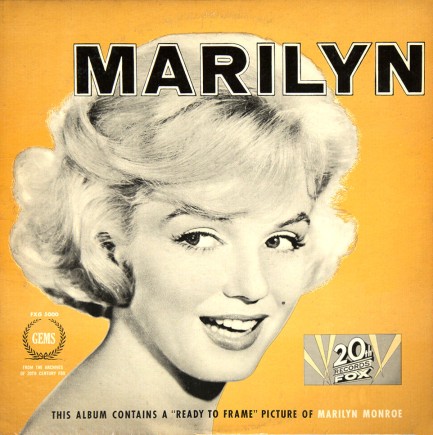 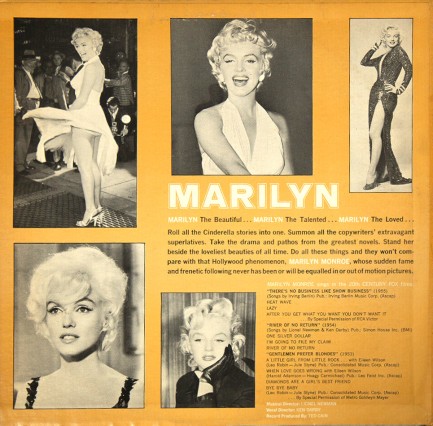
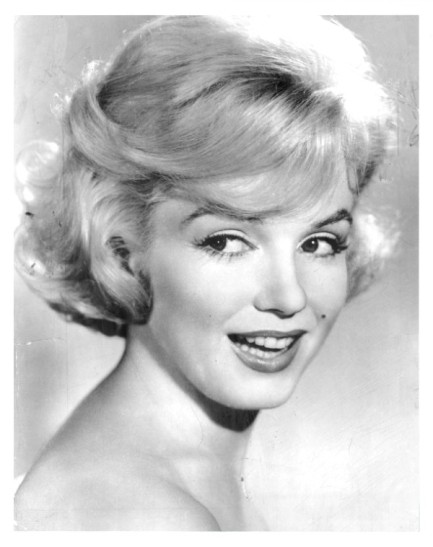
Above: the front and rear sleeves of a 1962 Twentieth Century Fox album featuring the brightest star in Hollywood, Marilyn Monroe, performing musical numbers from three films—River of No Return, Gentlemen Prefer Blondes, and There's No Business Like Show Business. Inside you get a “ready to frame” Monroe photo, which is the cover shot unaltered. It's a nice image indeed. The full list of songs is as follows: “Heat Wave,” “Lazy,” “After You Get What You Want You Don't Want It,” “River of No Return,” “One Silver Dollar,” “I'm Going To File My Claim,” “A Little Girl from Little Rock,” (with Eileen Wilson), “When Love Goes Wrong,” (also with Eileen Wilson), “Diamonds Are a Girl's Best Friend,” and “Bye Bye Baby.”
You can hear most of the tunes by looking around YouTube, if you're curious.
 La Muse de l’existentialisme et Miles. 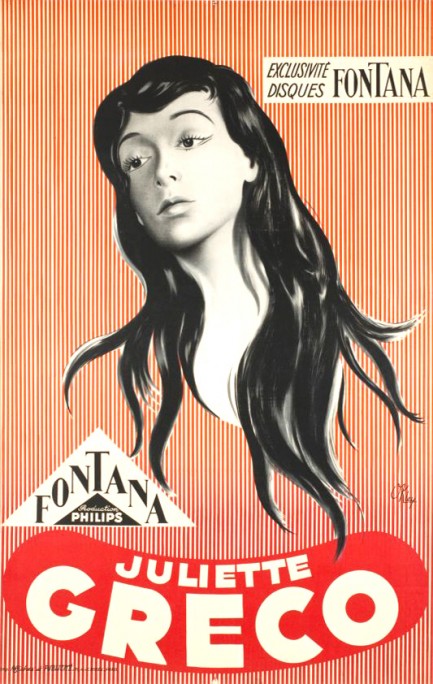
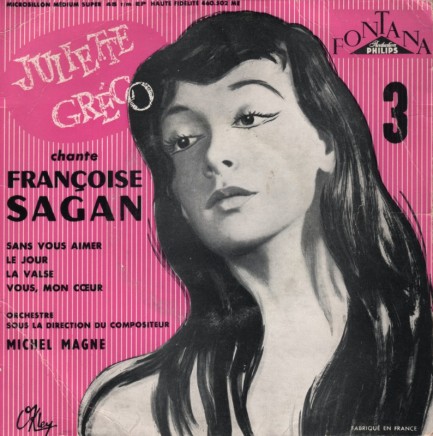
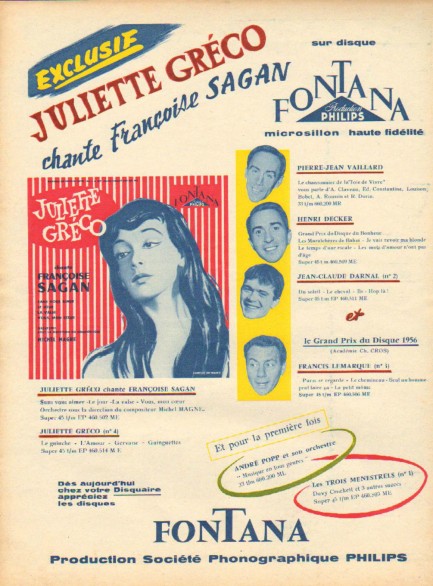
 This striking music brochure promo art for French singer Juliette Gréco and Disques Fontana (a subsidiary of the Dutch label Philips Records) was created by the famous illustrator O’Kley in 1956. The art was reused for record covers, as you see below. This striking music brochure promo art for French singer Juliette Gréco and Disques Fontana (a subsidiary of the Dutch label Philips Records) was created by the famous illustrator O’Kley in 1956. The art was reused for record covers, as you see below.
Gréco, an actress as well as singer, was a fixture in the Saint-Germain-des-Prés area of Paris, and her acquaintanceships with such figures as Jean-Paul Sartre and Maurice Merleau-Ponty earned her the nickname La Muse de l’existentialisme—the existentialists’ muse. She was also, according to Miles Davis, one of the great loves of his life, and the feeling was reciprocated, so that wins major points right there because Miles was the bomb.
Moving on to the art, O’Kley was a pseudonym for Nantes-born Pierre Gilardeau, the man behind some of the most collectable Folies Bergère posters. He also illustrated many book covers and movie posters, and after a long career died in 2007. We’ve seen some good examples of his art, so we’ll try to get back to him a bit later—but we make no guarantees. You can see another Fontana post here.
 The fundamental things apply. 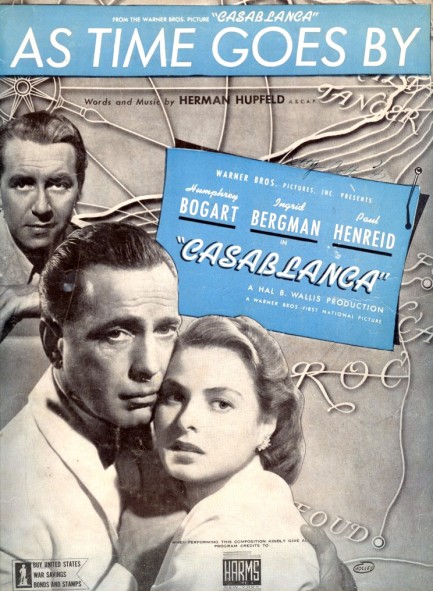
Here’s something nice we ran across on an auction site. It’s a piece of sheet music for “As Time Goes By”, which is a song written by German composer Herman Hupfeld and sung by Dooley Wilson’s character Sam in 1942’s Casablanca. The tune is inextricably identified with the film, but it was actually written for the 1931 Broadway show Everybody’s Welcome, where, in its complete form, it becomes clear the song is just as much about stress as about romance. You wouldn’t know that of course, because you don’t know the lyrics—really, who does? But today’s your lucky Monday—you can brush up on the words here. Just remember these two music fundamentals: if you sing, please do so from the diaphragm; and if you sing badly, blame it on booze.
 If you're going to put a musical group together make it the best. 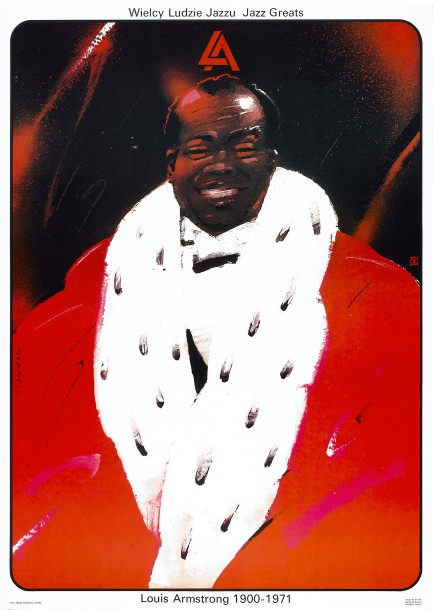
It's been awhile since we featured Polish art, so today we're revisiting the interesting aesthetic of that country with a small collection serving as a reminder that jazz was the predominant popular musical form during the heydey of the pulp era. Polish artist Waldemar Świerzy painted this series of portraits featuring American jazz icons. He signed them all on the left edges. The phrase “wielcy ludzie jazzu” on the top of each print means, “great jazz people,” some of whom, you've noticed, he painted more than once. Świerzy was born in 1931, and painted these in the mid-1980s, focusing mainly on musicians who had been active and popular during his youth. There are even more we didn't show here. Several of these musicians are mentioned by name in books we've read, for example Louis Armstrong, who's the subject of a brief discussion in Harold Sinclair's New Orleans based novel Music Out of Dixie. We think this is nice work by Świerzy. You can see more Polish art here, here, and here. 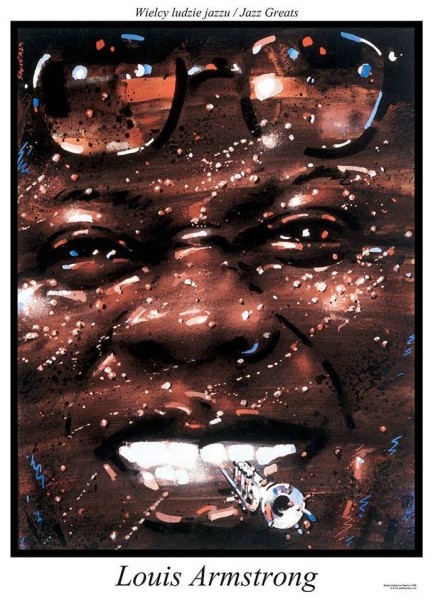 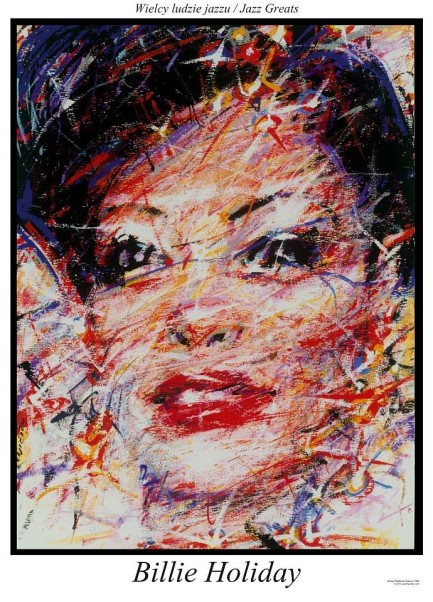 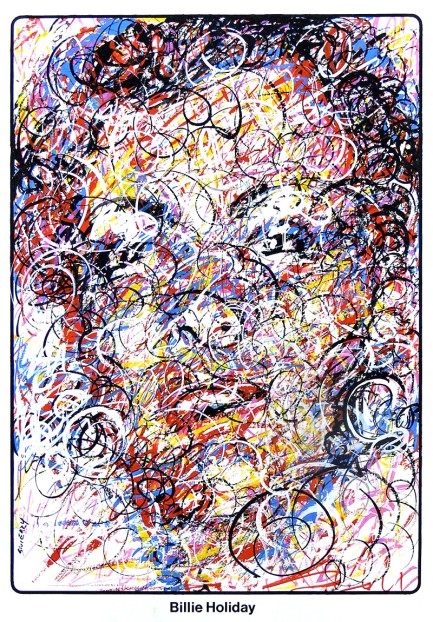 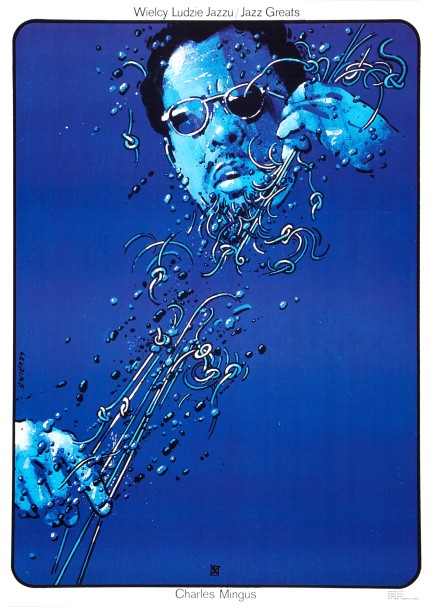 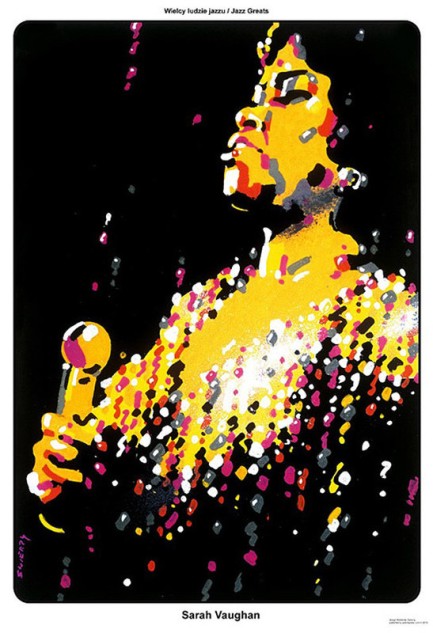 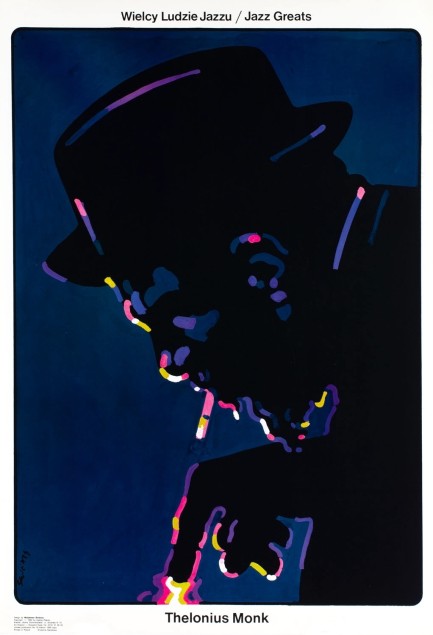 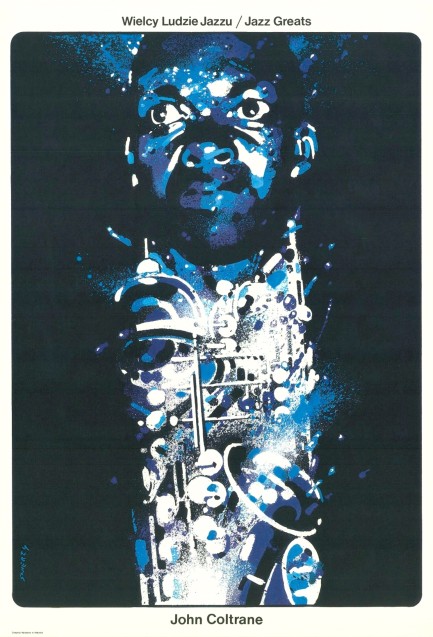 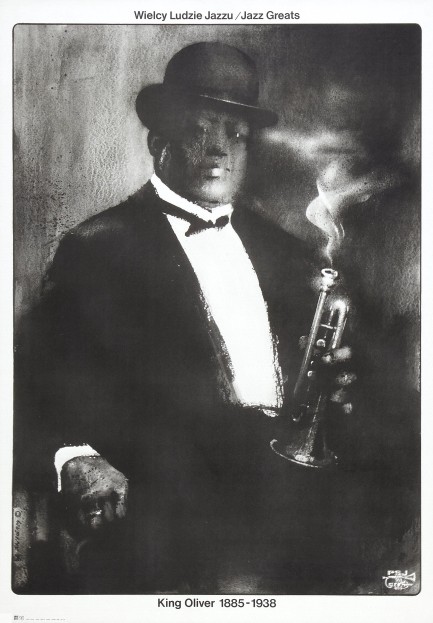 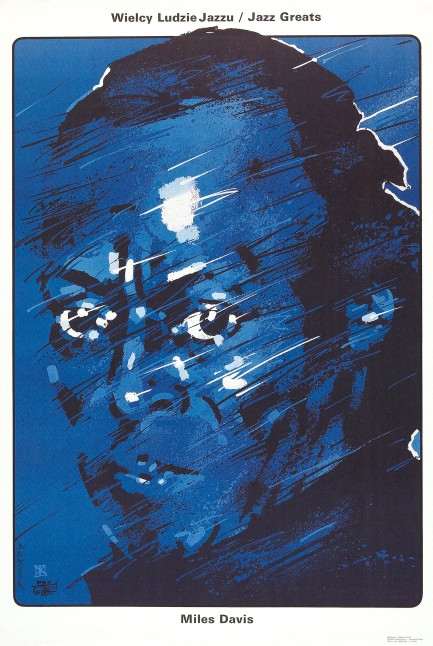 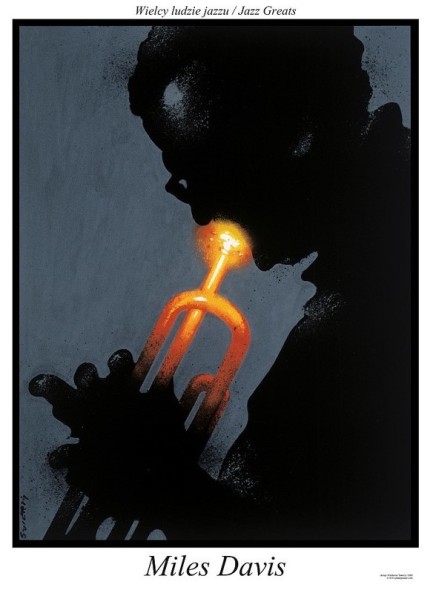 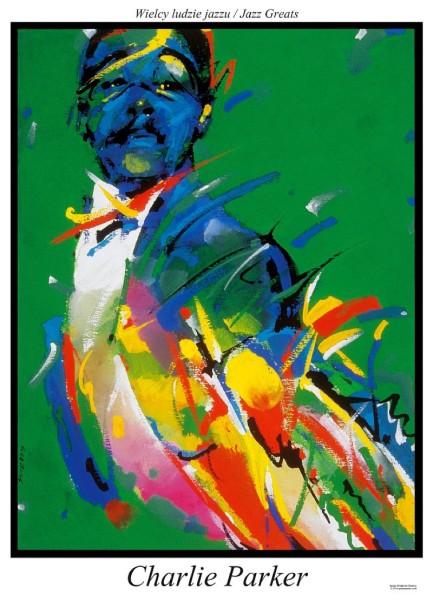 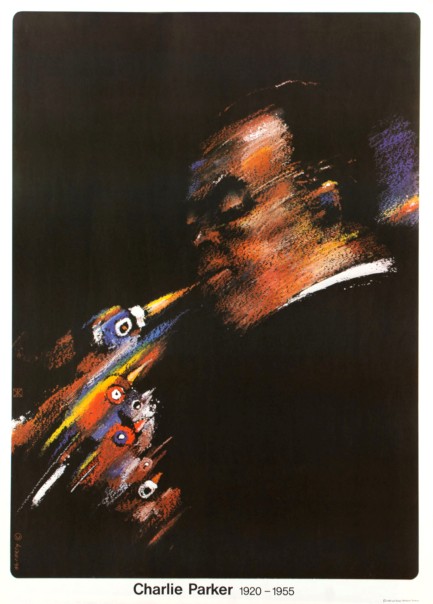 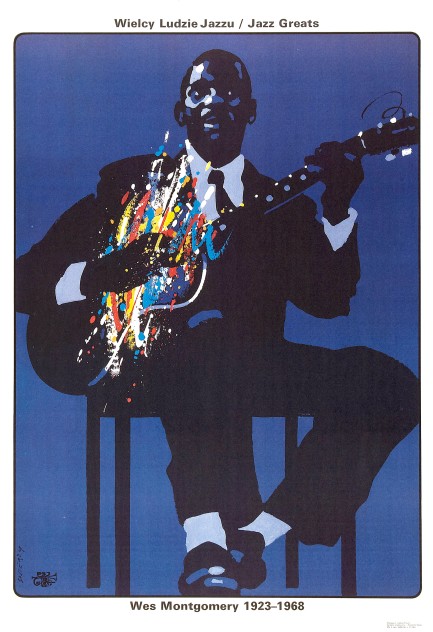
 I've shattered censorship barriers and redefined French cinema! My work here is done! 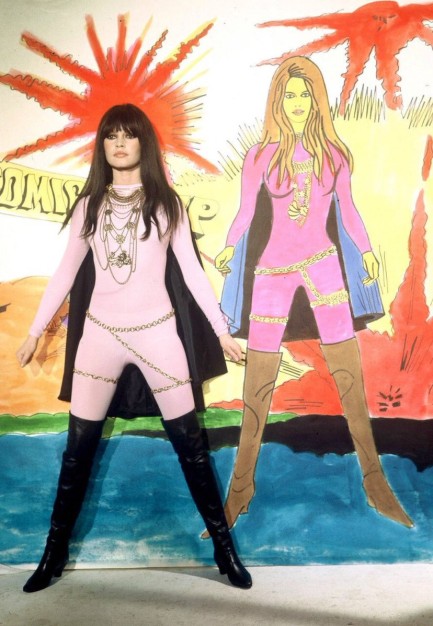
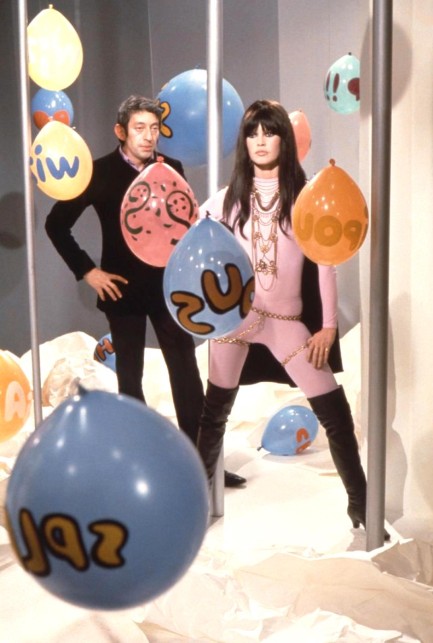
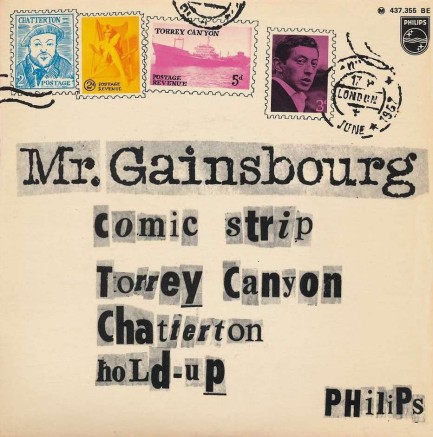 French cinema luminary Brigitte Bardot is easy to recognize even in a wig and wild costume, as shown here in an image from 1967. It was made when she appeared in singer Serge Gainbourg's music video (yes, a few visionaries were making them that far back and ever farther) “Comic Strip.” French cinema luminary Brigitte Bardot is easy to recognize even in a wig and wild costume, as shown here in an image from 1967. It was made when she appeared in singer Serge Gainbourg's music video (yes, a few visionaries were making them that far back and ever farther) “Comic Strip.”
Serge went the literal route for his clip, which is why Bardot is dressed as a superhero and echoed by a comic strip-like version of herself. The song is literal too, with lyrics that include fight sound effects: “J'distribue les swings et les uppercuts. Ça fait VLAM !Ça fait SPLATCH! Et ça fait CHTUCK!” That all translates as, “I distribute swings and uppercuts. It's VLAM! It's SPLATCH! And that go CHTUCK!” You can hear the tune and see the video at this link.
Bardot made other videos in 1967 and 1968. We think “Contact” is particularly interesting. But only a few years after achieving something as cutting edge as helping to popularize the most important promotional tool used by music artists even today, she retired from performances on both the small and large screen to focus on other pursuits. Below, you see her with Serge.
 You're intimidated by this little thing? It's just a fully loaded .38 Special that I look for any excuse to use. 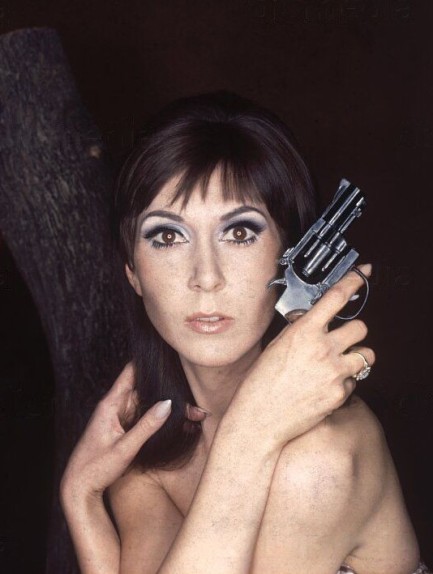
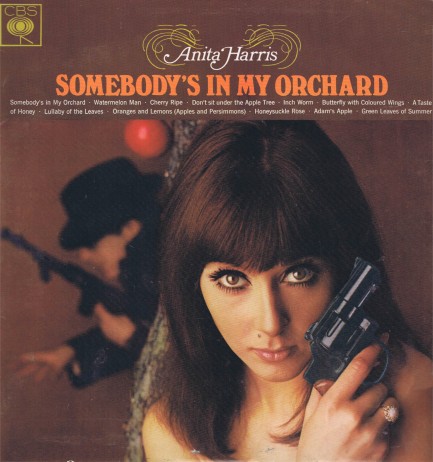
Even a dangerous weapon can't make doe-eyed British actress and singer Anita Harris look anything other than harmless. But ask the Pulp Intl. girlfriends and they say she looks completely mad. They say she has crazy eyes. Well, as far as we know she never harmed anyone unless you count a few bad acting performances. Harris appeared in such films as Love Is a Woman and Carry On Doctor, as well on numerous television shows, and as a singer charted several hits during the 1960s. Actually, one or two of those so-called hits are pretty hurtful too. Another frame from this photo session was used for the cover of her 1966 album Somebody's in My Orchard. Somebody she then blew away, we suppose.
 A jazz legend shows her stripes. 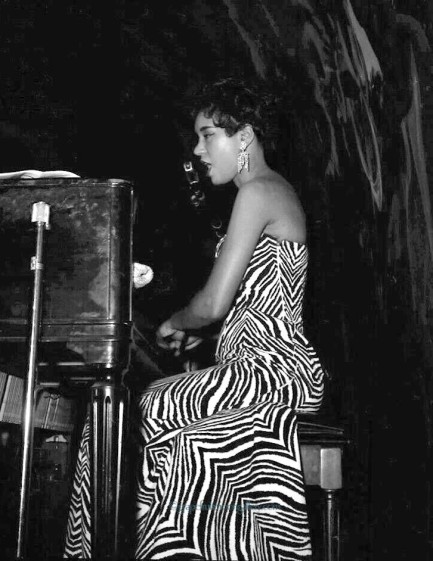
Above you see a live concert photo of musical pioneer Jo Thompson, who broke segregation barriers as a jazz performer, particularly in Miami, where she played often and where this image was made by famed photographer Bunny Yeager. Thompson also performed in Detroit, where she was based, New York City, Havana, London, Paris, and other European hotspots. She isn't well known today but she's considered by jazz lovers to have helped pave the way for black performers who came along slightly later, and critic Herb Boyd said about her that she was, “a consummate storyteller whether standing or at the keyboard."
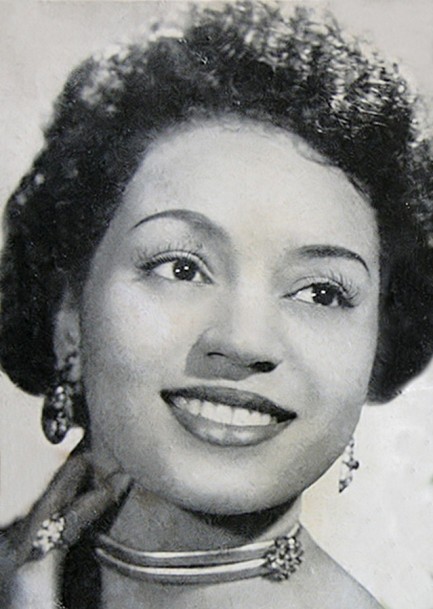 That being the case, we'll highlight a story Thompson occasionally told about Frank Sinatra, the hipster gadabout of the mid-century, who came to see her one night at the Cork Club in Miami. He was with Ava Gardner, and after the show invited Thompson to join them at their table. The Cork, being in the deep south, didn't allow black performers to sit at the tables, let alone with white companions. But Sinatra being Sinatra, the rule crumbled, at least for the night. Thompson greatly appreciated that. And the jazz world appreciated her. She was a trailblazer. She lived a very long time, long enough to receive many overdue tributes, before finally dying just two years ago of COVID-19. That being the case, we'll highlight a story Thompson occasionally told about Frank Sinatra, the hipster gadabout of the mid-century, who came to see her one night at the Cork Club in Miami. He was with Ava Gardner, and after the show invited Thompson to join them at their table. The Cork, being in the deep south, didn't allow black performers to sit at the tables, let alone with white companions. But Sinatra being Sinatra, the rule crumbled, at least for the night. Thompson greatly appreciated that. And the jazz world appreciated her. She was a trailblazer. She lived a very long time, long enough to receive many overdue tributes, before finally dying just two years ago of COVID-19.
 Okay, my dear. Let's get you back indoors. You've provided Italy more than enough spank bank material for one day. 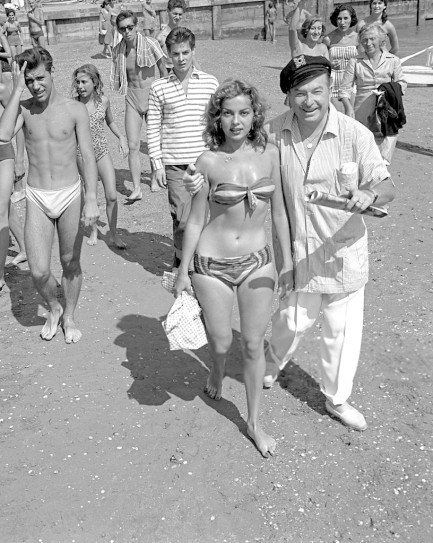
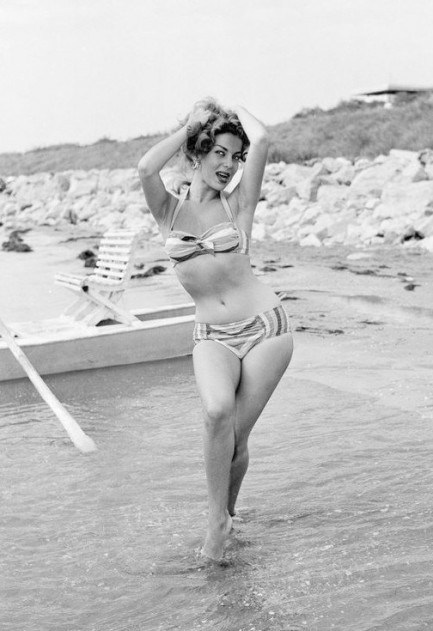
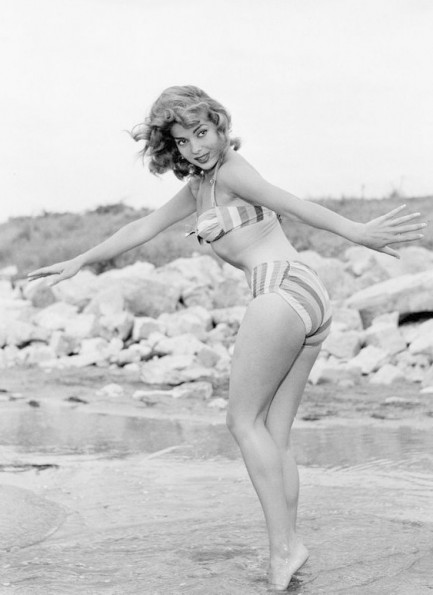
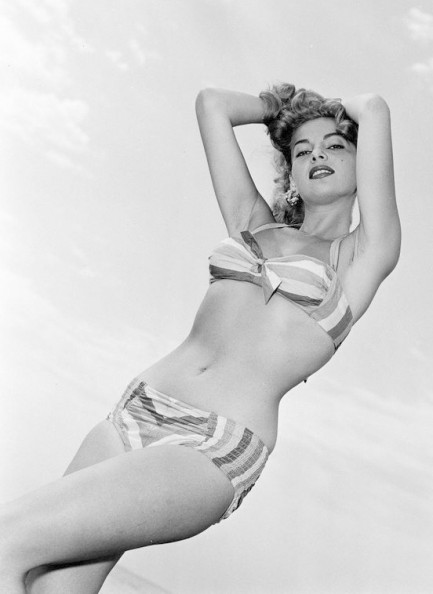
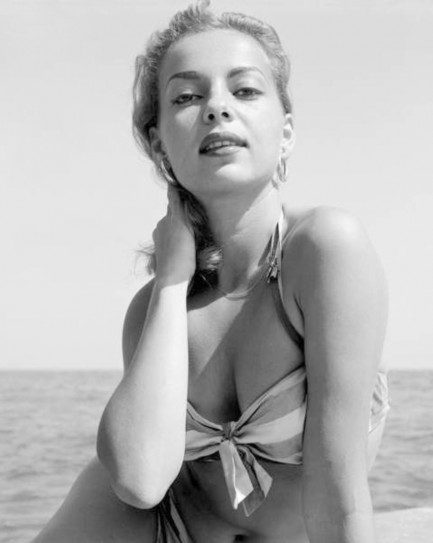
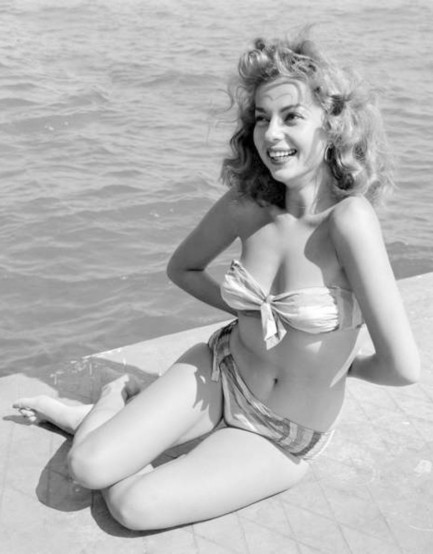
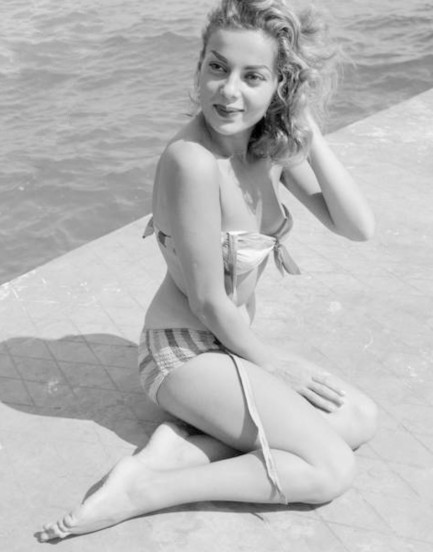
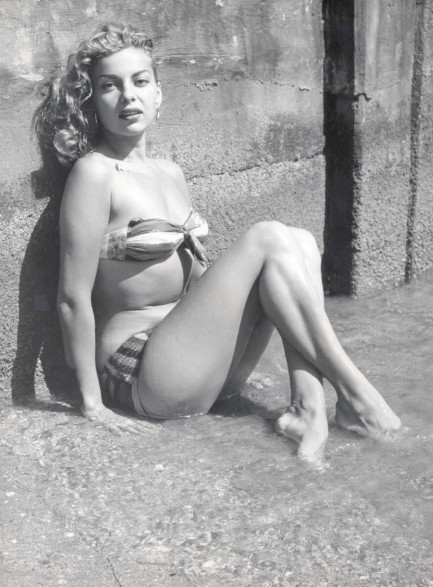
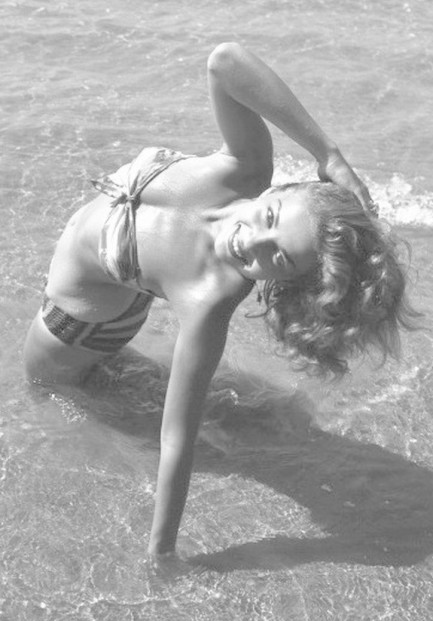
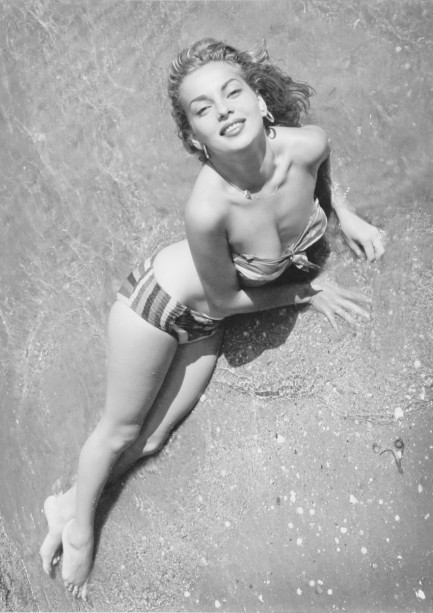
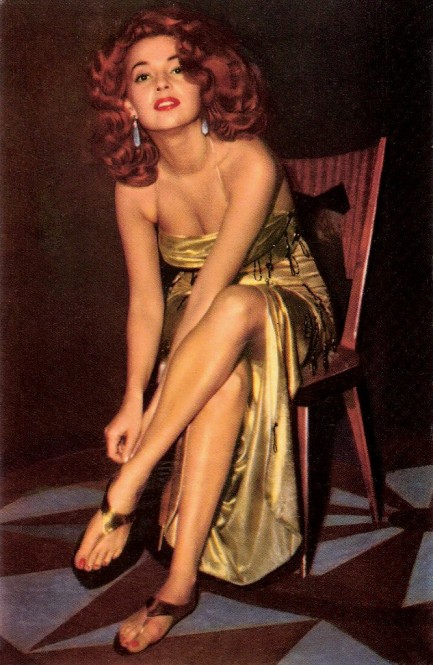
We recently showed you Abbe Lane on one of her album covers, but we've brought her back today because of this fun photo and the ones below. Lane was once deemed by Italian television authorities to be too sexy for broadcast. That's right—in Italy. So you can imagine the excitement when she donned this striped bikini for a photo shoot on the Lido in Venice, Italy during the summer of 1956. The proprietary arm belongs to her husband, Spanish bandleader Xavier Gugat. We think of the couple as the Beyoncé and Jay Z of their era, which is to say, Lane is waaaay too pretty for Cugat. She was also thirty-one years younger than him, which just goes to show what talent can do for a man: Xavier: You have inspired me, baby. I will write a song about you.
Abbe: You've already written me dozens, Xavier. All that cha-cha stuff is getting a little old.
Xavier: Music is just one of my abilities, cariño. Did I ever make you my authentic paella Valenciana with garrofó and rabbit? I almost became a chef, you know, but music beckoned.
Abbe: Men have cooked for me before. Yves Montand once made me a chocolate and pear soufflé. It was an exquisite grace note in a magnificently composed dinner, and that wasn't even really the dessert.
Xavier: Yes, that Yves. How urbane of him. How about I give you a purifying seaweed mask and a pedicure? I am a bit of an amateur aesthetician, and I love your feet.
Abbe: My skin—in case you haven't noticed—is perfect. Several men told me that today, and a cabana boy named Guido gave me a foot rub. You were snorkeling at the time.
Xavier: Grrr... I see. Well, I could paint your portrait. I am quite a good artist. I spent some time studying egg tempera at the Reial Acadèmia Catalana.
Abbe: I could never sit still that long again. Marcello Mastroianni painting me nude last year was quite enough. Day after day, hour after hour in that... well, frankly provocative pose he wanted. You were on tour, but I knew you wouldn't mind.
Xavier: Is that so? Well, fine, but I was at his house just a month ago. Why did he not show me this painting?
Abbe: I don't know. It's hanging right in his bedroom. So he tells me.
Xavier: *sigh* No meal, no skin care, no song. I guess I am just an old man unable to impress you any longer. When we get back to the villa I will simply take out the garbage, then finish reading that book I was—
Abbe: Take out the garbage? Oh, sweetheart. Tell you what—you do that and I'll put on the g-string and thigh-high boots you like and meet you in the bedroom.
The lesson from that day in Venice is that, for a wife, the ultimate turn-on is a husband who's willing to do chores. Cugat spent eleven years with Lane before they finally divorced in June 1964. She was married again before the year was over, which was a pretty fast rebound and remarriage even for Hollywood. Meanwhile, a few years later Cugat married Spanish singer and dancer Charo, who was his junior by fifty-one or forty-one years, depending on who you believe. Either way, music, cooking, and even chores are all fine, but maybe Cugat's real talent was for bedazzling younger women.
 Not only was she explosively sexy, but her voice could blow you away. 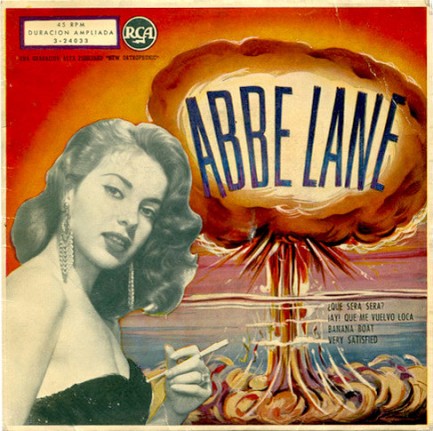
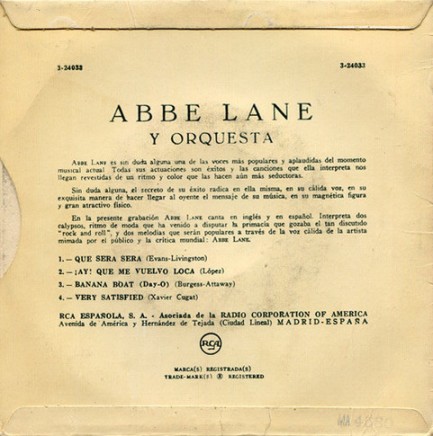
We love this nuclear themed 45 sleeve for an Abbe Lane four song disc, which we guess is titled simply Abbe Lane. It came from RCA Española and was released in Spain in 1958 with the offerings: “Que será será,” “¡Ay! Que Me Vuelvo Loca,” “Banana Boat (Day-O),” and “Very Satisfied.” All four songs are easy to sample online, so give them a whirl if you wish.
The rear sleeve text is fun. It says: Abbe Lane is without a doubt one of the most popular and applauded voices of the current musical moment. All her performances are hits and the songs she sings come to us covered in a rhythm and color that make them even more seductive.
Without a doubt, the secret of her success lies in herself, in her warm voice, in her exquisite way of conveying the message of her music to the listener, in her magnetic figure and great physical attractiveness.
In this recording, Abbe Lane sings in English and Spanish, interprets two calypsos, a fashionable rhythm that has come to dispute the primacy enjoyed by the much-discussed “rock and roll,” and two melodies that will be popular through the warm voice of the artist pampered by the public and critics worldwide: Abbe Lane.
The promotional staff at RCA Española might have loved Lane, but they couldn't spell. They open the third paragraph by calling her “Abre,” instead of Abbe. That amused us. We also like how, according to the front office brains, calypso was supplanting rock and roll. Really? Well, it turned out to be a marathon, not a sprint. We have a bonus shot of Lane below, for your viewing pleasure.
 Fitzgerald and friends enter the no-go zone. 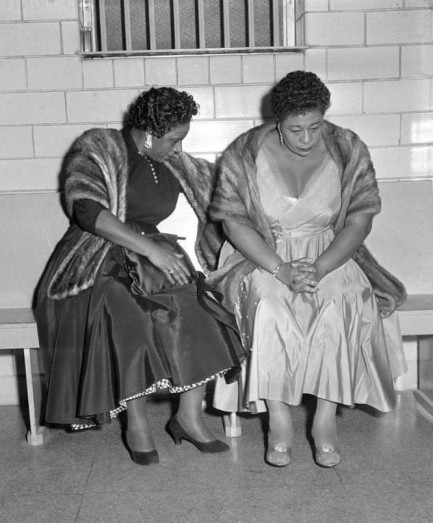
Today in 1955 in Houston, musicians Ella Fitzgerald, Dizzy Gillespie, Illinois Jacquet, personal assistant Georgiana Henry, and concert promoter Norman Granz were arrested, ostensibly for the crime of illegal gambling. Five undercover cops had barged into the backstage area at the Houston Music Hall during a mid-set break and caught Jacquet and Gillespie playing craps. Fitzgerald was having a snack. Henry was nearby, as assistants tend to be. And Granz was arrested for blocking the cops' access to Fitzgerald's private bathroom because he feared they might plant drugs—a trick he'd seen before. The photo shows Fitzgerald and Henry. The despondent singer told gathered reporters, “I have nothing to say. What is there to say? I was only having a piece of pie and a cup of coffee.”
The gambling charge was, of course, just a pretext. Ella and company were actually arrested for playing to an integrated audience. Segregation had been made illegal the year before, but local authorities weren't budging in their attempts to keep the city divided, and jazz music, because of its popularity and tendency to elevate black culture, was feared by the old guard as the thin edge of the wedge of equal rights. Back then, opponents of equality called non-segregated shows such as Fitzgerald's “forced integration,” because whites had no option to partake without mingling with blacks. The phrase is eerily similar to “forced diversity,” which you hear a lot in 2022, and will continue to hear in upcoming years.
Pretext arrests are really about plausible deniability. Even today on fact-checking websites like Snopes, the arrest is not fully labeled an incident of racist harassment. They were actually gambling, goes the logic. But so were thousands of other Houstonians that night, including, probably, cops at poker sessions in their dens. Everyone breaks the law. Policing is about who is targeted. Five of Houston's finest bursting into a private backstage area when no probable cause existed is itself proof that the arrest was harassment. But it's the cops who write the record, and in covering up their true motivations they also get to skew official history. It's the oldest game in the book.
Fitzgerald and her companions weren't taken to jail until after they completed the few songs left in their show, a concession doubtless bestowed in order to prevent the audience from getting riotous. After being released the musicians made it back to Houston Music Hall and played a second contracted show—again, leniency that was probably a crowd control measure, if not a favor to the concert venue itself. The police had accomplished their objective. They'd sent a message and, because news media were present at the jail, had embarrassed the performers nationally. We suspect that Fitzgerald's heart wasn't really in that second performance. It had to be clear to her that no matter what protections blacks were given with a pen and ink in Washington, D.C., actual power in the south flowed from a corrupt badge and the muzzle of a gun.
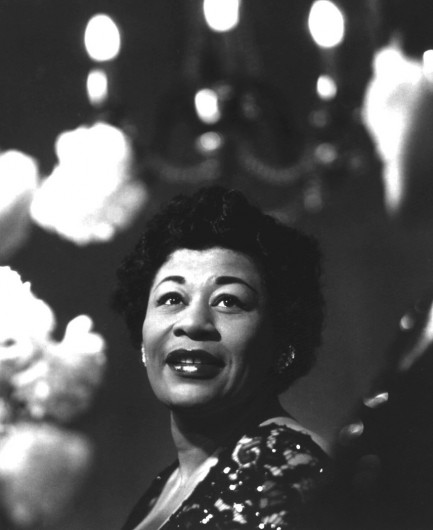 If you want to hear Ella at her magical best, have a listen to this.

|
 |
The headlines that mattered yesteryear.
1923—Yankee Stadium Opens
In New York City, Yankee Stadium, home of Major League Baseball's New York Yankees, opens with the Yankees beating their eternal rivals the Boston Red Sox 4 to 1. The stadium, which is nicknamed The House that Ruth Built, sees the Yankees become the most successful franchise in baseball history. It is eventually replaced by a new Yankee Stadium and closes in September 2008. 1961—Bay of Pigs Invasion Is Launched
A group of CIA financed and trained Cuban refugees lands at the Bay of Pigs in southern Cuba with the aim of ousting Fidel Castro. However, the invasion fails badly and the result is embarrassment for U.S. president John F. Kennedy and a major boost in popularity for Fidel Castro, and also has the effect of pushing him toward the Soviet Union for protection. 1943—First LSD Trip Takes Place
Swiss scientist Albert Hofmann, while working at Sandoz Laboratories in Basel, accidentally absorbs lysergic acid diethylamide, better known as LSD, and thus discovers its psychedelic properties. He had first synthesized the substance five years earlier but hadn't been aware of its effects. He goes on to write scores of articles and books about his creation.
|

|
|
It's easy. We have an uploader that makes it a snap. Use it to submit your art, text, header, and subhead. Your post can be funny, serious, or anything in between, as long as it's vintage pulp. You'll get a byline and experience the fleeting pride of free authorship. We'll edit your post for typos, but the rest is up to you. Click here to give us your best shot.
|
|