| Sex Files | Jun 7 2015 |

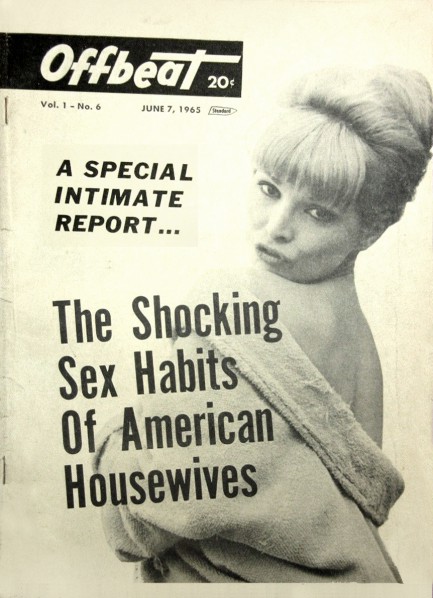
There’s no limit to the range of tabloids from the 1960s and 1970s. Yesterday we showed you Private Affairs, and today we’re going downmarket with Offbeat, which came from Beta Publications of Chicago. The main thing that’s offbeat with this publication is the cover design, which you can see on this issue that appeared today in 1965 features elements skewed relative to each other and the magazine’s frame. We like it. Content-wise, though, Offbeat is nothing new. Its report on the shocking habits of American housewives is just sleaze fiction dressed up as research. 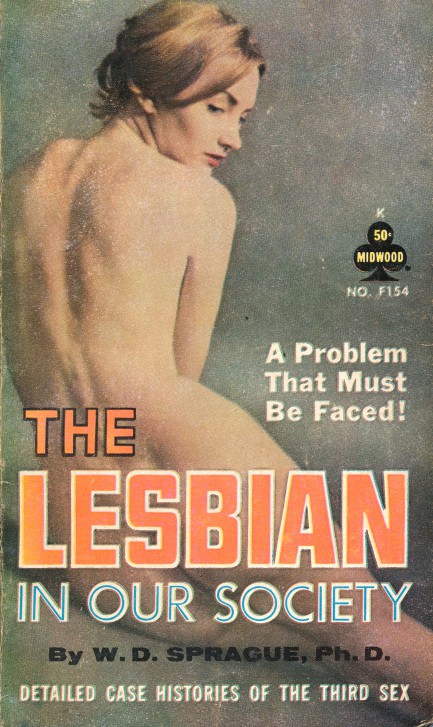 The number one reason wives cheat, according to W.D. Sprague, PhD, is revenge against cheating husbands. Readers are treated to a steamy retelling of a wife’s affair with a milkman—yes, really, a milkman—and another wife tells the story of how she ran into an old boyfriend one day and they fell into the old pattern and started having sex regularly again. It’s pure lit-porn.
W.D. Sprague was not the creation of tabloid editors you might suspect, but rather an actual author who published Sexual Behavior of American Nurses, Sex and the Secretary, The Lesbian in Our Society (A Problem That Must Be Faced!), and many other romps that swelled readers’ groins while doing the same for his bank account. The article in Offbeat is actually taken directly from Sexual Behavior of the American Housewife, another Sprague winner. His real name was Bela von Block—yes, really—and he also published under other names besides Sprague. His PhD was a hoax, of course, but who needs a degree when you’re smart enough to make a career of faking expertise about the inner lives of women? Some of his work was done for reliable sleaze imprint Midwood-Tower, but he also published for Lancer and other companies. We’ll undoubtedly run across him at some point in the future.


| Vintage Pulp | Jul 7 2014 |

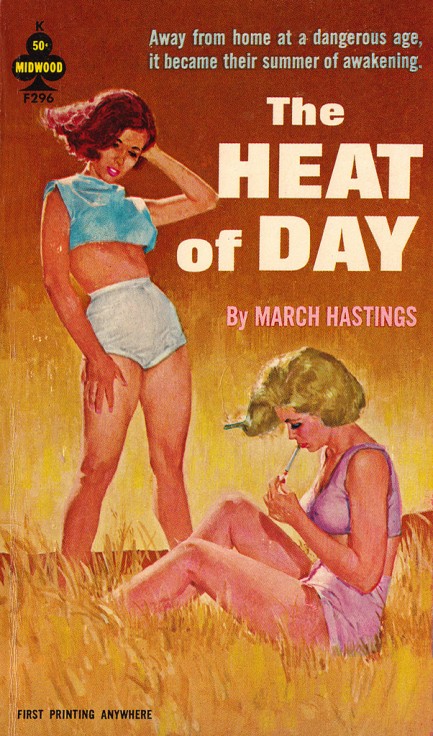
Above, the cover of March Hastings’ The Heat of the Day, one of many lesbian themed novels published by Midwood-Tower. It’s the story of two girls whose blackened skeletons are found in a fire-scorched field. Well, not really. It’s actually about two girls who meet at a summer camp and develop a scorching attraction for each other. 1963 on this one, with art by Victor Olson.

| Vintage Pulp | Sep 3 2012 |

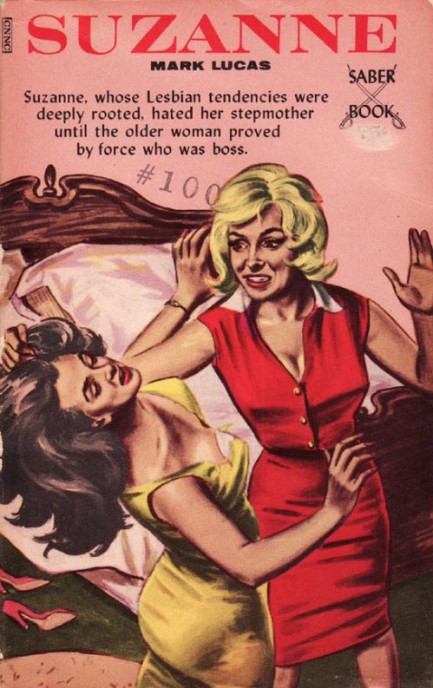
Like any art form, pulp illustration runs the gamut from scintillating to disastrous. Today, with Mark Lucas’ lesbian sleaze novel Suzanne, we’re confronted with a cover from the latter category. The book was published by the low rent imprint Saber, which was owned by Sanford Aday, and if you take a look at the art, you see a woman whose right arm is on backwards. Or who has two left arms, depending on how you prefer to describe it. Just about the time you start wondering if she has two left feet, too, everything suddenly resolves like an Escher and you see that the bizarro arm actually belongs to her adversary. But what an amusing failure this cover is. We have no idea who to blame, though. It’s uncredited.

| Vintage Pulp | Oct 5 2011 |

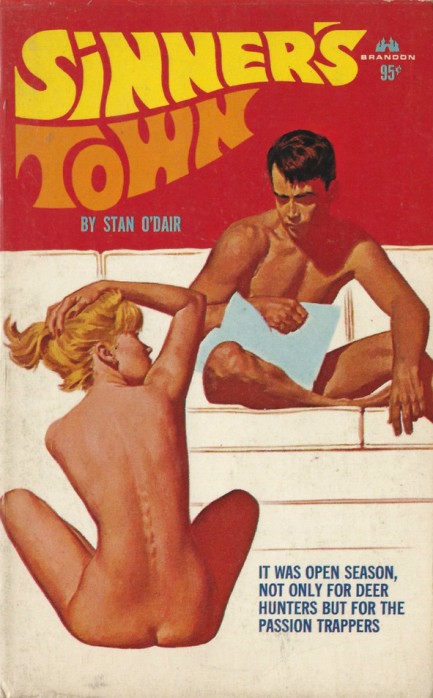
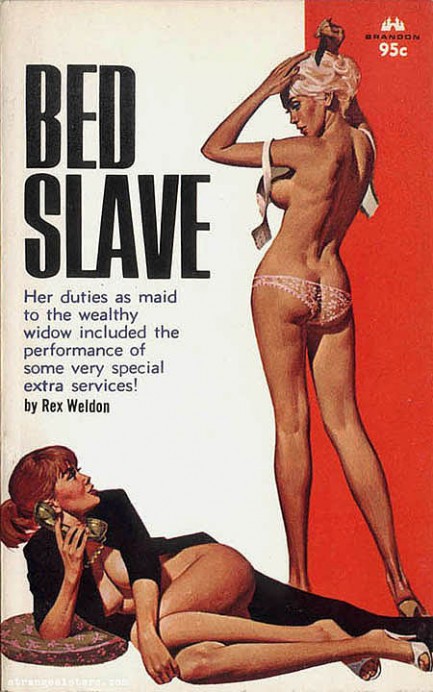
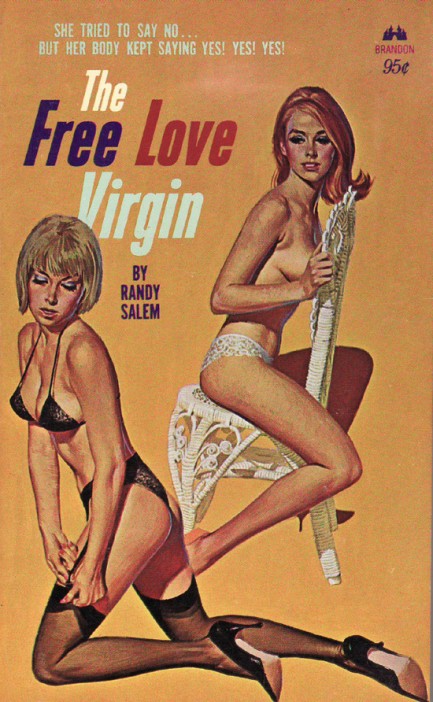
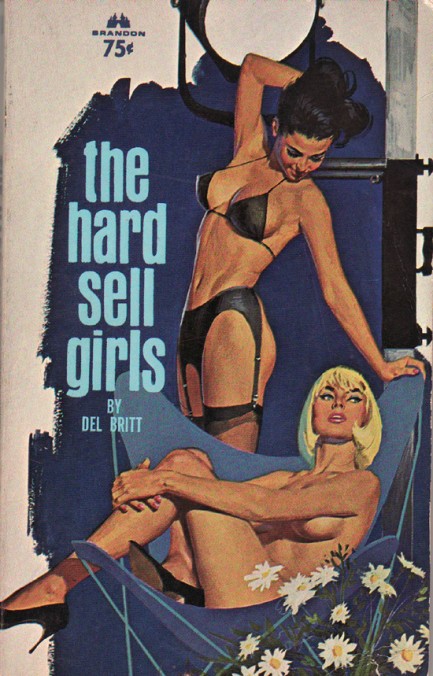
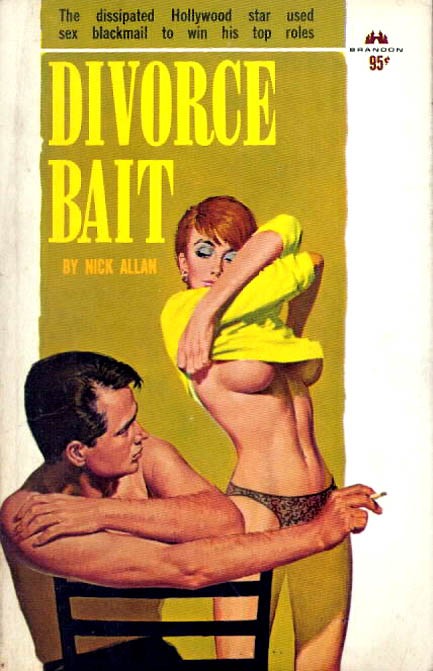
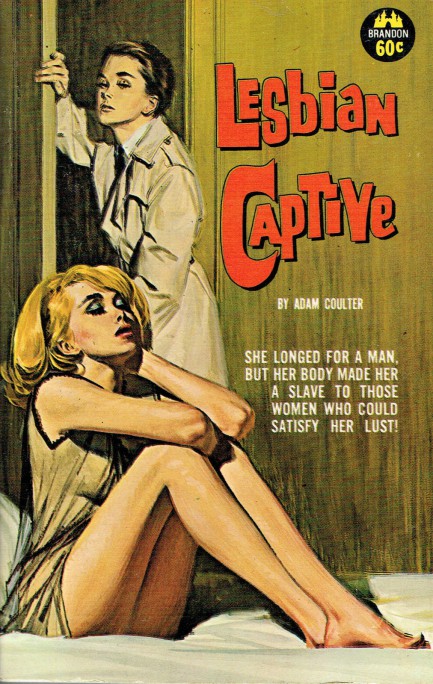
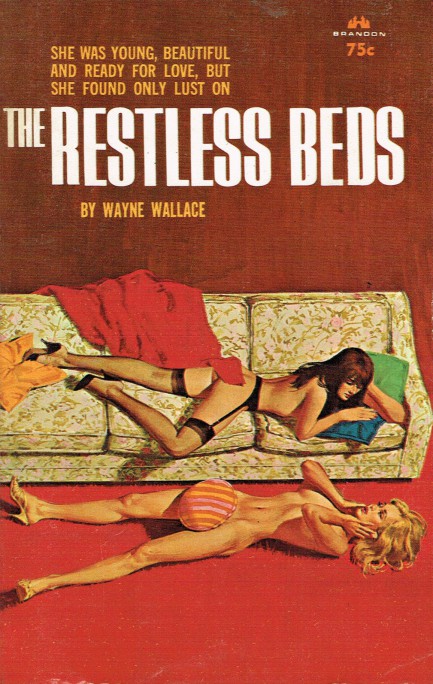
Hungarian-born Fred Fixler’s first career was as a diamond cutter, but by the early 1950s his focus shifted to art, which he studied in both the U.S. and France. He began illustrating paperback covers, and for years was an illustrator for the sleaze publishing imprint Brandon House. During that time his instantly identifiable style resulted in some of the most dynamic paperback covers ever seen on U.S. book racks. The piece above, with its shadowy lovers, is a prime example. Brandon House used Fixler as the primary illustrator for their line of lesbian paperbacks, and because of his talent, these books, which originally sold for around one dollar, go online today for in excess of seventy-five bucks. Fixler also worked in the commercial art field, and taught at schools like the California Art Institute, The Brandes Art Institute, and Parsons School of Design. Below are several more great Fixler pieces that we corralled from around the internet. You can see more of his art by searching online, and learn a lot more about him from his website. 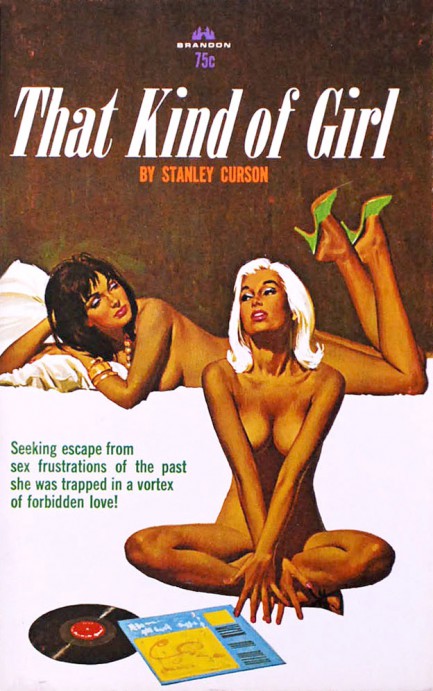

| Hollywoodland | Aug 6 2011 |

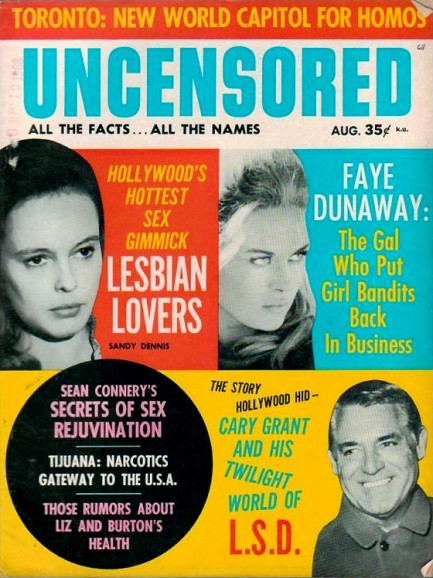
We’re back to the gossip magazine Uncensored today, with its info-packed cover telling us about gay Toronto, lesbian Hollywood, Sean Connery’s sex secrets and rumors about Liz Taylor and Richard Burton. But the standout item here (aside from the appearance of the non-word “rejuvination” and the misused term “capitol”) is the one on Cary Grant and his experimentation with LSD. Before the Beatles, Timothy Leary, and Carlos Castaneda, LSD was the drug of choice for a rarefied circle of glamorous elites who ingested it as part of their psychiatric therapy sessions. We’re talking about people as famous and diverse as aquatic actress Esther Williams, Time publisher Henry Luce, director Sidney Lumet, authors Aldous Huxley and Anais Nin, and composer André 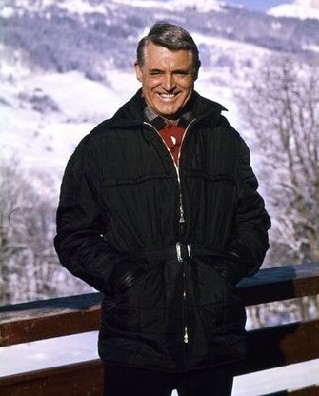 Previn.
Cary Grant never tried to keep his LSD use secret. In fact, he spoke glowingly about it in a 1959 interview with Look magazine, saying that it had brought him close to happiness for the first time in his life. He also said that LSD taught him immense compassion for other people, and had helped him conquer his own shyness and insecurity.
But by 1968 the U.S. government—which had experimented extensively with LSD in hopes of using it as a truth serum or a form of chemical warfare, and had dosed thousands of people both willingly and unwillingly—was moving toward declaring the drug illegal. Grant’s wife Dyan Cannon had famously cited LSD usage as a primary factor in seeking a 1967 divorce, and the counterculture embrace of the drug was beginning to frighten middle America and the White House. That’s the backdrop against which this August 1968 Uncensored appeared, and by October of the year LSD was illegal. But the fact that public opinion had shifted—or more accurately, had been pushed by a steady, government-initiated anti-LSD campaign—did not particularly harm Grant’s public standing.
When he died in 1986 he was still one of the most revered Hollywood actors ever. And about his LSD usage he had no regrets. Quite the opposite—he commented: “Yes, it takes a long time for happiness to break through either to the individual or nations. It will take just as long as people themselves continue to confound it. You’ll find that nowadays they put you away for singing and dancing in the street. ‘Here now, let’s have none of that happiness, my boy. You cut that out; waking up the neighbors!’ Those darn neighbors need waking up, I can tell you, constable!”

| Vintage Pulp | Sep 17 2010 |


| Modern Pulp | Sep 19 2009 |


Here’s a little piece of modern pulp we found in a bar in Donostia-San Sebastián, Spain. We had just finished a round of tasty apple-flavored shots, and there it was on the bartop at a place called Akerbeltz. The magazine is called Gehitu, and it’s published by a GLBT rights organization based in Northern Spain. The magazine is nicely put together, promotes a cause we respect, and is filled with events information, but what interests us most is their usage of an iconic photo of Ursula Andress, who they’ve given winglike appendages and depicted as wounded but unbowed. If we assume this is a visual reference to Hamlet’s famous “To Be or Not To Be” soliloquy, then it’s a poignant and clever rebranding. Since we started this website we’ve discovered that small magazines, flyers and pamphlets are goldmines of pulp styled art. In those media we tend to find creators who truly get what pulp is about. We’ve been picking up these bits and pieces, and with today’s post have shared one of our many finds. We’ll have more for you down the line.

| Vintage Pulp | Jan 24 2009 |

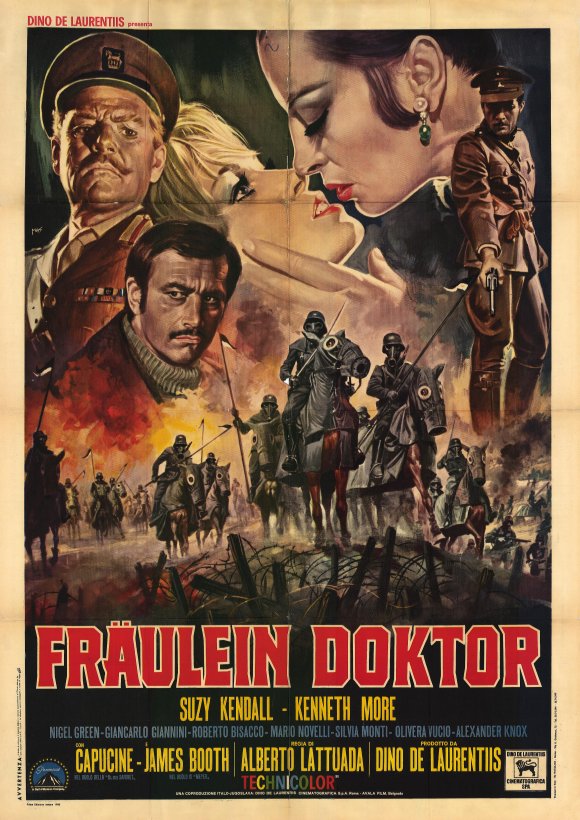
Fräulein Doktor is an Italian production, despite the German title. And though said title conjures up images of lez sexploitation (at least it does for us), it’s actually an artful film made with what was at the time a substantial budget. Though there are pulp elements, it presents a serious discussion about the horrors of war, and the emotional sacrifices made by its Mata Hari-like central character, played by the über-hot Suzy Kendall. Despite these positives, the film performed poorly upon release and was re-edited to remove its lesbianism, then relegated to late night television, where it languishes to this day. But it has a devoted cult following, so a DVD re-release is not completely out of the question. Time will tell. Fräulein Doktor premiered in Italy today in 1969.

| Modern Pulp | Dec 23 2008 |

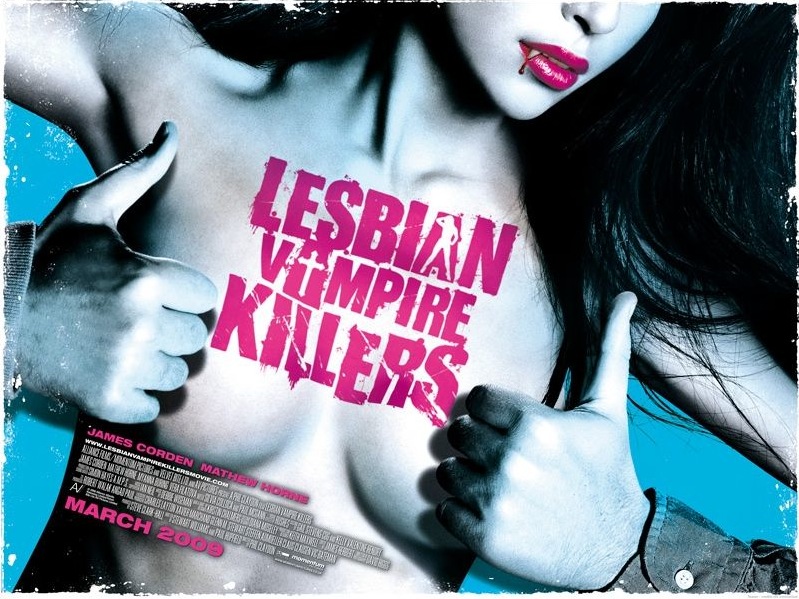
We first saw this teaser art for the upcoming British flick Lesbian Vampire Killers a couple of weeks ago and were debating whether to post it. We’d decided it was widely enough available without our efforts, but the more we looked at it the more we liked it, so here you go. Question now is, can the movie ever be as thumbs-up as the teaser art?