You can think about it, but first you have to know what “it” is. 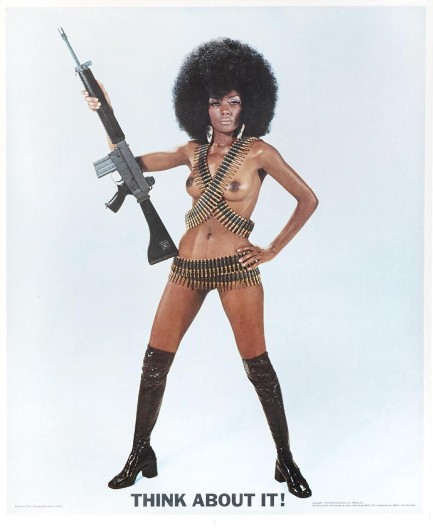
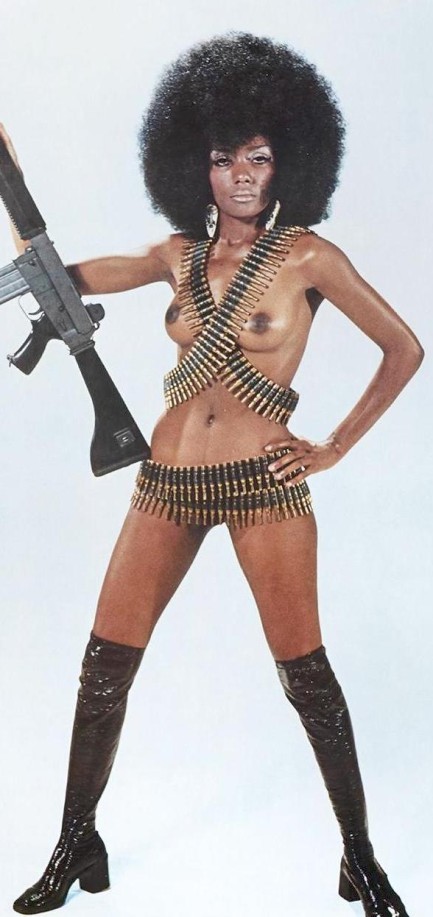
Stop us if you already know this. Back during the ’60s and ’70s stores that sold items related to tobacco and weed consumption were known as headshops. The hippest sectors of town—your Haight-Ashburys, Capitol Hills, and Greenwich Villages—were home to these establishments, and among the many products on offer counterculture posters were big sellers. These would be Che Guevara posters, naked-woman-smoking-a-bong posters, fluorescent black light posters, etc., genrally aimed at young male customers. Above is an example of that collectible art form. The shot was made by Dozier Mobley, who you see here. 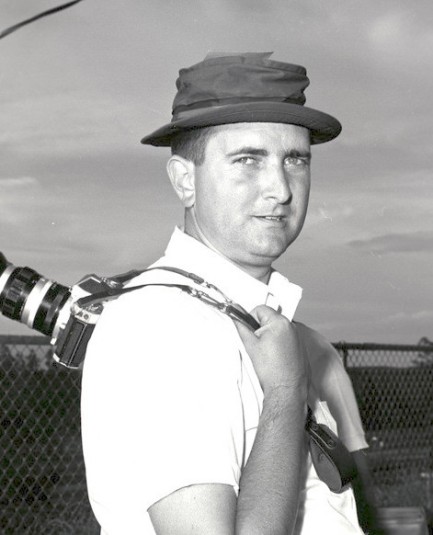 He was a photojournalist for the Atlanta Journal, the Associated Press, and United Press International, and later went on to work extensively with NASCAR. He was a photojournalist for the Atlanta Journal, the Associated Press, and United Press International, and later went on to work extensively with NASCAR.
The message of the poster may seem self-explanatory (most websites say it calls for revolution), but we aren't sure. While that's an understandable interpretation, we actually think, because the model is nude, this is more likely a sex-not-war, anti-Vietnam type thing aimed specifically at black buyers, who had been sent overseas in disproportionate numbers (particularly early in the war, and particularly when compared to earlier wars). The “Think About It!” tag suggests an anti-war message, we feel, as in, “Think about what you'll lose.” But we'll never know the exact meaning. It's a headshop poster. The message is up to each buyer to determine. Mobley would probably know, but he died in 2009. The model might know too, but she's unidentified, sadly. Unidentified—but unforgettable.
 Dan J. Marlowe gives readers an immersive experience. 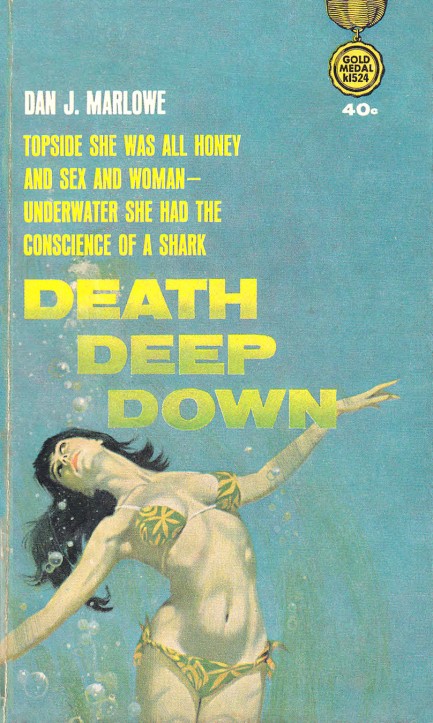
Death Deep Down, a thriller from the typewriter of the prolific Dan J. Marlowe, was published in 1965, which is a significant year compared to the books from the ’40s and ’50s we typically read. Books from the mid-sixties and later usually have pacing more similar to today's novels, with faster movement and more action-oriented plot beats. That's true here, and combined with good writing skill, the result is that there isn't a single page Marlowe has written that readers would likely be tempted to gloss over at any point. But let's not get ahead of ourselves.
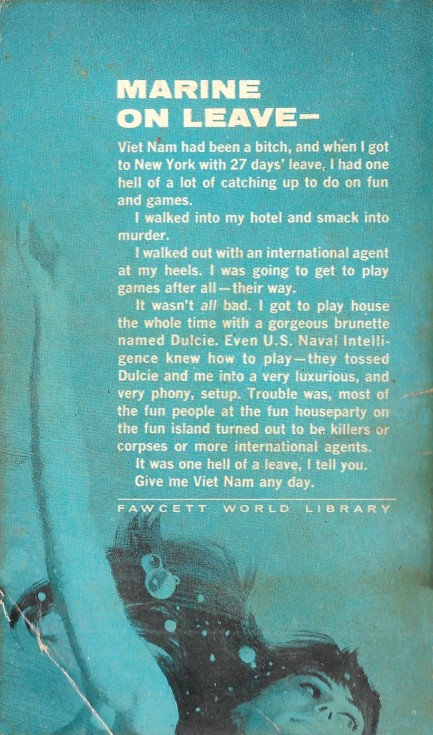
The story revolves around a potential fortune-making modification to scuba equipment (or SCUBA if you prefer), and the various forces—business, government, and non-aligned—that all want the rights to it. When you think scuba you think warm waters, and the cover illustration reinforces that notion, but all the aquatic action is in the freezing waters of Long Island Sound, off Oyster Bay. The protagonist Rocky Conrad, a marine on leave from the Vietnam War, is drawn into the plot when his half brother, who developed the gear, is tortured to death. This is juxtaposed against an inheritance drama within a wealthy family, while lurking in background are mysterious assassins of sadistic bent, who flay skin, break bones, and cut out eyes. Who they're working for is one of several mysteries Rocky needs to unravel. He goes about it the way you'd expect of a guy with his name—fists first.
This was Marlowe's tenth novel, and he knew exactly what he was about. There aren't many flaws, though it's at times jarringly pervy, with female characters getting fully or partly naked according to flimsy authorial pretexts. We love nudity, but within the narrative flow. Rocky's asides get a little digressive. Even so, the female characters play important roles both behind the scenes of the caper, and front and center in the action. One such instance involves a vicious fight. We just mentioned how rarely authors write truly knock-down drag-out battles between two women, and presto—here you go. This fight is amazingly hateful, with face scratching, hair ripping, and the combatants rolling off a deck. At the end both require serious medical attention and are likely to be scarred for life. It's a nice punctuation in a book filled with good action.
Turning to the striking cover, this Gold Medal edition features the instantly recognizable work of Robert McGinnis, and his genius shines through even on what is an understated effort by his standards. As often occurs with mid-century paperbacks, the blurb is misleading. Topside she was all honey and sex and woman—underwater she had the conscience of a shark. That's every woman in the book apart from the main love interest Dulcie, which makes it potentially foolish that Rocky treats them all dismissively. The only thing more dangerous than a femme fatale is, like, three of them. We're going to try another Marlowe. Based on how involved we got in Death Deep Down, more is mandatory.
 And this stretch is great for the shoulders. We violent ones know how to take care of bodies in more ways than one. 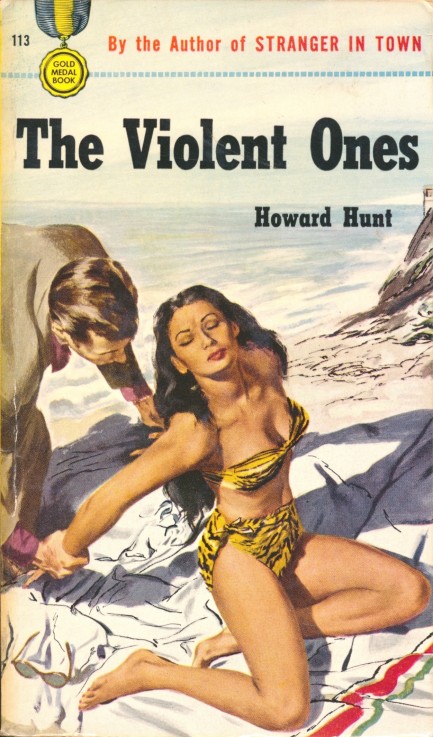
Above is a Barye Phillips cover for Howard Hunt's 1950 novel The Violent Ones, about World War II vet Paul Cameron, summoned by his buddy Phil Thorne back to Paris, where they spent part of the war. Thorne needs help with an unspecified jam, but he's killed not long after Cameron arrives, who then vows revenge against any and all. There's nothing subtle here. He turns bull-in-china-shop, knocks heads, gets knocked, uncovers commies, and manhandles various women—who fall for him anyway. The murder has to do with the smuggling of gold to Hanoi. Cameron mocks the head smuggler at one point, “So now you're sending gold to your cousins in Indo-China so the Little Brown Man can come into his own?” Hunt couldn't imagine Vietnam escaping the western orbit, but it happened anyway. That's irony. He's an intriguing author and a uniquely interesting man, which means he may appear here again.
 Minuit puts the country's hospitable reputation to the test. 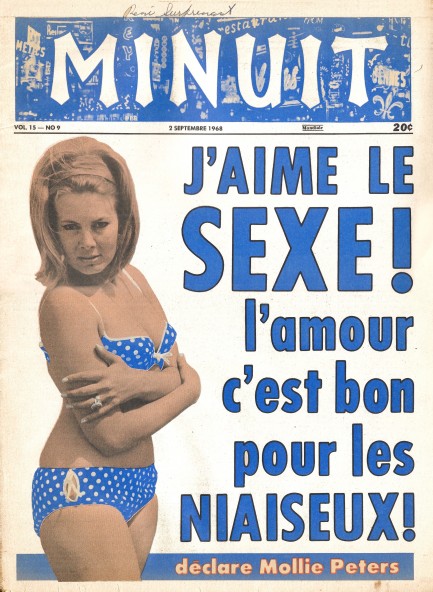
Ever since we discovered a while back that the U.S. tabloid Midnight was actually a spin-off of Montreal based Minuit we've been looking around for issues. We finally had some luck. This example hit Canadian newsstands today in 1968, and on the cover is British actress Mollie Peters, or Molly Peters. Inside, various Hollywood stars are spotlighted in unflattering ways. Edy Williams was allegedly attacked by a lesbian; Paul Newman resorted to transcendental meditation to cut down on his drinking; Jason Robards, Jr. broke everything Humphrey Bogart related in Lauren Bacall's house; Robert Vaughn paid off his extensive gambling debts and cancelled his credit cards; Janet Margolin allegedly ate a pound of ground beef every day for health reasons; and Ursula Andress attacked Anita Ekberg in a Paris restaurant for making eyes at Andress's boyfriend Jean-Paul Belmondo.
There's also a note on Babsi Zimmermann, who Minuit claims just refused a nude role in a French film. We noticed the blurb because of her name, which seems too good to be true, and familiar too. We looked her up and she did exist. It turns out she was better known as Barbara Zimmermann. She changed her stage name after the release of her first film, a counter-culture sexploitation romp called Heißer Sand auf Sylt, aka The New Life Style (Just to Be Love). Maybe she wanted a fresh start because the movie was such a stinker. We know it was bad because we wrote about it, which is why her name sounded familiar. She's naked as a donskoy cat in it, so Minuit's claim that she refused the French movie makes sense if she wanted to rebrand herself. The change still has people confused. Currently IMDB has separate entries for Babsi and Barbara.
Minuit reserves special attention for U.S. actor George Hamilton, who had been generally targeted by tabloids for avoiding military service in Vietnam. Why him? We wrote about the reason a long while back, and if you're curious you can check. Minuit wryly informs readers that, “George Hamilton somehow managed to break his toe the day after he received a notice to report to the U.S. Army recruiting center. This gives him an interesting three-month [deferral]. It's clever, isn't it?” Obviously, toes heal. Hamilton eventually received a full deferral for other reasons.
Also in this issue, Minuit editors treat readers to a story about a man cut in half by a train. We feel like it's urban folklore, but there are photos—for any who might be convinced by those—and a long story explaining how a man named Regerio Estrada caught his wife Lucia in bed with another man, beat him unconscious, and tied him to a train track to await the next express. Do we buy it? Not really. The internet contains only a fraction of all knowledge and history, but we think this tawdry tale is so bizarre that it would have found its way online. There's nothing. Or maybe we're just the first to upload it. Anything is possible. We have additional colorful Canadian tabloids we'll be sharing in the months ahead. You'll find eighteen scans below. 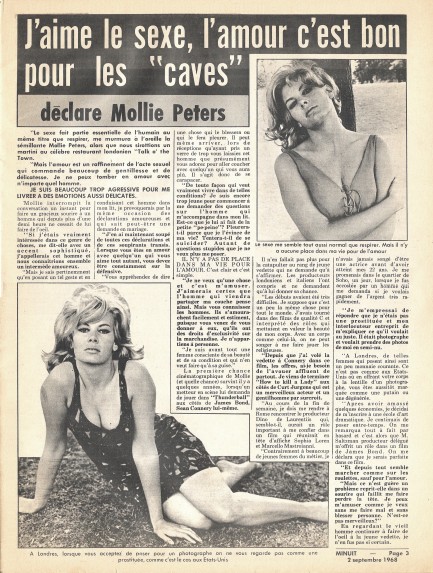 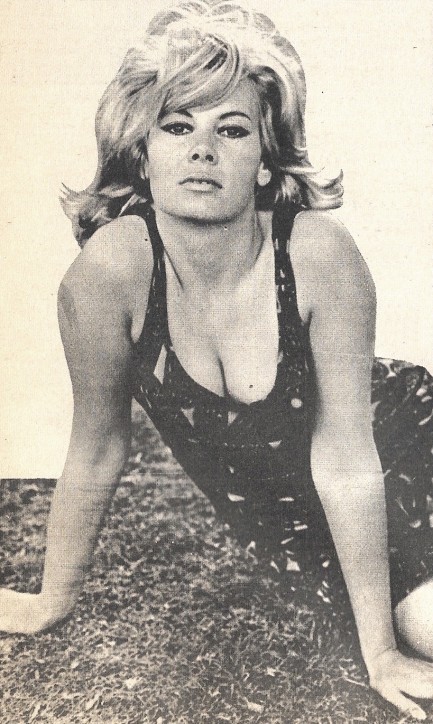 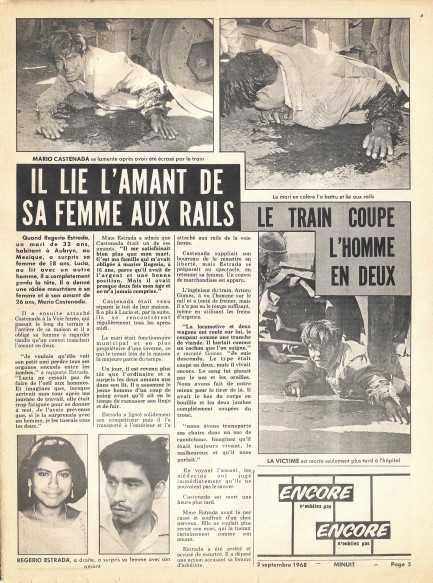 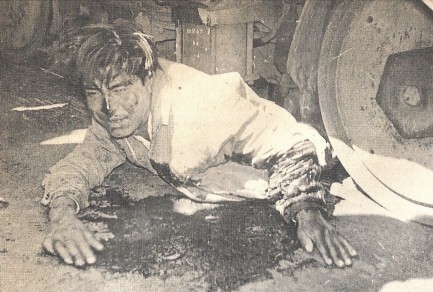 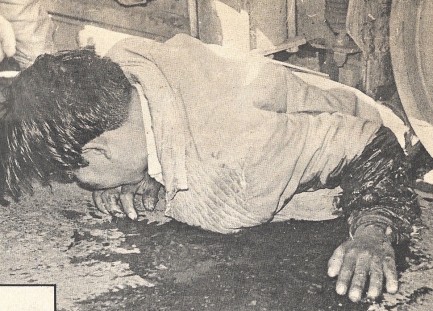 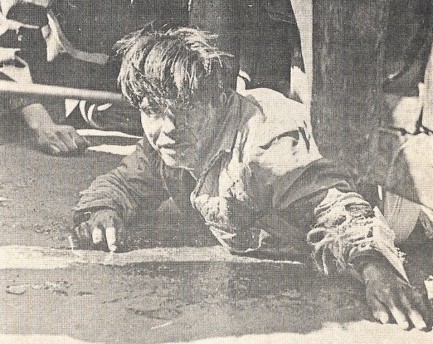 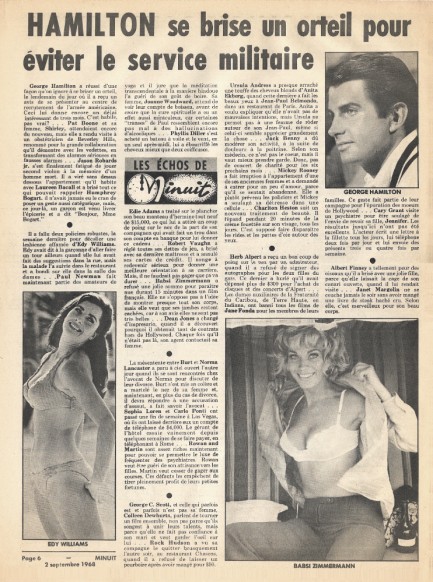 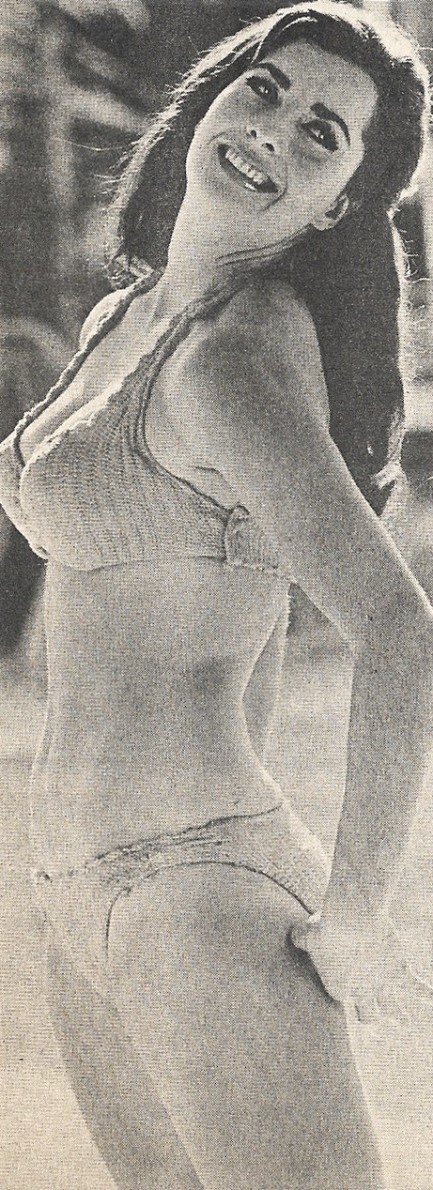 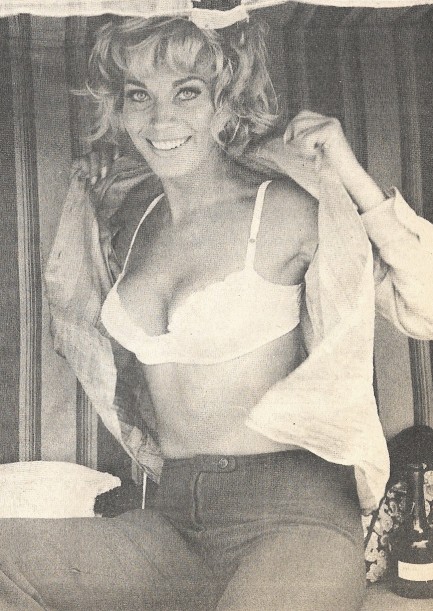 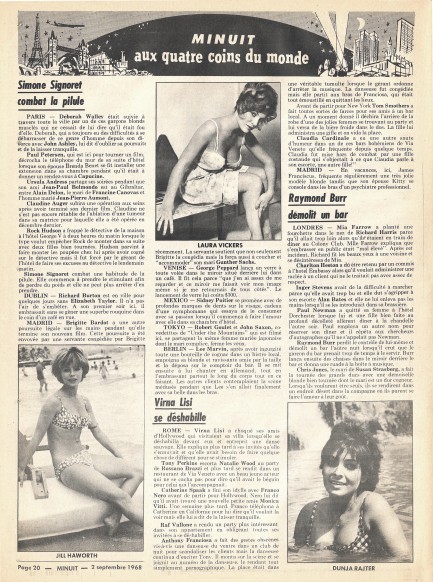 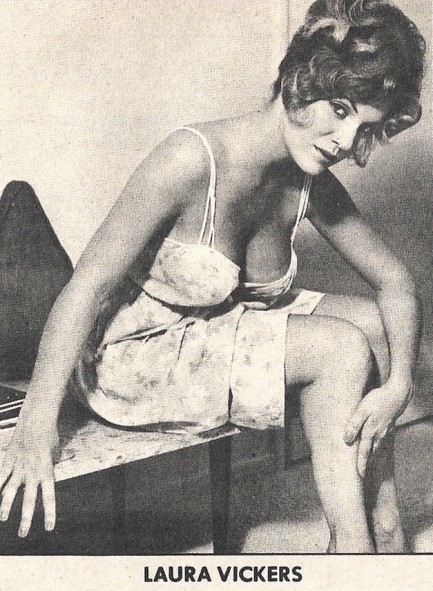 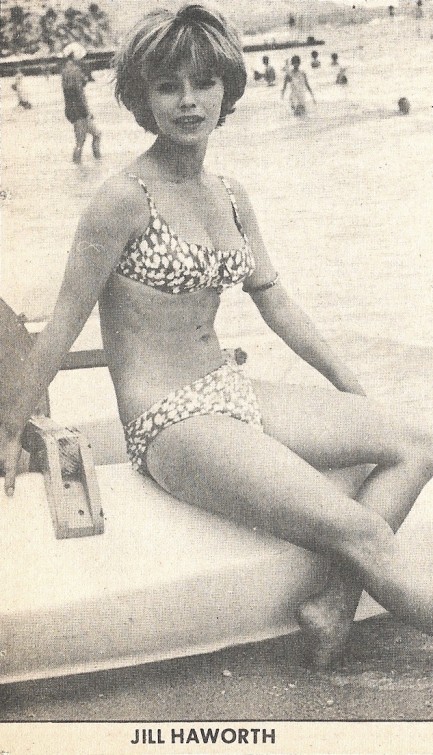 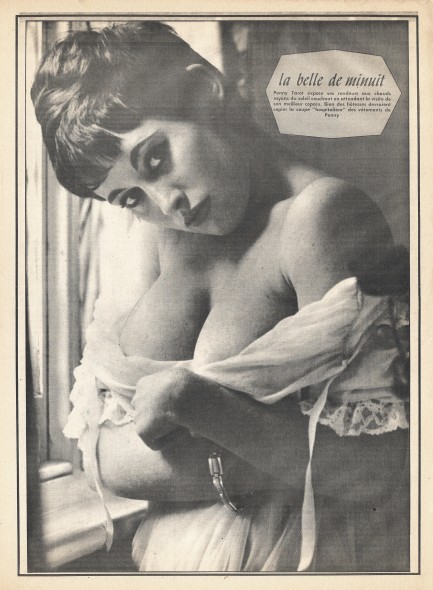 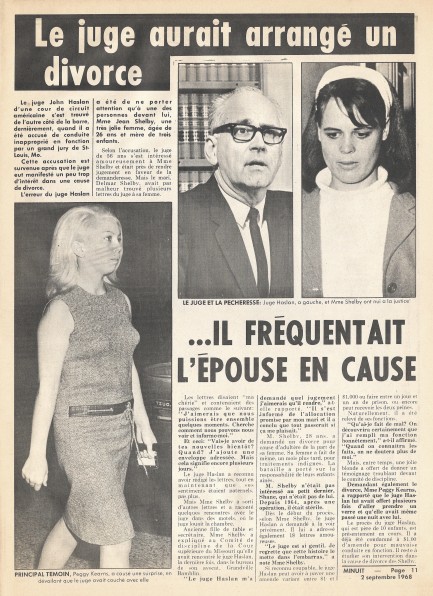 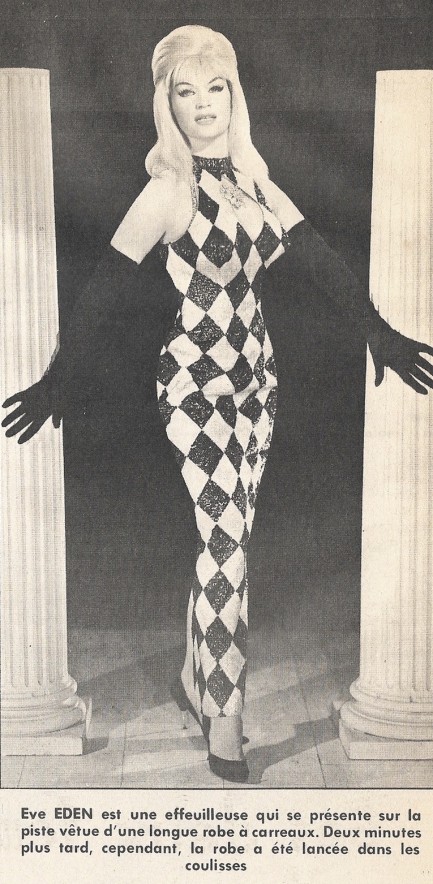 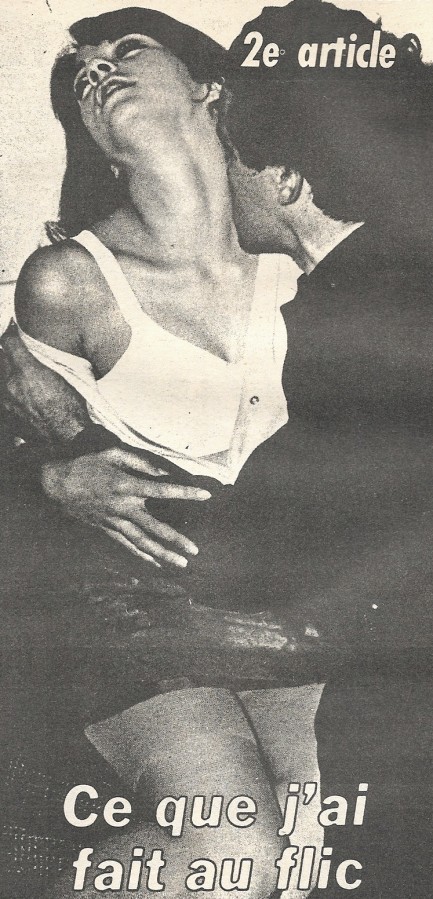 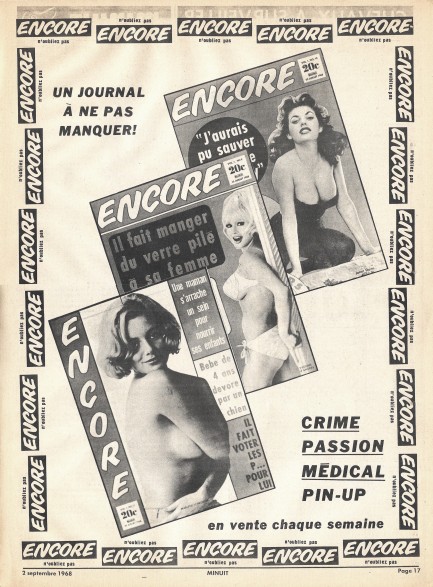
 I came up with it all by myself. Totally groovy, right? 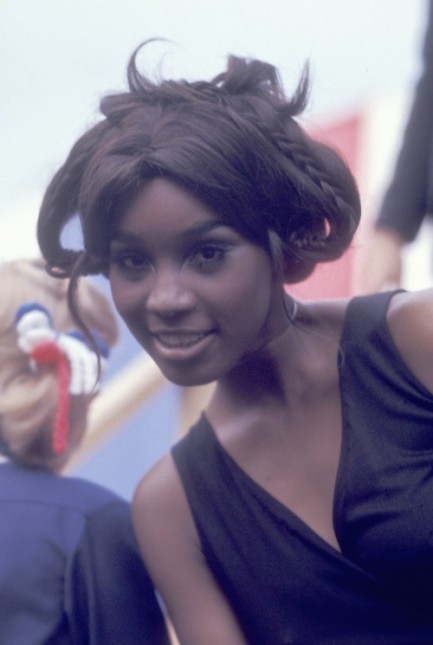 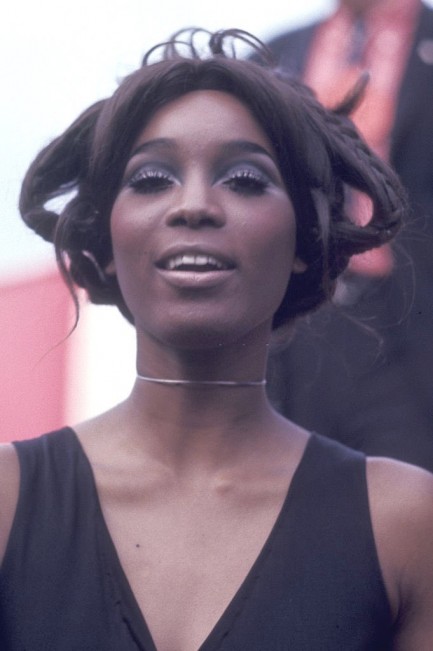 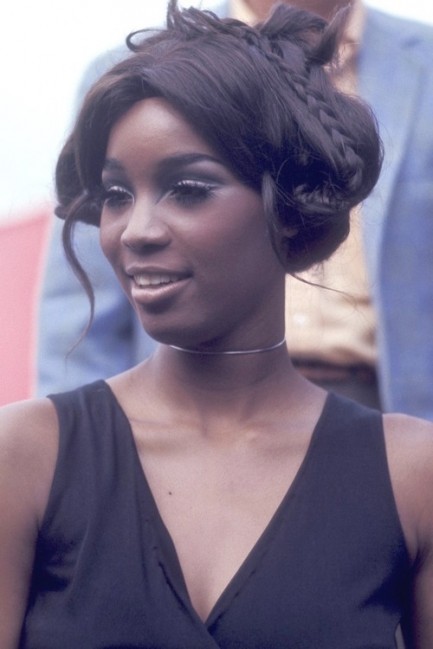
These shots show U.S. actress Teresa Graves today in 1970, and despite the fact that her bizarro hairdo makes her look counterculture, she was in Washington, D.C. attending the Honor America Day celebration. If you've never heard of Honor America Day, that's because it was a one-off, hastily cobbled together by then-president Richard Nixon, who was under pressure due to his decision to send U.S. troops into Cambodia during the Vietnam War, a move which precipitated a protest at Kent State University at which Ohio National Guard troops shot and killed students. Graves was a minor television star at the time, a recurring guest on the show Rowan & Martin's Laugh-In, however she was a natural for the D.C. event because she had built her career partly by touring Southeast Asia as a singer with Bob Hope's USO show. She would eventually become a major star on the police drama Get Christie Love! By then she'd ditched the hairdo that looked like it picked up signals from space for something conventional, as you can see at this link. But whatever shape her hair took, she was quite beautiful.
 Leave it to Nazis to turn phys ed from your favorite class into the worst experience of your life. 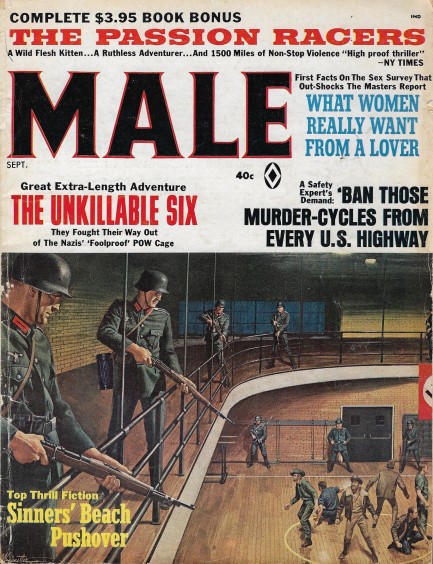
This cover of Male from this month in 1967 has cover art of history's worst gym class, painted by the great Mort Kunstler, and leave it to Nazis to ruin the one thing you can get a good grade in just by showing up. Another thing ruined is the magazine. When it arrived it turned out some pages were razored out of the center. Probably the most interesting pages. It's an occupational hazard, we suppose. We generally assume the seller had no idea, as these mags are so often the leftovers of fathers and grandfathers, but if it was in fact deliberate, well then, cocks on their house! That's the saying, right? Or it pox? Doesn't matter. The silver lining was that we didn't have to worry keeping the magazine intact while scanning. We just ripped it apart, which sort of felt good.
There's still plenty of interesting material inside this mutilated Male. There's fiction and fact, art from Gil Cohen and Bruce Minney, plus more from Kunstler, a screed against motorcycles, a lot of pro Vietnam War content, with lots of digs at peace activists and draft fugitives. The magazine works especially hard to convince readers that draftees who fled to Canada faced lives worse than if they'd gone to Southeast Asia. We doubt quite seriously that anything could be worse than dying in a hot jungle for no rational purpose 10,000 miles from home. But maybe we're biased—our fathers were war vets, and they had one wish in life: that the military never get its mitts on us. Also that we never do hard drugs. Well, one out of two isn't bad. Twenty scans below. 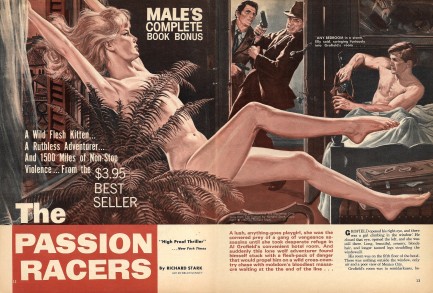 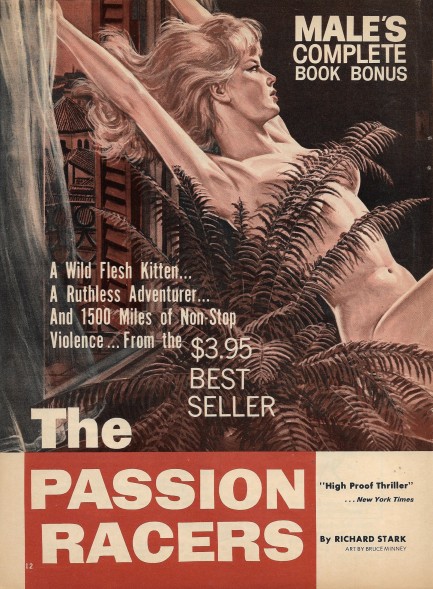 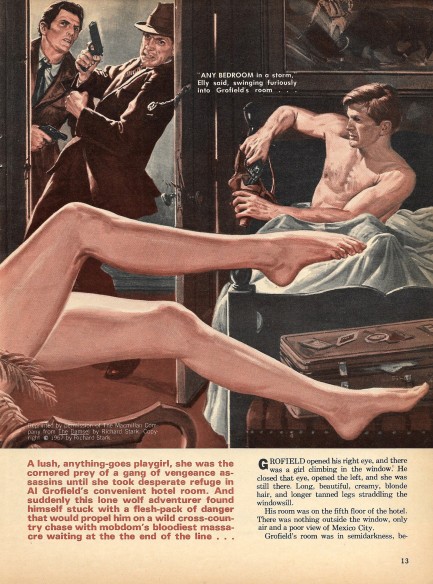 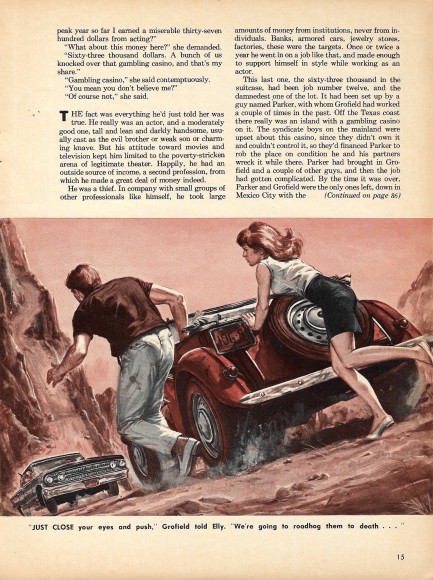 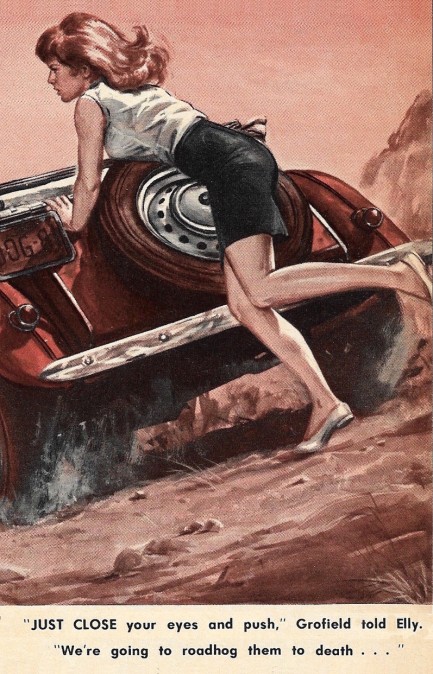  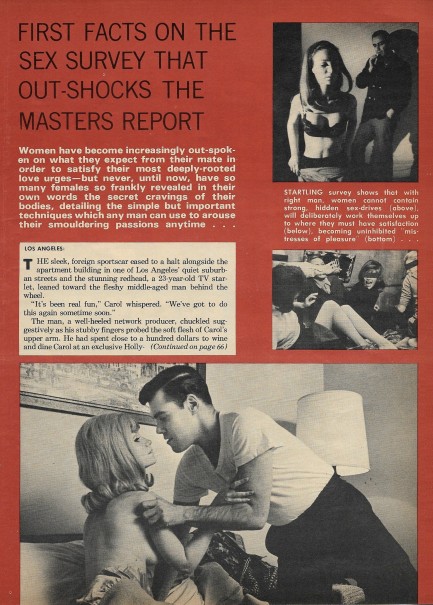 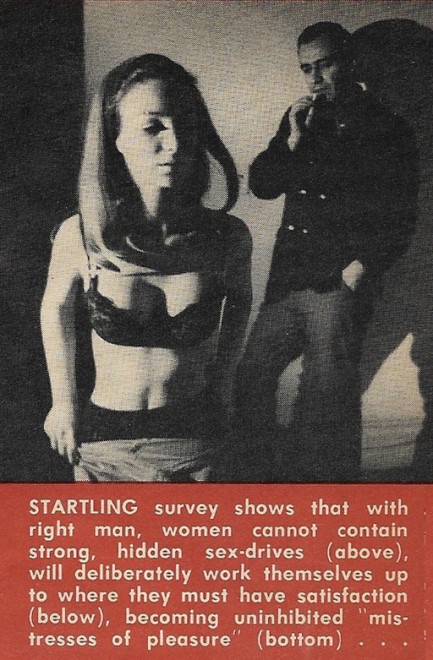 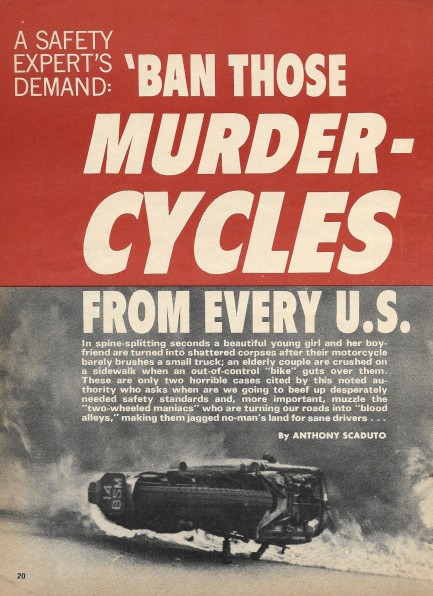 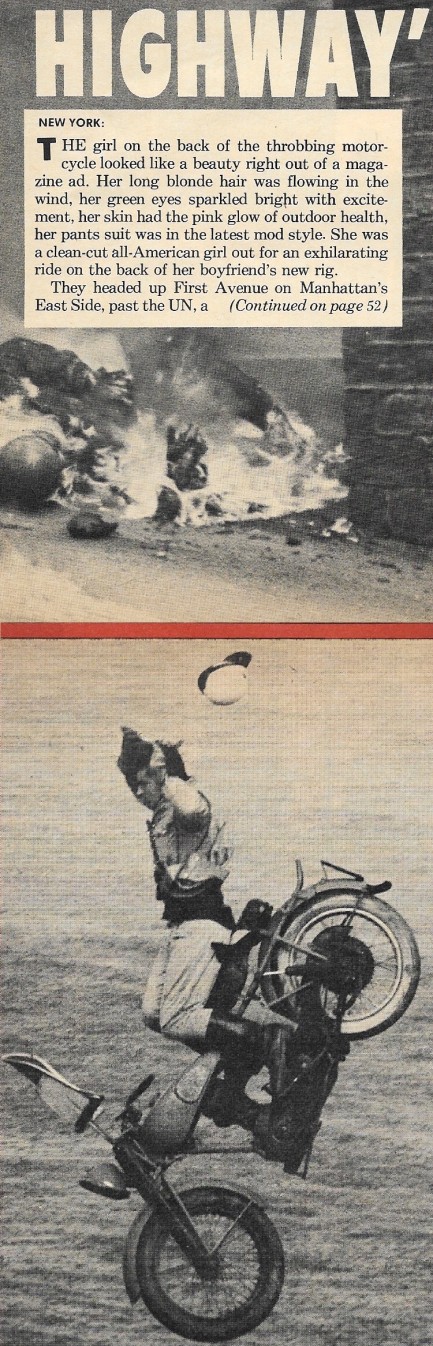 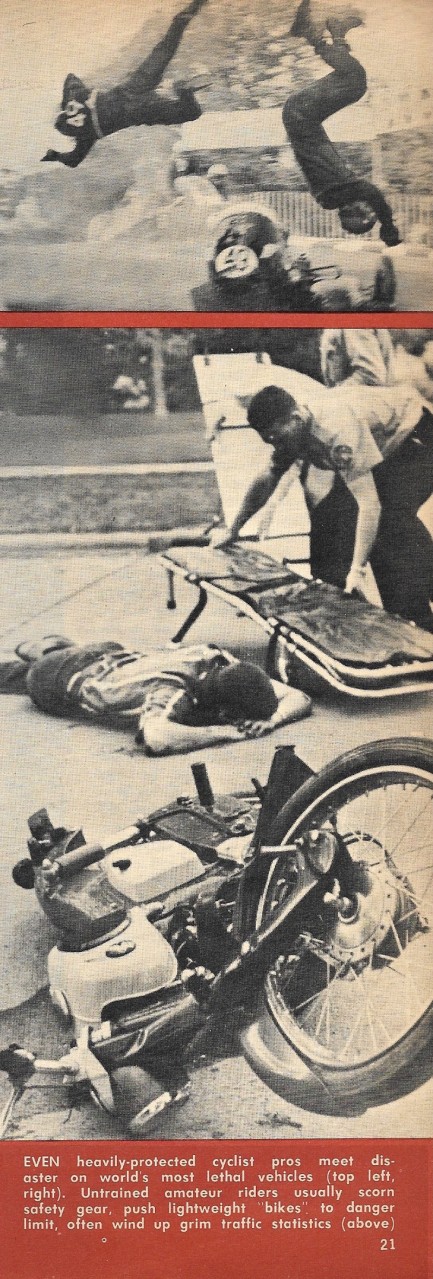 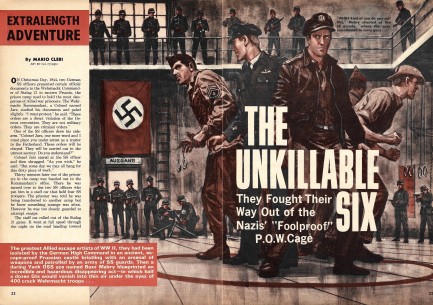 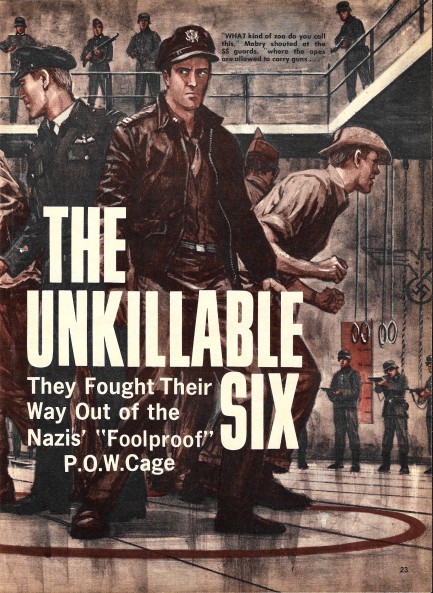 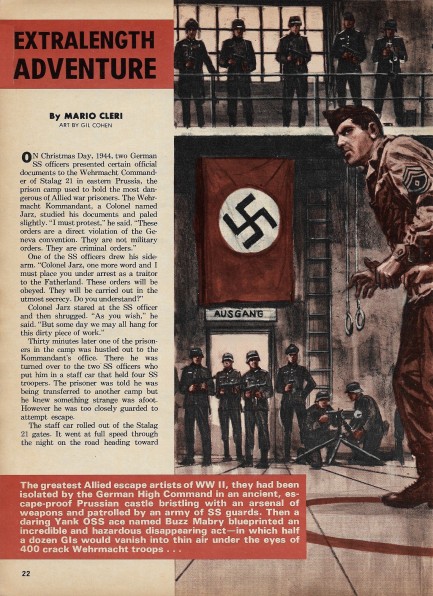 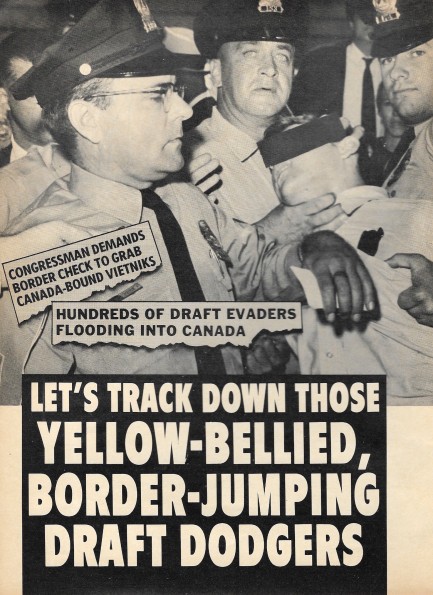 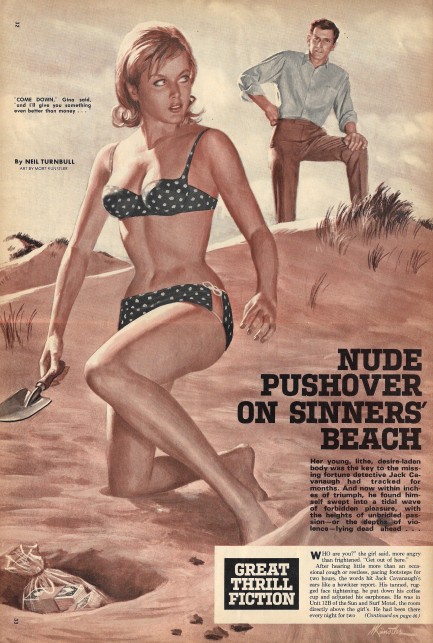 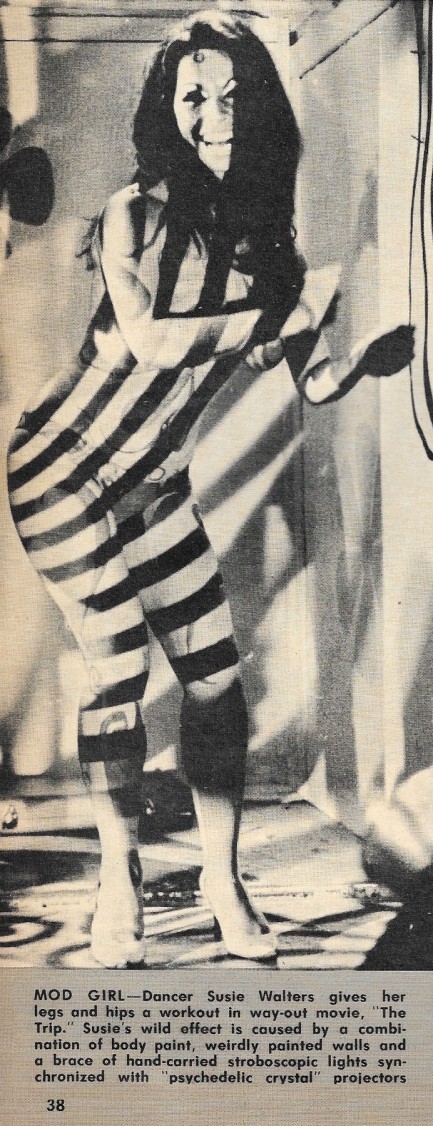 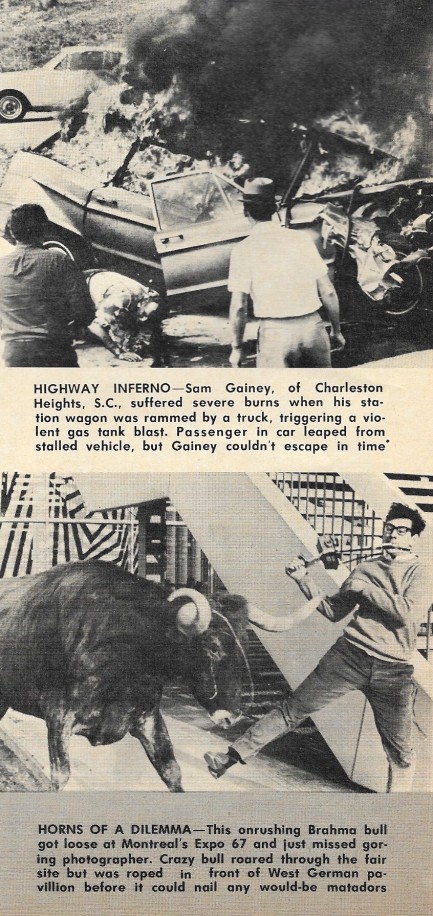  
 Steve Sandor draws first blood before Rambo arrives on the scene. 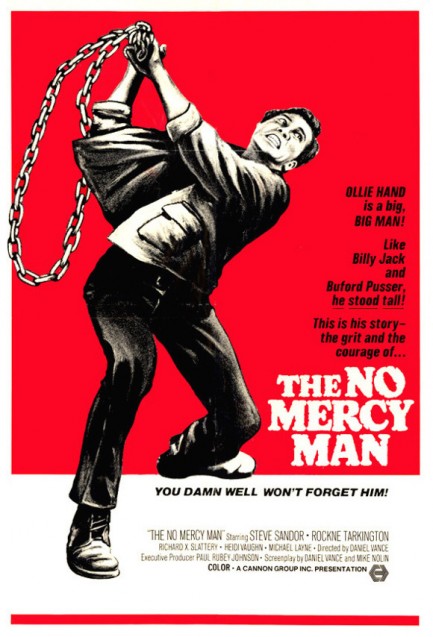
Above you see a low rent poster for The No Mercy Man, aka Bad Man, aka Trained to Kill: USA, which premiered this month in 1973 starring Steve Sandor and Rockne Tarkington, the latter last seen chilling with his pet lion in Black Samson. The No Mercy Man is a mash-up of a biker film, a High Noon-style western, and a blaxploitation film, done on the cheap. And of course with low budgets usually come bad acting, weak scripting, all thumbs in the technical departments, and a paucity of promo images (we found two). This film also has, as a special bonus, a deeply earnest theme song that sucks terribly:
And when he loves you, he loves as hard as he can. You get no mercy, naw naw naw, from the no mercy man. Love and lust are the same to him, just like being raped by the Devil. His kind of love can only bring you sin, and his arms can only bring you evil... whooooa ohhh ohhh...
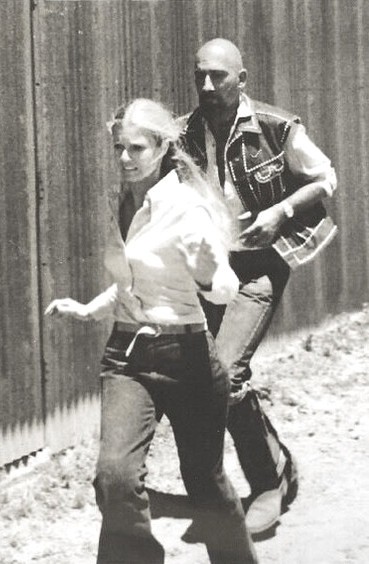 The “no mercy man” of the lyrics is the protagonist Olie Hand, played by Sandor, which means being raped by the Devil is about the hero. Incredibly, the closing theme is even worse, with the lyrics, “no one understands you ’cause you can't be understood.” The “no mercy man” of the lyrics is the protagonist Olie Hand, played by Sandor, which means being raped by the Devil is about the hero. Incredibly, the closing theme is even worse, with the lyrics, “no one understands you ’cause you can't be understood.” Well, let's give it a try. Olie Hand is a Vietnam veteran who did terrible things in the jungles of Southeast Asia, and has now returned to his Arizona hometown to find it plagued by amoral carnies and petty criminals. He's haunted by the war. The sight of violence sends him into a mental tailspin, as horrible memories of his time in action rise to the surface. Despite his aversion to violence, it isn't long before he's forced to take on the men who are turning his town upside down.
Hand is legitimately psychologically damaged, which makes him a clear precursor to Sylvester Stallone's disturbed John Rambo from First Blood. After that film became a runaway hit Stallone booted the mental imbalance of the Rambo character out of the franchise, which freed cinemagoers to revel in hyperviolence without reflection. Rambo became the type of archetypal tough guy many Americans imagine themselves to be—the basically solid guy who tries very hard to avoid trouble, but once he's pushed across the line, boy howdy, you better open wide for your just desserts. Ollie Hand's relationship to John Rambo is clear, but he also brings to mind another iconic movie vigilante.
The year after The No Mercy Man appeared Charles Bronson brought everyman architect Paul Kersey to the screen in Death Wish. Kersey wasn't tortured by previous violent acts; he was justified by current events to commit violence. Killing wasn't harmful but healing, and took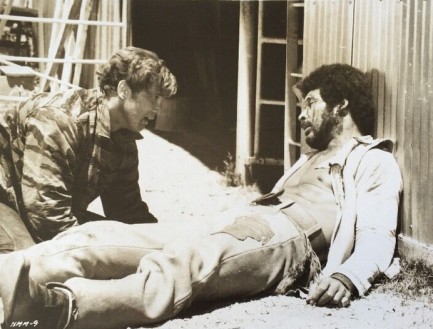 place vigilante style because of the limits of the law. It was done reluctantly, but creatively, because the capacity for baroque forms of murder lurked beneath the surface all along. American action movies have largely resided in that space ever since: violence is a rarely used but well-oiled tool every real man has at the ready, tucked between his pliers and his socket wrench. place vigilante style because of the limits of the law. It was done reluctantly, but creatively, because the capacity for baroque forms of murder lurked beneath the surface all along. American action movies have largely resided in that space ever since: violence is a rarely used but well-oiled tool every real man has at the ready, tucked between his pliers and his socket wrench.
The No Mercy Man is exploitative schlock, but it's at least a bit more thoughtful than the average revenge flick. It suggests there's a price paid for violence beyond mere regret, or being turned into a taciturn curmudgeon whose warm side can eventually be teased out by the right woman or a precocious kid. The price is that you may be so altered that others are unable recognize you as human. If you've actually read your U.S. history—we mean the stuff they only gloss over in school—you know that violence has always been a first resort. The No Mercy Man acknowledges that this isn't ideal, but of course in the end decides pacifism is for pussies. It is, after all, still an American movie.
 We expected lightweight erotica but got stuck in a quagmire. 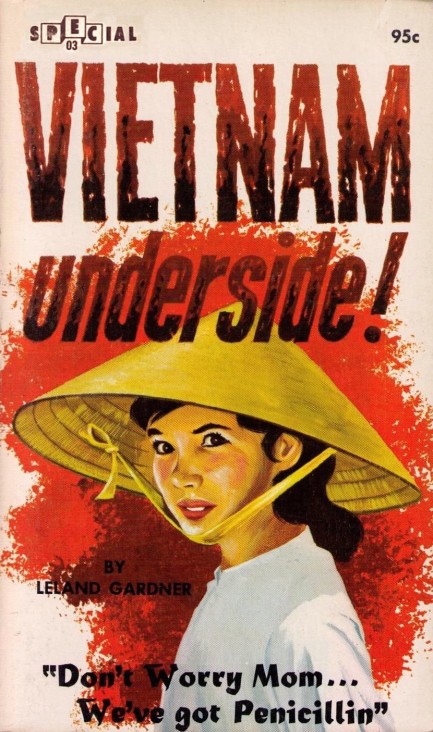
“Don't worry, Mom. We've got penicillin...” With a cover blurb like that, we thought Vietnam Underside! might be something along the lines of L.J. Brown's infamous sleaze novel Viet-Nookie, but no. Instead, the book is a deadly serious history of prostitution and sexual practices in Vietnam from the mid-1800s to the date of publication, which is 1966. It's also—and there's no grey area here—virulently racist. Leland Gardner writes reams about the depravity of the Annamites (an 1800s word used to refer to the Vietnamese), disparages in the most detailed terms their hygiene, morality, ethics, customs, religion, history, mentality, intelligence, and more. He accuses them of practicing pederasty, of allowing incest between pre-teens, and of being inherently promiscuous. The diseases they're allegedly rife with include yellow fever, elephantaisis, syphilis, and gonorrhea, all subsequently inflicted upon ivory pure Westerners. When Gardner writes something true—for instance about the deleterious effects of betel nut chewing on the teeth and mouth—he goes on, and on, and on. He describes Vietnamese women as having “black lacquered teeth and blood red mouths” at least fifty times. Interesting, isn't it, that just when your country's overseas invasion is ramping up you find that, basically, your foes don't deserve to live? Gardner actually claims the Vietnamese were well on their way to self-destruction long before the Yanks showed up. He writes about the war: “[these] decadent, deteriorating people have been adopted by a benevolent Uncle Sam.” Right at that instant Vietnam Underside! got to be too much, so we scrambled to the top of the literary embassy and barely got the last helicopter out. When it comes to choosing books based on the cover art, you win some and you lose some.
 My designer told me it would be a daring dress but this is a little ridiculous. 
Vietnamese actress Mei Chen, aka Mei Chen Chalais, tries on a dress and immediately realizes her designer got her request for a plunging neckline confused. Chen isn't well known today, but she'll always have a place in our hearts for her lost world film Luana. And this crazy dress. The photo is from 1968 and first appeared in the magazine Girl Illustrated.
 So when you sang “You're So Vain,” the song really was about me, wasn't it? 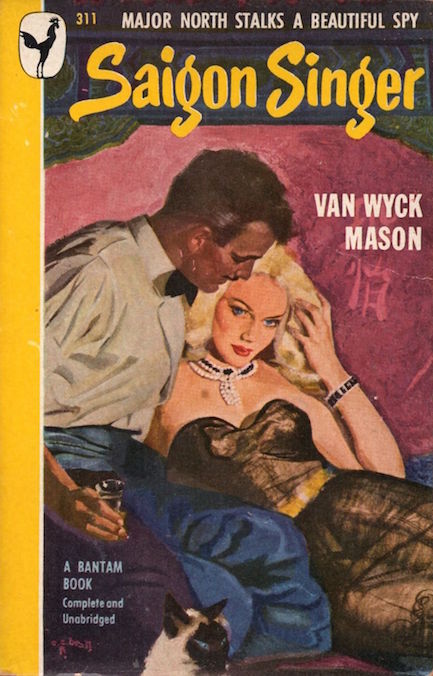
This is top work from artist C.C. Beale on this cover for Van Wyck Mason's Saigon Singer, especially the small elements of the background writing on the wall and the Siamese cat in the foreground. The singer of the title—who never performs “You're So Vain,” sadly—is Pamela Saunders, a former prisoner in a Japanese internment camp who survives filth and near starvation to resurrect herself as singer in Saigon. Along the way she becomes known as Black Chrysanthemum before adopting the stage name Xenia Morel. Her transformation is interesting, but the star of the story is Major Hugh North, who turns up in Saigon looking for a dossier containing the names of British and American traitors who during the war sold secrets to a Japanese general. Saunders-Chrysanthemum-Morel survived the prison camp by becoming the mistress of the general, and it's due to this close association that she possesses the dossier. She'll give it to North, but only if he pays her enough money to get to Paris, where she wants to continue her singing career.
Mason knew this part of the world and uses his knowledge well in writing of Saigon social life, oppressive heat, scented baths, tiger hunts, French legionnaires, and other you-had-to-be-there aspects of post-World War II Vietnam. As number thirteen in a series of exotic Hugh North mysteries (others were set in Singapore, Burma, Manila, Bangkok, et al) we sense a formula here, but in the end we liked it despite the usual flaws of colonialist fiction, and we were envious of Mason for having travelled in that part of the world during that time, and having been lucky enough to make a career of writing about it. Well, maybe we can't complain too much—we've hit some good spots too. And we write, though we get fuck-all for it. In any case, this particular discovery makes us curious about earlier Mason books, so maybe we'll check out some of his Hugh North adventures. Saigon Singer was originally published in 1946, and the above edition is from 1948.

|
 |
The headlines that mattered yesteryear.
1923—Yankee Stadium Opens
In New York City, Yankee Stadium, home of Major League Baseball's New York Yankees, opens with the Yankees beating their eternal rivals the Boston Red Sox 4 to 1. The stadium, which is nicknamed The House that Ruth Built, sees the Yankees become the most successful franchise in baseball history. It is eventually replaced by a new Yankee Stadium and closes in September 2008. 1961—Bay of Pigs Invasion Is Launched
A group of CIA financed and trained Cuban refugees lands at the Bay of Pigs in southern Cuba with the aim of ousting Fidel Castro. However, the invasion fails badly and the result is embarrassment for U.S. president John F. Kennedy and a major boost in popularity for Fidel Castro, and also has the effect of pushing him toward the Soviet Union for protection. 1943—First LSD Trip Takes Place
Swiss scientist Albert Hofmann, while working at Sandoz Laboratories in Basel, accidentally absorbs lysergic acid diethylamide, better known as LSD, and thus discovers its psychedelic properties. He had first synthesized the substance five years earlier but hadn't been aware of its effects. He goes on to write scores of articles and books about his creation.
|

|
|
It's easy. We have an uploader that makes it a snap. Use it to submit your art, text, header, and subhead. Your post can be funny, serious, or anything in between, as long as it's vintage pulp. You'll get a byline and experience the fleeting pride of free authorship. We'll edit your post for typos, but the rest is up to you. Click here to give us your best shot.
|
|