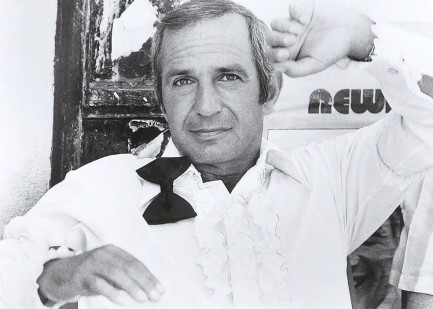
Zip your pants and keep them zipped, Harry. I'm going to bed and you aren't coming with me. 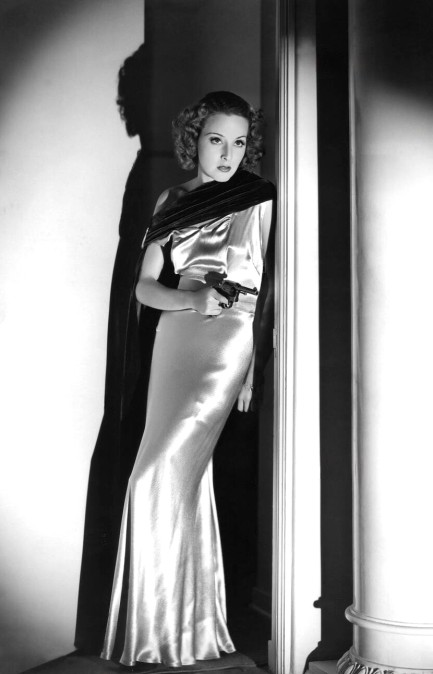
Above is U.S. actress Joan Perry in a promo image made for her 1936 crime drama Shakedown. She appeared in about twenty films beginning in 1935 and was out of acting by 1941, when she married Columbia Pictures co-founder and president Harry Cohn, one of the most hated and feared men in Hollywood. Cohn allegedly attacked actresses, demanded and received sex for film roles, and infamously had mob acquaintances threaten to kill Sammy Davis, Jr. if he kept canoodling with Kim Novak. Perry stayed wedded to the guy for seventeen years, until his death. Afterward, she married twice more, but one union lasted only two years, and the other lasted three. Which goes to show that you never can tell about relationships—or for that matter, people.
 Even in the height of summer New York City can be a cold, cold place. 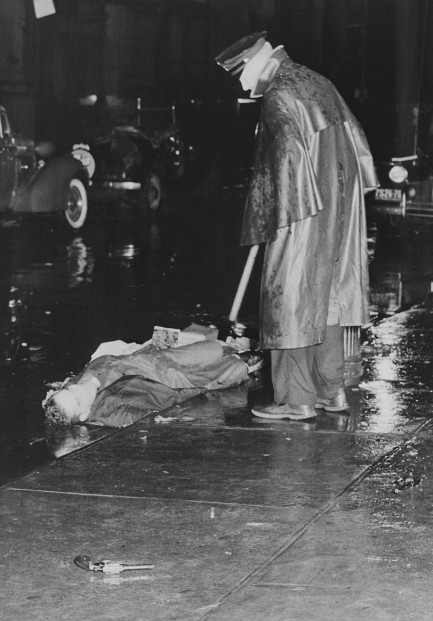
In this photo made today in 1930, a policeman stands over the body of Louis Riggiona, who had been shot twice in the heart by two gunmen as he and his brother Joe exited a restaurant in New York City's Bowery district. Joe fled and avoided injury, while the gunmen dropped their weapons (one pistol is visible in the foreground) and escaped. Louis Riggiona had become the latest casualty in what was known as the Castellammarese War, a Mafia power struggle whose opposing figureheads were Salvatore Maranzano and Joe Masseria. Maranzano was from Castellammare del Golfo, Sicily, thus the name of the conflict. He won the war, but got to be capo di tutti i capi for only five months before he too was murdered.
 Gangster life has great benefits but the retirement plan leaves a lot to be desired. 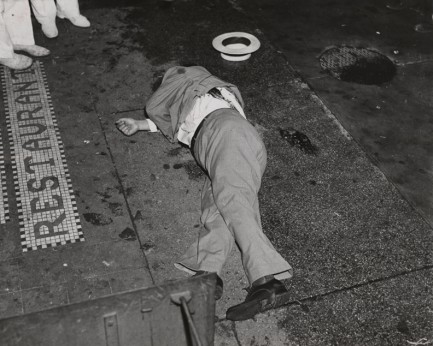 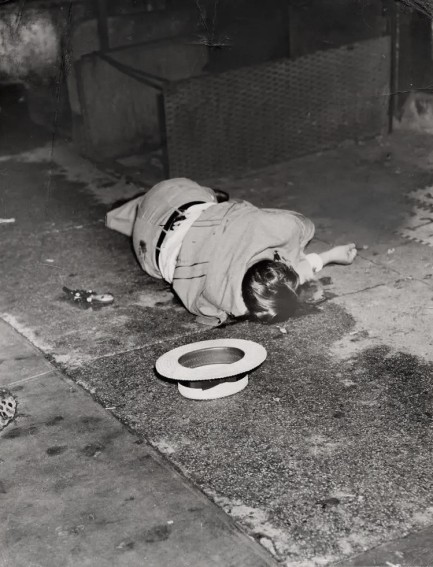
It seems like the same lesson is imparted by nearly every vintage Mafia photo we run across—ambition is a double-edged sword. Dominick Didato, aka Terry Burns, who you see above in a photo made by Arthur Fellig, aka Weegee, lies dead on a New York City street where he was gunned down today in 1936. He was killed for interfering with rackets run by Lucky Luciano. It was a low percentage play. Luciano was literally the most powerful mobster in the U.S. at the time, and as the saying goes, you come at the king, you best not miss.
 Strindberg, Tamburi, Bisera and company wip it good in Italian sexploitation drama. 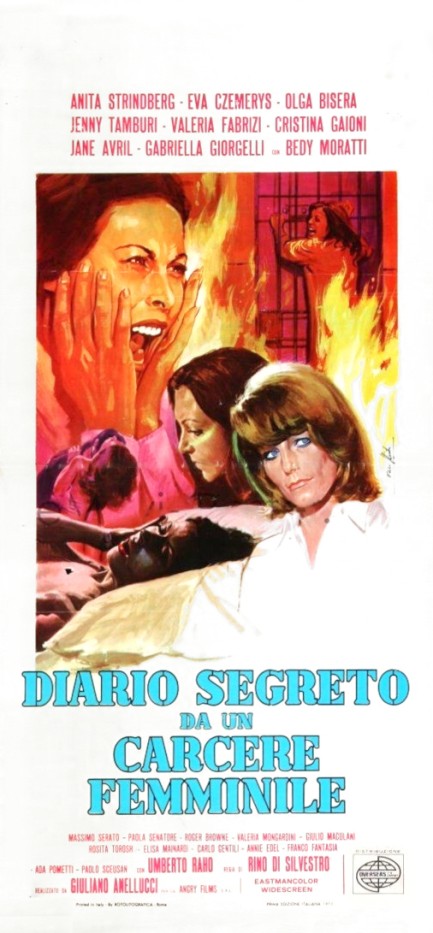
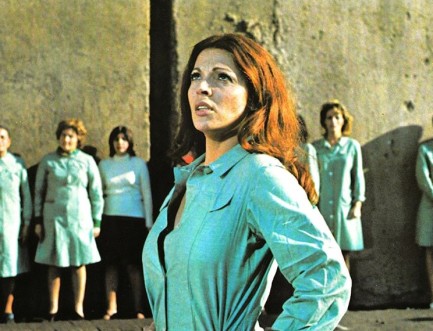
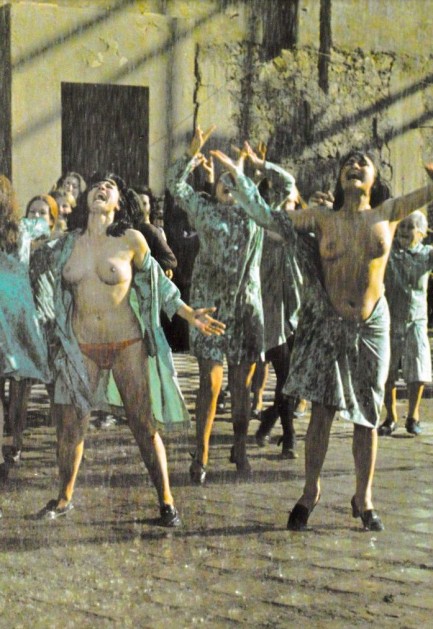
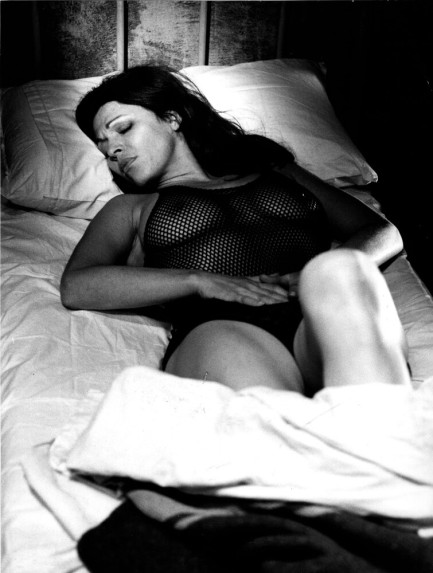
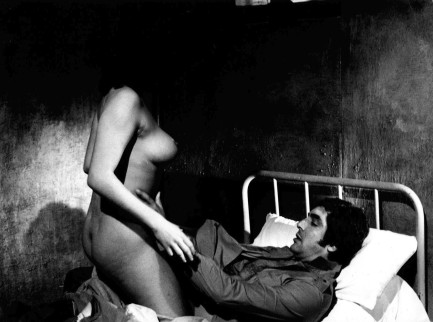
We ran across this poster for a movie we watched years ago, the exploitation drama Diario segreto da un carcere femminile, which premiered in Italy today in 1973 and is known in English as Women in Cell Block 7. Such films, for the uninitiated, are thought of by b-movie fans as belonging to a sub-genre known as women-in-prison or WiP. In honor of today's post we've gone back through the website and keyworded for them, so you can see what we've done on this unusual style of cinema by clicking “women in prison” at bottom.
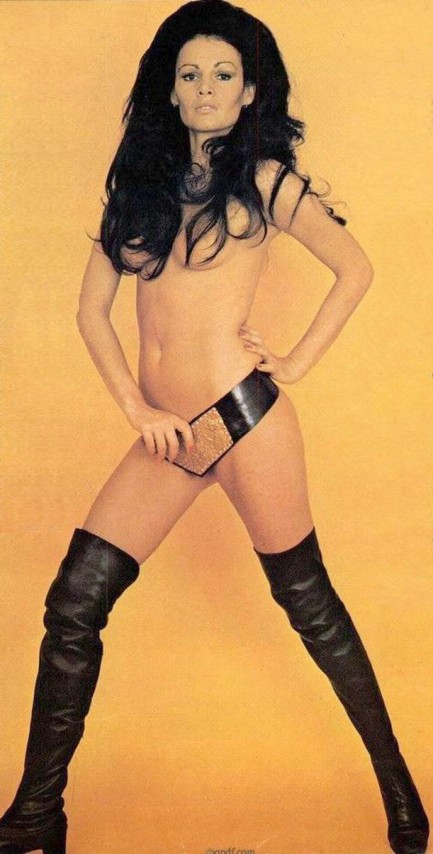
The art on the poster is by Enzo Nistri, which makes it worth a share. The movie is sort of interesting too, though perhaps not exactly good. However, we've never been able to forget Olga Bisera's naughty correctional facility finger. You can see her using it in a couple of the production photos below, and following those are some of the stars, who comprise a who's-who of 1970s European exploitation cinema: Anita Strindberg, Eva Czemerys, Jenny Tamburi, Paola Senatore, Maria Pia Luzi, Gabriella Giorgelli, Olga Bisera, and Valeria Fabrizi.
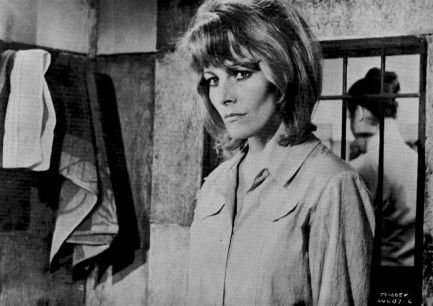 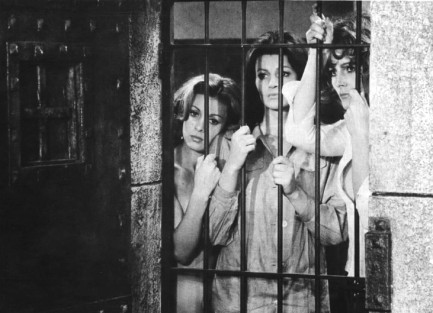 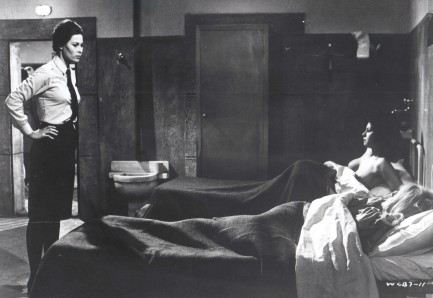  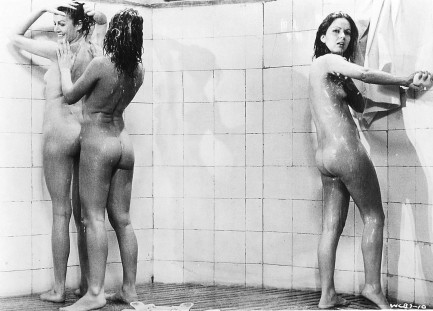  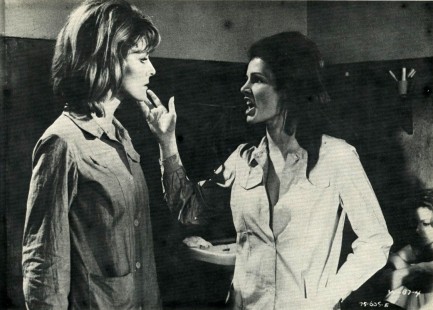 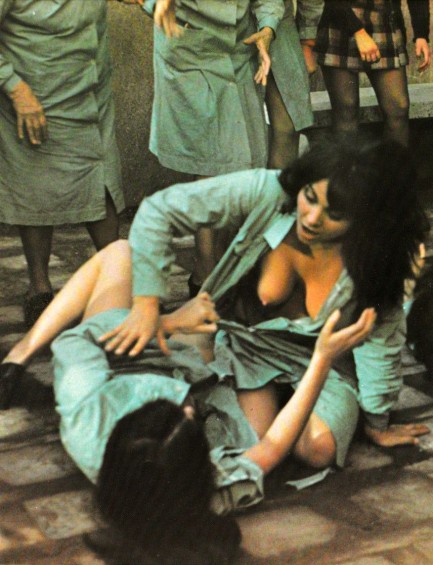 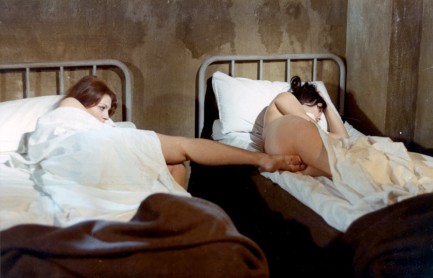 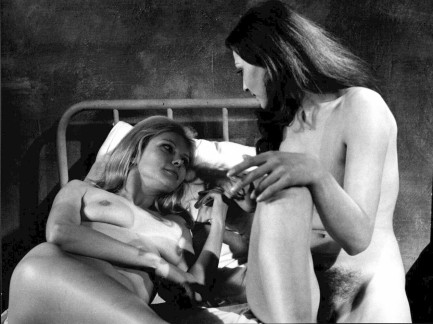 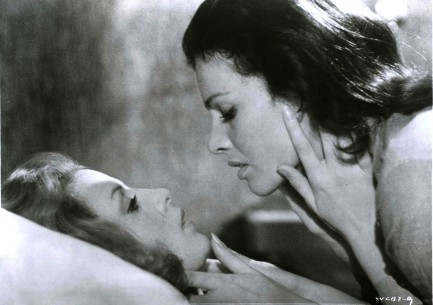     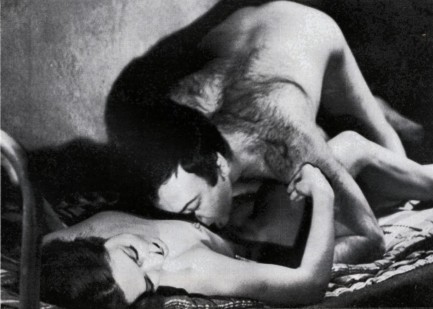 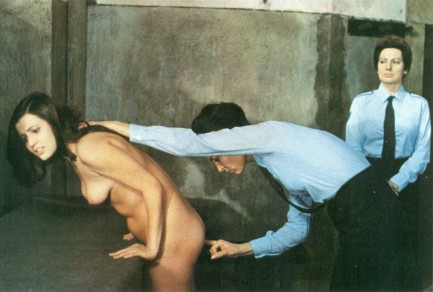 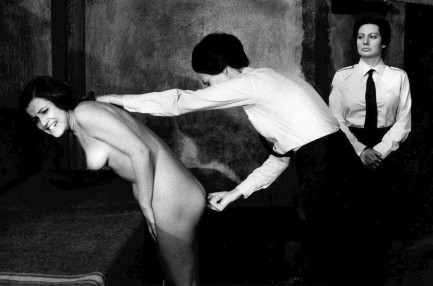       
 One way or another someone has to pay. 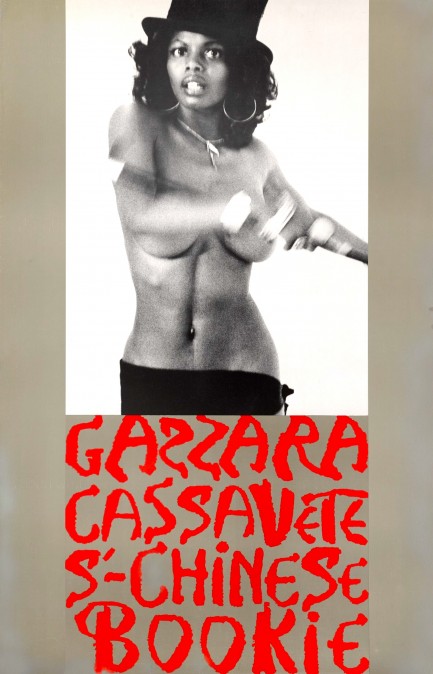
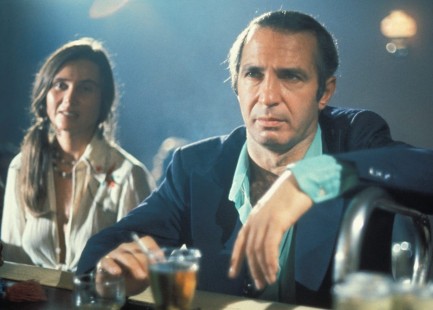
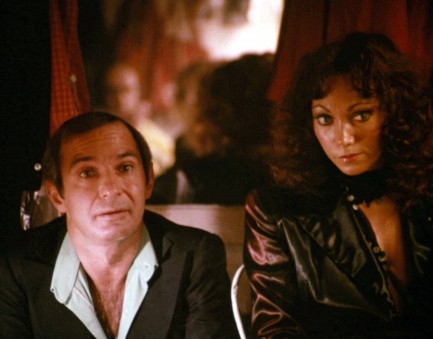
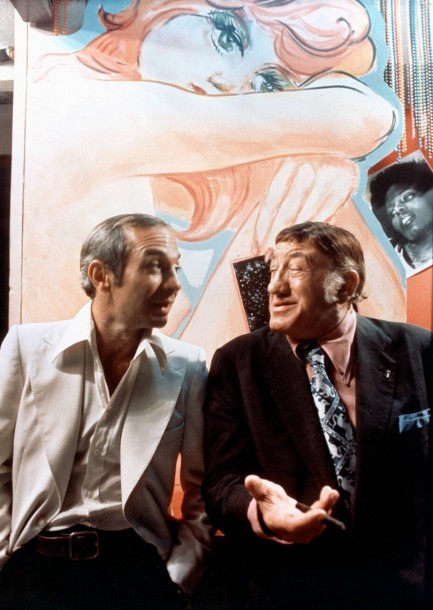
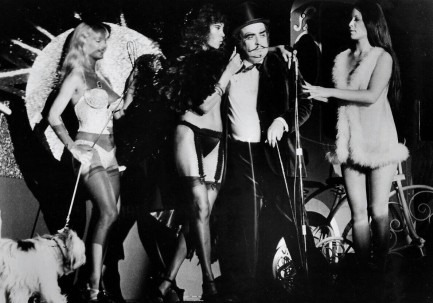
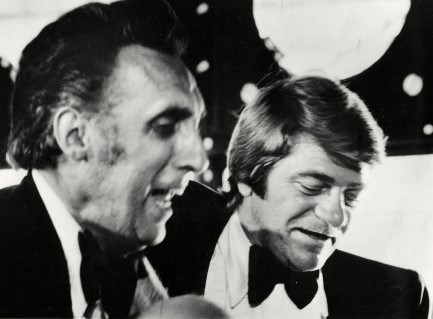
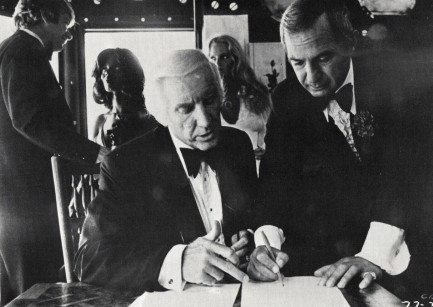
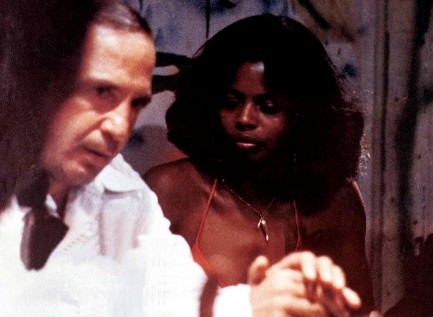
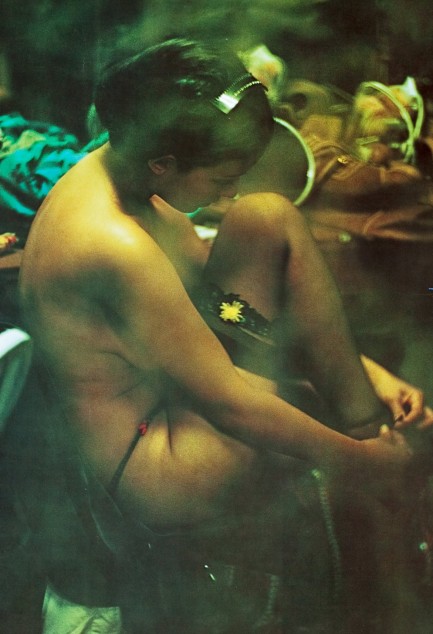
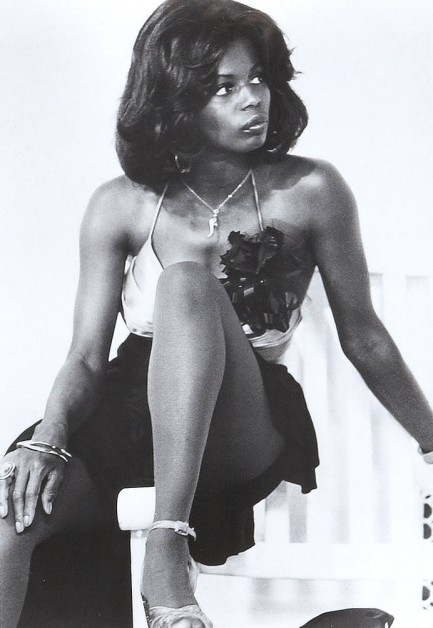
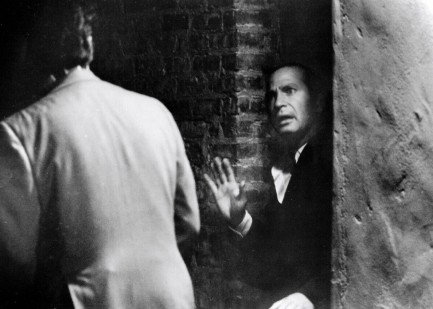
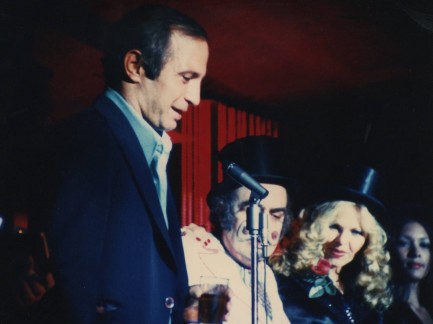
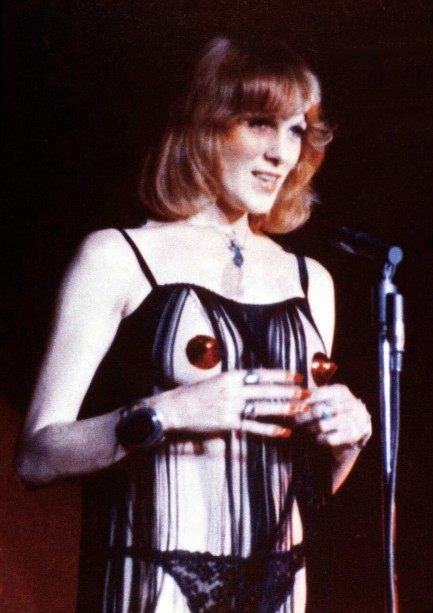
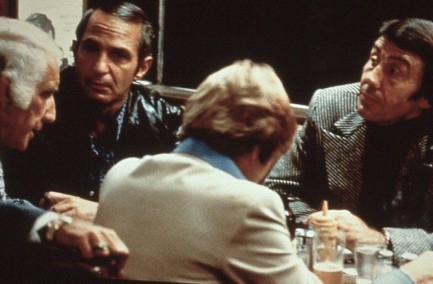
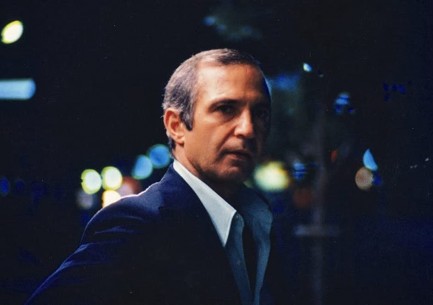
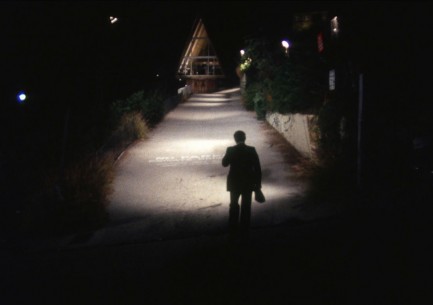
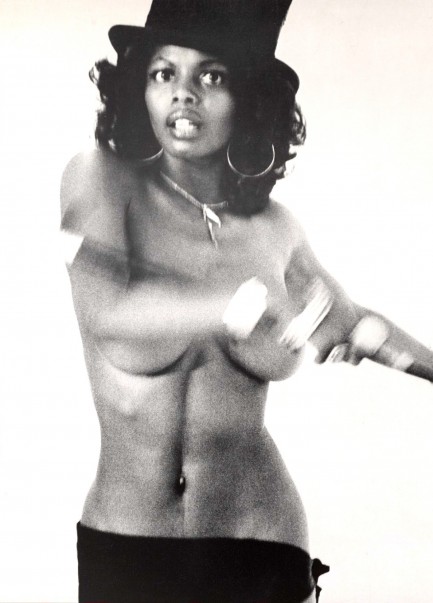
This unusual poster was made for the gritty John Cassavetes drama The Killing of a Chinese Bookie, and features co-star and Playboy model Azizi Johari. It's an alternate promo that was never used in cinemas, however it appeared at auction several years ago, and thence onto the internet. We noticed it because of the lovely Johari, who we've highlighted before, but we also knew the movie, which is one of Cassavetes' more discussed efforts. It's about a cabaret owner, played by Ben Gazzara, who has a serious gambling problem. After making the last payment of a loan shark debt he's been whittling down for seven years, he goes right out accompanied by Johari and two of his club's dancers, loses big again, and must sign over his club as collateral on the debt. Later, as the film's title suggests, his creditors demand—none too politely—that he kill someone.
Gazzara is one cool cucumber. His aplomb makes you wonder whether he's self-contained or just stupid. But really, how smart can you be to fall right back into a hole it took seven years to climb out of? Now it's called gambling addiction, but we think of it as merely being a mark. We wondered whether his cabaret Crazy Horse West, which features amazingly mediocre acts, was meant to embody his generally poor judgment. In any case, his bill will come due. Cassavetes puts all this together in his trademark patchwork style, with small moments stitched together to create the main character's life, and what a crazy quilt it is. The style may be off-putting to some, and the movie is marred by substandard acting from a couple of minor castmembers, but overall The Killing of a Chinese Bookie shows why Cassavetes was such a respected director. It premiered today in 1976.
 The shots heard round America. 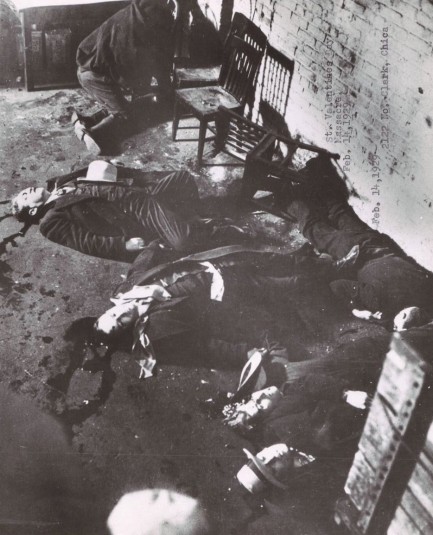
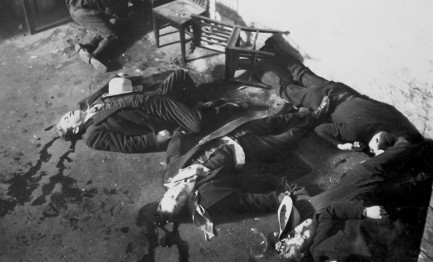
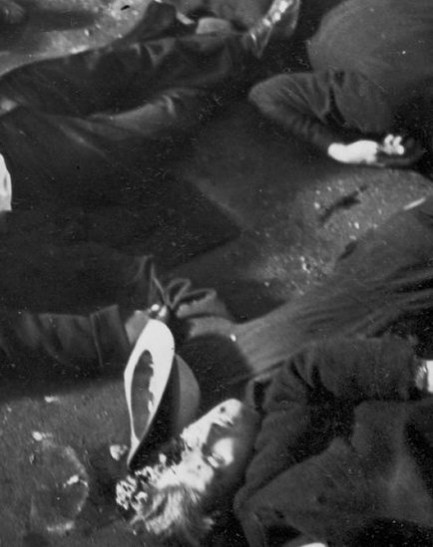
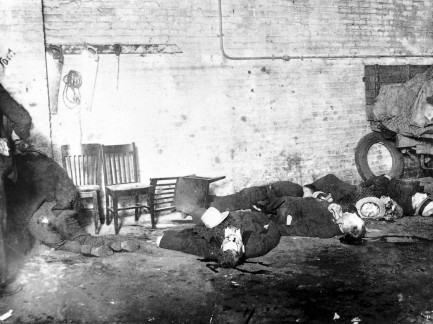
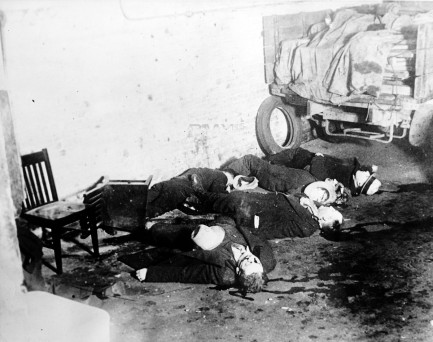
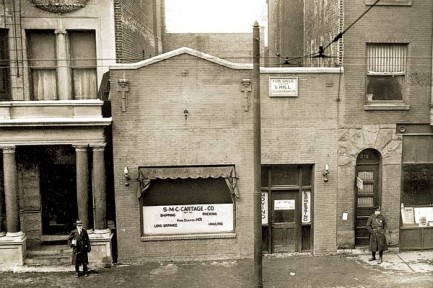
We suspect most Americans know of the St. Valentine's Day Massacre, which occurred today in 1929, but somewhat fewer have seen its actual result. If you're one of them—Happy Valentine's Day!—you can now cross that off your list, as above are pictured six unfortunates who learned that the gangster life often ends bloody. Albert Kachellek, Adam Heyer, Albert Weinshank, Reinhardt Schwimmer, John May, and Frank and Peter Gusenberg were in the SMC Cartage Company warehouse on Chicago's north side when they were corralled by four rival gangsters, two of whom were wearing police uniforms and sporting fake badges, and blasted into oblivion with Thompson submachine guns and shotguns. May, who was probably there only because he was repairing a truck, lost the left side of his skull to a round of buckshot.
The murders stemmed from a turf war between the North Siders, who were headed by Bugs Moran, and the Chicago Outfit, led by Al Capone. It's Moran's men who got ventilated. Capone, in true gangster style, was away in Florida at the time. The photos show only six victims because Frank Gusenberg miraculously survived the shooting and was rushed to a hospital, where a few hours later he died of his fourteen bullet wounds while refusing to identify his killers. Even to this day their identities are not conclusively known, though ballistics evidence later suggested one was veteran hood Fred Burke. The massacre may not have resulted in murder convictions, but it drew the attention of Washington, D.C. authorities, led to broad new efforts to tackle organized crime, and eventually led to Capone's imprisonment for federal tax evasion in 1931. Please enjoy this romantic day.
 Get away from him you bitches! 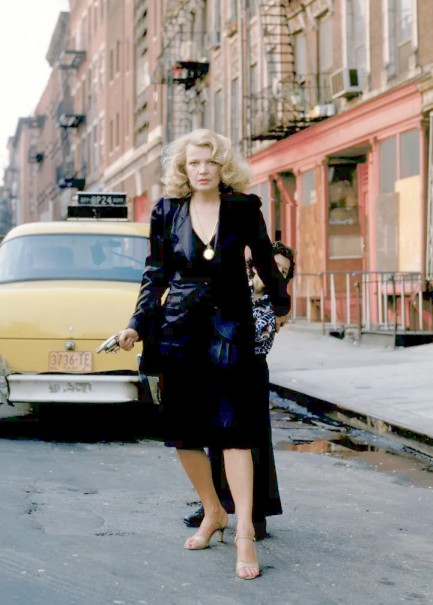
Many reviews of the classic movie Aliens point out the subtext of mother instinct rekindled under violent circumstances, but that idea predates Sigourney Weaver's awesome 1986 performance. The closest example we can think of is the 1980 thriller Gloria. Gena Rowlands, who you see above in full mama bear mode, tries to protect an eight-year-old boy from vicious animals (the Mafia) in a deadly and hostile place (the Bronx). Where Weaver has outlived her entire family due to hibernation in space and loves children, Rowlands is a gangster's moll who has outlived her childbearing years and claims to hate children. Both characters are catalyzed by a youngster's innocence, have a strong sense of justice, and face the longest possible odds. Do yourself a favor and watch the movie. Also: check the absolutely badass pose below. 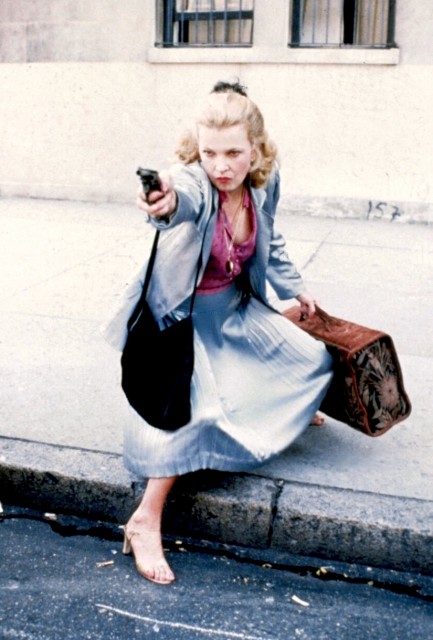
 It's not a party until someone gets their brains blown out. 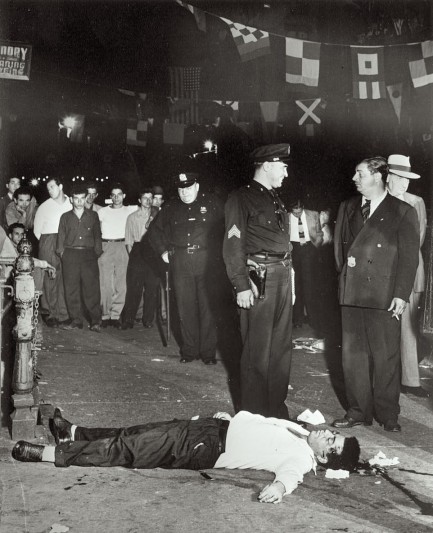
The above photo shows the murder scene of a mid-level gangster named Joseph “Little Joe” La Cava, and occurred in New York City on Mulberry Street at the Feast of San Gennaro today in 1939. We'll go out on a limb and say the festive atmosphere took a fatal hit too. Luckily, the celebration usually went for a week, so we suppose it was salvaged. La Cava was gunned down along with Rocco “Chickee” Fagio, who you see below. These images were made by Arthur Fellig, aka Weegee, and are especially well known because the ever clever lensman angled himself to get a photo of Fagio ironically sprawled beneath a scungilli restaurant sign that says O Sole Mio!—which means “my sun,” after the famous Neapolitan song. He used the same trick when shooting other murders, because hey, if it works, just roll with it. Also interesting, cops being cops, the flatfoot closest to La Cava looks incongruously jocular as he chats with a higher-up. If this wasn't the most unforgettable Feast of San Gennaro in Little Italy's history it had to be close.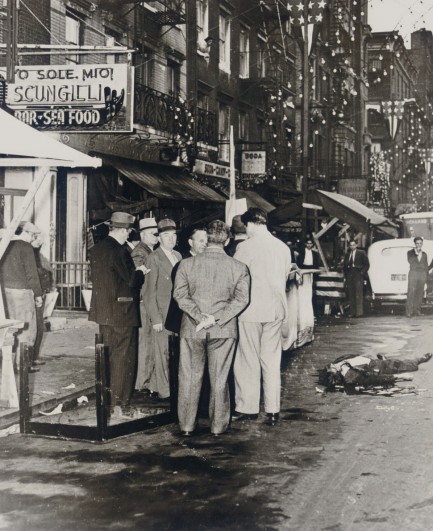
 He was bound to get burned. 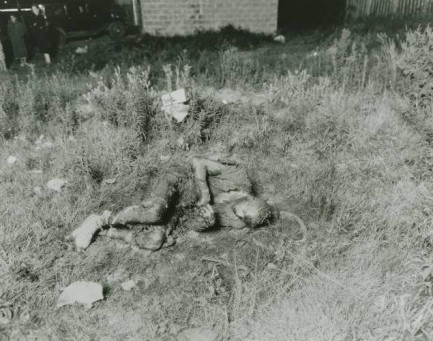 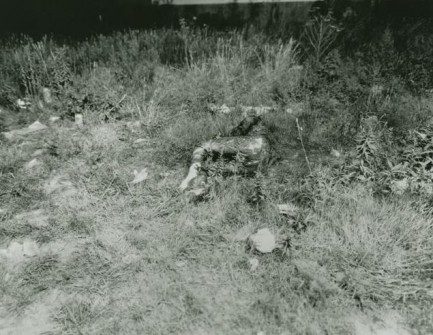
Just in case you haven't had any gruesomeness in your week, above you see mobster Irving Feinstein after he was burned by Murder, Inc. today in 1939. What do you have to do to meet this fate? Feinstein tried to horn in on territory that wasn't his, but that wasn't why he was torched. His error was in trying to stay alive. Feinstein was in the process of being repeatedly ice picked by hitman Harry Strauss, and bit Strauss's finger. Strauss and associates called a halt to the ice picking and instead bound Feinstein, his legs stretched backward and a rope running from ankles to neck. This killed him by the more protracted method of slow strangulation. Then afterwards, just for the hell of it, the killers transported the body to a vacant lot in Brooklyn and did what you see above. There's a lesson in this: don't bite the hand that bleeds you.
 He's watching your every move. 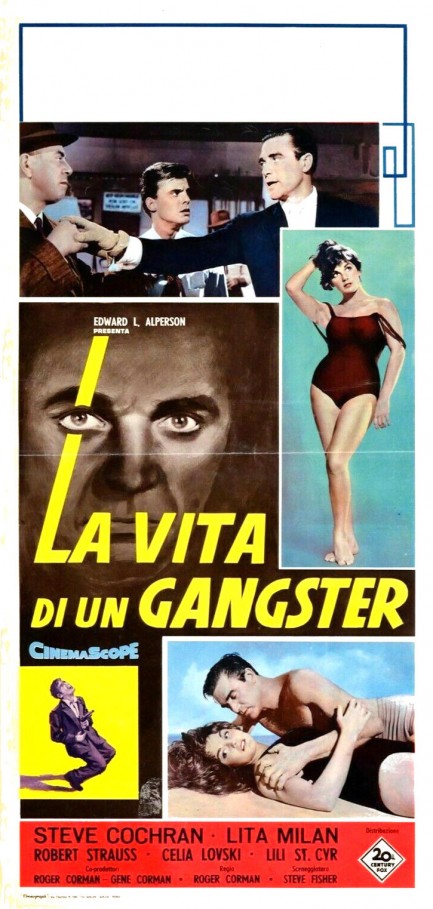
Above is an Italian poster for the U.S. drama I, Mobster, a 1959 crime drama starring Steve Cochran that we discussed earlier this year. This promo is different from the U.S. version but still features lettering across Cochrane's eye—though the visual pun of having the actual letter “I” cross his eye is not achievable in Italian. But we still like this for its successful conveyance of mood, and we liked the movie enough to want to circle back to it. It's obscure, but pretty good. Plus it introduced us to Lita Milan.

|
 |
The headlines that mattered yesteryear.
1967—First Space Program Casualty Occurs
Soviet cosmonaut Vladimir Komarov dies in Soyuz 1 when, during re-entry into Earth's atmosphere after more than ten successful orbits, the capsule's main parachute fails to deploy properly, and the backup chute becomes entangled in the first. The capsule's descent is slowed, but it still hits the ground at about 90 mph, at which point it bursts into flames. Komarov is the first human to die during a space mission. 1986—Otto Preminger Dies
Austro–Hungarian film director Otto Preminger, who directed such eternal classics as Laura, Anatomy of a Murder, Carmen Jones, The Man with the Golden Arm, and Stalag 17, and for his efforts earned a star on Hollywood's Walk of Fame, dies in New York City, aged 80, from cancer and Alzheimer's disease. 1998—James Earl Ray Dies
The convicted assassin of American civil rights leader Martin Luther King, Jr., petty criminal James Earl Ray, dies in prison of hepatitis aged 70, protesting his innocence as he had for decades. Members of the King family who supported Ray's fight to clear his name believed the U.S. Government had been involved in Dr. King's killing, but with Ray's death such questions became moot. 1912—Pravda Is Founded
The newspaper Pravda, or Truth, known as the voice of the Communist Party of the Soviet Union, begins publication in Saint Petersburg. It is one of the country's leading newspapers until 1991, when it is closed down by decree of then-President Boris Yeltsin. A number of other Pravdas appear afterward, including an internet site and a tabloid. 1983—Hitler's Diaries Found
The German magazine Der Stern claims that Adolf Hitler's diaries had been found in wreckage in East Germany. The magazine had paid 10 million German marks for the sixty small books, plus a volume about Rudolf Hess's flight to the United Kingdom, covering the period from 1932 to 1945. But the diaries are subsequently revealed to be fakes written by Konrad Kujau, a notorious Stuttgart forger. Both he and Stern journalist Gerd Heidemann go to trial in 1985 and are each sentenced to 42 months in prison.
|

|
|
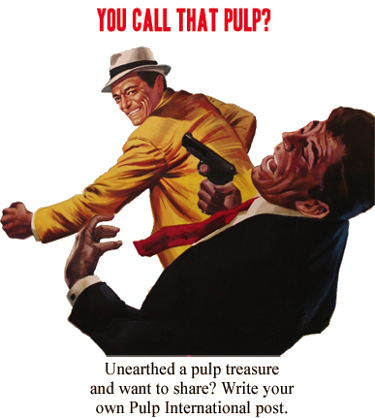
It's easy. We have an uploader that makes it a snap. Use it to submit your art, text, header, and subhead. Your post can be funny, serious, or anything in between, as long as it's vintage pulp. You'll get a byline and experience the fleeting pride of free authorship. We'll edit your post for typos, but the rest is up to you. Click here to give us your best shot.
|
|