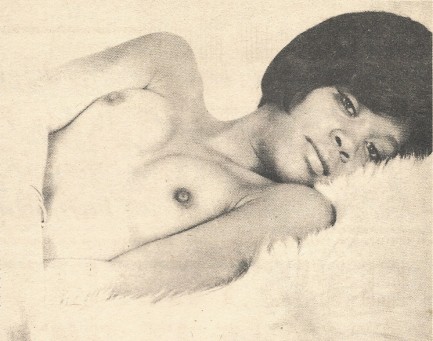
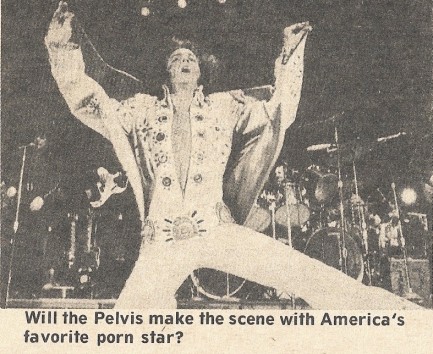
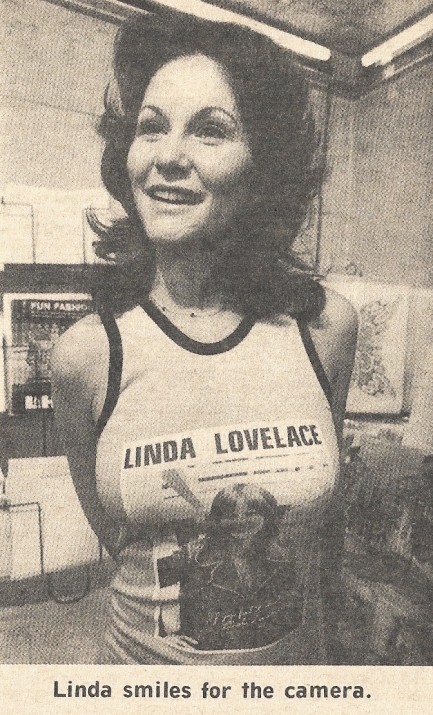
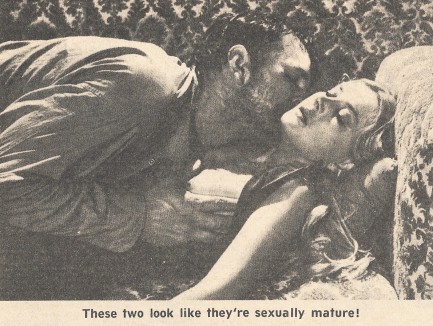
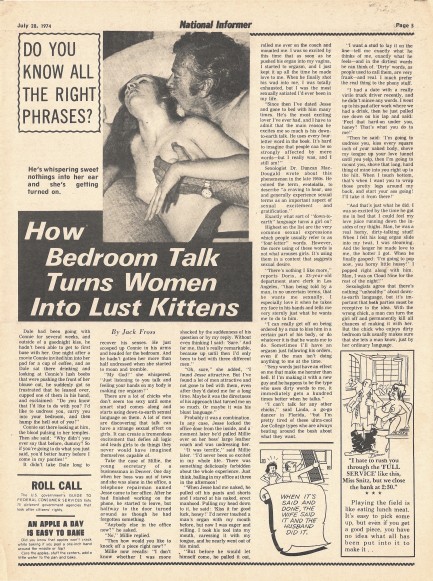
 Notable show business encounters: the Pelvis meets the Throat. 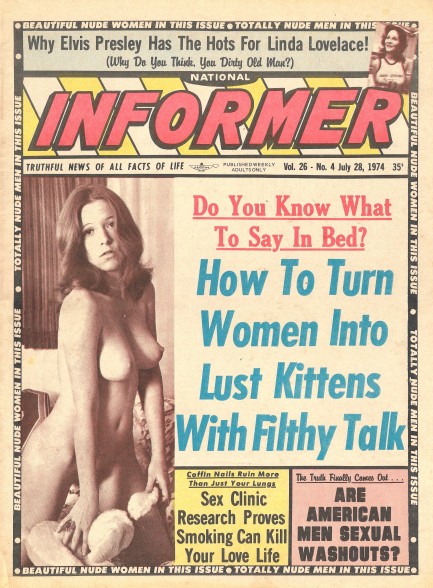
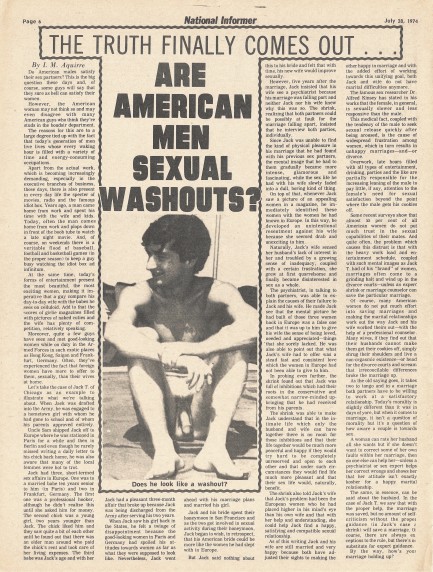
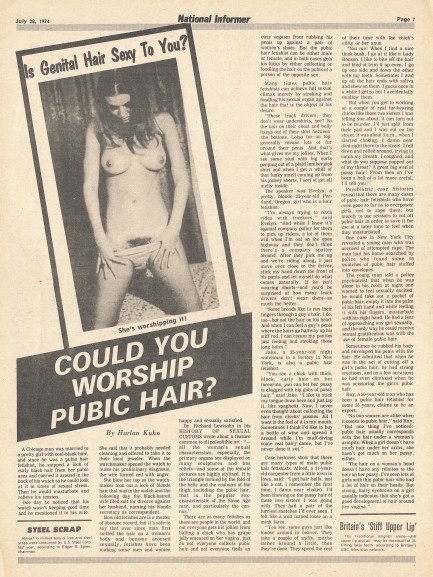
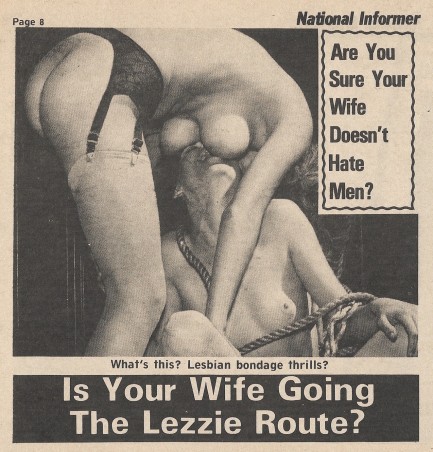
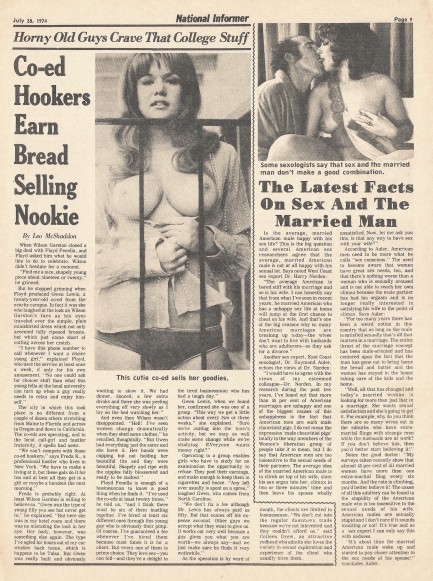
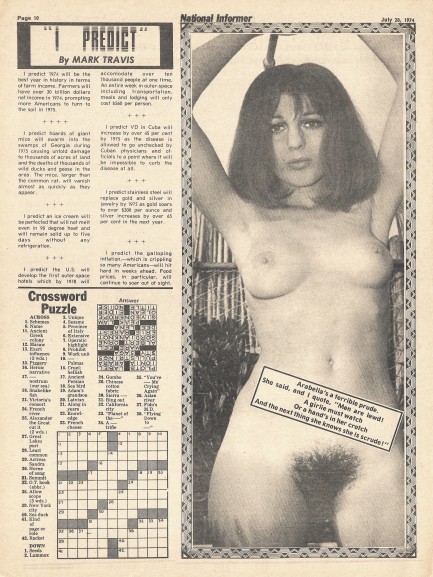
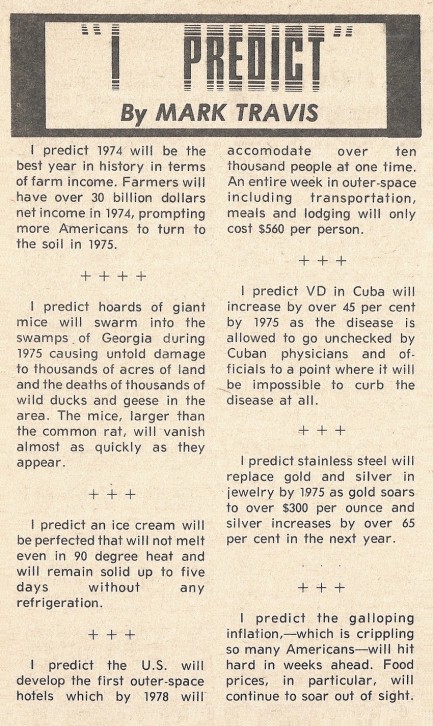
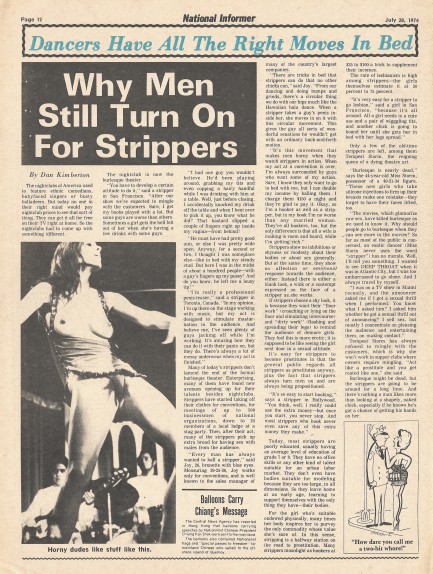
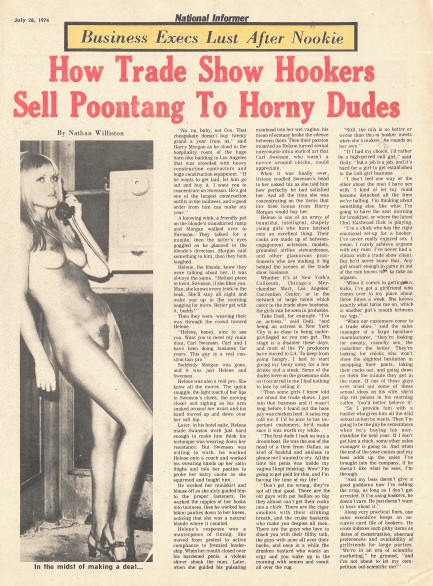
Issues of National Informer on back-to-back days? Sure, why not? The above example, published today in 1974, is five years older than yesterday's, and in the intervening timeframe the editors seem to have stopped woman bashing. They're still treating them as complete sex objects, but that's what Informer was all about. They've also replaced the (not so) Great Criswell with new psychic Mark Travis. We're still curious who actually bought these mags (we do it for scientific purposes, so we don't count), and exactly how seriously they took it. Our guess is not very.
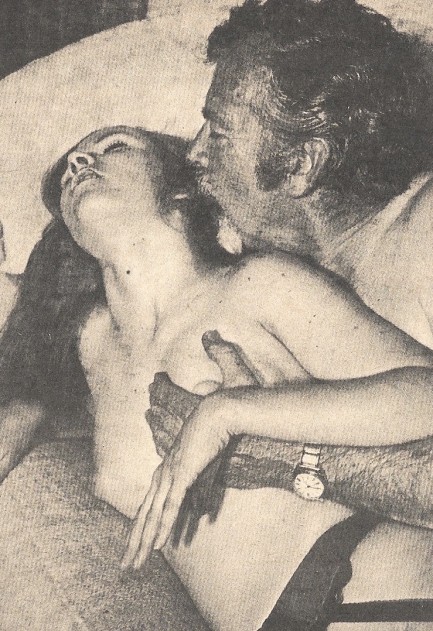
The main attraction in this issue is the story on swivel-hipped musical star Elvis Presley and Linda Lovelace, centerpiece of the xxx smash Deep Throat. Lovelace, who was purportedly involved—at least for a few hours at a time—with such aging stars as Richard Burton, Rex Harrison, Bob Hope, Dean Martin, and (of course) Frank Sinatra, as well as young Hollywood rebels Paul Newman, Marlon Brando, and Dennis Hopper, is alleged to have met up with Presley in Las Vegas. You could be forgiven for assuming that nature took its course, but it didn't. At least, according to reports.
What on Earth could have stopped these two sex elementals from joining forces? Presley allegedly told Lovelace he was temporarily hors de combat because he had hurt himself having sex with Natalie Wood the previous week. Hey, we just relay this stuff. We make no claim that any of it is true. And we thought Natalie was so sweet. Well, you should never judge a book by its cover. Tabloids, on the other hand, you can safely evaluate at a glance. Informer is just as down and dirty as it looks.
 She was a material girl living in a material world. 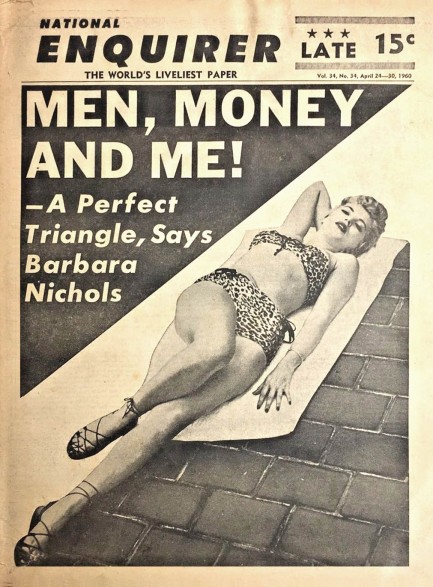
Above is a 1960 National Enquirer with Barbara Nichols on the cover, and editors claiming she said “men, money, and me” make a perfect triangle. Nichols was never a top star, mainly guest starring on dozens of television shows, but she was a staple in tabloids because she dated many rich and famous men but never married, which is why we suspect Enquirer editors came up with their cover quote. Some of her escorts included Jack Carter, Steve Cochran, Cesar Romero, and Elvis Presley. Nichols died in 1976 aged forty-seven due to liver dysfunction. It had initially been torn in an auto accident a decade earlier and gave her problem the rest of her life. We have a pair of nice femme fatale photos of her and you can see those here, and well as an awesome album sleeve here.
 They say even bad publicity is good publicity. 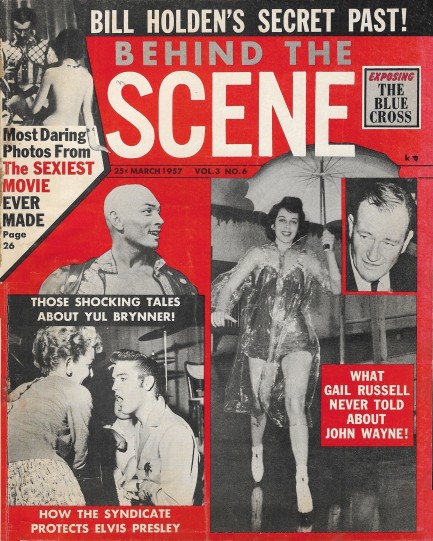
In this March 1957 issue of the tabloid Behind the Scene editors take swipes at assorted Hollywood icons, among them Yul Brenner, John Wayne, and others. Highlights include the allegation that Elvis Presley's career is mob controlled, that camera clubs are just fronts for porn peddlers, that Hedy Lamarr used Linda Lombard as a body double for Samson & Delilah, and that Lucrezia Borgia is the sexiest movie ever made. Also Mamie Van Doren's “secret weapon” is that anywhere she goes she always wears the least clothing of any woman present.
The shocking tales about Brynner have mainly to do with his claims of being a real life man of action, born on the Russian island of Sakhalin to Mongol ancestors. The truth was more mundane, but the lies helped Brynner establish himself as a star. As far as Elvis goes, he was dogged by rumors of Mafia ties later in his career, but this mention of a connection as far back as 1957 was a surprise to us. As always, people on both sides of the issue are willing to shout their version of the facts to the mountaintops, but nobody really knows who’s telling the truth. We’ll check with Elvis himself on this, since he lives just over in the next town since faking his death in 1977.
The interesting story here is the one about Gail Russell and John Wayne. Their acquaintanceship began when they starred in Angel and the Badman together in 1947, and continued when they reunited for Wake of the Red Witch in 1949. Whether they were more than just friends, nobody really knows. At the time Wayne was married to Esperanza Baur Díaz, and the relationship was marred by drinking and fighting, including one incident when Baur shot at Wayne. When the divorce inevitably came, it turned into one of the nastiest splits in years, with Baur accusing Wayne of being a violent drunk who beat her and fucked around with various women, including Russell, and Wayne accusing Baur of hanging around sleazy dive bars in Mexico, hooking up with strange men, and spending his money to entertain them.
The divorce was in 1953, but Behind the Scene, with this cover, is offering its readership dirt from an event that was still fresh in the public’s minds because it had been such a knock-down-drag-out spectacle. Russell had never weathered the limelight well, and she used booze to cope. Her long term drinking problem was exacerbated by the turbulence surrounding the Wayne-Baur split. Two weeks after the divorce she was arrested for drunk driving. It caused Paramount to decline renewing her contract, and she kind of floated around for a few years, trying to hook on with a new studio but drinking steadily all the while. In 1955 she crashed her car and fled the scene, and in early 1957 she drove though the plate glass windows of Jan’s Restaurant in Hollywood.
With hindsight, it’s clear Russell was in a death spiral, but in the Tinseltown of that day the situation was perhaps not so obvious. In August 1957, Russell was found unconscious in her home, passed out after a drinking binge. Even in Hollywood, she had now crossed the line from being merely a party girl to having a problem. She was persuaded to join AA, but couldn't stop drinking, and in August 1961 was found in her L.A. apartment, having died from liver damage, aged 36, another beautiful star that flamed out. All that and more, in thirty-plus scans below. 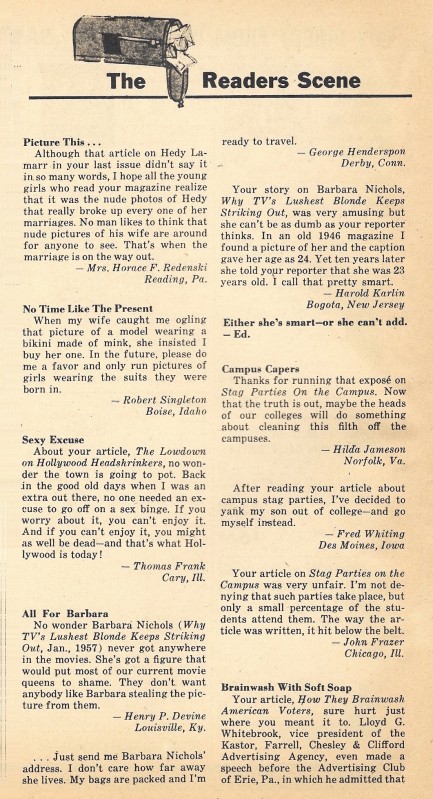   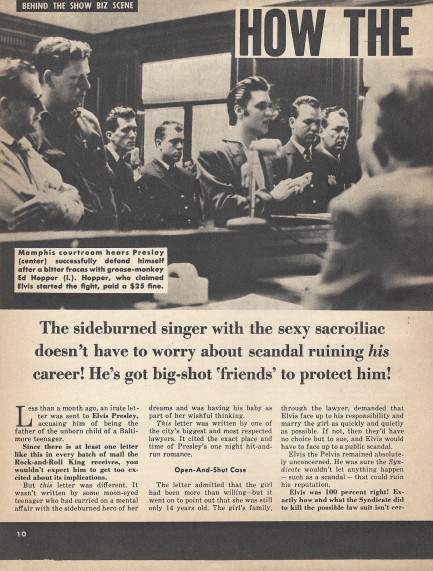 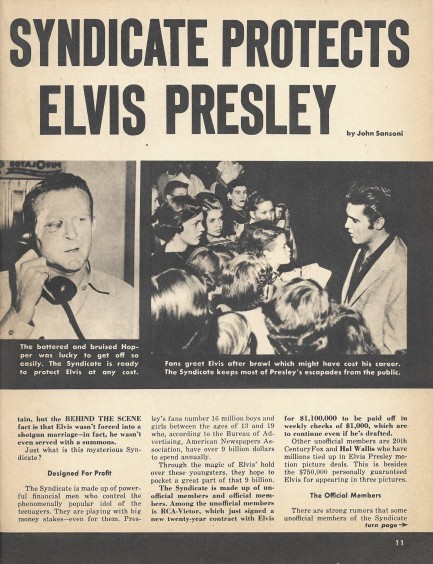 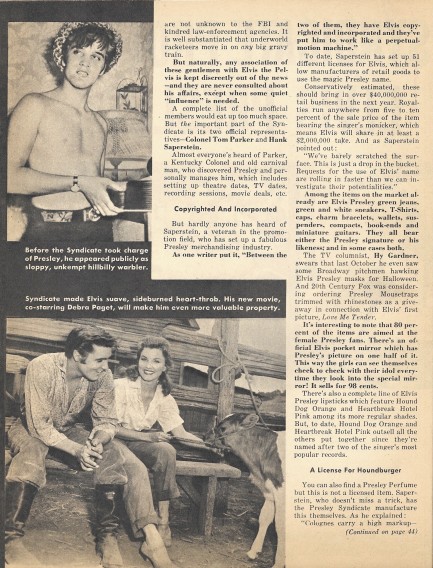  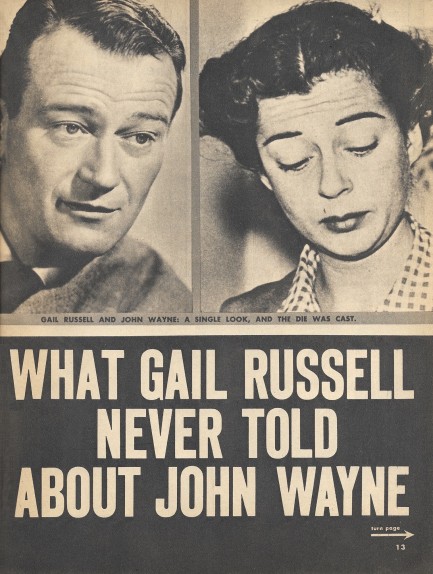 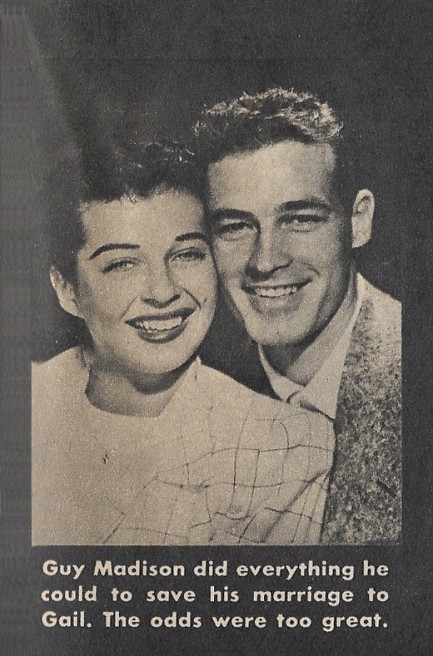 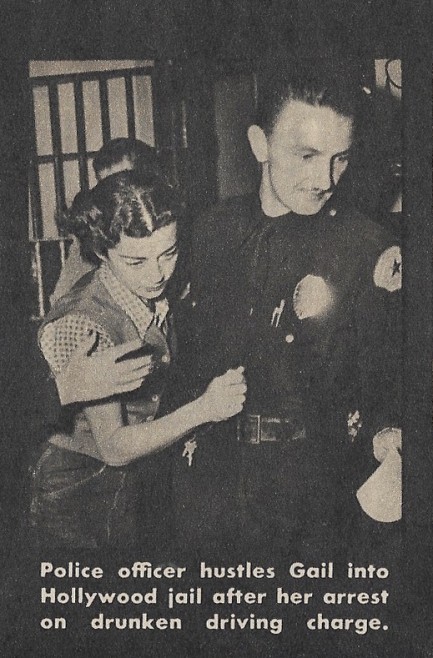 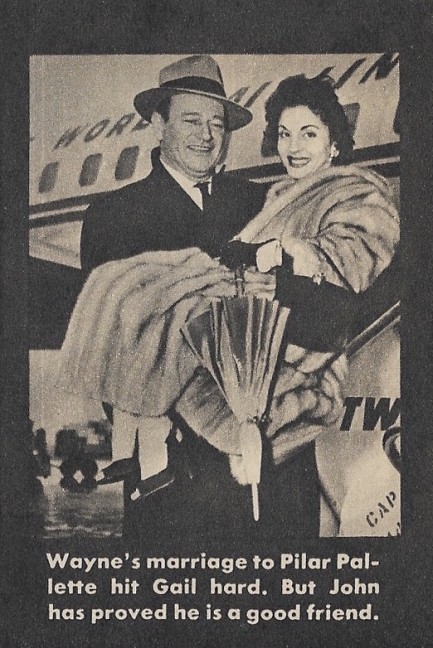 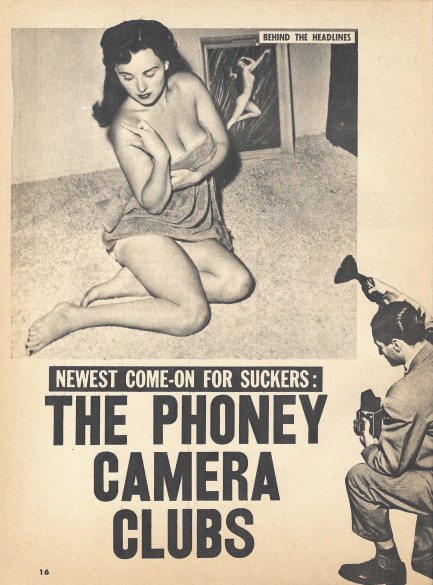 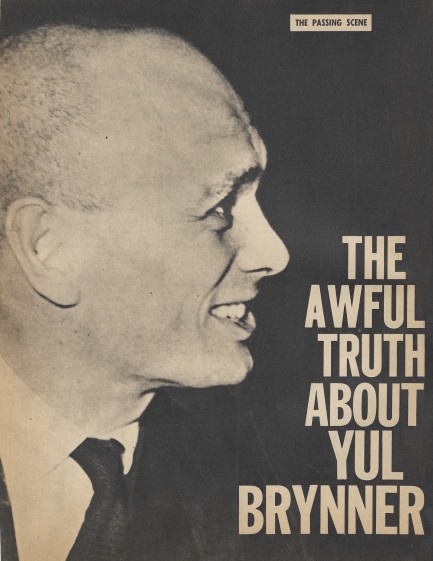 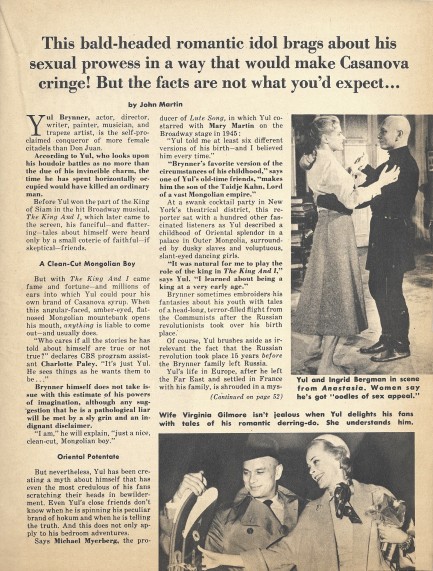 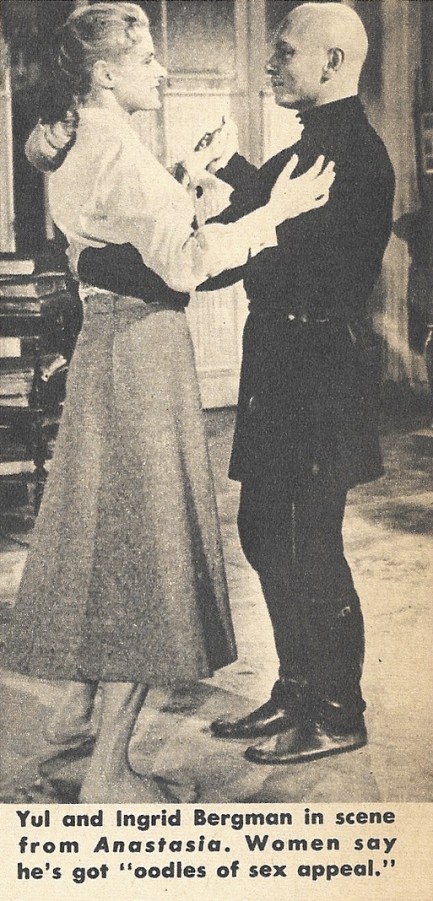 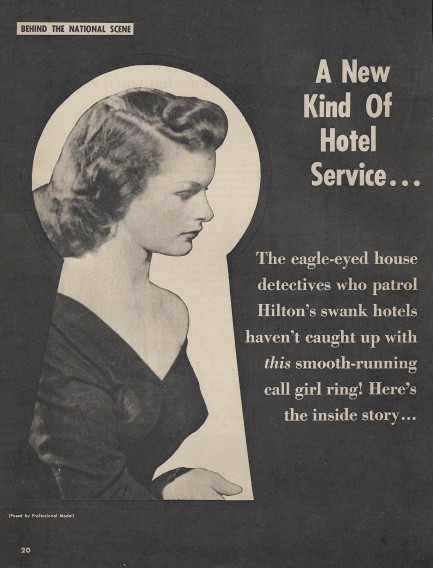 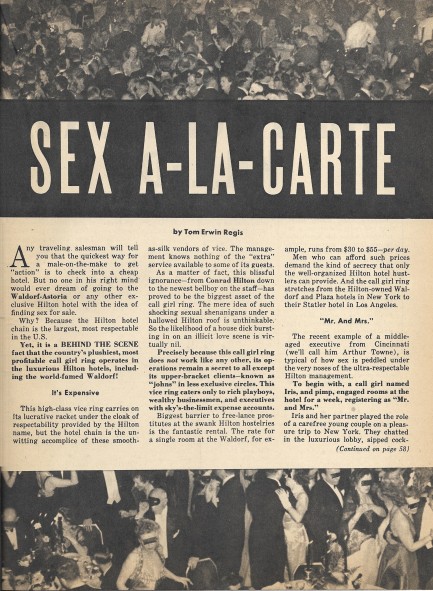 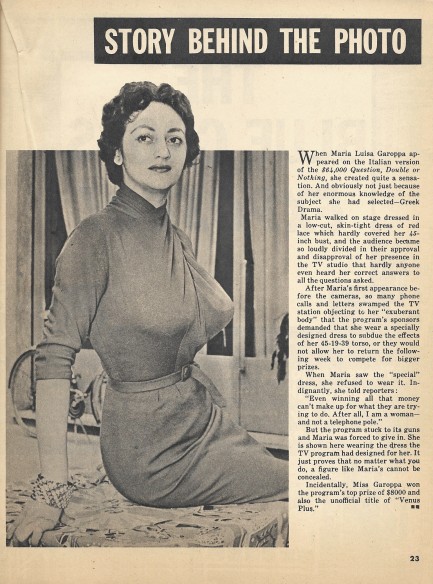 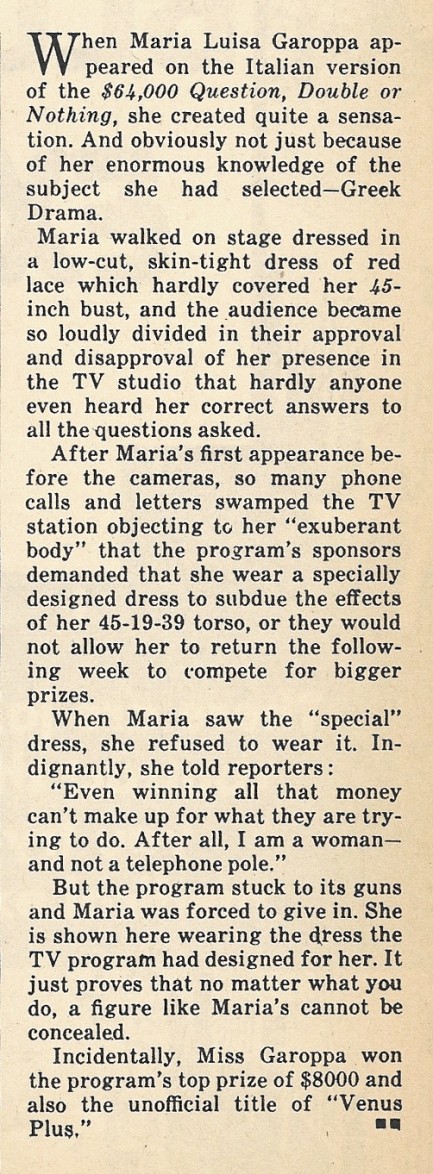 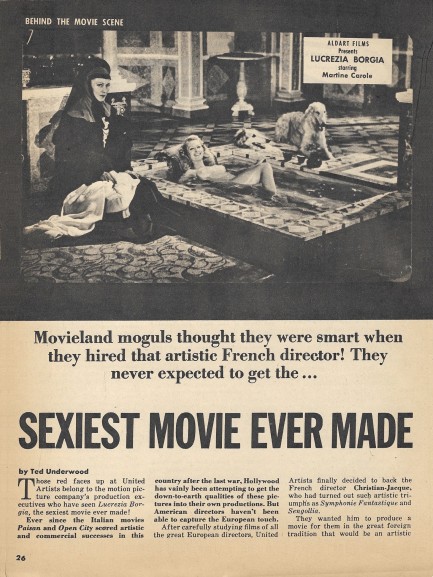 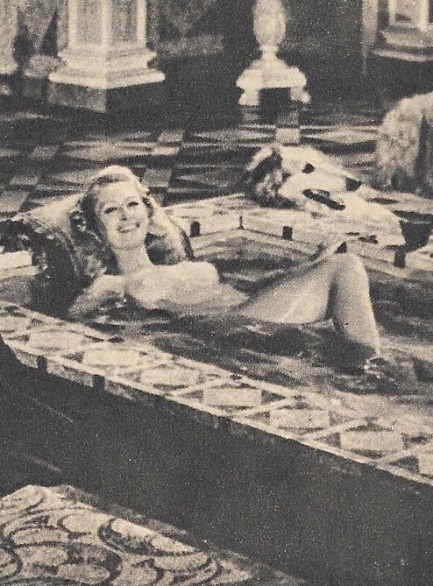 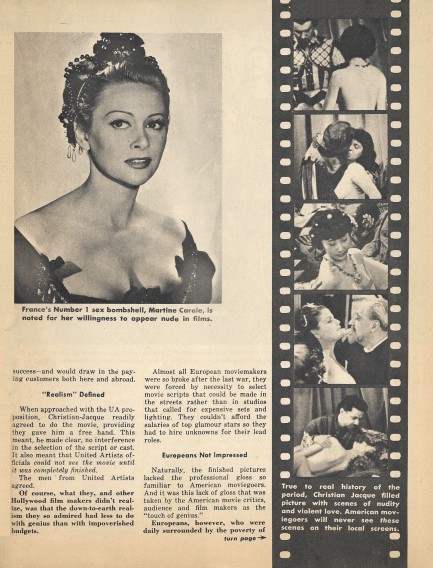 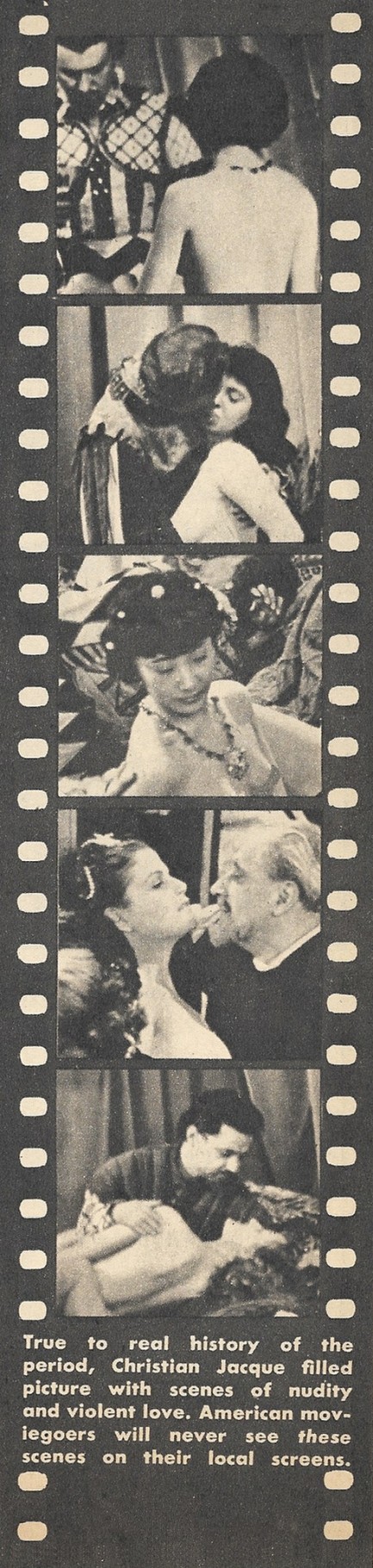 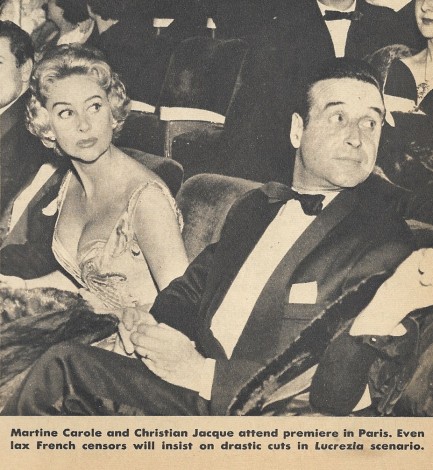 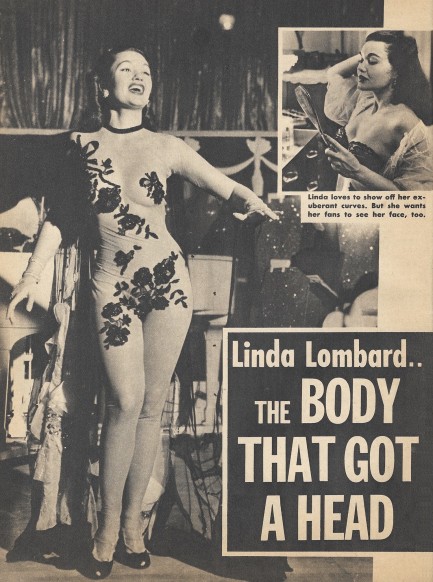 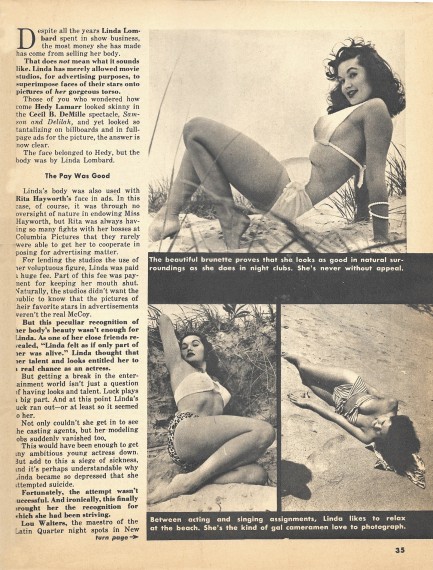   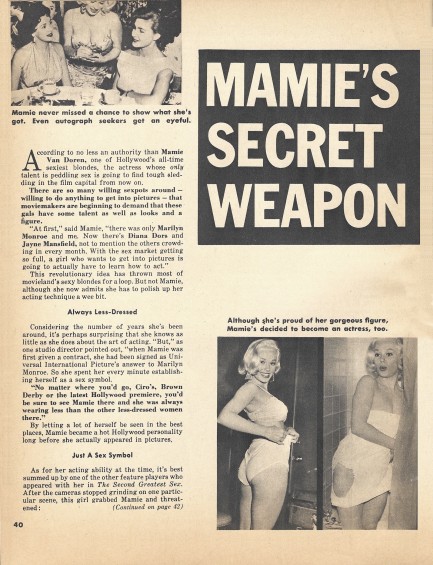 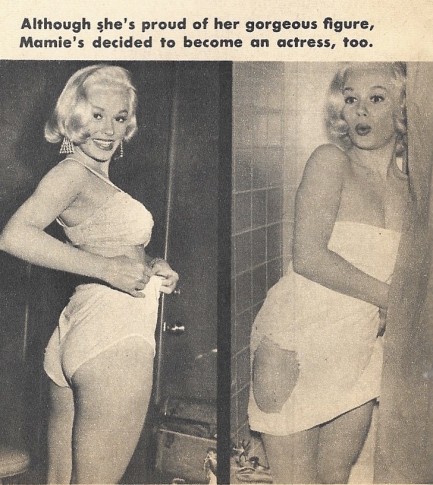 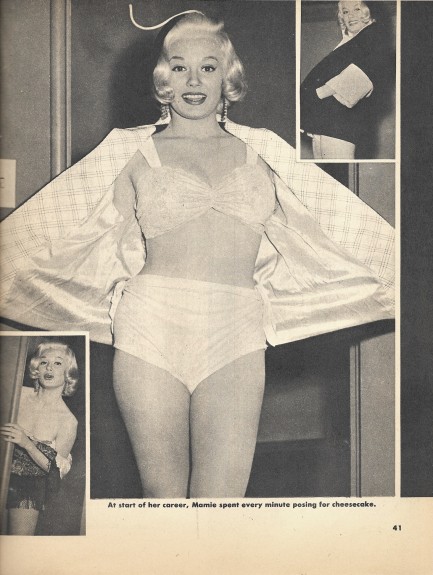 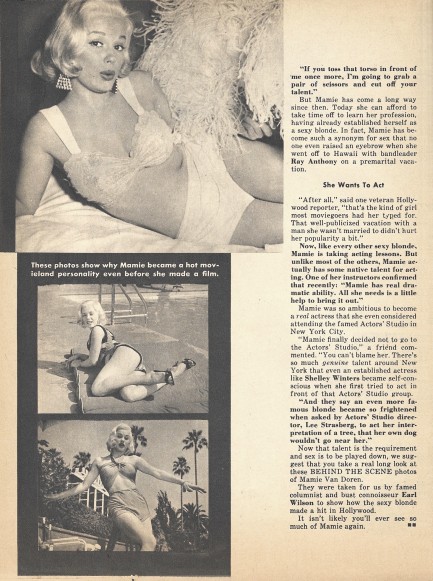 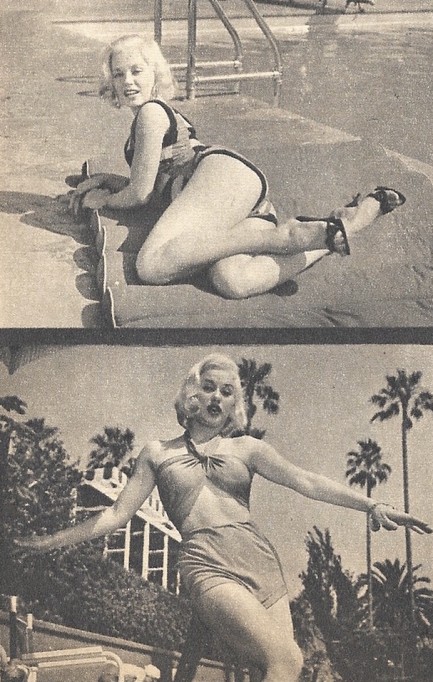 
 Anita Ekberg bares all for art. 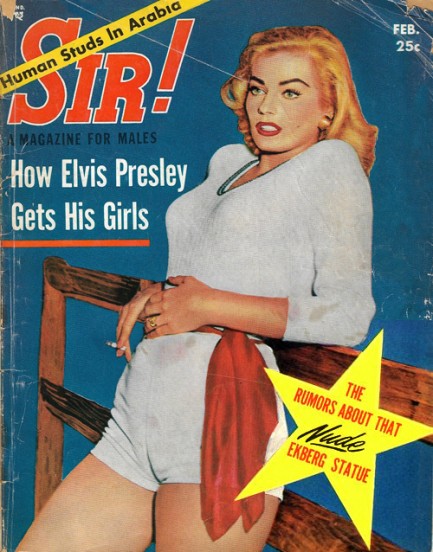
Anita Ekberg graces the cover of this February 1957 issue of Sir! magazine, laid back, colorized, and looking good. She gets in depth treatment inside, with a focus on a nude statue of her made by Hungarian sculptor Sepy Dobronyi. The story was perfect for Hollywood gossip rags, and accordingly they all reported breathlessly that Dobronyi wanted to make the statue a nude, and since he was headed back to his studio in Cuba and couldn't have Ekberg sit for him, took a series of nude reference photos. Dobronyi was a scuba diver in his spare time and had collected gold coins from sunken Spanish galleons to use in his art, some of which he applied to Ekberg's likeness, leading to this boob-related witticism from Sir! editors: “Anita's statue has a real honest-to-goodness treasure chest.” The sculpture was mostly bronze, though, and became known as the Ekberg Bronze, which when last seen was in a Norwegian museum, though Ekberg was actually Swedish.
Elsewhere in Sir! you get the short feature, “A Homo Speaks Out.” The title alone. Really. The author, working in confessional form, admits to deep feelings of regret, shame, self-loathing, and so forth at his “condition”—basically writing everything mid-century homophobes would have wanted to read. It ain't pretty, so we won't transcribe any of it. Readers also learn about marriage rites on the Pacific islands of New Hebrides (now Vanuatu), where tribal ceremonies involve all the male members of the groom's family having first crack at the bride. Is that true? We have no idea, and really aren't inclined to find out. To each culture their own, we say—as Americans, we come from the weirdest one on the planet. Other stories deal with Elvis Presley, burlesque, and prostitution. While Sir! wasn't one of the top mid-century tabs, it outdid itself with the Ekberg cover alone, which we consider one of the most eye-catching images of her we've seen. 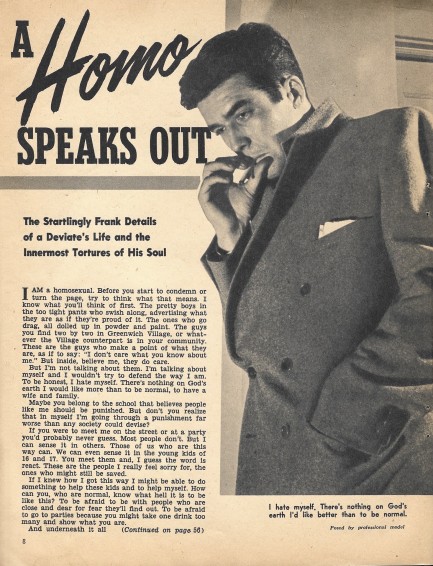 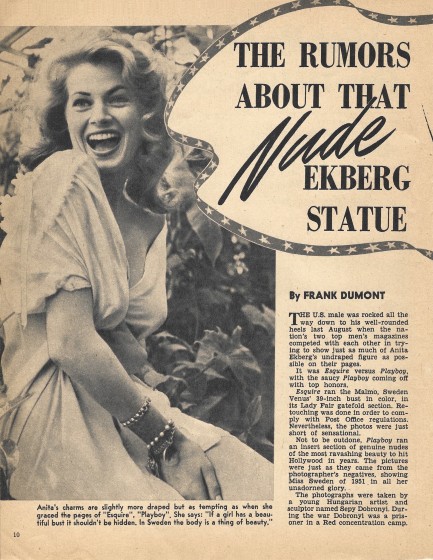 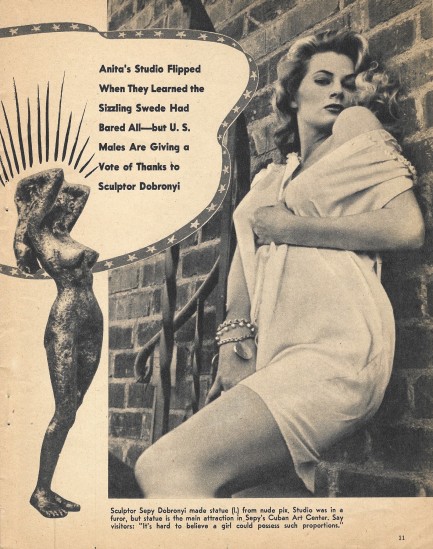 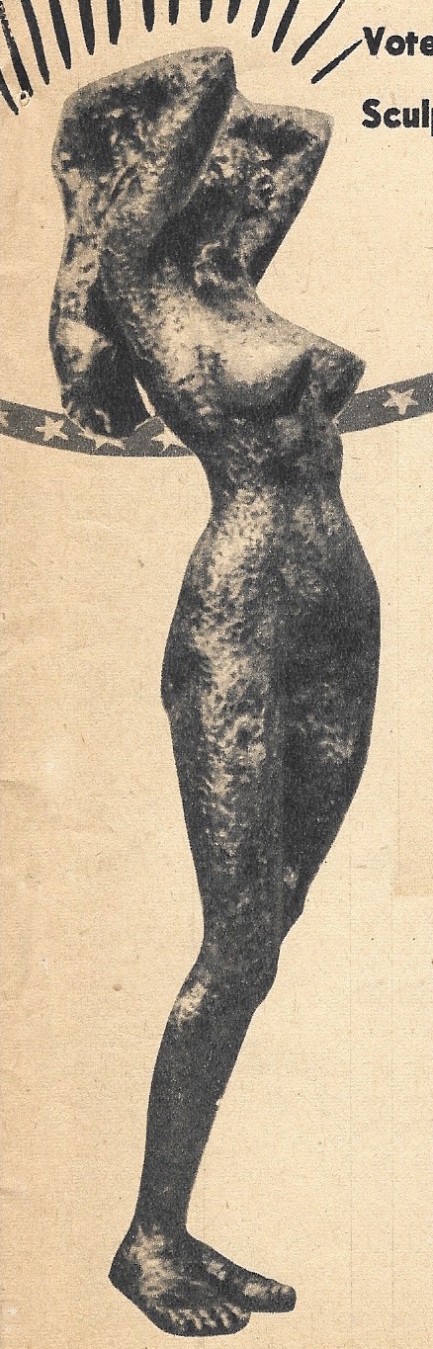 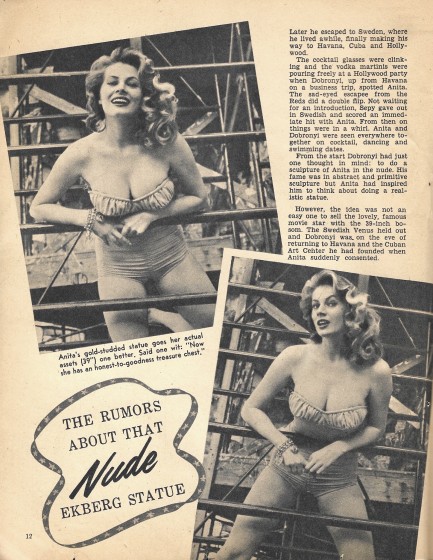 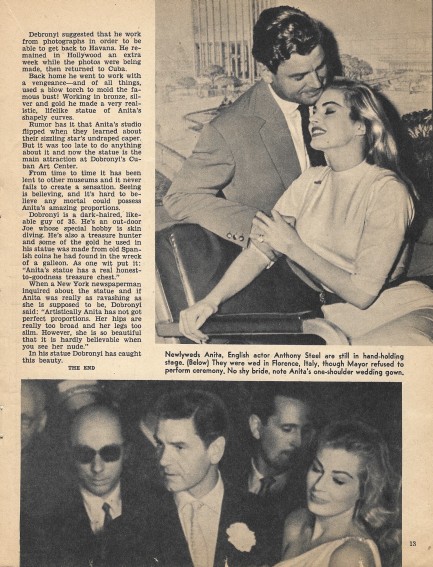       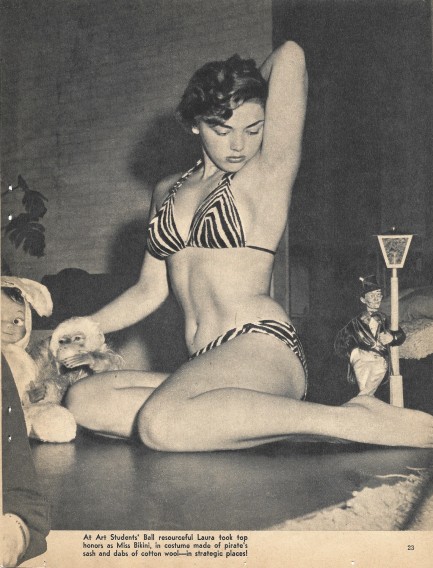 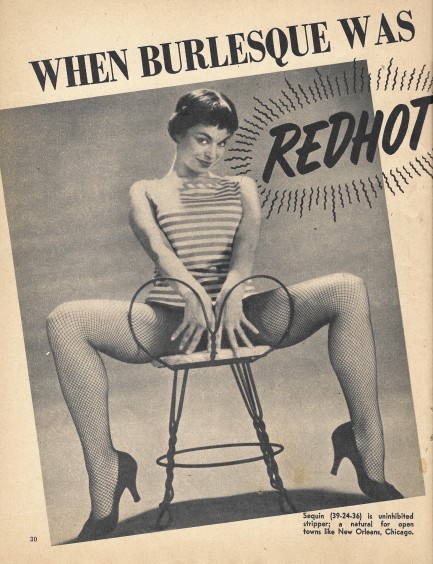 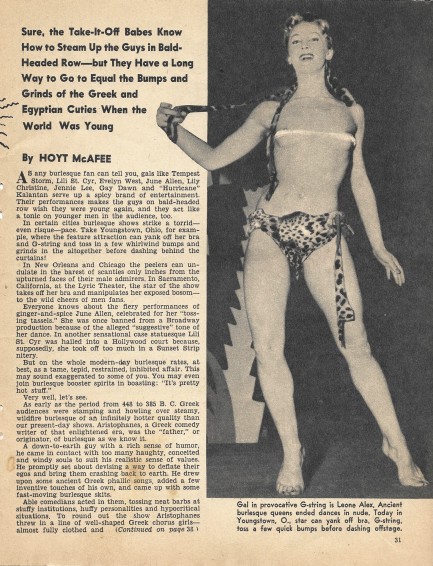 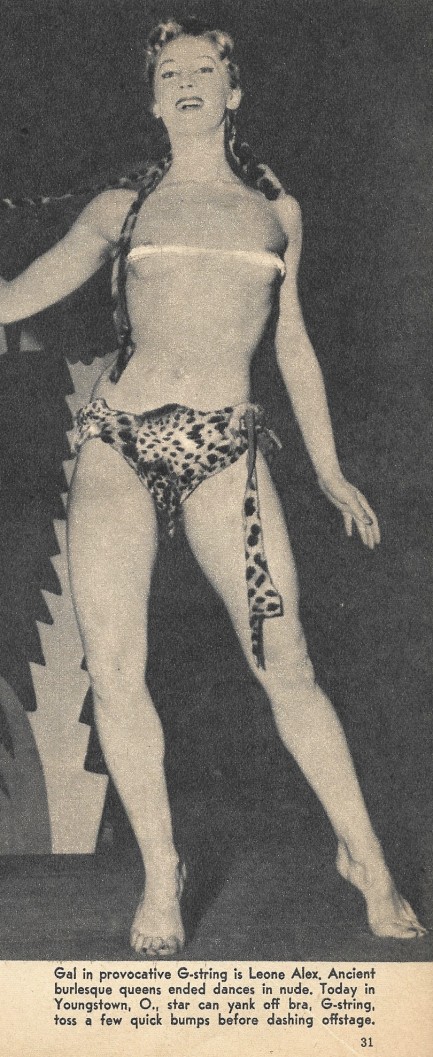 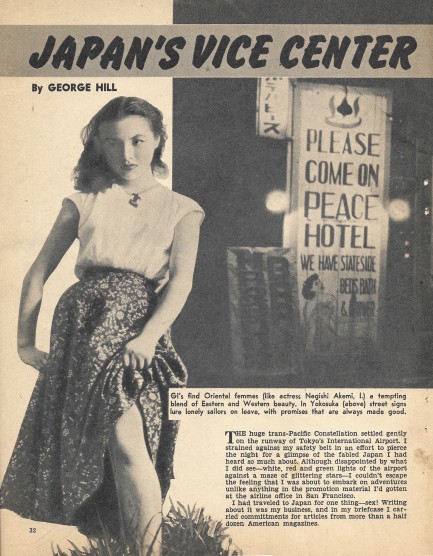 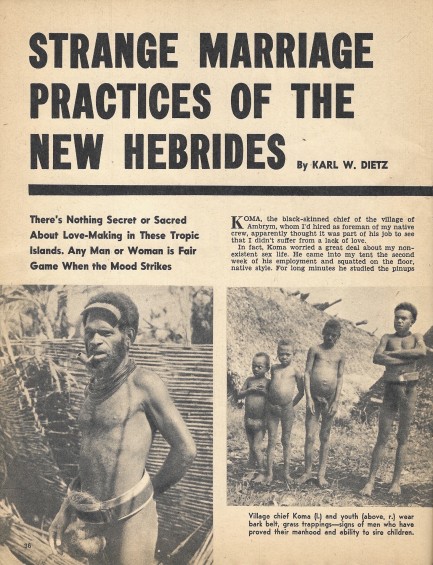 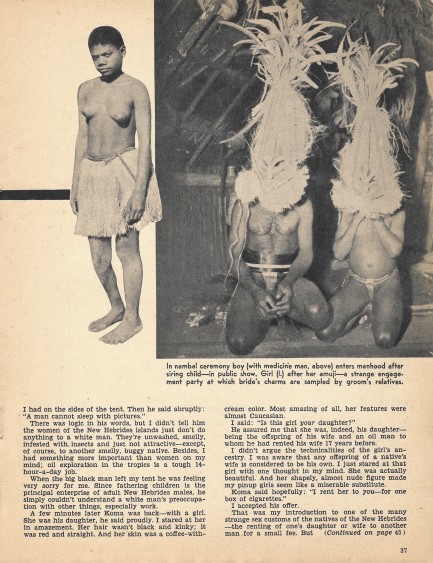 
 Wherever celebrities misbehave National Spotlite is on the scene. 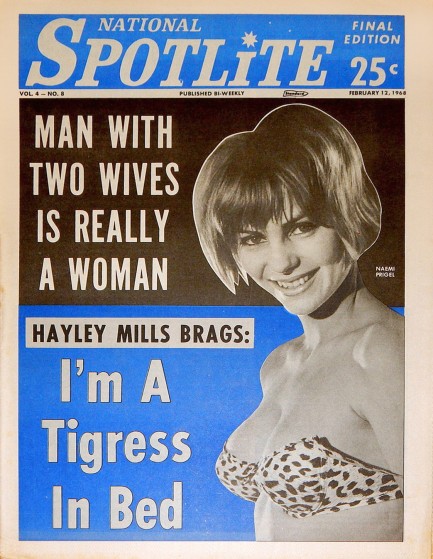
This National Spotlite published today in 1968 features cover star Naemi Priegel, a West German television actress and singer who reached the height of her fame during the 1970s. Inside are many interesting Hollywood tidbits, including former child star Hayley Mills allegedly describing herself as a tigress in bed, Marlon Brando beating up two party crashers, Elvis Presley breaking the arm of someone to whom he was demonstrating a karate hold, Richard Burton being pursued by a chorus girl who claimed he fathered her child, Gene Tierney and her husband Howard Lee getting into a public spat, and John Wayne slugging an autograph seeker who mistook him for Robert Mitchum. Was any of this stuff true? We have no idea, but it sure is interesting reading. You can see more in the same vein at our tabloid index, located at this link. 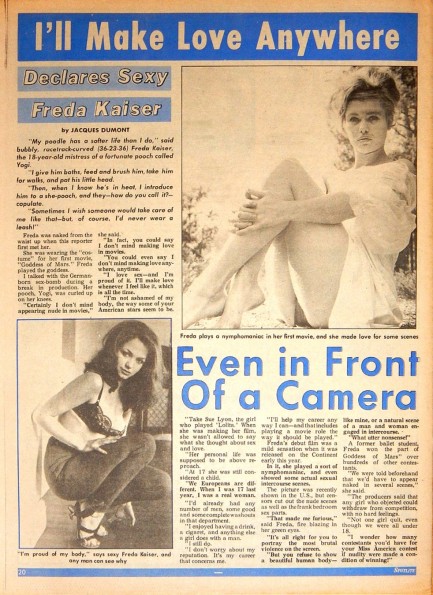
 Happiness in Hollywood can be hard to hold onto. 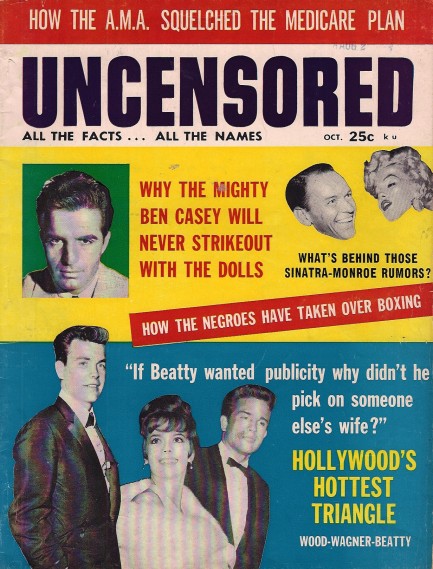
Uncensored gives readers the lowdown on all the Hollywood trysts and splits in this issue published this month in 1962. José Ferrer and Rosemary Clooney apparently broke up—after eight years and five children—over Ferrer's insistence on carrying on extramarital affairs, as was his natural right. At least that's what he thought: “Since the beginning of our marriage he has engaged in a series of affairs with other women,” Clooney is quoted. “I discussed this with him prior to our separation, but he said he couldn't change his way of life.” Apparently the Puerto Rican born Ferrer was old school with the whole machismo thing. But all was not lost between him and Clooney. They married again in 1964 and managed to stay together another three years.
Pivoting to the hook-ups, Uncensored explains how Joan Collins stole hotel heir Nicky Hilton from Natalie Wood, but Robert Wagner stole Collins from Hilton, leading to Natalie Wood stealing Wagner from Collins, and Collins falling into the arms of Warren Beatty. Mixed in with those four are James Dean, Tab Hunter, Lance Reventlow, and Elvis Presley. Or so the magazine says. That's a lot of guys and only two women, but the old tabloids loved to slut shame women while either ignoring or approving the antics of men. For example, Beatty was already known in 1962, after some years in television and with two hit movies behind him, as a fuckboy, but that's not mentioned here at all. These days, though, that immunity is largely gone. Although you'd have to have the brain of a fourteen-year-old to believe—as many people do—that he's slept with 12,000 women.
Uncensored next gets to Marilyn Monroe and Frank Sinatra. It's since been established that the two hooked up, but at the time this magazine was published the pair were generating mere rumors. Why? Because Monroe was flying to Las Vegas regularly and staying in Sinatra's home there. There's no rationale needed for this pairing—beautiful people tend to get together. But the editors actually offer a rationale for Monroe's interest in Sinatra and it's simply amazing: “Monroe is having all kinds of troubles with her studio and would like a man around the house to fight her battles for her.” Huh? That one makes no sense to us. Let's run it through our trusty Mid-Century Tabloid Filter™: Buzz...whirrrr... clickety click... Aha. What Uncensored means is Monroe was so emotionally fragile she had to have a guy around 24/7 to handle angry phone calls. Interesting, but we're still not buying it. Twenty scans below. 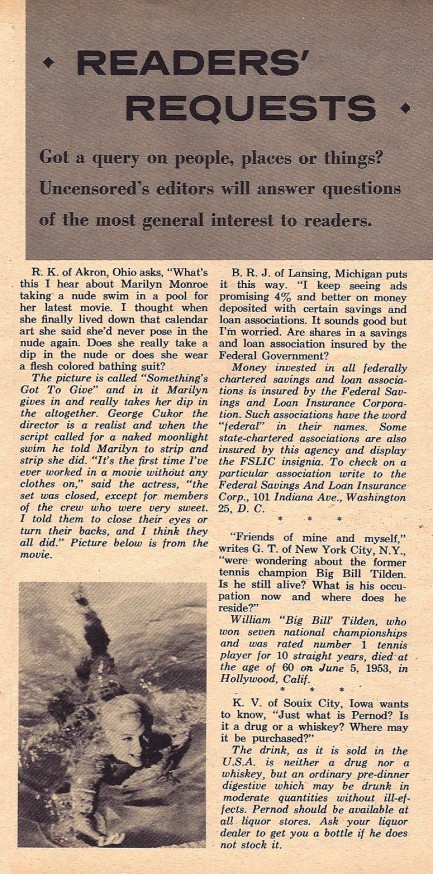 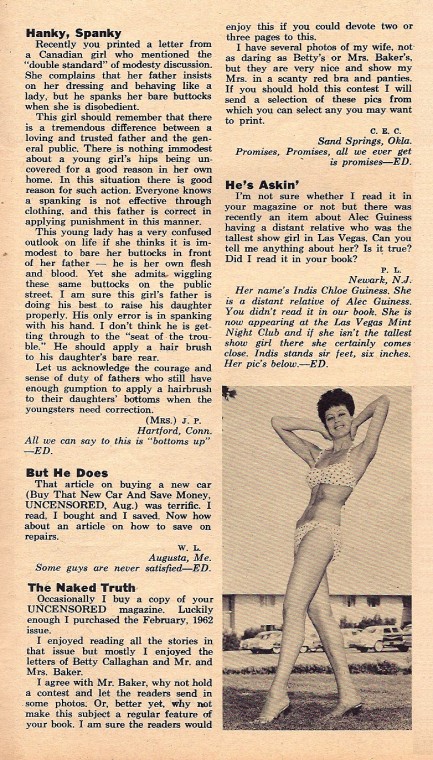 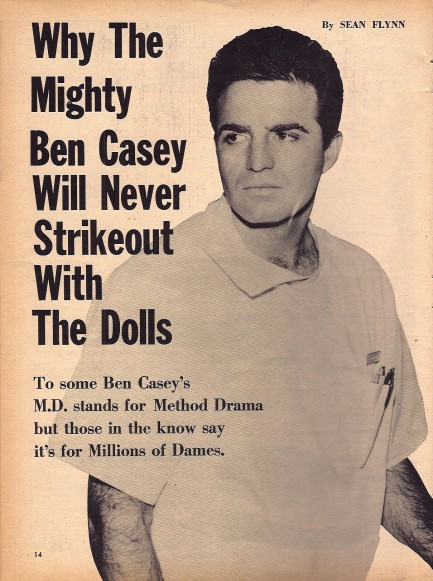 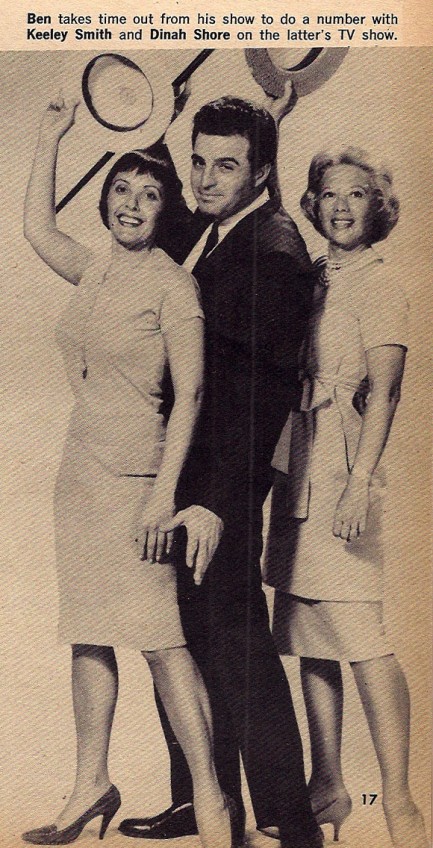 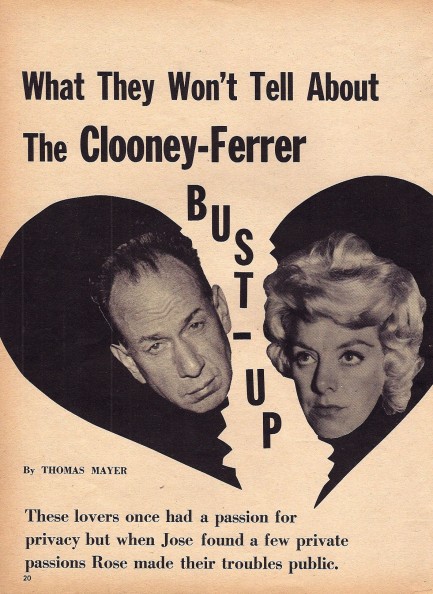 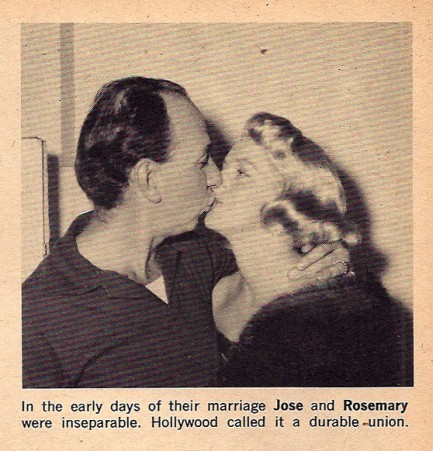 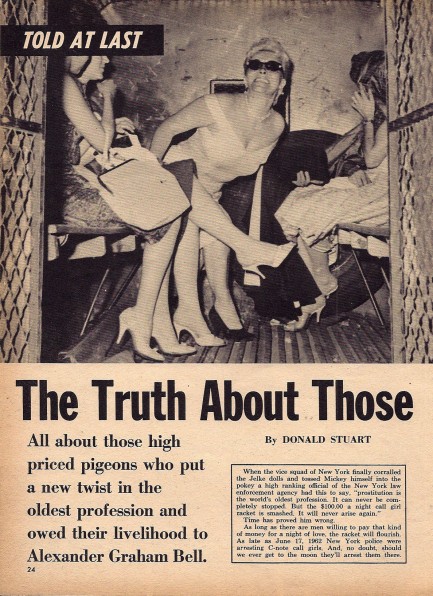 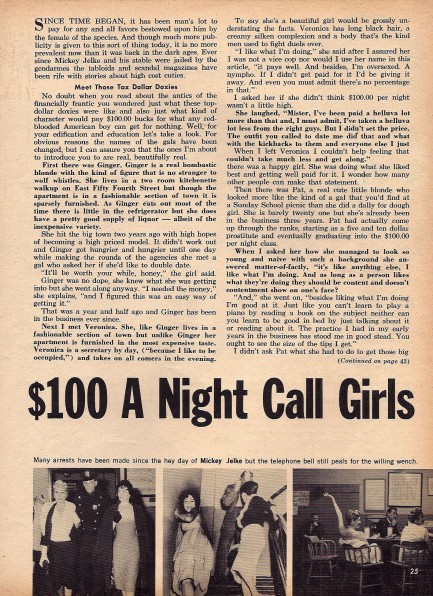 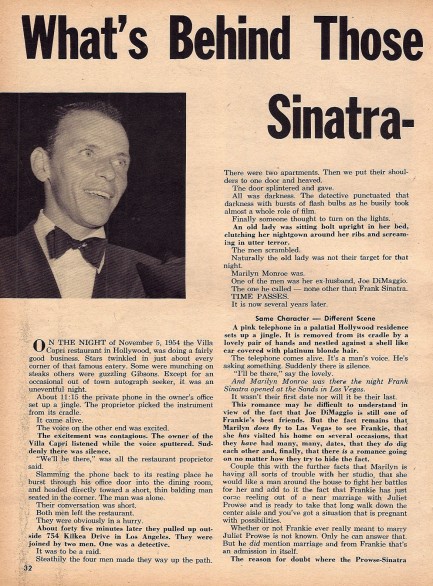 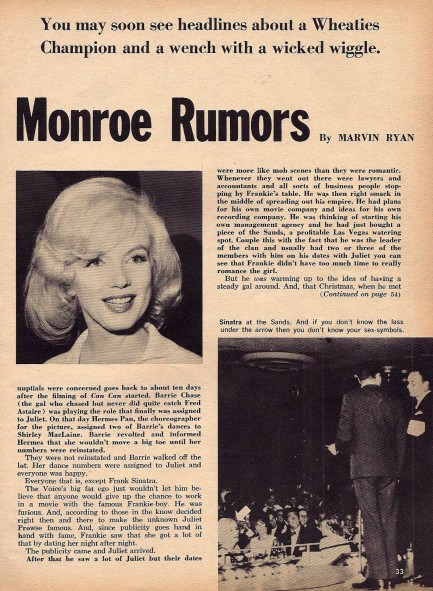 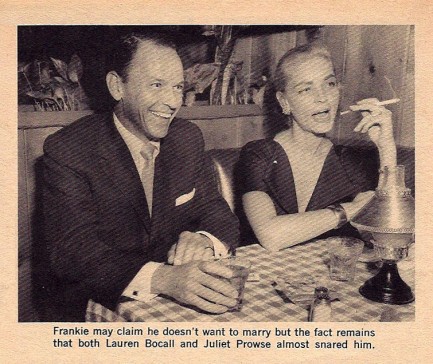  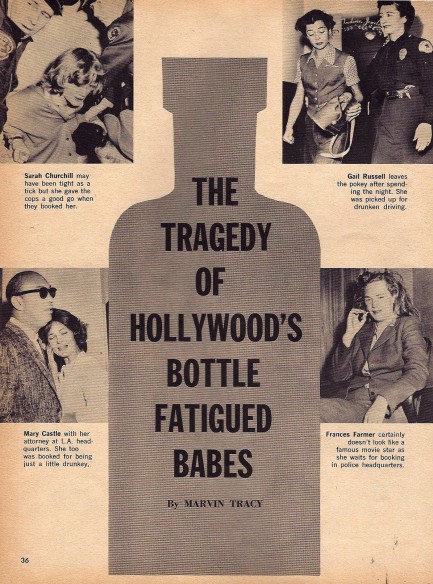 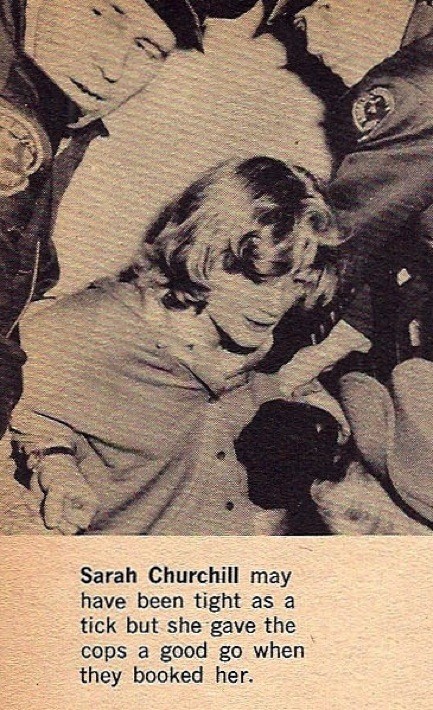 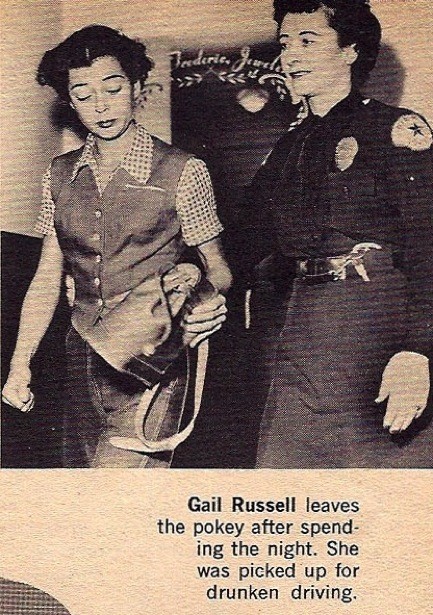 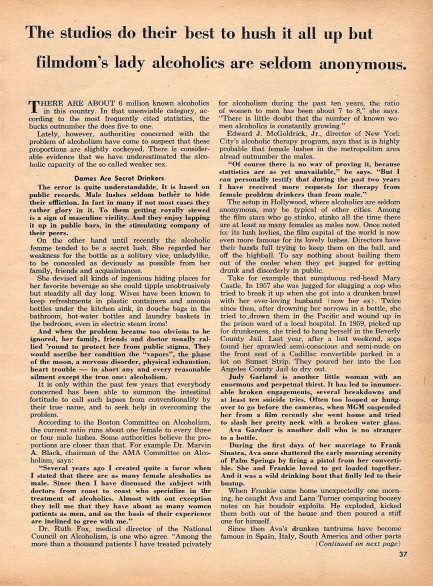 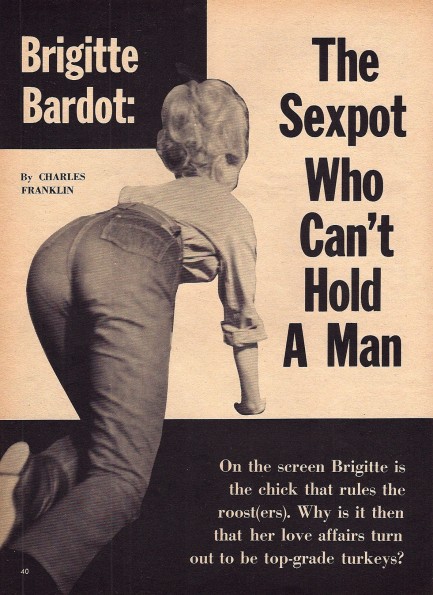 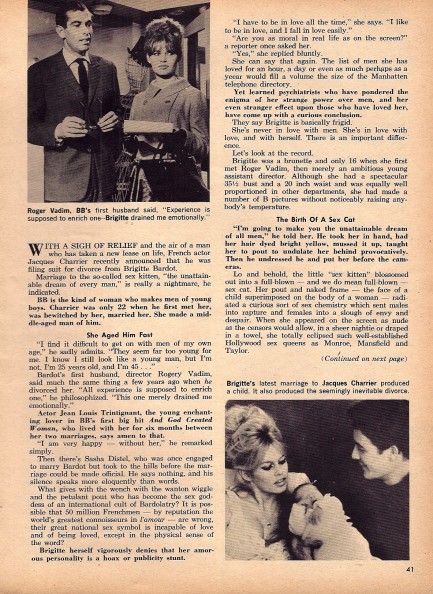 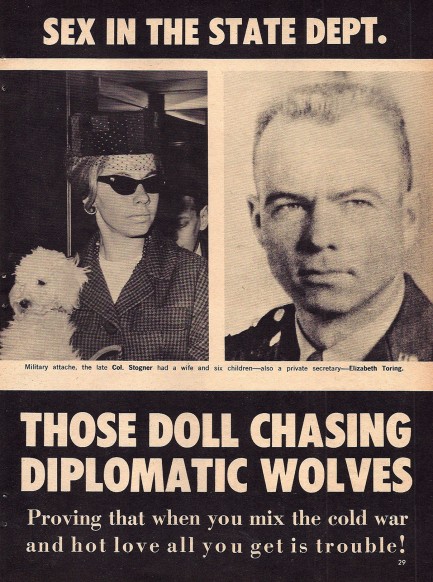 
 We’re really cooking with gas now. 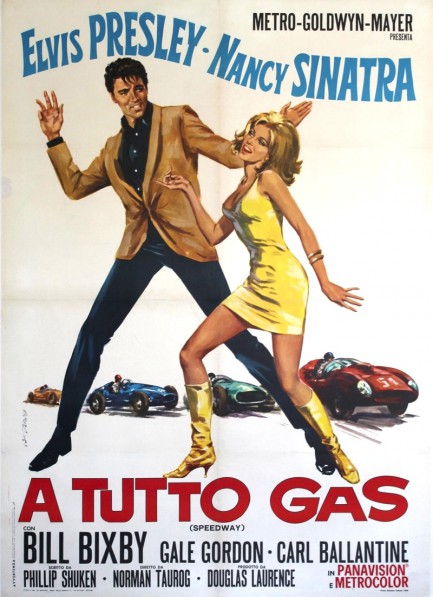
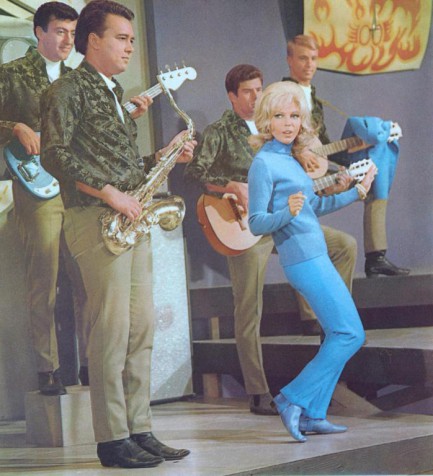
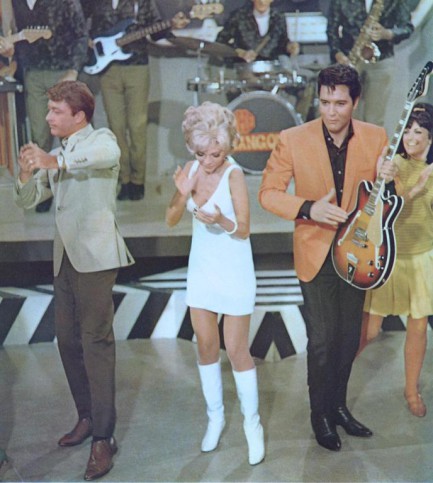
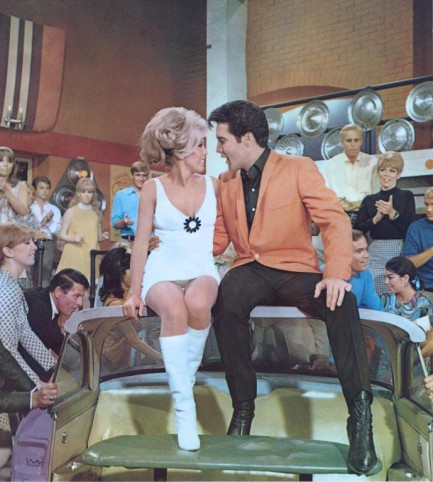
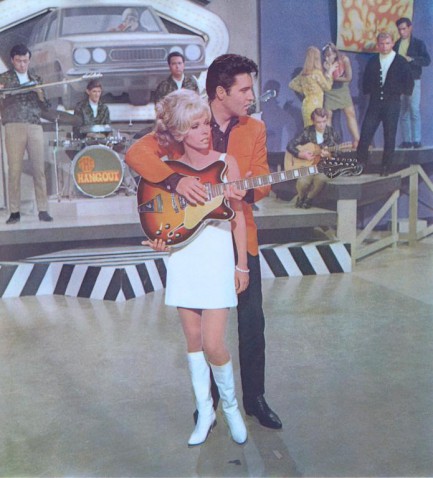
You can probably discern at a glance that this poster for A tutto gas was made for the Italian run of the American musical Speedway. This isn’t really pulp material, but we liked the art, so there you go. A tutto gas translates to “at full throttle,” and that’s where the cheese-o-meter is pegged in this musical romp starring Elvis Presley as an indebted stock car racer and Nancy Sinatra as the tax agent who falls in love with him. The movie is silly but it has its charms, and Elvis fans will certainly like it. Be forewarned, though, that it was released at the height of his fame but still tanked at the box office. There are reasons for that. A tutto gas opened in Italy today in 1968.
 Even in decline Confidential had eyes and ears everywhere. 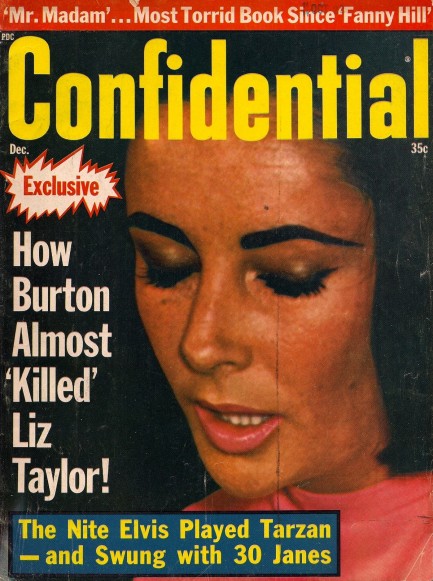
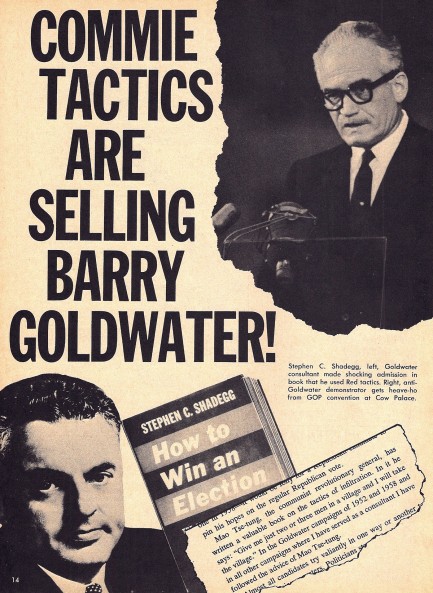
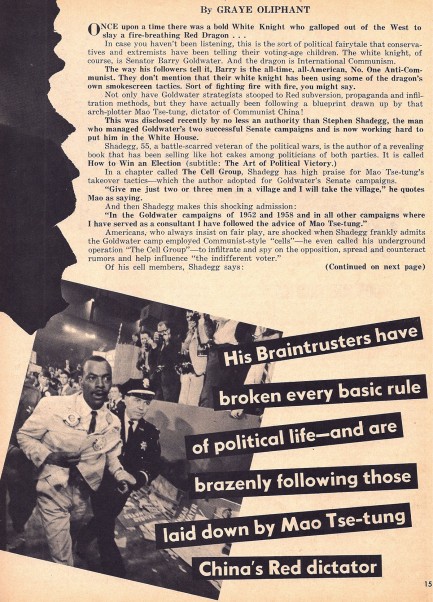
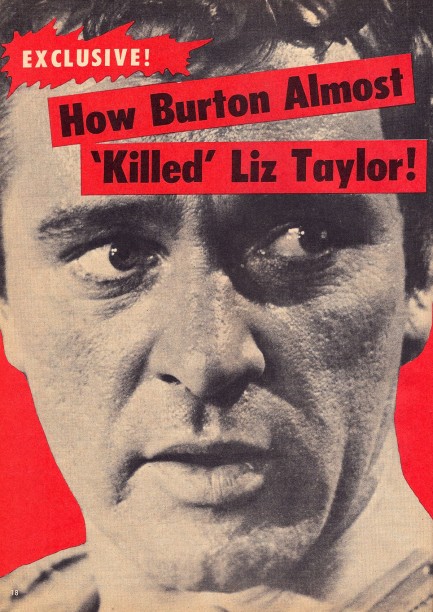
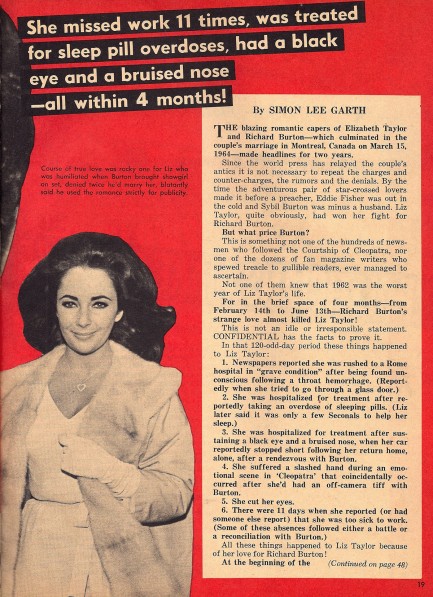
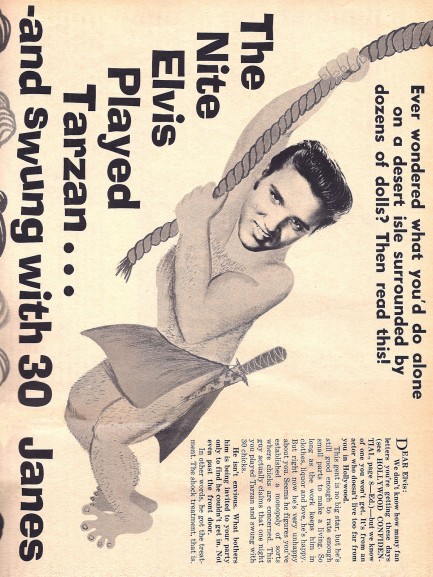
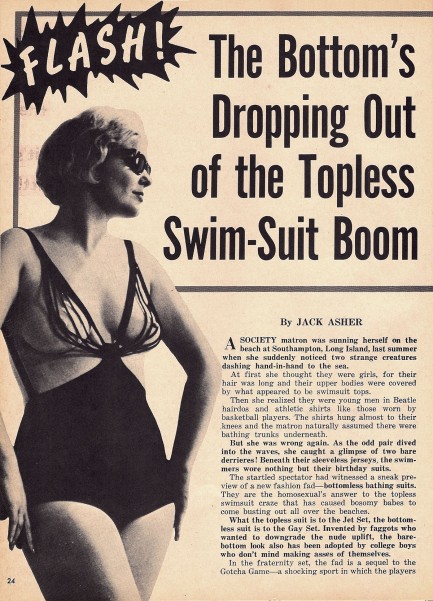
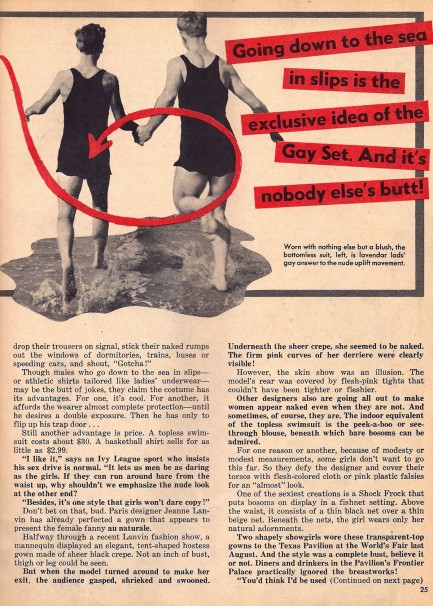
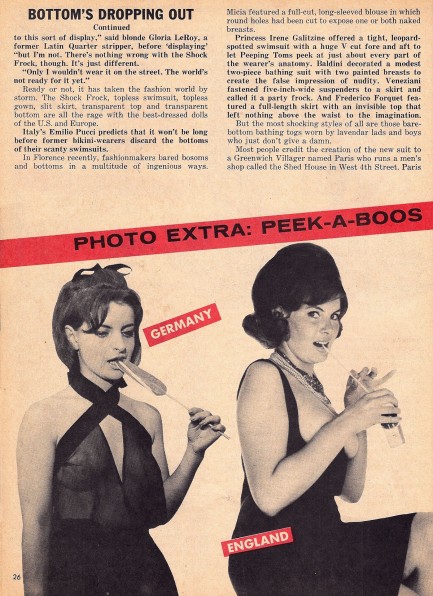
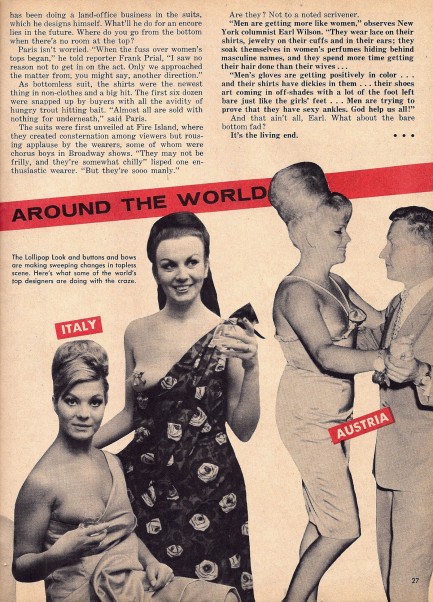
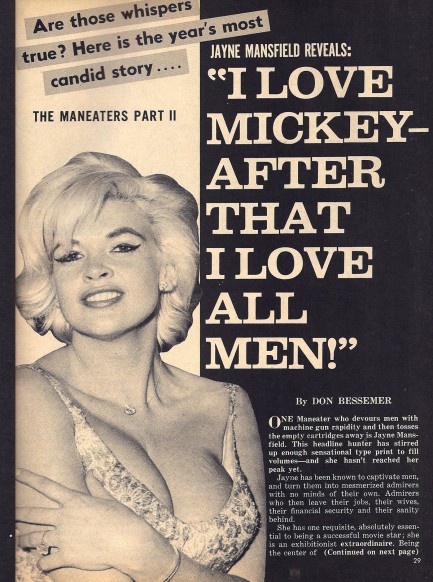
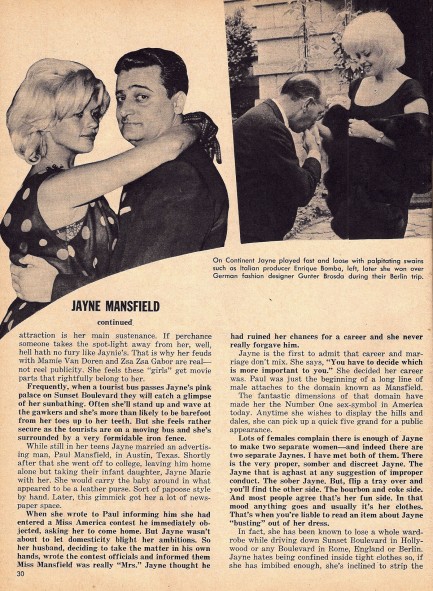
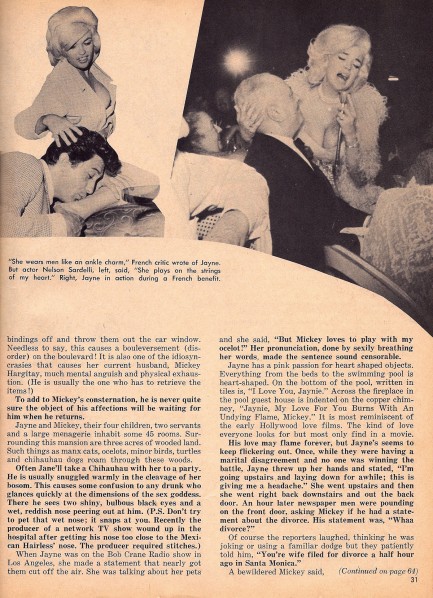
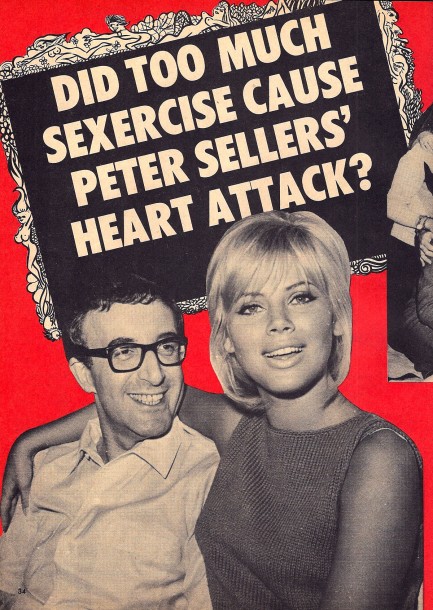
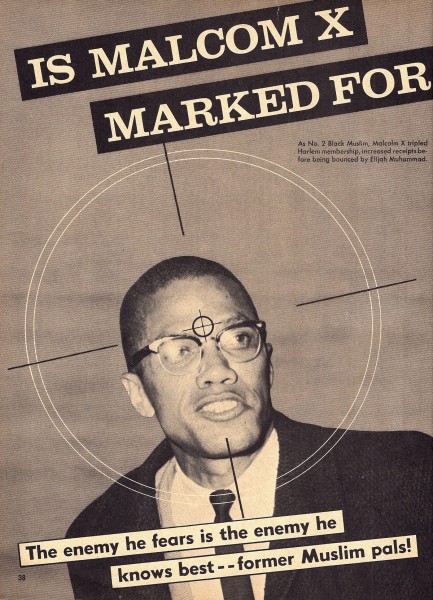
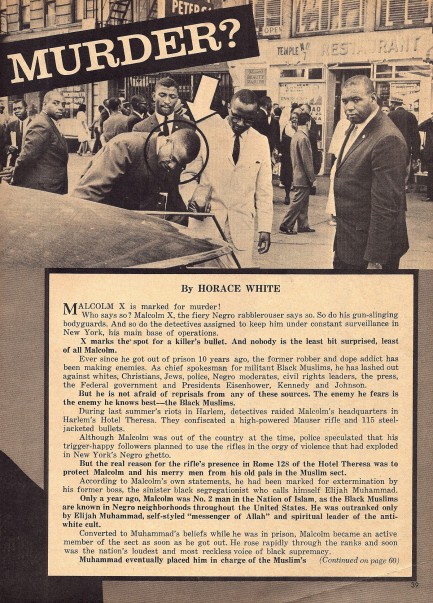
Liz Taylor and her tan star on this cover of Confidential published this month in 1964. The magazine was just a shadow of its former self by this point, but the inside stories still manage to raise eyebrows and give the impression of tabloid spies in every corner of Hollywood. Simon Lee Garth’s exposé accuses Richard Burton of being an abusive drunk, but that was not a scoop—other tabloids had written the same. But elsewhere, investigative journo Beverly Hillis (nice, right?) shares the amusing story of Elvis Presley throwing a party at which only women were invited. Apparently “swivel hips”, as Confidential refers to him, paraded around in a series of bizarre costumes and generally acted the fool, prompting some (but crucially not all) of his guests to leave in a huff. In another story Jack Asher writes about bottomless swimsuits worn by gay men as a response to the topless women’s suits that had appeared on European beaches, and also tells readers the fashion house Lanvin Paris had begun selling a bottomless suit for women. We don’t buy that one for a minute, but there are some interesting photos of women wearing breast-baring dresses. Elsewhere in the issue you get tabloid fave Jayne Mansfield and her husband Mickey Targitay, Peter Sellers sexing himself into a heart attack with Britt Ekland, Barry Goldwater playing dirty politics, and an impressively tasteless graphic of Malcolm X. All below.
 Precisely when it’s scarcest is when you want it the most. 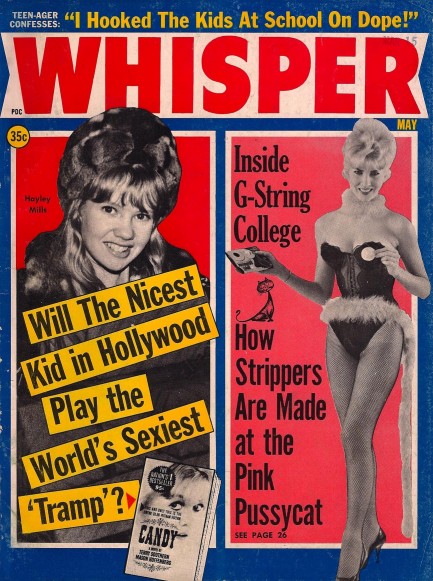
Jayne Mansfield, Mickey Hargitay, Elvis Presley, Eartha Kitt, and more. This issue of Whisper published this month in 1965 tells tales about some of the most popular stars of the day. And then there’s Hayley Mills, former child star who was trying to make a full-grown career for herself where breaking from type often involves shocking the public. In Mills’ case, she planned to star in the film Candy, which was to be an adaptation of the banned satirical novel Terry Southern and Mason Hoffenberg had based on Voltaire’s Candide. Considered one of the sexier novels of the time, it touched on homosexuality, masturbation, interracial relations, and seemed like a disastrous choice for wholesome Hayley Mills. But if she actually wanted to change that image what could do it? Candy could. Whisper warns Mills away from the role: “We’ll bet her fans—and the moviegoing public at large—won’t buy it.” Dire words, indeed. But in the end, Mills never got the role. It went instead to Swedish actress Ewa Aulin. Whisper also discusses the infamous relationship between Sammy Davis, Jr. and Kim Novak, and ponders whether Novak is still carrying a torch for Davis. Journalist Pete Wallace doesn’t interview Novak, but manages to score quotes from many acquaintances—or so he claims. The upshot? Novak’s life has been a shambles ever since the relationship ended, but Wallace, trying to reason from afar with Novak, explains that Sammy dropped her for both their sakes because of the forces—studio, family, the American public, and eventually the Mafia—that were arrayed against them. But Wallace also sympathizes. He writes: “If the one man she ever really loved walked out on her (never mind that it was for the best of reasons) how can she trust herself to anyone less?” Who could ruin you for other men forever? The Candyman could. We have nineteen scans below of all that and more, and many more issues of Whisper to come. 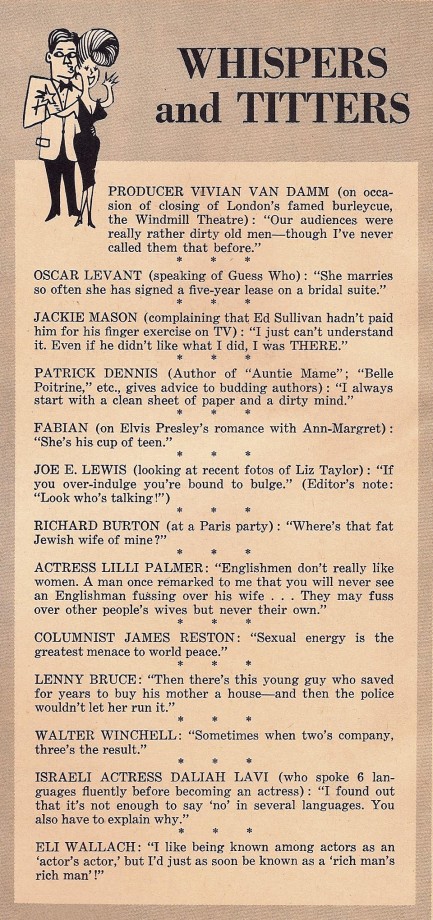 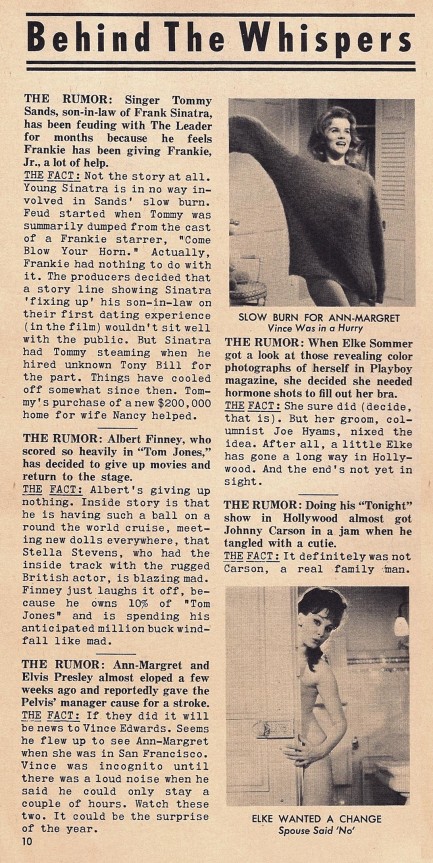 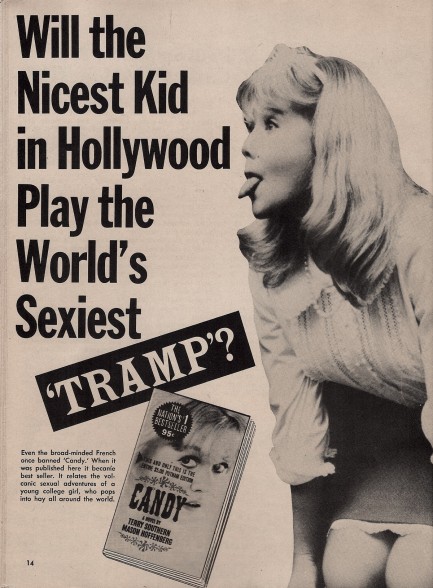 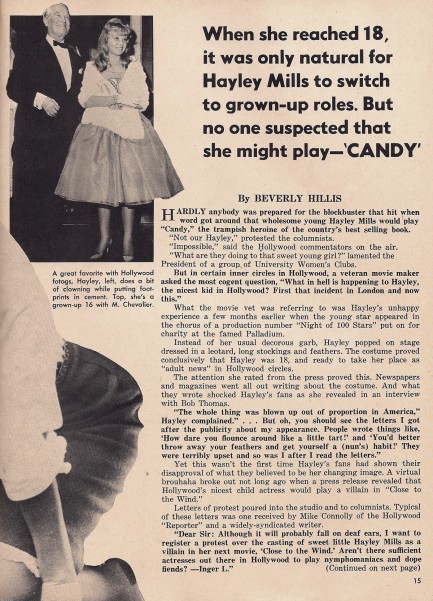 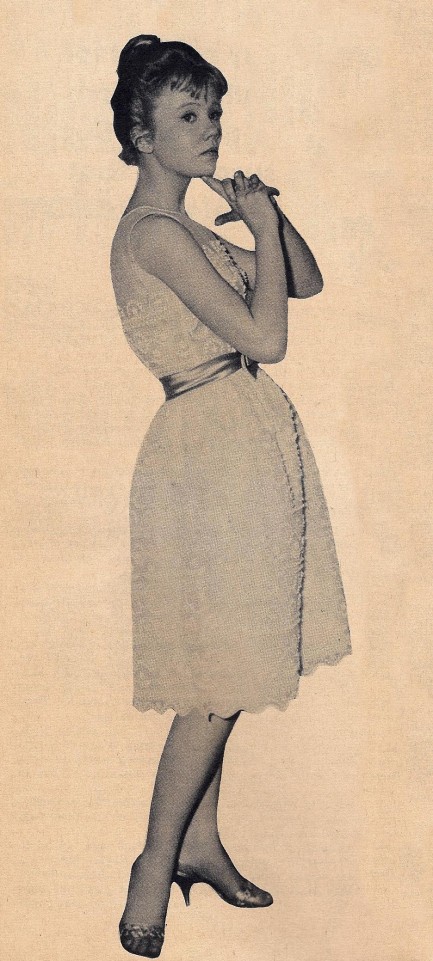 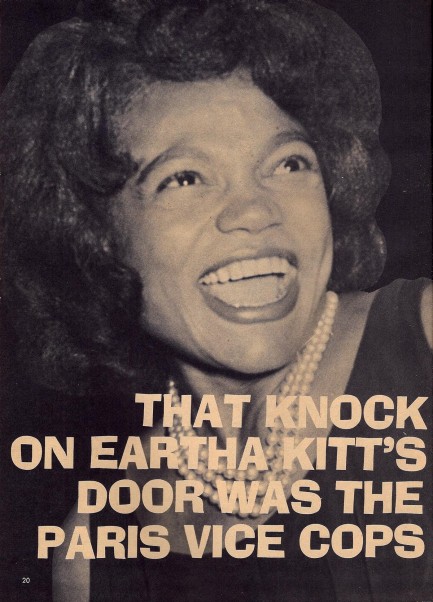 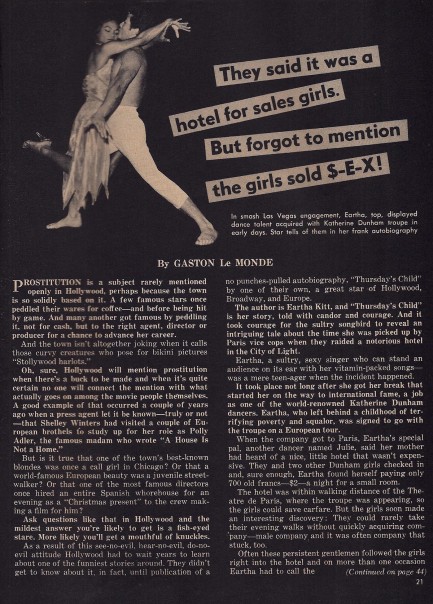 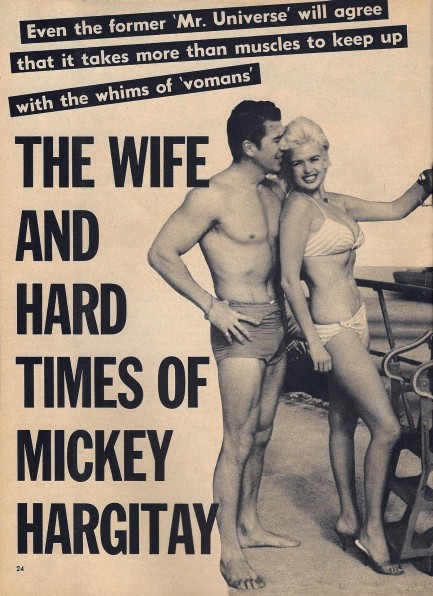 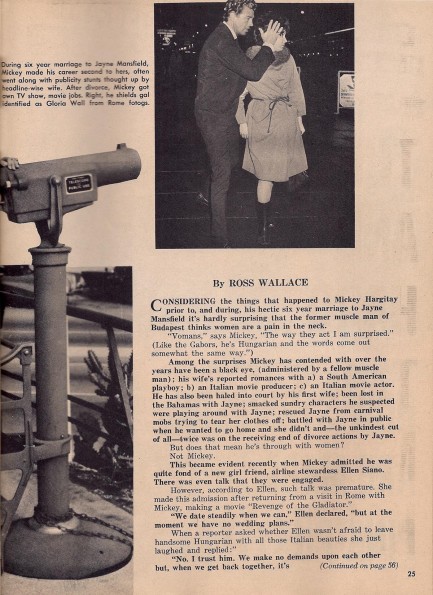 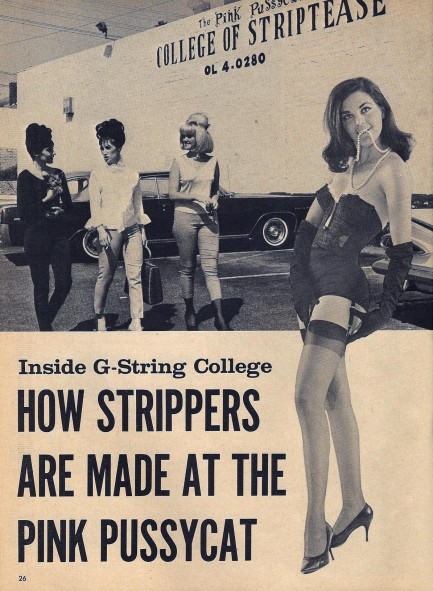 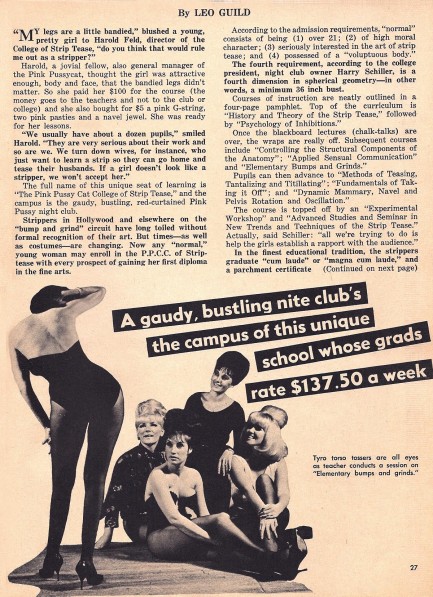 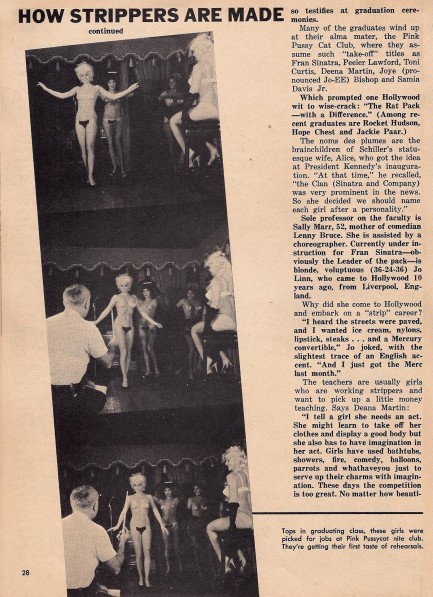 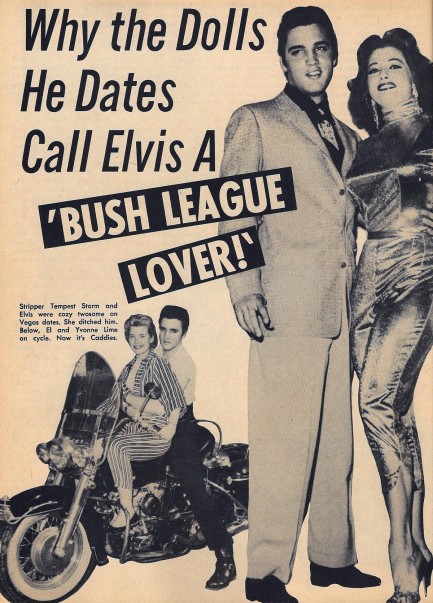 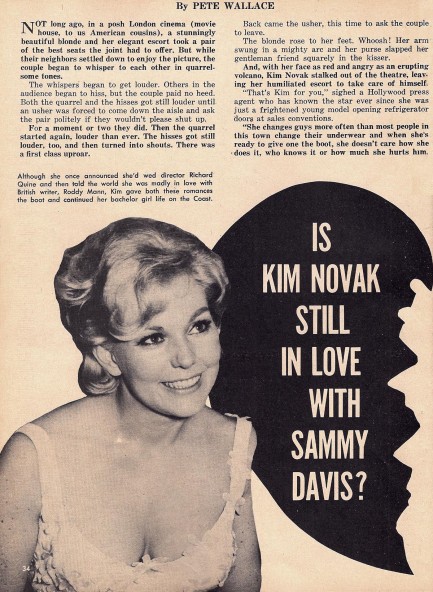 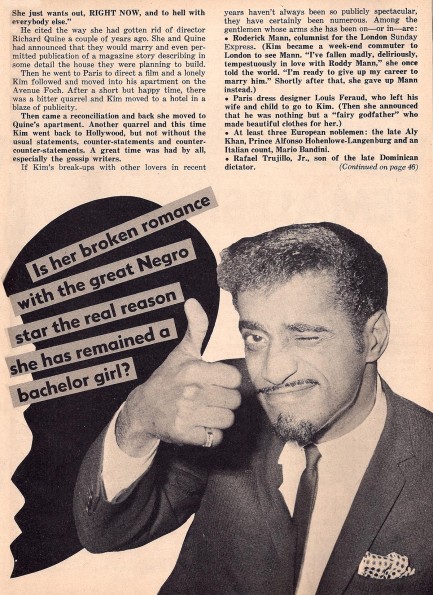 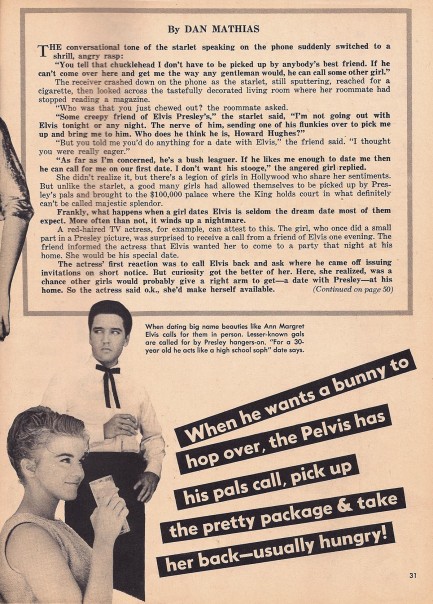 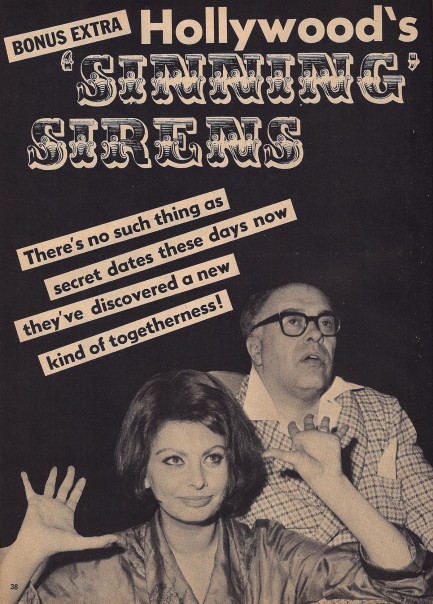 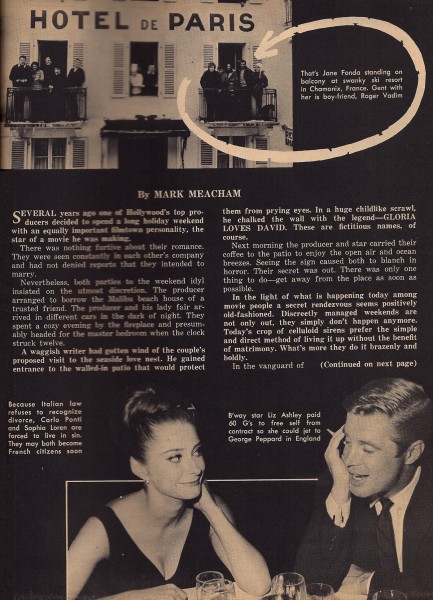 
 America’s most lovable hick decides to let her hair down. 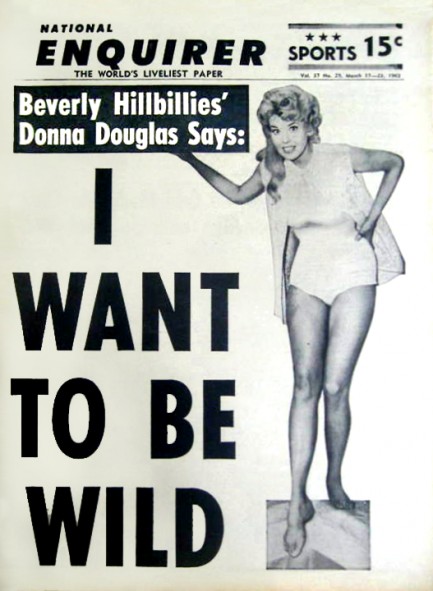
This cover of National Enquirer appeared today in 1968 and features cover star Donna Douglas, who at the time was in the midst of a nine-year run as Elly May Clampett on the smash American television series The Beverly Hillbillies. Despite the headline here, Douglas was never wild in either her portrayals or her personal life, although some sources seem to think that during the filming of 1966’s Frankie and Johnny she had an affair with co-star and noted freak Elvis Presley. That’s untrue, as far as we can tell, but since Frankie and Johnny turned out to be Douglas’ only starring role in cinema, maybe she should have hooked up with the Pelvis—he went on to star in many more smash movies opposite such forgettables as Dodie Marshall and Annette Day. 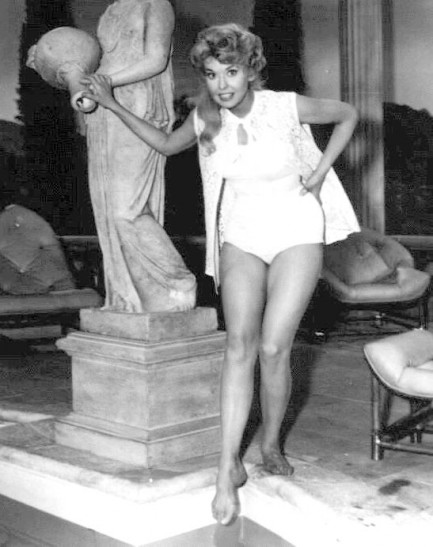

|
 |
The headlines that mattered yesteryear.
1927—Mae West Sentenced to Jail
American actress and playwright Mae West is sentenced to ten days in jail for obscenity for the content of her play Sex. The trial occurred even though the play had run for a year and had been seen by 325,000 people. However West's considerable popularity, already based on her risque image, only increased due to the controversy. 1971—Manson Sentenced to Death
In the U.S, cult leader Charles Manson is sentenced to death for inciting the murders of Sharon Tate and several other people. Three accomplices, who had actually done the killing, were also sentenced to death, but the state of California abolished capital punishment in 1972 and neither they nor Manson were ever actually executed. 1923—Yankee Stadium Opens
In New York City, Yankee Stadium, home of Major League Baseball's New York Yankees, opens with the Yankees beating their eternal rivals the Boston Red Sox 4 to 1. The stadium, which is nicknamed The House that Ruth Built, sees the Yankees become the most successful franchise in baseball history. It is eventually replaced by a new Yankee Stadium and closes in September 2008. 1961—Bay of Pigs Invasion Is Launched
A group of CIA financed and trained Cuban refugees lands at the Bay of Pigs in southern Cuba with the aim of ousting Fidel Castro. However, the invasion fails badly and the result is embarrassment for U.S. president John F. Kennedy and a major boost in popularity for Fidel Castro, and also has the effect of pushing him toward the Soviet Union for protection.
|

|
|
It's easy. We have an uploader that makes it a snap. Use it to submit your art, text, header, and subhead. Your post can be funny, serious, or anything in between, as long as it's vintage pulp. You'll get a byline and experience the fleeting pride of free authorship. We'll edit your post for typos, but the rest is up to you. Click here to give us your best shot.
|
|